
One Of Cape Cod's Best-Kept Secrets Is A Nature Preserve Where Wild Seals Roam Amidst Untouched Beach Beauty
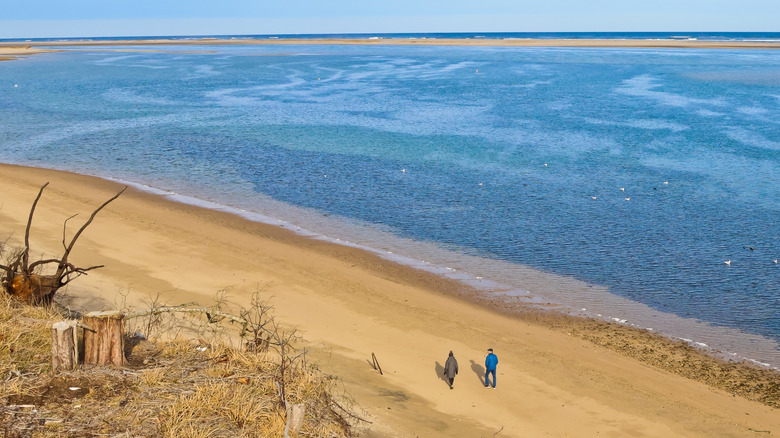
Just off the coast of one of New England's busiest summer destinations is a seaside escape void of vacation homes and beach clubs. Monomoy National Wildlife Refuge (NWR) is a thread of sand stretching into the Atlantic, with three islands whose borders continually shift as they're reworked by the ocean waters. On the ground, its raw wilderness of dunes and marshes serves as a protected habitat for about 40 species of shorebirds and a haven where thousands of seals can be seen basking together. Visitors can look for wildlife along trails that wind through the refuge's marshes and wild beaches.
Cape Cod is famous for its crowded beaches, but Monomoy NWR is a much quieter version of the Cape. Despite sitting at the edge of Chatham, a Cape Cod resort town famed for its historic inns, Monomoy is a spot that skirts many visitors' notice. Take, for example, how it compares among Tripadvisor stats: While popular shoreline spots like Race Point Beach and Herring Cove Beach hold close to 1,000 (or, for Race Point, well over 1,000) reviews, Monomoy's Tripadvisor listing has just a couple hundred reviews, as of this writing.
The refuge's offshore, uninhabited island is accessible only by boat, with just a few structures (including a bright red lighthouse) and publicly accessible walking trails. The Cape Cod visitor looking for boardwalks and beach bars will be disappointed here, but for travelers who want to watch birds and seals from shores that only a handful of explorers have walked, it's a special find — and free to visit.
See one of the coast's biggest seal gatherings at Monomoy NWR
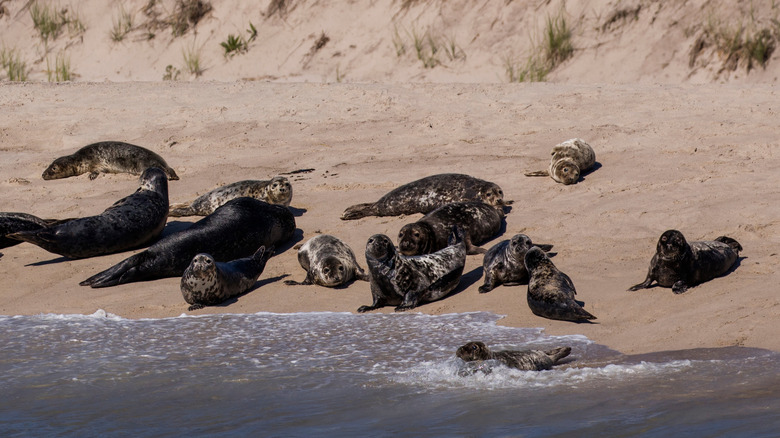
Monomoy NWR exists today as a pocket of Cape Cod shaped more by nature than development. Its islands did, at one time, have a settlement called Whitewash Village, which emerged in the 1800s. But it was left behind in the same century, transformed into one of New England's abandoned towns. In 1944, the U.S. Fish & Wildlife Service established the refuge to provide habitat for migratory birds. Some of the shorebirds protected here are federally endangered, including piping plovers, red knots, and roseate terns. Aside from its birds, the refuge is home to spawning horseshoe crabs and a plethora of gray seals.
To be precise, up to 50,000 seals inhabit Monomoy National Wildlife Refuge. It's also the U.S. Atlantic Coast's biggest gray seal haul-out site. You can sometimes see hundreds of them packed together on the refuge's sands. Monomoy's vast seal congregations are even visible from outer space. But instead of taking a spaceship, a seal-spotting cruise is a much more feasible option for visitors.
A couple of seal-focused charter tours departing from the Cape have positive reviews, including Monomoy Island Excursions (4.6 stars from Google Maps reviews) and Monomoy Sportfishing (5 stars from Google Maps reviews). One previous visitor wrote: "We couldn't have asked for a better experience," adding that they recommend the charter tour to anyone "wanting to have a great family experience out on the water." The charters can take you to prime seal-viewing spots and let you see them up close.
Walk along untamed beaches at Monomoy NWR
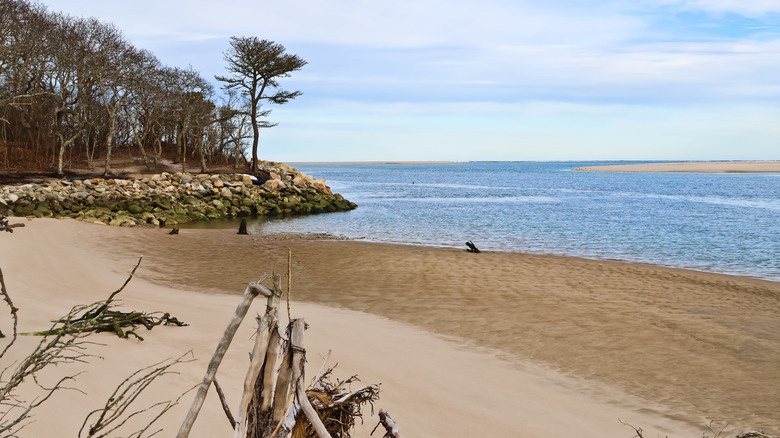
In lieu of rows of beach houses and towels laid out, visitors to Monomoy's beaches will find windswept dunes, marshes, and intertidal flats. Almost half of the refuge's acreage is designated wilderness, contributing to the feeling that it's a "serene and wild place, more to be observed than to be explored," as a Google Maps reviewer wrote. Nevertheless, some exploration is viable. There are several trails on the refuge's mainland unit, called Morris Island. The active trail network has just under 2 miles of paths, with interpretive panels and a brochure available (you can ask for one at the information kiosk by the parking lot). The trail winds through multiple habitats, including serene dunes that extend across miles of Massachusetts coastline.
There's also a trail on South Monomoy Island, one of the refuge's offshore islands, for visitors to truly immerse themselves in remote nature. It covers 1.39 miles, linking the Monomoy Point Light (listed on the National Register of Historic Places) to the island's remote shores. However, some areas around the trail are closed to the public, so it's a good idea to check the USFWS public access map for updates. Also, to reach this trail, you'll need a boat to get you there — the refuge itself doesn't offer boat shuttles.
Two boat services — Stage Harbor Excursions and Got Stryper Charters — are permitted to land with passengers on the island. In any case, travelers will first need to arrive in Chatham, around a 30-minute drive from the Cape Cod Gateway Airport. While in Chatham, you can check out one of New England's most legendary hotels, the Chatham Bars Inn. Or, consider extending your adventure by visiting nearby Dennis Port, a Cape Cod seaside resort town with incredible beaches and fresh local seafood.