
10 Portuguese Travel Destinations That Are Most Popular With Boomers
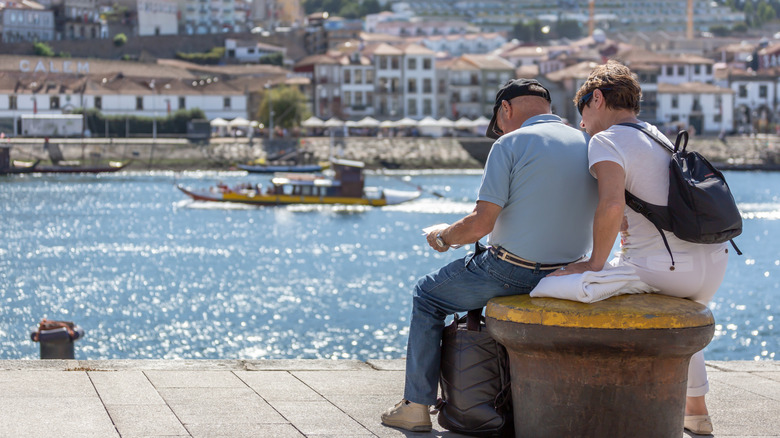
Baby boomers aren't traveling less than younger generations; they are, in fact, spending more. In 2025, the generation collectively spent roughly $157 billion on vacations, with Portugal becoming a clear beneficiary of that. A look at what the country offers senior travelers, and it's not hard to see why.
Safety appears to be Portugal's strong suit. The country held the seventh spot in the 2025 Global Peace Index, ahead of most countries in Western Europe. Language, often a challenge while traveling abroad, is rarely an issue here, with Portugal ranking sixth out of 123 countries in the 2025 EF English Proficiency Index — a "very high" band shared with only a handful of countries worldwide. In practice, this comes down to basics such as navigating a menu or a pharmacy with ease instead of guesswork, a convenience even more valuable for boomers. Add the currency and cost advantage over most of Western Europe, mild weather that stretches well past summer, and pedestrian-friendly towns and cities, and the pull becomes obvious.
Furthermore, Portugal's warmth extends beyond its weather. An InterNations survey found 94% of Portuguese locals rate as friendly toward foreigners, a factor presumably instrumental behind the country earning "Best Destination in Europe" at the 2025 World Travel Awards. The list that follows adheres to varied travel styles spanning 10 destinations, split across golf and sun, wellness and quiet, culture, books, and reflection, that make Portugal an undeniably sought-after destination for seniors.
Cascais: For boomers seeking a quiet, scenic escape
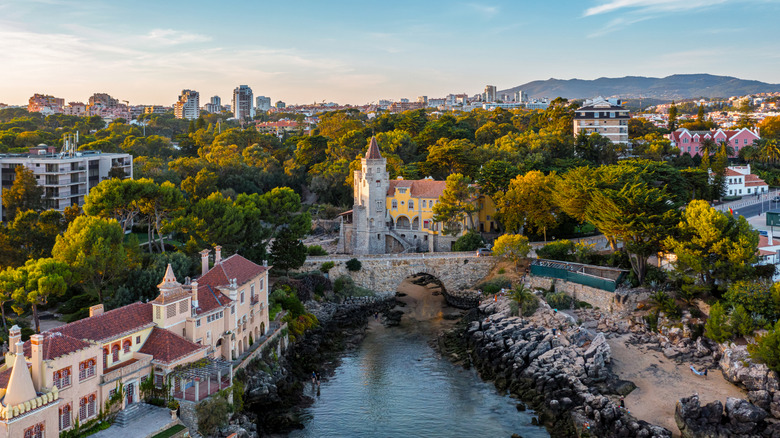
Just a 40-minute train ride from Lisbon, getting to and around Cascais doesn't require much effort, making it a prime contender for pensioners looking to travel. The 1.86-mile town promenade is small enough to cross on foot, and where the ground isn't already flat, ramps and elevators fill the gaps. Its compact size and step-free routes let visitors reach the beaches, the old citadel, and the seafront promenade without needing a car or bus. With year-round temperatures hovering around 16 degrees Celsius (61 degrees Fahrenheit), this stylish seaside town with miles of picturesque coastline and spectacular beaches offers a mild coastal retreat that's easy to explore.
The stunning Boca do Inferno cliffs along the Atlantic Ocean, the Cascais Marina where pleasant meals can be enjoyed in the backdrop of sea vistas, the Cidadela Art District, and a historic center mixing Roman and Moorish-era influences all sit close together, and a few unhurried days can cover most of its prime offerings. Cascais' museum quarter especially is tailored for a slow afternoon. Its centerpiece is the Museu Condes de Castro Guimarães, a turn-of-the-century aristocratic residence turned into a museum in 1931, with a library holding a rare 1505 manuscript depicting Lisbon.
Noticeably less crowded than some of Portugal's other coastal draws, Cascais feels quieter and more local. Its restorative calm and easy lifestyle have also positioned Cascais as a worthy retirement option for senior immigrants for years now, enhancing its appeal among senior travelers, too.
Algarve: For sun and golf-loving boomers
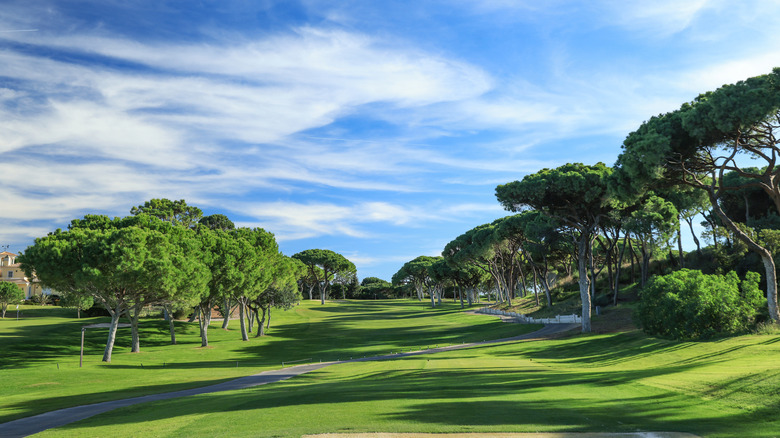
The region of Algarve has built its reputation as Portugal's top golf destination and one of the finest in Europe, with travel packages designed specifically around golf courses. The best-known courses cluster in the so-called Golden Triangle of Vilamoura, Vale do Lobo, and Quinta do Lago, 20 minutes from Faro Airport. These not only count among the top 10 golf courses in the region, but also, being close to each other, they don't warrant long transfers.
These golfing greens are open through the year, as this southernmost region of Portugal draws travelers with roughly 300 sunny days a year and winters clocking around 15 to 20 degrees Celsius (59 to 68 degrees Fahrenheit), making it a longstanding cold-weather escape. Beyond golfing attractions, Lagos in western Algarve is a coastal city and a beachy tourist paradise comprising a walled old town with the cliffs of Ponta da Piedade, best seen by boat, along with the naturally sculpted Benagil Cave, whose formidable domed ceiling and striking limestone walls make it an unmissable sight. In Tavira, in eastern Algarve, the attractions include Ponte Romana, a 12th-century seven-arched Roman bridge, sheltered island beaches reached by short ferry rides, and a slower pace that suits boomers looking to relax. Nearby, the historical town of Faro, the capital of Algarve, houses the magnificent Faro Cathedral, the Faro Municipal Museum housed in a 16th-century convent, quiet plazas lined with orange trees, and eateries serving traditional Portuguese fare.
In 2026, Algarve secured the second spot among the top places in the world to retire, according to the Live And Invest Overseas Retirement Index. A thriving immigrant community further cements the region as a contender for a senior travel hub.
Madeira: For boomers seeking a wellness getaway
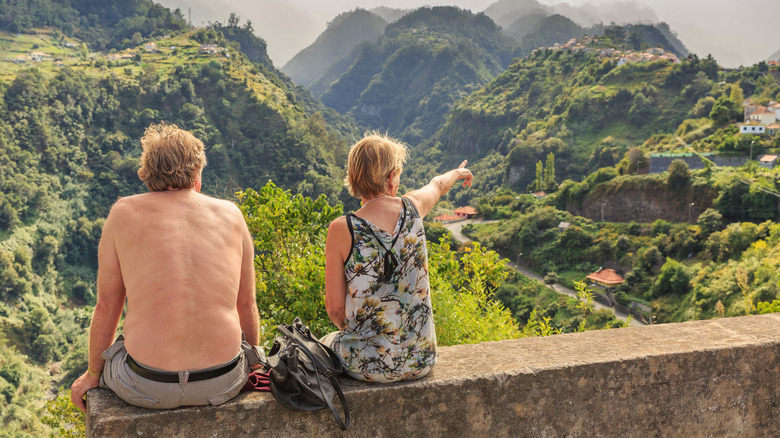
Madeira's association with older travelers isn't new marketing; it dates back to the 1700s, when the island became a winter retreat for well-off Europeans looking to escape the cold at home, laying the groundwork for the wellness-focused tourism industry that exists today. A trace of that era survives at Belmond Reid's Palace in Funchal, where afternoon tea remains a ritual for visitors who enjoy that kind of old-world formality. In the present day, Funchal is a major cruise stop that attracts many boomers with coach tours covering the thatched houses of Santana, and the volcanic pools of Porto Moniz, on the northern tip of this warm year-round volcanic island that is famed for its food and beauty.
Nicknamed the "Floating Garden" and the "Pearl of the Atlantic" for its mild climate, Madeira has repeatedly been voted Europe's Leading Island Destination by the World Travel Awards. Its wellness credentials run deeper than a regular spa day. The ocean-view spa at Belmond Reid's Palace pairs treatments from La Prairie and Ytsara with organic therapies made from local plant and flower extracts. There's also a wellness center built around fitness, hiking, and ocean-based activities that lets guests be as active or unhurried as they like.
Beyond the resorts, the island's broader wellness pitch rests on its actual geography, which, paired with its weather, supports gentle daily movement, and tour operators capitalize on it. Small-group tours navigating Madeira's levadas and Laurissilva forest trails run with flexible, relaxed itineraries matched to different fitness levels, explicitly marketed for senior travelers who want movement without strain. It's these centuries of practice of welcoming older travelers, and a landscape that's soothing for the mind and body, that sets Madeira apart from Portugal's mainland stops.
Douro Valley: For boomers who love wine with a view
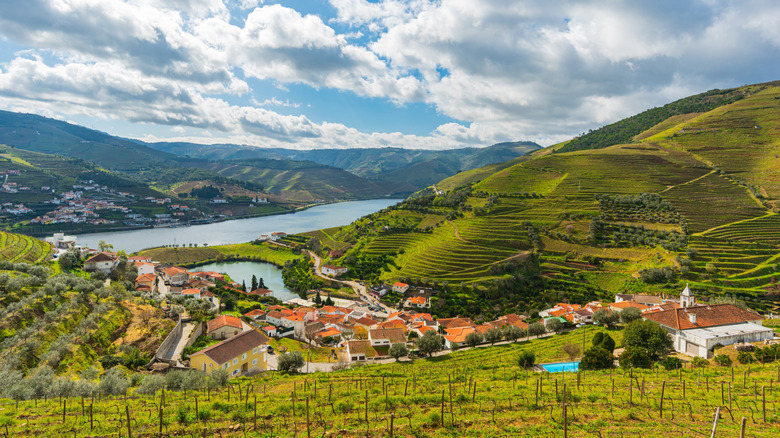
The Douro Valley is where port wine comes from, and the landscape shows why. Over centuries, farmers here have carved the river's harsh canyon walls into level terraces for grapevines, olive trees, and almonds, turning this formidable terrain into one of Europe's most striking and one of the world's oldest wine regions. It's a place built for savoring — think long lunches, slow drives, indulgent tastings — just the kind of pace senior travelers would prefer.
Pinhão makes a good home base, close to many of the region's best-known wineries and immersive "quintas", or traditional working wine estates offering anything from simple farmhouse rooms to elegant country properties with sweeping views. Only two hours from Porto by train, the charm of the town begins at the historic train station itself, laden with azulejo tiles depicting scenes from the valley. Travelers can also opt for Douro's river cruises that cover Pinhão, aside from Régua, the center of the valley, where guests can learn to make port wine. The 18th-century Mateus Palace is another attraction, a Baroque marvel marked as the National Monument of Portugal in 1911. With these river cruises leaning towards an older guest profile, cruise operators continue catering to this bracket.
A must-do in Douro is the historic train line through its scenic terraced landscapes that runs from Peso da Régua to Tua. The Linha do Douro, which dates back to the 1800s, comprises five restored period coaches. Over 36 kilometers (22 miles), the route meanders along the river, offering a leisurely introduction to this UNESCO-demarcated wine region before visitors step into its historic quintas and tasting rooms.
Sintra: For boomers wanting a storybook daytrip
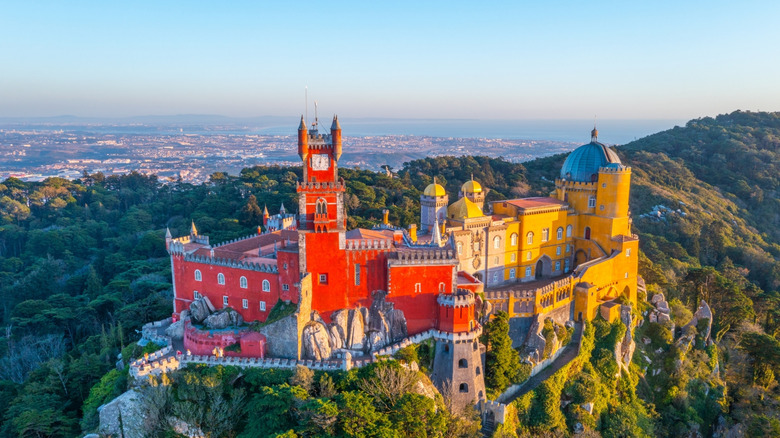
Portuguese royalty spent centuries retreating to the cooler, forested hills of Sintra to get away from Lisbon, a habit the town's aristocratic class shared in building their own palaces alongside the royal court. The scenery of Sintra is heavy on contrast. Ornate, colorful architecture breaks the rhythm of lush subtropical greenery, with the coastline and capital visible in the distance on a clear day. Poet Lord Byron summed up the essence of the town, calling it a "glorious Eden," a description that still seems to hold, even as it gets swarmed with tourists.
Right in the town center is the imposing National Palace. It became a part of the European Royal Residences Network in 2013. Centuries of royal additions left the palace with a blend of Gothic, Manueline, and Mudéjar architecture, the latter most striking in its intricate Hispano-Moresque tilework. The rest of the sightseeing sits further out and higher up. The vividly painted Pena Palace, the hilltop remains of the Moorish Castle, and Quinta da Regaleira, known for its underground tunnels and a symbolic spiral staircase called the Initiation Well, are all worth the extra mile, making Sintra a better match for travelers with some sightseeing endurance. Some visitor accounts of the climb up to Pena Palace describe it as a manageable incline for anyone in decent walking shape, and shuttle buses run between the main sites for those who'd rather not climb at all.
Just 40 minutes from Lisbon by train, the timeless fairytale town of Sintra is easiest treated as an add-on to a Lisbon stay, offering a different world without needing a second hotel booking.
Porto: For boomers seeking big city charm, minus Lisbon's prices
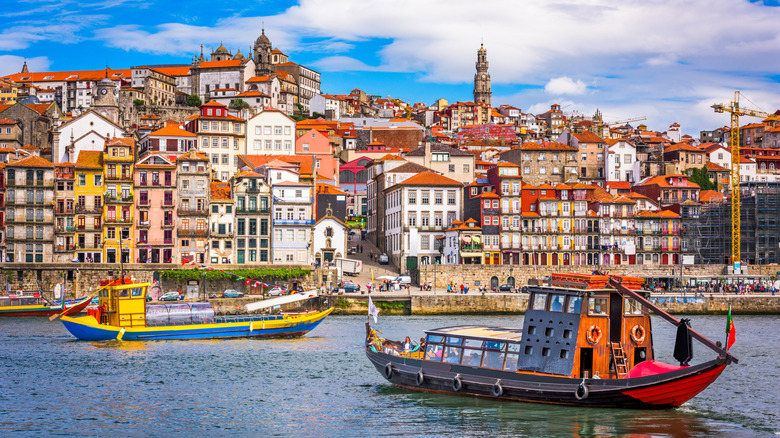
Portugal's second largest city may feel less polished than Lisbon but carries a weathered charm. Red-tiled houses blanket its hilly terrain, church towers pierce into the skyline, and small rabelo boats drift along the Douro River below. The riverside Ribeira district delivers postcard views, while across the river in Vila Nova de Gaia, visitors find tucked-away port wine cellars, where tours and tastings remain the city's most popular pursuit.
For boomers, Porto offers an alluring combination of a compact, walkable historic core, ornate Baroque architecture, and an easy hour-long river cruise that takes in the city's best views without much walking. While some streets can be steep, many attractions offer ramp and elevator facilities to keep them accessible for all. Spend a day exploring Porto's quieter side at the Serralves Museum and Park, where contemporary art meets expansive gardens, before wandering through the Jardins do Palácio de Cristal for panoramic views over the Douro River. As evening falls, head to the Dom Luís I Bridge to watch the sunset drench the city's red-tiled rooftops in golden hour lighting. Another leisurely outing is aboard the historic Tram 1 to Foz do Douro, where the river meets the Atlantic Ocean. The nearby Matosinhos Beach is ideal to relax by the sea while digging into fresh seafood at the waterfront restaurants.
With enough to fill several days at any pace of one's choosing, Porto is the pick for boomers wanting a city experience that combines culture, history, food and wine, without Lisbon's crowds or costs.
Évora: For boomers drawn to history
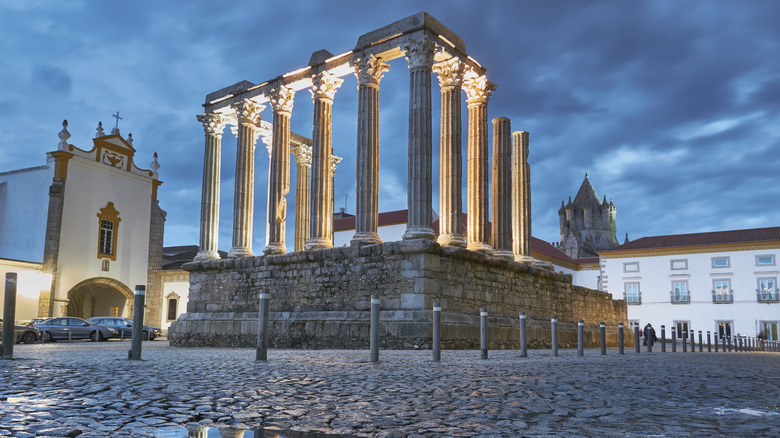
Évora sits inland from the coast in Alentejo, a province of southern Portugal known for dry heat, cork forests, and olive farming. The town itself has been continuously inhabited and was fought over for roughly 2,000 years — the Romans, the Moors, and the Portuguese royalty have all left something behind. The historic city center, featuring a Roman-era temple held up by 14 surviving Corinthian columns, earned UNESCO recognition in 1986.
A short walk away, construction on the city's main cathedral, the Sé de Évora, stretched across decades from 1186 to 1250. Nearby stands the town's stranger claim to fame, the eerie Chapel of Bones, housed inside the Church of St. Francis, where local monks once arranged thousands of exhumed skulls and bones into wall-to-wall decoration, reportedly as a pointed reminder to visitors about what actually remains of us.
None of this requires much effort to see in this very compact, walkable town, where the main attractions are within a five-minute walking distance from the central plaza. Beyond its Roman ruins and medieval churches, this must-see Portugal gem that travel expert Rick Steves called a "proud little town" has the easygoing energy of a university town, with lively squares lined with cafés, restaurants, wine bars, and local markets. The town has witnessed a slow but sure surge in international residents, also comprising retirees seeking a slower pace of quality life, embracing an authentic Portuguese lifestyle, the very same qualities making it an easy fit for boomers looking beyond the coastline.
Óbidos: For boomers looking to get lost in books
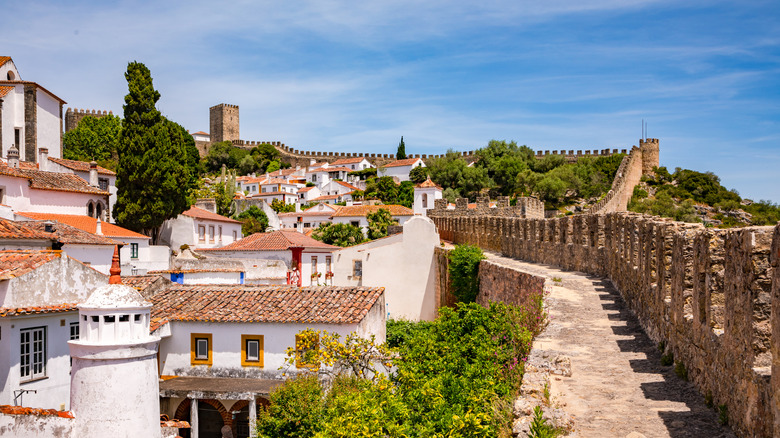
Long before it acquired a bibliophile character, Óbidos was accustomed to grand gestures. Portuguese kings spent more than six centuries presenting the town as a wedding gift to their new queens, a tradition running from 1210 to 1834 that left behind aqueducts, chapels, and almshouses funded by a long line of doting monarchs. That romantic history eventually gave way to something more literary. With more than a dozen independent bookshops tucked into its old buildings and an annual literary festival, the town is today a haven for book lovers.
Several bookshops are housed in former churches and chapels. Designated as UNESCO Creative City of Literature since 2015, the town is also home to The Literary Man, a hotel built around more than 60,000 books, known as the largest literary hotel in the world. Each year, the town's FOLIO International Literary Festival brings in readings, talks, and events, giving bibliophiles a reason to time their visit. Being a walled town, however, Óbidos might be better suited for more active seniors to negotiate its sloping, cobblestoned terrain, even though walking from one end to the other takes about 10 minutes.
Finding one's way through hordes of day-trippers can be trying, making it worthwhile to stay for a night or two to take in its more authentic, quiet charm. The town's tiny size leaves plenty of time to move slowly between bookshops, courtyards, and cafés. For a coffee-and-a-chapter kind of afternoon, topped off with the local Ginja de Óbidos — a cherry liqueur served in an edible chocolate cup — Óbidos is best explored sans crowds and rush, thus fitting into the boomer itinerary.
Fátima: For boomers on a spiritual journey
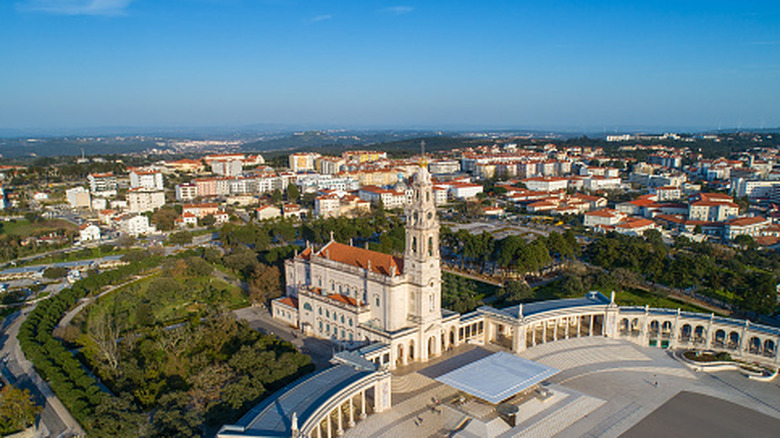
What's today one of Catholicism's major pilgrimage destinations began with a fairly humble tale that even many non-Catholics have heard of: the story of Our Lady of Fátima. In 1917, during World War I, three shepherd children reported seeing an apparition of the Virgin Mary, with a message centered on peace — a claim the Vatican didn't formally validate until 1930, but one that had already turned a quiet farming village into a pilgrimage site well before then. This small religious city today is anchored by a pair of basilicas set at opposite ends of an open plaza which fills each month between May and October, on the 12th and 13th, with pilgrims attending Mass and partaking in candle-lighting rituals.
The crowds can genuinely swell — Rick Steves notes the site has drawn six-figure attendance on its busiest dates, and pulled in roughly half a million people, Pope Francis among them, for its 100th anniversary observance in 2017. But the physical layout holds up well under that volume. Elevators, ramps, and volunteer-based assistance systems run throughout the plaza, thereby facilitating ease of movement, especially for those with mobility issues, even when crowds are heaviest.
That ease of movement is part of why pilgrimage operators have built Fátima into longer, more paced-out itineraries. A stop at the childhood homes of the three shepherds, or an added excursion to the Batalha monastery, can be comfortably woven in, leaving ample time to sit, pray, or simply take in the surroundings. So whether it's faith, history, or plain curiosity, any of the three is reason enough to slow down here.
Lisbon: For big-city boomers
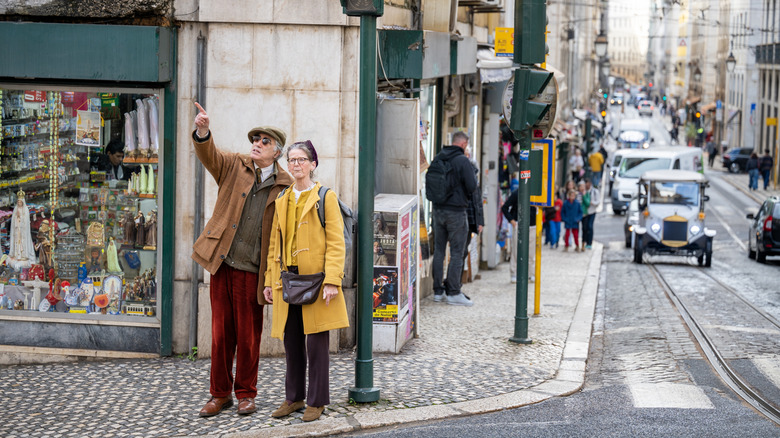
Unlike some European capitals that feel like a race against the clock, Lisbon has built a character around unhurried mornings and long lunches, which is why boomers keep returning. The steep terrain, however, is a caveat. The Alfama district's sloping lanes can wear out visitors fast, so the flatter ground around the Baixa and Avenida da Liberdade makes an easier base.
The city's vintage yellow trams do the climbing for you, and none more than Tram 28, which winds between Martim Moniz and Campo de Ourique, cutting through the storied neighborhoods of Alfama, Baixa, and Chiado in one ride. Its carriages date to the 1930s and have been kept running because modern, wider trams can't fit these streets and hills. Passenger volumes swell by midday and on weekends, so a ride first thing on a weekday morning is far likelier to fetch an empty seat.
Elsewhere, half-price museum entry for anyone over 65 is common enough across the city, while the history museum by Praça do Comércio waives entry entirely. For an easy itinerary, a loop bus circling major landmarks lets you hop off wherever looks interesting, and for a splurge, some hotels sit inside converted historic palaces. What makes Lisbon a fitting finish for this list is its duality of real capital-city energy; it's safe and friendly, with just enough built-in ease that never feels too overwhelming.