
Unwritten Rules You Should Know Before Visiting Everglades National Park
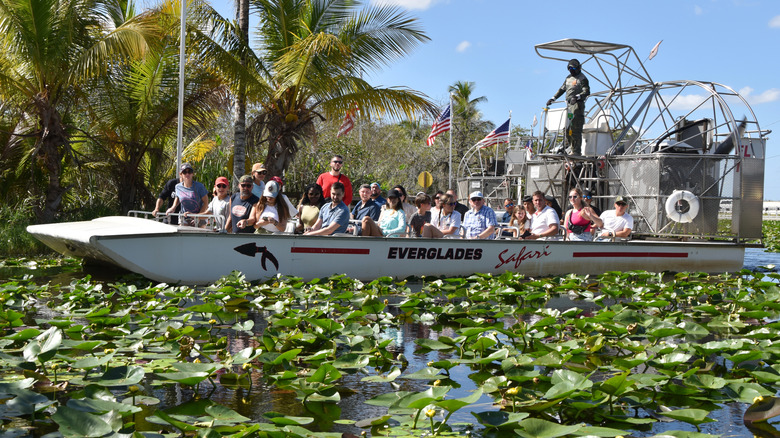
Out of the 63 national parks in the United States, Everglades National Park in southern Florida is unlike the rest. But contrary to popular belief, this incredible park isn't "just a swamp," (a fact people don't seem to believe until they see it for themselves). In fact, the park's 1.5 million acres are distinct from other protected areas in the country because they are subtropical wetlands with a very unique terrain that allows for all different types of wildlife and plants to thrive. In fact, there are more than 2,000 interesting species of flora and fauna currently living in the Everglades, and planning a visit there can reap practically endless rewards if your goal is to better commune with nature. However, you have to follow a handful of unspoken guidelines to accomplish that feat safely and respectfully.
The Islands team wanted to learn more about how to make the most out of a trip to Everglades National Park by uncovering the subtle rules that ensure that you have fun and stay out of harm's way. We did this by perusing official information from the National Park Service website and various threads discussing the best ways to visit the Everglades in subreddit groups like r/Everglades and r/NationalPark to determine less obvious bits of insight that the average traveler might overlook. In the end, we gathered this wide range of important unwritten rules to keep in your back pocket during your next visit to Everglades National Park. These tips will help you see more animals, get the most ideal conditions for exploring, and, most importantly, avoid emergencies while you're spending time in the Everglades.
Visit in the dry season and arrive early
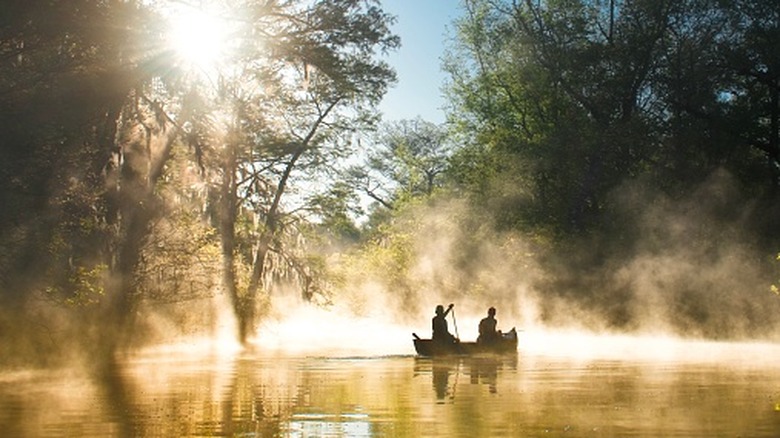
Timing is always crucial when you're planning an outdoor adventure — especially if you're planning a visit to a place with ever-changing weather conditions like the Everglades. Firstly, you must carefully consider the time of year you'll be visiting the area because each period is quite different. The wet season, which is from May to November, is very rainy. This is not only unpleasant for visitors, but it can also create issues with mosquitos. However, December to April is usually the dry season, meaning that it's less rainy and humid overall, so there are many opportunities to view the wildlife that comes out for the comparably "nice" winter weather.
After nailing down the month you'll be visiting the Everglades, you need to be just as diligent with your daily itinerary and enter the park as early as possible. Many of the popular visitor areas can get super packed later in the day. As one local in r/Everglades explained, "South Floridian here who visits ENP multiple times a year. I strongly recommend doing Shark Valley first thing in the morning, especially if it's a weekend. The parking lot fills up and you will see rangers counting cars leaving to allow that many to enter."
Bring supplies the wetland environment
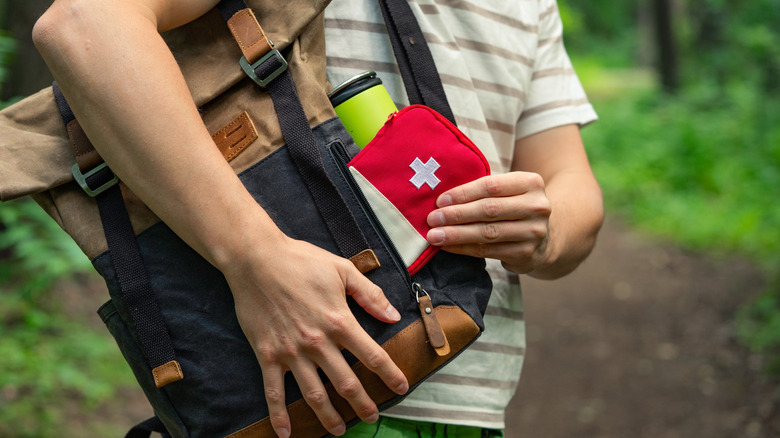
Everglades National Park offers plenty of amazing camping opportunities, but you need to be fully prepared if you plan on spending the night there. There are all types of potentially serious situations you might encounter when you're in the thick of the Everglades. This could include anything from crossing paths with a dangerous animal or getting bit by an insect to injuring yourself or becoming lost out in the wilderness. In many of those scenarios, you'll be happy you were strategic with your packing list.
Aside from the must-have camping essentials you'll need, you should really go the extra mile to craft a comprehensive first-aid kit with anything that could be helpful while you're out in the wilderness, like personal medication, devices such as an EpiPen, bandages, and antiseptic wipes. In addition, the National Park Service suggests bringing things such as a multi-tool, lighting equipment, fire-starting gear, and more water and food than you think you'll need. It's also a wise idea to download offline maps since the service out in the Everglades can be spotty at best. One individual specifically recommended gear for this particular type of wetland environment in r/HerOneBag, writing, "It's going to be humid and you're going to be sweaty. Moisture wicking, quick dry fabrics are key. Your feet will get really hot in boots. Bring some bug repellant and sunscreen too!"
Stay on the marked trails only
Even if you're a seasoned hiker and camper, things can still go wrong while you're visiting any national park. Specifically in the Everglades, it happened to 67-year-old Roger Sawyer, who disappeared seemingly without a trace in 2011, according to CBS News. His relatives told the media that he was very experienced with being in an outdoor environment, yet even he vanished out in this dense, remote terrain. Even after all these years, there has never been any evidence found of Sawyer after he disappeared and the case was still open as of June 2024.
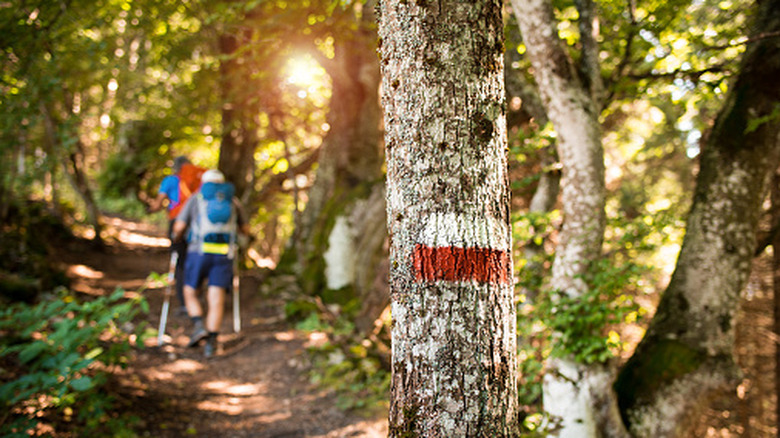
Unfortunately, this isn't a solitary incident and people get turned around in the Everglades all the time. Of course, there is a much higher chance of this happening if you dare to wander off the marked paths while exploring. There are Everglades hikes that are considered some of the most beautiful trails in the United States, but the only way to safely enjoy them is by staying on the marked paths at all times. Thankfully, there are plenty of official trails that visitors highly recommend, such as the Shark Valley Tram Trail for a long trek, the Anhinga Trail for a short loop under a mile, and the Snake Bight Trail for a flat, "short-but-not-too-short" jaunt, according to ratings on All Trails.
Check weather conditions often
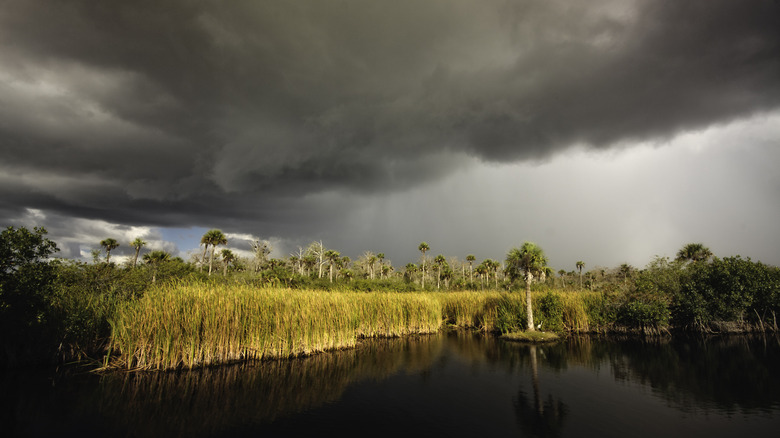
In a national park with such a wide variety of ecosystems, the weather conditions can change rapidly and you want to know what you're getting yourself into. Florida is already known for chaotic weather in general, so be sure to continually check the weather leading up to your trip on a reliable weather app or website. One person in r/FloridaGarden highly recommended an app called Wunder Ground, saying, "I've had the app for probably a decade now. Always one of the first things I install when getting a new phone. You can select favorite locations, down to which weather station is closest to you. Rain forecast times are spot on."
In addition to checking the weather conditions leading up to your arrival, you also need to be mindful of the bug forecast — especially if it's not something you ordinarily think about. At least 43 different species of just mosquitos alone live in Everglades National Park, as well as many other types of insects that can be really bothersome to humans. They can put an end to the day very quickly because, as one individual explained in r/Everglades, "I go to the Everglades very often to fish. Drove over an hour a couple weeks ago and had to immediately turn back because the mosquitos were so thick." That's why it's crucial to use mosquito forecast tools like Off.com before visiting — because the last thing you want is spending all day swarmed by bugs.
Keep your distance when encountering wild animals
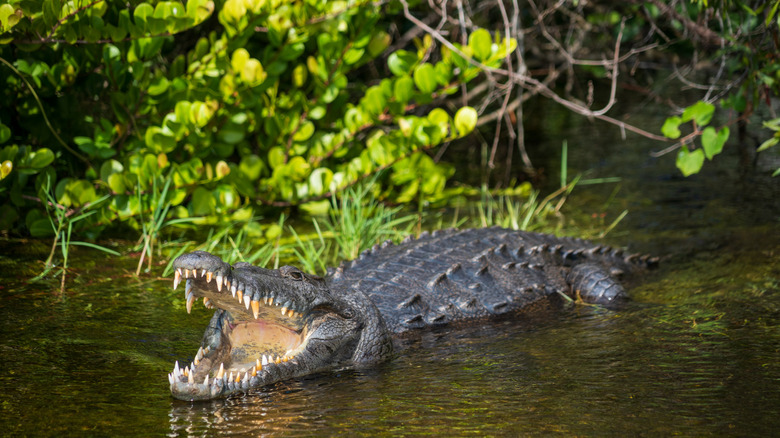
There are lots of places in Florida where it's possible to see wild alligators, but the Everglades is the only place on the entire planet where they live in the same environment with crocodiles. That fact alone should clue you in to how rich the biodiversity of Everglades National Park actually is. There is such a wide variety of species roaming the Everglades, including many sorts of birds, panthers, bears, and an assortment of large snakes — including the Burmese Python, which is considered an invasive species there.
Encountering these critters can be a highlight of visiting the park, and many folks are attracted to the Everglades in the first place specifically because of its large animal population. If that's your goal, one local in r/Everglades advised checking out Shark Valley or Royal Palm for alligators or going kayaking in the Flamingo Marina to spot ospreys, manatees, dolphins, and sharks. However, many of these creatures can be very dangerous, or even deadly, and you'll want to be mindful of certain guidelines that allow you to appreciate them safely.
The biggest rule of thumb is to never approach any of the wildlife. In fact, stay at least 15 feet away. The National Park Service says visitors should invest in a good pair of binoculars to ensure they can maintain a safe distance from the animals and still see them. You should also familiarize yourself with potential threat behaviors that could indicate an attack, like staring or making a lot of noise. Since there are many endangered species living in the Everglades, following these rules is extra important because you don't want to mess with the delicate ecosystem.
Book an air boat or kayaking tour
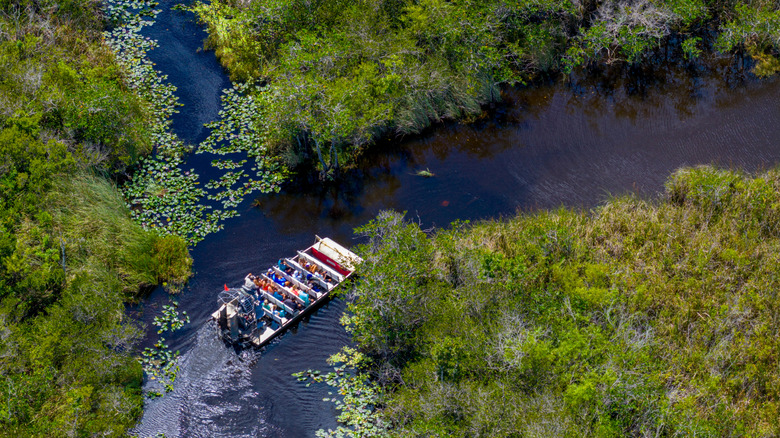
Visitors have numerous ways to explore the Everglades and it is smart to book a few organized activities — especially if seeing wildlife is a priority for you. While many people just turn up to the national park and enjoy the nature freestyle, there are tons of fun tours around the area that are well-worth an extra splurge to have a one-of-a-kind memory.
One family who took a vacation to the Everglades said that these activities were the best parts of their trip, writing in r/NationalPark, "A few highlights were a mangroves kayak tour (LOTS OF GATORS!), sunset boat ride where we saw many dolphins and manatee, half day guided fishing tour- the guide also told us which restaurant we could take our freshly cleaned fish to cook and serve us."
People who are really keen on seeing as many animals as possible should look into one of the many airboat tours in Everglades National Park. These adventures can take you to less crowded parts of the Everglades where you have the chance to safely see wildlife up-close. Better yet, these excursions are often quite affordable, with some of the airboat tours through the Everglades costing around $30 for the opportunity to see wild turtles, alligators, and more on Get Your Guide. The National Park Service also has options for airboat tours and other guided experiences.
Store all your food and supplies properly
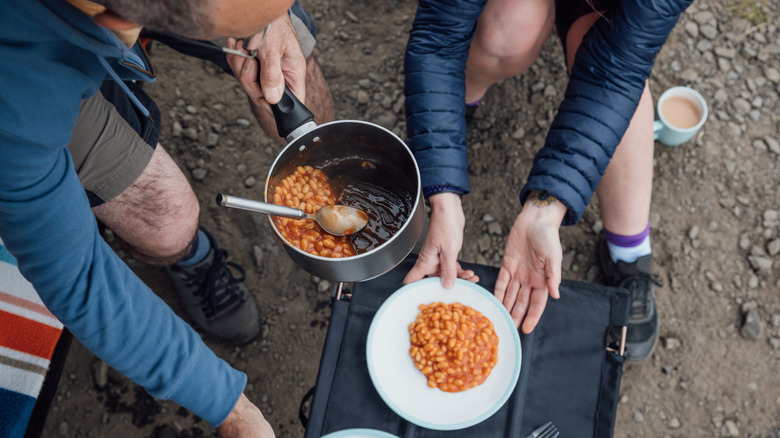
Camping is an amazing way to really get in touch with nature in the Everglades since it can feel like a completely different place after the sun goes down. Wilderness camping in Everglades National Park is allowed as long as you have a valid permit. Or, you can opt for frontcountry camping at Flamingo Campground and Long Pine Key Campground, both of which offer sites for tents and RVs as well as different amenities like flush toilets, showers, and grills. Whichever option you choose, you need to take an extra level of care to keep your campsite safe.
One of the most important considerations is food storage. With so many hungry critters running around, even the slightest mistake in this department can invite an unwanted guest. One person in r/Camping said that you want the scents of your food to linger as little as possible, explaining, "Use your cooler for food only and you should only open it at meal prep time. Get in, get your food and shut it back up as quickly as possible."
The Food and Drug Administration also advises campers to keep their meat items separate from other items, and store everything at below 40 degrees Fahrenheit in a sealable cooler. This not only helps with scent but also ensures your food is safe to eat. In addition to food storage, the National Park Service suggests taking a few more precautions to ensure animals aren't attracted to your campsite. This includes things like never giving animals food, getting rid of your garbage immediately, and not tying things up to the trees. It's also advisable to think beyond just food items and secure anything with a scent that could attract animals (including personal toiletries).
Be careful when visiting with kids
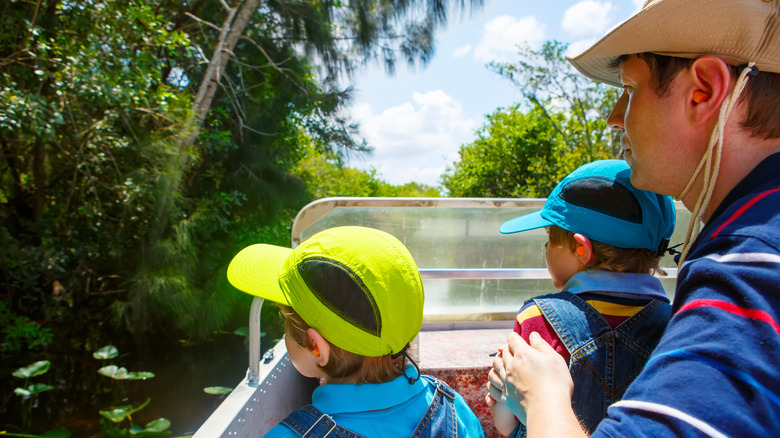
Yes, you can definitely bring the kids to Everglades National Park. This wonderful escape into nature can teach little ones so much about wildlife in an engaging way that might even have them begging to come back. One person broke down the appeal in r/NationalParks, saying, "Everglades is PERFECT for kids. You will see tons of wildlife and the activities are easy. What to do depends on where you plan to go to Shark Valley definitely take the little trolley ride to the dome and look out for ranger programming. There are also fan boat tours nearby in Everglades City. It's extremely fun." The park even offers a program that lets the kids really get involved by becoming junior rangers.
That said, even though this environment can be a natural wonderland, it can also be extremely volatile in many ways. You really have to keep a close eye on kids, because it is very easy to get lost among the thick greenery — and it only takes a second to lose your way. Young visitors can be much more vulnerable to predators in the Everglades as well, so that's double the reason to be extra cautious when you're wandering around this area as a family unit. While safety should be at the forefront of your brain, don't let that worry you so much that you avoid the national park altogether. It's still definitely worth visiting with kids.
Help keep the land pristine by leaving no trace
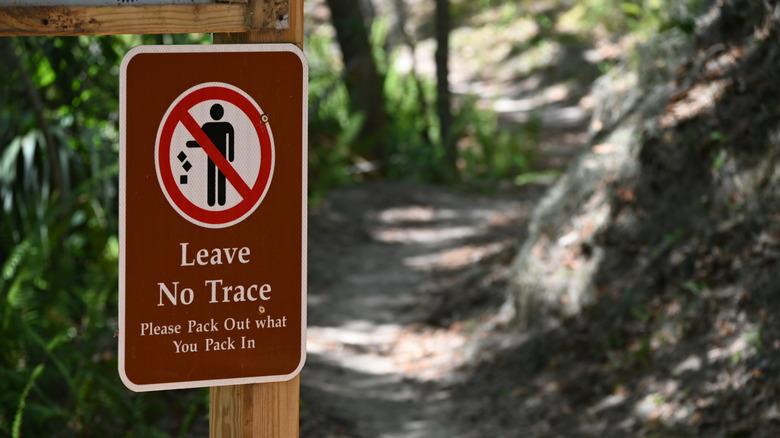
The land of the Everglades has been around for thousands of years and was established as an official national park in 1947 as a way to keep the area's nature as immaculate as possible. There are lots of people and programs who help maintain this dream today, but it's also the responsibility of every visitor who steps onto the land. While there are numerous ways to do that, one of the most simple and effective is a policy called "Leave No Trace."
A golden rule for visiting any protected natural area is that you should always try your best to leave it exactly the way you found it — and that's the expectation when visiting the Everglades as well. The National Park Service has guidelines on exactly how to abide by leaving no trace, which includes things like properly getting rid of your waste products responsibly and cleaning up your fire if you're camping.
One person broke down the deeper reasoning behind this mentality in r/hiking, saying, "'But it's just one carving' or 'but it's just a small stack of rocks' is stuff I hear all the time. Yes, you did one small thing, but you're not the only person hiking here. If every hiker does 'one small thing' it'll take one season and the whole area is altered, add a few years or even decades and it's not recognisable anymore and you destroyed the reason people enjoyed this area to hike." They're completely right — it's tiny actions like these that will either help keep the Everglades thriving for another few thousand years or destroy it forever.