
9 Common Traveler Complaints You Should Know Before Buying An Amtrak Ticket
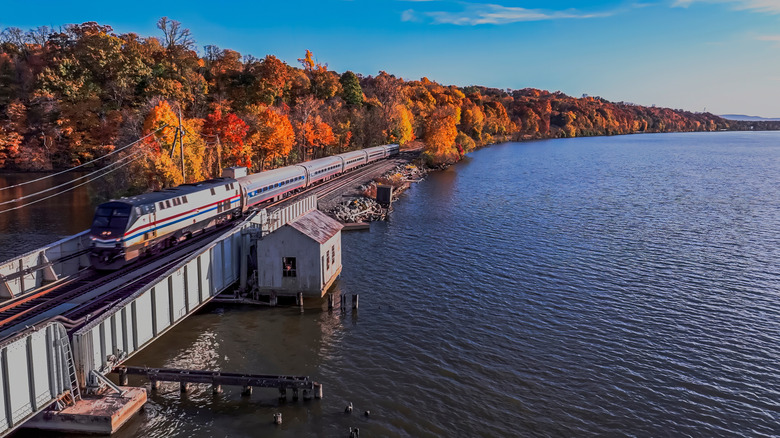
From a dreamy train ride up the California coast to a rugged journey from Chicago to the Pacific Northwest, taking an Amtrak train can be an exciting way to travel. However, that doesn't mean it's perfect. From time to time, people who choose to take the Amtrak system either for leisure travel or for daily work commutes run into problems. Here, we look at nine common traveler complaints you should know before buying an Amtrak ticket.
If you still decide this is the right mode of transit for your next journey, we'll also provide helpful tips to make your trip more enjoyable. As with many travel frustrations, proper preparation ahead of time can alleviate a lot of issues. If you go into your Amtrak trip with the right mindset, you're much more likely to have a positive experience.
To put together this guide, we used the official Amtrak website for details about company policy, as well as first-hand accounts from Amtrak passengers on Tripadvisor, Reddit, Quora, Threads, and Facebook. We also used blogs like Backroad Planet and Zadrails to assist with certain pieces of information.
Delays are more frequent than you might expect
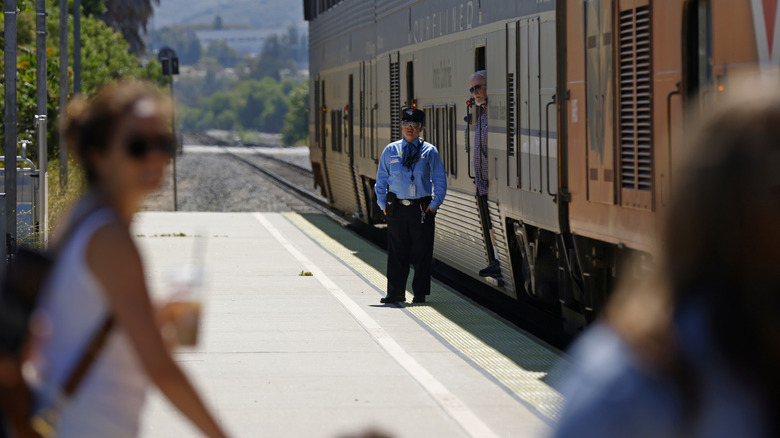
Sometimes people assume that train travel will be less prone to delays than flying, but that isn't always the case. One major reason for this on Amtrak is that the train line uses many "host tracks" owned by other companies rather than owning and operating all of its own tracks. In fact, over 70% of the lines Amtrak uses are owned by other companies, according to a 2021 report by the ASCE. Although federal law dictates that Amtrak's passenger trains should have priority over freight cars, freight delays remain a huge issue. In 2024 alone, freight trains delayed Amtrak passengers by an astounding total of 850,000 minutes!
Around the web, Amtrak passengers lament late trains on a frequent basis. One Reddit user remembered a time when "I was on a train about two years ago that was 16 hours late at Minot, eastbound." Another Redditor recalled "the southwest chief being 30 hours late" to a stop. It's worth noting that long-distance Amtrak trips are more likely to be delayed than shorter routes. There are simply more variables to account for on longer journeys.
Fortunately for travelers, Amtrak does make an effort to pad its schedules so that "pinch points" — spots on a route where delays often happen — are accounted for. Basically, schedule padding means that the train operator allows for certain delays throughout the trip while still planning for an on-time arrival at the final destination. One Redditor experienced effective padding firsthand on an Empire Builder train, sharing that, on two different trips, they were delayed but "both times over the course of the trip we made up time and got to our destination exactly as scheduled."
Ticket prices fluctuate
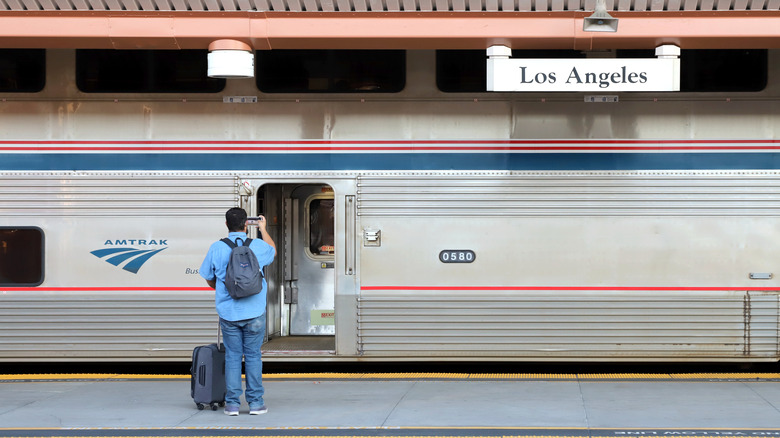
If you're used to buying commuter rail tickets on MBTA, MTA, or another local line, you might assume that Amtrak tickets will also be priced about the same whether you buy them today or in a few weeks. That's not necessarily the case, though. Amtrak functions more like an airline than a commuter train system when it comes to pricing. One Threads user posted that they've "never seen public transportation pricing as volatile as Amtrak's. The magnitude and frequency of train price changes is wild!"
One reason for the seemingly constant fluctuation is that Amtrak sells seats at different fare levels. Once inventory in the least expensive pricing bucket is sold out, travelers will automatically be kicked to a higher-priced bucket. Thus, two passengers in the same row on an Amtrak journey could have paid two different prices for basically the same seat. The time of year can also play a role. Someone on Facebook pointed out, "Southbound more expensive from October December. Northbound from April-June." Part of this may be due to seasonal travel, but it's important to note that October through December coincides with many U.S. holidays as well (which also affects pricing).
As of early 2026, Amtrak now uses cost-adjustment algorithms and passenger-demand data to alter prices at any moment. The goal, much like on airplanes, is to lower prices on trains that have lots of empty seats in an effort to fill them, while raising prices on popular routes that are likely to sell out despite the cost. One Reddit user experienced this in real time when their ticket price kept changing from $135 to $150, seemingly at random. If you're nervous about getting the cheapest rate on your next trip, check out our tips for scoring the most affordable Amtrak tickets.
The best seats sell out quickly
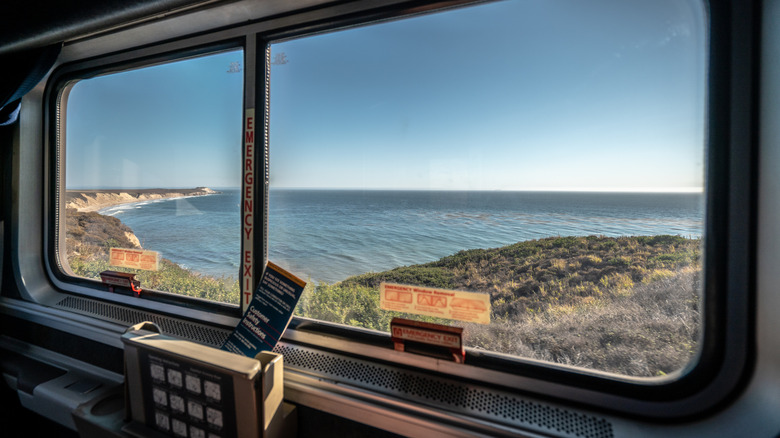
Among the greatest perks of train travel is settling in and watching the gorgeous scenery roll by, like on the California Zephyr that crosses seven states during its incredible cross-country trek. However, because having a good view (or a sleeper compartment on long trips) is a huge part of the appeal, the most desirable Amtrak seats tend to sell out quickly. Per Amtrak's official policy, tickets become available 11 months ahead of a trip. If you know your travel plans that far out, book as early as possible.
This is paricularly important if you know you want a specific type of accommodation, like a roomette with a bed. However, sleeping accommodations are limited, and once they're gone, it's quite likely that none will open up again. Price is another reason to book early no matter what type of seat you're interested in. As one commenter on a Reddit thread seeking advice about a particular route noted, "Book as far out as you can, assuming you're confident. Looks like that route starts at $139 but can go up to over $300 or so if you're booking last minute."
Even standard Amtrak seating can require some strategic planning. One Redditor was disgruntled that they couldn't find available seats on a train their friend had previously booked, and a commenter noted that a sold-out train having seats open up "when it benefits you is a gamble." Additionally, some people become frustrated when Amtrak's booking algorithms sometimes hold certain seats for people taking longer routes, rather than opening them up for those who want to get on and off at stations mid-way through the journey. A Reddit user called it "unethical to lie and say the seats are sold when clearly they are not."
Checked baggage isn't available at all stations
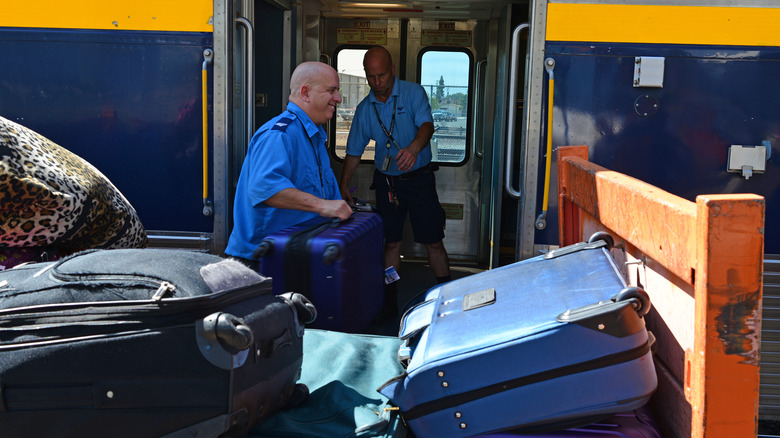
Although Amtrak's ticket pricing works similarly to how airlines operate, its baggage policies are somewhat different. While airlines may have never-ending baggage fees, some Amtrak routes don't offer checked bags at all. For checked baggage to be an option, both your departure and destination stations need to have the proper facilities and personnel. If you are able to check bags, though, the price is right! Two bags that meet size requirements and weigh up to 50 pounds are free, while additional baggage (including oversized) is just $20 per piece.
When you're planning, confirm that both stations allow for checked luggage on your specific route. If checked baggage isn't available, you'll need to bring your suitcases aboard, so make sure they meet carry-on size requirements. Most of the time, overweight baggage needs to be repacked so it's under 50 lbs, per the Amtrak website. Some Reddit users noted that they were still able to bring their larger bags aboard — warning that you still need to be cognizant of where you store them. One Redditor noted, "I got in trouble for this because the guy whose seat backed up to mine couldn't recline his seat!" Amtrak may also charge you that same $20 for excess bags.
In other situations, though, passengers have been called out for their baggage. One person on the AmtrakTrains.com forums dealt with an unfortunate scenario in which their suitcase was erroneously called out as too large, even though it met size requirements. They referred to it as "a humiliating experience, and I don't think I will ever go through that again." If you do check bags on an Amtrak train, make sure you research the drop-off and pick-up process and keep your claim ticket handy.
Catching connections can be risky
If you're building an Amtrak itinerary online, it might seem completely reasonable to add connections. In practice, however, a tight connection window can be extremely stressful if your first train gets delayed for any length of time. As we've mentioned, delays are not at all uncommon, particularly on longer Amtrak routes when connections are generally most necessary. In a New York Times article about the train operator's frequent delays, mass transit expert Madison Feinberg said that a significant portion of Amtrak's tracks are from the 1930s, and fixing issues is "effectively playing Whac-a-Mole, which Amtrak's team is very good at."
One person on Reddit was considering their first Amtrak journey with only a 30-minute layover connection and shared they were "a bit wary since I know that Amtrak can have issues with being on time." In another Reddit conversation, a traveler was frustrated that they were given multiple answers from Amtrak staff about how a missed connection would be dealt with. In one post, they wrote, "Some people say I would just get a voucher. Other people saying no I would get refunded the difference."
Some other Redditors said that Amtrak will generally take measures to get you to your destination if your journey was sold as a single itinerary, and you missed your connecting train due to a delay. Other travelers have reported that they've gotten booked on the next train out or, in severe cases, given a hotel overnight and a ticket for a train the following day. If, however, you arranged your own connection, you might simply have to buy another Amtrak ticket.
Wi-Fi and cell service can be spotty
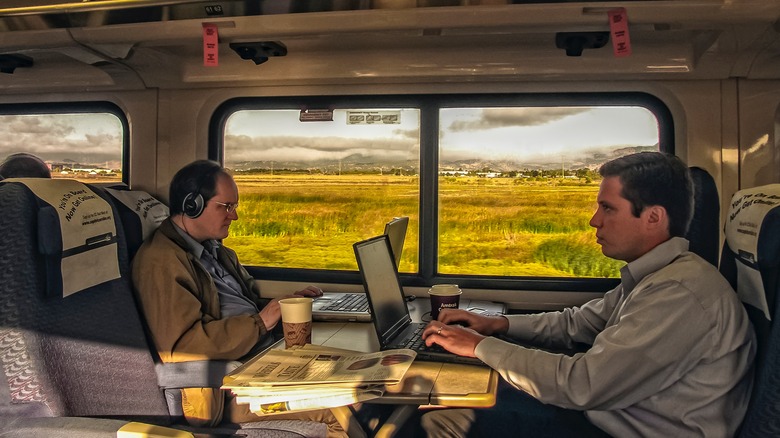
While some modern travelers are intentionally visiting destinations without Wi-Fi in 2026, there is something appealing about settling into your Amtrak seat, pulling out your laptop, and having several uninterrupted hours to work. Unfortunately, rail travelers in the United States can't always count on having reliable internet access during their train journeys. Both Amtrak's complimentary Wi-Fi service and cell phone coverage can be extremely inconsistent.
A passenger on Reddit even went so far as to call the internet "horrible. Constantly going in and out, couldn't keep a solid connection." This is largely because Amtrak's Wi-Fi relies on the availability of cellular networks. As trains cut through the Great Plains, around the rural Midwest and South, and across other remote locations nationwide, cell service coverage is not always consistent, which means the internet onboard becomes spotty, too. On Facebook, one person noted that service can be especially dicey "on the trains west of Chicago, where cell connection is spotty or nonexistent."
Amtrak makes clear that its current Wi-Fi is meant for activities like web browsing, not streaming movies, listening to music, or other high-bandwidth tasks like video editing. The best solution is to download any media you know you'll want during your journey beforehand. Movies, TV series, and music files can all be added natively to your tablet, phone, or laptop. In regard to work, try to save some tasks you can do without internet access for your train ride.
Staff can be impolite
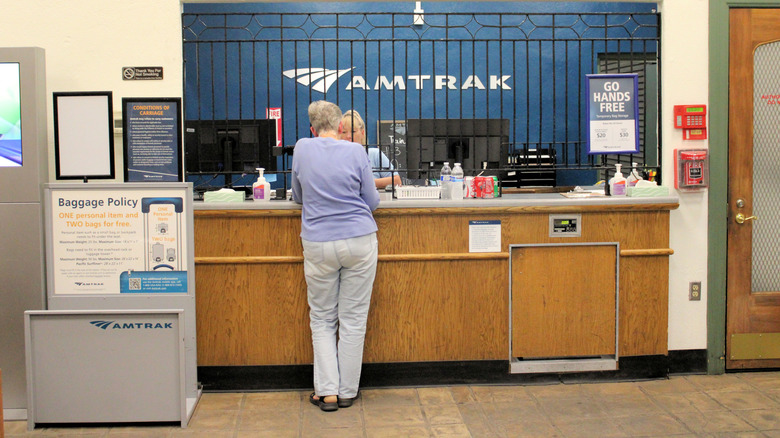
The quality of Amtrak's customer service, unfortunately, does not have great reviews from past passengers. On the Trainorders.com forums, one rider wrote that in Boston "there is a woman at reception who is just flat rude ... I have complained, nothing has changed." Another person on Reddit had a poor experience with an agent at a New York City station when they paid $20 for their suitcase to be stored before a later train. They explained, "The same clerk told me it would cost $20 to get my case. I told him I'd already paid him in cash earlier. 'Oh, I thought that was a tip, because you don't pay until you get your bag back' ... I feel like he took advantage of me not knowing how their system worked."
The issues extend to staff interactions on the trains themselves. A Tripadvisor reviewer shared that she found a supervisor on her train to be "very rude, nasty and unprofessional." Back on Reddit, a California passenger shared a tale in which "the conductor was screaming at us" about an upset two-year-old toddler in their travel group. In that case, Amtrak later confirmed to the rider that "the behavior was unacceptable."
Yet another traveler on Tripadvisor had bad experiences with the company's call center agents on multiple occasions. After forgoing Amtrak due to "rude" team members, they "received a smart mouthed reply again" when they were reconsidering train travel. Bear in mind, of course, that all customer service interactions are subjective and people have also reported plenty of positive experiences with Amtrak staffers. If you ever have a negative encounter with an employee on an Amtrak train or in a station, the best recourse is to file a citizen's complaint.
Not every station has expected amenities
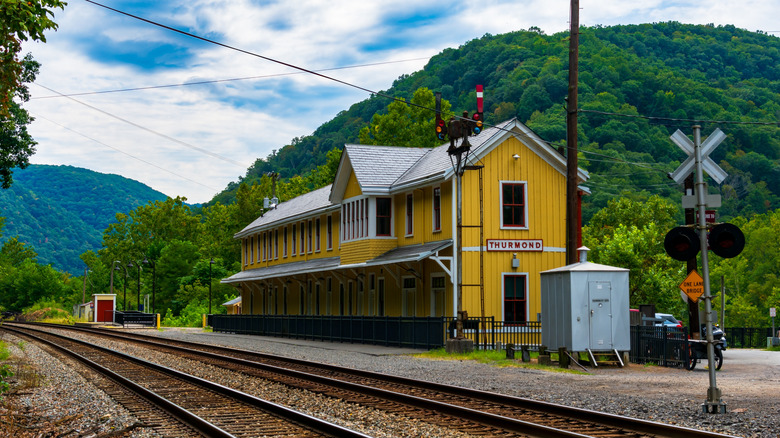
When many people think of train stations, they immediately think of places like New York City's Grand Central Station or London's beautifully modernized St. Pancras Station. Certain Amtrak stations, though, are significantly more bare bones, lacking airy waiting areas, restaurants, and sometimes even bathrooms. One Facebook user decried Amtrak's Fort Edward, New York facility, asking, "How is legal to not have a bathroom available at a station?" Another Facebook post shared "the loneliest Amtrak station in California," which is nothing more than a tiny covered bench by the beach with no other structures in sight.
This dearth of amenities can create problems for travelers who are expecting to purchase food or coffee, use the bathroom, or wait inside (out of the elements). On Reddit, a user questioned, "Why don't more train stations have a little coffee shop / cafe?" while citing Chicago's Union Station as the blueprint for what Amtrak stops should be. Other commenters pointed out that this isn't practical in many situations, as smaller stations don't have the passenger volume that would be required to sustain dining and shopping establishments.
Accessibility has long been another issue at Amtrak stations. Disability advocates and nonprofit organizations like the National Disability Rights Network (NDRN) have fought for change at passenger rail stops, and they are finally making headway. In 2026, Amtrak confirmed that more than 160 stations have now been remodeled with full accessibility in mind to better accommodate passengers with disabilities and their caregivers. So things are definitely looking up in this department.
Cancellation and change policies vary by fare
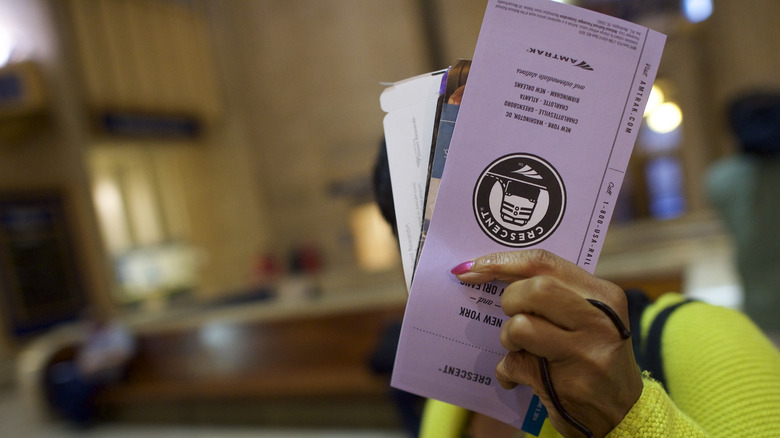
If you're new to the Amtrak system, you might assume that the company has a single cancellation and change policy for all types of tickets. However, this is not strictly true. The company offers multiple fare types, each with its own specific rules regarding itinerary changes, cancellations, and refunds. It's important to know exactly what kind of train ticket you're buying, especially if your travel plans aren't set in stone.
Even if you're not a first-timer, but it's been awhile since you took an Amtrak ride, you might find that the rail line's policies may be a little different than what you remember. Major changes introduced in 2018 and again in 2020 resulted in previously unheard-of change fees, as well as new low-priced ticket tiers that do not allow any changes more than 24 hours after the purchase is finalized. At the time when the 2018 changes took place, passengers were extremely frustrated. One Redditor called out company leadership, writing, "I can't think of a less consumer-friendly CEO in the business."
Again, Amtrak's ticketing is similar to airlines when it comes to changes and cancellations. In general, the less expensive the fare, the fewer options a passenger has to make alterations. Although the rules are rather complex, and there are many caveats you should research for your particular ticket type, these are the basics: If you have to cancel or change your Amtrak travel plans, you may qualify for a full refund, receive an Amtrak eVoucher for future travel, or have a cancellation fee deducted from your pro-rated refund. Contact Amtrak directly with questions about the ticket you're planning to buy.