
Unwritten Rules You Should Know Before Visiting Pittsburgh
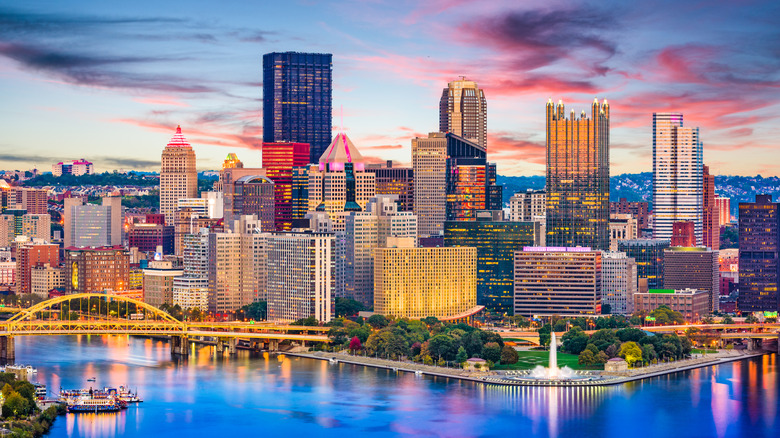
Surrounded by picturesque hills with its downtown nestled at the confluence of three rivers, Pittsburgh is affectionately known as "the Paris of Appalachia." It brims with green spaces and historic sites, with 176 parks, including a new public art and recreation destination called Arts Landing, complete with artist-designed pickleball courts. That's no outlier, either — Pittsburgh brims with artistry, from the funky Randyland artist environment near the city's walkable "Mexican War Streets" to The Andy Warhol Museum, one of four world-class Carnegie Museums. Getting around Pittsburgh can be a memorable experience with its numerous tunnels, Inclines, and hundreds of bridges, but fortunately, locals have plenty of great advice about how to travel the area, understand the local culture, and enjoy the city to its fullest.
Below, explore 12 tips from Pittsburgh locals that delve into how to have a great visit, plus things to be aware of. In addition to the author's experience visiting the city during a road trip, we've referenced regional tourism sites, news sources, blogs, vlogs, Reddit threads, and more. We've also consulted visitor reviews and ratings for specific attractions and destinations to make sure we're highlighting the best and most unique to Pittsburgh. From the city's best food spots and cultural experiences to architectural heritage and spectacular views of its distinctive downtown, read on for lots to see and do and the unwritten rules that will help you make the most of it.
Pronounce local places like a true Yinzer
"What are yinz doing? Going dahntahn?" In Pittsburgh, you'll likely clock a specific dialect that locals use. It comes out when they're describing everything from food to other local communities, shares a Redditor: "You'll see some surrounding towns that you think you know how to pronounce ... but never doubt western Pennsylvania. Mt. Lebanon [is] pronounced Leba-nin ... North Versailles is Ver-sayles." Locals Christina and Monica of QueeryUs note that the delicious Greek sandwich in a pita called a gyro is usually pronounced "jye-ro" rather than "yee-ro."
Backing up just a little bit, though, what's a Yinzer? That's a name for a proud Pittsburgher. It's derived from the local word "yinz," which means "you all" or "y'all." They speak what's known locally as "Pittsburghese." According to YinzerShop.com, even the city's name comes out sounding more like "Pixburgh." And the beloved local NFL team? It's commonly referred to as the "Stillers" rather than the Steelers. Yinzer speech also includes some phrases not heard in many other places, like "redd up," which means to clean or tidy up. A "buggy" is a supermarket shopping cart, "worshing" is what you do to clean your face and hands, and a "jagoff" is someone who's being a pain in the neck.
Pittsburgh is friendly but insular
This may not come as a surprise to anyone who has lived in a particular place for a long time and knows its community well, but Pittsburgh's longtime residents are usually very close with one another. "Pittsburgh is friendly but insular," shares a Redditor, who adds that locals tend to build their friendships early on and stick with them. "You'll be greeted warmly and treated very nicely, but don't expect an invitation to socialize. You might be able to join a group, but you'll always feel like an outsider (and subtly but definitely treated like one)." In a Quora discussion, a resident named Nicole adds that in addition to being courteous and helpful, "we're a big city with a small town atmosphere."
Friendliness is a characteristic you'll encounter throughout the city, and you may even chat with people on buses or in line at the store more than you're expecting. "People will talk to you more than you're probably used to," shares a resident in the same Reddit thread. Another adds, "We're kind of a mix between the Midwest and Appalachia, so many people will immediately act like they've known you for 20 years." Whether you're attending a sports event or simply ordering lunch at a local deli, enjoy the small talk.
Mind your manners around the cookie table
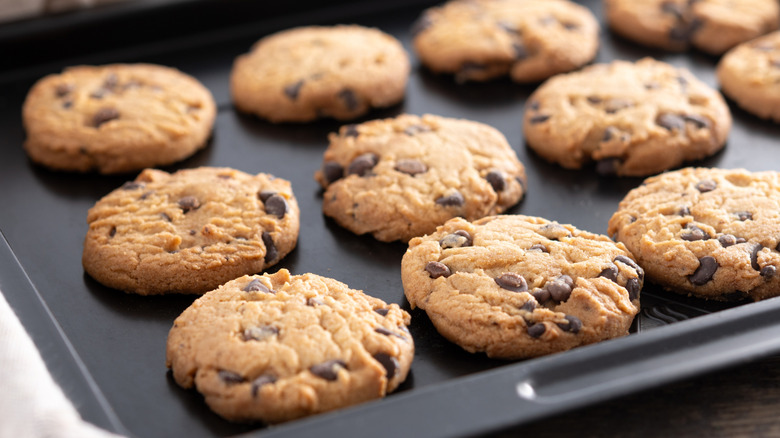
While it might sound like a playful metaphor, the cookie table is a literal thing and a staple of Pittsburgh weddings. If you're heading to a local nuptial celebration, keep an eye out for the tradition, which is essentially what it sounds like: a spread of delicious baked goods. We're not talking just a little side table with a tray or two, though — expect a buffet-style selection with a variety of styles and flavors. A few trays of well-loved family recipes are popular at smaller weddings, while larger parties may include thousands. Make sure you get one or two while you can, especially as the party winds down. "Sometimes they'll give you takeout boxes for the cookies, sometimes they won't," shares a Redditor. "Just make sure you grab some before the hotel staff starts grabbing them."
Pittsburgh's rich immigrant history has something to do with the tradition, and it continues to influence the city's vibrant culture today. According to Lizzie Diller of Mt. Lebanon Magazine, the tradition may have emerged during the Great Depression, when European immigrants whipped up economical recipes because it was more difficult to afford a cake. "Many of the cookies were, and are, made from scratch using favorite family recipes," Diller says.
Be wary of GPS downtown
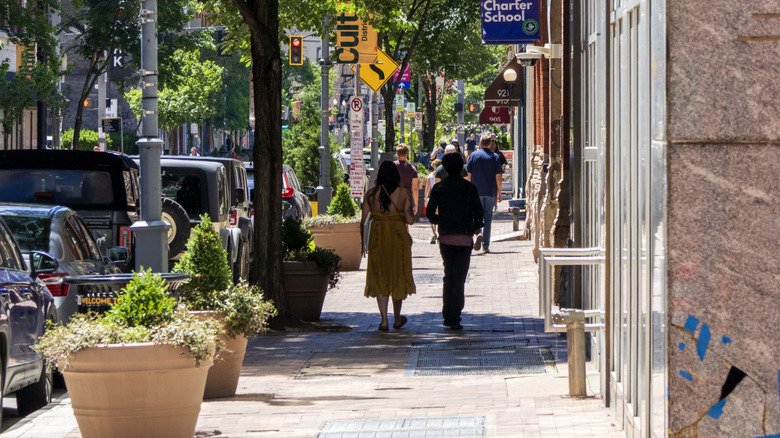
With three converging rivers and lots of bridges and hills, downtown Pittsburgh can be a quagmire for navigation, and it even trips up GPS from time to time. One Redditor notes that especially when downtown, their GPS sometimes thinks they're in the river instead. Another adds, "The disjointed nature of the roadways throws GPS for a loop — especially downtown. By the time it catches up, you're off to Monroeville." Part of the reason for this is the complexity of the city's roadways and intersections. "You could be on Route 65 going north and want to get to 79 North, but it's an intersection!" shares local radio personality Bonny Diver in Pittsburgh Magazine. "How can two highways that are both going north have an intersection?"
Despite gridded streets downtown and in some neighborhoods, routes can feel disjointed, or exits and turns come up surprisingly quickly. GPS might not be able to catch up, and by the time you notice you were supposed to turn, it's too late to change lanes. Numerous intersecting interstates, U.S. highways, and state routes crisscross the city through its handful of tunnels and 446 bridges. Fortunately, the rivers, hills, and architectural landmarks also help with visual navigation so you can at least figure out what direction you're facing.
Don't leave town without tasting homemade pierogies
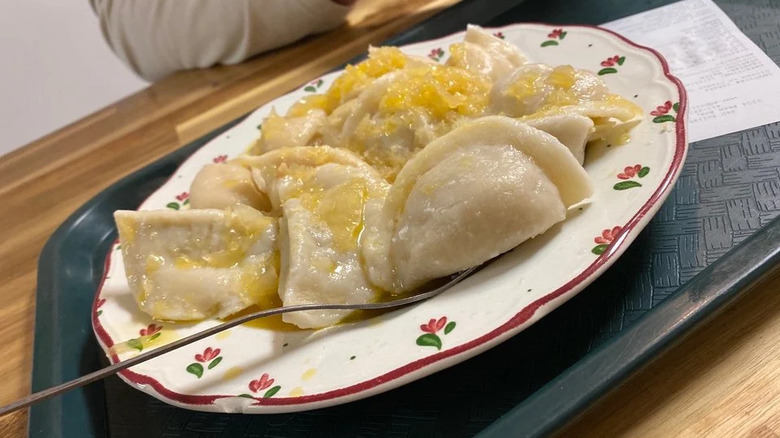
There's another reason to admire Pittsburgh's diverse immigrant heritage, especially when it comes to food. Pierogies are traditional Polish dumplings made with mashed potato- and-cheese-filled dough, often served with butter and caramelized onions. They're ripe for infusing with different flavors, too, and they're scrumptious with some sour cream on the side. Fortunately, Pittsburgh's residents of Eastern European descent are carrying on the custom in the city, and a comforting lunch at a deli is a must during a visit.
One of the best-known spots in town is S&D Polish Deli in the Strip District, which is a go-to for a range of Polish food near downtown. You can purchase pierogies fresh on a plate to enjoy at one of the outdoor tables or grab them to go. It's all in the name at Pierogies Plus, which is located just northwest of downtown in the suburb of McKees Rocks. Some of the best, though, come from what may seem like a surprising source: local churches. Volunteers at Holy Trinity Ukrainian Catholic Church serve them during lunchtime on Fridays and Saturdays, and you can also purchase them from St. Vladimir Parish. Church websites publish their pierogi schedules online, and may not serve them all year, so check websites for updates before heading over.
Don't be surprised by the Pittsburgh left
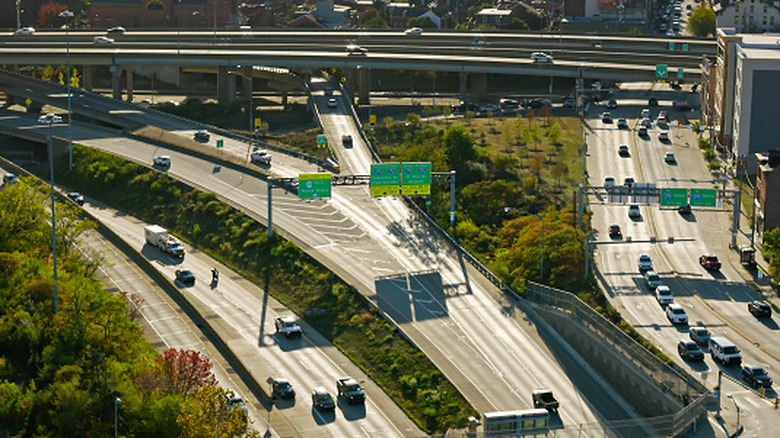
Pittsburgh is infamous for its challenging intersections, which large vehicles can find especially difficult to navigate. Due to its riverine, hilly geography, not to mention historic urban designs that have had to be updated over the decades to incorporate major highways, Pittsburgh's roadways have a reputation for being quirky. Former Uber driver Jakob Lazzaro tells the City Cast Pittsburgh podcast, "The white lines here at a lot of the intersections in the city are way, way back from the intersection." He emphasizes that you really do need to stop behind those lines to allow traffic to turn, sometimes from weird angles.
According to law firm Shenderovich, Shenderovich, & Fishman, some of the most treacherous intersections include Boulevard of the Allies and Bates Street, plus McKnight Road and Siebert Road, among others. Be prepared for what's known as the "Pittsburgh left," which occurs when someone takes a left turn in front of oncoming traffic going straight rather than waiting for that traffic to clear first. With unusual angles and congestion, it can be hard to know what to do in the moment, but one trick is to always remember that driving is, in a sense, a social activity. If a driver in oncoming traffic stops and flashes their lights at you as you're waiting to turn left, that's your cue to move.
If there's a chair in the parking spot, go elsewhere
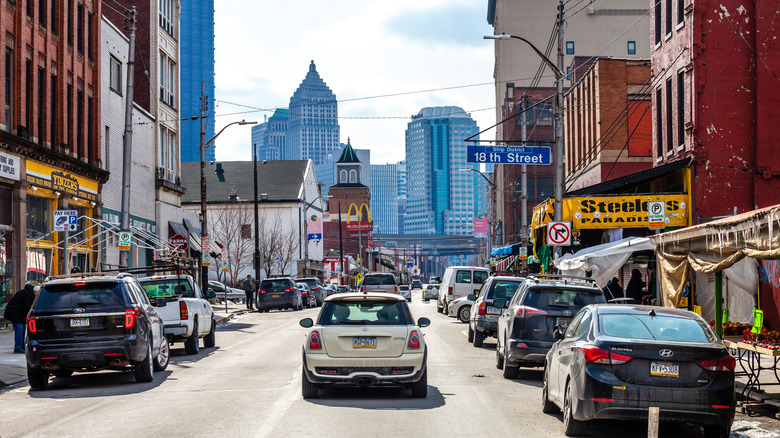
You may be catching on to a theme when it comes to Pittsburgh drivers — there are a lot of quirks. Yet another comes in the form of a time-honored parking reservation system. It may be informal, but it's taken seriously. "Technically, by law you can't reserve a public parking sport with a chair, but they are generally tolerated by the police who respect the 'code of parking chair,'" Janice Lane Palko shares on Positively Pittsburgh.
Especially in the winter, when residents have dug themselves out of parking spaces they would like to return to after shoveling, they'll mark the space with a chair — usually a plastic lawn chair or something similar, nothing fancy. "Whatever their form, it's the function that matters: you have to honor the sanctity of parking chair dibs," says Francesca Dabecco on City Cast Pittsburgh. Essentially, if you're new to the city, it's important to remember that these chairs serve a purpose and aren't being left out on the curb, so to speak, as if they're free to take. It's your cue to find somewhere else to park.
There's an etiquette to sports jerseys
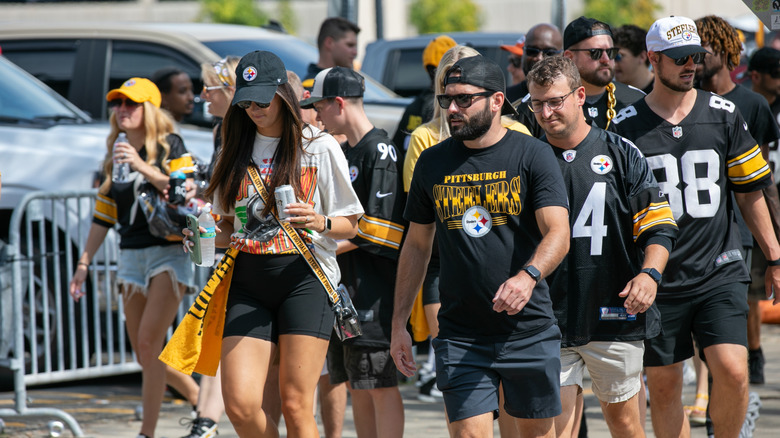
Any city with a major sports team will have a subculture like no other. The Pittsburgh Steelers are to this so-called "City of Champions" as the Packers are to Green Bay — a place where tailgating is on every football fan's list. They even share a star quarterback in common: Aaron Rodgers played for the Packers through the 2022 season. He signed with the Steelers in 2025. Pittsburgh is also home to the Pirates, its Major League Baseball team, and the Penguins, its National Hockey League team. Then there are the college sports teams like the Pitt Panthers, playing Division I football. With all of these and more, it's perhaps no surprise that Pittsburgh fans are the real deal. "Sports jerseys are allowed in church," shares a local on Reddit. "And funerals," another adds. But another points out, "If you go to a funeral, it's home jerseys only." If you're visiting the city on a game day, you'll likely see jerseys at every turn.
Local fans are also protective of their teams and fan identity. Ian Douglass shares on Movoto.com that some stereotypes occasionally prove true about Steelers fans, particularly regarding what he describes as "bandwagon fans" — those who claim to be fans of the NFL team because it's trendy when the team is having a good run rather than being real die-hards. Local fans will sniff you out in no time.
There's also etiquette to driving in tunnels
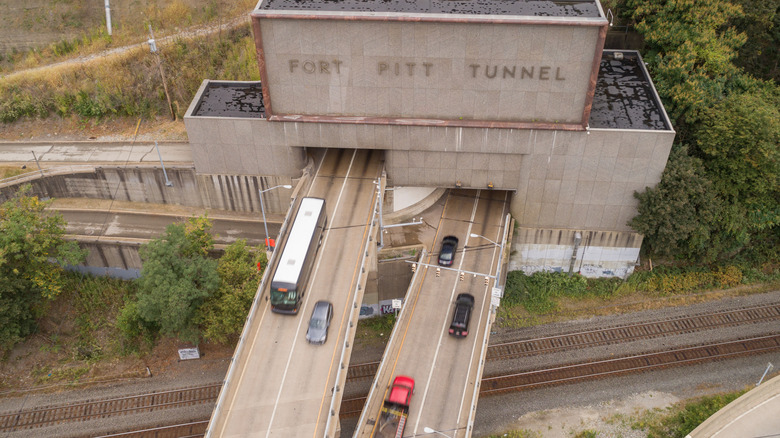
Another of Pittsburgh's nicknames may be the "City of Bridges," but it's also known for its tunnels, and there's a thing or two to know about cruising through them. Of course, depending on where you live or travel, tunnels may not be unusual, but they're a novel experience for many visitors. Pittsburghers drive through them regularly, and there are three major traffic tunnels motorists use to get to downtown and back: the Fort Pitt Tunnel, Squirrel Hill Tunnel, and Liberty Tunnel. There are lots more for railways and other purposes, but these are the ones you'll encounter if you're exploring by car. For a memorable view of the city skyline, an executive for the Pennsylvania Department of Transportation tells Pittsburgh Magazine, "The combination of passing through the Fort Pitt Tunnel onto the Fort Pitt Bridge provides a dramatic 'Pop!' to reveal our famous view."
During morning rush hour, traffic backups inbound to downtown are common. In the evening, the other direction can turn to gridlock as people head home from work. To stay safe and keep other drivers from getting on your case, "Don't brake before entering a tunnel," shares a Redditor. "Maintain your speed, your lane, and your sanity." Do the best you can when traffic is heavy. As a general rule of thumb in any tunnel, put your headlights on.
Make the most of gray days
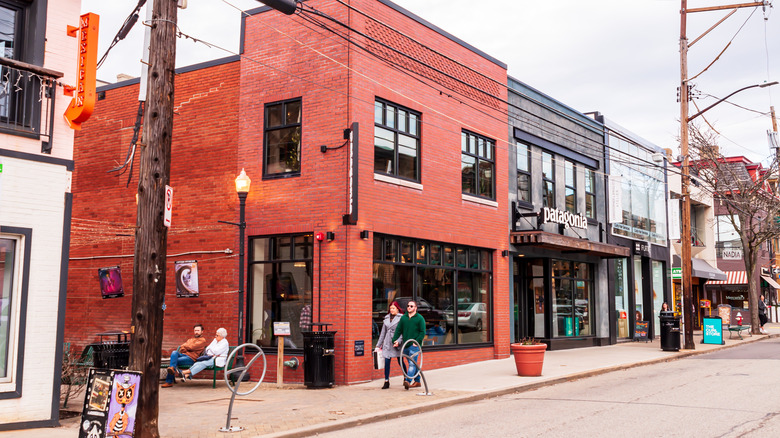
Although gray places in the U.S. might evoke visions of Pacific Northwest gems like Seattle, which can feel gloomy, Pittsburgh is also among the cloudiest cities in the country. The city typically sees more than 200 days with heavy cloud cover. If lack of sunlight tends to get you down, there are plenty of things to do and see around town to get your mind off it. See up-and-coming contemporary art at Mattress Factory, wander the halls of the Carnegie Museum of Natural History, or peruse works of art at the Carnegie Museum of Art, the "crown jewel" of Pittsburgh's museum scene.
If you prefer to be outside, make your way to the Phipps Conservatory and Botanical Gardens, go wild at the Pittsburgh Zoo, or head to Kennywood, Pittsburgh's iconic local amusement park. You'll also find some distinctive places, too, like Bicycle Heaven, which touts itself as "the world's largest bicycle museum and bike shop." There's even a museum exhibit dedicated to Heinz, whose food company was founded in the Pittsburgh area in 1869. The Nationality Rooms in the Cathedral of Learning at the University of Pittsburgh offer a glimpse into more than two dozen classrooms inspired by cultures from around the world, celebrating the heritage of the communities that helped shape Pittsburgh.
There's more to Pittsburgh than downtown
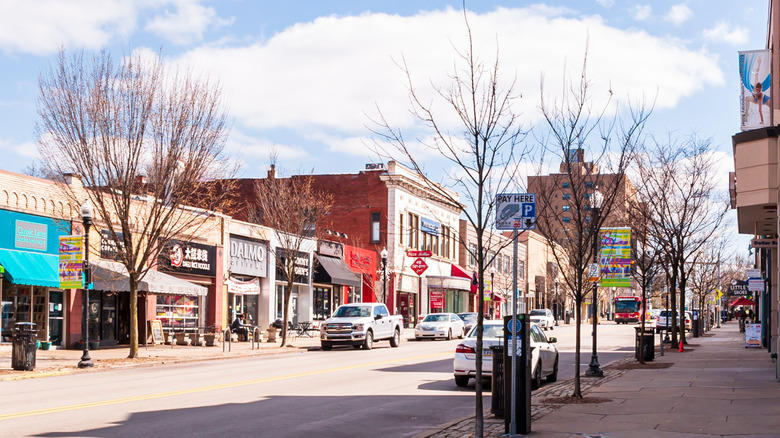
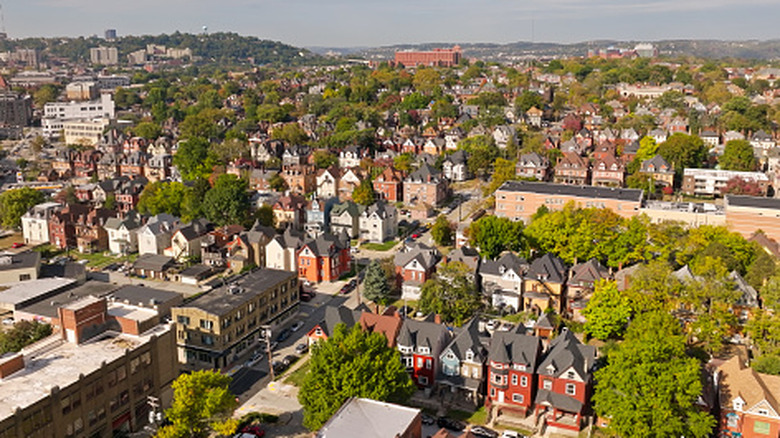
Even though downtown Pittsburgh is beautiful, and you'll find the historic Point State Park with its footprint of historic Fort Pitt adjacent to the Cultural District's theaters and restaurants, hotels, and more, there are also plenty more areas of Pittsburgh to explore — and you should. There are actually 90 distinct neighborhoods, so it's impossible to touch on all of them, but one idea to get you started, especially if you're short on time, is the Strip District, which borders downtown and features food shops and eateries. Grab breakfast at DeLuca's Diner, look around Wholey's Market, and take a guided tour followed by lunch at Wigle Distillery.
South of downtown, across the Monongahela River, ride either the Duquesne or Monongahela incline up to Mt. Washington for views over the city and several restaurants like The Summit. East of downtown, you'll find Oakland, Pittsburgh's "second downtown" with museums and restaurants and an unmistakable university vibe, which also extends a little farther east to Squirrel Hill, where you'll find one of the region's largest stores, Jerry's Records. Because there are so many to explore, and you may have to drive a bit to reach them, do your research ahead of time by checking the neighborhood guide on VisitPittsburgh.com before you arrive.
Think what you will of Primanti Bros., but at least say it correctly
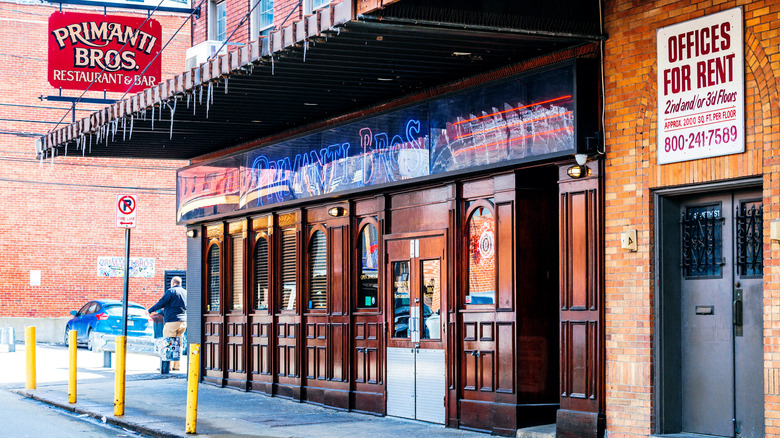
A local sandwich chain that's iconic to Pittsburgh and has been around since 1933, Primanti Bros. is often on the list of top things to do in the city, partly because it's one of the foods Pittsburgh is known for. But first things first: It's pronounced "Primanny's," and you don't have to say "Brothers," according to QueeryUs. The original location is in the Strip District, but there are now dozens of locations across Pennsylvania, West Virginia, Maryland, Ohio, and Florida, with nine across Pittsburgh alone.
Primanti's is known for a particular style of sandwich combining house-made coleslaw, tomatoes, provolone, deli meat, and — quintessentially — french fries. "The sandwich comes with french fries and coleslaw on top," QueeryUs explains. "If you're ordering it for the first time you're visiting the city, order it that way. Don't be a baby, just order it that way and try it. If you don't love it, that's fine — you do have to put hot sauce on it, though, that is the key." Opinions from locals are divided. One longtime resident writes on SomeRootsWander.com, "The whole sandwich ends up being a mess. The coleslaw isn't good, the fries are bland, and the Italian bread is dry and tasteless." Another visitor shares on Reddit that they're not sure what the big deal is. Is it overrated? Maybe, but it's an icon worth trying. One of the chain's other main draws is beer. They even produce their own beer, the Almost Famous Red Ale.