
12 Tips Straight From Park Rangers To Have The Best Glacier National Park Adventure
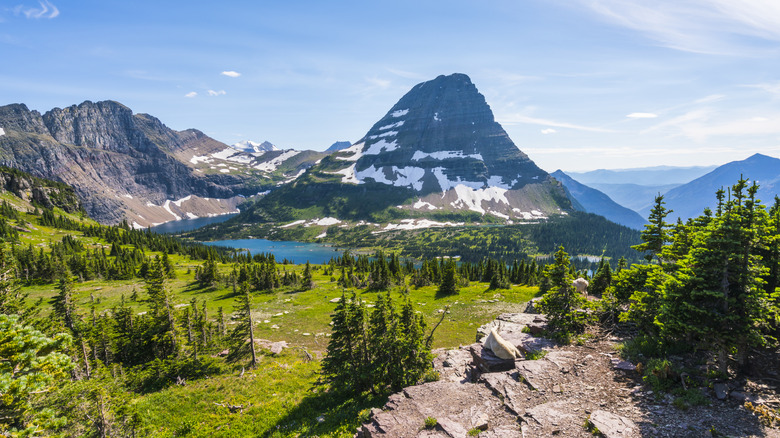
At 1,583 square miles, Glacier National Park is as expansive as it is beautiful. It's so stunning that it's known as the "Crown of the Continent," with 26 named glaciers and mountains that exceed 10,000 feet. It's a treasure of northwest Montana and the American West, where its trails, scenic drives, wildlife viewing, waterfalls, and glacial lakes are among some of the most beautiful places in North America. That said, there are some things that rangers would like you to know if you visit. Not only are there two distinct sides of the park, but it encompasses so much more than what most tourists see in the busiest areas.
Below, peruse 12 tips straight from current and former Glacier National Park rangers who have experience writing backcountry permits, maintaining trails, studying nature, and giving lots of advice. Some are named in formal articles and interviews, while others offer advice anonymously in national park-specific subreddits like r/ParkRangers and r/GlacierNationalPark. We've focused on tips that are specific to Glacier National Park rather than generic national park advice, but you'll encounter some tips that are still good to keep in mind more generally across the region, such as bear safety in the Rockies.
In addition to the author's experiences visiting both sides of Glacier National Park a couple of times, we've consulted YouTube videos, articles, and social media to find these specific tips from rangers. We've also researched NPS.gov, the National Park Foundation, and federal resources for official guidance.
Plan for Glacier National Park's seasonality
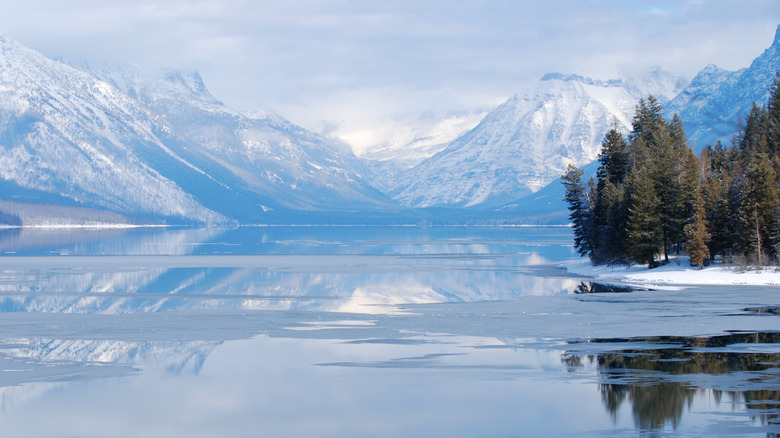
Due to its high elevation and northerly position, Glacier National Park is very seasonal. "The park pretty much shuts down, and aside from management and permanent caretaker staff there isn't anyone there," shared a former ranger on Reddit. St. Mary Visitor Center, at the east entrance, and Logan Pass Visitor Center in the middle of the park are both closed throughout the winter, while Apgar Visitor Center, located at the west entrance, is open only on Saturdays and Sundays. Going-to-the-Sun Road is typically plowed between West Glacier and Lake McDonald Lodge, but traffic doesn't have access anywhere beyond that — the unplowed parts of the road make for cross-country skiing routes during this time, and rangers lead guided snowshoeing treks on the weekends.
Expect late spring and early summer to be a bit wet. "June is the rainy month and then after that it tends to get hot and dry," shared the same aforementioned Redditor in another thread. Ranger Richard Menicke also noted in an article for National Geographic that "September is the best time to visit Glacier because the crowds are gone and the park is beautiful. You can feel like you have the place to yourself." Just be aware that it can start to snow as early as September, too, but that can certainly be seen as a plus if you love dramatic scenery.
Visit early in the season for snowmelt and dramatic waterfalls
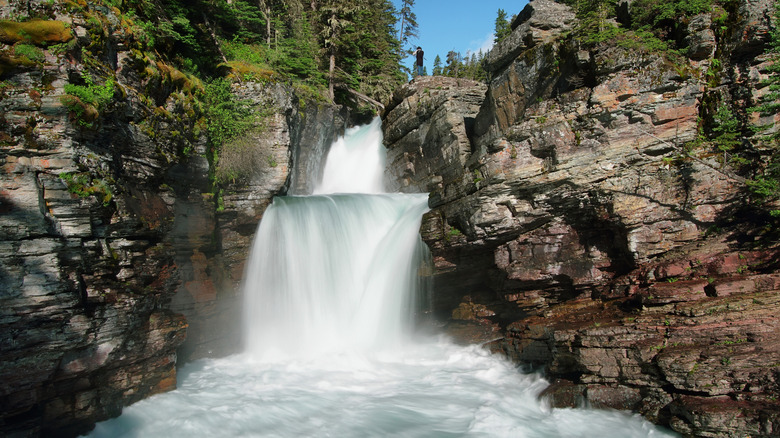
While June can be a bit rainy, it's also a remarkable time for seeing melting ice and snow turn into powerful mountain cascades, rivers, and lakes that appear to glow with silt and sediment known as "glacial flour." It's what gives the water its distinctive, teal color. "There's a beautiful waterfall area in the St Mary Valley, it'll be gorgeous mid-June bc of the runoff," shared a former ranger on Reddit who was accustomed to giving advice to hikers thanks to writing lots of backpacking permits. "Any waterfall areas are particularly nice that time of year."
St. Mary Falls is an icon of the eastern side of Glacier National Park, located beyond the western shore of St. Mary Lake. It can be reached via a series of relatively short trails, which can also carry on to the beautiful Virginia Falls. Then, there's the spectacularly turquoise Iceberg Lake, which is surrounded by stone cliffs and is known for its ice floes that break off into the water in the spring. It's reachable on a challenging but rewarding hike that covers 9.6 miles out-and-back from Iceberg-Ptarmigan Trailhead. "If needed (and safe to do so), head back with spikes or crampons and you'll see the namesake," the same aforementioned ranger added on Reddit.
Explore beyond Going-to-the-Sun Road
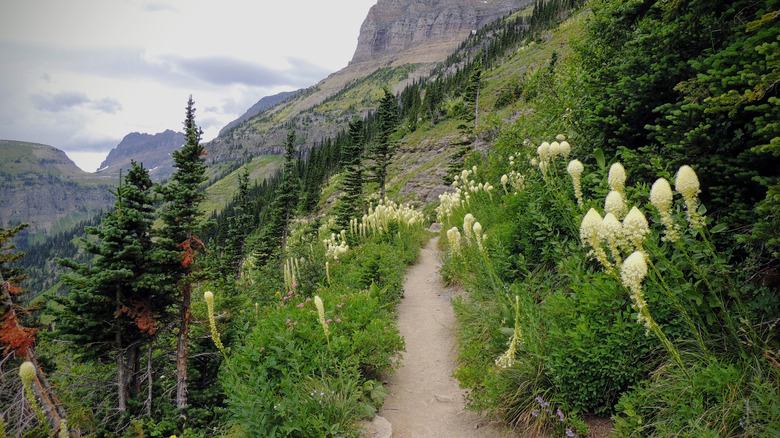
Going-to-the-Sun Road is a popular, gorgeous route that serves as the primary artery through Glacier National Park. It connects the east and west sides, linking all three visitor centers and passing over Logan Pass, which is the highest point reachable by vehicles. Overlooks along the way offer wonderful viewpoints over the mountains, but there's so much more to the park than this paved thoroughfare. "That road will take you to a lot of really unique hikes and spots that you can get to here in the park," said a ranger named Stephanie in an episode of Exploring by the Seat of Your Pants on YouTube.
Some of the most popular hikes are encountered at higher elevations, such as around Logan Pass, where you can stick a parking permit in your car that's good for three hours and head out. If you want to spend more time, there's also a ticketed shuttle, which was piloted for the first time in 2026. The Highline Trail is popular and challenging at nearly 12 miles one way. For something easier, Hidden Lake Trail starts right behind the visitor center. "You're hiking the whole way up these mountains, and you honestly don't see this lake until probably about the last quarter of a mile of that hike, so it truly is hidden on most of the hike," Stephanie added on YouTube. "You can really explore and hike to a lot of incredible places across the park, especially just off that Going-to-the-Sun Road."
Head into the backcountry to escape the crowds
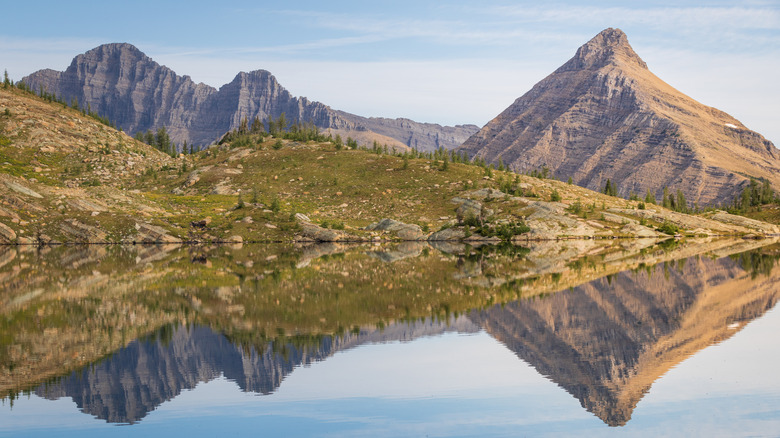
Going-to-the-Sun Road may be the easiest and most popular route through the park, but it's also very busy, and so are the easily accessible stops along the way. If you're looking to escape the hubbub, Richard Menicke said in National Geographic, "The most peaceful place in the park has to be the North Fork, where you really feel 'out there.'" It's located in the northwest part of the park, accessible via unpaved roads — no shuttles or park-led tours head here. The National Park Service sums it up well: "With limited amenities, the North Fork invites a self-reliant visitor."
Kintla and Bowman Lakes are surrounded by gorgeous peaks that may not have the stark drama of areas like Many Glacier or the Highline Trail's iconic ridge, but the tranquility harkens back to the feel of a few decades ago when annual visitation was considerably lower. There's some driving involved, but visitors have four primitive campgrounds to choose from, plus beautiful day hikes over rolling hills.
Head to the quieter east side
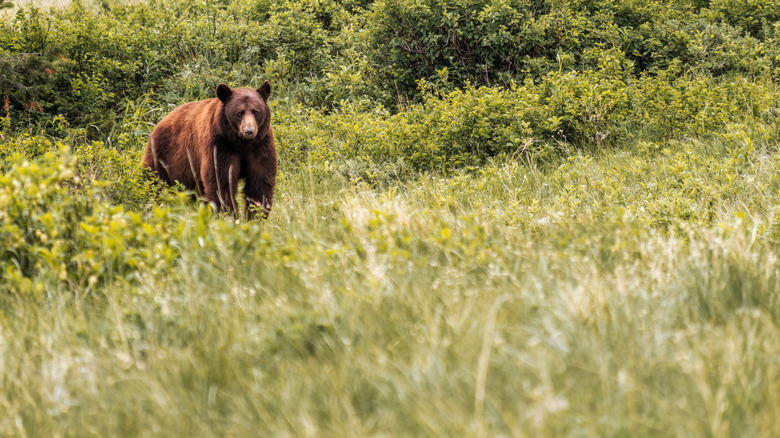
Both sides of Glacier National Park have a feel distinctively their own. The east is relatively quieter, with entrances at Many Glacier, Two Medicine, and St. Mary — three totally distinct valleys — which see a fraction of the number that enters at the west gate. A former Glacier National Park ranger noted in a Reddit thread that you may even be more likely to see a bear on the east side because it's quieter and less developed than the west. Richard Menicke added in National Geographic, "Head to Many Glacier if you want to see wildlife. If you're really lucky, you'll spot a grizzly bear. But be warned: Make sure to enjoy the local fauna at a distance and do not approach the animals." If you're adventurous, you can even double your valley views from Many Glacier with a trek to the helpful mountain passage of Ptarmigan Tunnel.
If you're headed to the east side, an easy first stop is the wildly charming community of St. Mary because it's reachable via U.S. Highway 89 and is the beginning of the westbound Going-to-the-Sun Road. Dip south along Montana Route 49 to Two Medicine, where you'll also find a lovely campground, one of many popular campgrounds open by reservation, although it's worth noting that this narrow, hairpin turn-filled route is not for the faint of heart. If you're not a fan of blind curves and you're driving between Many Glacier and East Glacier Park Village, opt for a detour via U.S. Highway 2 and Montana Route 464 instead.
Bear bells alone won't cut it
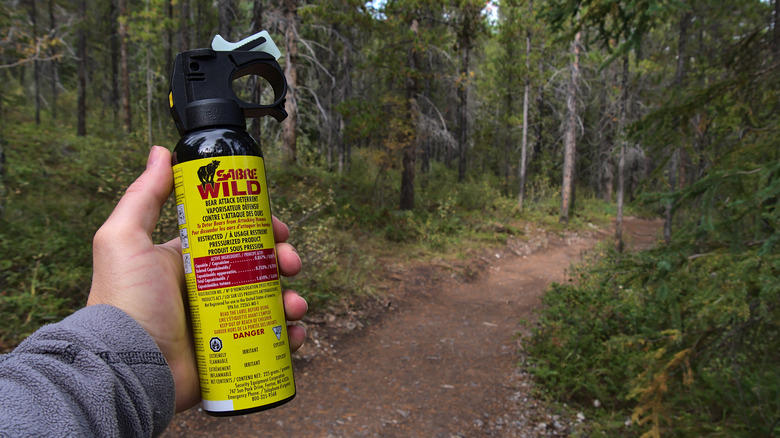
A ranger who used to write backcountry permits for hikers in Glacier National Park noted in an AMA on Reddit just how important it is to be bear-aware, starting with the fact that bear bells aren't enough to deter them. "Behind the desk I'd say: There is zero evidence that bells are an effective method of mitigation," the former ranger said. "What I'll say here: Clapping and shouting looks a hell of a lot less dumb than looking and sounding like an actual clown." One of the most important things to remember about encountering bears is that you don't want to startle them. The problem with bells is that bears often don't hear them until you're too close — the noise is just too quiet to really register. They even have a nickname, "dinner bells," because some think that may even stoke bears' curiosity — although evidence of this is totally anecdotal.
Glacier National Park wildlife biologist John Waller shares in an informational NPS bear safety video: "Being aware of your surroundings is very important. Carry your bear spray, and most important of all, make sure you make noise when there's a chance you might encounter a bear at close range." Quieter noises like bells and even speakers don't always alert bears effectively. Instead, make very loud noises like clapping and yelling "Hey, bear! Hey!" as you round a corner or a blind hill. Waller added in the video, "Many people are hesitant to hike in the park because they read about bear attacks and maulings. I encourage people to know the risks, know your surroundings. The chances of it happening are very slim, and you shouldn't let it interfere with enjoying the park."
Secure your scented items
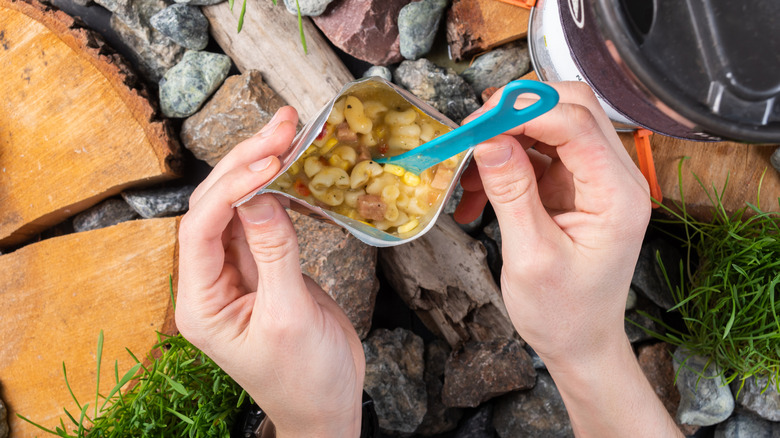
As you'll have gleaned already, bear safety is very important at Glacier National Park. You'll want to make sure you're carrying bear spray in the backcountry. If you head out to camp there, be sure the very first thing you do is get smelly things out of the way so you don't lure the park's megafauna right to you. Bears that become habituated to finding food at campsites can pose a longer-term danger because they'll seek places where humans hang out more often. The National Park Service then needs to remove them altogether for both the bears' and visitors' safety.
Make sure your food and other items with an odor are always secure and stored at least 100 feet away from where you sleep. When you get to camp, take care of this first. You may even want to forego perfumed shampoo, deodorants, and scented sunscreen altogether to avoid drawing more attention from wildlife. "All but a couple [backcountry] campsites have bear hangs (those that don't, have boxes). You can either hang the can up via a basket technique with cord, or you can tie it down so the bear cannot get it free," shared a former Glacier National Park ranger on Reddit who had experience dispensing backcountry permits and providing bear safety advice. "If the bear gets it free, it WILL eventually be able to open it (or it will roll into a river, etc.) so make sure you hang it or really tighten it down."
Check in at info desks for mountain status
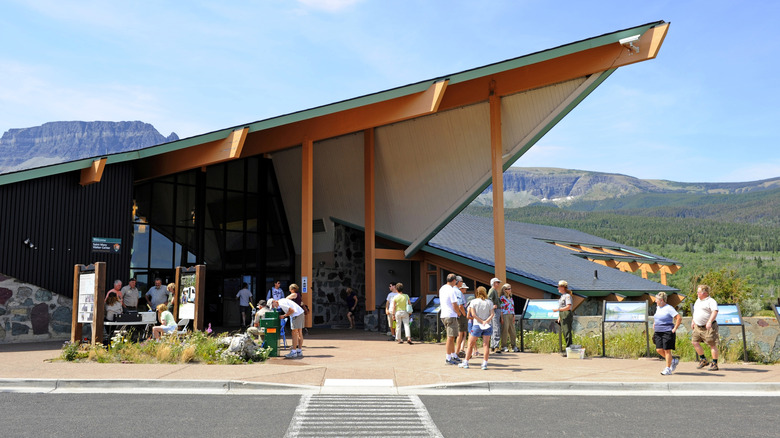
While it may seem like it should go without saying, conditions can vary greatly depending on the time of year since Glacier National Park is very seasonal. It may feel like full-on summer in June if you're hanging out in Whitefish, Montana's most charming small town to the west of the park, but at higher elevations, it's still snowy and icy in a lot of places. Come September, you may encounter snow again. "Anything above 5,000 [feet] may need spikes/etc.," shared a former ranger on Reddit in response to a question about planning hikes in mid-June. "Snow runoff makes for great falls but dangerously high streams. Check in with visitor center for real-time updates bc the weather/melt is very variable."
Glacier National Park's official website posts updates on its Current Conditions page about the status of wildfires or smoke in the region, trails, roads and snow plows, construction projects, and more. It's a good place to start, especially within a few days of arriving. But once you actually get to the park, and especially before heading out on any major hikes, check in with rangers at information desks within the visitor centers. They'll give you the latest news and will alert you to any routes that may be closed or impassable.
See an actual glacier
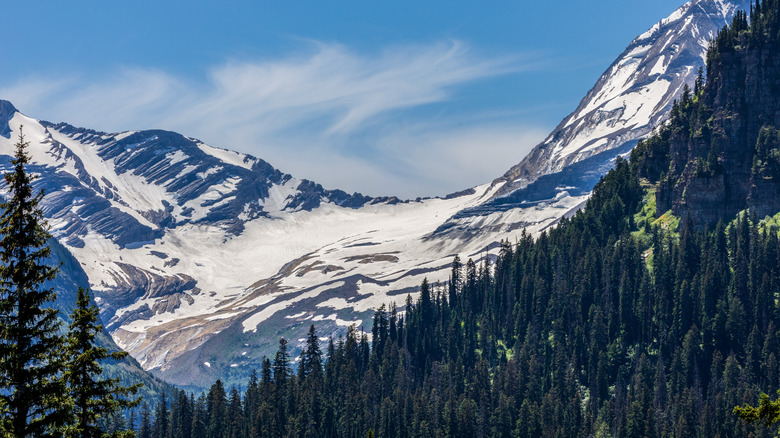
"Ya-qawiswit̓xuki" is the name the Indigenous Kootenai people have historically called what we now refer to as Glacier National Park, meaning "the place where there is a lot of ice." In the mid-19th century, there were around 80 glaciers in the park, but today, there are just 26 that are named. Unfortunately, they're all shrinking, so that number will likely decrease further. According to NASA, the park may even be glacier-free by 2030. Needless to say, now's the time to see them.
"One of the coolest trails, I think, in the park — but it tends to be very, very busy — is our Grinnell Glacier Trail," said the aforementioned ranger Stephanie during the episode of Exploring By the Seat of Your Pants on YouTube. "Why it's so cool is not only is your end destination to getting to a glacier ... you don't get to go up and touch it, but you get to see it pretty close, you get to see the glacial lake. But you also get up into the high country of Glacier National Park, so you never know what wildlife you might run into, and you get fantastic views all back in the Many Glacier Valley." And even if you just stick to Going-to-the-Sun Road, you can also get a great glimpse of the Jackson Glacier from an overlook.
Join a ranger-led hike or program
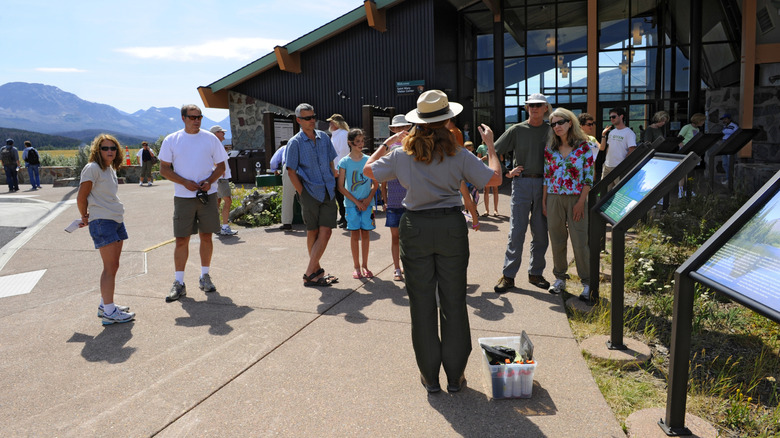
"If you're interested in a guided experience, try a ranger-led tour or seek out one of the park's permitted partners," said Richard Menicke in National Geographic, which is something to keep in mind no matter which side of the park you're on. Head out on a guided hike or even a historic hotel tour, or cruise along Going-to-the-Sun Road in the iconic, vintage red buses, which are operated by a concessionaire. Ranger-led programs also include lots of different types of events to choose from. Evening programs at several of the campgrounds' amphitheaters are a wonderful way to round out your day with a bit of education before winding down for the night. After nightfall, astronomy programs are also a fantastic way to learn more about the stars and other phenomena you can see from the park.
Short ranger talks are offered at a range of different times of places, and the best way to find out what's going on during your visit is to check in at the visitor centers. During the summer, make sure to find a presentation that's part of the Native America Speaks program, during which members of the Blackfeet Nation and the Confederated Salish and Kootenai Tribes introduce visitors to a diverse array of cultural traditions, performances, crafts, and more.
There's more recreation than just hiking
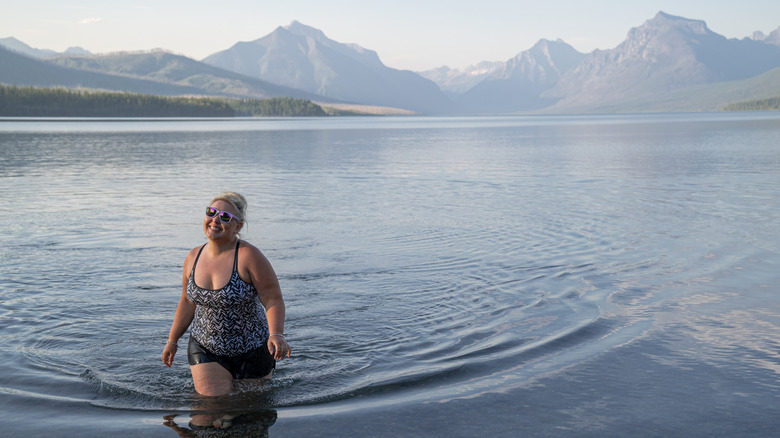
Hiking is one of the most popular activities in Glacier National Park for good reason. There are more than 700 miles of trails, from relatively short, interpretive nature trails to strenuous ridge-top treks and backcountry routes ideal for an overnight stay or two. But there are a several other things you can do, like cycling along Going-to-the-Sun Road to experience the grandeur at a slower pace, fishing in the park's lakes and rivers, boating and paddling, and more. "If you have kids (or are a kid at heart), you won't want to miss sledding at Logan Pass in July or swimming in Lake McDonald," said Richard Menicke in National Geographic. The lake is somewhat shallow toward the Apgar Village end, warming up enough to swim in, unlike other bodies of water in the park that remain literally glacial.
Speaking of Apgar, camping is another timeless pastime in the park, and it's the largest campground with nearby lake views and trails. The others don't skimp either. "Any front-country, drive-in campground is the best place to stay while you're visiting," Menicke added. Surrounded by trees and mountains, it's the way to stay that combines both immersion and convenience, although the historic lodges also offer a unique and totally timeless experience.
Add on a visit to Canada's Waterton Lakes National Park
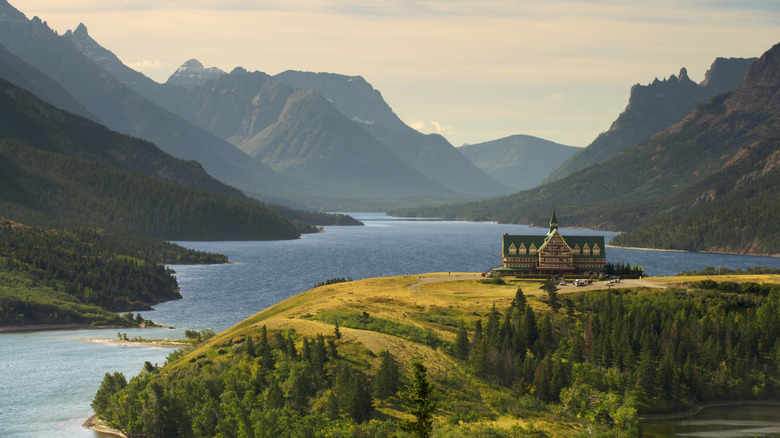
It may sound unusual to include advice about visiting Glacier National Park by suggesting that you leave it, but that's exactly what a couple of rangers suggest, particularly if you're hanging out in or entering the east side. Richard Menicke noted in National Geographic that in addition to Grinnell Glacier Trail and the Highline Trail being the best in the park, "the Chief Mountain Highway — which connects Glacier to Waterton Lakes National Park in Alberta, Canada — is the most scenic drive." From St. Mary to the Waterton Lakes entrance, the drive is less than 30 miles.
Remember that you'll need a passport if you intend to head over the border, but it's well worth a side trip if you've got the time. Chief Mountain Highway comprises Montana Route 17 on the U.S. side and Alberta Highway 6 in Canada, and it's a wonderful route to peep fall foliage. Glacier and Waterton Lakes are administratively connected to create the UNESCO-listed Waterton Glacier International Peace Park, which is renowned for not only its spectacular scenery but also the wealth of plant and animal life distinctive to this alpine region.