
9 Common Tourist Complaints About The Grand Canyon
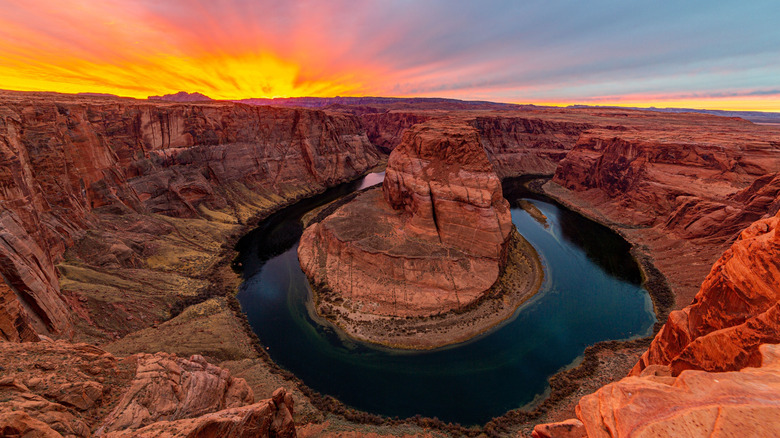
For many travelers, seeing the Grand Canyon in person is a bucket-list experience. As one of the Seven Natural Wonders of the World, it's difficult to fully appreciate the grandeur of this gorge unless you're standing next to it (or, in some cases, hiking down into it). Grand Canyon National Park has something for everyone, from scenic overlooks for photography buffs to wildlife spotting for nature enthusiasts to whitewater rafting for adrenaline junkies. While the South Rim is the most popular area to visit, the North Rim and other sections also offer stunning scenery.
Being at the Grand Canyon in person, however, isn't always as perfect and majestic as visitors expect. Heavy crowds, parking problems, and a lack of tourist infrastructure inside this National Park can be tough for travelers to handle. Whether you're headed to the Grand Canyon Village for a scenic weekend getaway or on the hunt for one of the cleanest campsites in the Grand Canyon for a longer trip, it's important to be prepared for every eventuality you might encounter. Here we're going to walk through nine common tourist complaints about the Grand Canyon and help you figure out how to tackle each one.
To put together this guide, we used the official Grand Canyon website and information from the National Park Service. Additionally, we used high-authority travel sites like Fodor's and blogs including Mountain Tripper and Detour Effect. We also turned to firsthand accounts from Tripadvisor, Reddit, and Facebook, as well as Google Reviews for specific hotels and restaurants.
Popular viewpoints get absolutely packed
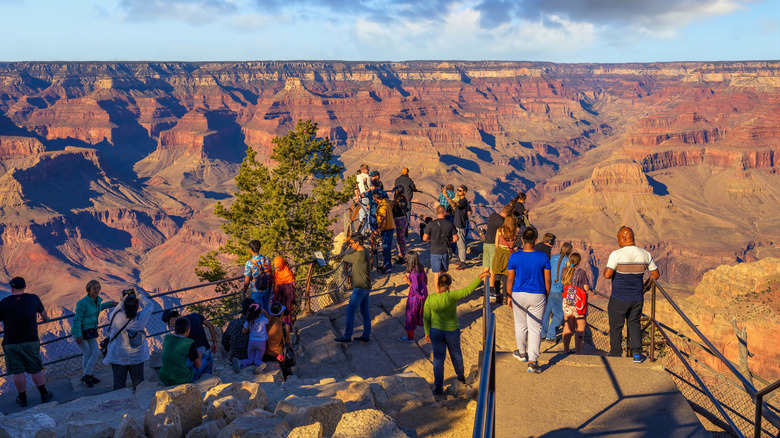
Although people know the Grand Canyon is huge, many tourists don't realize just how large. To put things in perspective, it can take as long as five hours to drive from the South Rim Visitor Center to the North Rim Visitor Center via US-180 W! This means there are plenty of places for the more than 4 million visitors who come yearly to enjoy incredible views. The southern side of the Grand Canyon offers many of its most iconic spots, but that also means they're the most crowded. Mather Point, which is near the South Rim Visitor Center, and Yavapai Point tend to be especially packed.
One Redditor said they have specifically avoided the Grand Canyon because they detest "crowds and touristy crap." Fortunately, you don't need to leave the South Rim entirely to find less crowded locations. Grandview Point and the Grandview Mesa loop are suggested as great options on Reddit. Hermit's Rest is another aptly named choice for those looking to avoid throngs of people. The time of year you visit also affects crowd levels. Local photographer Ray Redstone shared on his blog that "during the quieter winter months is basically the only time I will go to the South Rim now."
There are lots of unwritten rules about visiting the Grand Canyon, but perhaps the most important is not to be afraid to go off the beaten path! The North Rim tends to offer the most secluded places to enjoy the gorge. Bright Angel Point and Cape Royal are the best options for travelers who prioritize easy accessibility, while Widforss Point offers numerous overlooks but requires visitors to hike nearly 10 miles of trails. As a result, it's best for more experienced hikers.
Parking is nightmarish
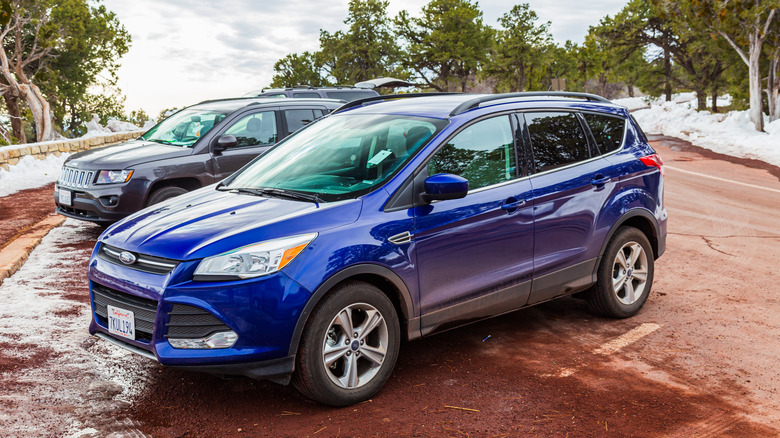
It's not unreasonable to assume that an incredibly famous National Park that is comprised of over 1.2 million acres would have plenty of parking. Unfortunately, however, this assumption is incorrect. At the popular South Rim, in particular, finding parking can be a huge challenge, especially during peak summer travel season and on weekends. Although the Visitor Center in this section of the park has four parking lots, one Reddit user noted "I have seen the VC parking lot full by 10 a.m."
Once these lots are filled, it could theoretically take hours for spots to open up, so drivers typically have to look elsewhere for parking spaces. Additional public parking lots are available at Grand Canyon Village, with shuttle access to select trailheads. Some Redditors also recommend the Backcountry Parking Lot, which is located within easy walking distance of the well-known Bright Angel hiking trail.
It's worth noting that the Visitor Center parking lots aren't always overrun either. One person on Reddit was concerned about not finding an open space on a May Saturday, but ended up being able to snag a spot as some guests were already leaving after spending the early morning hours at the South Rim. Patience and knowing where the South Rim's overflow lots are located are key to having a pleasant parking experience.
The heat can be deadly
It's very important for tourists to be prepared for the heat. For every 1,000 feet you travel into the canyon, you can expect a 5.5 degree increase in temperature on the Fahrenheit scale. Even in shade, areas inside the Grand Canyon can be 110 degrees Fahrenheit. One Reddit user advised against going deep into the canyon during summer, calling it "Stupidly and dangerously hot if you aren't prepared and fairly fit."
The danger of hiking into the canyon in extreme heat is not just theoretical. In June 2026, an 18-year-old who was hiking with his father passed away in the strenuous Bright Angel Trail area in 106-degree temperatures. Three other hikers also died from heat-related causes in 2026 alone. On Facebook, people mourned the deaths, with one commenter saying the "heat is NO joke and neither is the climb. Please take extra care." Another person said even the most "experienced hikers can get overwhelmed by heat, dehydration or exhaustion faster than they expect." Hiking into the Grand Canyon is an awesome feat, but it is never worth risking your life.
Fortunately, there are many precautions you can take to stay safe. The best ways to avoid heat stroke outdoors include packing salty snacks like pretzels and saltine crackers, carrying plenty of water (fresh water is not available on all Grand Canyon trails), and wearing loose, breathable clothing. The National Park Service advises that people remain on easy trails or stay indoors during the heat of the day from 10 a.m. to 4 p.m. If you or someone in your party become disoriented, starts getting a headache, or experiences sudden dizziness, get the impacted person to a shaded area and seek medical attention for them.
There aren't guardrails everywhere
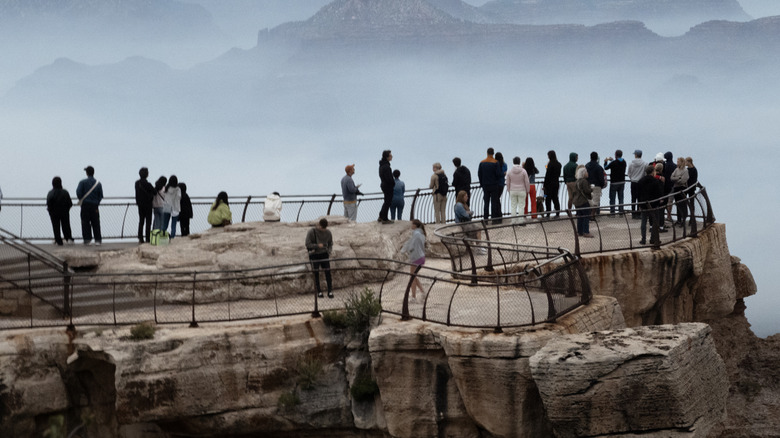
At most major tourist attractions around the world, visitors are used to having barriers that protect them from falling a significant distance. There are some common tourist complaints about the Eiffel Tower, for example, but a lack of safety rails is not among them. The Grand Canyon is different. While some popular overlooks like Mather Point are equipped with railings, the more undeveloped parts of the fissure, especially deep down near the Colorado River, have been left largely untouched by human development.
Even the railings that do exist aren't always particularly effective. People can climb over the Mather Point guardrails with relative ease either for a thrill or to take photos. This is not because Grand Canyon officials have a blatant disregard for safety. Since the gorge is 277 miles long, it would be impractical to put guardrails along the entire thing. When you factor in each individual trailhead, plateau, and overlook, the prospect of putting barriers everywhere is impossible. As one Redditor explained, viewpoints have " just like 1 crossbar ... And there are no rails on any of the hiking trails going to the bottom."
For some visitors, the lack of safety rails can be unsettling. This is especially true, as one can imagine, for people traveling with young children. On TripAdvisor, one parent said they "nearly had a heart attack at the lack of rails in so many places" around the tourist-laden South Rim. If that area is alarming, you can imagine how many fewer railings exist in less developed parts of Grand Canyon National Park. Another person on the same thread said they've "seen so many little ones dart from their parents and go dangerously close to the edge."
Food is overpriced, and there are limited options
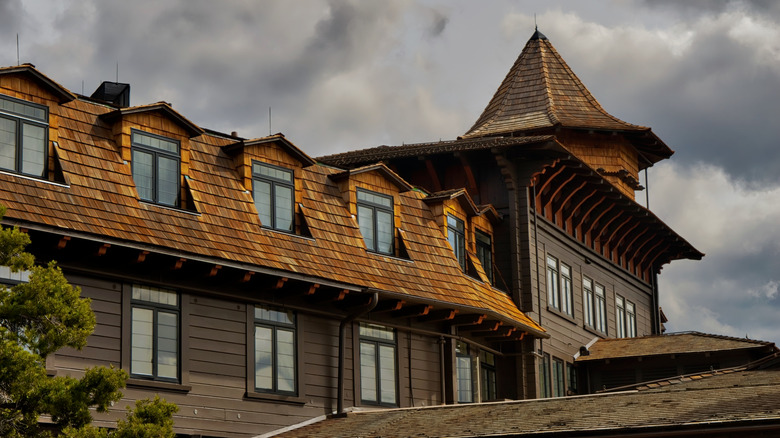
Given that millions of people come to the Grand Canyon annually, first-timers may picture it packed with restaurants like Disney's Animal Kingdom or another theme park, that's not the reality. There are actually fairly limited dining options in and around the Grand Canyon, and many of those can be found inside of various hotels and lodges. Among these establishments are the El Tovar Dining Room and Lounge at the El Tovar Hotel, the Yavapai Dining Hall, Cafe, and Tavern at the Yavapai Hotel, and the Maswik Food Court at Maswik Lodge.
One person on TripAdvisor advised a fellow traveler to not "expect a Michelin star chef or 5-star accommodations with many amenities" anywhere in the immediate vicinity of the Grand Canyon. That said, all hope is not necessarily lost. Many Redditors like El Tovar, with one person noting that it "is what I would call "fine dining" given that it is many miles away from any fresh food source." Another Reddit user said the restaurant is as near "to top tier as one can get In National Parks." Yet another commenter chimed in that they enjoyed "an excellent Bison Burger at Yavapai Tavern."
In short, good food can be found if you know where to look. The cost, however, is another matter. Be prepared to spend quite a bit for every meal if you don't purchase your own groceries. The remote nature of the Grand Canyon plays into the high cost. Someone on Reddit pointed out that El Tovar "routinely sources things from Flagstaff, but has to pay the delivery costs, etc., etc.," which drives up the end price. Budget Your Trip tells travelers they should expect to spend $84 a day on meals per person.
Inclement weather can obscure the canyon
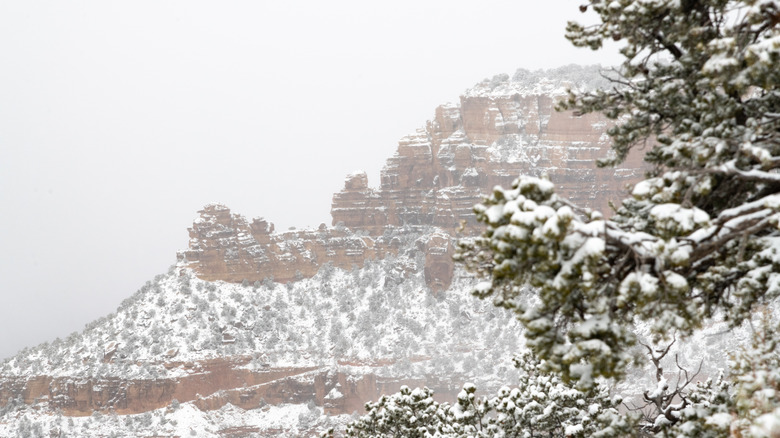
Imagine traveling hundreds or thousands of miles to finally see the Grand Canyon, only to discover that fog, snow, a rainstorm, or wildfire smoke is obscuring your view. Unfortunately, this does happen from time to time. On a spring day when much of the area was experiencing thick fog, someone wrote on Reddit that they were envisioning all of the Spring Break families "driving through rain, snow and weekend traffic only to be able to see 15 feet in front of you. Fattest L imaginable." It's absolutely disappointing to have plans to see iconic sites foiled by weather, but in situations like this, it's important to be flexible.
For one thing, because of the Grand Canyon's massive size, it's possible for it to be raining, snowing, or foggy in one area, but not in others. Theoretically, you could drive for 30 to 45 minutes to escape the poor visibility. Additionally, like in many regions of the country, bad weather doesn't always last all day. If you have some flexibility, you could return to your lodge for a few hours, then head back to the gorge when the weather clears.
It's also worth noting that, although it may not be the view they were expecting, some people ultimately find the Grand Canyon to be even more incredible when inclement weather occurs. One Redditor was concerned about the forecast, sharing that it "would be a huge disappointment" to have their view obscured. Others chimed in, however, assuring them that rain and storms can still be beautiful with the right mindset. Another Reddit user who visited on a rainy day said they experienced "literally the most breathtaking view, even with limited visibility!"
It tends to take longer than expected to explore
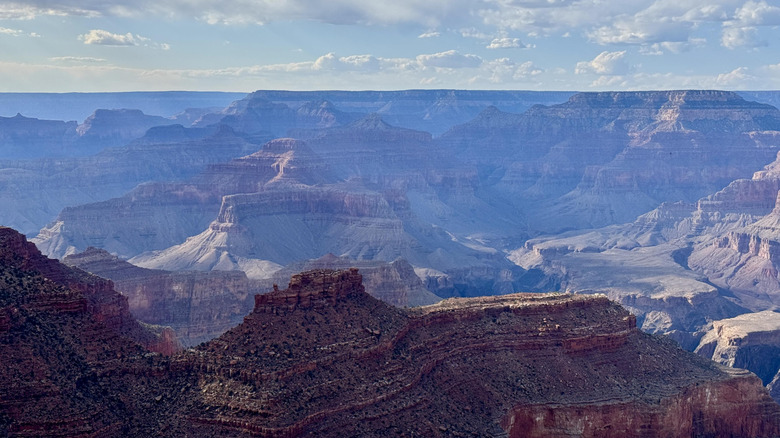
Often, people drastically underestimate how much time they will need to fully explore the Grand Canyon. The length of time you should spend at this natural wonder depends, of course, on what you want to do. While it is certainly possible to visit popular South Rim viewpoints to take photos in just a few hours' time, rafting through the bottom of the canyon on the Colorado River can take as long as two weeks!
Many past visitors have given advice about this subject around the web. One TripAdvisor user said the absolute minimum amount of time needed for a day trip with children is "4-5 hours at least." On Reddit, someone said non-hikers can get the full experience in one full day at Grand Canyon National Park. However, they advised staying overnight and essentially spending two half days on the grounds. Another person on the same thread seconded this plan, sharing that they "arrived at dinner time. Got up for sunset the next morning, went to breakfast at El Tovar, and then had the full day in the park. Left for Zion the next morning."
Others, however, advise against a day trip altogether. As one Reddit user noted, the "South Rim is at 7,000 feet, and if you're not used to that your body will quit long before you expect it to." If your body needs to acclimate to the Grand Canyon's altitude, it's wise to spend a couple of days adjusting before doing any heavy hiking or exploring, if your itinerary allows. If you do need to go out without proper acclimatization, make sure you are well-hydrated and have salty snacks in your bag.
The bus drivers can be perceived as rude
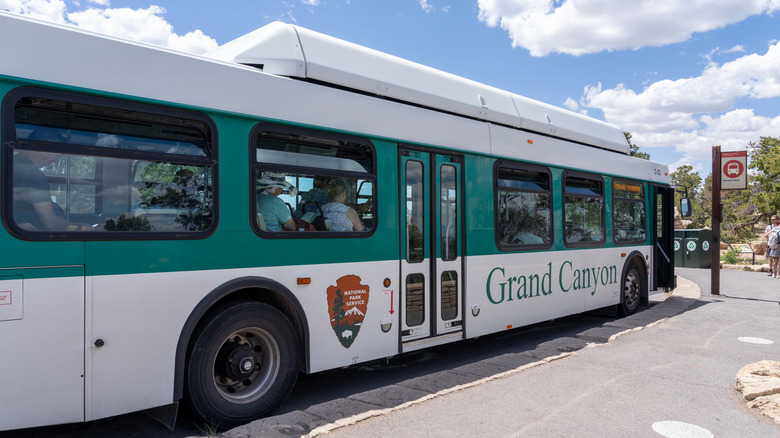
Grand Canyon National Park offers free shuttle buses intended to help tourists navigate various sites around the South Rim. Unfortunately, though, using them isn't always intuitive. Multiple color-coded routes visit different destinations, some routes are seasonal, and others change with visitor demand. This can, understandably, lead to confusion for visitors. One TripAdvisor reviewer was extremely frustrated with their shuttle bus experience, noting that they often had to wait more than 30 minutes to board due to capacity constraints.
That same person found local signage to be quite unclear, sharing that the "shuttle bus stop in front of the IMAX says "Summer Only" We were there in April [...] The bus was running. Is April now considered summer?" The confusing nature of the shuttle system can lead to seemingly unpleasant interactions with bus drivers. A person on Reddit was left floored when a driver "dropped off a family and was empty, we were 5 feet away from the door and she shut the door on our face and drove away."
In some cases, complaints about Grand Canyon bus drivers pertain to an entire journey, not a single interaction. One passenger on a red line bus said on TripaAdvisor that their driver "yelled, screamed the entire trip. Everyone was shocked!" Another TripAdvisor poster shared a situation in which their bus driver "did not want to stop at the sights promised in the brochure," leading to great stress and frustration for nearly everyone on the bus. It is important to note that bus drivers are on strict schedules, so a person who is perceived as brusque or rude may sometimes simply be in a rush to get to their next depot on time.
Cell service is often unavailable
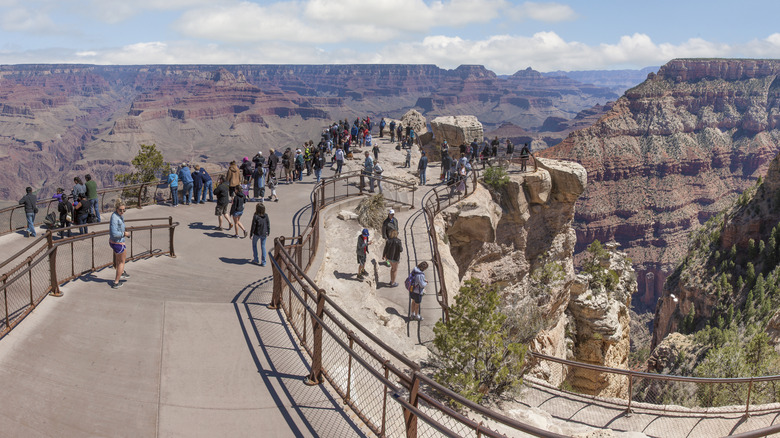
Travelers who are used to using their cell phones for everything from local mapping and navigation to making dinner reservations may struggle at the Grand Canyon. Cell service throughout Grand Canyon National Park is often spotty and, in some locations, completely nonexistent. Unsurprisingly, the best signal tends to be available at popular overlooks like Mather Point and in the small town of Grand Canyon Village.
One Reddit user was concerned about visiting with family members who are "both very dependent on wifi [sic] and could get cranky without access." However, the original poster was urged to encourage their travel party to enjoy the natural world around them for a few days. As one fellow Redditor pointed out, the "world will be waiting when you return to the city." That said, for people who need Wi-Fi or cellular access for work or an emergency, many of the hotels and lodges in the area offer internet access.
It's also wise to prepare before you leave your house. Take screenshots of any important reservation numbers, shuttle routes, and other details you might need. You can also download maps to use when you're unconnected and, in some cases, may be able to connect to Google's satellite navigation system. If you are venturing deep into the Grand Canyon, you will assuredly not have cell signal, so make sure family and friends know where you are just in case something happens and they need to send a search team.