
9 Common Tourist Complaints About Visiting Lake Tahoe
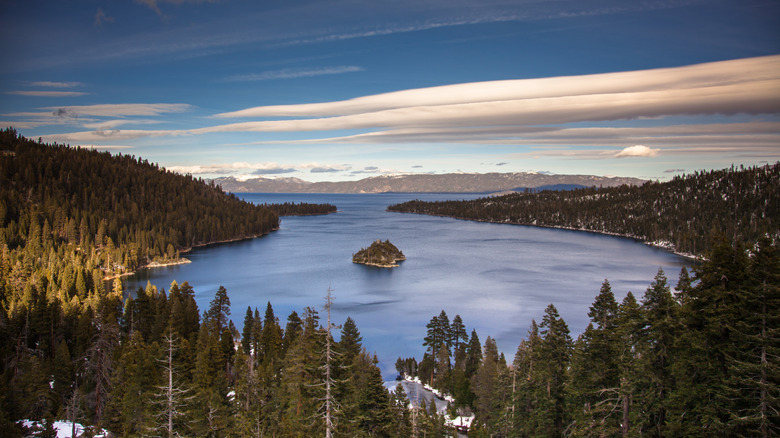
There are plenty of unwritten rules you should know before visiting Lake Tahoe, and some of them have to do with preparing for things that could go awry during your stay. Although Lake Tahoe is an undeniably beautiful destination in the United States, it is not always all sunshine and roses for tourists. Some recurring complaints about Lake Tahoe appear on many review platforms around the web.
Here, we dive into nine common complaints and explain how to deal with them in the moment or prepare ahead of time. Many of these issues can be alleviated with a bit of planning prior to your trip. And, even if you can't eliminate a problem, knowing what to expect before you arrive in Lake Tahoe is sure to make your stay more enjoyable, whether you're staying for a weekend or a whole month!
To put together this guide, we looked at the official Lake Tahoe tourism website, webpages for specific tourist attractions, as well as articles from publications and news networks like SF Gate, FOX 40, National Geographic, CalMatters, and Lake Tahoe This Week. We also got firsthand feedback from reviews on a variety of platforms, including Reddit, Tripadvisor, and Facebook.
Traffic can be brutal
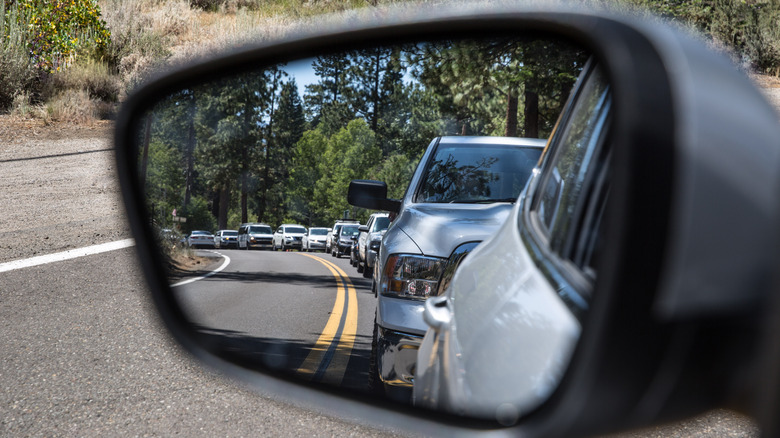
As the oldest lake in North America, Lake Tahoe has been drawing travelers to the California-Nevada border for generations. The area first became popular with tourists in the 1860s, but it is still a relatively small town at heart even today. With a year-round population of around 55,000, Tahoe's roadways and overall infrastructure were not originally designed for the more than 15 million visitors who now flock to the area annually.
Traffic congestion is easily among the top complaints from travelers and locals alike, especially during summer weekends and peak ski season. One summer visitor shared a video of intensely gridlocked traffic on Reddit, writing, "Traffic at Tahoe when I got in started at 1130. Ended in Tahoe around 3:45 pm." That person eventually gave up and went to the lake on the Nevada side, which was less overrun on that particular day. Another Redditor who lives in the area and is clearly tired of the traffic said that they "hope everyone realizes that it's not worth it, and just stops coming to Tahoe. That'd be great."
Of course, people aren't just going to stop going to one of the country's most popular destinations, but the sentiment sums up how some residents feel about the constant influx of people. If you find yourself planning a road trip to Lake Tahoe, timing is key. Try to avoid Friday evenings for driving in and Sunday afternoons for departing. If you're coming from the Bay Area, locals on Reddit offer a lot of tips, including waiting to head out until after dinner on Friday evening to avoid the worst of the traffic once you reach Lake Tahoe from the city.
Parking spaces at popular beaches fill up fast
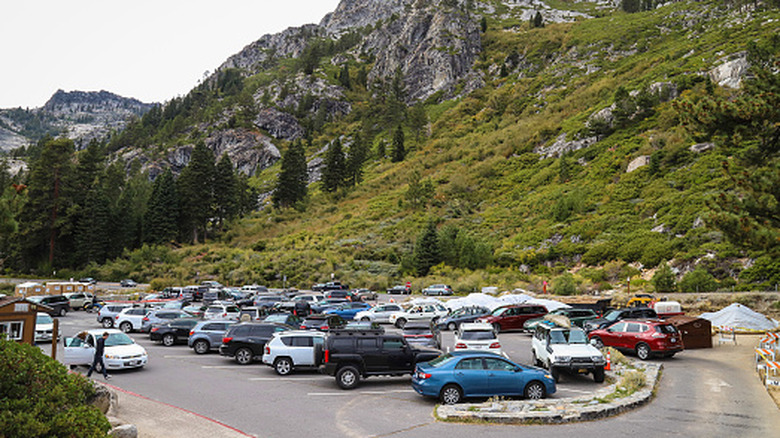
Spending a lazy summer day on one of Lake Tahoe's beautiful beaches sounds like perfection. That is, until you arrive to discover there's nowhere to park — even when you get there by 10 a.m. Many of the most popular beaches around the lake have remarkably few parking spots. North Tahoe Beach, for example, has just 39 spaces for cars, Cave Rock has only 20 spots, and, although Chimney Rock now has room for 130 vehicles, it can still fill up quickly in the summertime.
The parking situation has gotten so bad on the California side that the Sonoma County Regional Parks Department took to their official Facebook page to urge beachgoers to have a backup plan in case their first-choice beach is already at capacity. Across the border in Nevada, Sand Harbor State Park began requiring reservations to access the beach during popular summer morning hours in 2024. One Redditor lamented that it is next to impossible to go to the beach by even mid-morning: "What year did it become apparent to enjoy Tahoe, you need to be up there by 730ish?"
Street parking isn't always an option in Tahoe either. Visitors can be towed or face expensive fines for illegally parking on roadways in the area. If you have your heart set visiting a specific Lake Tahoe beach, your best bet is to arrive before it officially opens to snag a parking space. It's also important to note that late afternoons and evenings are sometimes less crowded, so you may also want to stop by late in the day to check out the spectacular, cotton candy cloud sunsets on Tahoe's beaches.
It is extremely expensive
While Colorado's Aspen and Beaver Creek are the two most expensive ski resorts in the United States, visiting Lake Tahoe can still cost a pretty penny. Tourists regularly complain about the cost of coming to this area, with everything from restaurant food and gasoline to accommodations often priced higher than they expected. One incredulous Tripadvisor reviewer questioned, "WOW!! How can this place be so Expensive," noting that they paid more for restaurant meals in Tahoe than in San Francisco, which, they pointed out, "can be astronomical."
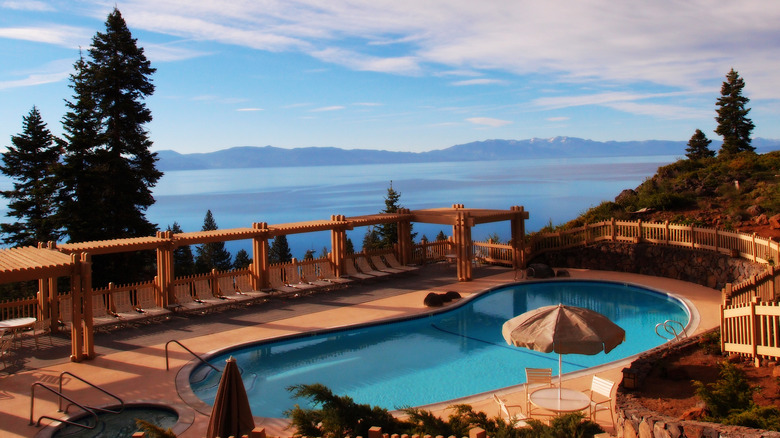
Lodging prices are another pain point, particularly on summer weekends and during prime ski season. At the top end of the spectrum, certain Lake Tahoe hotel rooms cost over $2,000 on desirable nights, which is more than some comparable island resorts in the Caribbean. On Facebook, one Tahoe visitor said they had "never felt so robbed" by businesses of all kinds, including hotels. They called out the town's commercial outlets for being "greedy."
Then, there are the winter costs. Skiing at Lake Tahoe generally requires buying a pricey lift pass or season pass. There's also the cost of purchasing après-ski concessions and drinks at a restaurants or lodge, and potentially paying for lessons or equipment (if you're a novice skier). In a rather wild twist at the time of publication, one major resort, Palisades Tahoe, has been caught up in a lawsuit alleging that it was part of a group that illegally raised prices of both season tickets and daily lift passes to price-gouge consumers. Fortunately, there are some ways to save money, like visiting during off-peak seasons and choosing affordable restaurants. Yellow Submarine Sandwich Shop has been a popular lunch stop for decades.
The lake water is shockingly cold all year
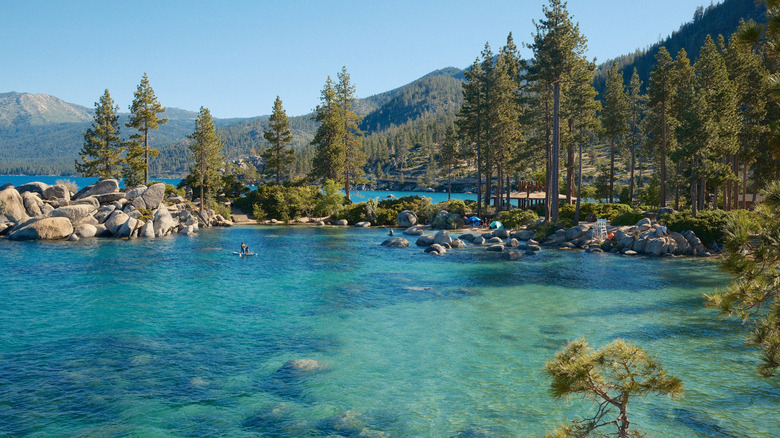
While Lake Tahoe can look warm and welcoming on a summer day, the expectation doesn't always match the reality. In June 2025, the water had yet to rise above the 50s (Fahrenheit) for the year, a temperature that can lead to shock, hypothermia, and even death. The chilly temperatures here are largely the result of a perfect storm created by Lake Tahoe's elevation and depth. As an alpine lake that sits 6,224 feet above sea level, Tahoe's water comes largely from melting snow and ice high in the mountains. Couple this with the fact that it is one of the deepest inland lakes in America — 1,645 feet at its deepest point — and it's easy to understand why Lake Tahoe never gets particularly warm as a whole.
On a Facebook thread where some people were complaining about not being able to swim in Lake Tahoe in the summer, one person said, simply, "Too cold – people drown from cold water shock." Another commenter said it's only feasible to go in the water for a couple of months per year and "the weather can't be counted on to be really good until around the beginning of July."
Bear in mind that staying out of the water in Lake Tahoe, especially in the deeper sections away from shore, is more than a comfort issue. The U.S. Forest Service posted specific safety tips on their Facebook page, encouraging all Tahoe visitors to take important precautions even during the summer months. These include always swimming with another person, wearing a life vest at all times even if you know how to swim, and carefully supervising children. And if it's too cold to swim, you can always enjoy the lake from the shore.
Wildfire smoke can wreak havoc
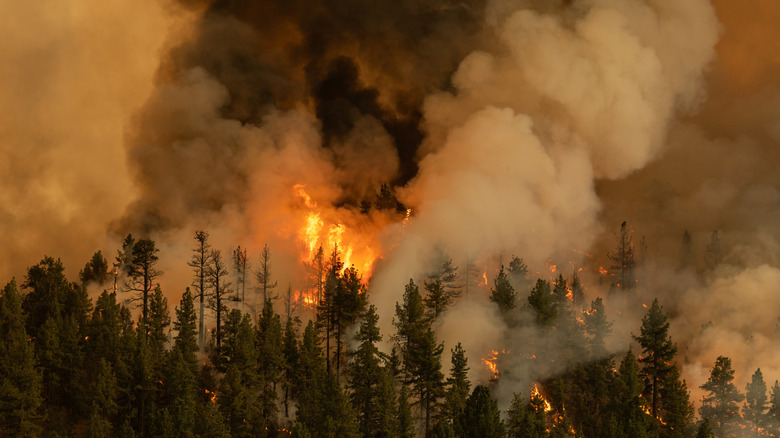
Wildfires have long been a problem in the Western United States, but they have intensified in recent years, which has taken a toll on tourism. While some people simply decide not to travel while wildfires rage, others opt to brave the elements as long as they are not visiting an active evacuation zone. The problem with this is that wildfire smoke can travel thousands of miles, so a fire burning anywhere near the Lake Tahoe Basin can seriously impact visibility.
While the most important thing is to take necessary safety precautions if a natural disaster impacts your travel plans, it's only natural to feel frustrated if you can't fully enjoy a trip you've been looking forward to. One Facebook user lamented that they "picked the wrong weekend to visit" as they had to deal with very limited visibility due to "smoke from the uncontained fire burning 60 miles away in mosquito, CA." On Reddit, a Tahoe local shared an update with potential travelers as a fire raged, writing, "I can't even see down my street."
As noted, staying safe is paramount during wildfire season. Local law enforcement and environmental experts have warned that Lake Tahoe "could be a deathtrap" during a severe fire. There are also concerns about the long-term impact that fires could have on the region's ecosystem. If you have any doubt about whether you should travel to this area while there are active wildfires in the general vicinity, it's better to err on the side of caution than to put yourself or your loved ones at risk.
Winter driving can be treacherous
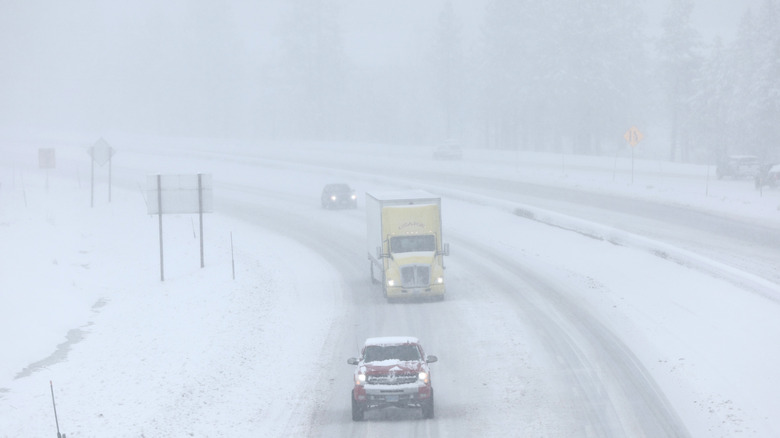
Although Lake Tahoe is a fantastic winter destination, with gorgeous mountain views and exceptional skiing that won it the 1960 Winter Olympics, it can also be hazardous when winter weather sets in. Major routes like Highway 50, Highway 59, and I-80 can all become nearly impassable when snow and ice begin to accumulate. In February 2026, for instance, conditions became so treacherous that a 60-mile section of I-80 was completely closed in both directions.
One Facebook user shared video footage from well-known Donner Summit, in which several vehicles simply spun around in circles on the roadway while their drivers struggled to gain traction. The footage showed emergency vehicles and tow trucks coming to assist. Commenters were aghast, with one person referencing the infamous Donner party that perished in the area in the 19th century, saying, "It's Donner pass, for crying out loud! Haven't people that live in that area ever read a history book?"
If you plan to drive in the Lake Tahoe area during the winter season, it's important to pay attention to local news updates before you leave. Note that both California and Nevada authorities may implement chain requirements. If this happens and you don't have chains on your tires, you could be required to turn around at a checkpoint. The type of car and tires you choose also has a major impact on your ability to traverse Tahoe's winter roads. On Facebook, another person complained about local unprepared drivers on weekday mornings, posting, "If you don't have the right tires.... Just call in and spare others."
Overtourism is a huge problem
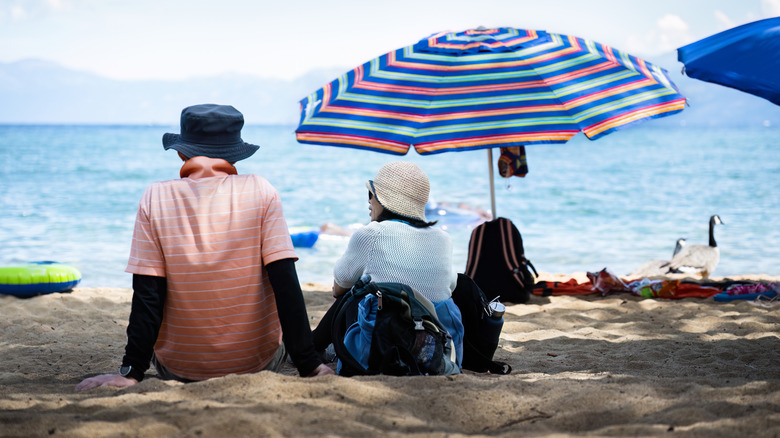
As with many of the world's best and most beautiful destinations, overtourism has become a major problem in Lake Tahoe, even making national news. CNN went so far as to call tourism a "monster," pointing out that a single summer holiday weekend in 2023 yielded an astounding 6,000 pounds of discarded items at the popular Zephyr Shoals beach. Around that same time, the Tahoe Daily Tribune collectively urged travelers to reconsider going to the Lake Tahoe basin because of the negative impact humans have had on the natural ecosystem in the area.
On Reddit, one person complained that they "hardly hiked or went to the beach this season because of how crowded every place was." Sadly, things have not significantly improved. In a 2024 Reddit discussion, someone said the "beach was so crowded you couldn't fit a group of like 4 people. I don't plan to ever go back." And, in 2026, a fellow Redditor told a would-be Labor Day weekend reveler, "flying into sfo Saturday morning on Labor Day weekend and then thinking that you're going to drive into Tahoe is.. not realistic."
All of this crowding and overtourism, though, doesn't mean that you can't still have a nice time at Lake Tahoe without feeling overrun by people. You simply need to do a bit of proper planning. If your schedule allows, visiting mid-week or during the off season, like early spring, can certainly help with the crowd levels (as well as affordability). Additionally, you may want to consider evening activities, such as stargazing from a light-up kayak or visiting the all-ages 24-hour arcade at Caesars Republic Lake Tahoe, since this is when traffic is generally lighter.
You can develop altitude sickness
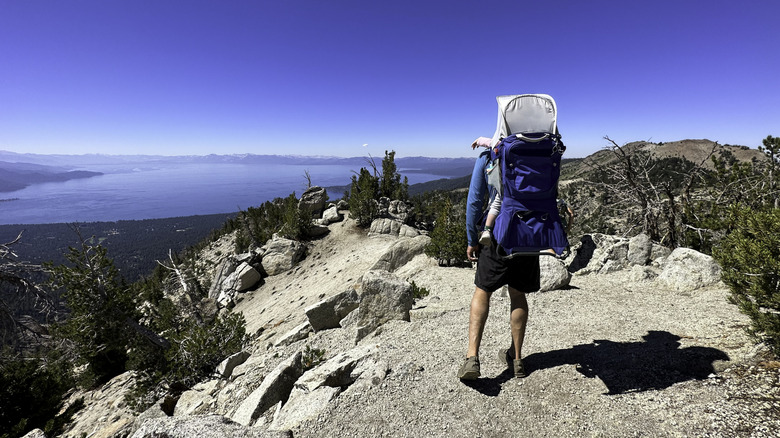
Lake Tahoe's elevation is part of what makes it so amazing, but it can also be problematic for some travelers. As we shared earlier in this guide, the lake itself has an elevation of 6,224 feet, which is well over a mile above sea level, without accounting for hiking trails and ski slopes that can take people even higher. Freel Peak, for example, stands at 10,881 feet. Although around 8,200 feet is often thought of as the metric for a serious risk of altitude sickness, it is not unheard of at lower elevations. Even Lake Tahoe's base elevation can make some visitors feel ill.
On a Facebook thread about altitude sickness in the Tahoe area, one commenter shared that their home in Lake Tahoe sites over 7,300 feet, and, "Very often our guests experience mild altitude sickness." Another Facebook user who regularly hosts Florida locals said altitude sickness "definitely can be an issue." Common symptoms of this ailment include loss of appetite, shortness of breath, headache, fatigue, nausea, and feeling dizzy. While altitude sickness usually resolves itself without medical intervention, people have died if they develop high altitude pulmonary edema (HAPE) or high-altitude cerebral edema (HACE).
If you are planning a trip to Lake Tahoe from a lower elevation, there are things you can do to prepare. If possible, start your vacation at a slightly lower elevations for a night or two and then gradually ascend up to Lake Tahoe's elevation. If earlier travel is not an option, however, you should begin seriously focusing on hydration a few days before your trip. Usually, it takes 24 to 72 hours to fully acclimate to a new elevation, so take it easy your first couple of days in the Sierra Nevadas for the most pleasant experience.
Getting around without a vehicle is a struggle
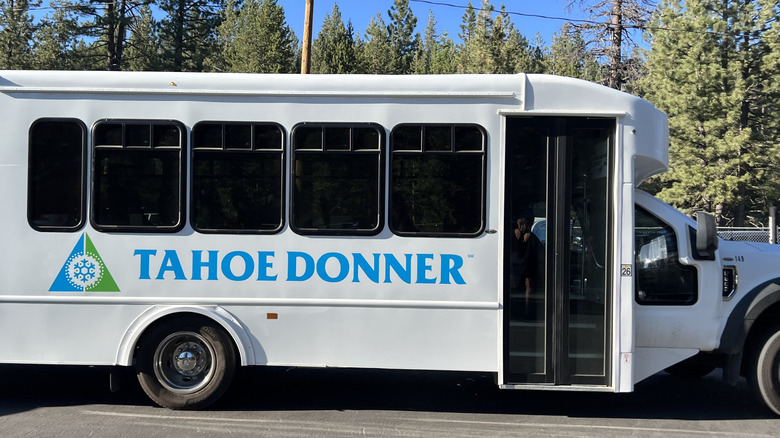
As we've established, Lake Tahoe is a relatively small community, but getting from one place to another without access to a vehicle can be quite the challenge. The area is not particularly walkable since tourists are often traveling miles through mountain passes and over difficult terrain to get from place to place. One local Redditor told a traveler that if you want to "see the whole lake, it's absolutely not feasible" to take a trip without a car. Another person on the same Reddit thread gave some slightly concerning advice: "If you don't rent a car and want to hike, hitchhiking might be your only option."
While hitchhiking might not be a serious consideration for safety-conscious 21st-century travelers, that post proves how tough it is to get around the region sans automobile. There are some shuttles and public transit options, like the Lake Link and TART Connect microtransit systems. However, these don't go everywhere, especially if you're headed somewhere remote. As one Reddit user noted, they also might not be super viable "unless you don't mind waiting...a looong time." Nevertheless, Tahoe authorities are making efforts to expand bus routes for travelers.
A rideshare is another potential solution if you are flying into Lake Tahoe and don't want to rent a car. Again, though, this is not a foolproof plan. As someone noted on another Reddit discussion about visiting without a vehicle, Uber and Lyft often match Tahoe riders with Reno-based drivers. Another person chimed in that "it's miserable" to try to enjoy a vehicle-free Lake Tahoe trip. For those who are unable to drive a rental car for one reason or another, hiring a dedicated driver for the duration of your stay may be the best way to get around.