
7 Weird Airport Rules That Could Catch Travelers Off Guard
When making travel plans, travelers' sights are usually set on the destination, from making hotel reservations to planning what they'll see and do and where they'll eat. Of course, there's also the process of booking flights and strategizing what to check or carry on. Overall, most people's airport worries usually start and end with making sure their bag isn't overweight and getting through TSA smoothly. Very few travelers consider the strange rules some airports may have — and, in some cases, they could even affect your trip.
In this article, we list weird airport rules that you might want to know before planning an upcoming trip. While some are minor rules you may never have noticed (even after traveling through these airports), others could land you in big trouble if you violate them.
Flights departing LaGuardia generally cannot exceed 1,500 miles in distance
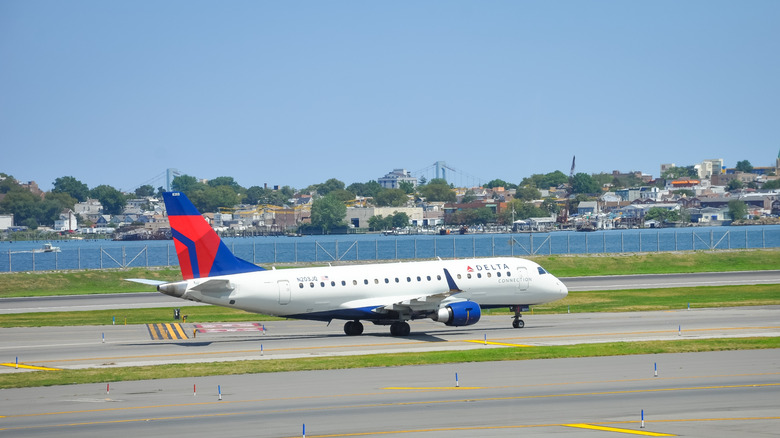
Unlike neighboring John F. Kennedy International Airport (JFK), LaGuardia Airport (LGA) in New York City mostly serves domestic and shorter international routes. This is because of the strict perimeter rule enforced by the Port Authority of New York and New Jersey, which generally prohibits nonstop flights to destinations more than 1,500 miles away.
Implemented in 1984, the rule was designed in part to ease congestion and minimize pollution and noise disruptions over the Queens area. The underlying rationale is that longer routes necessitate larger planes, which in turn increase engine noise and emissions. Flights to Denver International Airport are the only exception, as the route was grandfathered in and is only 1,619 miles away. Interestingly, the rule does not apply on Saturdays, allowing some longer nonstop routes that day.
Recreational marijuana is not welcome at Denver Airport
Though Colorado has legalized recreational marijuana, this doesn't mean you can bring it into Denver International Airport (DEN). Marijuana laws in the United States have relaxed considerably over the last decade, with recreational use now legal in numerous states. That said, marijuana remains illegal under federal law in most circumstances.
DEN's policies explicitly prohibit the possession, use, and sale of marijuana on airport property. This means possessing even minuscule amounts of weed could still get you in trouble if you're caught. However some airports, such as Los Angeles International Airport, allow travelers to carry a certain amount of marijuana in accordance with state law, with a warning that it may not be allowed at their destination.
Keep in mind that while TSA does not specifically search for marijuana, officers who find a substance that may violate federal law during screening are required to refer it to law enforcement. At DEN, since marijuana is prohibited on airport property, travelers caught with it may be referred to the Denver Police Department.
San Francisco Airport has banned plastic bottles

San Francisco is among the healthiest cities to live in and travel to in the United States. Part of what makes it a healthy city is its progressive public infrastructure and programs, which include commitments to sustainability. One of the ways the city follows through on these commitments is at San Francisco International Airport (SFO), which prohibits restaurants, stores, lounges, vending machines, and other businesses from selling beverages in certain single-use plastic packaging. Instead, beverages sold must use approved alternatives, such as compostable material, glass, or aluminum. Travelers are permitted to bring their own personal water bottles, plastic or otherwise, and free water bottle refill stations are available throughout the terminals to encourage their use.
London Airports charge a 'farewell fee' to drop off travelers
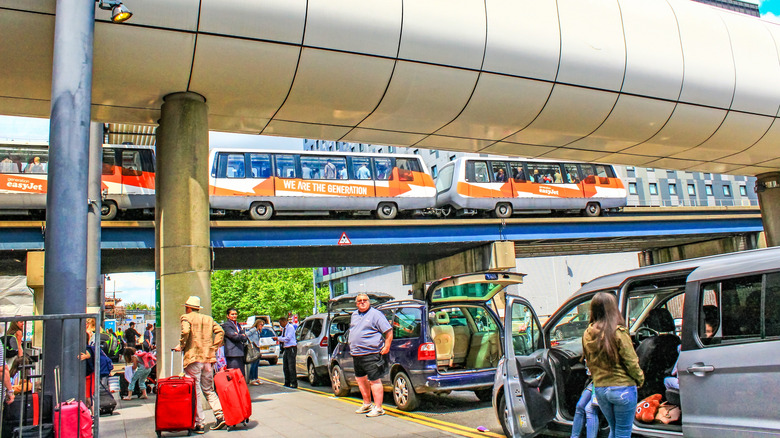
After traveling in London, the world's top literary travel destination, you might be departing from London Gatwick Airport (LGW) or Heathrow Airport (LHR). If someone is dropping you off, make sure they know about the "farewell fee" that drivers must pay to use the terminal drop-off zones. As of 2026, the Gatwick Airport fee has increased from £7 to £10 (about $10 to $14), which covers the first 10 minutes. After that, another £1 is added for each additional minute, with a cap of 30 minutes and a maximum charge of £30 (roughly $41). There is no need to pay while at the airport. Cameras read the car's license plate number, allowing drivers to pay their fee online. Payments must be settled by midnight the next day.
Heathrow is similar. LHR charges drivers £7 (approximately $10) to enter a terminal drop-off zone. Unlike Gatwick's time-based structure, Heathrow charges a flat fee for each entry and imposes a stricter time limit. Drivers must exit the drop-off zone within 10 minutes.
Overall, many of the U.K.'s most popular airports now charge drop-off fees to encourage travelers to use public transport, decrease pollution around airports, and reduce drop-off traffic at terminals. In Gatwick's case, the charge was introduced in part to meet approval prerequisites for a second runway, which require at least 54% of passengers to arrive by public transport. After the fee increase in 2026, Gatwick sits at the top of the list for most expensive drop-off fees. The most expensive drop-off fee per minute, though, is London City Airport, which charges £8 for five minutes.
Adolfo Suárez Madrid-Barajas Airport restricts access to its terminals overnight
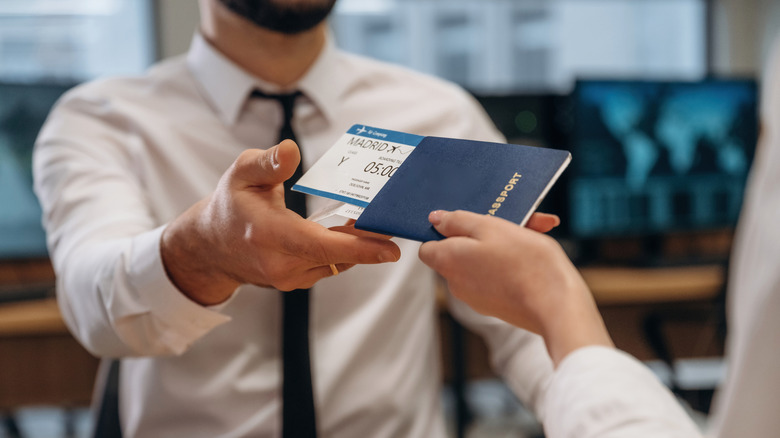
In 2025, Spain's airport authority, Aena, implemented new measures at Adolfo Suárez Madrid-Barajas Airport (MAD) that restrict access to its terminals overnight to passengers with boarding passes or tickets, people accompanying passengers, and airport employees. From 9 p.m. to 5 a.m., members of the general public who don't fall into one of these categories cannot enter the terminals. While it seems like a strange rule, this policy was introduced after an influx of unhoused people began camping overnight in the terminals. According to AP, local media reported that the number grew to hundreds of individuals and that Aena did not receive sufficient support from Madrid city officials, leading to the new policy.
Ngurah Rai Airport in Bali closes for 24 hours for the Nyepi holiday
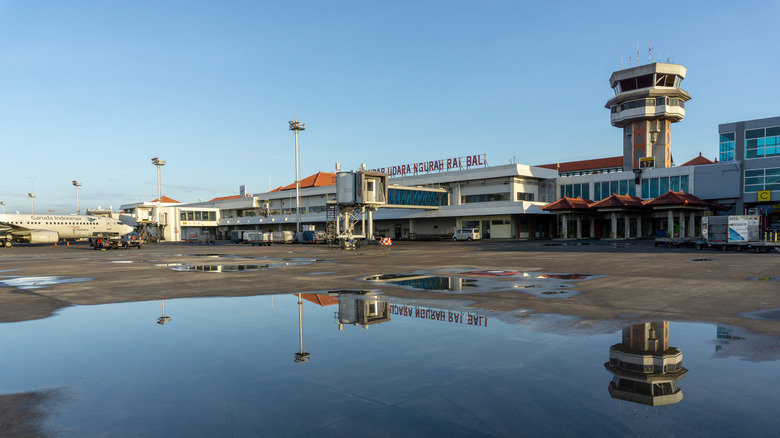
Throughout the world, there are very few holidays that completely close down retail stores, public services, and banks all at once, and almost none that completely suspend flights. We say "almost none," since the I Gusti Ngurah Rai Airport (DPS) in Bali, Indonesia, does have one such holiday. Every year, Bali observes Nyepi, also known as the "Bali Day of Silence," which marks the Balinese Hindu New Year. This Hindu holiday is traditionally observed with quiet reflection and fasting, and it places restrictions on things like entertainment, making noise, and traveling. To accommodate Hindu followers and observe this important holiday, DPS suspends regular commercial flights and remains closed from 6 a.m. on Nyepi until 6 a.m. the following day. In case of specially authorized flights, including medical emergencies, airport employees remain on standby.
Travelers arriving at Auckland Airport must declare certain outdoor equipment

If you're headed to New Zealand to enjoy the beautiful outdoors, such as the wild haven of Paparoa National Park, make sure to give your hiking boots a good scrub and declare any outdoor equipment that could pose a biosecurity risk — or else you might face an NZ $400 fine (approximately $235 USD). This isn't unique to Auckland International Airport (AKL); it's part of New Zealand's biosecurity rules for arriving travelers. Items like hiking boots or trekking poles can carry dirt that harbors pests and disease.
Since New Zealand's environment is so unique and isolated, outside pests and disease can wreak havoc on local flora and fauna, upsetting local ecosystems. When you declare these items on your declaration form, a biosecurity officer will inspect your equipment and may clean your items for you if there's some remaining dirt. If they are too dirty to be cleared, you may have to bin them. As such, you'll want to clean them thoroughly beforehand to make sure they're in tip-top shape.