
9 Disadvantages Of Staying In A Rental Compared To Booking A Hotel
We may receive a commission on purchases made from links.
Whether you want to call it the big hotel comeback or the age of the short-term rental decline, one thing is certain: many are questioning if rentals are still worth it. Many used to believe they were a better deal than hotels, while offering more authentic local experiences. But today, many aren't so sure about those notions and are thinking twice about booking Airbnbs or other rentals. At the time of this writing, demand and occupancy rates have been on the decline for years, and that drop-off is forecasted to continue; many Reddit threads are calling hotels more convenient and just generally better.
Unreasonable hosts are one common complaint. But local complaints of some major issues short-term rentals bring into their neighborhoods have soured some of those authentic connections travelers hoped for. And those savings that used to be a big draw also seem to have dwindled. One study found that when all the extra fees were accounted for, in most cases, hotels were cheaper in the majority of U.S. cities (via Rateranger). While this study used data from Airbnb for their comparison, you can expect the same from Vrbo as they have similar pricing — but you can always try your luck with one of the other traveler-approved booking platforms!
I've used dozens of rentals, and I agree that in some cases, they're no longer cheaper than hotels. But that's only one of the long list of disadvantages of staying in a rental. I've also experienced safety issues and other uncomfortable circumstances while staying in the accommodations. If you're deciding between the two, we're sharing our personal experiences plus some wild stories from other travelers that highlight other downsides you may want to consider.
No alternative accommodations when things go wrong
Imagine you've rented a dreamy cabin or house in the middle of nowhere. You've stocked up on food and gas, and now all you have to do is relax for the next week. Then you get to the rental, and important appliances are broken. This actually happened to me on the remote south coast of Jamaica. I was there for an important family event but had booked extra days to relax. An hour or so after we arrived, we realized that the AC in the living area and one bedroom didn't work. It took an email message and two phone calls to get through to the host a couple hours later.
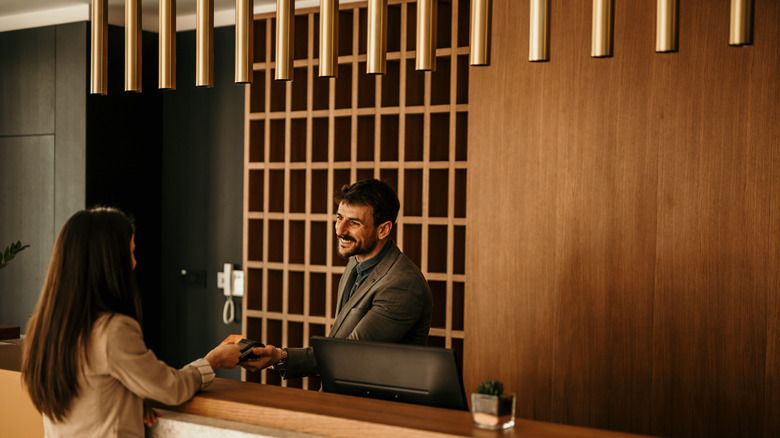
Now, if this were a hotel, it would have been easy to call the front desk for help. They would have offered substitute accommodations in all likelihood — maybe even an upgrade – as that's a common way they deal with these situations. But this wasn't a hotel. When you book a rental and encounter serious issues, you have to contact the host and wait for a reply on their time. Even then, the most they can do is send a technician. A Rent Responsibly study shows that more than 60% of hosts don't own second properties, so even if they wanted to offer alternative accommodations, most can't.
It's fair to point out that if you have major issues and contact rental platforms like Airbnb within 72 hours, they'll look around for another house at a comparable rate. But if you're in a remote area like I was, there's no guarantee they'll succeed. This is a distinct disadvantage when compared to a hotel. With the latter having so many rooms and suites on hand, the probability of getting alternative accommodations is higher than with a rental.
A rental can sell to new owners who may not honor your reservation
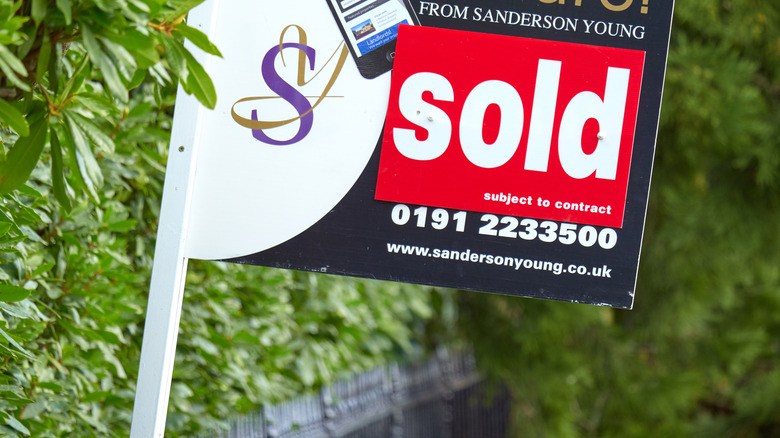
Social media is replete with people showing up at rentals to find that they've been sold. These new owners aren't usually obligated to honor prior reservations and many times will not. This is where your vacation can turn into a nightmare. One traveler on Reddit luckily found out before their trip: "Rented an Airbnb for 10 people in Florida months ago ... I get a message yesterday from the host that the property sold and closed much faster than she was expecting and so now I no longer have a rental."
But as this Redditor illustrates, not everybody is that fortunate: "Rented a house in Florida for a wedding this weekend. I received check-in instructions yesterday and, after driving 6 hours today ... A man came out and told me it was no longer a rental—he had purchased it 4 months ago." This brings us to an inconvenient downside of booking a rental instead of a hotel. Since residential properties sell faster than commercial ones, rentals are likely to easily find a buyer once they hit the market. Hotels, on the other hand, can take up to a year, or longer, to sell, giving guests more notice to re-book elsewhere. But this is rarely necessary as it's highly unlikely that the sale of a hotel will affect bookings.
Hotels usually get sold as operational entities, a type of contract where new owners honor operational agreements made by old owners. This includes bookings. In fact, it is in the current owner's best interest to maintain reservations as potential buyers view them as signs of a thriving business. Basically, if you book a hotel that sells, it's unlikely you'll even know, as bookings transfer seamlessly without affecting you.
You have to do your own housekeeping (then pay cleaning fees)
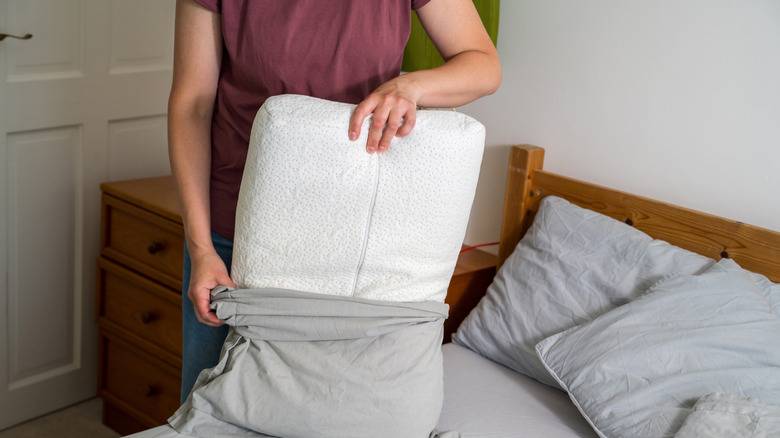
If you've used a rental platform at all, you know that cleaning fees are par for the course. Airbnb, Vrbo, and Homestay all allow the additional charges as part of standard policy. They're so customary that guests largely accept them. What irks travelers is the amount of housekeeping they're expected to do, in addition to having to pay hefty cleaning bills. "Airbnb is $182 a night for 2 nights but final bill is $730 with $230 of that being a cleaning fee," complained a traveler on Reddit. "Fair enough. Except when I get here I'm told I have to take all the trash to the dumpster, clean all the dishes, wash the towels we use, put the sheets in the hall, sweep."
It should be pointed out that Airbnb's official policy, at least, makes it clear that hosts should not charge cleaning fees above what it costs for standard cleanings between reservations. However, there are no set guidelines for amounts, so this is left to the discretion of hosts. Depending on the host you get, you can expect very high cleaning fees or more reasonable ones, but there'll be a fee, even if the rental is left in good condition.
It's different with hotels. While they can charge extra fees, cleaning fees are rarely added unless you leave behind a big mess above the abilities of normal housekeeping. When you consider that, although you don't pay extra for the service, housekeeping will stop by daily to clean up, you can see why hotels come out on top in this respect. Maybe that's why travelers like this Redditor are done with rentals. "Went back to hotels," they wrote. "Never again will I pay to be my own maid."
Fees can be higher than hotels
Like many other travelers, I've found that private accommodations are more expensive than hotels in some cases. Almost without exception, rentals are the better deal when I'm booking for my family or a big group of friends. When it's for two, they'll almost always be more expensive. So if you're a large group looking for a cozy cabin rental across America or a big family seeking an amazing rental for a vacation in Florida, you may still find savings. Otherwise, not so much.
For example, say you're a group of six to eight visiting Disney in the last week of August 2026. At the time of this writing, you could book two rooms with a pair of queen or double beds in a mid-range hotel like Ramada Plaza by Wyndham Orlando Resort, or Best Western Orlando Gateway Hotel, for between $1,200 and $1,500, including taxes. The most affordable 3- or 4-bedroom on Airbnb would be around $800, plus fees, which may work out cheaper than the hotels — and come with more space.
Take the same scenario for a couple. A room would be around $600, including taxes. But the cheapest one-bedroom on Airbnb would be around $750. And this is without the additional fees that can significantly increase the bill. While the rental may offer more space being more expensive, it may not be worth it for some. Shockingly, one post on Reddit went viral for a rental invoice where $700 of the $1,200 total was for fees like cleaning, a damage waiver, and other charges. No wonder travelers leave these kinds of comments on Reddit: "I used Airbnb a lot at first. I never use it now ... Airbnb is now more expensive and more hassle than a hotel."
The effect on local housing markets
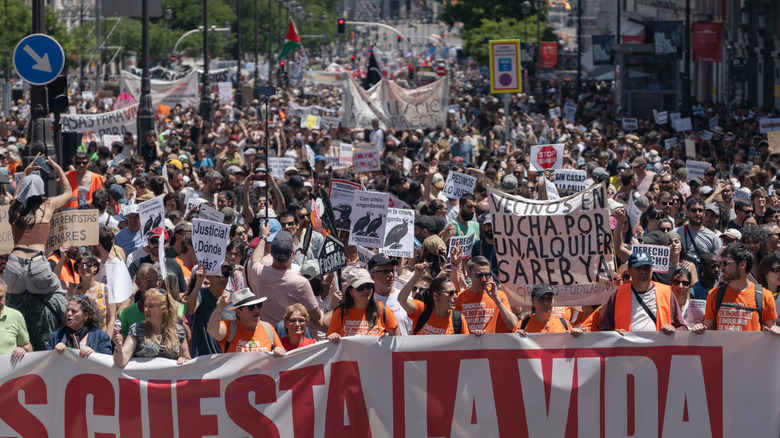
You may think booking through a vacation rental platform is harmless. But some communities in popular destinations would disagree. According to its now-famous pitch deck, when Airbnb launched in 2008, its unique selling proposition was: 'Book rooms with locals, rather than hotels.' With travelers staying in homes already occupied by locals, there was little impact on the housing market for residents. That all changed around 2009 when the platform began offering whole homes and apartments. Vrbo and other similar platforms also offer the same service, giving local landlords the chance to rent to tourists instead of long-term tenants.
Many home owners in touristy destinations like Portugal and Spain chose to withdraw their properties from the local market, lowering housing stocks and driving up long-term rental prices to exorbitant levels. This prompted locals, from Spain to Mexico, to take to the streets in protest of being driven out of their neighborhoods. With housing priced out of their reach, their pain is real and something every ethical traveler should consider when booking a rental — you know it's serious when travel stalwart, Rick Steves has resorted to begging travelers to stop using Airbnbs for this very reason.
To be sure, the protesters are happy to welcome visitors into their towns. But not if the cost is homelessness. This is where choosing a rental in affected cities is the inferior choice if you can go with a hotel. Hotels have little effect on housing markets as they're zoned in commercial areas that don't overlap with residential neighborhoods. They're also an asset as they provide jobs and revenue for local merchants and city officials. The same isn't true for rentals which were historically part of the collection of long-term housing before being converted into vacation accommodations.
You may have to lie about your rental status in restricted areas
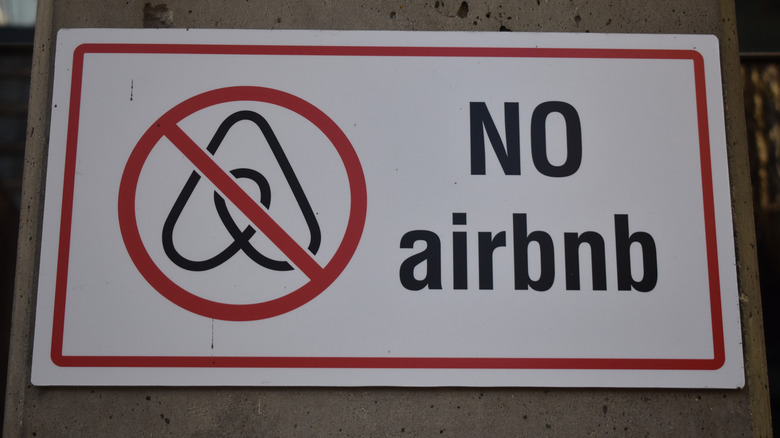
With their severe impacts on residents' access to housing, many cities have enacted legislation targeting short-term rentals. In the U.S., cities like Los Angeles, New York City, and Palm Beach have various restrictions to lessen their effects. Canada and other destinations like Europe have similar short-term rental regulations. But hosts sometimes bypass or ignore these laws and offer their properties illegally anyway. This makes it easy to inadvertently rent a restricted house and find yourself in the uncomfortable situation of having to lie once you arrive.
A CNBC report on illegal Airbnbs in Miami Beach details instances where hosts ask guests to lie and say they're staying for free. And a traveler planning a trip to Taiwan told this story on Reddit: "Host sent me some instructions that made me really uncomfortable. They told me that if the Taiwan Tourism Bureau staff asks, I should say I am not from Airbnb, pretend I am just a friend of the owner, and not show my Airbnb booking ... This feels really unsafe and possibly illegal."
While there's no guarantee you won't have other issues in a hotel, being asked to lie won't be one of them. When you book a hotel, you have the peace of mind of knowing you are making a reservation in a property that is zoned to accept guests without restrictions. You'll never have to lie about whether or not you're a guest, and you definitely won't have to worry that you're being rented illegal accommodations.
Rentals aren't always as safe as hotels
Back when I was a student with a limited budget, I suddenly needed to be in Newark, New Jersey, in a neighborhood close to the light rail so I could make an important meeting. Although I was intentional about checking with the host about safety, I arrived to a scary situation. The "family" in the house was actually individual guests in what can best be described as makeshift rooms. One was blasting music and smoking indoors. The other two guests began fighting in the room next to the one I was staying in and literally dented the wall between us.
Adding to my fear, during the night, all kinds of cursing came from the living room area, making me worried that whoever was making the threatening sounds could easily break into my room. Fears for safety when it comes to short-term rentals aren't unfounded. When dealing with hosts in their private properties, your safety depends on their morality: there is no buffer between you and them, in the event they turn out to be dangerous. And human nature dictates that some percentage will pose a danger. To illustrate, a Bloomberg.com investigation uncovered numerous instances where Airbnb hosts raped, blackmailed, or assaulted guests. These attacks are widespread enough that the company has a secret team to rescue customers and stave off unwanted publicity.
When you consider that private homes don't come with the stringent security a hotel has, you can see why these instances can easily occur. Hotels, on the other hand, usually have on-site security personnel and front desks to protect you in emergencies. There are no lurking hosts with easy access to your space, as the security employed by hotels actively protects guests from unwanted visitors, giving an added layer of protection.
You may be secretly filmed by hidden cameras
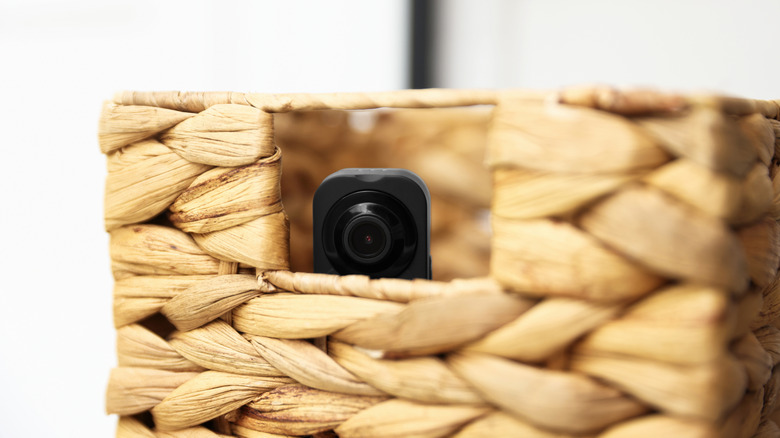
Stories of being secretly recorded while in a rental have become common around social media and news outlets. For one traveler on Reddit, the discovery came after complaining of a broken lock: "He also claims to have video footage of us closing a door 'too strongly.' That's when I realized... we were recorded during our stay. And not only that, but we were NEVER informed there were cameras inside the house." And one person went into: "Pure panic, pure shock mode," when she found hidden cameras in her rental after an intimate moment, according to Fox 5 News. "I've definitely had many cry sessions about it," she further explained.
Another Fox News report highlighted criminal investigations after a woman found two cameras in a rental's bathroom. The list of incidents could continue forever, as hidden cameras are an ongoing problem with private accommodations. This is usually because hosts want to protect their properties and end up doing so in an invasive way. But it could also be because you get a perverted host. When dealing with strangers, you never know.
If you book with a hotel, you're unlikely to have these issues, as you won't be dealing with individuals who may or may not have twisted inclinations. Being big corporations, most hotels won't willingly expose themselves to those liabilities. "In the U.S., there is no hotel or management company of hotels that would ever subject themselves to the massive liabilities of putting surveillance cameras in an actual hotel room," explained security expert Todd Morris, in an article in Time. This isn't to say it can never happen in a hotel. On the rare chance it does, though, it's likely an employee targeting a celebrity guest. Unless you fall in that category, you're probably safe.
Ridiculous house rules
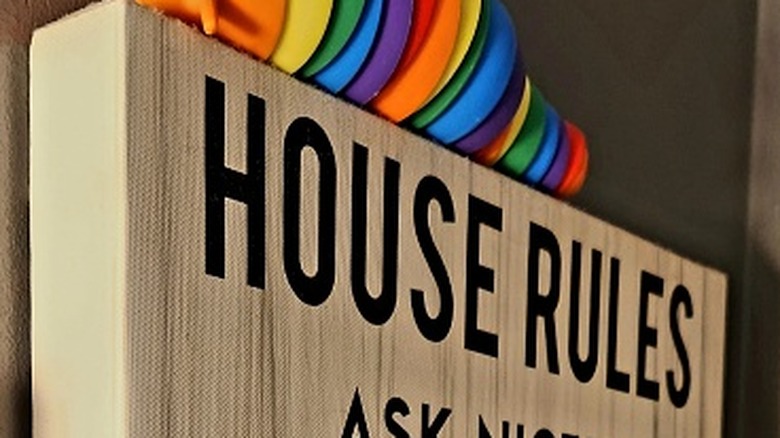
With strangers staying in their properties, it's understandable that hosts would have rules to lessen damage and make for a smoother transaction over the course of the stay. But some go to ridiculous lengths. One traveler who was renting a private house posted this silly example on Reddit: "Absolutely no noise after 9 pm on Thursday, 10 pm Friday. This is enforced by a 'noise monitor.'" Elsewhere, a host attempted an equally unbelievable rule: "A $100 fine for any negative review until removed." Not surprisingly, the reaction from the Redditor was to find it "hilarious."
Other examples, like this item from a numbered list, "DO NOT OPEN WINDOWS; IF YOU DO WILL CHARGE YOU A FEE OF $200.00," are all over Reddit and show just how unbelievable the rules can get. This is quite unlike what you would expect from a hotel. Hotels may have expected rules around refunds, smoking, illegal activities like drug use, and noise in common areas, but we can confidently predict that a hotel will never threaten you with a penalty for a bad review!