
10 Tips From Park Rangers For Enjoying Death Valley National Park
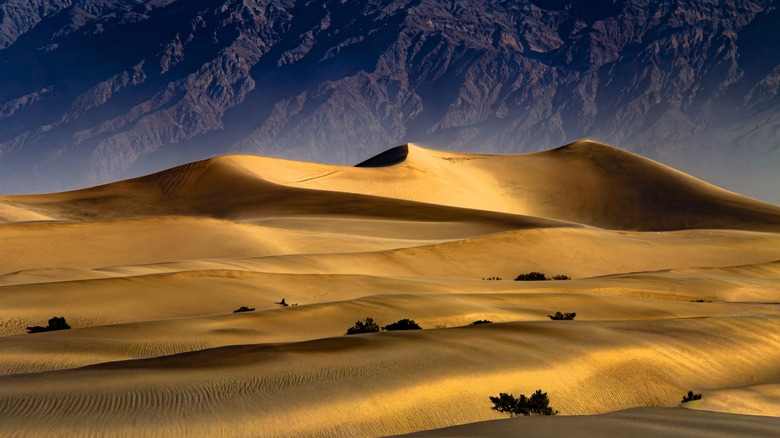
At 3.4 million acres, Death Valley National Park is the largest national park in the Lower 48 by far, exceeding Yellowstone by 1.2 million acres and more than more than doubling the Everglades. In 2025, the southeastern California park, which hugs the Nevada border, welcomed more than 1.32 million visitors. Considering that nearly 93% of the park is designated wilderness full of surreal, Mars-like landscapes, however, there are plenty of places to explore where you might not see another person. Travel along nearly 1,000 miles of roads, join a ranger-led program, stargaze beneath some of the darkest skies in the country, and camp amid wide-open expanses with mountain views.
Death Valley holds the distinction of being the hottest place on Earth. In 1913, the Furnace Creek area clocked 134 degrees Fahrenheit, the highest reliably recorded air temperature on Earth. With its intense dryness and heat in mind, rangers have plenty of pointers on how to enjoy the park, from what to see and do to how to stay safe in this landscape of extremes. Below, discover 10 tips from Death Valley rangers that will help you make the most of your visit.
To compile this list, we've consulted a variety of official National Park Service (NPS) videos, podcast interviews, and safety tips published on NPS.gov from rangers at Death Valley specifically. We also researched information published by the National Park Foundation, PeopleinParks.org, local news outlets, and Reddit threads where a ranger identified themselves as such. Read on to learn more from those who know best about this remarkable Western destination, along with how and when to get the most out of the experience.
Take in an astronomical show after dark
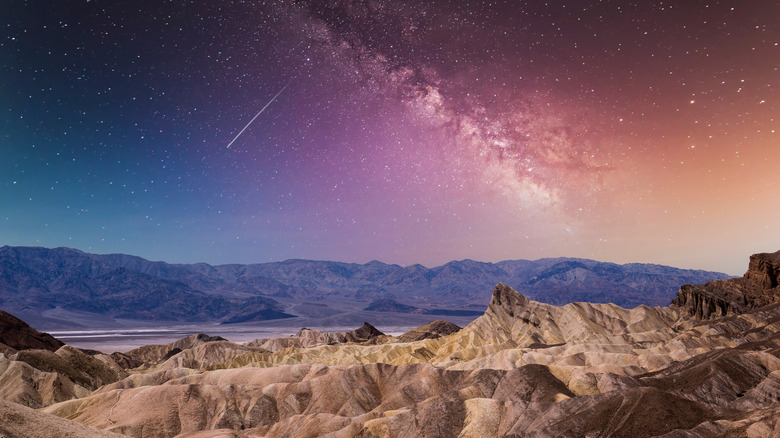
After scouting out the best sunset views in Death Valley, there's much more yet to see. "Something to not overlook is stargazing," says ranger Abby Wines on The Parks Podcast. She adds, "If you're here at a time when the moon is not up, then you're going to be treated to seeing the Milky Way itself." Death Valley's skies are so dark and clear that DarkSky International has awarded the park its Gold Tier designation —its highest rating of darkness — which means there is very little light pollution obstructing the view of the night sky. Astronomy fans may also want to plan a visit during the annual Dark Sky Festival, which is usually held in early February and includes talks and workshops by NASA scientists, rangers, and others.
Stargazing takes time to get the full experience. If you've been in an area illuminated with white light, such as sitting in a tent with a lantern, it takes up to 30 minutes for our eyes to fully adjust to the darkness. The park suggests using a red light or a flashlight covered in red cellophane to help preserve night vision. A pair of good binoculars is a great way to see the sky in more detail. Ranger Matt Lamar adds during an interview with Safe Travels Podcast, "Nowadays almost everyone has a smartphone, so I really recommend downloading one of the star-viewing apps. Even though we don't have much cell phone service here in Death Valley, as long as you set it up in advance, the GPS will work."
Prepare to see way more than just dry, cracked earth
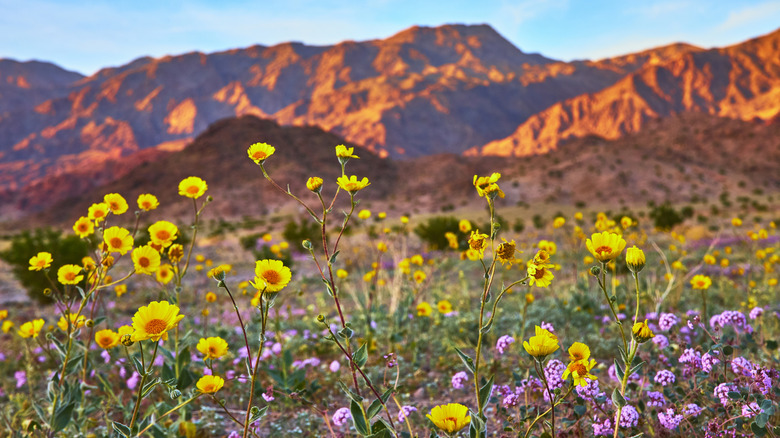
Death Valley National Park might evoke broad expanses of arid, cracked desert, and while there is some of that, there's a whole lot more, too. To begin with, the name itself is rather deceiving, as the region is home to a wide array of plants and animals. In spring and fall, hundreds of species of migrating birds pass through, and mammals including coyotes, desert bighorn sheep, nine species of bats, and numerous types of mice and kangaroo rats make their homes here.
In addition to animals, the land also comes alive with wildflowers in spring and early summer. Sometimes visitors are treated to a rare superbloom, such as one that erupted with color in spring 2026. In an official NPS video, ranger Alan Van Valkenburg notes, "If you get a chance to see a bloom in Death Valley — especially a superbloom — you should take the opportunity to see it because it could be a once-in-a-lifetime opportunity." In the event of one of these epic flowerings, the park chronicles what's blossoming, both where and when. Because spring is a busy time of year in the park, expect crowds and limited parking in popular areas like Zabriskie Point or around Golden Canyon, with its ethereal views and wildlife.
If you have car trouble, stay with your vehicle
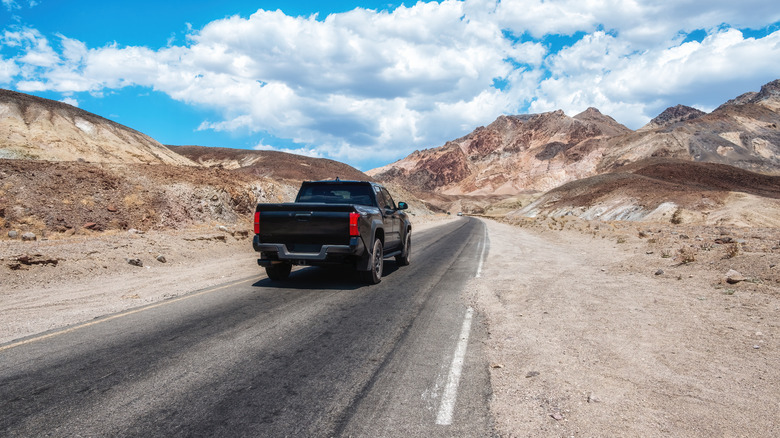
Because of the extreme conditions in Death Valley National Park, especially in the summer when temperatures can hit 120 degrees Fahrenheit or higher, cars sometimes feel the brunt of the heat. Brakes and engines can overheat, especially in older vehicles, and it's not unheard of for vehicles to burst into flames. First, it's a good idea to make sure all your fluids are topped off and you have enough gas before you enter the park, but you may also want to avoid visiting in summer for your own safety altogether.
Sometimes, though, you can't foresee an issue. "If your vehicle is running into any trouble, stay by your vehicle. Do not attempt to walk across the desert," ranger Clint Augustson says in an official NPS video. This is especially true if you're not dressed for the walk or don't have enough water with you. He adds, "As long as you're in the more popular sections of the park, help will arrive soon." So what if you're not in a popular area of the park? A French tourist died in August 2026, according to The Guardian, after his car became stuck in mud in a remote area of the park and he and a companion began walking in 116-degree heat.
The park recommends going into wilderness areas only if you're prepared. Head into the backcountry with at least one, but preferably two, spare tires, and make sure you have extra food and plenty of water — enough to get you through at least a couple of days, as search and rescue teams can take a long time to arrive.
Don't cave to clever coyotes
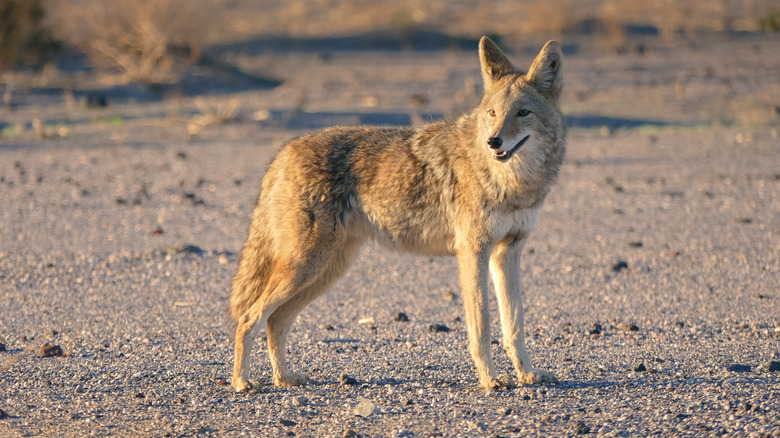
Coyotes are a common sight in Death Valley, where they've adapted to the harsh climate. They mostly eat rodents, but they'll also nibble prickly pear fruits or pick at carrion. They also don't mind scrounging around in humans' garbage for additional food. Visitors sometimes feed them, too, which is illegal, but that doesn't mean it doesn't happen. In that vein, ranger Elyscia Letterman tells Safe Travels Podcast, "One of our biggest messages is, please don't feed the coyotes, because no one wants a coyote walking up to them." She says that the animals have been spotted faking an injury or trying to appear cute to persuade people to give them snacks.
Keep both yourself and the park's coyotes safe by ignoring their clever ploys. They'll "actually stop traffic by walking out into the middle of the road and just standing there," Letterman adds. "And then people are taking their pictures and giving them food, but then what happens? The coyotes end up getting run over." When coyotes head into the road in an attempt to get handouts, the trick doesn't always work, and cars collide with them instead. As a driver, it's a good reminder to always watch the road for wildlife, too.
Stay safe from wildlife, especially on hikes
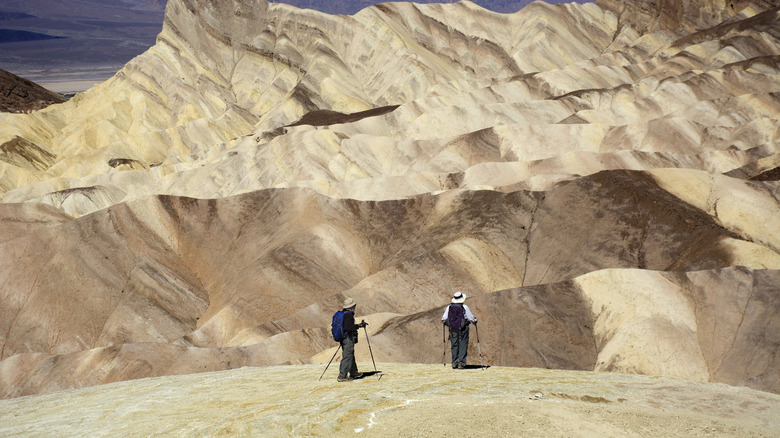
There are a few things to keep in mind for hiking safely in Death Valley that may sound familiar if you've hiked in other national parks where terrain and weather can be harsh, but here, you're facing the extremes: heat, remoteness, and some animals with bites or stings that can be venomous. The desert is home to black widow spiders, sidewinders, rattlesnakes, and scorpions, but it's rare for them to come in contact with people. "Of course there are dangers. If you get bitten by a rattlesnake, that could be a problem," Elyscia Letterman says on the Safe Travels Podcast. "Not every bite contains venom; some bites are dry bites, but you should certainly go to the hospital." No matter where you are, watch your step. You may be more likely to spot tracks in the sand — including the distinctive J-shaped pattern of the sidewinder — than the creature itself.
And what about larger animals? "We don't have a lot of big predators," Letterman adds in the interview. "Mountain lions are the biggest ones. For those, normal mountain lion precautions: best to hike in groups. If you see a mountain lion, make a lot of noise, get big." Situational awareness is a visitor's biggest asset when out on the trail or cruising along a remote road. Pay attention to your surroundings, trust your gut, and make sure you're prepared in advance for the activity you're taking on, such as having plenty of water.
Fido would be happier at home
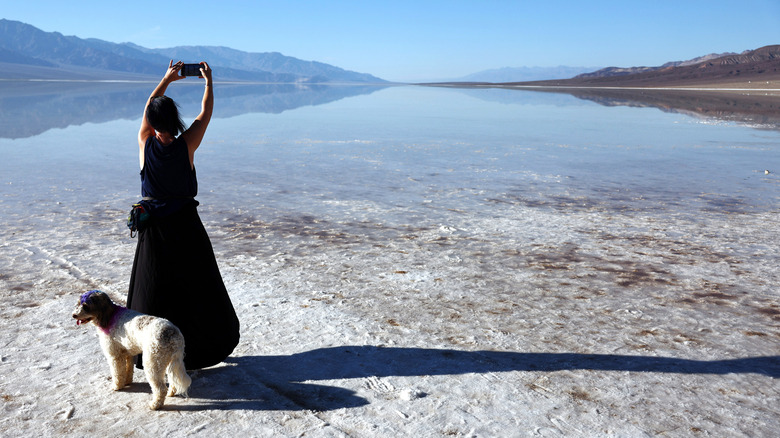
National parks generally aren't the best places to bring pets, with a few parks and monuments that are actually dog-friendly as exceptions. Unfortunately, Death Valley isn't one of them. "Pets would probably be happier if you left [them] at home," says ranger Abby Wines on The Parks Podcast. "Pets are only allowed in campgrounds and on roads. They are not allowed on trails, they're not allowed cross-country, and that really limits what you can see in the park." Access and the elements aside, if you head to lands managed by the U.S. Forest Service or Bureau of Land Management (BLM) outside the park boundary, dogs are typically permitted in more places.
As mentioned before, there are almost 1,000 miles of roads in the park, including dirt tracks. Dogs are allowed on these roads if that's the kind of hike you're happy to take, but you'll still want to be wary of wild animals, such as lizards and snakes, plus sharp, hot rocks that can be tough on your dog's paws. "Also, for much of the year, it's too hot to leave pets in cars," Wines adds. The park especially advises visitors to avoid bringing pets between late spring and early fall, when temperatures soar.
Hydrate all day long
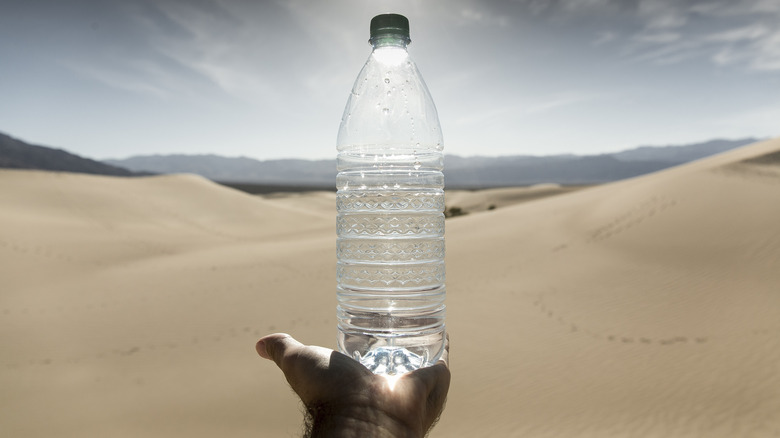
We've touched on the importance of water already, but it's worth getting into hydration at Death Valley National Park because it can mean the difference between life and death. In the desert, you may not feel sweaty because it evaporates so quickly. You may not feel thirsty right away, but trust that the dehydration process is happening. One good tip is to sip water consistently rather than stopping to take big gulps after you're already parched. In an NPS video, ranger Clint Augustson says, "Make sure you have enough water for each person. The average person in Death Valley, in the summer, will drink about a gallon of water a day."
Another thing that's easy to forget about dehydration is that it's not only water you lose during activity but also electrolytes, which are minerals including potassium, sodium, and magnesium. Along with plenty of H2O, pack salty snacks to have along the way, or consider drinking water with added electrolytes.
Steer clear of old mines
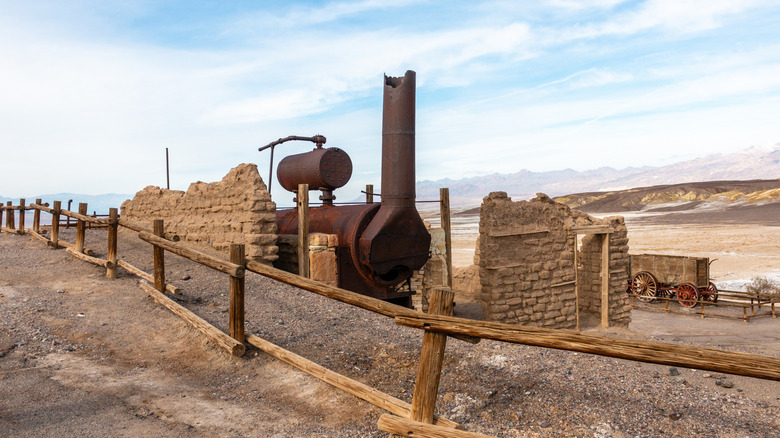
Thousands of remnants of Death Valley's mining heritage are scattered throughout this vast park — more than 18,000 features, in fact. After the legendary 1848 gold strike in California, Death Valley became a center of mining activity, and when visitors are out on hikes or driving around the desert, they may encounter old shafts and mounds of discarded debris known as tailings. The park recommends keeping your distance from these structures, which can be unstable and may contain noxious chemicals or toxic metals.
Another reason not to disturb the mines comes down to ecology, especially for the park's populations of bats. "Death Valley has a rich history not only biologically with different species but also rich human history," Elyscia Letterman says on the Safe Travels Podcast. "And part of that, a more recent part, is mining. So we have a lot of abandoned mining adits and shafts that the bats have started utilizing."
For some 19th-century ingenuity you can explore, Harmony Borax Works is among the best-preserved historic sites in the park, and visitors can wander around this frontier location often called an "outdoor museum." The company made the cleaning agent from a compound of naturally occurring minerals in the 1880s and became famous for its "20-mule teams," which hauled the material by the wagonload.
Report illegal marijuana grow sites
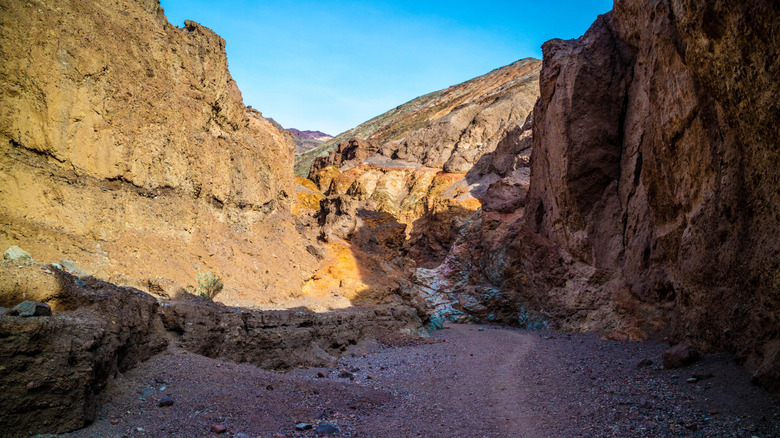
Among the many safety tips Death Valley National Park advises, there's one visitors don't encounter too often in other parks: what to do if you encounter an illegal marijuana grow site. Because of the park's vast expanse and remote areas, illicit growers have occasionally set up shop in tucked-away canyons where they hope they won't be discovered. In 2023, a site in Jail Canyon was cleaned up, one of nearly two dozen that law enforcement had dealt with in less than a decade.
"Even though California and Nevada have passed laws legalizing marijuana sale, it remains illegal at the federal level," Death Valley Superintendent Mike Reynolds said after another bust in 2018, according to National Parks Traveler. "Our biggest concerns in Death Valley are that grow sites decimate vegetation around springs, poison wildlife, and are dangerous for the public." They're usually situated near natural springs that provide irrigation, and if visitors hiking through the park notice signs of suspicious activity — including excessive trash, heavy trail use in a remote area, or plastic irrigation tubing — they should leave the area promptly and contact an NPS ranger as soon as possible.
Offroad elsewhere
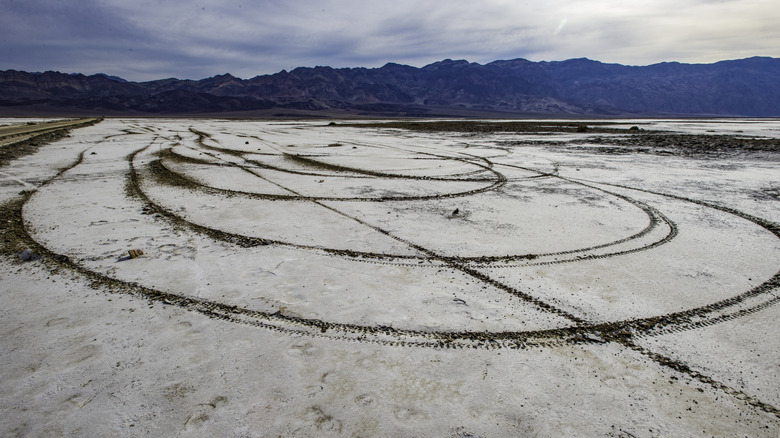
As tempting as it may feel to head out onto the open ground of Death Valley in your four-wheel-drive vehicle, off-roading is prohibited in the national park. One of the NPS' most pointed messages is to stay on marked roads. "Tire tracks last a really, really long time," says Elyscia Letterman on the Safe Travels Podcast. "People come to park and they don't realize it's not an OHV area or an area where you are allowed to do those types of activities. What happens is that, when you drive, depending on what you're driving on, you can really compact the soil, and it can stay there for years." Also, remember the tourist whose car became stuck in mud? It's hard to know what type of terrain you'll encounter, so it's a safety precaution, too.
Tire tracks and footprints are also unsightly, damaging the desert landscape that hundreds of thousands of visitors come to enjoy every year. Nothing takes you out of an experience with nature like evidence of someone doing something illegal there. In fact, all OHVs, including dune buggies, ATVs, or any vehicle with a California "green sticker," are prohibited in the park. Fortunately, there are some places outside the park boundaries where off-roading is welcome, including Dumont Dunes OHV Area, a Bureau of Land Management area south of the park. Big Dune, sometimes referred to as Amargosa Dunes, is another option east of the park.