
13 Biggest Things That Surprise American Tourists When Visiting The UK
Thanks to film and TV, British culture might seem familiar in some ways, yet there's little to really prepare you for the experience of actually being there. People can sound different even when they grew up in the same city. The roads are narrow and the roundabouts are famously daunting and elaborate. And even familiar American brands or restaurant chains have a British twist. There's a lot that can surprise a first-time visitor. Of course, that also gets to the heart of why a visit can be immanently memorable.
I first visited the U.K. two decades ago during a semester-long study abroad program in London. I eventually moved to Scotland, where I lived for a little more than three years, and I've traveled around the U.K. frequently. It continues to be one of my favorite places to visit, and although parts of it now feel like a home away from home in many ways, I still learn something new every single time I go there.
Below, discover 13 things that American tourists often find surprising about a visit to the U.K., from unusual things you'll encounter in a hotel room to dining customs and public transportation. I've experienced every one of these things firsthand, but I've also drawn from insights shared by other travelers and U.K. residents on blogs, Reddit, and other social media platforms. I've also consulted a number of official governmental and infrastructural resources, such as transit authorities. Don't "faff about" as you plan for your next trip; read on to learn about some of the things to be prepared for.
You don't have to tip as much
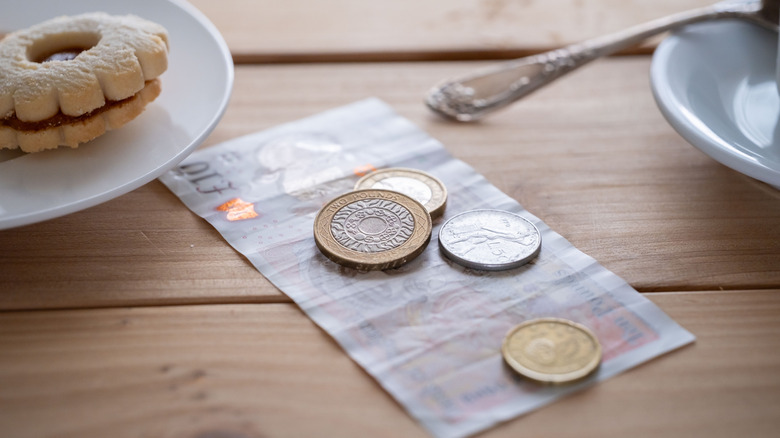
Americans are so used to tipping that not adding 20 to 25% to the check — which Brits call the "bill" — can feel wrong. But it's not necessary to tip so much in the U.K., and that's because restaurants and cafes pay their employees closer to a living wage — usually between £17,000 and £27,000 per year, depending on experience, according to the National Careers Service. In the U.S., by contrast, the federal tipped minimum wage is $2.13, which means that all other income is dependent on the server earning tips.
Essentially, tipping in the U.K. is simply a way to show the server that you appreciate the level of service they've provided. An appropriate amount is usually between 10% and 15%. If you're using cash, leave the tip on the table. If you're using a card, you'll want to calculate ahead of time how much you'd like to tip after seeing the bill, then tell the server how much you'd like to actually spend, including the tip. For example, if your bill is £15, ask them to make it £17. They always run your card at the table, so you can see them do it. If you don't tell them, they won't add a tip (and they won't ask). As an aside, taxi drivers, who often operate as independent contractors, also appreciate tacking on an extra pound or two in thanks.
There are different styles of pubs
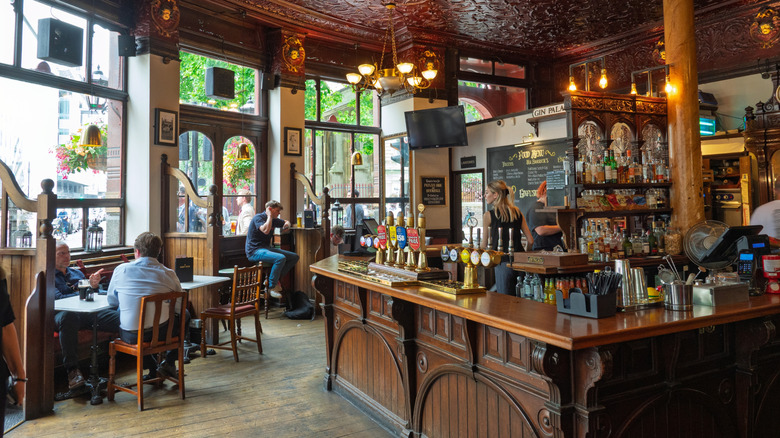
When we hear the word "pub," it's likely that a kind of cozy alehouse with moody lighting comes to mind, possibly with barrels outside the door and cask ale on tap. And you'd be right. But just like bars in the U.S., pubs take on an array of styles. Rick Steves has often recommended the vibrant refuge of Anglesea Arms in South Kensington, London, and there are certainly plenty around the city to enchant visitors. I recently wandered into a traditional corner spot called Fox & Hounds near Sloane Square, where you won't find any TVs or music, and the only pub snacks are bags of crisps — but timeless simplicity is kind of the idea.
Across the U.K., from England and Wales to Scotland and Northern Ireland, pubs are a mainstay. What may seem like indie spots are often actually owned by large corporations such as Marston's, J.D. Wetherspoon, Greene King, Stonegate, and others. You can usually tell this by looking at the branding on the menus, if it's not explicitly noted on the pub's signage. There are also inns, which as the name suggests, provide accommodation. And among all of these, there are hole-in-the-wall historic pubs, noisy ones with "fruit machines" (electronic betting machines), trendy music spots, famous literary locations, large chain operations, and places that complement more of a restaurant experience.
'Are you alright?' is a greeting
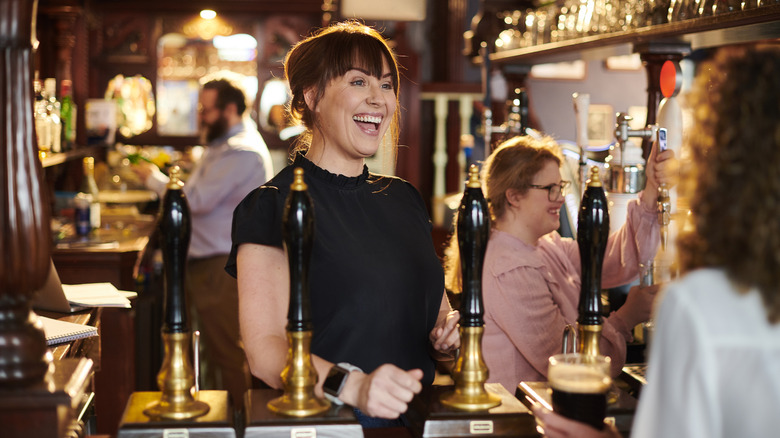
For some reason, even after living in different parts of the U.K. for a few years, the phrase "Are you alright?" still throws me for a loop. I always stutter in response: "Yes?" "I'm fine?" "Doing well?" Especially in England, you'll often hear people ask, "Alright?" or "You alright?" This is a friendly greeting roughly equivalent to how we say, "How are you?" or "How's it going?" And you can respond very similarly: "Good, you?" or "Fine, hi." Or reply back in kind with, "Yeah, good, alright?" Rather than a direct question about your state of wellbeing, it's meant as a polite, quick interaction, often over the counter at a pub or in a shop.
There are plenty of other greetings you may encounter, depending where you travel. In Scotland and Northern England, you'll often hear, "Hiya!" In the Midlands, you might hear, "Ey up." I've also heard "What ho," and "What's the craic?" To say goodbye, the variations are just as diverse. You may hear "Ta," or "Ta-ra." And the endlessly charming "Cheerio" or "Toodle-pip" aren't unheard of either. Most commonly, though, someone will just directly say, "Goodbye."
You typically won't find flat sheets on hotel beds
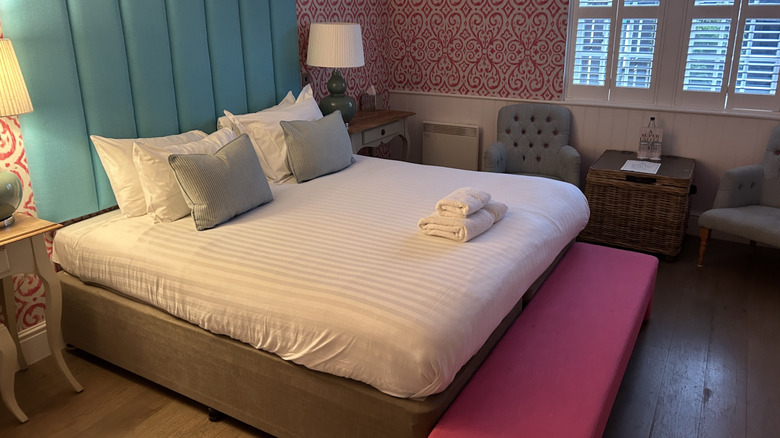
Typically, hotel rooms in the U.K. will feel smaller than Americans are used to, and although it may seem a little odd, you won't find flat sheets on the beds either. Unless you're staying in a higher-end chain or an opulent countryside hotel, you'll typically just find a comforter or a bedspread with a duvet cover, which is traditionally how many Brits make their beds at home, too. It's not that you can't find flat sheets in stores, but they're simply less popular.
In hotel bathrooms, it's also hit-or-miss as to whether washcloths are stocked. Again, unless you're staying at a nicer location, there will be hand towels and bath towels, but that's it. If you feel strongly about having a washcloth, pack your own. And while the hotel rooms are compact, they almost always come equipped with a tea and coffee station, complete with an electric kettle, sugar packets, and sometimes a biscuit or two. Just remember that you'll only get milk for the tea — no half and half — which is pretty standard for most coffee shops, too. Also, if you ask for cream, you'll get heavy cream, so be wary of that too.
Some of your favorite food brands might be different
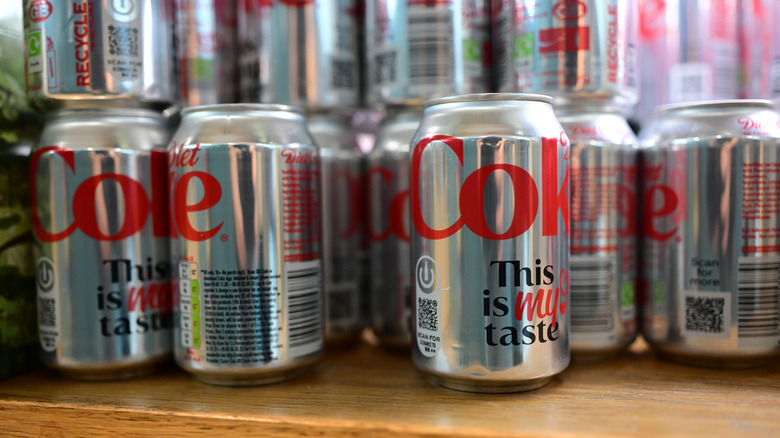
Trying foods in different countries is one of the best things about travel, but even when we encounter brands we recognize from home, there can still be some surprising differences. My first memory of this involved a bottle of orange Fanta, which is produced more like fizzy orange juice in Europe as opposed to the neon-orange colored soda we find in the U.S. Even Coke tastes different due to being sweetened with sugarbeets rather than high-fructose corn syrup. It's a theme you'll notice across a lot of kinds of sweets because regular sugar, treacle, and golden syrup are more commonly used in the U.K. rather than corn syrup.
The same goes for salty foods. You can find Doritos at the supermarket, but they're a little less greasy and come in different flavors that appeal to the British market, such as "Chilli Heatwave." And if you happen upon a Burger King or a KFC, the core offerings may be the same, but remember, you're not in Kentucky anymore — the sides may be different or you won't have as many options. During a recent layover, my only nearby food option was a KFC, so I ended up ordering fried chicken with baked beans and chips (chunky french fries) rather than coleslaw and a biscuit.
Public transportation is available and easy
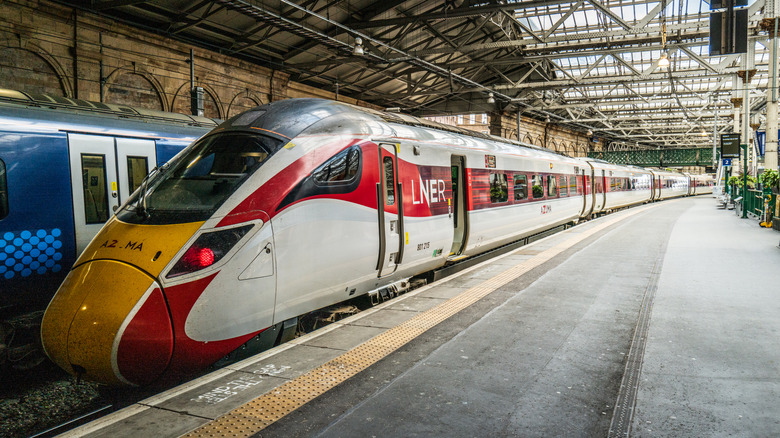
Having lived most of my life in the Midwestern and Western United States, I've been accustomed to wide-open spaces and the need for a car due to infrequent or totally absent public transportation. In the U.K., it's truly a viable option, and the country's trains, undergrounds, and buses are an excellent way to get around. Many of my friends who live in urban areas of the U.K. don't even bother getting their driver's licenses because public transit is so affordable and dependable.
Trains connect to all major cities, plus numerous suburbs and villages along the way. Buses fill in the gaps in most places, especially in rural regions. In many cases, you can just use your contactless credit card or wallet app on your phone to purchase fare. For anything operated by Transport for London (including the Tube and its river boats) as well as Edinburgh's Lothian Buses, Belfast's Translink, and many others, just tap when you step on or walk through a station stile and tap again when you get off. If you're taking smaller local or county buses, you may still need to pay exact fare in cash depending on the provider.
Washing machines are commonly in the kitchen
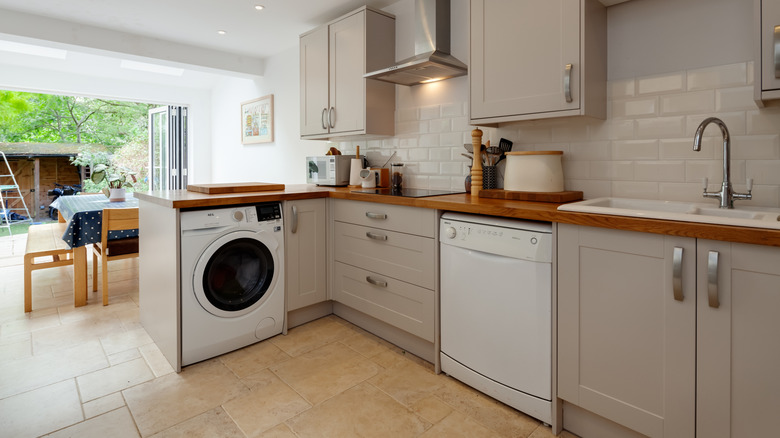
One thing that often surprises Americans on their first visit the U.K. is that washing machines — which are also occasionally all-in-one washer-driers — are usually located in the kitchen. This is something you'll likely encounter in a vacation rental, such as an Airbnb or a self-catering cottage, and they're a much more common appliance to have in the kitchen than a dishwasher (although those are certainly not unheard of).
Because drying in the machine can take a while and isn't usually as effective as the purpose-built dryers we use in the U.S., most people hang their washing out on the line in the garden — a British way of saying "yard" — or on clothes drying racks indoors. Every flat I lived in had what's known as a box room, which is sometimes large enough to be a small bedroom but also sometimes feels like a strangely oversized interior closet, and this is a common place to dry clothes. And if there's a higher ceiling in the kitchen, a drying rack known as an airer can be hoisted using small pulley system, so look up if you can't find the rack.
There are more British accents than you think
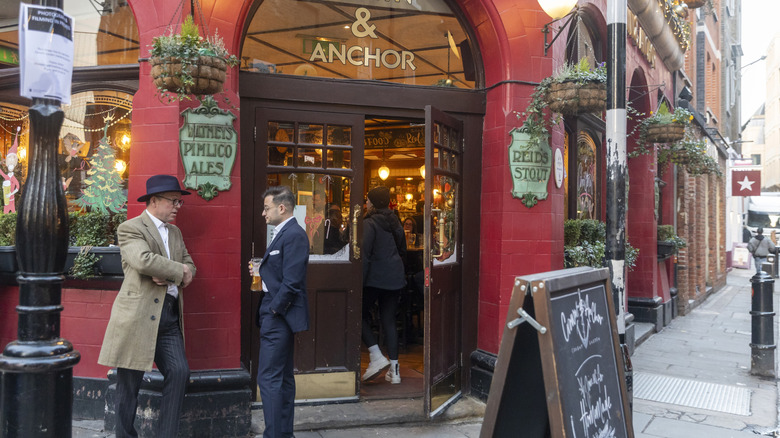
We often refer to a kind of catch-all "British accent" when we're describing what we hear in movies or TV — there's a reason that British actors make the best villains. What you're probably imagining is described by linguists as Received Pronunciation, which is common in London and South East England. It's also considered something of a standard. But did you know there are actually nearly 40 different accents and dialects around the U.K.?
Some accent differences are obvious, such as those spoken in Cornwall and Scotland. But even within a single city, there can be numerous dialects. Cockney is associated with East London, but you won't hear someone like King Charles speak with that accent despite the fact that he technically lives in the city as well. Irish accents can also vary wildly, sometimes even from town to town. Welsh is its own language and deeply influences the cadence of English speakers in that region. And in Scotland alone, the difference in how people speak in Edinburgh, Glasgow, and distant Shetland is quite noticeable. Edinburgh itself has numerous dialects.
You can legally hike across a lot of private land

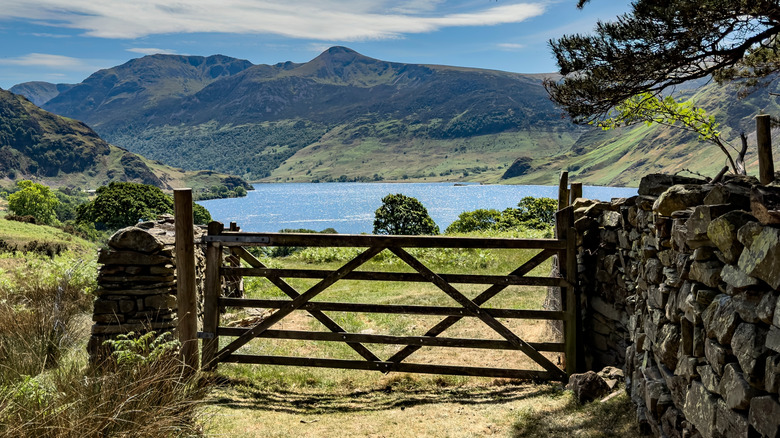
Depending where you are in the U.K., you can legally hike across someone else's property. For Americans, this might seem a little nuts! Hiking across someone's ranch in Nevada, for instance, would very likely land you in hot water with the landowner. Scotland, in particular, has fantastic right to roam laws, meaning that people can walk basically anywhere within set guidelines, such as staying away from houses and the middle of crop fields. Scotland is also one of the most beautiful places to hike, and Rick Steves recommends getting off the tourist trail in Glencoe to see some of its most beautiful Munros (what the Scots call mountains).
England and Wales also grant the public some access on foot to private land away from houses, crops, building sites, and others. However, there has been strong opposition from landowners and countryside groups, so it's not as thorough or recognized as in Scotland. Wales has a spectacular walking path along its coastline. Contrarily, Northern Ireland is a bit closer to how we interpret the use of private land in the U.S., so visitors need to stick to public pathways and parklands.
Some words don't mean what you think they do
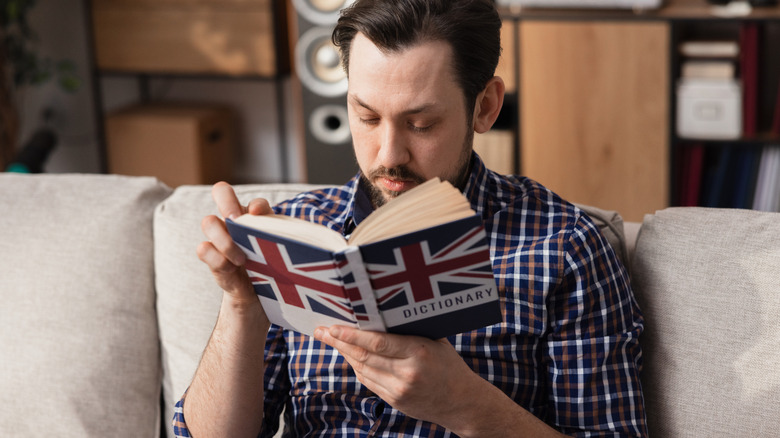
One day, as I sat with a Scottish friend at a coffee shop and mentioned the new pants I had just bought, he found it difficult to suppress a giggle. He knew what I meant, but I had made a classic faux pas: Trousers are what we consider pants in the U.S. In the U.K., "pants" describes underwear. So, if you want to tell someone you like their pants, be sure that's what you mean! You'll probably also encounter other terms, such as "lift" for elevator, "bum bag" for fanny pack, and "trainers" for sneakers. Beyond that, if you're talking to a Scot in particular, there's also an unspoken etiquette rule to never break, which boils down to avoiding ever referring to them as "British."
There are too many different British English terms to list, but some of my other favorites come from the way that people in the U.K. abbreviate longer phrases. Rather than "AC" for air conditioning, it's often referred to as "air con." GPS? It's called "satnav" — short for satellite navigation. Modern conveniences? Mod cons. And my very favorite of all is a dinner menu item: spag bol. Yep, spaghetti bolognese. It's fun to see how many you can pick out.
Air conditioning is less common
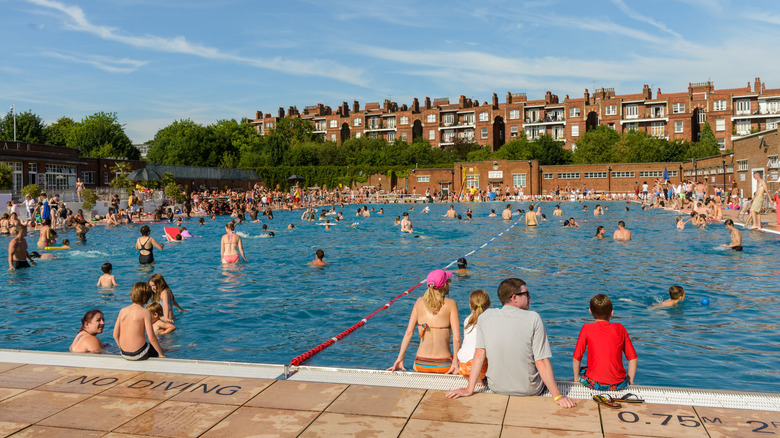
On the topic of air con, which is something Americans tend to take for granted during the summer and in hot climates, the U.K. hasn't adopted it in such a widespread way. Temperatures have historically been mild here at more northerly latitudes, where the sun isn't as direct and weather systems off the Atlantic Ocean generally keep things cool. I grew up thinking London was cold and rainy all the time. Scotland certainly has that reputation, too, being located even farther north. But due to climate change, British summers have been getting hotter.
While it's true that the weather is generally milder, and the U.K. sees more days of rain on average than the U.S. annually, temperatures can still soar. If you're considering the best time to visit London, for example, July or August may bring the heat. People flock to beaches and outdoor pools, known as lidos, to cool down. The farther north you are, or the closer you are to a coastline, the cooler you'll feel. Stepping into the shade will instantly remind you how chilly the sea breeze can also be.
Shopping is unexpectedly different, even the names of places
One of the first differences I remember encountering when I landed in England for the first time was that shopping was different. Large supermarket chains include Sainsbury's, Tesco, Aldi, Lidl, Morrisons, Co-Op, Scotmid, and Asda. Somewhat more upscale options include Waitrose and Marks & Spencer. If you're in the center of town, you'll usually encounter a smaller, convenience-style version of these same brands, while the full-scale version of the store may be on the outskirts of town. They're also referred to as supermarkets or food shops, and it's not weird to say you're going "food shopping."
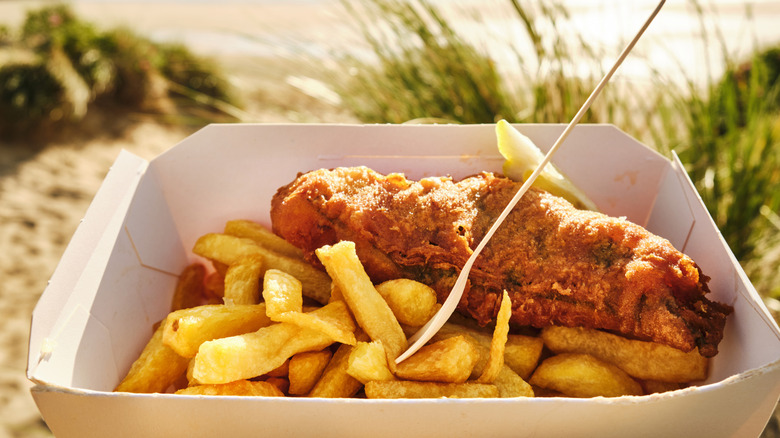
One wonderful thing worth acknowledging in the U.K. is that downtown, or in the "city centre," you'll often discover great, independent specialty shops for meat, cheese, bakery, and fish. These smaller, locally owned places are both traditional and accessible due to the walkability of many commercial streets, which are called high streets. It's on these you'll also often find other cafes and retail outfits like franchised post offices. You'll know a liquor store by the sign outside that reads "off-license," which many people refer to as the "offie." A similar sensibility is at play for fish and chips shops — head to the "chippy" for not only fried haddock but, depending on the shop, comfort foods like shawarma, curry, and sausages.
Everything feels more compact
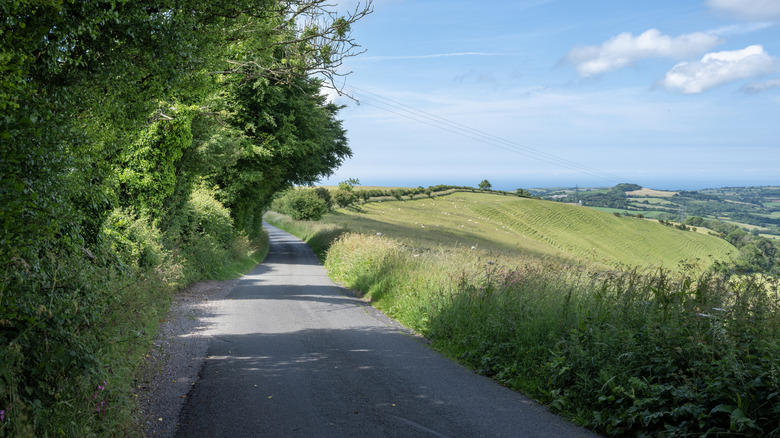
Another thing that may take American tourists by surprise in the U.K. is how compact a lot of things feel. Villages, streets, yards, houses, hotel rooms, and even cars all feel a little smaller or more condensed. A lot goes into why that it is, but one main reason is physical size: The U.K. is nearly 40 times smaller than the U.S. Population-wise, the U.K. has nearly 70 million residents, while the U.S. is pushing 348 million. Density really comes into play here, however, as the U.K. has about eight times more people per square mile, than the U.S.
Perception of worthwhile travel distance is also an interesting difference in the U.K. It's not unusual for a local to become slightly flabbergasted if you tell them you plan to drive for more than a couple of hours because, usually, that's just not necessary. If you rent a car, be aware of narrow roads that may have little or no shoulder. Motorways and what are known as A-roads are a little wider, busier, and continually maintained. They're similar to interstates and two-lane highways, respectively. B-roads, on the other hand, are quite a bit narrower. Many rural routes are unclassified and very remote, where you can drive for miles on single-track road with only the occasional "lay-by," or turnout, to let oncoming traffic pass — and yes, that includes sheep.