
Unwritten Rules You Should Know Before Visiting A British Pub
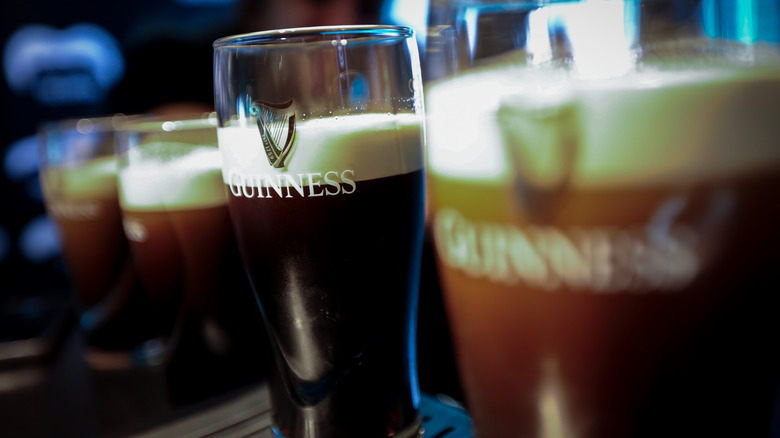
Whether you're planning a trip to explore the best of London in one day or a month-long excursion through the English countryside, visiting a real British pub is probably high on your list of things to do while in the U.K. Although pubs may look familiar to American travelers (after all, we have our fair share of British-inspired bars and pubs all over the country), walking into one in England is a decidedly different experience.
For centuries, people in Britain have been going to pubs, and these establishments have become far more than just places to get a great pint of Guinness. They are gathering spots that are deeply ingrained in local culture, becoming an essential third place where people eat, chat, watch sports, play games, and catch up on gossip. Here, we'll look at the unwritten rules you should know before visiting a British pub.
To compile this guide, the author of this article used firsthand knowledge of U.K. pub culture as a traveler, as well as advice from pub patrons and locals on Facebook, Reddit, and Quora. Official pub websites for specific locations like DeBrett's also provided details. Additionally, we referred to high-authority etiquette guides published by the BBC, The Telegraph, The Independent, and Boak & Bailey.
Understand the importance of 'the round'
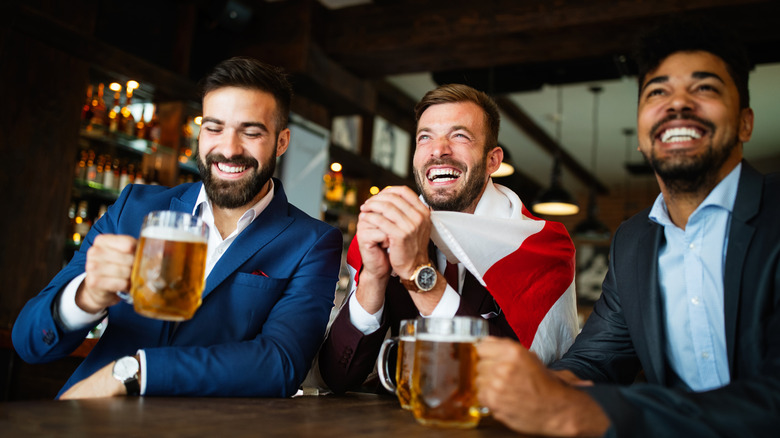
In the United States, buying a round of drinks for your group is considered a nice thing to do, but certainly not a duty. In Britain, however, the art of "the round" is practically sacred. If you're drinking in England, Scotland, or Ireland, the essential rules of pub etiquette dictate that once someone in your group gets the first round of drinks, each person is then unofficially expected to pay for a subsequent round. The way this works is simple. One person takes everyone's drink order, goes to the bar, and pays for the group's tab.
When glasses are empty (or nearly empty), another person offers to grab the next round, and so on until everyone has participated. There are unspoken rules of round buying, including that it's best with people who drink at a similar pace and that the "ideal" size for a group is between four and eight, though neither of these are set in stone. Not everyone has to be drinking the same thing either, but it is considerate to keep drinks at a similar price point. That said, if you move from pub to pub, don't tally if some people spend more than others.
Finally, remember that you're not obligated to participate if a round begins, but be clear about it from the beginning if you plan to leave early. Your British mates, in fact, may have a long memory if you accept several pints, then take your leave before your turn comes up. One person on Reddit was concerned about how to gracefully exit a round without offending anyone, and a commenter said simply, "[Be] open and honest. 'I can only stay for 2 lads so I'll grab my own.'" Cheers to that.
There may not be a line, but everyone knows who's next
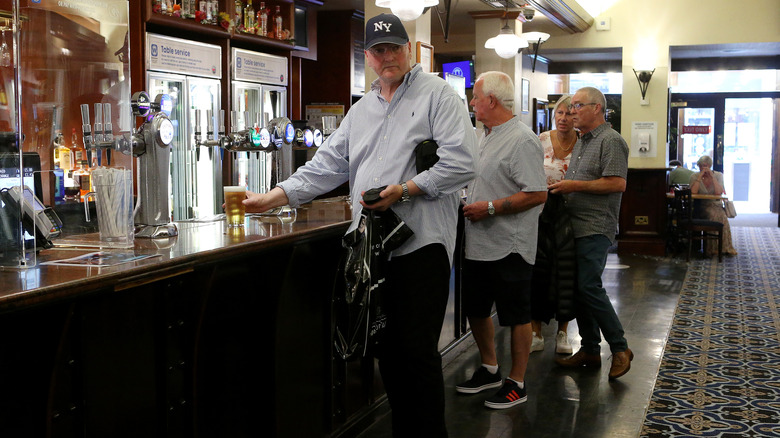
Britain is world famous for its orderly queues that date back to the 18th century, but as the old adage goes, "There's an exception to every rule." In British culture, pub queues are, indeed, the exception to the queuing norm. Rather than forming a conventional single-file line in which one person stands behind another, pubgoers typically stand in what may appear to first-timers to be a jumbled mess by the bar. In reality, though, there is absolutely an order, and everyone knows exactly who's next.
Even as you're walking up to the bar area, pay attention to who was there before you. Not knowing what's going on and barging right up to the bar through the crowd will immediately mark you as an American tourist to European locals. According to the BBC, the right approach here is to choose a spot, stand your ground, catch the bartender's eye, and wait for them to ask what you want. If you think they are taking your order out of turn, simply say, "I think they were next," and incline your head toward the appropriate patron.
When in doubt, letting someone go ahead of you will earn you more points with the pub crowd than accidentally cutting the queue. And, for good measure, a quick pro tip from a lifelong Guinness drinker: If you're ordering a pint of Guinness, ask for it before anything else. The perfect Guinness takes 119.5 seconds to pour and settle, which is significantly longer than other beers, so it's smart for the bartender to get started while you place the rest of your order.
Don't sit around waiting for a server
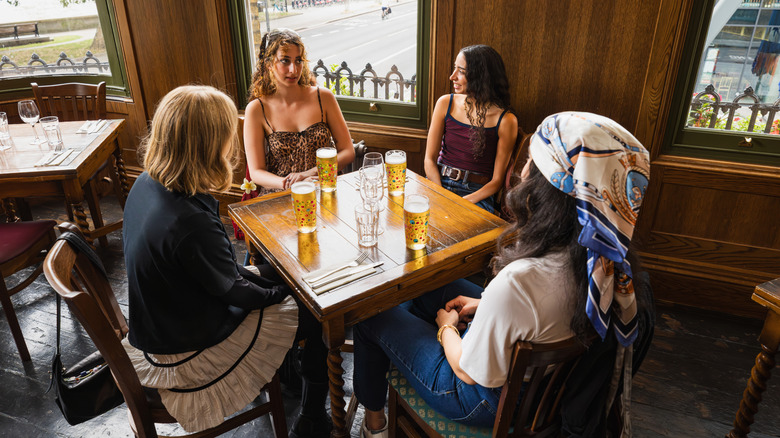
In American sports bars, it's fairly normal to sit down at a table, then wait for a server to come take your food and drink order. In a traditional British pub, though, that's simply not how things work. As a matter of fact, that server you're waiting for may never arrive. Unless the establishment you've chosen specifically states that it has table service, you'll need to join the aforementioned "understood queue" system by the bar.
On Reddit, someone helpfully explained the difference between a pub and a restaurant, even if both serve food. At "a restaurant there'll usually be someone to find you a table, and give you menus," they said, while at a pub, one orders both food and beverages from the bartender in most cases. Another commenter on the same thread confirmed this: "They'll either ask for your table number or give you some kind of hilarious numbered object (eg. big wooden spoon, novelty watering can etc.) to take back to your table." This is not, of course, true at every single establishment, but it's a good rule of thumb, especially for first-time visitors who want to fit in properly with locals.
It's also worth noting that in a post-COVID world, an increasing number of bigger pub chains like JD Wetherspoon (typically called just "Spoons" if you're in the know) and posher pubs give patrons the option of ordering via an app or a QR code displayed on each table. At one of my favorite pubs, The Elephant and Castle in Kensington, the latter is the case. Regardless, if you have questions about how ordering food or beverages works at a specific establishment, just ask an employee politely, and they will typically be more than happy to help.
You don't have to tip your bartender
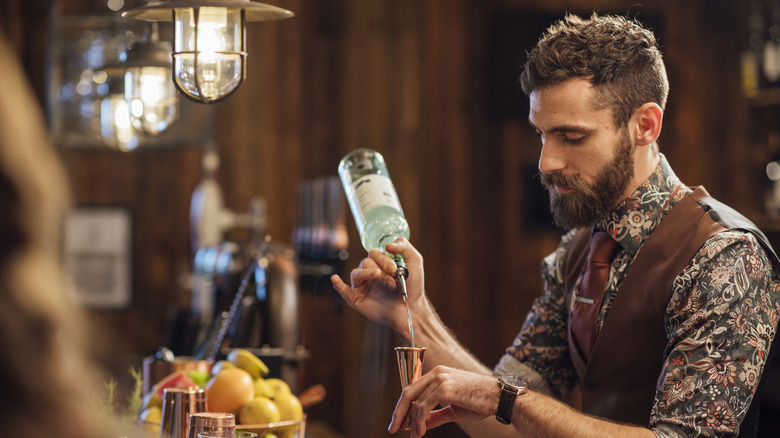
In the United States, many people tip the customary 20% every time they're served, but this isn't necessarily the case in British pubs. Of course, tipping culture throughout the United Kingdom has changed in recent years, to the point where the The Guardian even reported there is a shift toward Americanized tipping there. Still, most Britons still don't typically tip at pubs. Someone on Quora explained it well by referring to pub spaces as "communal living rooms," noting that "sliding loose coins across the bar will just make everyone incredibly awkward."
There are some exceptions to this rule, though. If, for example, you are in a pub that serves food, tipping somewhere between 10% and 15% of the total bill is acceptable. Some people also feel more comfortable tipping at neighborhood pubs than at large corporate chains like "Spoons." One Redditor described these establishments as places where "the floor is sticky and the toilets are wiffy ... old men have their own glass behind the bar," and the proprietors are part of the gang. Here, they said, it is more acceptable to tip the bartender by simply telling them to "keep the change" when you pay for a pint.
Another way to tip British barkeeps is to buy them a drink. A former bartender on Reddit wrote that they always enjoyed when patrons would "say 'and one for you' at the end. I think that's a nice tradition as it's like you're being included in the round." This is a genuinely lovely way to top off a fun night out, and it's a uniquely British way to show appreciation since it is frowned upon (and illegal in some states like Oregon) for bartenders to drink at work in the United States.
Don't expect an ice-cold pint
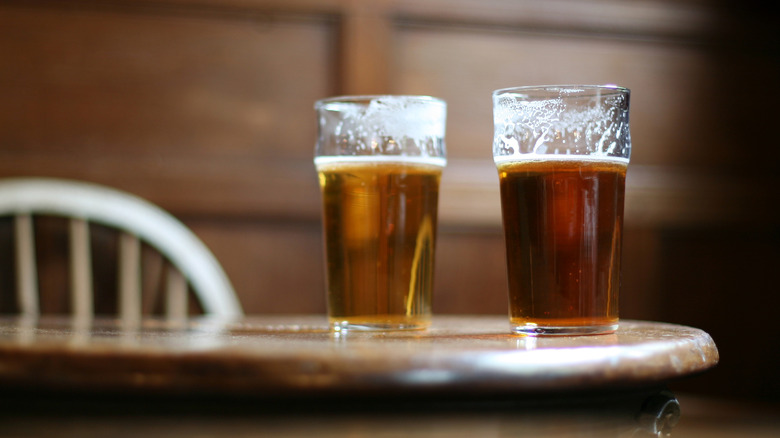
There exists a stereotype that British people drink warm beer, and like many stereotypes, it contains a nugget of truth alongside a bit of a misconception. Americans, by and large, are used to drinking ice-cold beer à la Coors, a brand that has literally used slogans like "When the Mountains Turn Blue, It's as Cold as the Rockies" and "Reach for the Cold." Even according to travel expert Rick Steves, though, real cask ales are served warmer than American tourists expect. This does not, however, mean they are truly warm or even room-temperature.
Different types of beer should ideally be served at different temperatures. According to Oculyze, an engineering firm that specializes in highly accurate yeast counters for brewing, Trappist ales should be served, for example, at around 50 to 54 degrees Fahrenheit. Stouts like Guinness, meanwhile, can be dispensed even a few degrees warmer, up to 57 degrees Fahrenheit. A brewery owner on Quora confirmed this based on real-world experience, sharing that they serve "cask beer at 'Cellar temperature', around 47F–50F."
Technically, "cellar temperature" ranges from 50 to 55 degrees Fahrenheit, and applies to a variety of popular beers, including Belgian, Scottish, and sour ales, as well as some porters. However, this rule does not apply to every beer available in English pubs. As one Redditor noted, "Lagers are still always served chilled." Furthermore, even some British people don't have a major opinion on the temperatures of their drinks, with one Facebook user quipping that they "wouldn't refuse a drink however it comes!"
Don't assume a table is empty because no one is sitting there
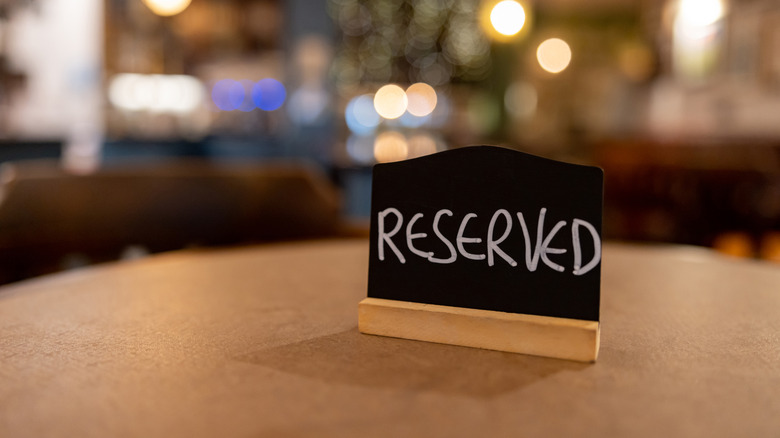
Walking into a British pub and finding what appears to be an unoccupied table can feel like a minor miracle, but don't celebrate immediately. If there's a newspaper, coat, bag, or unfinished drink sitting on the table, it may be a sign that the person has simply gone to the restroom, walked up to the bar, or stepped outside for a moment. This is particularly true if there's a beer mat atop a glass. In British pub culture, that's a universally understood signal that the pubgoer will be back.
An empty glass sitting by itself, however, could actually just be a leftover from the prior party. As the BBC points out, pubs are revered spaces, and you should act as if you've been "invited into a community hall, church or someone's home." Thus, it would be incredibly rude to take someone's seat without knowing for sure that they were gone. If in doubt, just ask nearby patrons if the table is taken. They are almost certain to know, especially in smaller neighborhood establishments where the regulars have "their" spots.
It's also worth noting that some of today's British pubs accept standard table reservations. This is a relatively recent phenomenon, so every pub operates a bit differently. In one Reddit discussion regarding the topic, people debated if these reservations should be timed, and how it should be handled if the subsequent party shows up early. One commenter shared that they were "not really a fan of booking in pubs to be honest." Another Redditor said that because pub reservation is so new, "the etiquette hasn't formalised." For now, simply use your best judgement (and best manners) when you spy an open table from across the room.
A bell ringing indicates last call
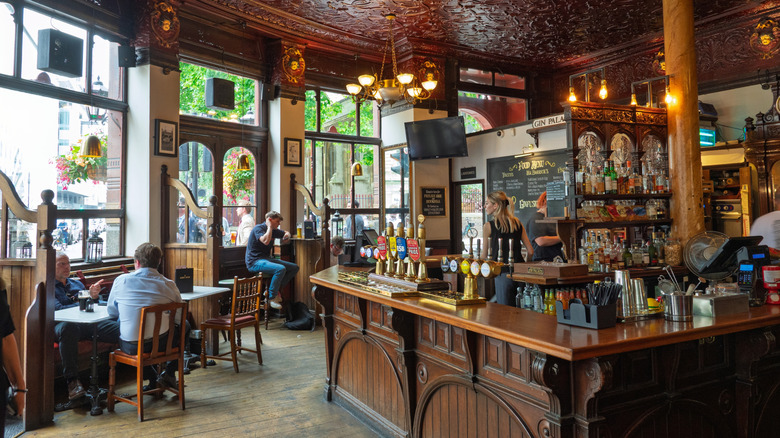
Whether you're checking out the vibrant London pub scene at Anglesea Arms or hiking 20 miles for a beer at Scotland's remote Old Forge pub, a uniquely British pub tradition is the ringing of a bell to signal last call. The first time I heard this, my American ears thought someone had either won a prize or there was some type of emergency. In reality, this is a longstanding tradition that has existed for many years, though its origin story is somewhat murky. The first ring generally indicates that the bar will soon stop serving alcohol.
If you hear a second ring of the bell, it means the pub is closing up shop for the evening, and it's time to leave. The precise signals differ from place to place, so keep an eye on what the regulars are doing and follow suit. I've been at both English and Irish pubs where there is just a single bell ring, for example. Also, remember that this is not the time to grab a pint you'd like to nurse for an hour or two, as the pub will shortly be locking up, often within about half an hour.
For many years, British pubs were required by law to close at 11 p.m. However, the Licensing Act of 2003 made it legal for bars to stay open later in England and Wales. Today, every pub operates according to its own liquor license and business schedule. In my experience frequenting pubs during my British travels, I've seen some establishments still ring the bell and close at the traditional time, while others don't signal last call until well after midnight.
Know what you want before you order
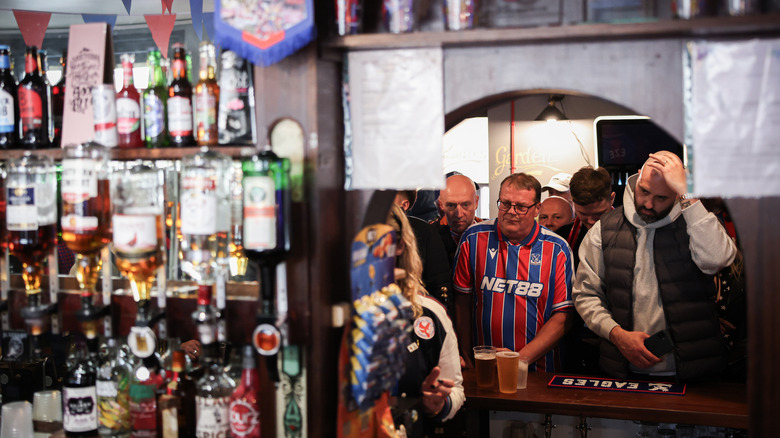
Generally speaking, a busy English pub is not the proper place to spend 10 minutes debating what beverage you want, while asking about the merits of every beer and liquor behind the bar. Bartenders are busy, the queue needs to keep moving, and your party is probably waiting for you to return to them with the next round.
One of the best ways to be efficient at the bar is to have a standby order in your back pocket. Mine, for example, is a simple pint of Guinness. I can order it quickly, it requires no special instructions, and it can even be easily shouted over other people's heads in particularly crowded pubs. On Quora, one person wrote that it's wise to "develop a favorite simple drink, your signature order, something you really enjoy." Whether this is a type of beer, a simple cocktail like Jameson and soda, or just ordering the "house specialty" wherever you go, it's a great trick to help you order efficiently in a bustling pub setting.
Being able to "read the room," so to speak, is another important skill to have when it comes to ordering. If, for instance, you wander into an unassuming local pub in an English or Scottish village (The Keys in St. Andrews is a personal favorite that is well worth your time should you find yourself with a tee time at the Old Course), it's probably not the right vibe to start ordering complex cocktails that require multiple obscure, very expensive alcohols and garnishes. Instead, stick with whiskies or beers, and spend some time getting to know the locals. They usually have amazing stories.
You can order a half-pint
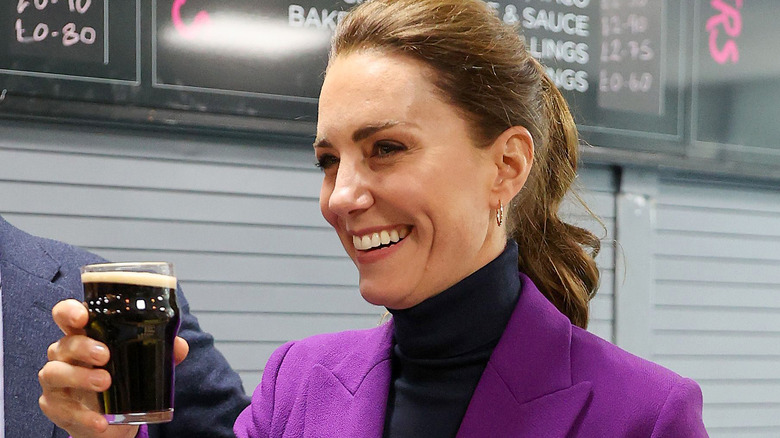
For Americans, the idea of a half-pint of beer is remarkably foreign. It simply isn't a standard size in U.S. bars, so the notion of ordering less than a full pint of beer on purpose feels a bit strange, or even embarrassing in some cases. However, in a British pub, nobody will judge you, think you're a lightweight, or probably even take a second glance if you ask for a half-pint from the bartender. This is a standard serving size in Britain and equates to 10 ounces (yes, a British pint is officially 20 ounces, 4 ounces larger than a U.S. pint).
While some people simply prefer a full pint for the mere tradition of it — writer Oliver Bennett even went so far as to call the pint "a pillar of British civilisation" in The Telegraph — others have come to prefer the half-pint. In the same Telegraph article, co-writer Tomé Morrissy-Swan notes that one of his favorite reasons for switching to half-pints is that "a smaller measure leaves you with consistently cold beer," which is particularly refreshing in the summertime. Furthermore, drinking less generally has health benefits, so smaller glasses of beer could potentially have a positive impact on one's overall wellness.
As a traveler, ordering half-pints instead of full pints can be especially beneficial if you're pub hopping to several different spots in quick succession. Half-pints fill you up less quickly, so you can sample more beers. As one Brit said on Facebook, "order the quantity you want to drink, and bloody well enjoy it!"
Know the difference between a pub and a gastropub
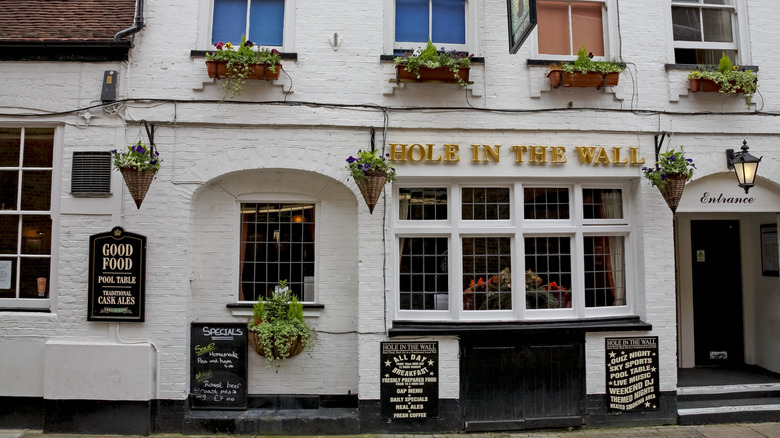
Not every British establishment with the word "pub" in its name is a traditional pub. Classic British pubs are social drinking establishments first and foremost, even if they have food menus available. A gastropub, however, functions as a sort of hybrid restaurant and pub, with the relaxed "living room" vibe of a true pub coupled with a elevated culinary experience.
The modern concept of a gastropub can be traced to London in 1991, when chef David Eyre and restaurant manager Michael Belben transformed an establishment called The Eagle that still operates today. As of 2024, Britain is home to a little over of 45,000 pubs, including plenty of popular gastropubs like The Devonshire, The Unruly Pig, and The French House. Gastropubs typically offer chef-curated menus featuring rotating seasonal ingredients and gourmet or gourmet-inspired dishes.
Gastropubs are also more likely to have fun cocktail options and a full bar, rather than just beers, whiskeys, and maybe gins or vodkas. Because of the food component at gastropubs, table service is also more likely than in a conventional pub establishment. Overall, gastropubs are intended to provide an exceptional foodie experience at a lower price point than many trendy restaurants offer. Effectively, they bring artisanal dining to the masses.