
12 Of The Creepiest Ghost Towns To Visit Around The World
Although being able to travel and learn about remote corners of the world — thus opening our eyes to the cultures and histories around us — is a positive thing, one downside is overtourism. In some of the most visited cities on the planet, you're bound to stand in more than a few lines that will have you sighing and checking your watch. Overtourism is a big problem for many popular travel destinations, and locals are fed up.
But time forgot some towns. In these now-quiet ghost towns, windows are boarded, buildings are crumbling, and the only residents — if any — have four legs. For one reason or another, these once-thriving spots have become ghost towns, left to rot away at the mercy of the elements.
While the rest of the world may have forgotten these places, we don't have to. Some ghost towns are still worth exploring due to their bone-chilling creepiness, especially for travelers who love to feel a few goosebumps during their journeys. So, Islands rounded up these ghost towns, ranging from those in a Namibian desert to a Japanese island. To decide which are the eeriest and most worth exploring, we considered which are most authentic to their pasts, as all of the towns in this list still have standing homes, schools, churches, or stores.
Bannack, Montana
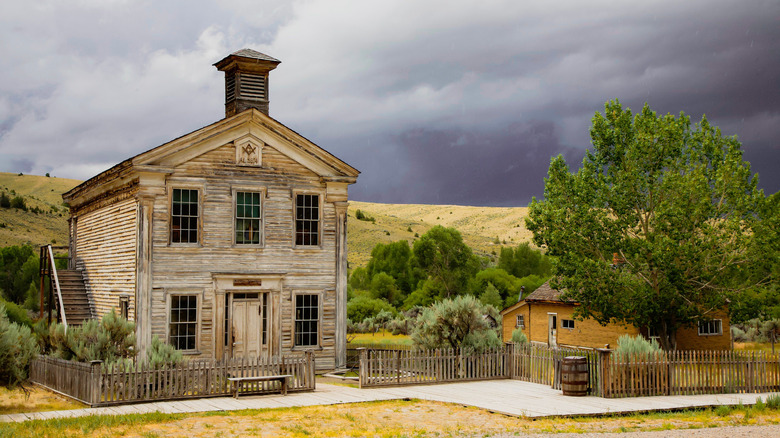
When you see the abandoned buildings surrounded by desert that make up Bannack, Montana, it's tough to believe that the town was the first capital of the state. Now, it's Montana's historic ghost town. More than 3,000 people lived in Bannack by 1863, just a year after its founding. But less than a century later, the former Gold Rush hotspot didn't have a single resident, leaving its homes, churches, schools, hotels, and stores empty. The once bustling population tumbled as there was less gold to be found, which was only exacerbated by a gang of criminals — secretly led by the town sheriff — who had their way with the town.
However, visitors can now see Bannack almost exactly as it was left. Since it was named a state park just a few years after it was abandoned, Bannack is now one of America's most complete remaining Old West towns, with 50 buildings remaining. It was also Montana's first state park that was recognized for keeping history alive. Nowadays, people from across the planet travel to see it.
But that doesn't mean Bannack is without scares. Some of its structures are supposedly haunted. Ghosts have been spotted in the former courthouse that later became a hotel, as well as at the former general store. Plus, the sheriff, a gang of criminals, and many of the people they attacked all died in town, so who knows if their ghosts are pattering about.
Belchite, Spain
Three thousand people died within a little more than two weeks in 1937 in the town of Belchite, Spain, during the Spanish Civil War, making it one of the deadliest battles of the war, which lasted from 1936 to 1939. The war began after Republicans won the 1936 election, leading to Nationalist protests and violence led by Francisco Franco. The town was ground zero for the war due to its location, which was right between Republican and Nationalist lands. Although the Republicans won the battle in Belchite, they lost the war in 1939. That led to Franco presiding over Spain as a dictator for nearly four decades.
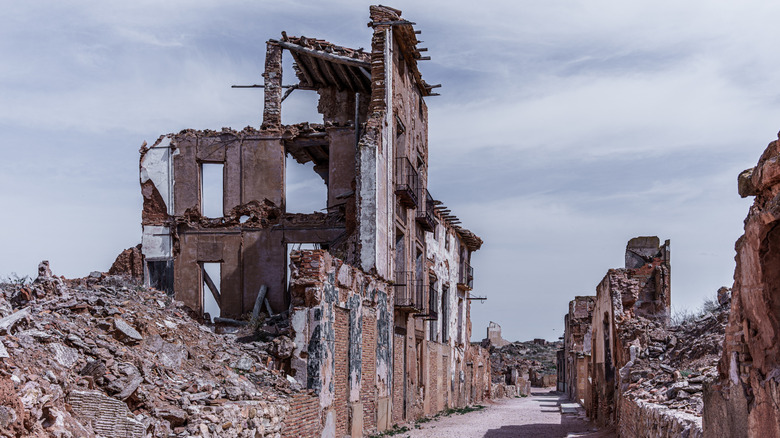
Now, the setting of that gunfire between the Republicans and the Nationalists is a sort of graveyard, leaving just the skeletons of former buildings, including the homes, clock tower, and churches. Visitors can see them only by going on a guided tour. Even some of the old streets are now hard to make out in Belchite, as the village was so decimated.
Crumbling red stone structures fill the ghost town, which is next to the "new" village of Belchite. Rather than bring the original Belchite back to life, the new town was built under the command of Franco, who wanted the former Republicans he fought against to be reminded of his win.
Bodie, California
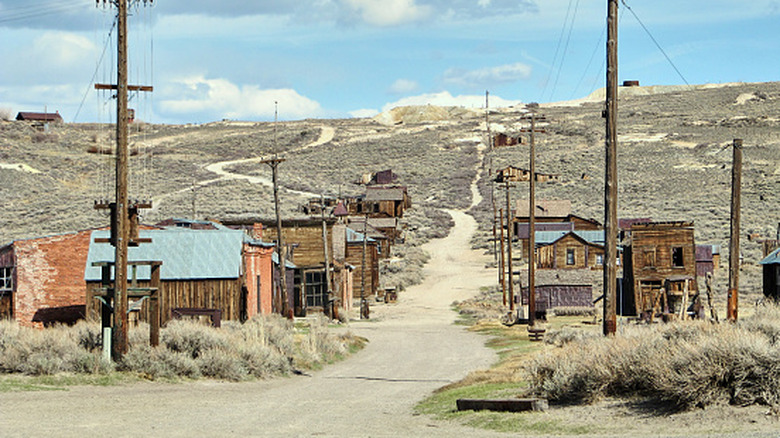
If you see the homes — still filled with dishes and furniture — as well as the saloon, church, and school that now make up the 200 structures still in Bodie, California, it's almost tough to believe it's a ghost town. But that's on purpose. Once a thriving Gold Rush mining town with more than 2,000 buildings, the abandoned town of Bodie in the eastern Sierra Nevada is now a protected state historic park. It's also one of the most recognized ghost towns in California. It remains in a state of "arrested decay," as it was preserved in 1962 just as it was abandoned decades prior. Tours and a museum are available for visitors.
After being claimed by prospector William S. Bodey (aka Waterman Bodey), who was the first to find gold in the area in 1859, the town of Bodie became a happening place, complete with families looking to live their own American dream thanks to the Gold Rush. More than 7,000 people called it home, utilizing its new restaurants, saloons, hotels, and stores. But, as with other boomtowns, Bodie's luck ran out as its gold did. Residents slowly began to leave by 1881 as gold in the local mines became scarcer. Things got even tougher in Bodie following a large fire in 1932. That was the final straw in the otherwise forgotten town, a far cry from when it was written about in newspapers as an important gold mining hotspot.
Cahawba, Alabama
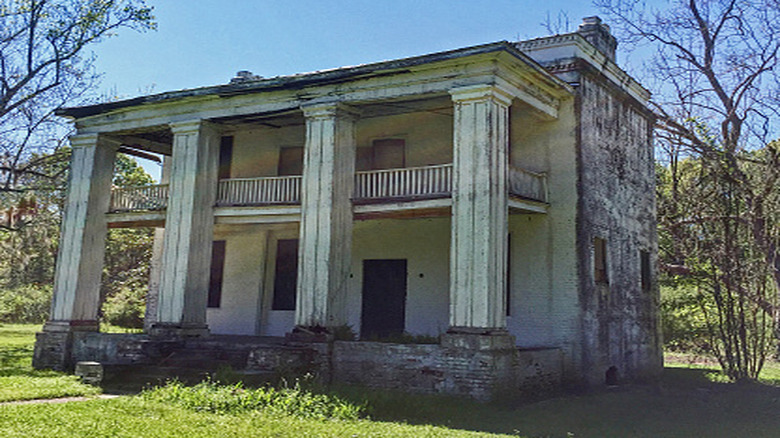
Cahawba — sometimes called Old Cahawba or Cahaba — is Alabama's once-thriving first state capital. Now, though, it's known as one of the spookiest ghost towns on earth as well as the most famous ghost town in the state. It was slowly abandoned by many residents after 1825, when flooding in the area made living there difficult. Then, for a time, it was an enclave for former enslaved Black people who gained freedom after the Civil War. Despite its abandonment, visitors can still see its former Gothic-style church, Civil War prison, homes, slave quarters, wells, cemeteries, and even pieces of a former mansion.
Besides being home to dilapidated buildings, the town, which is now known as Old Cahawba Archeological Park, is also supposedly home to ghosts. Some of the ghosts that haunt New Cemetery are thought to be children. People have reported hearing the ghosts laughing. The bodies of former Cahawba residents are also buried in the Old Slave Burial Ground, which is where at least hundreds of Black people were buried in unmarked graves for nearly 150 years.
Craco, Italy
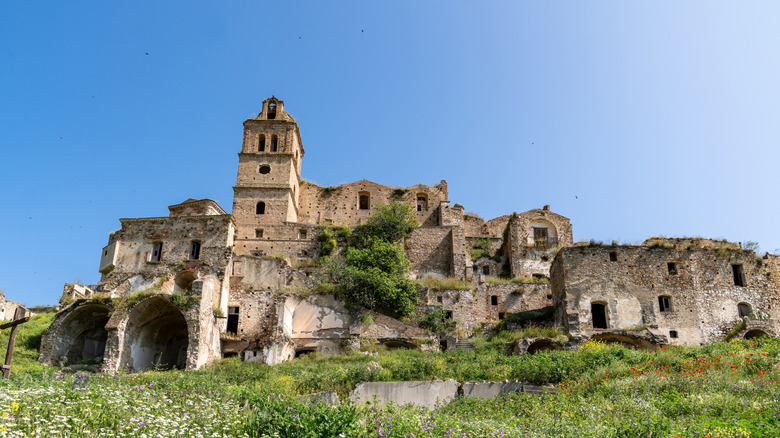
Tourists heading to Italy on vacation are used to battling colossal crowds in all of the popular destinations, including the Amalfi Coast, Florence, Pisa, Venice, and Rome. However, there are quite a few places where visitors are unlikely to see fellow passersby at all. Italy is home to hundreds of ghost towns, many of which were abandoned due to natural disasters including earthquakes, floods, and landslides. One is Craco, which is Italy's little-known abandoned hillside ghost town that promises both picturesque views and mystery. It was the site of scenes from the films "The Passion of the Christ" and "Quantum of Solace." Once so large that it had two separate districts, this town has ancient roots; tombs dating back to the eighth century B.C.E. have been found here. By the sixth century C.E., a Greek settlement had formed.
Despite Craco's long lineage and once massive size, it couldn't survive the many natural disasters that plagued it, partly due to its high location at more than 1,300 feet above sea level. The beginning of the end was in 1963, when several landslides turned homes into piles of rubble. Less than a decade later, Craco was again devastated, this time by a flood. Finally, an earthquake struck in 1980, making it clear to locals that Craco didn't make sense as a home base anymore. However, it remained close to them in other ways, as some former residents founded The Craco Society to keep its memory alive. These days, Craco's only visitors are those on guided tours or those headed there to partake in various events, including religious festivals.
Hashima Island, Japan
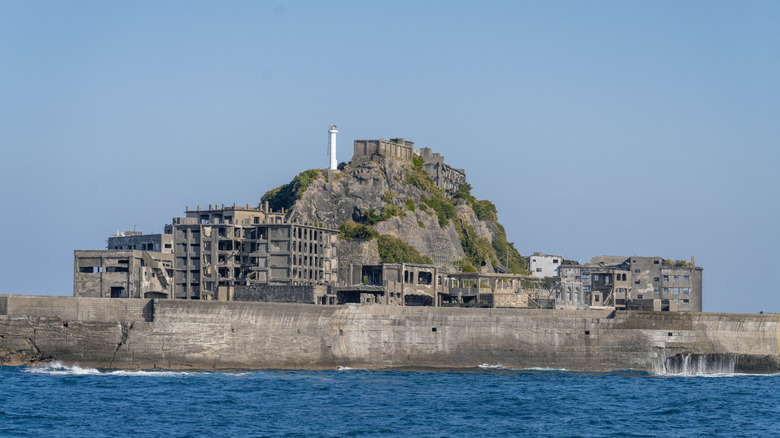
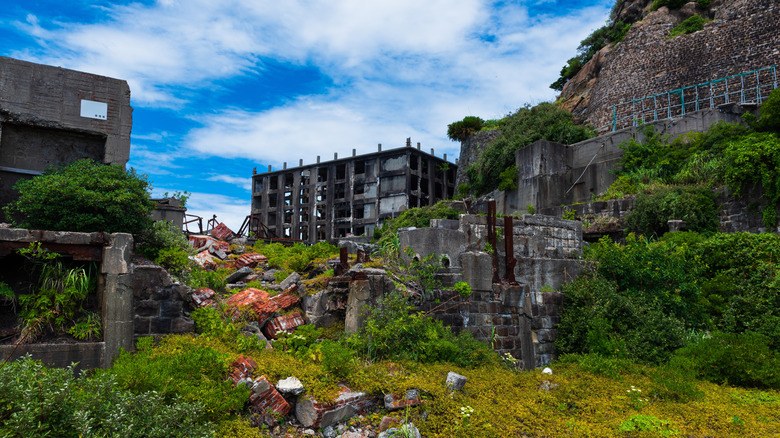
The Wild West is the most notorious home of boomtowns, but it isn't the only place. The same thing occurred on Hashima Island, a 15-acre Japanese island that's now a UNESCO World Heritage Site. After coal was discovered underneath the island during the 1800s, Mitsubishi made it like its own city, complete with apartments, hospitals, bars, and schools. The company, known best for making cars these days, has a long history; it purchased coal mines during this period to make fuel for Japanese ships, which proved to be the downfall of Hashima Island.
More than 5,000 people lived on the island at one point, making it one of the most densely populated spots on the planet. But after 1974, the island was empty, as coal production decreased in popularity and Mitsubishi closed its mine. All that was left behind were empty buildings and remnants from the people who once utilized them, including shoes and books.
What's left of Hashima Island only became accessible by guided boat tour in 2009. It takes about 40 minutes to get here by boat, after which tourists can see a portion of the island's structures from afar so they don't get hurt by rubble or on walkways without banisters. If you do visit, make sure you look out for more than just dilapidated buildings. The island is supposedly haunted, as many forced workers, who were Korean and Chinese prisoners of war, died here during World War II. It's so creepy that it inspired Bond villain Raoul Silva's secret hideaway in the movie "Skyfall."
Houtouwan, China
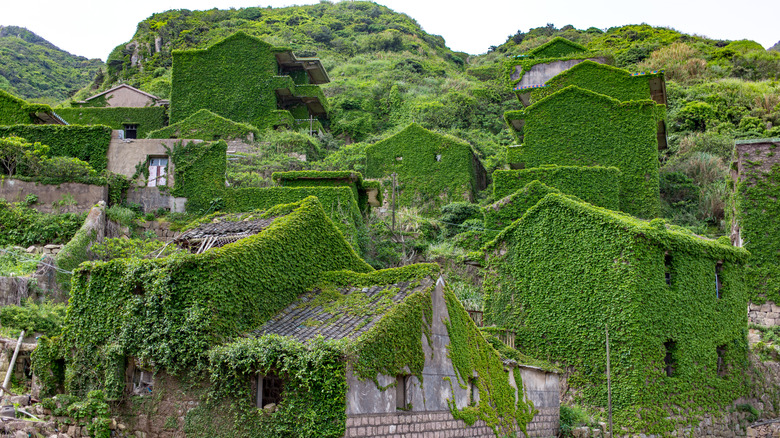
Houtouwan is a former fishing village on Shengshan Island, part of a 400-island archipelago in the East China Sea. It's technically a ghost town as it was abandoned by residents, with some of its homes still filled with furniture. However, thanks to its lush look that spread across the internet in 2015, it has since received tens of thousands of visitors per year and hundreds of visitors per day. People have flocked to the village to either hike it or see it from a viewing platform and get a glance at its buildings covered in greenery.
The buildings were reclaimed by nature after the early 2000s. Families fled the village for the mainland as profits from the fishing industry waned due to competition from the mainland. That abandonment was intensified by the village's isolated location, as a ferry is needed to reach it. Even during the village's peak, workers had to commute to and from mainland China by boat.
By 2002, Houtouwan was officially a ghost town. The abandonment was a far cry from just about a decade prior, when Houtouwan was so bustling that it was dubbed "Little Taiwan." But now, Houtouwan's untouched look is what attracts visitors. The best time to see it is summertime, when the buildings' plants are at their most vibrant. But it will take you some time to get there, since it takes a three and a half hour ferry ride from Shanghai to reach it.
Kolmanskop, Namibia
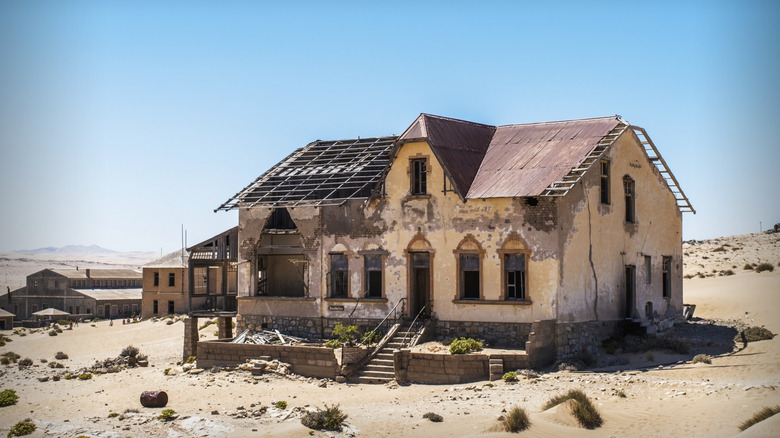
Kolmanskop — then a part of German South West Africa — was founded for diamond mining in what's now Namibia in 1908. Around that time, it was so prosperous that nearly 12% of the world's diamonds were mined there. The homes in the new diamond town were constructed so that the desert area's sandstorms couldn't turn them into nothing but sandcastles. And even more than a century later, they still stand — but now, with no people. Nowadays, the abandoned homes in the ghost town are filled with sand, with the homes' bathtubs and doors swallowed by sand just the same. Visitors can see them in person by taking a 15-minute bus ride from Luderitz. The trip is made even easier since Namibia is one country that's actually encouraging more tourists to visit.
Kolmanskop's abandonment in the Namib Desert began just two decades after its development when locals found diamonds in Oranjemund, which is about four hours from Kolmanskop. By 1956, the hundreds of former residents had left their recreation center, hospital, railway, power plant, post office, butcher shop, lemonade factory, and school behind. Just years before, it was one of the richest towns on the continent. However, it's tough to call that period its heyday. At that time, Kolmanskop was under German colonial rule, and only one German company could even access its diamond market. Even after colonial rule ended in 1915, it was only the Germans and their families who reaped the riches of Kolmanskop.
Oradour-sur-Glane, France
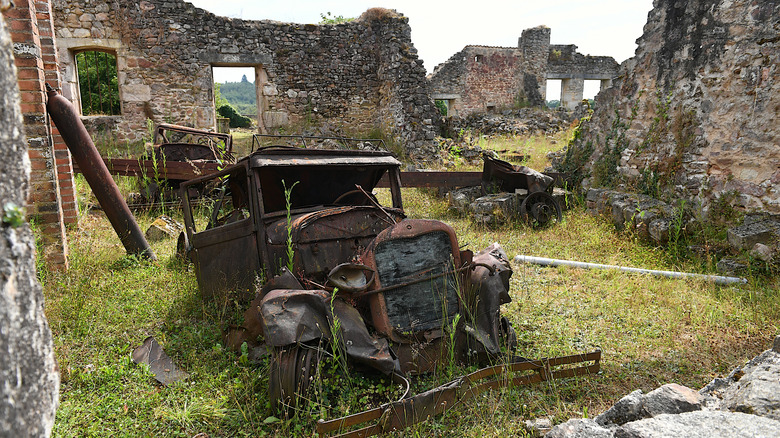
No one is sure why Nazi troops stormed the small French village of Oradour-sur-Glane during World War II in 1944. They left behind the bodies of 642 people, including hundreds of children, whom they shot or burned alive with dynamite. Many of the bodies were never even identified, and just 10 people in the village survived. It was the deadliest Nazi attack ever inflicted in France, and a strange one at that. Many Oradour-sur-Glane residents had never even seen a German, although the town was in a German-occupied area of the country.
The village was never rebuilt after the attack to memorialize the people who died there and the destruction that the Nazis caused. It was preserved by the command of Charles de Gaulle, a French general and statesman who became president after the war. Left behind were burned restaurants and shops, and even the former mayor's abandoned car. Today, what remains of Oradour-sur-Glane stands as a memorial. It's also known as "Village des Martyrs." Considered a historic monument, the ruins are protected by France and visited by more than a quarter of a million people every year. The ruins also house a museum, a cemetery, the ashes of some of the victims, and some of their former possessions. To get there, visitors can take a 40-minute bus ride or a 25-minute taxi ride from Limoges.
Pyramiden, Norway
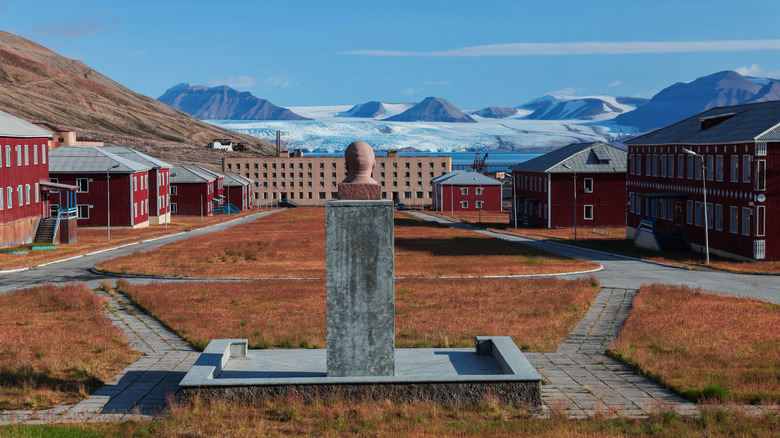
Good news, travelers who love all things eerie. Despite its 1998 abandonment, Pyramiden, Norway isn't going anywhere anytime soon. That's because due to its chilly location in the Svalbard archipelago, the former mining camp will be just as preserved as if it was in a freezer. Although the books on the shelves and clothes in the dressers might not still be there hundreds of years from today, they are now, tucked away in red brick buildings that were former apartments for local miners.
Pyramiden became a coal mining camp when it was founded a Swedish company on an Arctic Ocean island in 1910. Just 10 years later, the 1920 Svalbard Treaty was signed, which allowed all signing countries to partake in business on the archipelago. So, the Soviet Union bought the camp to get in coal mining — then a burgeoning industry — and also showcase that even in rugged terrain, communism could be successful.
By looking at Pyramiden, one would think they were right. Over 1,000 coal miners and their families here had free housing and education, as well as recreational outposts like a movie theater, pool, and sports hall. But that changed by the end of the 20th century when the Soviet Union fell and miners were sent back across the pond to Russia. These days, the only ones who get a glimpse at Pyramiden are dedicated tourists, who get there via a two to three hour boat ride in the summer or a snowmobile in winter.
Tyneham, England, United Kingdom
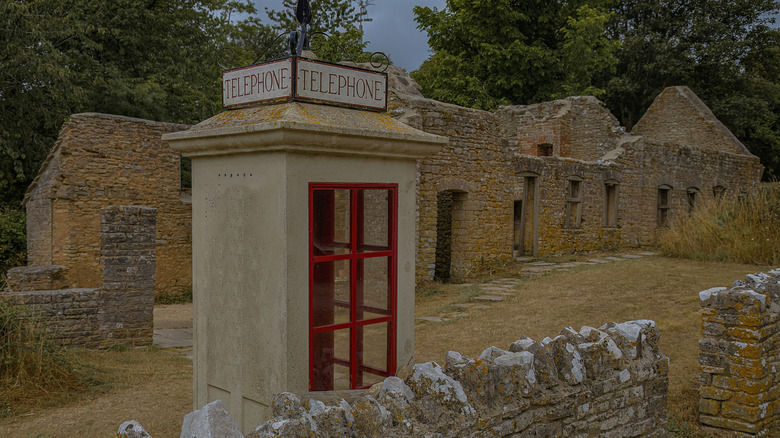
Just months before Oradour-sur-Glane in France was vacated, the residents of the village of Tyneham in Dorset, England, were forced to leave, too, although thankfully, they didn't meet such morbid ends. In 1943, the British government forced residents of the town — which had been developed for more than 1,000 years — to find new homes as the government wanted Tyneham's land for D-Day training. They had less than a month's notice that they had to relocate.
But decades later, Tyneham's residents still have not been allowed to return, as the quiet town continues to be owned by the Ministry of Defense. That wasn't without pushback, as many former residents asked about being allowed to return to their homes after the end of World War II. But the government turned them down, and the town's homes continue to be empty, many also now without their roofs and windows after being ravaged by army drills. The school and church, however, have both been restored to their former glory.
The area is a firing range during the week, but people interested in seeing the ruins can walk the area on a mile-long path on the weekends and during holidays. For more eerie spots also on the Dorset coast, check out Corfe Castle, which is one of the spookiest U.K. destinations for a Summerween getaway.