
Forget Badlands National Park, Visit Texas' One-Of-A-Kind Educational Monument With Ice Age Fossils
While not among America's most-visited attractions, South Dakota's Badlands National Park has had no trouble drawing an average of more than a million visitors per year (according to National Park Service data) over the last decade or so. Those visitors come for a variety of reasons, from hiking along scenic trails to stellar stargazing, but the park's biggest claim to fame might just be its fossils. Often lauded as having "one of the world's richest fossil beds," Badlands is a dream destination for anyone curious to gaze upon paleontological specimens from millions and millions of years ago. That said, it's not the only place in the U.S. where travelers can find fascinating fossil displays. Located in central Texas and significantly closer to several major cities than its South Dakota sister, Waco Mammoth National Monument showcases stunning Ice Age relics that most Americans won't have to stray so far north to see. Here, the fee to enjoy such sights is also more affordable (around $6 per adult, compared to Badlands' $30-per-vehicle rate).
Of course, as you might expect, Waco Mammoth National Monument is smaller than the 244,000-acre Badlands National Park. Encompassing roughly 100 acres, the Waco site features key areas such as the fossil-rich Dig Shelter, a welcome center, and hiking trails, plus additional facilities like picnic spots and an amphitheater. While offering enough curiosities to fill a day of exploration, the national monument is no behemoth, making it an excellent, low-stress addition to road trips and longer journeys through the region. There are some fun options for extending your time at Waco Mammoth National Monument, however. Before you visit, check out the attraction's National Park Service page for information on guided tours, family-friendly story times, and upcoming events (such as National Fossil Day celebrations and star parties).
Discover the wonders of Waco Mammoth National Monument
Your visit to this one-of-a-kind educational monument begins in the town it shares a name with — Waco, an artsy and historic gem often called the "heart of Texas." Home to more activities and landmarks than those unacquainted with the region might guess, this city of roughly 147,000 people is the proud host to one of America's most breathtaking destinations to see fossils.
As a matter of fact, Waco Mammoth National Monument actually qualifies as a primary fossil park. Though over 280 national park sites have some number of unique paleontological findings, fewer than 20 are classified as "primary fossil parks." According to the NPS, this designation specifically applies to places "established wholly or in part for their fossils." Notably, Waco earns this recognition, while Badlands does not. So, for sightseers itching to study the fossilized remains of ancient animals, the national monument may be a better spot to visit than the South Dakota park.
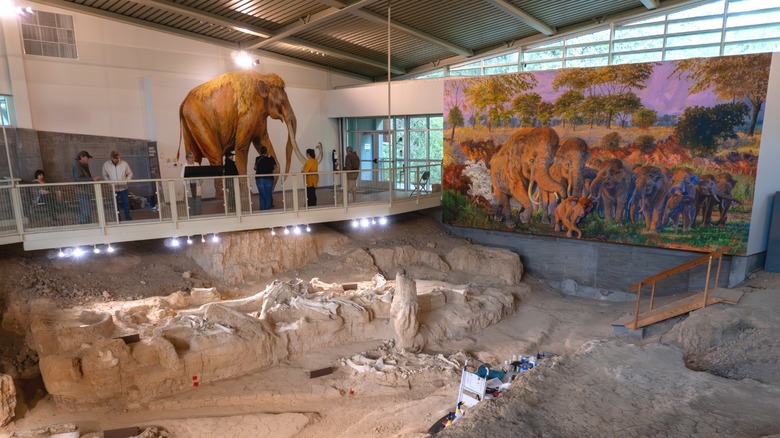
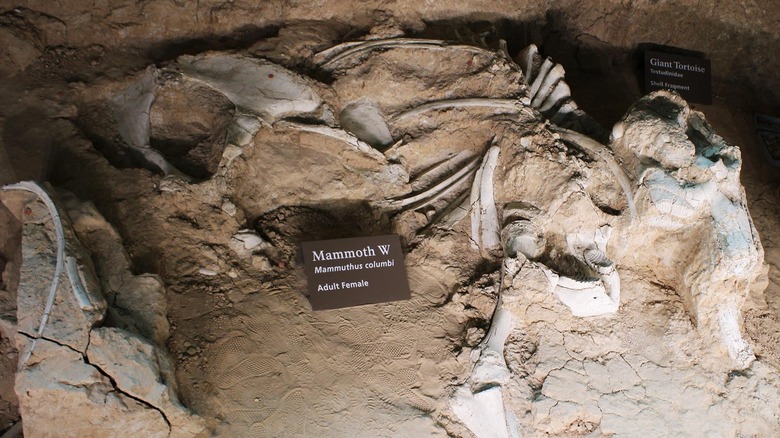
If that sounds like you, here are a few gems to look for at Waco Mammoth National Monument. Upon entering the Dig Shelter (a covered area around the scene where local discoveries were first made in 1978), expect to encounter an elevated walkway with authentic dig site views on display to the left. Carefully unearthed from the ground below is an intriguing collection of fossils, which includes the remnants of six Columbian mammoths, a Western camel, a saber-toothed cat, and a giant tortoise. The mammoth remains are particularly remarkable, as they constitute America's "first and only recorded evidence of a nursery herd of ice age Columbian mammoths" (per the NPS). The Ice Age (aka the Pleistocene Epoch) occurred many millennia ago, meaning that Waco's fossils are thousands of years old. Current estimates place the mammoth remains at 67,000 years old.
Hike Waco Mammoth National Monument's trails
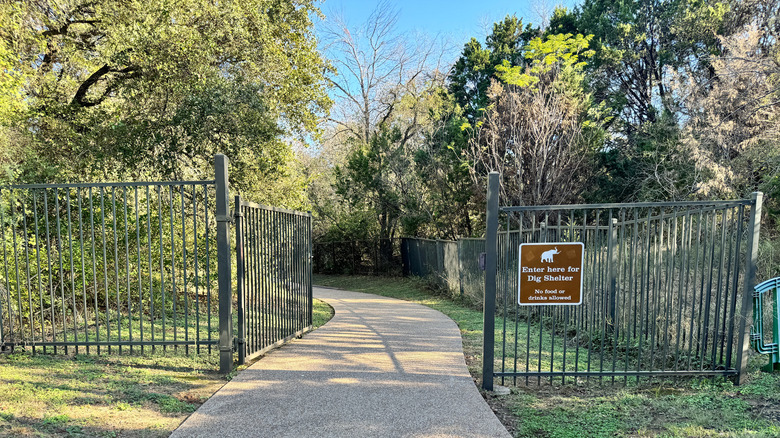
Outside of the Dig Shelter, hikers can soak in livelier scenery along Waco Mammoth National Monument's trails. A few short treks wind through the attraction's 100 or so acres, the longest being the half-mile-long Eagle Trail. Accessible via the welcome center or from the trailhead near Waco Mammoth's amphitheater, the Eagle Trail is a narrow path that can feature rugged or wet terrain. For a flat, fully paved route that can accommodate mobility aids such as wheelchairs, there is the 300-yard Mammoth Trail, which runs between the welcome center and Dig Shelter. As visitors wander along this path, they'll pass a covered picnic area, the amphitheater, the trailhead for the Eagle trek, and a spot marked for views of flowers. A short detour off the Eagle Trail is Deer Loop, which itself connects to the 250-yard Camel Trail. Along Deer Loop, birders will want to have their binoculars at the ready, as this part of the grounds is known for its wildlife viewing opportunities.
As with many national park sites, Waco Mammoth encourages sightseers to keep basic hiking safety tips in mind during their explorations. Specific recommendations here include coming prepared with bug repellent, ensuring any accompanying pets remain leashed, keeping to marked trails only, and minding the weather. In Waco, average summer temperatures regularly rise above 80 degrees Fahrenheit, and highs can exceed 100 degrees Fahrenheit. If hiking in these conditions, remember to stay hydrated and reapply sunscreen when needed.
Adventurers with spare time to spend after their Waco Mammoth National Monument visit won't have far to go for more fun, either. Just across town lies Waco Surf, a thrilling Texas waterpark and resort with the longest lazy river in the world.