
9 Park Ranger Tips For Staying Safe While Visiting An Active Volcano
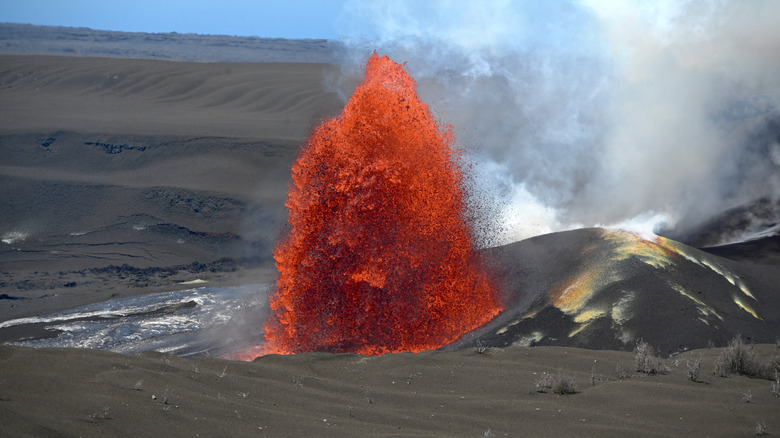
The United States has about 169 active volcanoes, most of which are in Alaska. Hawaii has six active sites, including the ever-lively Kilauea, and Washington State has five as well, including Mount St. Helens, the site of the deadliest eruption in the United States' history.
Of the many other geologically active places, some are found within the National Park System. From Lassen Volcanic National Park to the geysers of Yellowstone and the volcanic landscapes of Mount Rainier in Washington, visitors flock each year to places where they can come face to face with some of nature's most impressive sights. A volcano is a thing of glory to behold, yes, but proximity to one comes with no small amount of danger.
They are places of toxic gas, superheated ash, and flows of molten rock that can at times move with terrifying speed. There are mudflows to worry about, landslides to avoid, and tsunamis caused by volcanic collapses to keep in mind in the event of an eruption. This is not to say that such places are literal death traps — fatalities are vanishingly rare. Volcanoes are, after all, closely monitored, and many within the National Park System are watched in coordination with U.S. Geological Survey volcano observatories. Rangers mark trails, monitor conditions, and may close areas when volcanic hazards make access unsafe. Their advice, sought out or otherwise, is worth its weight in gold. That's why we've trawled through dozens of NPS sites and government sources and found a few direct quotes from rangers on how best to explore volcanoes without putting yourself or your loved ones at risk.
Carry emergency supplies
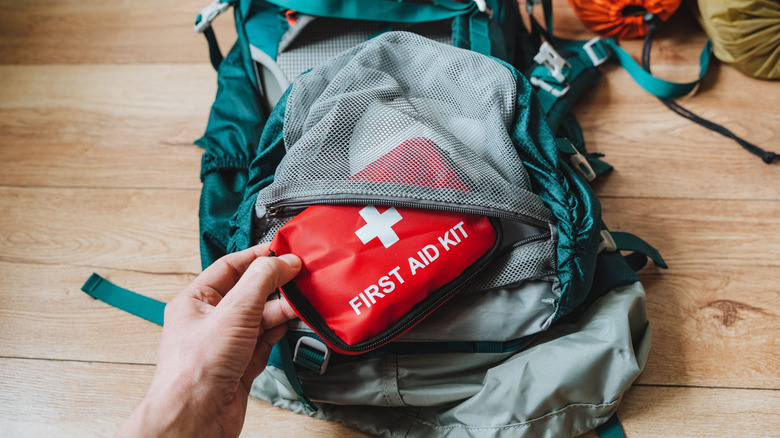
The wilderness is filled with hidden dangers, and when it comes to active volcanoes, situational shifts are sometimes measured in minutes. The unpredictable nature of volcanoes is such that there can never be any ironclad guarantee that something won't go wrong. A trip up the side of a caldera without a little forethought is an act of faith.
So, hope for the best, plan for the worst, sure. According to John Tillison, a former Washington State Parks ranger and founder of Park Ranger John, it's all about covering as many bases as possible. "We always suggest having the 10 essentials with you when hiking," he wrote. The 10 critical items Tillison recommends bringing along are familiar yet easy to overlook. Water, food, and warm clothing cover many of the basic needs of survival, and when accompanied by sunscreen, matches, a knife, and a first aid kit, they provide a highly adaptable tool set. Something to help you start a fire and a flashlight with plenty of extra batteries for navigating at night and signaling for help round out the list.
Such advice is relevant across the complete list of national parks in America, including volcanic landscapes such as El Malpais National Monument. Rangers suggest carrying trail mix and a gallon of water per person per day. While carrying these items is good practice, several others are worth considering because of the unique dangers posed by volcanic activity. Volcanic ash can act as an irritant, so carrying eye protection and some sort of face covering is also highly recommended.
Stay away from closed-off areas
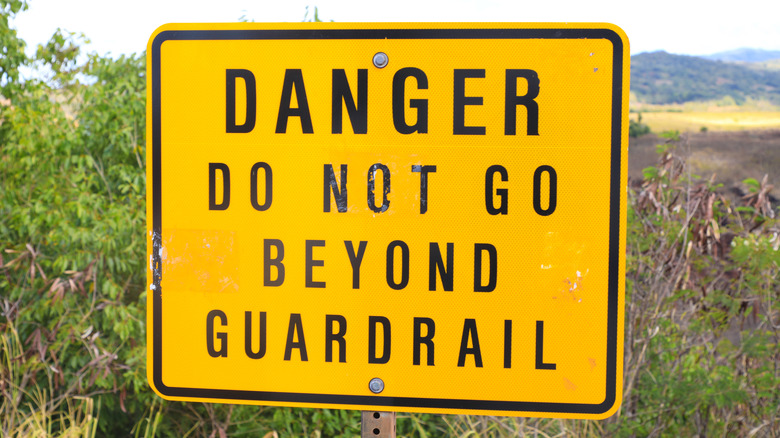
The wilds include dangers ranging from tick-borne disease hotspots to the threat of wild animal encounters, but when it comes to climbing active volcanoes, the hazards are necessarily different. Hydrothermal areas may have places where the crust is too thin to walk on. Low-lying areas may contain dangerous concentrations of volcanic gases, such as carbon dioxide, a colorless and odorless gas that can be deadly at high concentrations. Avoid unstable cliff edges, spots where flying debris is an ever-present threat, and areas within the splash range of erupting geysers or other geological phenomena. Signs placed at the periphery of such places are there for a reason. Many are permanent; others may be moved as conditions change. All such instructions should be followed.
Jack Corrao, chief ranger at Hawaiʻi Volcanoes National Park, spelled out the dangers of leaving designated areas in a National Park Service news release: "All it takes is a slight change in wind direction, and offenders could inhale a fatal dose of volcanic gas. One misstep or a crumbling cliff edge and they could plunge into the vast pit of molten rock or to the crater floor." To make matters worse, veering off designated paths gives rangers more ground to cover and increases the possibility that a trespasser could be overlooked during an evacuation.
In February 2026, a search and rescue team worked overnight to locate a 33-year-old who had entered a closed area on the east side of Kīlauea caldera within Hawaiʻi Volcanoes National Park. He was located the following day and later pronounced dead at a hospital.
Be prepared for sudden changes in the weather
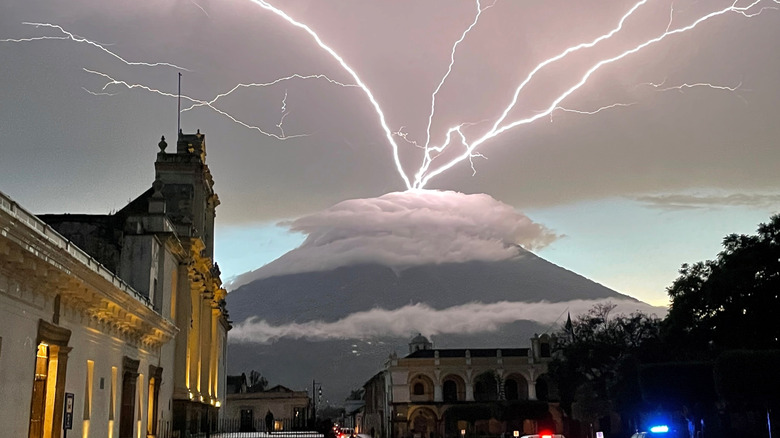
Millions of people visit active volcanoes every year, and when it comes to safety, our minds often turn to the dangers of extreme heat. Superheated gases, burns from contact with lava, and the increased danger of sun exposure at high altitude all come to mind. But other threats are no less deadly. A visit to a caldera may involve climbing up the side of a mountain. And although you might set off on a clear day, the mercurial nature of weather is one of those known quantities that remains difficult to plan for.
The local weather report is your first line of defense. If things look sketchy, it might be time to change plans. Your second line of defense rests on the aforementioned emergency supplies that you should be carrying regardless. If you get lost or cut off from help for a period of time, those supplies can mean the difference between life and death. Exposure is, after all, one of the main things you need to worry about.
Indeed, as former park ranger Scott Berkenfield told The Washington Post, hypothermia is the biggest threat even during the warm summer months. Added to that is the potential for volcanic activity to affect the microclimate in a variety of unpredictable ways. Sudden lightning caused in part by particulate friction within plumes of volcanic ash makes for dramatic viewing but can pose a significant threat. Greg Purifoy, a ranger at Lassen Volcanic National Park, offered some succinct advice to the Sacramento Bee: "The best thing to do in a thunder and lightning storm is to go indoors. The next best thing is to go inside a vehicle with the windows rolled up. If you are stuck outside, move to a low point."
Don't get lost
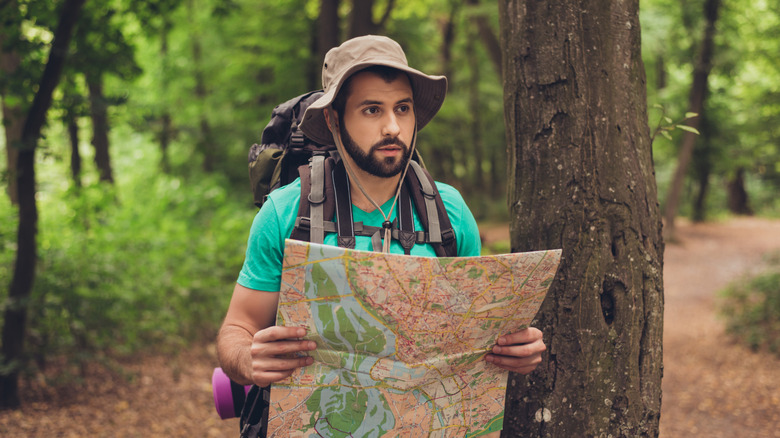
Paying attention to signs around a caldera is a surefire way to avoid some of the most dangerous elements of a volcano, active or otherwise. Following signage will also help keep you from losing your way.
When visiting any stretch of wilderness, following ranger tips for staying safe while hiking is an excellent start. According to Andrew Herington, an experienced wildlife ranger and survival instructor, day hikers often fall victim to one critical oversight. In an interview with National Geographic, he said, "If you go backpacking and you get lost, or you get caught out in bad weather, it's like; oh, well, I'm going to be out here another night and maybe go to bed hungry. No big deal. But when you're out there, and you don't have a sleeping bag and tent, or extra clothing for the overnight experience, you're much more vulnerable, and that tends to be where most people get in trouble."
Such an observation highlights the general conundrum. Few day trippers want to head out into the great unknown carrying a tent on their back, which emphasizes why it's a good idea not to get lost in the first place. Taking a moment to study the terrain, downloading the national park app and packing a real map, compass and, yes, a GPS device often pays dividends. Mindfulness exercises such as the S.T.O.P. method, which encourages you to stop, think, observe, and plan, can also help prevent you from moving farther into a dangerous situation if you lose your way.
Dress appropriately
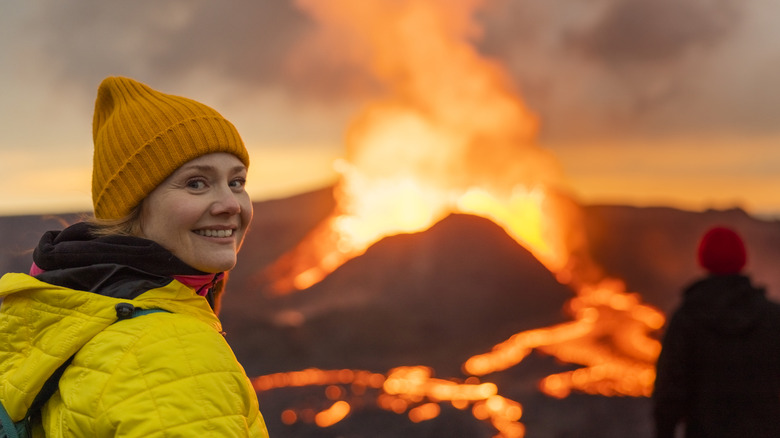
The internet is awash with advice on what to pack and what not to pack, but definitive guides on how to dress for a climb up to a caldera are less forthcoming. There are TL;DR guides, of course (open-toed shoes are a no-no and long trousers are encouraged), but for those who want a more in-depth explanation of what clothes to take on geothermal excursions, direct advice from park rangers is the gold standard.
The advice given to visitors to the Capulin Volcano varies. In addition to recommending long pants over skirts, the guidance calls for long-sleeved shirts, a hat, and layered clothing that can be added or removed as needed. Such items become ever more essential for those planning to witness an eruption, although in such cases eye protection and a dust mask might also be required.
Meanwhile, choosing the right footwear is important too. Avoiding open-toed sandals is important, especially around hot or recently erupted material, but the sharp nature of volcanic rock also demands extra caution. Park ranger tips for viewing lava flows include recommendations for sturdy hiking shoes and gloves, both of which can provide protection from razor-sharp volcanic rock.
Listen to park rangers
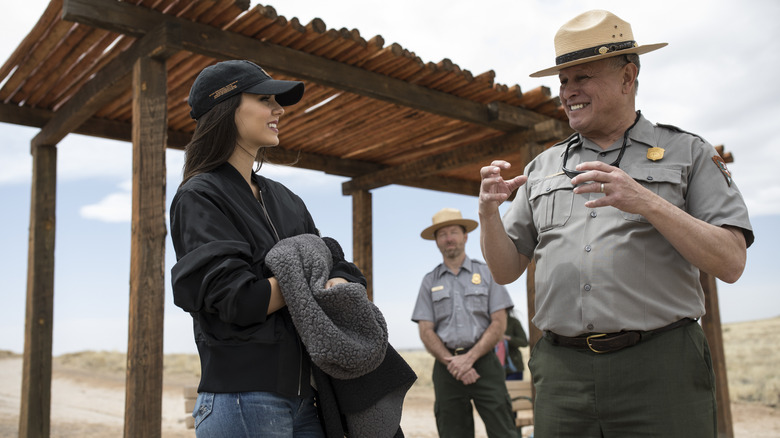
Park rangers provide general safety guidance, but conditions near active volcanoes can change quickly and may require them to make decisions on the spot. Whether there's an emergency or not, always follow their instructions.
This is not to say that all such instructions will be issued face-to-face. According to guidance on Mount Rainier National Park's website, taking the time to check current trail conditions can help you prepare for a safer visit. Still, during a crisis, any verbal command either in person or issued via telecommunication devices should be taken seriously. Such commands may include instructions to let rangers handle a situation, even when someone you know is in danger. The National Park Service, for example, advises visitors not to search for a lost member of their group themselves, but instead to seek help from park staff.
Indeed, as Stephen T. Mather, the first director of the National Park Service, once noted, "If a trail is to be blazed, it is 'send a ranger.' If an animal is floundering in the snow, a ranger is sent to pull him out; if a bear is in the hotel, if a fire threatens a forest, if someone is to be saved, it is 'send a ranger.'" Instructions that seem contrary to your own instincts might give you pause, but it's important to remember who the experts are.
Stay road safe

Up until this point, there's been an assumption that people are exploring areas of geothermal activity on foot. Somewhat surprisingly, there are a few places where you can actually drive up the side of a volcano. There's a rather spectacular drive around Kīlauea's summit area, for starters. Meanwhile, an off-road ride to the stunningly volcanic Lake Askja is one of those destinations you shouldn't miss on an Icelandic vacation, and Erta Ale in Ethiopia is so remote that reaching its periphery typically requires an overland journey. Regardless, many volcanic parks such as Lassen Volcanic National Park in California cover vast swaths of wilderness, and those planning to navigate the terrain by car need to pay close attention to road safety.
The first point of order is an obvious one. You should obey all the usual rules of the road, including bringing along all the tools and supplies you might need if you get into trouble. You should park in designated spots and refrain from blocking roads required for emergency response access. Advice specific to emergencies, such as during an actual eruption, however, is far less intuitive.
First up, avoid driving during an eruption unless authorities tell you to evacuate or you have no safer option. According to the U.S. Geological Survey, volcanic ash can make roads slippery and damage both the inside and outside of your vehicle. That said, the Centers for Disease Control and Prevention offers guidance for situations when driving is necessary. The CDC advises driving away from the danger if necessary, with your windows closed and the air conditioning off. If you must drive during an eruption, follow official evacuation routes and emergency instructions.
Evacuations can be fluid
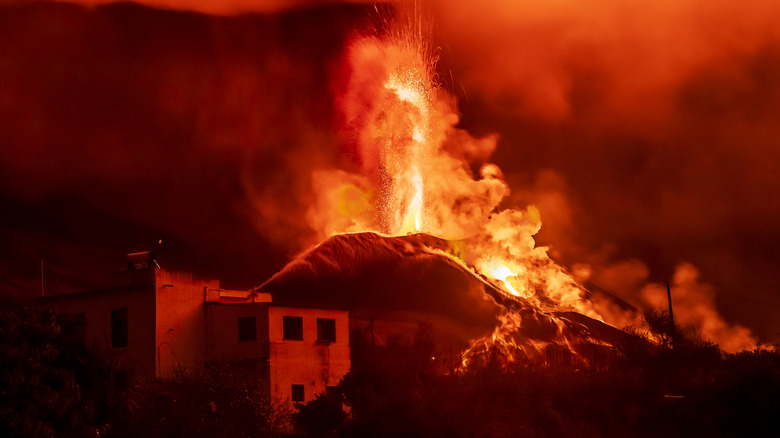
The sense that there is a quiet predictability to volcanic activity might very well be wishful thinking. True, recent innovations have produced prediction rates as high as 92 percent in some closely monitored cases, but such success comes with important caveats. First, that still leaves a failure rate; second, although some warning signs may arrive hours in advance, in other cases that window can be measured in minutes. In short, however unlikely it may be, the possibility that you will find yourself in an active eruption scenario is a real one.
In many cases, park officials may know something is happening before visitors do because volcano observatories continuously monitor activity and issue alerts as conditions change. An evacuation, if deemed necessary, need not be chaotic; it is always better to follow directions and proceed as calmly as possible. The specific details of those directions, however, most likely depend on the nature of the emergency itself.
If increased gas, ash, or seismic signs of an eruption are detected, those nearby should, according to the Global Summit Guide, "Move away from the volcano along pre-identified evacuation routes." They further advise that you should "Head crosswind from plumes, avoid gullies that channel pyroclastic flows, and seek higher ground if instructed. Notify your group and local authorities via your communication device and follow their directions." Taking time to protect eyes and airways is also recommended. The USGS also advises what to do when faced with lahars, fast-moving volcanic mudflows, stating that you should seek higher ground and then shelter in place.
Let someone know where you are going and carry a GPS locator
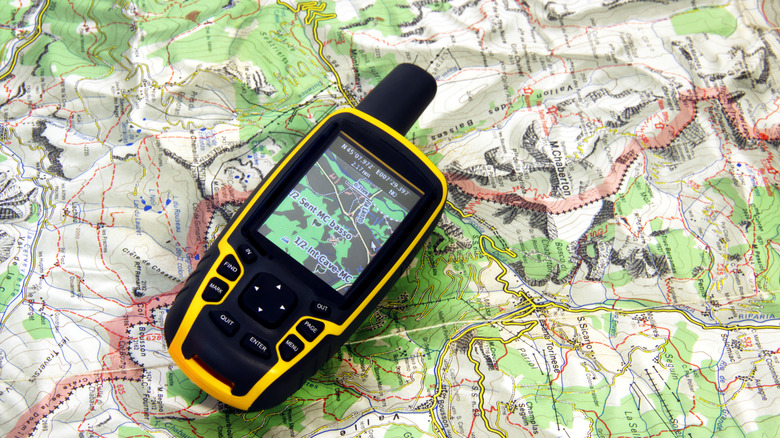
If there is one golden rule that relates to all aspects of survival, it is that not only should you let someone know where you are going, but you should also inform them of when you intend to return. After all, if nobody knows you are late returning from your wilderness adventure, then nobody is going to send anyone out to look for you.
A ranger writing on Reddit took the concept a step further by suggesting, "It never hurts to discuss your plans with a ranger for advice and trail conditions, though! Sometimes we remember conversations we have with visitors, and that can help in a search-and-rescue situation." Still, making yourself known to a ranger can only go so far. Each year, several hundred million people visit sites within the National Park System, and although the National Park System has changed greatly over the decades, it is still not possible to keep track of everyone.
Thankfully, the basics are easy enough to prepare for. With emergency supplies safely stored away, all that is left is a way to contact the outside world should the need arise. Phone signals in national parks can be patchy at best; phone batteries are notoriously unreliable in cold weather and can drain quickly during prolonged use. Some handheld GPS devices, on the other hand, are more durable and can offer battery life measured in the hundreds of hours. They aren't cheap, but they might save your life. They're not foolproof, though. Delaware Water Gap National Recreation Area's official Instagram account warned against overreliance, noting, "Blindly listening to your GPS can get you very lost and, without another form of navigation, very stuck."