
These US National Parks Are Sitting In Tick-Borne Disease Hotspots
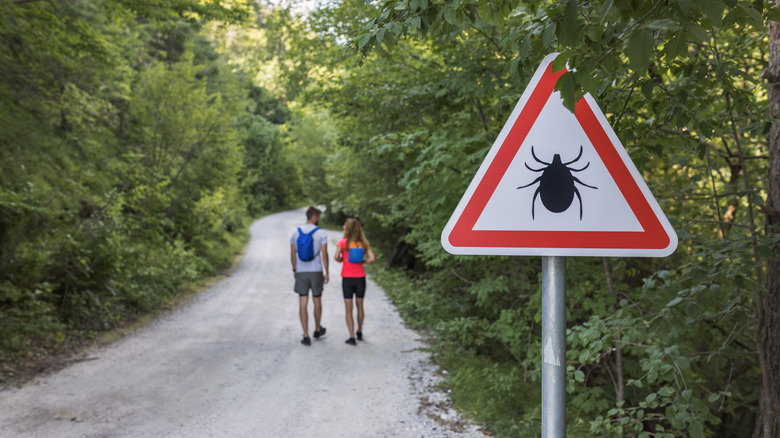
Few would argue that the American wilderness is a risk-free environment. There are bears, of course, and the occasional startled bobcat to contend with, more than a few venomous snakes who, despite preferring to be left alone, are more than happy to bite you on the ankle if you step on their tail. And then there are the ticks. Annoying, yes; icky, certainly; their bites carry any number of nasty pathogens, many of which can make you seriously ill. Tick season begins in April and ends in October, although climate change is beginning to blur those lines somewhat.
More than 30 million people are bitten by a tick annually, per the Centers for Disease Control (CDC), and nearly half a million contract Lyme disease and seek treatment. It's not just Lyme disease you need to worry about; ticks can carry more than a dozen other pathogens in the U.S. Tick hotspots exist, with the Northeast and Midwest facing unprecedented levels of tick activity. If bitten, the tick should be immediately removed with a pair of tweezers to ensure its mouth parts don't stay behind, as per the CDC's instructions. Keep the tick in a Ziploc bag and send it away for testing if you are worried; most states in problem areas have facilities to do so.
To help you stay safe, we've compiled a list of National Parks with the worst tick infestations and have also added in some advice on protecting yourself from tick-borne illnesses in these areas (and in general). A 2024 report in the Journal of Zoonotic Diseases served as a jumping-off point, and we also drew on data from the National Park Service (NPS) and the CDC and cross-referenced them with MyWild's 2026 Tick Forecast. Lastly, we examined citations from blogs, news reports, and articles.
Great Smoky Mountains National Park, North Carolina/Tennessee

While it remains true that the Northeast and Midwest are veritable nests of tick-borne diseases, to assume that elsewhere is free of issues would be a misnomer. The 2026 Tick Forecast placed North Carolina and Tennessee's threat only as moderate, but the difficulty of collecting data in more rural areas may have skewed the results. Regardless, those visiting the Great Smoky Mountains from either side of the State Line should exercise increased caution.
As little as a decade ago, the park was relatively tick-free, but incursions from the hyper-aggressive lone star subspecies saw infections rise in 2024. The lone star, alongside the also-present blacklegged or deer tick, is a definite disease vector. The former carries ehrlichiosis and alpha-gal syndrome (AGS), conditions nasty enough that you need to seek immediate medical care if bitten. The latter, quite famously, carries Lyme disease. The American dog tick has also been spotted at the park and is known to pass on Rocky Mountain spotted fever, which can be deadly if left untreated.
Still, America's most visited national park is filled with postcard-perfect mountain ranges and renowned hiking trails, all of which can be enjoyed safely. There are tick-safe steps to take directly after a hike, and a need to practice situational awareness, yes, but prevention is always the first line of defense. Clothing should be treated with 0.5% permethrin level insect repellent, trousers should be long, and you should stick to the middle of trails and avoid wading through long grass whenever possible. Full body checks should be taken at least once every 24 hours, and showers should be taken as soon as possible once you return indoors. The good news is that if a tick is removed in good time, infection is unlikely; monitor for symptoms and seek medical advice if necessary.
Cuyahoga Valley National Park, Ohio

The Cuyahoga Valley National Park sits partway between Cleveland and Akron, and occupies some 33,000 acres of real estate along the banks of the river that gave it its name. It is a place of stunning waterfalls, serpentine trails, and marshland teeming with wildlife. Hidden deep within its bowels, you'll find a once-thriving village now lost to time, discover scenic railroads, and crushed limestone towpaths that date back over 200 years. Sadly, you'll also find ticks, and plenty of them.
The 2026 Tick Forecast suggests a moderate-high-risk for the entirety of the Midwest, including Ohio, and the NPS' own website for the Cuyahoga Valley Park noted that the high tick population in 2026. As of 2025, six tick species had been identified in the Buckeye state, including the Blacklegged deer tick, a known carrier of Lyme disease. That the said pathogen is present in Ohio is hardly in question: in 2014 there were 121 cases of Lyme disease. In 2025, that number had jumped to 2,799. Such numbers may increase the need to send removed ticks away for testing: Ohio State University is happy to oblige for a $50 fee.
The usual methods for prevention are encouraged. Light-colored clothing helps you to spot any ticks that might be clinging to it, and choosing long trousers over skirts or shorts helps keep them away from skin-on-skin contact. Regardless, those experiencing tell-tale symptoms of infection — a bullseye rash, fever, chills, lethargy, and muscle aches — within a week or two of a bite need to seek medical attention.
Gettysburg National Military Park, Pennsylvania

There are few people even outside of America who are entirely unaware of the Battle of Gettysburg. Fought over a three-day period in July 1863, it marked a turning point in the American Civil War. Today, the park stands in memorial to the 50,000 soldiers who lost their lives. Such stark figures mark the area as sacred ground, but the solemn nature of the site's provenance merely adds to its pull: the park is one of America's most visited destinations. Those planning on visiting should be encouraged to do so, but they should arrive in full knowledge of just how bad the tick situation is.
The 2026 Tick Forecast rated the entirety of Pennsylvania as very high risk, and according to the local Buhl Regional Health Foundation, Lyme disease is only one of the risks in play here. Lone star ticks sound like a Texas problem but are in fact so named because of the distinctive mark upon their back. They are present throughout the Keystone State and bring with them — as we have seen — the risk of contracting Alpha-Gal Syndrome. Other potential infections include anaplasmosis, which is contracted via the deer tick, which also acts as a vector for the far more dangerous but much rarer Powassan virus.
As always, prevention is king, but said dangers need to be put into perspective. Not every tick bite leads to infection. Off-the-shelf testing kits can bring some peace of mind, but they are not entirely reliable; irrespective of a positive or negative result, you should still monitor yourself for signs of a rash around the affected area. Meanwhile, the Gettysburg Park authorities also recommend the use of tick repellent.
Rock Creek Park, District of Columbia

Washington, D.C., is home to Rock Creek Park, a 1,754-acre refuge in the heart of the nation's capital, which, according to multiple reports, has an out-of-control population of ticks. Rock Creek Park is, after all, a likely place for such an infestation. Ticks tend to thrive in urban parks across the nation thanks to the abundance of low-cut vegetation, managed woodland, and a glut of hosts to latch onto and feed from.
According to the official D.C. government website. there are five separate species of tick present throughout the district, including the American dog and brown dog ticks, the latter of which rarely bites humans. Of more concern are the by now familiar Lone Star Tick, and the new-to-this-list Gulf Coast tick, which is capable of transmitting spotted fever rickettsioses. Said condition is one of 11 recognized pathogens found in the capital's tick population, spread out over a list that also includes Heartland virus, babesiosis, and southern tick-associated rash illness (STARI), which is usually only found much further south.
Still, those visiting the nation's capital should be buoyed by the presence of so many much-beloved neighborhoods and should travel with confidence, provided they stick to the prevention is better than a cure mantra. Walking through the park with pants tucked into your socks is far from the sartorial faux pas it once was. Opening up your ankles to the environment is one of those things you should never do in a rainforest, and since tick season is making a jungle of the most urban of spaces, adapting to the conditions is the smartest of all plays.
Isle Royale National Park, Michigan

Superlatives and lakes go together like cheese and crackers. There are lists of the coldest lakes worth visiting, the deepest inland varieties worthy of our attention, and a near-Freudian obsession with the scale and majesty of America's Great Lakes. The islands found within said bodies often get overlooked, but few people could ever ignore Isle Royale. Located in the northwest corner of Lake Superior, the park occupies 893 square miles of real estate, making it the fifth largest lake island in the world. It was folded into the National Park system in 1931 and, some 50 years later, was granted the status of Biosphere Reserve by UNESCO. Unfortunately, like much of Michigan itself, the island has a tick problem.
The 2026 Tick Forecast gave the Wolverine State a moderate-high rating, but the heavy presence of ticks on the island itself further compounds the issue. Isle Royale is at once one of the most remote and most underrated National Parks in the whole of the Midwest, and the relative paucity of human visitors creates fewer opportunities to spread diseases. Moose ticks, however, mostly latch on to the very same animals that gave them their name; as many as 100,000 ticks can be found feeding on a single animal. What they don't do is carry human-transmissible diseases.
That makes the island something of a haven for those wishing to avoid vector-borne diseases. Alas, recent sightings of wood or dog ticks within the park render any such celebration premature; they absolutely will bite and can pass on a whole host of nasty diseases. Still, across the state you'll find 20 or so species, including all the usual suspects lining up to ensure visitors to the state stay alert. The usual precautions apply whether traveling across the island or seeking adventure more broadly in Michigan.
Voyageurs National Park, Minnesota

Upswings in tick activity are one thing; spikes in transmitted diseases are quite another. Over in Minnesota, during the first half of 2026, visits to emergency rooms with patients complaining of tick bites were up over previous years. For those wishing to visit the state's most famous fishing lake filled with top-tier views, such metrics are a cause for concern.
As is always the case, the issue is not that you are bitten, but rather what type of tick has bitten you and what steps you take in the aftermath of said bite. You'll find 13 species of ticks across the North Star State, most of which pose no risk to your health whatsoever. Most but not all. You can find the deer or blacklegged tick all across the park. They carry Lyme disease via a pathogen that takes at least 18 hours to transmit from the time the tick first latches on. Belabouring the point it might be, but regular checks and the prodigious use of tweezers are the way to go. You also need to watch out for American dog ticks, which love to bite but are less likely – but still able – to make you sick. Lastly, ticks of the lone star variety have been spotted, although such sightings are rare. Still, they carry pathogens virulent enough to warrant reemphasis here: Ehrlichiosis and tularaemia can prove fatal to pets and cause serious health issues in humans.
Regardless, both trail enthusiasts and local park conservationists acknowledge the threat posed by ticks but are far from put off by their presence. The park is best experienced from the water via ranger-led boat tours or a paddle through the backcountry lakes. Camping and wildlife watching are S-tier across the park. Tick-aware is tick-safe, as they say; don't let them ruin your day.
First State National Historical Park, Delaware

Delaware, like all of the Mid-Atlantic states, carries a high risk of encountering tick-borne pathogens according to the 2026 Tick Forecast. Indeed, an extremely warm summer exacerbated things, leading the state's Department of Health and Safety to call for heightened tick awareness. There were 350 reported cases of Lyme disease across the state in 2025, and 2026 rates were at an eight-year high as of April, with 101 emergency department visits for tick bites in that month alone. And although Delaware's most famous park is a fascinating historical site that represents the start of the United States, it too has issues with ticks.
To be fair, many of the main historical attractions keep you away from the worst-affected areas: There's the Dover Green where Delaware voted to ratify the Constitution. John Dickinson Plantation is a definite step back in time with few peers. Meanwhile, the Old Sheriff's House serves as a reminder of the rigidity of the state's law-abiding past without forcing visitors to wade through too much long grass.
But there is also an outdoor component to contend with: Brandywine hiking trails, scenic walking routes, and even stops for a simple picnic by the banks of the river all bring you into close proximity with potentially infectious diseases. Dog, black-legged, and lone star ticks are found throughout the park, spreading by now familiar pathogens to wildlife, pets, and people alike, so stay alert and take the usual precautions when venturing away from the more built-up areas.
Shenandoah National Park, Virginia
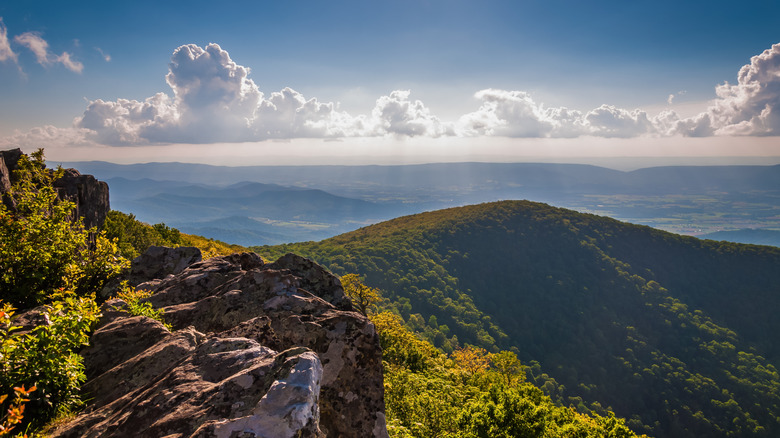
Nestled hard along the spine of the Blue Ridge Mountains sits Shenandoah National Park, 200,000 acres of pristine wilderness. Here you will find some of the most scenic drives in the country, meadows filled with wildflowers and deer, and Hawksbill Mountain, Shenandoah's highest peak and one that offers 360-degree views of the surrounding landscape. Sadly, it's also a place where you will find year-round ticks.
The park's relative proximity to both D.C. and North Carolina gives some indication as to what you are likely to find out on the trail: American dog, deer, and lone star ticks are joined by the Gulf Coast tick, which, as we have already seen, is known to carry Rickettsia parkeri rickettsiosis, or spotted fever as it is more commonly known. Thankfully, the species tends to be found towards coastal waters — hence the name — but they look very similar to the dog tick and are easily misidentified.
Most other species can be removed and then safely ignored, so getting to grips with basic tick identification is a great way to keep yourself and your loved ones safe. Tick populations across several states, including both Virginias, exploded in 2026 for reasons that remain stuck in the hypothesis stage. In 2025, Virginia-based researchers noted that red meat allergies caused by alpha-gal syndrome were up nationally. In 2026, health experts across the Old Dominion reported increases in the number of emergency room visits, along with a warning that the creatures often remain active during fall and mild winters alike.
Acadia National Park, Maine

Few parts of the U.S. have as hard a time of unwanted tick activity as the northeastern states. The whole region earned itself a very high-risk rating in the 2026 Tick Forecast. But where states such as New York and Vermont face struggles outside of the National Park System, Acadia National Park, in the heart of Maine, has a serious tick problem.
The park itself is a picture-postcard-worthy spot consisting of some 47,000 acres of wilderness filled with mountainous terrain, historic lighthouses, and a single sandy beach that is all the more satisfying for its solitary offering. There are trails to explore, fare-free bus services, and harbor town lodgings so cute you could chip a tooth on them. It is a place of fine kayaking in the summer and cross-country skiing in the winter, as beloved by fall leaf peepers as it is a mecca for spring-season wildlife enthusiasts. In short, it's delightful, and the presence of ticks should no more put you off visiting than they should any other park on this list. But you still need to be careful.
Researchers back in 2022 discovered that the ticks here seemed to prefer low-elevation forested areas over any other ecological niche as a whole. At the same time, they mapped tick populations that carried Lyme disease, babesiosis, and anaplasmosis. Their 2025 annual report warned of the dangers of blacklegged ticks while also noting the presence of the rare but dangerous Powassan virus among the resident tick population. Meanwhile, across the state, cases of tick-borne disease continue to rise: In 2025, there were over 6,000 cases, the majority of which were in both instances Lyme disease.