
Unwritten Rules You Should Know Before Visiting Liverpool
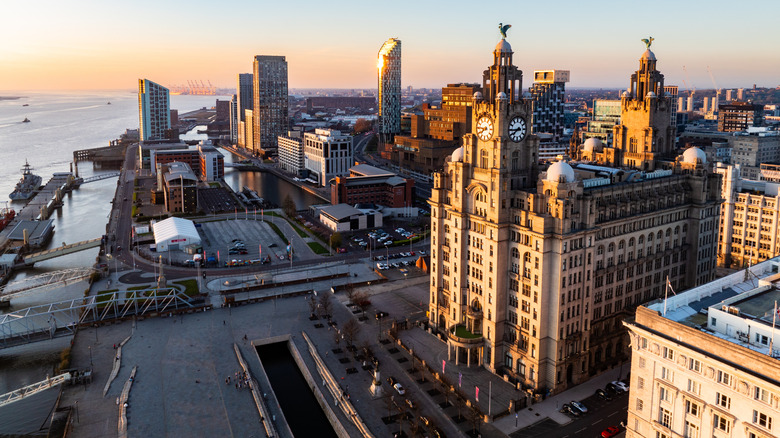
Whether you're seeking some of the city's hands-down most breathtaking scenic views, such as from the Anglican Cathedral tower or the elevated viewing deck of the iconic Royal Liver Building, Liverpool is a great way to avoid the chaos of London while visiting a beautiful English rival. You'll certainly hear the Scouse accent as you chat with friendly locals, who are passionate about football, food, pubs, and more. Known as Scousers — or Liverpudlians — residents of this maritime hub have their own way of doing things, along with some deep-seated convictions and some unexpected customs.
On the eastern side of the Mersey Estuary, Liverpool is a distinctive port city on England's northwest coast that has been shaped over the centuries by its maritime industries. The city's docklands were fundamental to the region's economy throughout the 18th and 19th centuries, where international shipping, railroad heritage, immense wealth, and the darker legacy of the transatlantic slave trade are deeply woven into its history. A visit to the International Slavery Museum (temporarily closed for refurbishment), part of National Museums Liverpool, provides an in-depth insight into the city's role and the wider legacy of slavery. The phenomenal Royal Albert Dock is another highlight, transformed into a hub of eateries, shopping, the Maritime Museum (also temporarily closed), the Beatles Story, and more.
As ever, it is important to understand the unwritten rules for visiting Liverpool, from tips for fitting in among the locals to how not to offend them, plus events and attractions not to miss. If you've visited other parts of England, some of the city's customs may be familiar, but others may be totally unique or present a new twist. We've referenced a number of articles, incorporated insights from locals, and consulted blog posts and Reddit threads that tap into residents' experiences and impressions from visitors.
Know when to use Liverpool Central or Liverpool Lime Street Station
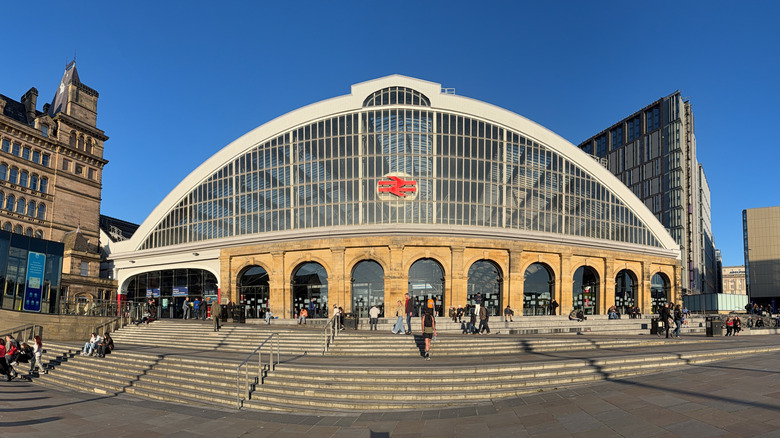
Liverpool is a bustling city of more than 500,000 residents in the city proper, and the metro area is home to more than 2 million, according to Liverpool John Moores University. It's also very well connected by rail. In fact, the historic Liverpool and Manchester Railway, which opened in 1830, was the world's first inter-city railway to operate a scheduled steam-powered service for both goods and passengers. Today, the city has four city-center stations, two of which tourists are most likely to use: Liverpool Lime Street and Liverpool Central. Just don't get them confused!
Liverpool Central might sound like the city's primary station, but that distinction goes to Liverpool Lime Street, which has national rail services, including daily journeys to and from London Euston. This is where most international tourists arrive or depart from, and the journey to or from London usually takes two to three hours, although delays are common on the British train network. Liverpool Central, on the other hand, is primarily a MerseyRail hub for short-distance commuter trains that serve the nearby city of Chester and towns like Southport, Ormskirk, and New Brighton. The other two stations are Liverpool James Street and Moorfields, both of which also serve relatively local connections. In short, use Lime Street for mainline journeys around the country and Central for most Merseyrail services around Merseyside and the Wirral.
Don't mock the Scouse accent
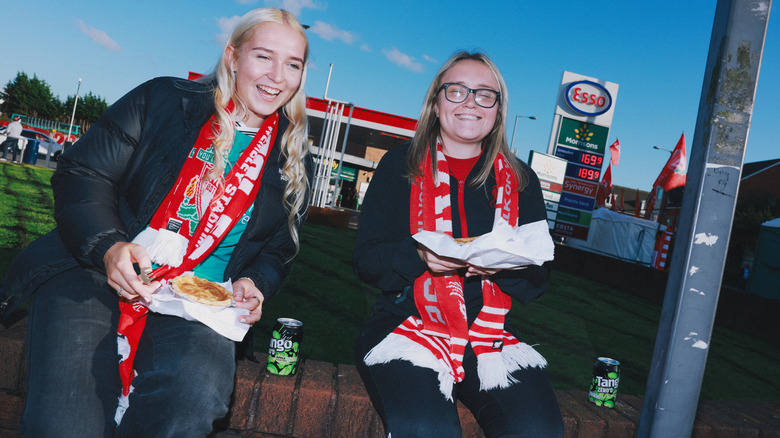
Liverpudlians speak with an accent known as Scouse, and locals are also often called Scousers. "The nickname is said to derive from the name of the traditional dish 'lobscouse', a sort of stew, which was/is eaten round there," wrote linguist Dominic Watt in a Notes & Queries segment in The Guardian. Liverpool's maritime heritage is evident here, as lobscouse was a traditional dish of Northern European sailors. When it comes to the accent of the same name, also known as Merseyside English, it's known for its sing-song quality and specific pronunciations. The "th" sound, for example, might sound more like a hard "t" or "d" sound. The word "the" is often added before nouns or store names, such as "the Asda" or "the Aldi." And there are myriad specific words, such as "bevvy," which is a drink, or "jammy," which means lucky.
Scouse has a highly distinctive regional sound, and it can sometimes also be difficult to understand. Just don't make the mistake of mimicking, or worse, mocking the accent. "Don't take the [expletive] out the accent," shares a Redditor. "I know it's tempting and it's not completely off limits; it's definitely alright occasionally with friends. But when southerners do it more than once it starts to feel a bit mean/like you're talking down." Especially as a tourist, remember to respect where you are and who you are speaking with; joking around with someone should only be reserved for times when you know the person well and are sure they won't take offense.
Know how Liverpudlians feel about The Sun
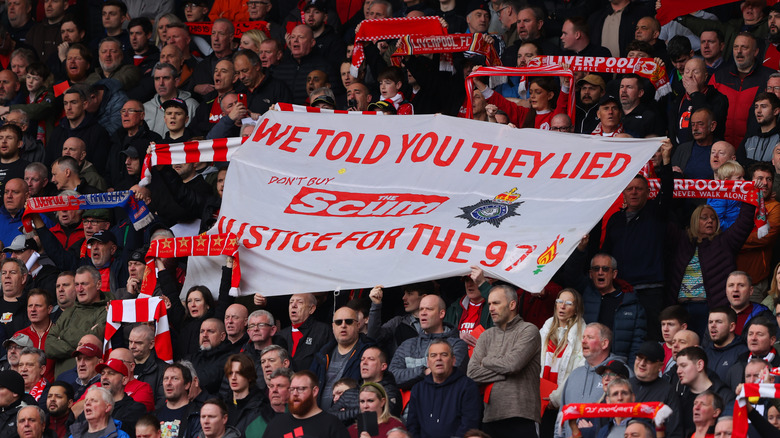
Memory runs deep in Liverpool, and The Sun newspaper found this out the hard way in 1989 with its irresponsible reporting on the Hillsborough Disaster. Ninety-seven people ultimately died, and hundreds were injured during a football match between Liverpool and Nottingham Forest at Sheffield's Hillsborough Stadium, a tragedy caused primarily by failures in police crowd management. In the aftermath, police sources blamed Liverpool fans for being unruly and drunk, but subsequent investigations refuted those claims. The Sun, however, ran a front page story with the glaring headline "THE TRUTH," and even falsely alleged that some Liverpool fans had picked the pockets of victims and attacked rescue crews. In effect, the coverage reinforced a false narrative that Liverpool fans themselves were responsible for what had happened to their community.
In response to The Sun's handling of the news, which was widely condemned as deeply offensive, many Liverpudlians boycotted the newspaper, and the sentiment continues today despite The Sun's full-page apology in 2004. As a visitor, you may see signage around town or at football matches referencing "The S*n" or "The Scum," plus expressions like "Never Forget the 96," a phrase that remains in use even though the death toll has since risen to 97. As one local says on Reddit, "Don't buy the S*n. It cant be stressed enough." In terms of unwritten rules, another replies, "Anything else can be gotten round of but not this. This is the only real written in stone rule." Singer Billy Bragg even has a song titled "Scousers Don't Buy The Sun."
Think twice before donning white socks
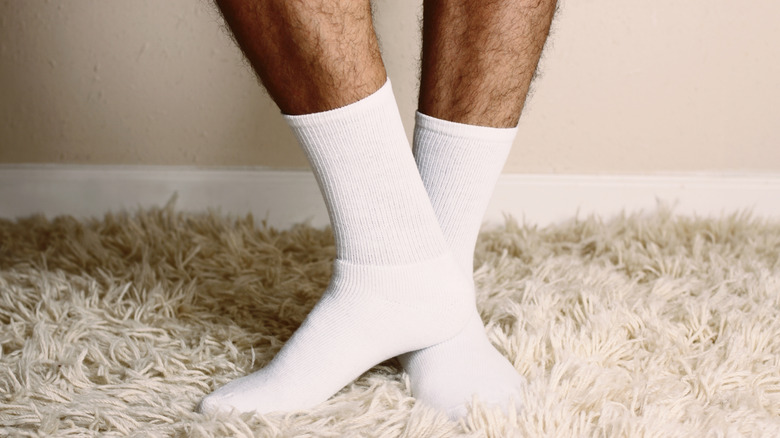
For another thing to file under "Specifically Scouse," white sock etiquette is something men are especially aware of. If you roll in wearing a pair, chances are, you'll be pegged as an outsider right away. "No white socks, the youth get massively offended by them,"says a Redditor. It may not be a really big deal, and could be changing over time, as another local adds: "It's not really a thing just a bit of a p*ss take. You can wear white socks if you want, it's not frowned upon. Now if you bounced round with a pair of England socks, then ..."
Wearing white socks is therefore a bit of a risk in Liverpool, albeit one that's mostly taken in good fun. "This rule seems to apply more to men (finally a win for the girls), and means that walking down Bold Street with white socks showing might have you booed out of town," says Grace Ellen in student publication The Tab. Ellen mentions Dr. Paul Cooper from the University of Liverpool, who noted that the tradition may have evolved from white socks being associated with specific situations, such as at the gym, before the idea of not wearing them elsewhere became entwined with local identity. Don them if you wish, but don't be surprised if you get a bit of stick.
Don't be put off by friendly small talk
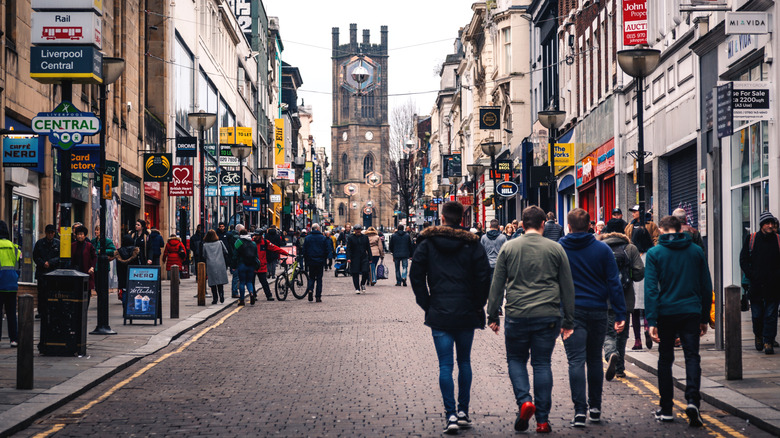
People in Liverpool are generally very polite, usually saying "please" and "thank you," and that definitely includes thanking the bus driver. This is a custom you'll experience in other northern U.K. places like York, Manchester, or Europe's "festival capital" of Edinburgh, among many other places. Liverpudlians are known for engaging in pleasantries and small talk, and depending on where you're from, this may seem either perfectly normal or surprisingly chatty.
Don't be surprised if someone strikes up a conversation in shops or at places where you're waiting around or queuing, like bus stops. "People are much more friendly in Liverpool, they will chat to you, you will make bus stop friends and train friends who you chat to when you see them on your commute," shares a user on Reddit who moved to Liverpool from London and appreciates the casual chit-chat in public. A local named Margy Newton told The Echo that, "In Liverpool everyone is polite, always a thank you, ta love or sorry."
Ladies Day is a very, very big deal
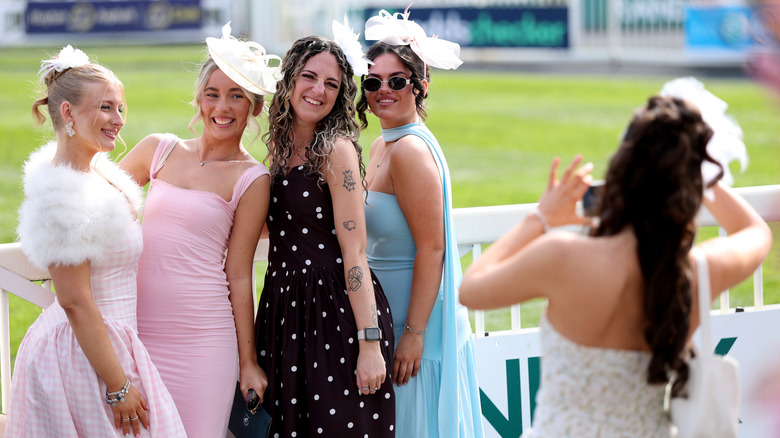
In British horse racing culture, tradition is deeply ingrained in its events. One of the most anticipated days on the annual calendar is the Grand National's Ladies' Day, which takes place at tracks around the nation throughout the season. Their origins can be traced to historical social events when women would don their best dresses for major meets, and over time, they've become a fixture for the fashion-forward. At Liverpool's Aintree Racecourse, Ladies' Day typically happens on the Friday of the three-day Grand National event, the day before the Grand National itself. Tickets range in price, depending on where you'd like to hang out and how much of the track you prefer to see, from a little more than £50 to just over £1,000 for a top-tier dining experience.
Attendees can book a wide range of hospitality options in different restaurants and lounges at the famous racecourse. Racegoers arrive in their finest race-day outfits, and the whole thing is taken very seriously. "An otherwise dull day of work was brightened by the most showstopping outfits and beautifully constructed hats you could imagine. It was literally Liverpool's own Met Gala," shares local Grace Ellen in The Tab, reflecting on her experience working at the racecourse during the event. If you go, prepare to get gussied up.
Pay attention to bar etiquette
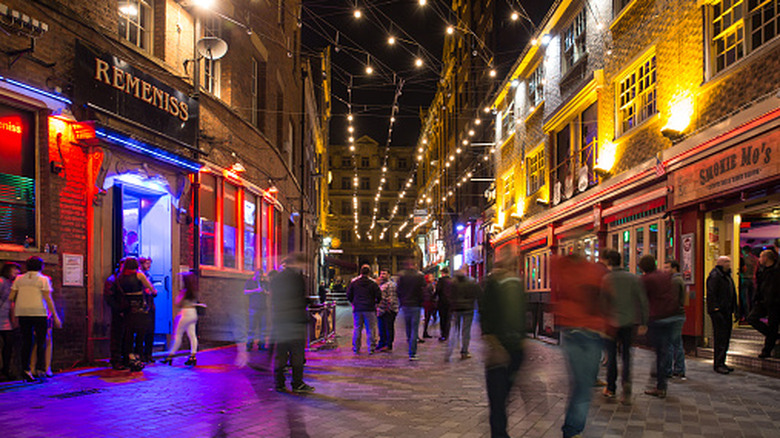
Bar etiquette can be tricky because every establishment is different; there may be more or less space to work with, and the bar staff can be busy. In Liverpool, you can expect to be called out on etiquette errors. "Something about students from other cities I've noticed is that they form queues at the bar, which is very annoying, and they will order their drink before you if offered rather than pointing out that you were there first and it's so rude!!!" shares a local on Reddit.
In Liverpool, don't necessarily form a queue behind people at a spot that's rammed; just find an open space at the bar where you can politely get the bartender's attention. This won't feel too different from other places, as this isn't limited to Liverpool, but it will help avoid confusion and potential frustration to put it into practice. Essentially, if you're at the bar, you're in the bartender's sights, and they'll get to you when they can. Bartenders won't wait for the next in line; they'll serve whoever is standing up front. With that in mind, if someone was waiting at the bar before you, make sure you let them order first. And if you're in a group, make sure you know what everybody wants before you place your order; if you turn back to ask what drink someone wants, there's a good chance the bartender will simply move on to the next customer (and rightly so).
Go beyond the city center
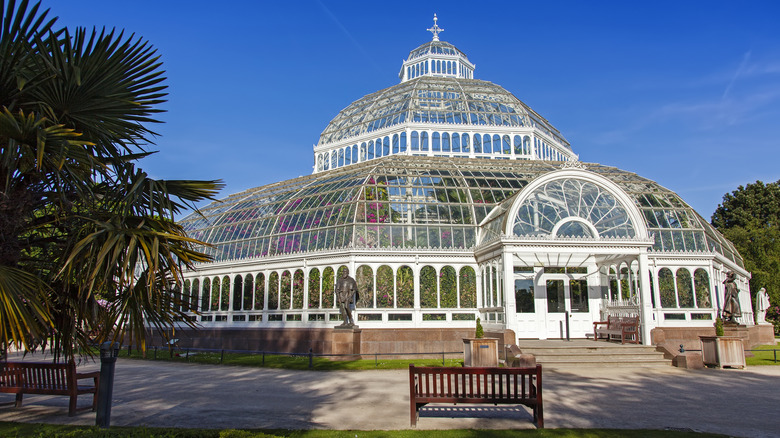
Liverpool boasts a very walkable city center, packed with university students, independent businesses, museums, scenic walks, and more. But there's also a lot to see outside the center, so don't discount outer neighborhoods, local day trips, and attractions right outside that area, such as the charming scenery of Sefton Park or the historic seaside town of Hoylake. Sefton Park is less than half an hour from the city center via several direct buses (any bus heading to Aigburth will take you nearby), and Hoylake (and the rest of the Wirral) can be reached in just 30 minutes from Liverpool Central via Merseyrail.
Another outing option is the palatial Croxteth Hall and Country Park, which is accessed from the city center via the No. 18 bus. Croxteth Hall may appeal to fans of the show "Peaky Blinders," as it was used as a filming location, and the park also hosts a 7¼-inch-gauge miniature railway that will delight visitors of all ages. To add to the park destinations not too far from town, head north to Lunt Meadows, one of Liverpool's most scenic nature retreats. It's a little less direct from the center of town than the other options mentioned here but takes less than an hour and a half to reach via public transit.
Be prepared for Liverpool's unique humor
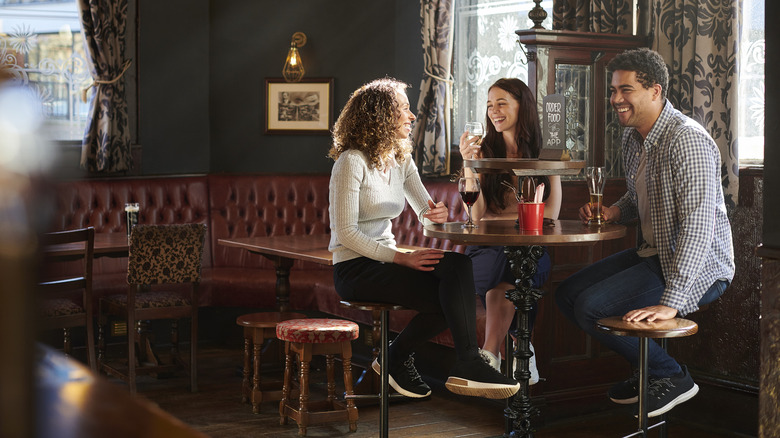
We touched on the local penchant for good manners and politeness, but that doesn't stop Scousers from indulging in a strong tradition of dry, sarcastic humor. That can include jokes about where other people are from and can also be self-deprecating in a good-natured way that reflects both pride of place and a sense of being the underdog. Don't let it get to you; it's all in the name of fun. As Liverpool-raised comedian Sian Davies shares in an interview with National Museums Liverpool, "The humour in this city runs through everything we do. Scousers don't take themselves seriously and will always find something to laugh about even in the darkest of times."
If you're chatting at a shop or meeting people at a bar, a good rule of thumb, according to a Redditor, is to not "make jokes about poverty or us stealing things. Banter yes, but some people will take offence." Remember how Liverpool was characterized by the police and The Sun newspaper in 1989? The 1980s were also a tough time for the city politically, and it was claimed that then-prime minister Margaret Thatcher was urged to let Liverpool deteriorate economically in a kind of so-called "managed decline," as reported by the BBC. Scousers certainly didn't stand for that. "I don't know if the Scouse sense of humour is a coping mechanism for the city's managed decline and government gaslighting, or if it's just a self fulfilling prophecy at this point," Davies adds. "Either way, Scousers are just funnier than most other people."
Make the most of local flavors
Liverpool has some fantastic cuisine, combining traditional English pub fare with modern eateries and international influences. For timeless British fare, think steak and ale pie, toad in the hole (a combination of sausages and Yorkshire pudding), and Sunday roast. As an international port city, Liverpool brims with international influences and boasts the oldest established Chinese community in Europe. For more flavors from around the world, Momo's on Lime Street is a family-owned Nepalese restaurant recommended for its curries and dumplings, and it also happens to sit above one of the city's best craft beer spots. Castro's Cafeteria offers a taste of the Canary Islands with butties — a common British term for sandwiches — and small plates. And as one might expect in a maritime city, seafood features on restaurant menus around the city. Just do yourself a favor and find the genuinely local ones rather than the big franchises.
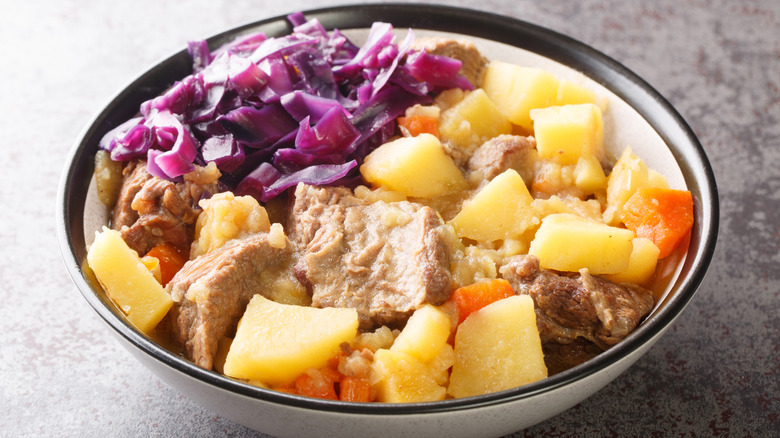
If Liverpool is known for a specific dish, it's Scouse (remember lobscouse?). Even this hearty bowl, made with either beef or lamb, evolved from a dish associated with sailors in Northern Europe, so, unsurprisingly, it traveled with them and could be made with readily available potatoes and cabbage. For something sweet, keep an eye out for a slice of Liverpool tart or the Liverpool bun loaf, which is kind of like a fruitcake but fluffier. "It's a good snack to have with tea," Mark Wolters says on Wolters World.
Prepare for changeable weather
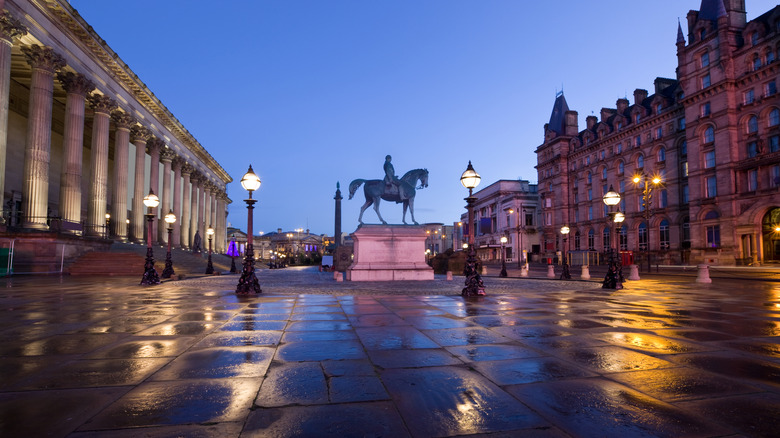
Situated in northwest England, Liverpool experiences a temperate maritime climate that's generally mild, but there are still seasonal shifts. Summers are decent, but winters can be chilly, windy, and rainy. Pack some shoes that won't become useless or uncomfortable if they get a little wet, and definitely consider bringing a good-quality umbrella — or just pack a rain layer that you don't have to worry about the umbrella whipping inside-out if it gets caught in a strong gust.
"Unless you're moving from elsewhere on the north-western coast, you are not prepared for the wind in Liverpool," says Grace Ellen in The Tab, particularly warning incoming university students about what they'll encounter on their walks to and from class. The same goes for tourists who visit during the off-season when storms are more likely. Even during the warmer months, be prepared with thin layers that are easy to add or peel off as needed and that can be carried with you.