
The 10 Most Beautiful Lighthouses In Scotland
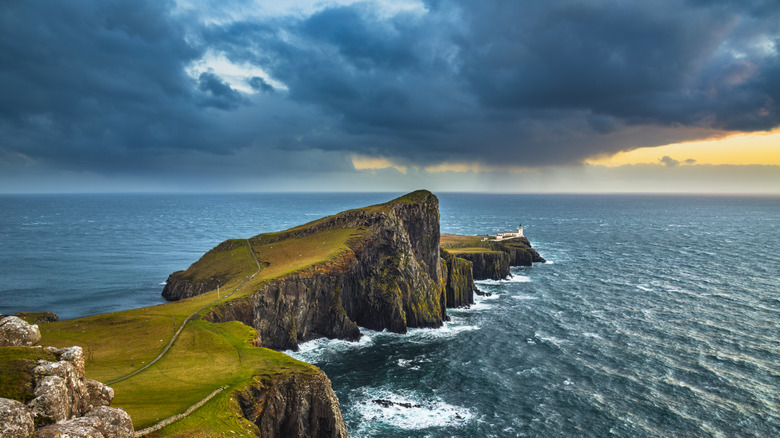
Mysterious lights shine through the dark night sky, guiding wayward sailors around treacherous coasts. Lone, eerie monoliths dot rugged, barren shores, standing tall in the face of Mother Nature's wrath. Lighthouses have always occupied a strange corner of our imagination. Their very image evokes strength and resilience in the face of insurmountable odds, surrounded by rugged cliffs and crashing waves. In few parts of the world is that image as literal as on the tempestuous coast of Scotland.
With its cliff-lined coast and water-buffeted islands, Scotland learned the necessity of lighthouses quickly. The first attempt at a Scottish lighthouse was in the 1600s, but the oldest non-coal-based one is the Kinnaird Head Lighthouse in Fraserburgh, built in 1787 by the Northern Lighthouse Board (NLB) — Scotland's official lighthouse board — which still manages 208 lighthouses across the Scottish coast. Scotland's lighthouses are famous for their dramatic settings and history. Most were built by the Stevenson family, especially Robert Stevenson. If that name sounds familiar, it's because his grandson, Robert Louis Stevenson, would one day write famous novels like "Treasure Island" and "Kidnapped," based on the rugged Scottish wilderness that his grandfather safeguarded through his lighthouse designs.
While Scotland's lighthouses are entirely automated today, they still provide a thrilling look at the ingenuity required to withstand the temperamental Scottish coast. Having combed through articles from visitors and rankings on TripAdvisor, we've selected 10 places — in no particular order — that encapsulate the remote nature and stunning settings that define Scotland's lighthouses.
Butt of Lewis Lighthouse
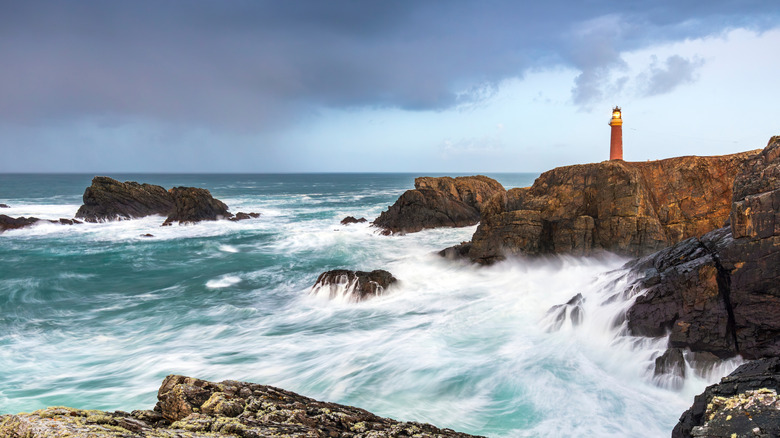
A 121-foot-tall tower of interlocked red bricks stands atop a weathered, rocky cliff. Below, vibrant waves furiously ram against the cliff in a spray of white. Here, visitors on the cliff are buffeted by winds that are extreme enough to make it into the Guinness Book of World Records, according to the Northern Lighthouse Board.
The Butt of Lewis Lighthouse is in Rubha Robhanais, the northernmost point of Scotland's Outer Hebrides. It's ranked No. 1 on TripAdvisor's visitor-ranked list of Scottish lighthouses and is also part of The Times' list of best coastal walks in the UK.
Muckle Flugga Lighthouse
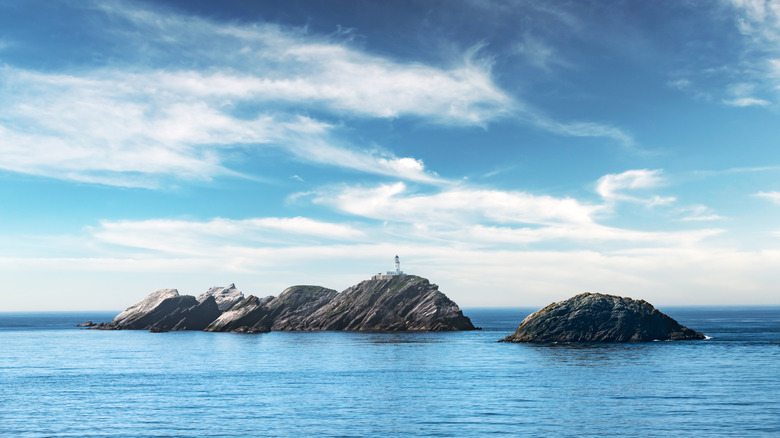
The Muckle Flugga Lighthouse is the northernmost lighthouse in the UK, perched precariously on a 200-foot-tall jagged rock off Unst, the most northerly of the Shetland Islands' inhabited islands, believed to be the inspiration behind Robert Louis Stevenson's "Treasure Island." On clear days, visitors to the Hermaness National Nature Reserve at Unst are treated to the sight of a dignified and solemn structure surrounded by merry seabird colonies like puffins and gannets. According to one of its former keepers, seals and killer whales could also be seen off the coast of Muckle Flugga (via Scotland's Lighthouses).
Rattray Head Lighthouse
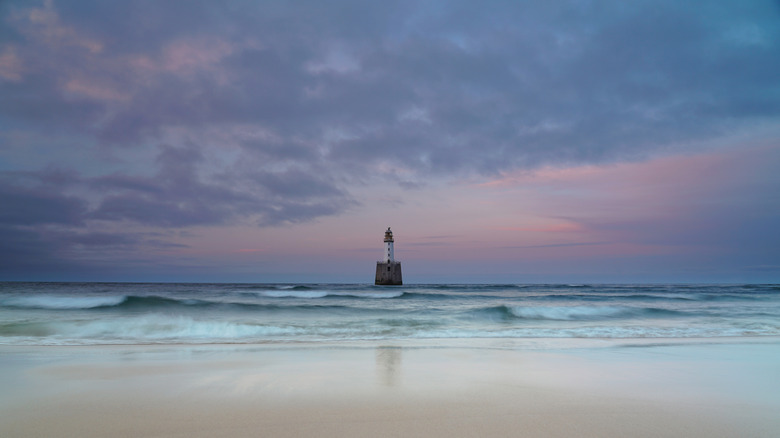
Rattray Head Lighthouse veers away from the standard image of a Scottish lighthouse. It doesn't stand on a rugged cliff battered by storms; instead, it sits off a remote, serene beach north of Peterhead, a quaint town around 32 miles north of Aberdeen, Scotland's "Silver City by the Sea." At low tide, a sandbar connects the lighthouse to Rattray Beach, allowing visitors to walk right up to it. However, photographers prefer high tide, when the lighthouse stands solitary against a canvas of soft pinkish sands and a vast ocean backdrop stretching to the European mainland.
Neist Point Lighthouse
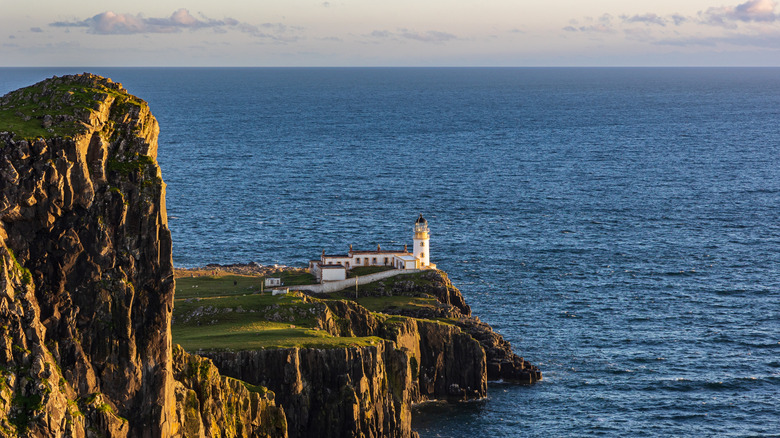
Neist Point Lighthouse sits on a cliff on the most westerly point of the Isle of Skye, famed for its breathtaking landscapes. It's one of the most famous of Scotland's illustrious lighthouses, frequently attracting photographers looking for the perfect sunset shot. A scenic trail leads you to the Neist Cliff Lighthouse Viewpoint, from where you can see the lighthouse perched on a craggy, grass-covered cliff, framed against the dark blue ocean. At sunset, the entire picture is bathed in a luminescent orange glow, as a staggering variety of seabirds settle into their nests for the night.
Cape Wrath Lighthouse
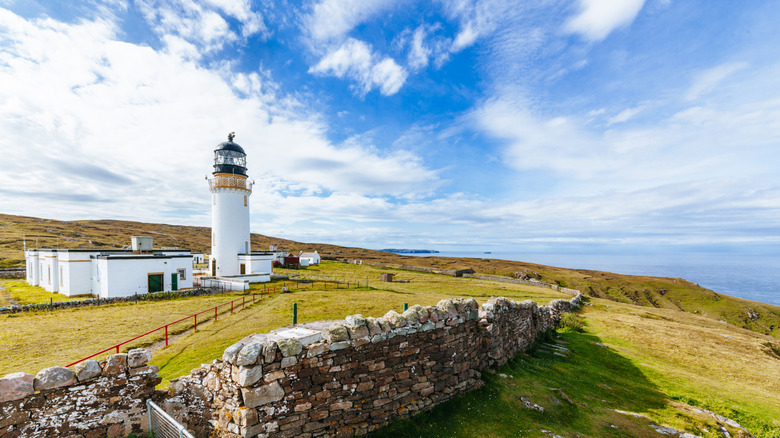
The Cape Wrath Lighthouse is the most north-westerly of mainland UK's lighthouses, and is famous for its stunning cliffside setting and remote, hard-to-reach location. Many ambitious thru-hikers visit this lighthouse via the dangerous but beautiful Cape Wrath Trail, although day-trippers can take a ferry from Keoldale, cross the Kyle of Durness, then take a minibus to the lighthouse. Visitors are greeted with views of massive, 400-foot-tall cliffs that absolutely dwarf its 66-foot tower, and the contrast between the Stevenson family's standard design of white-painted bricks and a black lantern room, with green grass, blue-and-white ocean, and wildflowers.
Stoer Lighthouse
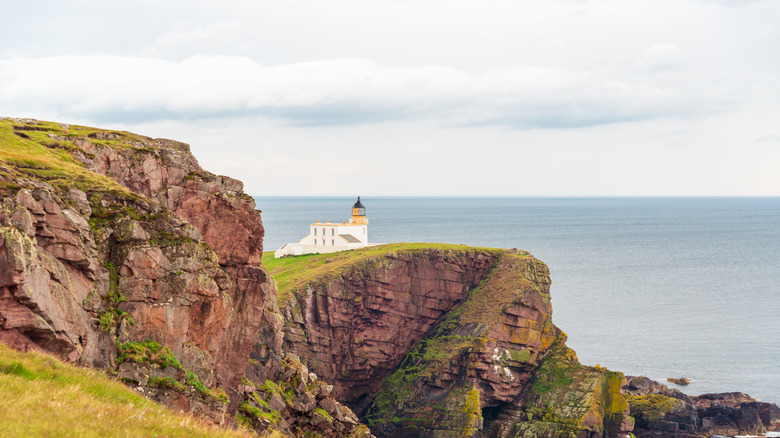
Stoer Lighthouse on Stoer Peninsula, north of Lochinver, feels like it's on the edge of the world, perched on a steep, wave-battered cliff with jagged rocks scattered around. At just 46 feet, the tower is much smaller than its counterparts, but the remote, wild cliffs of Assynt paired with the vast, dark ocean make for a truly stunning picture. The old keeper's apartments have also been converted into self-catered tourist lodges, so you can actually stay in the lighthouse itself. For a bit of adventure, use the North Coast 500, Scotland's "Ultimate Road Trip," to visit Stoer Lighthouse.
Dunnet Head Lighthouse
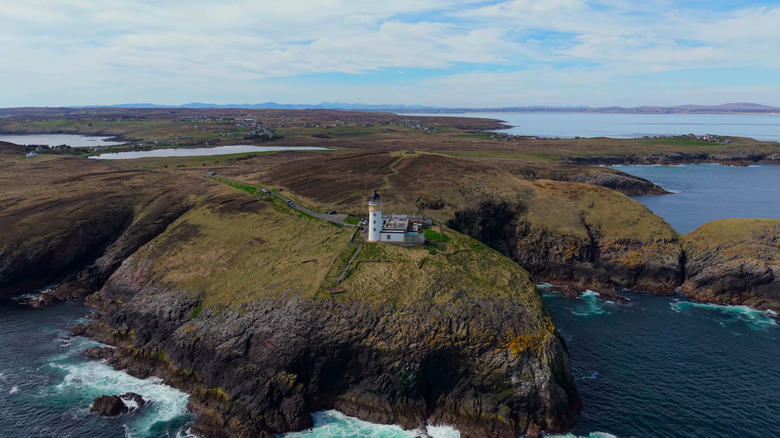
Dunnet Head Lighthouse is located at the northernmost point of mainland UK and features a standard Stevenson construction set on wildlife-rich cliffs. Apart from the combination of tall cliffs and ocean that characterizes Scotland's lighthouses, visitors can find excellent vantage points nearby to watch whales and dolphins swim past, and seals lazily sun themselves on the rocks. North Link Ferries also reports that the seabird cliff at Dunnet Head has walls near the cliff edge, making it safe for small children. On a clear day, you can also see the dramatic scenery of Scotland's world-renowned Orkney Islands.
Sumburgh Head Lighthouse
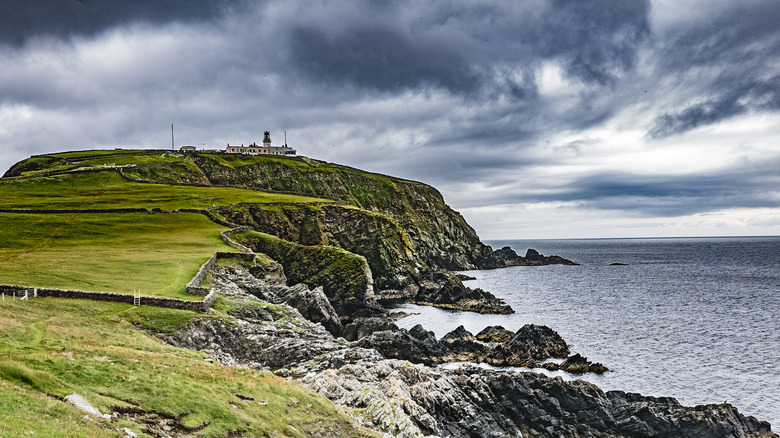
Sumburgh Head Lighthouse was the first lighthouse constructed on Shetland — a group of islands. At an elevation of 300 feet, Sumburgh Head Lighthouse embodies the ideal picture of a Scottish lighthouse, set on a cliff framed against a seemingly never-ending ocean. Sumburgh Head is also an important wildlife conservation area and houses a visitor center and a nature reserve where you can learn about the lighthouse's history and the many birds and sea animals that make this part of the Shetlands their home. It's also part of the NLB's audio tour of Scotland's Outstanding Lighthouses.
Covesea Lighthouse
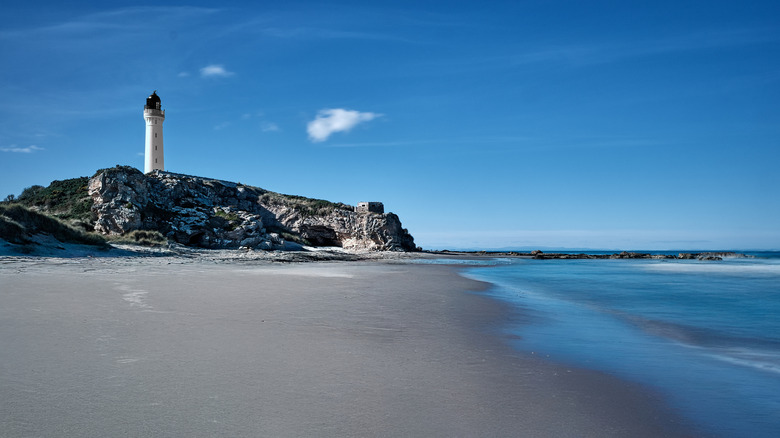
Unlike many of the other lighthouses on this list, Covesea Lighthouse has been decommissioned and is no longer managed by the NLB. However, the local Lossiemouth community operates it as a tourist attraction, which means you can actually climb to the top! The lighthouse sits around 7 miles north of the walkable and historic Scottish town of Elgin, on the Moray Firth coast, which National Geographic once rated among the world's most beautiful coastlines (via The Scotsman). Visitors can climb to the top of the 118-foot tower for spectacular views of idyllic beaches, pristine waters, and native wildlife.
Ardnamurchan Lighthouse
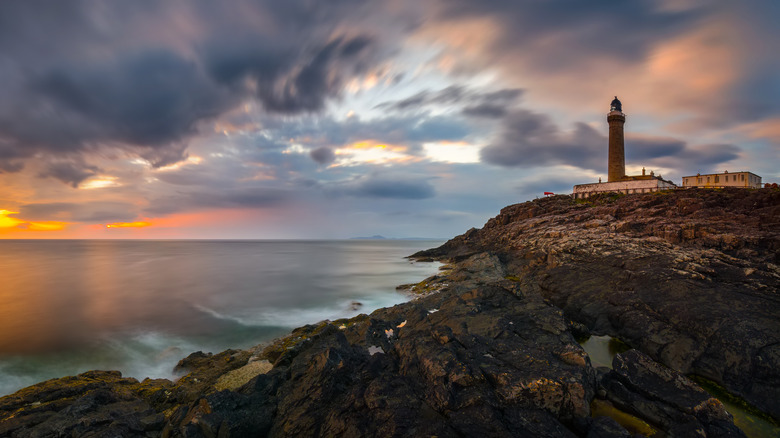
Ardnamurchan Lighthouse is the westernmost of mainland UK's lighthouses, set atop a peninsula made of volcanic rock. From the lighthouse, visitors can see islands and wildlife across the Sea of Hebrides. However, Ardnamurchan Lighthouse stands out from its counterparts in one way. In what is perhaps an homage to the Lighthouse of Pharos, the world's first lighthouse, Ardnamurchan Lighthouse features pillars and architectural motifs in an Egyptian style, rather than the standard white towers. The lighthouse features a distinctly Egyptian flair, contrasted by its quintessential Scottish surroundings of grass-covered cliffs, dark, often stormy seas, and distant, foggy islands.