
10 Common Tourist Complaints About Visiting Japan
We may receive a commission on purchases made from links.
Japan is a bucket list destination for travelers around the world. It has everything from ancient temples and modern architecture to incredible shopping and dining, and for some people, visiting Japan is a life-changing experience that stays with them for decades to come. The country is also regarded as the ultimate destination for solo travelers. Despite these charms, however, it doesn't mean that it's always perfect.
Visitors sometimes struggle with crowds, complex transportation networks, and cultural differences that can be confusing at first. In this guide, we'll walk through some common tourist complaints about visiting Japan. Some issues can be avoided completely by planning ahead, while others may require you to be flexible and understanding of Japanese culture in the moment. Remember, cultural differences are not "wrong," and understanding how people live and behave is part of the joy of travel.
To compile this guide, we used official Japanese tourism resources as well as firsthand accounts shared on Reddit, Facebook, DisBoards, Instagram, and Tripadvisor. We also consulted travel blogs and other firsthand travel resources, including Travel Caffeine, The Tokyo Chapter, and others.
Famous destinations are extremely crowded
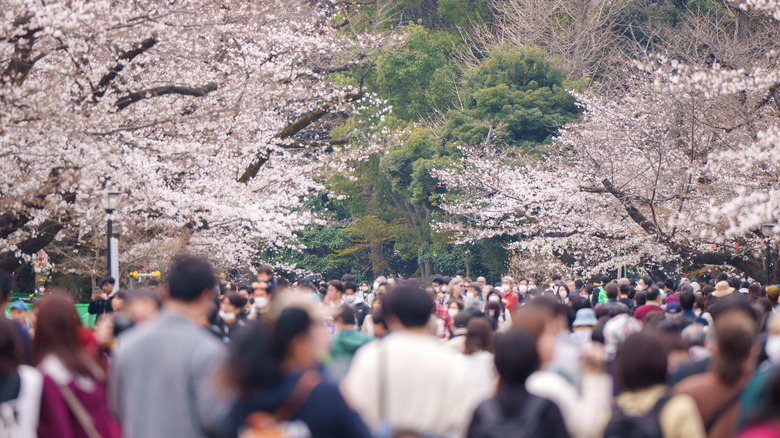
Tourism in Japan has soared in recent years, with over 42 million people traveling to the Land of the Rising Sun in 2025, as reported by Nippon.com. Unsurprisingly, the most crowded destinations are the most well-known, including Tokyo, Kyoto, and popular areas of Hokkaido. In a Reddit discussion about crowds, one commenter noted that popular sites tend to be the most packed, saying that "you're at Fushimi Inari at noon time. It's going to be crowded. Kiyomizudera? Crowded. Shinjuku Crossing at 7 p.m.? It's a sea of people."
Overcrowding can be a particularly serious problem during cherry blossom season, Golden Week, and the autumn foliage period. The situation has become dire enough to prompt new measures in some places. In 2026, for example, officials in Fujiyoshida canceled the city's popular cherry blossom festival near Mount Fuji, as reported by The Guardian. In an official statement shared by Japan Times, the local mayor said, "the quiet lives of citizens are threatened. We have a strong sense of crisis." The cancellation was the result of many issues, including throngs of tourists littering, trespassing, and generally disrupting residents' lives.
The best way to avoid crowds — at least as much as possible — is to travel outside of peak seasons. It's also worth considering lesser-known destinations rather than sticking to the classic "Golden Route." The Japan National Tourism Organization recommends alternatives like Kanazawa, Fukuoka, and Iwate Prefecture. Another potential perk of going off the beaten path is that vacationing in Japan is often more affordable outside Tokyo and other major cities.
Public transportation can be overwhelming
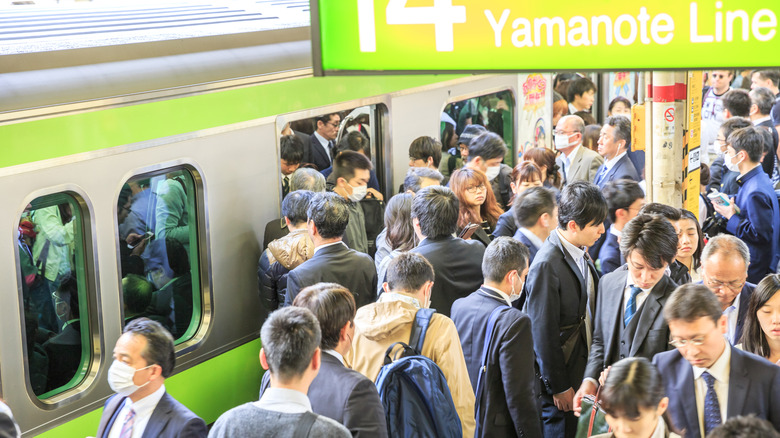
Japan's public transportation system is known for being efficient and punctual, but it can be overwhelming for first-time visitors. The first confusing thing is that larger cities have Japan railways (JR) lines alongside municipal subways and trains operated by private companies. These networks can share stations and, in some case, platforms. One tourist on Reddit lamented their experience: "Very confusing system, especially while trying to catch the train you need amongst millions of others rushing around. Never again."
The best thing you can do to prepare for taking public transit in Japan is research, research, and research some more to feel comfortable. Another Redditor on a different thread encouraged travelers to stay the course, saying they "may get a little lost inside stations with multiple lines in them," but they would ultimately find their way if they used resources like Google Maps and the Japan Transit Planner. When planning a journey, pay careful attention to the railway operator, line name or color, the station number, the train's direction, and the correct platform, not just the name of the station you're supposed to depart from.
Prepaid IC travel cards like Suica, PASMO, or ICOCA also make life simpler for travelers by allowing them to tap in and out rather than paying for their fares individually every time. Note that mobile versions of these cards have different device requirements. Welcome Suica Mobile is currently available on iOS, while PASMO supports both Apple Pay and Android. Physical IC cards are another option, and TOURIST PASMO is now available specifically for international visitors at Haneda and Narita airports. Flexibility is also important when it comes to traveling around Japan, so be prepared to pivot if there are last-minute platform number changes.
It's hard to travel with large luggage
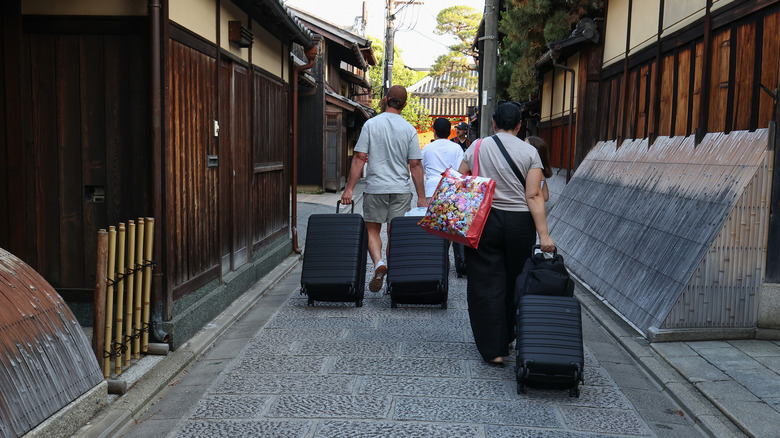
Even when the process is a bit difficult to navigate, Japan's trains undeniably make traveling between cities convenient. However, going from place to place with full-size suitcases may be tougher than some visitors expect. Checked-size luggage can also be awkward to move through some ticket gates, stairways, and narrow train aisles. There's also the inconvenience of attempting to cram a large suitcase onto already packed public transit. If you want to make a good impression in Japan, it's best to travel light.
One person on Tripadvisor noted it's especially frustrating when traversing "umpteen levels in big stations between platforms and exit/street level where and when any case can be a huge faff." Fortunately, Japan has an extensive luggage-forwarding service known as "takuhaibin." Companies like Yamato Transport can forward luggage to and from your destinations, and you can collect it at participating hotels, airports, and other designated service counters, allowing you to travel without your largest bags. Remember to keep medications, your passport, charging wires, and other necessities in a backpack or purse that you'll carry on the train. Luggage forwarding often has one-day turnaround, although some services and routes offer a same-day delivery.
It's also worth noting that some trains have specific rules for oversized luggage. The Central Japan Railway Company, for instance, classifies baggage with combined dimensions over 63 inches (length, width, and height) as oversized on the Tokaido Shinkansen, and anything over this size will require the passenger get a reservation for the limited-capacity oversized baggage area.
Popular sites require excessive planning
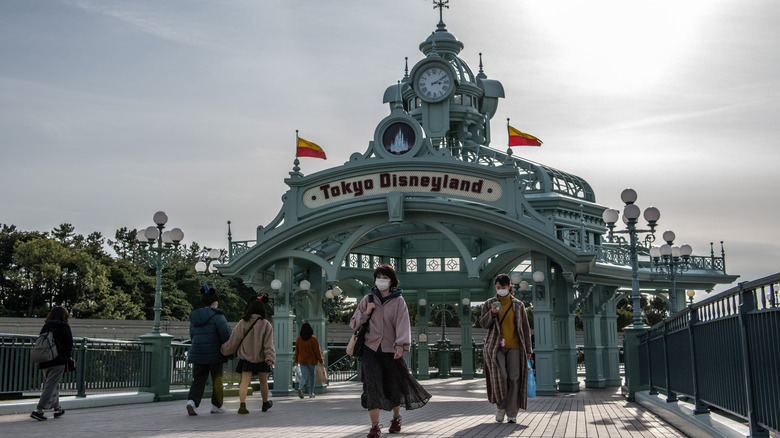
While the best time of year to visit Japan may vary depending on what you want to see and do, many of its most popular attractions require quite a bit of advance planning to have the best experience. This is a travel destination where spontaneity can be a challenge. Many popular Japanese attractions, such as Shibuya Sky, the Pokemon Cafe, the Nintendo Museum, and other experiences, use timed-entry tickets, limited booking windows, or advance reservations, so popular dates can fill up quickly. One Redditor noted that it "can be kinda hard to come up with things to do on the spot ... The days that were more packed were the least stressful."
Tickets for well-known themed attractions and entertainment experiences tend to sell out especially fast. The Ghibli Museum, for example, has a strict advance-reservation policy, with tickets for each month released on the 10th of the prior month. Ghibli Park follows a similar entry system, with guests given a specific date and time to arrive. Meanwhile, Tokyo Disney Resort releases park tickets two months in advance, while Universal Studios Japan also begins selling tickets around two months before the visit. Someone on Reddit even said that they believe "Tokyo Disney Sea [has] normalized an unnecessarily complicated guest experience."
The best way to avoid stress is to stay organized. For Japan, specifically, creating a list or spreadsheet of your group's must-dos, along with each attraction's ticketing rules and booking dates, is a great idea. And if you miss out on a particular reservation, don't panic. There is so much to do in Japan that you should be able to find an alternative option for most experiences.
Hotel rooms are often very small
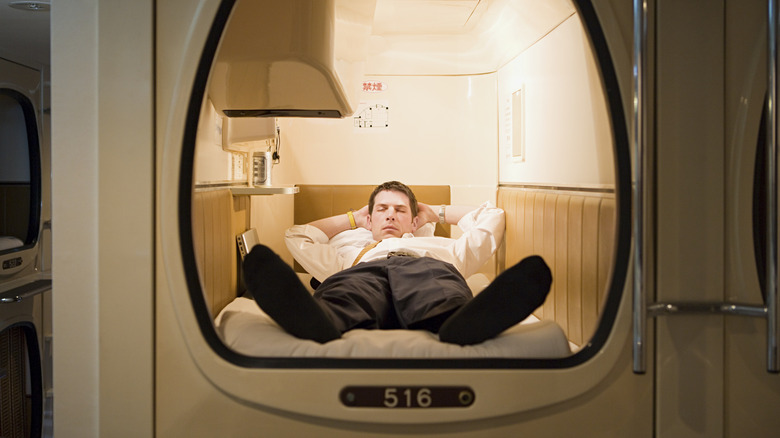
In the United States, hotel rooms are often considerably larger than those found in Japan, particularly in densely populated cities like Tokyo and Osaka. A fairly typical double room in urban Japan is around 200 square feet (according to Sweet Escape Japan), while budget hotels can be even smaller at approximately 150 square feet or less. This can come as a shock to visitors accustomed to a little more space while on vacation.
One traveler on Reddit shared that they booked a 139-square-foot room in Tokyo's trendy Shibuya neighborhood and were concerned it would be too compact after reading "horror stories." A commenter put things in perspective, noting, "160 to 180 square feet is the size of a typical parking space. This hotel room is smaller than that." If the idea of being crammed into a room that small alarms you, consider larger room categories or look for alternative accommodations in Japan. Fortunately, there are options available outside of standard hotels.
Vacation-rental platforms like Airbnb and Vrbo are both alternatives to conventional Japanese hotel rooms, and you can filter by the amount of space your party requires. Just make sure any property you book is legally registered and complies with local regulations. Choosing a house or an apartment is also beneficial because you can cook some of your own meals to save money. For a distinctly Japanese experience, consider staying at a traditional ryokan, or Japanese inn, at least for part of your trip.
There can be a language barrier
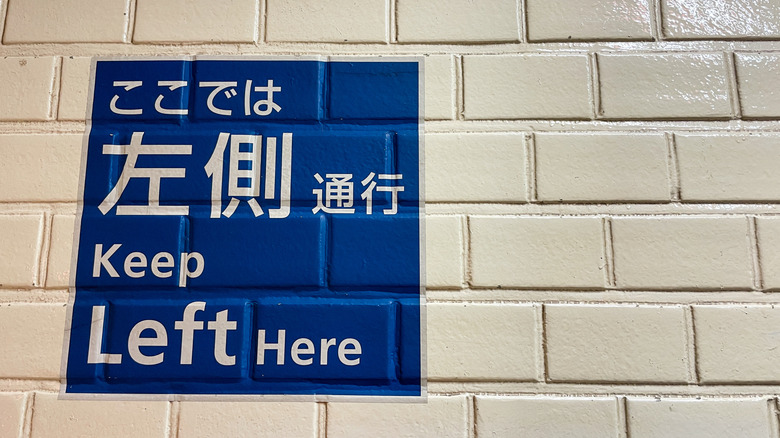
Because of its immense popularity as a travel destination, Japanese officials have made major efforts to accommodate overseas visitors. This is especially true in transit hubs, like train stations and airports. Bullet trains also make bilingual announcements, so English-speaking riders can easily understand instructions. However, while transportation centers and major cities may be relatively simple for visitors to navigate, there can be a noticeable language barrier in more rural areas of the country.
Even in Tokyo, only about 25% of residents have conversational English skills, according to Sam Quillen (writing on Medium). If the cosmopolitan capital has low English proficiency, it's not hard to imagine that the countryside has even fewer English speakers, and JNTO even states that "in rural areas or small local shops, English may not be understood." In fact, the nation's overall English proficiency has dropped year over year for over a decade (as reported by Japan Today), and one Redditor noted that travelers should not "expect to be able to carry out a conversation in English with a random person — it's not happening."
Fortunately, travelers don't have to speak fluent Japanese to have a successful vacation. Google Translate is a great resource where English is not commonly spoken. I've used this myself in Istanbul, where we would simply hold up our phones with the translation on them to let cab drivers know where we were headed, and it worked like a charm. Additionally, learning basic phrases like "sumimasen" ("excuse me"), "arigatō gozaimasu" ("thank you"), and "wakarimasen" ("I don't understand") can be helpful. Remember, patience and courtesy go a long way when there is a language barrier.
It can be tough to communicate dietary needs
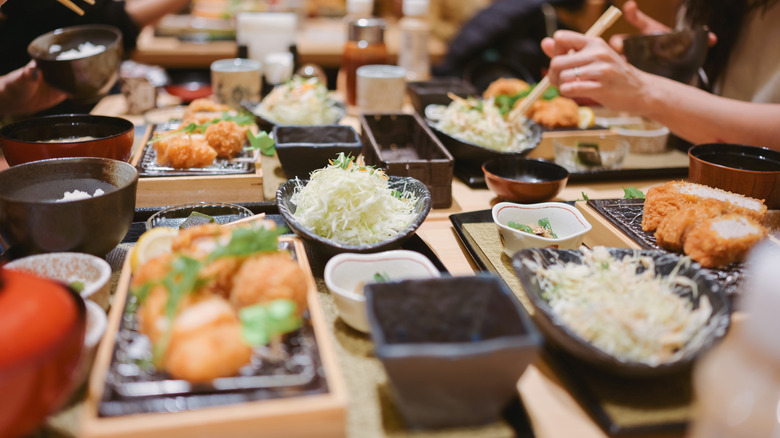
Whereas England is among the safest and easiest places for people with food allergies to eat in restaurants, Japan can present significant challenges on the dietary front. On Reddit, a slightly panicked traveler with a peanut allergy wrote that they had a major problem getting restaurant staff to understand their dietary needs. Ultimately, they shared there was "a whole struggle of communication between us and the restaurant, and me not eating any of the food we ordered out of fear of a reaction." The tourist said the allergy communication issue was causing "a lot of stress and unpleasantness in our trip already."
Commenters on the thread suggested checking out restaurants where ingredients and preparation methods are clearly explained, as well as places where they can watch the food being prepared. Travelers on Reddit also note that there are some halal and kosher restaurants in Japan's larger cities. Another Redditor suggested food such as soba noodles and yakitori as easier options, though it is important to do your own research about every restaurant you're considering.
People with allergies should also consider carrying an accurately translated dietary card that lists key information like their specific allergen, related ingredients, and whether cross-contamination may trigger a reaction. Additionally, Japan's Consumer Affairs Agency offers a free, downloadable English-language food-allergy communication sheet that travelers can save to their phones or print out. While documentation is useful, it's still wise to take extra care when dining out in Japan if you have allergies or other dietary requirements.
Public trash cans are hard to find
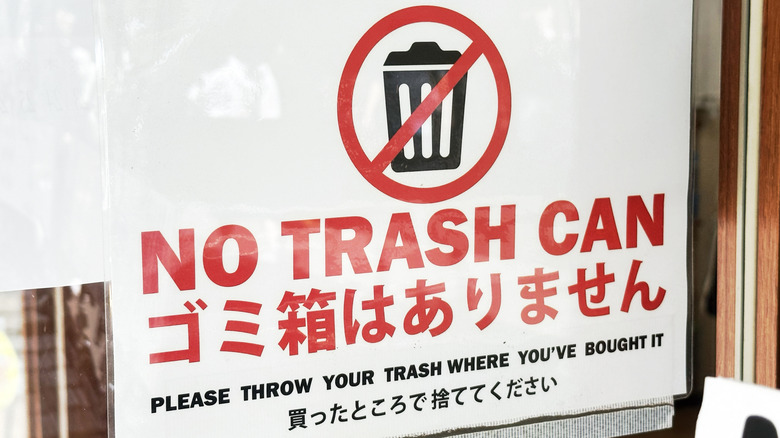
Japan is famously clean, which makes it all the more curious to visitors that there are very few public trash cans. Travelers who buy a snack or drink might finish it only to find no trash receptacle in sight, but there are several reasons for this. As we discovered when we looked at the unwritten rules of visiting Disney Parks, visitors to Tokyo Disney Resort are encouraged to dispose of food and drink waste at the establishment, even if it's a street vendor, and similar considerations hold true through other parts of the country. As a result, there simply isn't much need for public trash cans outside of eateries.
Visitors should respect this norm as much as possible, even if doing so feels unfamiliar, and one Reddit user wrote that it was "Quite the culture shock the first time I saw" the lack of trash cans. Of course, people do litter, but that doesn't mean you can. Don't be a tourist who leaves a mess for someone else to clean up.
Instead, keep several resealable bags in your tote, backpack, or purse. This way, wet or messy trash won't leak on your bag before you get back to your hotel. When you do see a public receptacle, pay close attention to the labels and graphics on each can. Waste is frequently separated into categories such as burnable rubbish, cans, glass, and PET bottles, although the system varies by location.
Summer weather is often hotter than expected
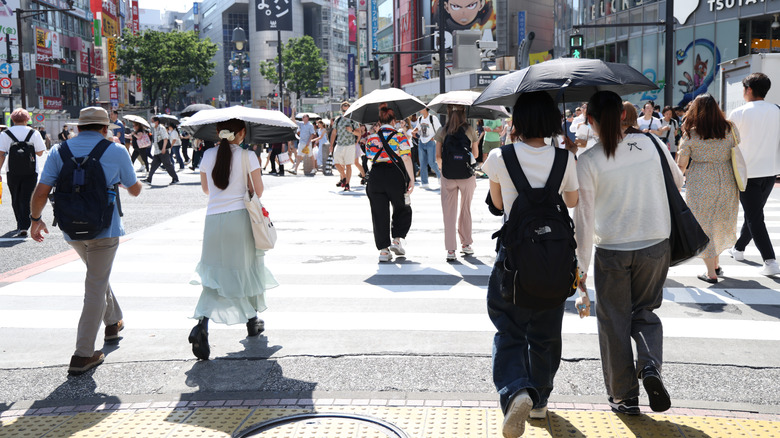
Although people may not immediately think of Japan as an extremely hot destination, much of the nation experiences hot, humid weather during the summer months. Daytime temperatures in major cities often exceed 90 degrees Fahrenheit (according to Matcha), which can feel sweltering to those who aren't used to it, especially during long days spent outdoors, moving from train stations to temples to gardens to shopping districts to other outdoor attractions. One Reddit user warned other travelers: "Think twice before visiting Japan in July — it's brutally hot!"
Summer visitors should take the weather into account when building their itineraries. It's wise to schedule outdoor sites like the Meiji Jinju temple in Tokyo for early in the morning or later in the day, when temperatures are a bit more manageable. During the hot afternoon hours, retreat to a museum enjoy a lingering lunch, or try something unique like a sushi-making class. If you're visiting theme parks during a summer trip, schedule sit-down dining reservations or see indoor shows while it's hottest outside.
Summer travelers should consider packing loose-fitting, breathable clothing, plenty of sunscreen, wide-brimmed hats or ball caps, and a UV-blocking umbrella. It's also important to stay hydrated. A Florida local on Facebook cautioned that they found the weather "warm in Japan and there is very little tree coverage." Japanese authorities also offer a helpful English-language Heat Illness Prevention Information website that displays regional alerts regarding heat stroke and other heat-related health conditions.
There can be a lot of walking and standing
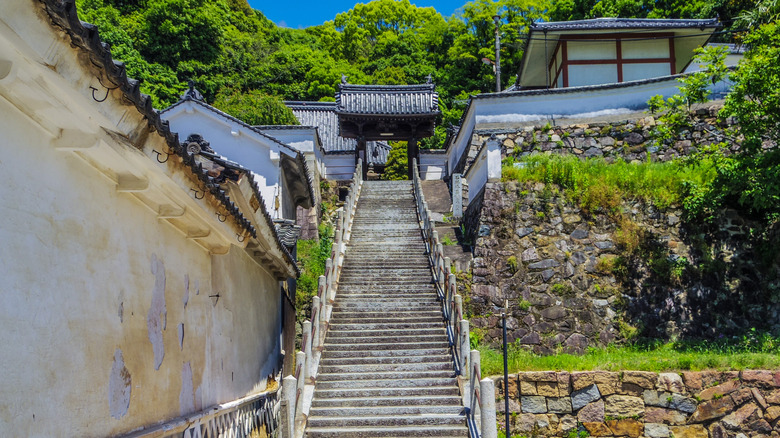
Vacationers often underestimate how much walking is involved in a Japanese vacation. One person on Facebook shared that their friends were fearful because they "can't walk much due to health issues," and a commenter agreed that would likely be an issue, sharing, "I haven't walked in any trip ever like we did in Japan! Got 20k+ steps every single day I was there." In addition to simply requiring many steps, walking at many historic attractions can be more demanding because of uneven terrain, hills, stairs, and winding paths.
Temples and shrines, castles and gardens, historic geisha districts — none of these are exactly known for their even pavement and flat walking paths. Instead, visitors should expect to walk up and down hills, through winding pathways, and even climb very long staircases. Comfortable shoes are essential, and if anyone in your party has mobility challenges, consider limiting the number of walking-intensive attractions you visit in a day.
It's worth noting that many modern Japanese structures, including train cars, train stations, newer public restrooms, and updated museums, are wheelchair-accessible and offer other accommodations. However, accessibility is not guaranteed at historic temples, shrines, castles, and other older sites. Even some restaurants can be difficult for travelers with mobility aids to access, with one Redditor saying, "Restaurants can vary a lot, there are some you won't really be able to access." In short, research everywhere you are planning to go ahead of time if accessibility is a priority for you.