
10 Tips From Park Rangers For Staying Safe When Camping
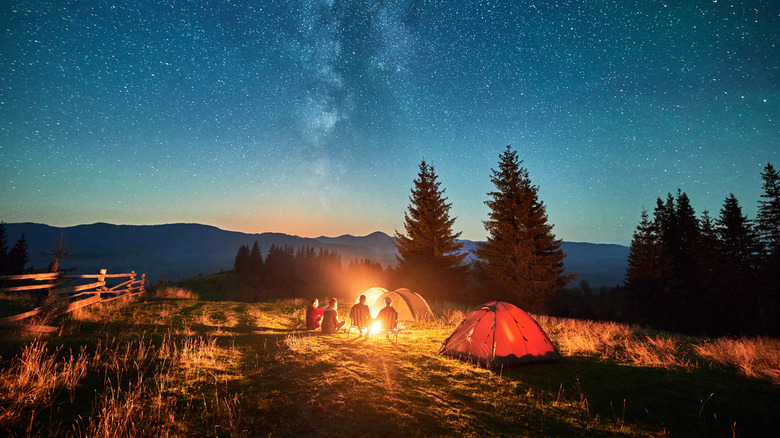
Within an outdoor recreation culture that's ripe for DIY hacks to improve your adventure and filled with myriad places to pitch a tent or park the rig, camping is a timeless way to connect with both nature and one another. It's one of those pastimes that can shape a person's view of the world and how they move around in it, providing ways to meet fellow travelers and find equipment and methods that we like. But it can also be a matter of safety, as any time we head into the wilderness or even to a campground with only basic amenities, we make ourselves more vulnerable to the elements and wildlife.
Whether they work in national parks and forests, state parks, or regional systems, rangers have some of the best advice out there about camping, partly because they've seen it all. From packing too little (or too much) to failing to research the weather ahead of time, below you'll find 10 tips from park rangers on how to camp safely and make the experience as stress-free and enjoyable as possible. These tips often keep both campers and nature in mind, helping ensure that the wild denizens of mountains and forests continue to feel at home, too. You'll find information especially geared toward first-time campers, but much of it will also come in handy for those who don't camp often or who may be branching out into new landscapes or climates on their next trip.
In addition to my extensive camping experience, I've assembled this list from rangers' comments about camping in blogs, articles, and Reddit threads. Additional practical information and data come from official sources like NPS.gov, state park systems, regional tourism sites, and outdoor resources like hiking platforms.
Start small and local
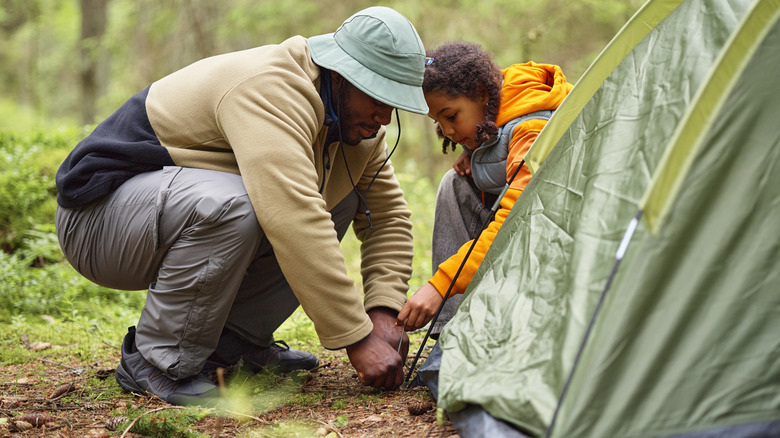
Jenny Blackmon, manager of park operations for Texas' Lower Colorado River Authority (LCRA) Parks, recommends in Fodor's Travel, "Start with a short trip and only pack the essentials." If you've never been camping before, it can be hard to wrap your head around how much equipment and preparation are involved in a stress-free visit. It's easy to bring too much stuff because you think you might need it, but consider what you really need. Blackmon also suggests avoiding a remote campsite for your first jaunt, which may mean staying in a frontcountry campground in a larger park rather than at a wilderness site you have to backpack into, or simply taking your first trip somewhere fairly local and close to nearby communities.
If you're just getting the hang of setting up and using your gear, staying locally for a night or two is a great way to do a trial run before embarking on a longer excursion. I often opt for a state park that's 20 minutes from home when I want to try out new equipment. Check your area for nearby county parks or private campgrounds. It's handy to be fairly close to a grocery or hardware store in case you forget something essential. I don't know how many times I've gone camping at this point, but if it's been a little while since my last trip, items always slip my mind — even seemingly obvious ones. One way to avoid making camping mistakes is to take notes while you're out there so you can add must-haves to your list for next time.
Know what time sunset is
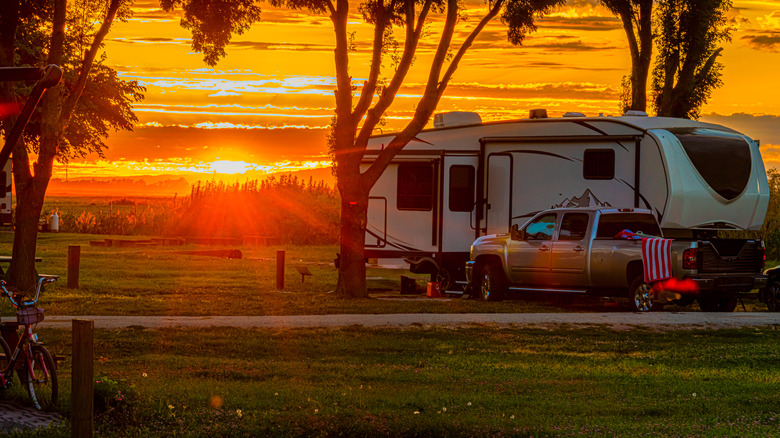
There's nothing worse than arriving at a new place, especially a dimly lit or totally dark campground, and having to set up at night. Setting up shelter is no small task even when you can see everything around you and know the lay of the land. Having to set up in the dark is a stressful experience for first-time campers, and I've certainly dealt with it more times than I'd like to admit, so one key rule of thumb is to know what time the sun sets on your arrival day. Even though the days may still be mild and camping trips just as tempting, the sun sets substantially earlier in September than it does in June, so you'll want to be aware of how much daylight you have to work with.
Then there's simply getting back to your campsite safely if you've been out on a hike all day. John Tillison of Park Ranger John, a former Washington State Parks ranger, says, "It is your responsibility to give yourself enough time to make it back to your camp before it gets dark." It's easy enough to check sunset times for the local area using basic weather apps on your phone. If you're driving a long distance, don't forget to account for time zones. Sunset on the eastern side of a time zone, for example, will generally occur earlier by the clock than on the western side.
Store food properly and don't bring anything scented into your tent
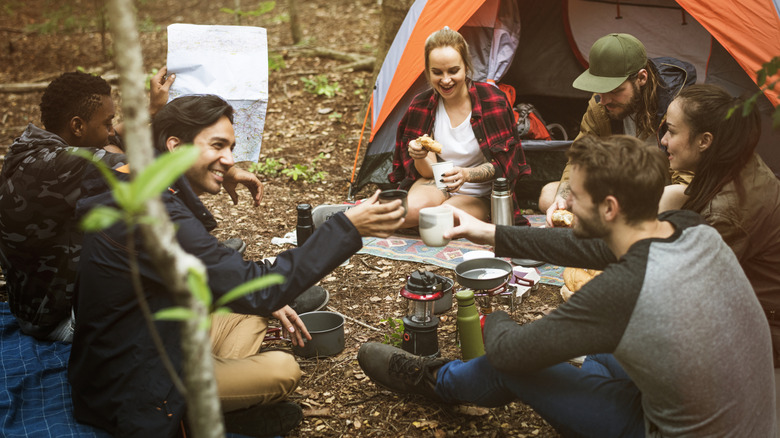
If you bring food or other items like toiletries — think lotions, deodorant, and similar products — into your tent, you may not realize you're unwittingly infusing your shelter with a scent that may attract animals. Bears, for instance, have a really keen sense of smell, and it's thought that black bears can detect food from at least one to two miles away. When it comes to grizzlies' keen olfactory sense, first imagine a bloodhound's ability to pick out smells 1,000 times better than humans — and then multiply that by seven. You don't want to give them a dinner invitation. "The last thing you want to do is attract woodland creatures to come to visit in the middle of the night to see what food you have," says Tammilee of Tammilee Tips, whose husband is a former park ranger.
Among the essentials to know about camping in the mountains, one is especially important: If there's a bear box at your site, use it. Bears have been known to break into cars when they smell what they think might be food, so eliminate that possibility entirely by keeping things in a box designed specifically to keep them out of reach. Of course, bears aren't the only wildlife that seek out food. Coyotes, squirrels, raccoons, and other critters will all try for a free meal if they can get it. I've seen garbage bags left out at campsites overnight, and in the morning, raccoons have gotten into them so thoroughly that it looks like the contents exploded all over the place. Don't even tempt them.
Brush up on bear safety
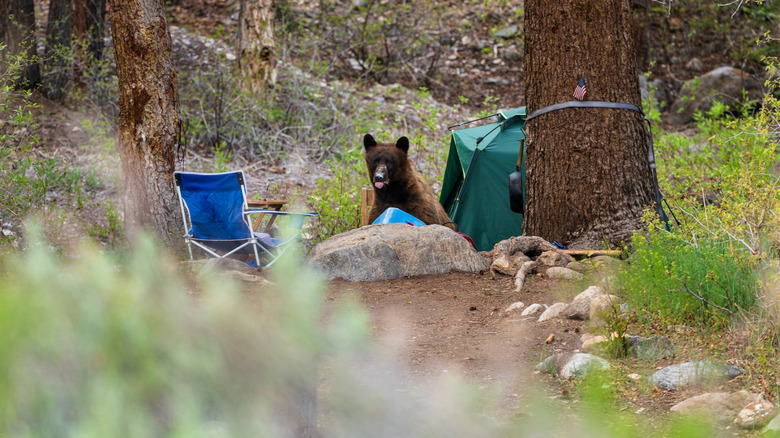
Preparing for wildlife encounters during a camping trip goes beyond preventative measures like food storage. It's always a good idea to brush up on bear safety basics before heading to a place where they're known to roam. Bear safety resources from the National Park Service are a great place to start. At one point along California's John Muir Trail, a ranger at Charlotte Lake left a handwritten note for hikers describing how to handle black bears that try to get food from campers. It included: "Never leave food unattended, not even for a minute." It also said, "If you see a bear, chase it like you're going to catch it and eat it. Get mad. Be mean." Most black bears are skittish and may run off. If you're attacked — which is unlikely but possible — you don't want to play dead or climb a tree.
When it comes to grizzlies, the guidelines are slightly different. If you come across a bear at a distance, try not to disturb it. Wave your arms and back away slowly, making sure not to run. If you come across a bear at close range and it is startled, stay calm, speak in a low voice, and back away slowly. If you can move to higher ground, it will help you appear larger. If a grizzly charges and comes within about 30 feet, deploy bear spray, which is recommended in grizzly country where it is allowed. And if the bear attacks, do not run or climb a tree. Lie flat on your stomach and play dead.
Check on fire regulations in your area
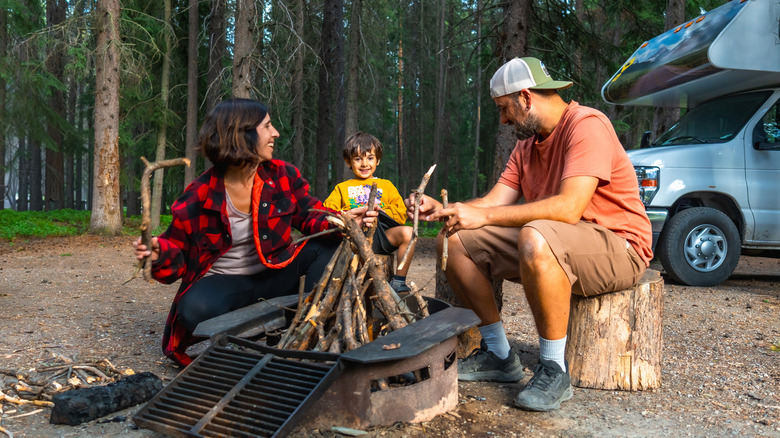
Especially in the American West, millions of acres of forest and arid, brushy landscapes are susceptible to fires. These happen naturally during the warmer months, spurred by lightning strikes or other ignition sources, such as rockfalls that generate enough friction to ignite dry vegetation. Wind and drought can cause them to spread far and wide, and wildfires have gotten more frequent and more powerful in recent decades due to climate change. Federal and state parks and forest agencies aim to keep visitors safe and prevent fires as much as possible by limiting or fully banning campfires and certain open-flame cooking methods. "Check to see what fire levels are in the area and if fires are permitted," says Tamilee of Tamilee's Tips.
As an aside, always buy firewood where you plan to burn it. "I know that you may save you a few dollars by carrying wood from home but the real threat here is transporting bugs/beetles and disease to a healthy stand of trees," says John Tillison of Park Ranger John. Ever heard of the emerald ash borer? Or the spongy moth? These are just a couple of the insects that can be transported to different forest areas by moving firewood, and they can be disastrous for trees. Where I live in Wisconsin, the DNR generally requires firewood brought into state parks and other state-managed lands to come from within a 10-mile radius, unless it is state-certified and treated to eliminate pests. Better yet, look for properly heat-treated or certified firewood, which helps eliminate insects and diseases that may be hiding in the wood.
Don't leave a fire unattended, and make sure it's totally extinguished
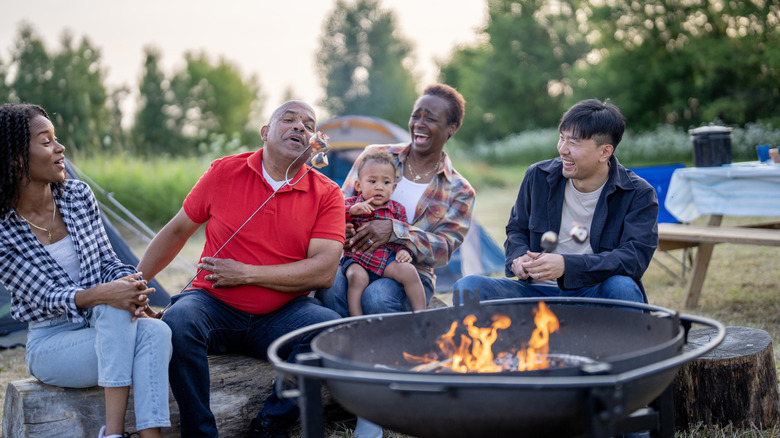
Leaving a campfire unattended is a big no-no for safety reasons, not only because a stray spark could be all it takes to ignite a wildfire, but also because your equipment, you, and others are at risk. For the same reason, you want to make sure that when you're ready to hit the sack, the fire is completely out. "A responsible camper leaves no trace, and this certainly includes making sure your campfire is completely put out," says David Schultz, an Oregon State Parks ranger, on RV Life. He adds that his team at Beverly Beach State Park has also had to fully extinguish campfires that were still smoldering after campers had left.
When nearly 85% of wildfires are ignited by humans, including unattended campfires, it's worth taking seriously. "This isn't just about following park rules; it's about preserving the natural beauty we're all here to enjoy and ensuring the safety of everyone in the park," Schultz says. Smokey Bear, the official U.S. Forest Service mascot, reminds campers to "drown, stir, drown, feel." Douse the fire with water, stir it with a shovel, douse it again, and hover the back of your hand over the ashes to feel for heat. It can take more water than you think — I often use a couple of gallons. "If it's too hot to touch, it's too hot to leave," Smokey says.
Check the weather forecast and pack appropriately
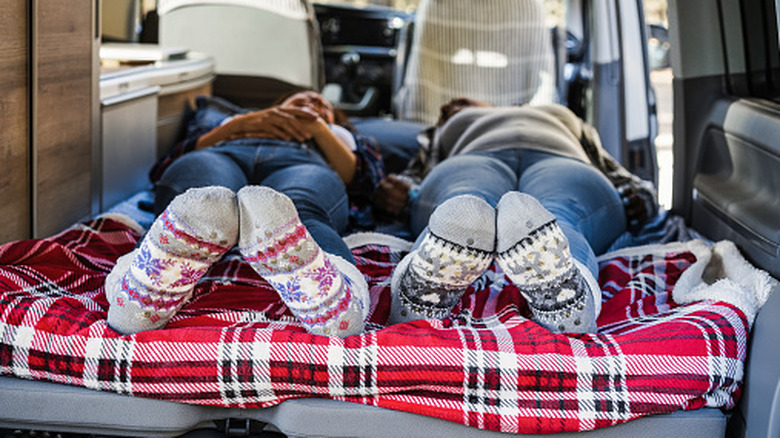
One of the biggest mistakes campers make is not checking the weather or under-packing for certain conditions, such as high-altitude campgrounds where temperatures can get below freezing at night. Always check the forecast before heading out. Make sure to also have a sleeping bag with a comfort rating that aligns with the temperatures you're anticipating at night. Men's sleeping bags are often assigned a lower limit rating, which denotes the temperature at which a warm sleeper may still feel comfortable. Tags will also often include a comfort rating, which is the number typically seen on women's bags. Lab data suggests "the 'average woman' will feel colder in the same bag than the 'average man' will feel," Ken Knapp writes for REI. "So, the comfort rating, which is the temperature for colder sleepers, was the logical spec target for women's bags, and brands continue to use the comfort rating on women's bags today."
Weather can change very quickly at high elevations or during transitional seasons, so be prepared for constantly evolving conditions. For both sleeping and enjoying activities during the day, you'll want to have layers you can put on or peel off. Amelia Gallina is a ranger at Grandfather Mountain in North Carolina, home to America's highest suspension footbridge. She tells Fodor's Travel that one of the most common mistakes she observes at that high elevation is that temperatures cool significantly the higher you get. "Many people don't realize that the top of the mountain can be 10-20 degrees colder than where they came from," she says.
Have a camping checklist for safety essentials
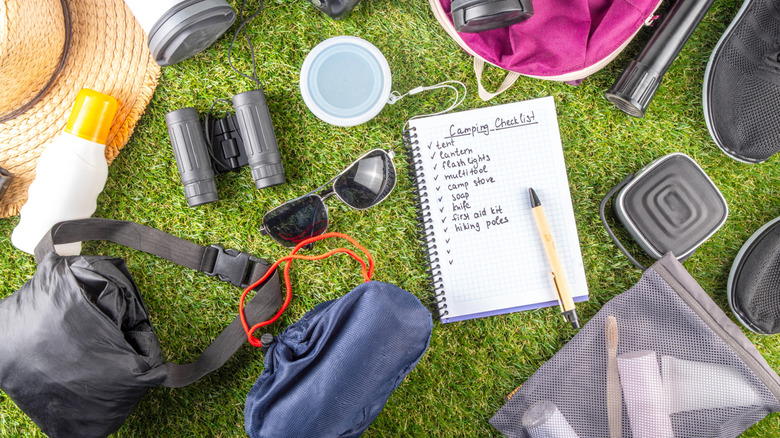
Some tools and equipment are essential for ensuring a safe camping experience, including lighting and a well-stocked first aid kit, plus backup batteries and chargers. (Remember to check the batteries in things like flashlights or fans before you leave home.) Park Ranger John suggests having a checklist of must-haves before you go so that you don't risk forgetting something that could make a real difference to your comfort or safety. And remember to consider quantities. "Some people bring one flashlight for the trip, but that's often not enough. I recommend also having a lantern to set on surfaces and a headlamp for cooking or other tasks that require both hands," says park manager Jenny Blackmon in Fodor's Travel.
Personally, I have a Google Doc with the basics that I update every single time I'm preparing to depart, which can vary quite a lot depending on the destination, whether I'm bringing my dog along or not, or if I'm tent or RV camping. Having a physical printed sheet of paper is great to take notes on as you pack. And the checklist isn't limited to before the trip; I find it really handy to have a little memo pad during the trip so that if I think of anything while I'm camping, I can jot it down for next time.
Make sure you have the right gear (and not too much)
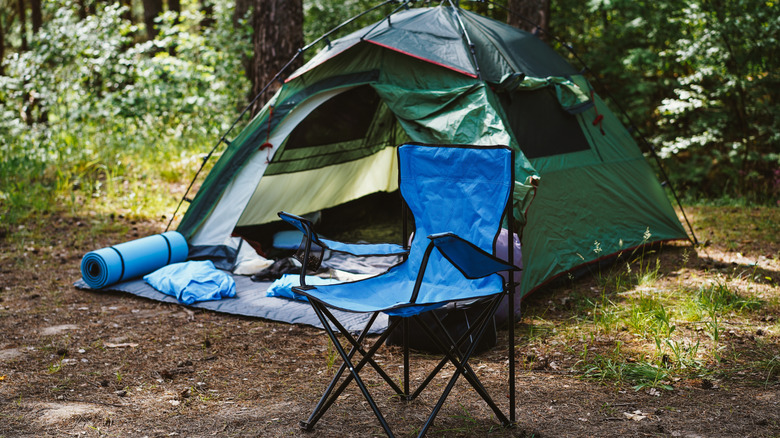
Planning what you need to bring on your camping trip is one thing, but having good-quality equipment that's suited to your needs is also very important. It may be tempting to get the cheapest tent you can find, but do yourself a favor and invest in something that will actually do the job. If you don't think you'll use it very often, by all means scout out an affordable tent for under $100. Just don't view them as one-time-use setups as people do after using them for festivals, where they can end up in the landfill after serving their purpose. The same goes for other essentials like your sleeping bag, hiking pack, lantern, cooler, and other items you'd be in a pinch without. And quality partly comes down to care. Whether you choose a basic tent or level up to a fancy setup, just make sure you can actually use it without too much hassle. You can extend its life by patching it when needed — my current rain fly has two mended areas on the front where a couple of stray embers caused small holes.
In addition to the right gear, don't overpack. While it may seem like more of an annoyance than a safety issue, bringing too much stuff can weigh you down on a backpacking trip and become both uncomfortable and potentially hazardous. Or, if you can't find what you're looking for in the car because there's too much stuff to sift through, you may not be able to find the first aid kit when you need it or remember where you put the spare batteries. Focus on efficiency. Jenny Blackmon tells Fodor's Travel, "The more organized you can be with your plans, such as meals and activities, the better prepared you will be to only bring the essentials."
Pack the 10 Essentials
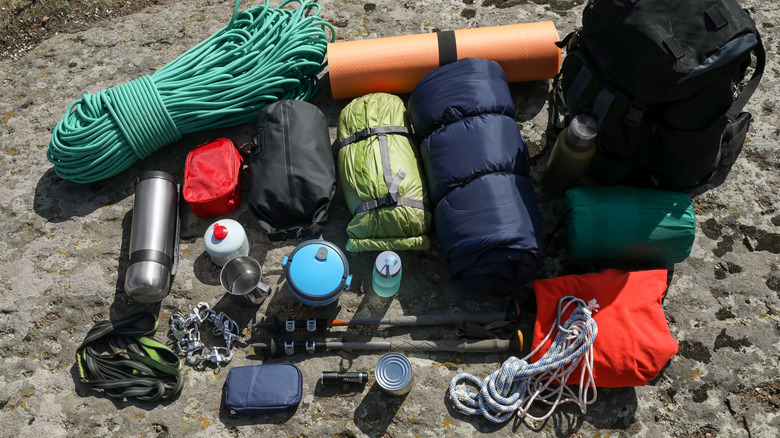
Dovetailing with the topic of high-quality gear, don't overlook the absolute basics. The National Park Service has a list of what it calls the 10 Essentials, which consists of must-have items for camping or hiking that can help ensure your safety. They're particularly handy if you get caught in inclement weather, become injured, or need to stay an extra night or two unexpectedly. The 10 Essentials are geared to campers and hikers alike, the latter of whom may not plan to bring a tent on a day hike but may find they really wish they had some form of emergency shelter if they can't get back by dark. In no particular order, the top things to consider having with you include basic shelter, navigation aids, sun protection, extra layers, a first aid kit, lights, matches or fire starters, repair tools, and extra food and water.
When you're camping, many of these things are a given, such as lighting and cover. But you may not think about others, such as navigation aids, ideally a detailed, printed map that you know how to use, especially if you're headed to a remote campground or wilderness site. "Many people associate this with the Boy Scouts, but they have been long adopted by hikers, climbers, backpackers or just anyone spending any time outdoors," says Park Ranger John. On the road, make sure you've organized your RV and know where emergency items are in case of a power outage in the cold, for example. When it comes to food and water, we usually worry about overpacking, but sometimes just a little bit extra is handy, even if you've just decided to stay an extra day and want to save yourself a trip to town.