
11 Camping Mistakes New Adventurers Often Make
We may receive a commission on purchases made from links.
From backpacking to RVing, styles of camping are diverse. Perhaps you're heading out to a state park with a new camper trailer or you're studying how to most efficiently pack for a car camping jaunt. Maybe you prefer hoofing it to backcountry sites or you're renting an RV to explore a series of national parks on the ultimate historic road trip across America. There are so many ways to take on the activity that it can feel a little overwhelming at first. Don't worry, because everyone was a beginner at one point, and even those of us who have been camping for decades still make mistakes — and learn from them.
When it comes to camping, there are minor blunders, such as forgetting to pack, and then there are mistakes, like not bringing enough water or storing your food in a way that puts you and your co-travelers in danger. Fortunately, the most egregious errors are easily avoidable with a bit of advance research, a solid plan, and a well-paced approach. Of course you're excited to get out there, but don't rush. Make sure you're carefully reviewing everything you need to know about where you're going, how to use your equipment, and what to do in case of an emergency.
As an avid camper for many years, I've gone on a range of backpacking trips, getaways with my trailer, and weeks-long car camping adventures. In addition to expert resources like those published on OutsideOnline.com, Backpacker.com, LifeLivedinTents.com, REI.com, BTFriends.org, NPS.gov, and BLM.gov, we've compiled the list below based on a wealth of others' experience, too, including discussions on forums like Quora and Reddit. Below, learn 11 different mistakes that new adventurers often make, with ideas for how to avoid them and make the most of your trip.
Not planning ahead or preparing properly
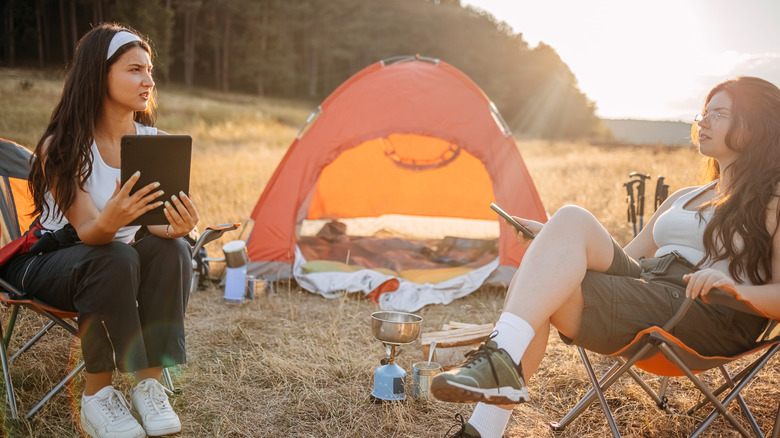
You've got your tent, a lamp, a backpack, a cook kit, and a sleeping bag — good to go? This might seem like a no-brainer, but never underestimate what you don't know about using different kinds of equipment or visiting a new place. Whether you're trying out a new camp stove or heading to someplace you've never been before, don't make the mistake of being unprepared.
When it comes to finding the site you want, always check if reservations are required. While many places have first-come, first-served sites, don't assume there will be availability, or you may be disappointed. Recreation.gov is the go-to site for federal lands, for example, and state parks usually use their own reservation systems. Popular campgrounds at many parks fill up quickly — sometimes months in advance. Also, make sure you research what the climate is like where you're headed, check the weather before you leave, and know how far away the nearest towns or services are. This will help with packing.
When it comes to camping equipment, don't assume that you'll just figure out how to put together a tent for the first time after your trip is already underway. One time, when setting up a new tent in my backyard, one of its poles was broken. I was able to exchange it before the trip, which saved a bigger headache. Making sure that your equipment is both complete and functional before you leave will not only make setting up at the site more expedient but also keep things running smoothly.
Overpacking
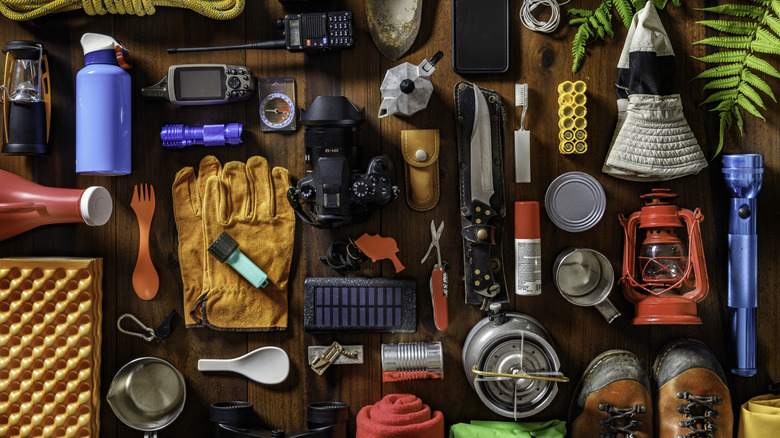
If you're heading out in an RV, part of the pleasure is having a lot of comforts of home with you, and overpacking isn't usually as big of a concern compared to car camping or backpacking — but it's certainly still possible. No matter your style, it's a good idea to carefully consider if you really need that extra sweatshirt or clunky stove. You may be able to do with something simpler or lighter.
There are go-to items you'll want for a quick and easy camping retreat, like a portable grill and sleeping bags. And then there are all of the "extras" — several pairs of shoes, extra tech, a huge inflatable mattress, bulky hammocks or chairs, and so on. These might all just end up getting in the way. Perhaps you can make do with two pairs of shoes. And do you really need all those extra sweatshirts and jackets? Only bring something if you're sure you'll use it. If "Will I need this?" crosses your mind, chances are you won't.
For backpacking, the decision-making gets more intense because you're determining everything you'll physically be carrying with you. While you may want to prepare some meals, a contributor to Live Life in Tents shares, on a shorter trip, "you may not NEED the burner, the kettle, the pot, the pan, the soap, the drying towel." You can prioritize an ultralight tent, dry foods, and a good multi-tool, but the length of your trip will determine how "ascetically" you need to pack.
Not bringing enough light
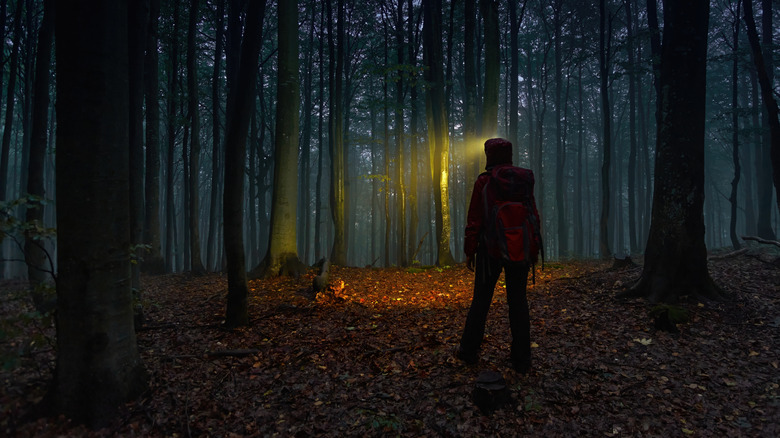
Despite sounding like a simple facet of camping, one thing that's easy to underestimate is how much light you'll need. The farther you are into the wilderness, meaning you're away from street lights and the ambient glow of the city, the darker your surroundings will be. If you're camping in the woods, evening can creep up quickly. Even if there's still light in the sky, it's usually much darker beneath a canopy of leaves. If you're car camping, having at least a couple of good-size lanterns is a must. At a minimum, I typically have one for the table and one for the tent, plus a good headlamp.
Among the camping tips that no one tells you about, making sure every person in your group has a headlamp is a great way to avoid literally fumbling around in the dark. These come in handy not only for moving around your site after nightfall, or if you arrive after dark, but also navigating to the restroom in the middle of the night or just trying to find something in the back of the car. If you're traveling minimally, one useful hack is to turn your headlamp into a lantern by sticking it into the top of a water bottle. Models like the Coast FL97R are both rechargeable and operable with AAA batteries — remember to pack backups, just in case.
Not putting safety first
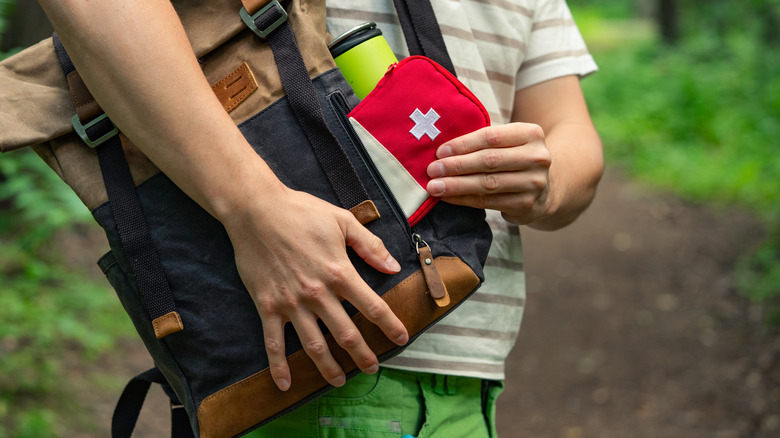
No one wants to think about worst-case scenarios, but sometimes nature throws some wild things our way. You may have packed really well, remembered to bring enough water on your hike, and worn sturdy footwear, but then suddenly the weather changes or an insect bite starts to look a little gnarly. Being out in nature means all kinds of accidents are possible, and while this is a risk we all take, the only real mistakes here are not being prepared.
Hydration is a good place to start. "Don't underestimate how much water you need," shares an experienced camper on Reddit. "If you can easily get it where you are going, then fine, but in many places, you need to bring your own." Remember to bring enough along with you for hikes, too, especially in very dry climates or if you'll be in full sun. On that note, lather on and regularly reapply that SPF and wear protective clothing like a brimmed hat and a long-sleeve T-shirt.
It's also always a good idea to have a basic first-aid kit along with you, no matter if you're in an RV or have a rucksack on your back. Basic starter kits can be inexpensive, lightweight, and compact — perfect for cuts and bites. If you have the space, plan to camp often, or are traveling with the whole family, a larger kit might be worthwhile. For backcountry adventures, especially if you're on your own or heading way out into the wilderness for an extended period of time, a personal locator beacon or GPS device like Garmin inReach or the Sirius Signal C-1003 provides a way to contact emergency services if the worst happens.
Going all-in too soon
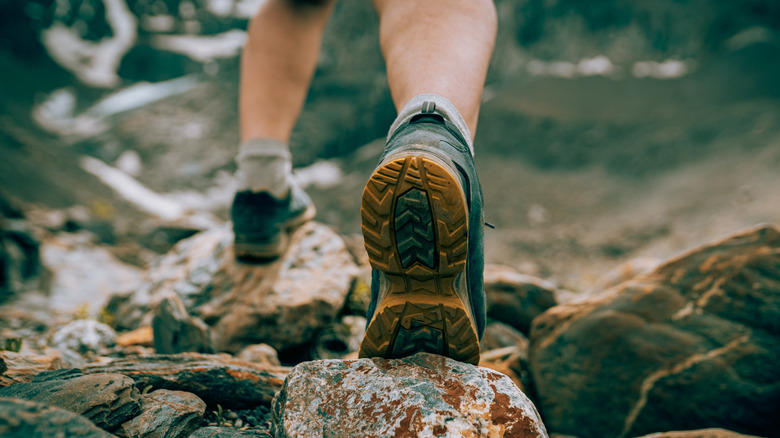
If you've never camped before but are craving a bona fide and challenging adventure, resist the urge to dive in headfirst on an ambitious trip without at least getting a little taste of it first in a safe, controlled environment. This is especially important if you've latched onto the solo camping trend. Plan for a small test run, which could be as simple as practicing packing and spending a night in your tent in your backyard. You'll be able to approach your trip more efficiently and understand your equipment. Don't make the mistake of biting off more than you can chew — that's when situations can turn dangerous.
It's always good practice to try something relatively simple and local before heading out on an ambitious expedition into the wilderness without any experience. If you're planning a big backpacking trip, practice packing and repacking your bag and taking it out for short walks near your home to get a sense of the weight and feel. Similarly, if you're heading out on a huge road trip and plan to camp along the way, doing a little test run at a local state or county park may end up giving you great ideas about things you do or don't need. This goes hand in hand with making sure to plan thoroughly for the type of trip you'd like to take and testing out your equipment before departure.
Not checking on fire (and firewood) rules
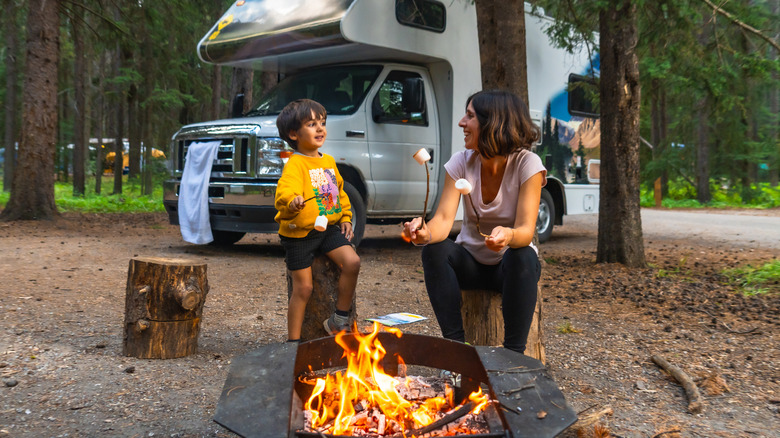
There's nothing like setting up camp and finally getting a fire going. Sometimes, though, it's worth checking in advance that where you're heading currently allows fires. Depending on the time of year or the location, or in the case of high winds, fire restrictions or total bans may be in effect to reduce the risk of wildfires. These are more common in arid regions where trees, scrub, and grassland can ignite and spread quickly in windy conditions. If you're set on having a fire, choose to visit a place where fires are permitted, and heed any changes in restrictions that may occur during your stay. Also, importantly, remember to fully extinguish your fire using water.
Firewood regulations vary by location. In some parts of the country, invasive insects like the emerald ash borer can hitchhike in firewood that hasn't been properly treated, leading to infestations that kill trees. In Wisconsin, for example, the Department of Natural Resources advises that people use firewood sourced from within 10 miles. Don't assume you can scavenge for firewood in the surroundings, either. Parks will often post guidelines about this on their website and at the campground.
Additionally, make sure you have enough wood. Some types burn very quickly, such as birch, but if you've purchased a bundle, it can be difficult to tell what kind it is. Err on the side of one more bundle than you think you'll need, and make sure you have some tinder and kindling. You can always leave a little leftover stack of firewood as a gift to the next site occupant, although some campers note that private campgrounds occasionally try to resell the leftovers.
Storing food improperly
In Maslow's Hierarchy of Needs, food, shelter, and sleep fulfill the most essential elements of living, and in a way, that's what camping is all about — connecting us to something that feels almost primordial. So it's no surprise that when planning a trip, food is up there as a top concern — but it's not always easy. Backpacking trips are notoriously challenging to coordinate, with long treks requiring resupply points. Shorter trips can be made with pre-prepared or dried foods made by outfits like Backpacker's Pantry or Peak Refuel. And if you're heading out in a motorhome, trailer, or even car camping, many things can be prepared on griddles, grills, and stovetops similarly to how you'd prepare them at home. Keeping things cool is a consideration, so don't make the mistake of packing too many perishable items that need to be kept cold if you have limited cooler space.
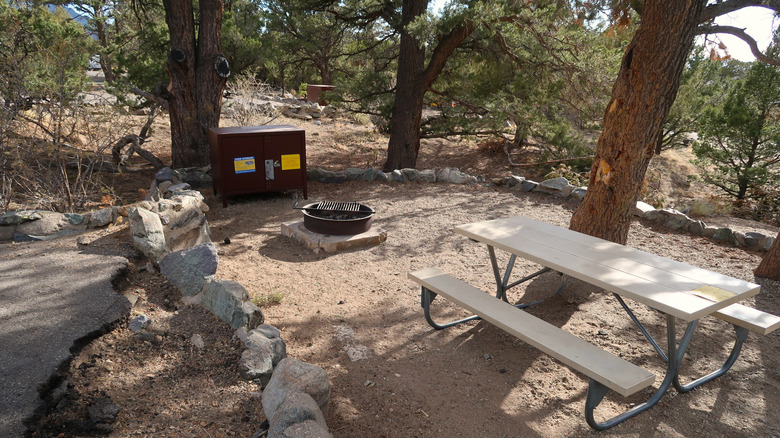
Obviously, we want our food to stay fresh, so don't forget to bring an extra Ziploc bag or two, or a couple of stackable, lightweight food storage containers. But another consideration has to do more with storing food once you're at your site. For your safety, don't forget to bring a bear bag and rope to hang food — and any smelly things — from a tree or carry a bear-resistant canister if you're in the backcountry — and always set up your tent at least 100 feet away from where you'll sleep. Bears can even smell food in coolers, so if you're using one, make sure it's secured in your car or in a bear box, with smelly things sealed as much as possible to keep the odors from drifting.
Planning to cook exclusively over the campfire
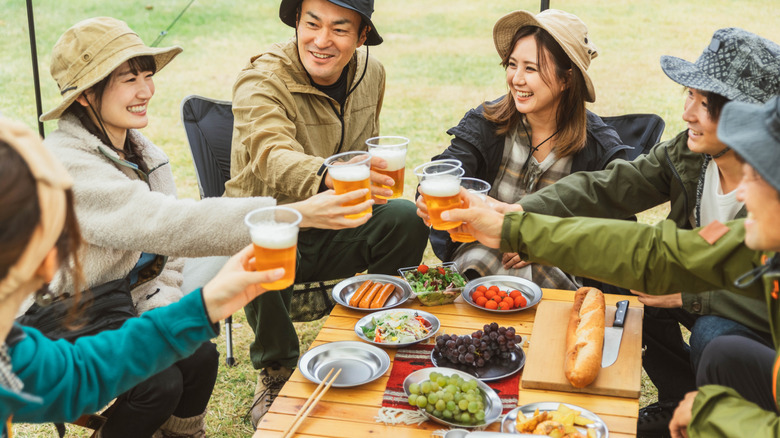
Depending on the type of campsite you head to and how well-maintained it is, there may or may not be a solid cooking grate over the fire. In the U.S., these are pretty common, but as Joey Holmes of Cool of the Wild notes, it may not be the case in other countries. There are also additional equipment requirements to really make a good meal over a fire, depending on what you plan to make, such as cast iron pots or Dutch ovens, skewers, slow-burning firewood, and long-handle tongs. If you've never cooked over an open fire before, it's definitely a treat. Just don't assume that it'll be the way you'll want to cook every meal.
"Learning how to cook over a campfire also requires time and patience," Holmes adds. Practice a dish or two in your backyard fire pit or at a local campground before trying it out in the wild, especially to get an idea about the supplies you'll need. You might even want to practice building the fire itself first. And it's always a good idea to bring a camp stove or burner of some kind — remember to bring enough butane or propane — whether you go for a large 2-burner stove like the Coleman Triton+ or a compact propane BottleTop burner. Then there's the essential camping cooking method that every outdoor traveler should know, requiring a little bit of advance planning and some aluminum foil to create grillable dishes in tidy packets.
Not bringing something to do in your down time
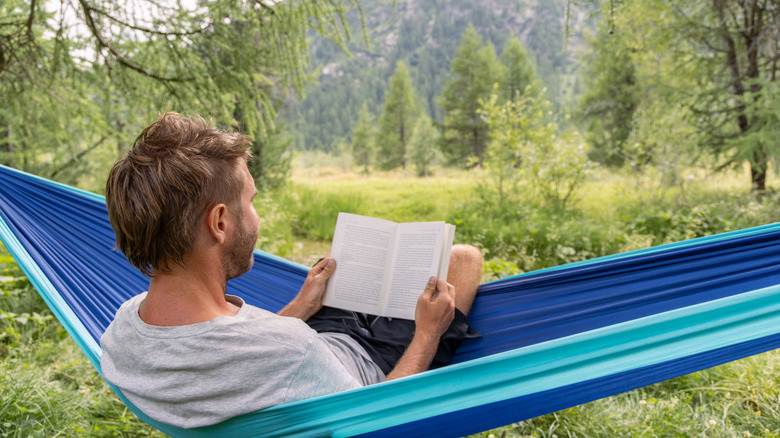
Even if you're planning a group trip or an excursion with the family, there come occasions when people need a little space and time to themselves. Of course, in our daily lives, it's easy to default to our screens to pass the time, but the true beauty of being in nature is being able to disconnect. Access to Wi-Fi or cell phone service may be limited or nonexistent anyway — which is also a good reason to pack analog maps and download any reservations or information you'll need — so bringing something else to pass the time is essential. Depending on how much room you have, bring a book or two, a small puzzle, playing cards and tabletop games, a portable craft project, or anything else that helps you relax — extra points if it's compact.
Not packing enough layers or a warm-enough sleeping bag
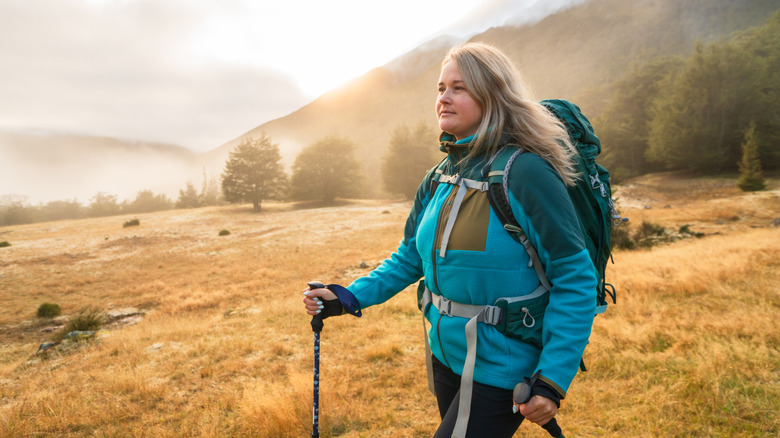
While there are some rules you should know before camping in winter and also some essential tips for the mountains, where high altitude also means dramatic changes in temperature, even summertime camping can bring extremes, which will affect your packing. For instance, one of my favorite campgrounds is the Denver West KOA in Central City, Colorado's "richest square mile on earth," located 45 minutes from downtown Denver. That said, it's also located at nearly 8,500 feet in elevation, and in July, daytime temperatures average in the 80s, while nighttime temperatures can dip into the low 40s. That's quite a contrast! Come September, it can get below freezing at night, whereas Denver is still around 20 degrees warmer in the evenings.
Depending on where you're camping, the temperature changes between daytime and nighttime may be more or less stark. Especially at higher elevations or in drier climates, nighttime temperatures can quickly fall, so it's important to bring extra layers and make sure you have a sleeping bag that's rated correctly for the climate you're headed to. Research temperature ratings to understand which sleeping bag is right for the trip you're planning.
Not taking notes for next time
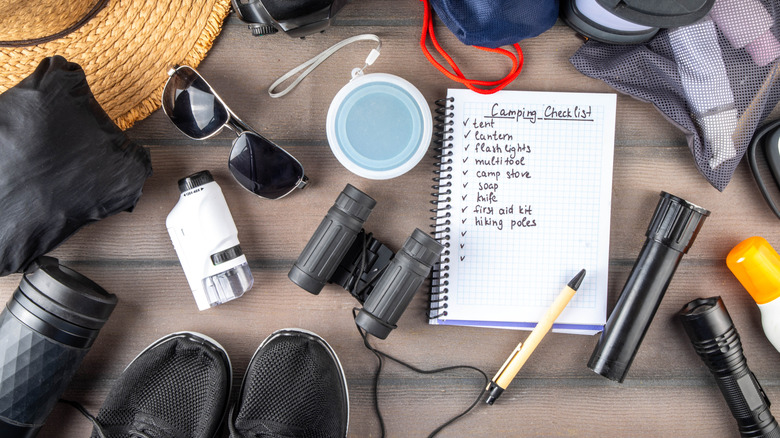
One pro tip for campers of any persuasion, no matter how experienced you are, is to have a little pad of paper and a pen or pencil handy for taking notes. Along the way, you'll almost certainly think of things you wish you would have brought on the trip or hacks you figure out as you go. The real problem-solving and optimization comes once we're actually out there. Maybe something didn't work quite the way you thought it would, you realize you could have used some backup batteries, or you packed way too much of something. It's so easy to forget the little "aha!" moments that pop in your head when you're out in nature, and being able to jot them down will help to make the next trip even better.