
Unexpected Places In America Airplanes Are Not Allowed To Fly Over
When Ron Goodwin composed his 1965 anthem "Those Magnificent Men in Their Flying Machines" for a movie of the same name, his satire of the early days of aviation was a deliberate nod back to simpler times. Sadly, the sky's reputation as a highway without borders open to anyone with a pilot's license and a sense of derring-do was an all-too-brief affair, and as time passed, the airspace above the United States became increasingly regulated.
In some cases, events accelerated the process; the lessons learned from September 11 were hard-earned, profound, and permanent. In others, the rise of new technology such as drones acted as a catalyst for the rapid implementation of new legislation as the new-fangled things transitioned from a hobbyist novelty to a legitimate security threat in the space of just a few years. Today, there are dozens of locations across the U.S. where flying is restricted, or in some cases totally forbidden. And yes, some are more surprising than others.
There are two separate main designations at play here. P- zones — the P stands for prohibited — are areas where flights are absolutely forbidden. There are parts of America where even air ambulances have to seek permission to cross. Entering such places without said permission is likely to provoke a military response. Restricted areas, on the other hand, tend to be places where unusual or invisible hazards exist, such as places where the military tests equipment. These can be designated as either hot or cold, meaning that the restrictions are not always in place. Both P-zones and R-areas are identified by a numerical suffix, and many come with caveated rules attached, such as permission to fly over them above certain altitudes. Regardless, we've trawled through the lists, crunched the numbers, and come up with a curated summary of those patches of sky that are simply not for traversal.
Areas of political significance
The United States is far from alone when it comes to seeking to protect its airspace. In the United Kingdom, for example, flights over politically sensitive buildings such as the Houses of Parliament, Downing Street, and Buckingham Palace are forbidden. But the protections offered in America often cover far more ground — or should we say, sky?
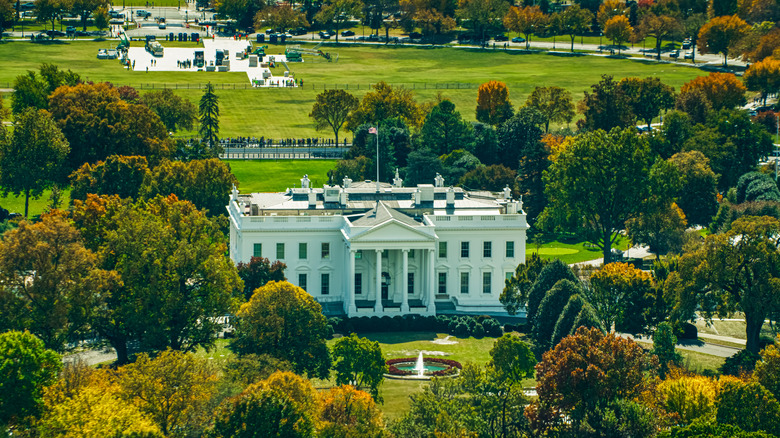
Take the national capital. In Washington, D.C., a Flight Restricted Zone (FRZ) around Ronald Reagan Airport, extending 15 nautical miles, is more robust than you would find at less-trafficked airports, although it is not unusual. The protected space around Capitol Hill, the Lincoln Memorial, and the Naval Observatory is another matter altogether. The prohibited areas known as P-56A and P-56B cover a relatively small area but carry incredibly strict regulations; no craft flying below an elevation of 18,000 feet is allowed to cross its boundaries without express permission. Such rules apply to drones also, and countermeasures for those who breach protocol are robust. The Secret Service is known to use counter-drone technology, and while tales of missiles atop the White House roof are apocryphal, those stationed at other key locations are another matter. Such defenses are not for show, either. In July 2026, several men were charged with murder conspiracy after planning a drone strike on the White House.
The U.S. capital is not the only place of political significance to find itself covered by restricted airspace legislation. In September 2026, an aircraft violated the restricted airspace above Camp David and was escorted out of the area by a fighter jet. The Bush Ranch – which is not listed as one of the best attractions in Texas but perhaps should be — was granted the designation of P- 49 in 2001, a ruling that continues to this day.
Military and strategic facilities
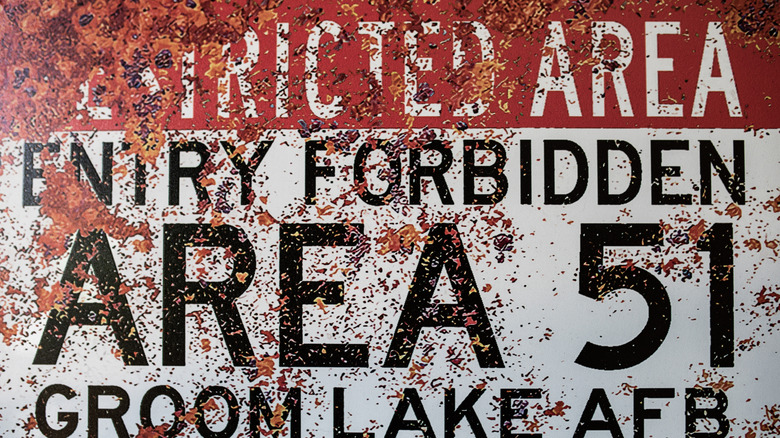
Flying over a military base without permission is something that you should not attempt. Sneaking a peek at the legendary Area 51 from a hidden Nevada summit is one thing. Attempting a flyover using the dark of night is quite another. While an airplane flying over Area 51 wouldn't be shot down, there's a chance that a pilot could face warning shots if they really test the patience of those charged with protecting the base. And they'd definitely get in trouble; a rather intimidating fighter would most assuredly escort them away from the Restricted Area 4808 North (R-4808N) airspace. Oh, and said pilot would probably find themself facing a hefty fine upon landing unless they could come up with an extremely good reason for flying over the world's most infamous testing ground without permission. Good luck with that.
Area 51, however, is merely one of many such military and research installations where flights and drones are prohibited. A plane cannot take a joyride over the skies above strategic nuclear weapon facility Pantex (P-47); veering off course towards Kitsap Naval Base (P-51) is one of those impulse moves that is liable to ruin your afternoon, and even thinking about swooping through the clouds towards the Naval Submarine Base at Kings Bay (P-50) is as bad an idea as bad ideas get.
Of course, while the fact that the military controls its own airspace might not be the most surprising item on this list, the fact remains that some of the locations with listed restricted airspace numbers are top secret affairs. The Dugway Proving Ground (R-6402A and R-6402B) is located close to Salt Lake City in Utah and is a known testing bed for chemical and biological weapons. That is about as much as the government is prepared to share with the general public, but considering what goes on there, avoiding its airspace feels like a million-dollar idea regardless.
Energy and infrastructure
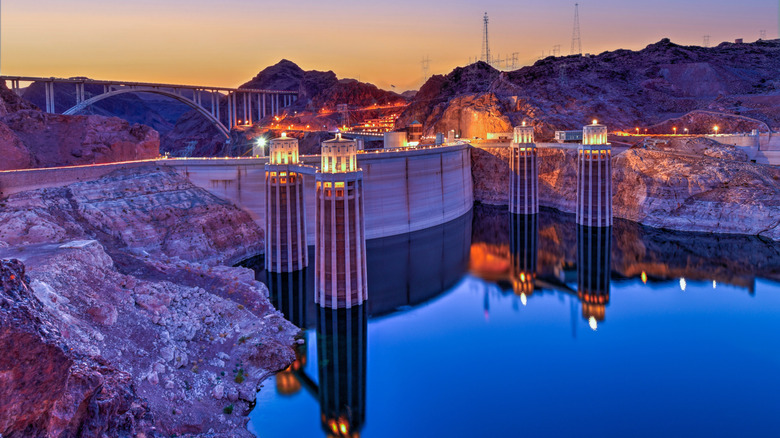
With military airspace so tightly controlled, you might be fooled into thinking that other areas related to national security face similarly robust measures. Nuclear power plants, hydroelectric dams, substations, and flood defenses are all susceptible to malicious actions, and security around such facilities is understandably tight. When it comes to airspace, however, the situation is less clear-cut than it is for military installations.
Flying across the airspace of areas of strategic importance, such as nuclear facilities or renewable energy clusters, is not routinely prohibited, but pilots are strongly advised to steer clear of them regardless. At times of heightened geopolitical uncertainty, however, the FAA has the authority to create temporary bans on violating the airspace above important infrastructure via what are known as Notices to Air Missions (NOTAMs), which can include Temporary Flight Restrictions (TFRs) over a whole range of structures. Such notifications were issued in 2001, shortly after the Twin Towers attack, and the FAA reserves the right to issue them at any time should the need arise. Air shows, forest fires, or any other hazard of natural or man-made origin are all valid reasons to do so, and the same is true for any part of the nation's energy infrastructure if the FAA sees reason for concern.
Even unmanned aircraft could soon be up on the chopping block. Drone enthusiasts take note. Proposed rule changes could soon restrict the use of unmanned aerial vehicles (UAVs) around a whole range of sectors: energy production, transport hubs, water treatment plants and so on. Said rules will either ban unmanned aircraft for anyone who has failed to satisfy safety and security standards under the Standard Unmanned Aircraft Flight Restriction (UAFR), or issue a Special Unmanned Aircraft Flight Restriction, which prevents anyone from flying drones in such places without express permission.
Walt Disney theme parks
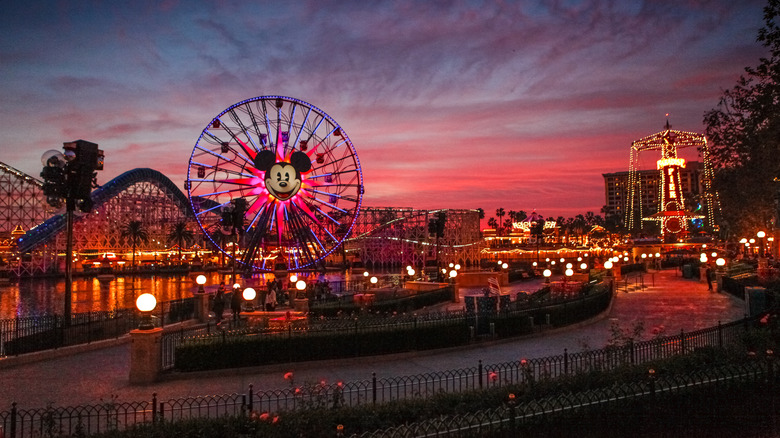
Both Disney World in Orlando, Florida, and Disneyland in Anaheim, California, offer unique experiences, and the question of which is the better amusement park is as subjective as it is a hot topic. Still, in one regard, the parks stand out from all others. They are the only theme parks in the U.S. to benefit from permanent no-fly zone protections.
While the protections might be surprising, when you think about it, it's easy to see why the parks wouldn't want airplanes flying over them. The thought of an aircraft crashing into any public place is a terrifying one, and Disney parks get tens of thousands of visitors per day. The fear of a terrorist operation certainly looms large, and attempts to use airplanes as weapons do still occur. In September 2026, a pilot was stabbed on a flight from Dubai heading to Tel Aviv, to give but one recent example. Still, successful attempts to turn airplanes into weapons have been few and far between. Shout out to the world's security services.
But pilot error also needs consideration. There are reasons flights in the past weren't all that great, and a patchy relationship with safety protocol is one of them. Thankfully, in the modern age, crashes are relatively rare, and pilots are trained to avoid built-up areas in the event of an inevitable crash. Which is all well and good, but does little to explain why Disney alone gets such enhanced protection. Once again, the trauma of the 9/11 attack played a role in the current status quo. The TFRs covering open-air gatherings were made permanent in the case of the two Disney parks thanks to a successful lobbying effort on behalf of the parent company. The TFRs usually depicted on maps as red circles around each respective park have been in place ever since, despite some calls to have them lifted.
Protected landmarks and monuments
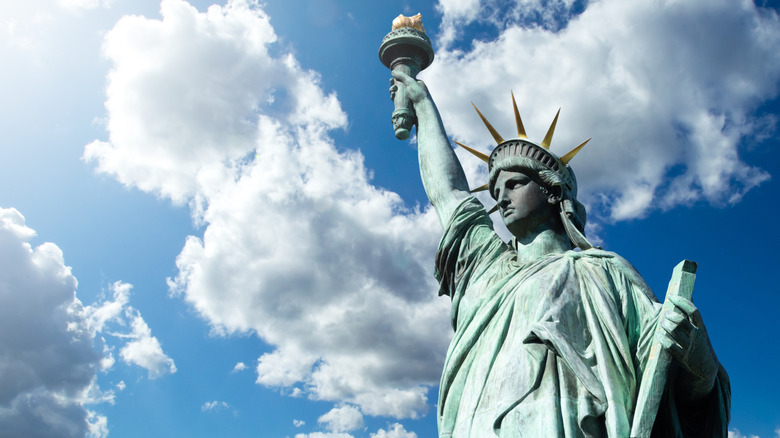
That Disney proxies successfully convinced Congress that its parks had the kind of cultural cachet that justified special treatment is a matter of public record. But even if their argument had merit, it certainly isn't alone when it comes to heritage in need of protection. When most people turn their minds to national monuments, they naturally turn to the National Park Service (NPS), and all that falls under their umbrella. The NPS' remit has changed over the years — structurally, it was completely different during the 1960s – but one thing that has remained constant is that it looks after a lot of sites of special interest. The NPS currently holds jurisdiction over a whopping 87 national monuments along with dozens of memorials, historic sites, and national preserves. Flying over such places is, for the most part, permitted. But there are exceptions.
Some feel like obvious no-brainers. Allowing unauthorized flights over places like the Statue of Liberty feels like a bad idea on an almost instinctive level, and true to that concept, flying within 1,000 feet of the statue is prohibited. Oh, and drones aren't allowed there at all. Meanwhile, although the thought that someone might want to crash headfirst into one of Mount Rushmore's oversized faces feels like the plot of a rejected Syfy channel movie script, they are protected, nonetheless. Flying within one half mile of the memorial site is forbidden for anything flying below 5,000 feet. Of course, broad though the NPS' reach may be, there are a few places outside their remit that also feature enhanced airspace protections. Flying below 1,500 feet over Mount Vernon ( P-73) isn't allowed in order to protect the aging structure from vibrational damage. Shaking sites of immense historical value to pieces is bad. Got it.
Sporting events
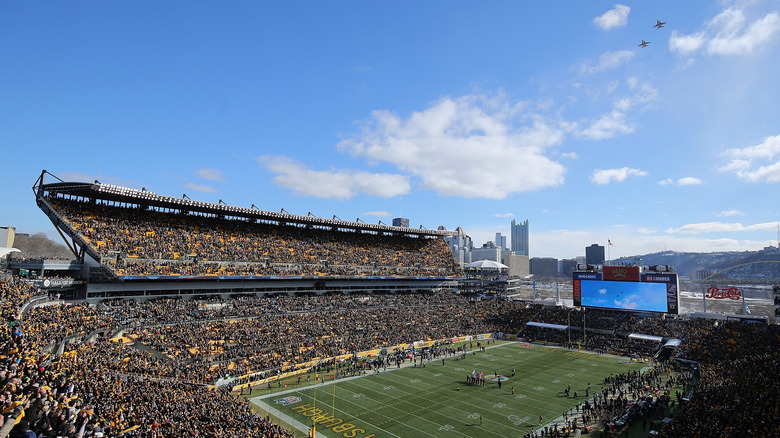
Picture the scene. It's the Super Bowl, the stadium is packed, the halftime show has wrapped, and the smell of popcorn suddenly blends with that of aviation fuel as a pair of F-15s cross the 10-yard-line in one one-hundredth of a second. Yes, we did the math. You're welcome. But chances are that those jets are going to be the only things in the sky above aside from the comforting presence of a blimp or two, because as you'd expect, the airspace above major sporting events is heavily regulated.
First up, once again, drones are a no-no. Trying to circumvent high ticket prices with some amateur drone footage isn't allowed. For most sporting events, drones aren't permitted anywhere within a three nautical mile radius from an hour before to an hour after the scheduled games. And that is just for regular games taking place in stadiums of 30,000 capacity or more.
At the 2026 World Cup, TFRs were in place for the entire match day; at the Super Bowl, most aircraft aren't allowed within 30 nautical miles of the event, and virtually no craft has permission to get closer than 10 miles. For large-scale public gatherings that don't take place within stadiums, such as music festivals, the rules are less clear. Local authorities can request that the FAA issue a TFR that certainly restricts the use of drones, but pilots are usually allowed to make use of the space as long as they don't fly too low.
Space launches
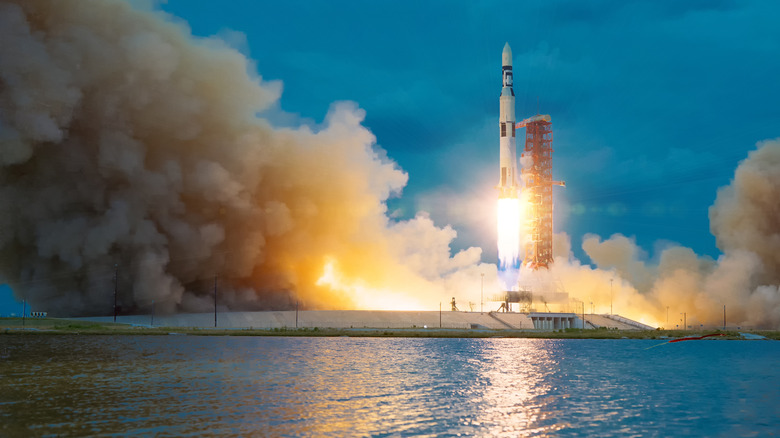
The United States is home to 14 spaceports, all of which serve the principal function of punching a hole through the sky in order to get men, women, and materiel up into space. Some, such as the Kennedy Space Center in Florida and the SpaceX launch site in Texas, are household names, but there are less conspicuous ones such as Wallops Flight Facility. Flying over their airspace is not something you want to attempt before checking things over with relevant authorities. Spoiler alert: airplanes and rockets don't mix.
While it might look to the casual observer that space exploration is all about expanding humanity's reach to the stars, the truth is that we probably would never have invested so much time and energy in the field of rocketry if not for their potential use as weapons of war. When the USSR launched the world's first manmade satellite back in 1957, it demonstrated its ability to put a payload in orbit, sure. But it also sent a signal that its rockets could reach American soil armed with warheads of the unashamedly nuclear persuasion — something that invoked a lot of fear in the Cold War era.
And yes, spaceports are sometimes involved in secretive military adventures, and they have the restricted skies to prove it. Vandenberg Space Force Base (R-2516 and R-2517), Cape Canaveral (R-2932, R-2933, R-2934, and R-2935), and Spaceport America have permanent rules in place. Other sites, such as Elon Musk's launch site at Boca Chica, rely on TFRs put in place around launch windows.
Boundary Waters Canoe Area Wilderness
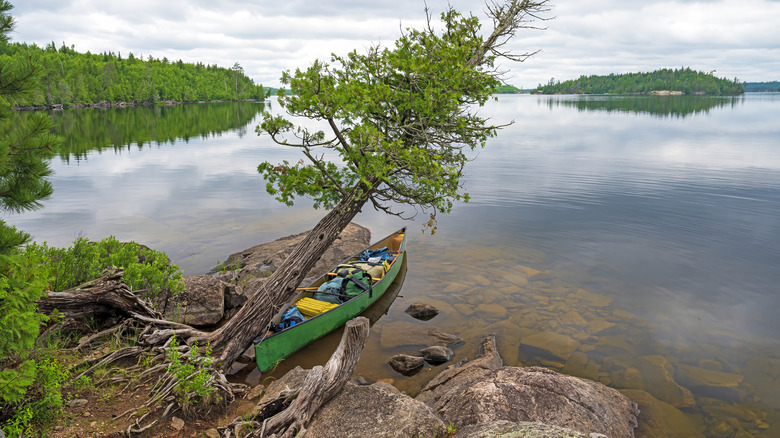
For all the talk about national monuments and memorials, and the fantastic work done by the National Park Service to protect and preserve them, the wider position on the National Parks as defined as stretches of wilderness is fairly uniform. Which is another way of saying you can fly over them if you want. Oh, the FAA can issue TFRs if they so wish, and you'll find tight rules regarding the use of drones for sure. But when it comes to commercial piloted craft, the sky is the literal limit. At least such is the case for most areas of outstanding national beauty. Because the Boundary Waters Canoe Area Wilderness is yet another one of those places where pilots are perma-banned from entering.
Ok, that might be a slight exaggeration. Aircraft actually can fly over the region, but they have to stay above 4,000 feet or around twice the height limits you'd find in other patches of wilderness. The rule stems from an executive order signed by Harry Truman in 1949, which covered several areas within the Superior National Forest, of which the Canoe area is a constituent part. For once, the ruling had nothing to do with national security or the protection of sensitive military hardware. The rule is just in place because it's a quiet place to be, and people decided they wanted it to stay that way.
Such restrictions issued on strictly recreational grounds are exceedingly rare, and it's quite possible that subsequent presidents have simply declined to rescind the order. Or perhaps it's gathered so much dust that people have forgotten about it. Regardless, the chance to observe wildlife across a patch of Minnesota wilderness with over 1,000 lakes and no roads in peace is most welcome; running water and clear skies are, after all, the very definition of picturesque.
Airports
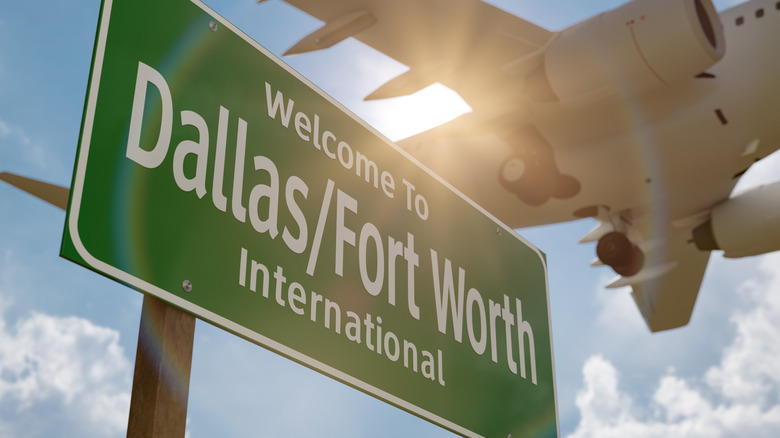
The keen-eyed amongst us will no doubt have noticed that the airspace above airports is, in fact, generally considered to be quite congested. The idea of a no-fly zone above such places is an obvious misnomer. So, to be clear, you absolutely can fly aircraft in and out of an airport, and that is as true of the most sprawling senior-friendly airports in the world as it is of the most out-of-the-way rural landing strip you could think of.
Still, however salient that point might be, the fact remains that anyone attempting to do so without permission is in for something of a rude awakening. Air traffic control is an ever-present reality. They can see you on their screens and quite possibly out of a window or two, and if they don't know who you are or where you are going, then they are going to have questions. A lot of them.
As it turns out, the skies above an airport are neither prohibited nor restricted. These areas exist in a third related category: controlled airspace. Such spaces are split into different classes, ranging from A to E, with each category containing specific rules of approach. While Class A mostly deals with high-altitude traffic, the lower tiers provide pilots with strict instructions. Those entering Class B controlled airspace need specific permission to do so. Class C and D both require two-way radio contact, while those entering the Class E category must obey FAA Visual Flight Rules (VFR) as they pertain to cloud cover and general visibility.