
The 9 Most Senior-Friendly Airports In The World

It's no secret that as we get older, we start to view the world differently. True, flights in the past weren't all that great, but traversing miles of endless terminals was comparably a lot easier, check-ins usually included talking to another human, and as for our knees? Well, let's just say that they were better suited to long waits at the security gate than they might be today.
To be clear, senior travelers are not hopeless wanderers lost in a haze of prolific memories, but admitting that you aren't quite the spring chicken you used to be is a sign of strength, not weakness. The rapid pace of movement might fail to woo us; luggage might start to feel like earthbound anchor; signage could be a little easier to follow, and yes, sometimes we wish the announcements over the PA were clearer.
Of course, it doesn't have to be that way. Competition for senior dollars is at an all-time high, and whether it's a Caribbean Island destination popular with boomers or a weekend city break in the heart of Europe, providing a stress-free experience to elderly patrons has never been more important. Thankfully, many airports have started to take note. Watchwords such as "accessibility" have begun to find themselves incorporated into core design principles. Awards have even been issued to those places that most deserve such accolades. We've looked at dozens of airport locations, taken note of passenger-led reviews, and spent some time aggregating the scores of various award-winning, senior-friendly airports. What we are left with is something approaching a definitive guide to air travel with the itinerant baby boomer — or any passengers with reduced mobility — in mind.
Manchester Airport (MAN), United Kingdom
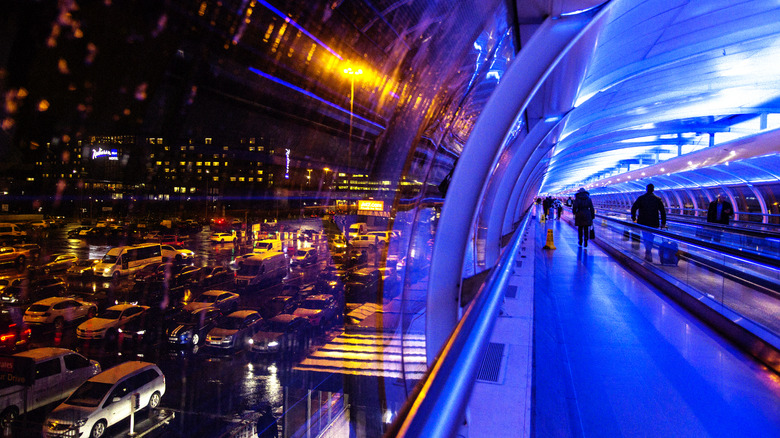
Manchester is one of those hidden gem destinations that falls way below the radar of those seeking a London-centric British experience. It's home to one of the best Christmas markets in all of Europe, it's a strong contender for the nation's second city — yes, this is a contested position — and it's a member of a growing list of European population hubs that offer free public transport.
The city is served by the third largest and busiest airport in the United Kingdom. About 29 million passengers pass through its doors every year, and its recent "very good" accessibility rating from the Civil Aviation Authority brought it up to speed with the competition down south. The recent introduction of assistance call points clearly went some way to help secure top marks for the sprawling complex. Scattered across both passenger terminals, the network includes drop-off points for luggage, an assisted travel lounge, and trained staff whose sole purpose is to ensure safe and inclusive passage. Like other modern airports, Manchester also operates a sunflower lanyard system for those with hidden disabilities, allowing access to family and assisted travel lanes, as well as expedited security screening.
Rail links to the city are excellent, and once you arrive, you'll find yourself greeted by some of the friendliest people in all the U.K. Many of the city's most iconic locations, such as the must-see Science and Industry Museum that charts the city's role in birthing the Industrial Revolution, offer a step-free experience. The revitalization of the city's industrial past also makes for a city of architectural flair, but it is as much a shopping hub as it is a foodie paradise with plenty of indoor locations for those times when the weather takes a decidedly British turn.
Munich International Airport (MCU), Germany
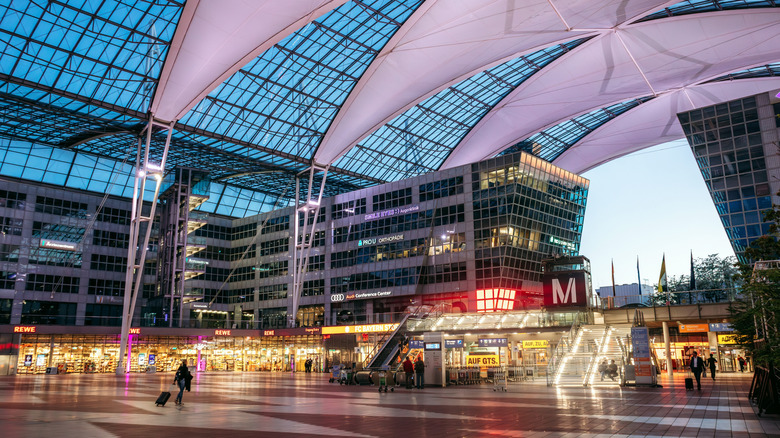
Nestled in the heart of southern Germany, less than 90 miles northwest of Salzburg lies Munich, the country's third-largest population hub and self-proclaimed "most walkable city in the world." It is a place of biergarten and café culture, museums, and day trips, and for seniors planning on taking a trip out there, it also has one of the most accessible airports in Europe (and beyond).
The first thing to note about Munich airport is that it is a delight to navigate, which is hardly surprising, really. Best for seniors and best overall often go hand in hand. In 2025, Munich was named "Airport Of The Year" at the Airline Industry Achievement Awards. Its bright spots for seniors are no less robust. Indeed, the fact that the airport is so keen to promote its mobility service credentials represents unmistakable evidence of how much faith they have in them. There are two dedicated assistance areas, one for each terminal, and while you can't book them specifically, you can tell your airline at least 48 hours in advance if you need assistance. While there, you can also drop off your luggage and have the option to discuss any additional questions you might have. The lounges are quiet, conveniently located, and any help on offer is a two-way street that applies to both arrival and departure.
Such a stress-free bookending of the trip can help you get the most out of the city writ large. The Altstadt (Old Town) is compact and flat, and its famous Marienplatz is well worth the hype, although visitors should prepare themselves for crowds if they arrive during Oktoberfest (which famously begins in September). Public transport here is also first-class: Over-65s can grab a free pass, with no questions asked.
Vancouver International Airport (YVR), Canada
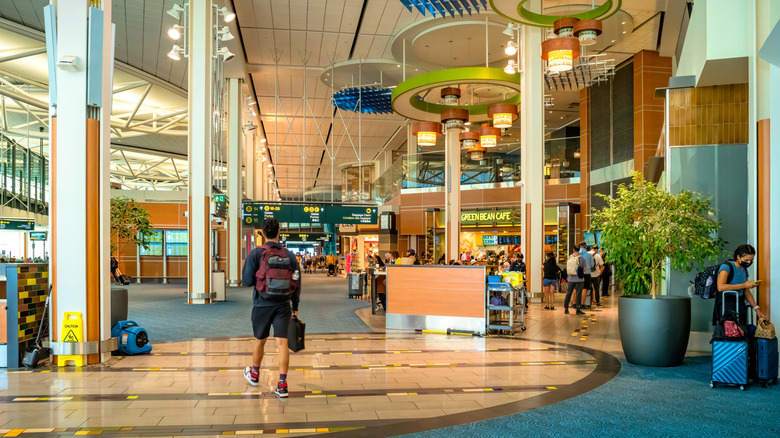
Vancouver was the only North American airport to make Skytrax's top 10 in their 2026 World Airport Awards. Its blend of Pacific Northwest architecture and prominent First Nations art certainly lends the place a charm all its own, but its focus on non-profit governance and promotions of local food options is what allows it to stand out. For seniors, there is much to recommend. The Rick Hansen Foundation Accessibility Certification (RHFAC) granted the airport a Gold Star rating back in 2018, and plans to take inclusivity concerns to the next level are already underway.
The airport's Curbside Assistance Program means that visitors to the airport are greeted both at the curb and at the sky train. Requests ranging from help with luggage to travel directions or advice can be handled there and then, without the need to proactively search for assistance. Help can be ordered in advance, and there is even an option to prep-plan your journey by engaging with the Travel Rehearsal Program. Its stated aim is to build confidence for those who experience travel anxiety. Lastly, the Sunflower Program allows those with hidden disabilities to signal trained volunteers and staff that they might need help or attention.
This is fantastic, of course, because it acts as a gateway to the highly-walkable waterfront that Vancouver is built upon. It's only about a 30-minute journey from the airport to the city proper with accessible stations positioned along the way. The mild climate and easy-going reputation of the locals make for an idyllic, safe destination for even solo explorers, but senior couples are no less well served: There's reduced pricing on both transport and major attractions, guided tours aplenty, and a wealth of excellent beaches to choose from.
Fiumicino Leonardo da Vinci International Airport (FCO), Italy
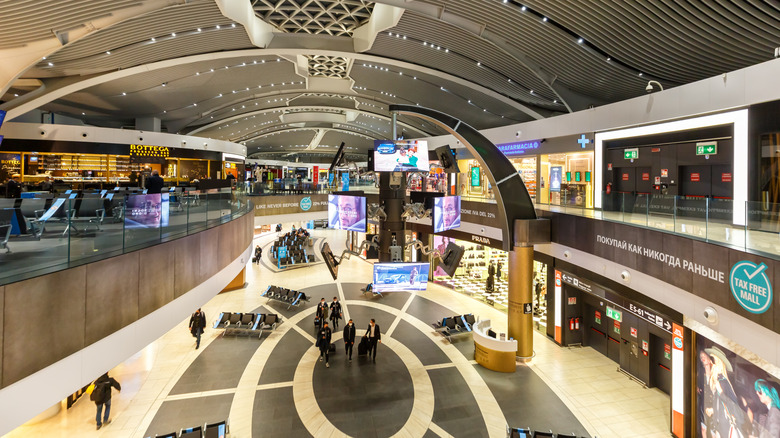
There's no question that Rome is a city worth visiting. It is, despite its many hills, one of the most walkable cities in Europe, attracts close to 23 million people per annum, and its reputation as an open-air museum is well-deserved. Shoulder season excursions help avoid the heat and some of the crowds, and this, when combined with a wealth of accessible attractions, makes it an easy recommendation for people of all ages. Still, its senior credentials, which include discounted tickets and entrance fees, are also plain to see. Even better, such courtesy begins the moment you arrive at the airport itself.
First, there are the usual accolades you would expect from such a well-heeled airport. Rome Fiumicino Leonardo da Vinci International Airport (FCO) received a Level 2 Accessibility Enhancement Accreditation from ACI World in 2025, moving up from its Level 1 accreditation that was awarded in 2024. This probably comes as no surprise since FCO certainly has the infrastructure to be considered well-worthy of the new credential. The introduction of autonomous mobility chairs in 2025 allowed seniors to not only travel around the airport in style but also remove the need to ask for directions.
And if that's all a little too cyberpunk for you, the airport has also put in place a long-standing ADR Assistance program. Through this, staff are trained to offer aid to passengers with issues ranging from reduced mobility to conditions such as autism or hearing impairments. It all makes for a seamless and inclusive environment that does justice to the great city it serves.
Paris Charles De Gaulle (CDG), France
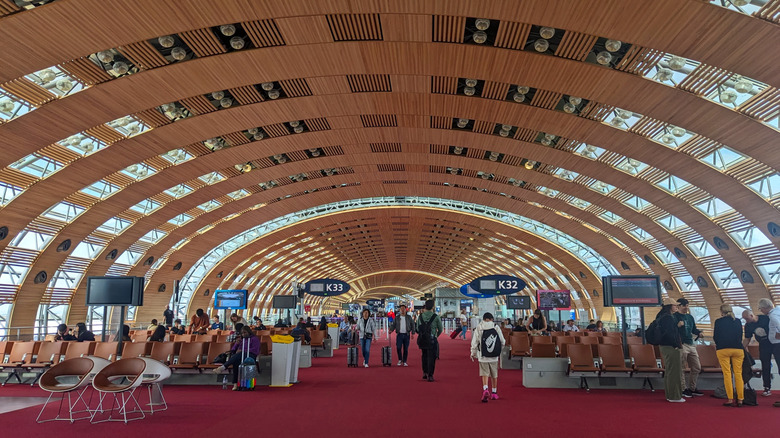
According to Visit Paris Region, over 23 million international tourists made their way to Paris in 2025, lured in by the promise of iconic sites, world-class dining, and the rich, vibrant French culture. While seasoned travelers search for must-see attractions that beat the tourist crowds, those looking for a less-hectic pace are well-served by the city's topography: a gentle cruise down the Seine, a stroll along the Champs-Elysées, or perhaps a little retail therapy at the Triangle d'Or, anyone? Oh, and Paris still offers one of the best shopping experiences in Europe, and a senior-friendly one at that.
Those arriving at Charles De Gaulle International Airport (CDG) are certainly treated to a preview of what to expect from the city proper. The complex achieved sixth place in Skytrax's Best Airport for PRM and Accessible Facilities category, beating out Paris Orly Airport (ORY) — although that too managed to achieve a respectable 10th place. Charles De Gaulle is a well-recognized masterpiece of efficient design and comfort. But for those with reduced mobility, the staff and design brief go the extra mile.
The Paris Aéroport Mobility Assistance is free of charge to those who need it. Through it, the airport ensures smooth passage through the facilities from the moment you arrive to the moment you depart. The end-to-end nature of the escort service is of a highly personalized nature. You can tailor the experience to your own needs, which helps prevent said assistance becoming overbearing. Meanwhile, self-service wheelchairs are available without hidden fees, and the restroom facilities meet and arguably exceed European standards for those with disabilities. Pre-booking is required with at least 48 hours' notice, but other than that, there are no restrictions for senior travelers in need of assistance.
Istanbul Airport (IST), Turkey

Some may be surprised to discover that London no longer has a free reign when it comes to the "busiest airport in Europe" accolade. In 2025, it maintained the top spot, but only just. Over in Turkey, Istanbul Airport (IST) is nipping at the iconic British airport's heels and, at its current rate of growth, may eventually take the crown in the very near future. Although biggest is not always best, as far as accessibility is concerned, Istanbul also comes up trumps: It ranked ninth in Skytrax's World's Best PRM and Accessible Facilities award category.
The airport maintains a fleet of electric buggies made available for seniors and those with mobility issues. So, there's one reason it stands out. But it also operates an accessibility program called iGA Cares. A team of volunteers sits at the heart of what the airport itself defines as the "fundamental right to travel" but the drive to inclusivity goes much deeper than that. The airport has been designed from the ground up to be age-friendly. There are discounted lounges and sleep pods for the over-65s, free charging stations for electric wheelchairs, and yellow-jacketed senior support personnel scattered throughout. You'll also find silent rooms, staff trained on how to deal with sunflower lanyard-carrying passengers, and specialist dining areas for people with a variety of age-related conditions.
It all leads to the perfect introduction to one of Europe's most beloved cities. Yes, Istanbul is an ancient place, and there are sections of it that can prove challenging to seniors. But Istanbul is also an unlikely (but amazing) destination for your next beach holiday, a city filled with accessibility-minded tours, fine dining, and thousands of years of history to uncover.
Seoul Incheon International Airport (ICN), South Korea
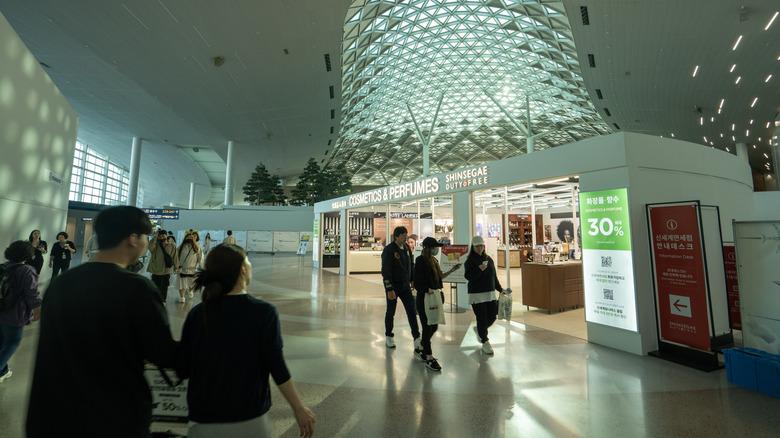
Seoul Incheon International Airport (ICN) managed to achieve second place for in the World's Best PRM/Accessible Facilities category in Skytrax's 2026 World Airport Awards, so it's hardly surprising that it finds itself so far down this list. And like many of the aforementioned locations, ICN offers a combination of easy-to-navigate topography and a multi-layered approach to senior service. Its physical attributes and commitment to inclusivity is certainly impressive.
As you approach the airport, you will be greeted by disabled parking zones close to the terminal counters, and priority drop-off zones near the actual gates. You'll also find help stations dotted around both terminals that connect directly to the nearest information desk. There's also a wheelchair lift service, discounted valet parking options, and a fleet of electric vehicles operating around the clock. Lastly, there is a dedicated priority lane that pregnant women, over-70s, or anyone else with mobility issues can make full use of. Throw in the ability to unwind at the airport's spas and traditional bath houses, and it's more than possible to exit the facility better rested than you were upon arrival.
Which is a good thing really, because Seoul and its surrounding areas have a lot to offer. Recently dubbed the coziest city in Asia thanks to its cafés, storybook palaces, and rainy-day magic, seniors will find themselves particularly well-served since around 20% of the Korean population is now classed as 65 or older. The subway system is climate controlled, accessible, safe, and, at the time of writing, over-65s can ride it for free. Meanwhile, museums have been designed with an aging population in mind, and there are well-cooled malls to explore, and close to half a dozen barrier-free, spectacular palaces to wander around.
Singapore Changi Airport (SIN), Singapore

It would be difficult to imagine Singapore Airport not finding its way onto a list such as this. Indeed, so revered is the city-state's only international travel hub that Skytrax named it the World's Best Airport overall in 2026. The list of attractions beguiles the senses, including the butterfly garden of Terminal 3, the seven-story Jewel Rain Vortex, and the rooftop swimming pool and jacuzzi. The airport has taken great pains to make itself an attraction in its own right. And when it comes to seniors and passengers with limited mobility, they raised the bar even further.
The list of offerings is by now familiar. Step-free transport is the norm: Complimentary sky trains deliver you to and from the heart of the complex and plazas are flat and equipped with extra-wide elevators. Wheelchairs and strollers are available cost-free, although meet-and-greet services with accompanying buggy rides come with an attached premium. An autonomous wheelchair program is in the early stages of testing and personal mobility equipment is already in situ throughout the airport. Sunflower lanyards are a recognized sign of invisible disability, and the porter service here is extremely affordable.
All of which grants access to the city itself, one of the safest destinations for women traveling solo, a place of incredible beaches, retail experiences that leave a lasting impression and some of Asia's most authentic restaurants. And with so much else to see and do — the Gardens by the Bay is a must; it's not even up for negotiation in our opinion — the city's level topography and senior-friendly public transport make for an unforgettable experience.
Tokyo Haneda Airport (HND), Japan
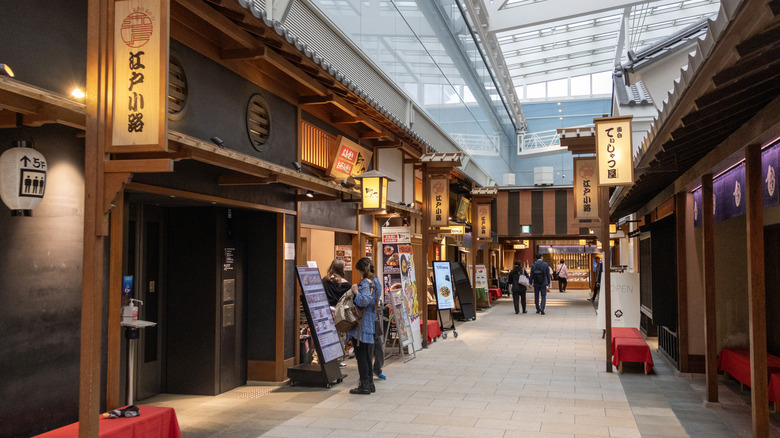
Many visitors to Japan may be more familiar with Narita International Airport (NRT) than Haneda Airport (HND). Although both are international hubs, Haneda mainly focuses on domestic flights. Still, while Narita was the fourth-best airport for PRM and Accessible Facilities category in Skytrax's 2026 World Airport Awards, Haneda managed to garner the top spot. That two such airports within a single city made the top five is impressive and demonstrates the national commitment to inclusivity in the world's most senior-blessed country.
The first thing to note about Haneda is that it is significantly closer to the center of Tokyo than Narita: the former is linked via a 20-minute monorail ride, the latter takes closer to an hour by express train. In addition, the airport has specially trained staff known as Care Fitters who are ready to help anyone with additional needs. Said help can be reserved online or via a dedicated service number. Autonomous wheelchairs are available free of charge, while the Takubin or hands-free service allows you to have your luggage transported to and from your hotel for a modest fee. Meanwhile, multilingual robot assistants are on hand to give advice should it be required, priority seating is plentiful, and the airport garden comes equipped with its own hot spring, which remains, to this day – and I confess some personal bias here – the best way to iron out travel fatigue known to humanity.
Such attention to detail is not limited to the airport. Senior visitors to the winner of 2025's best overall destination are treated to a city that has spent time considering their every need. Barrier-free laws have been in place since 2006, emergency medical services are world-class — dial 119 for assistance — and you'll find accessible facilities in abundance.