
Forget Yellowstone, This Scenic Montana State Park Is Home To Fishing, Canoeing, And Camping
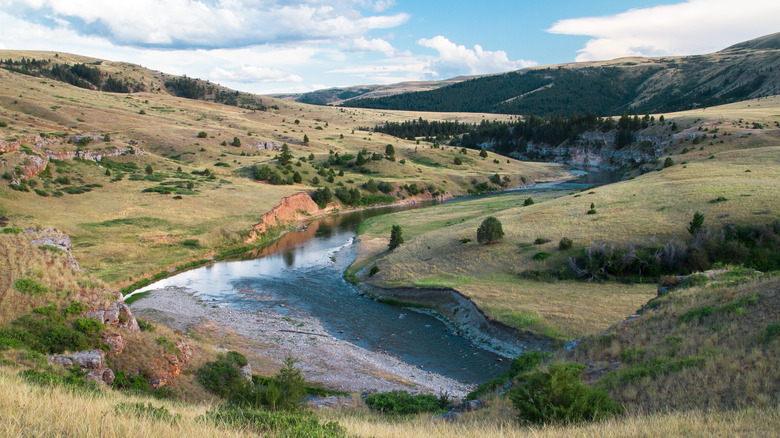
From rainbow thermal pools, bison-filled meadows, and waterfalls plunging through impossibly tall canyons, Yellowstone National Park's natural beauty is beyond comprehension. Yet, with almost 5 million visitors per year (according to the National Park Service), it's far from a hidden gem. For paddlers and anglers craving a once-in-a-lifetime adventure through the wilds of Montana, minus the crowds and chaos, Smith River State Park is the stuff of dreams.
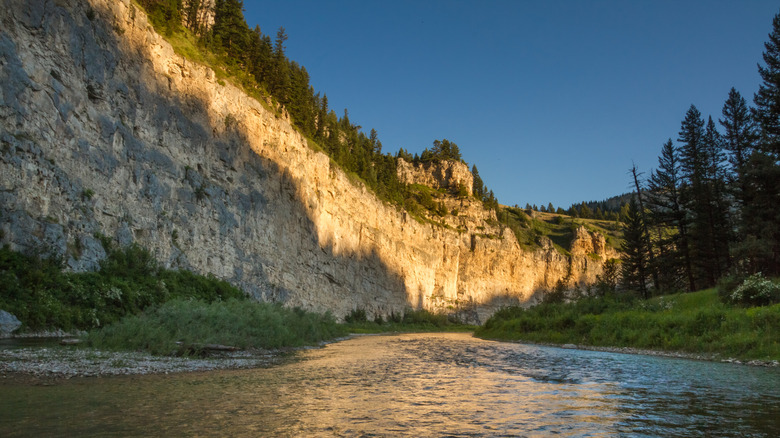
Centered on a 59-mile stretch of the Smith River near White Sulfur Springs, the park showcases deep limestone canyons, ultra-clear water, and scenery that rivals anything along the Yellowstone River. However, there's a catch. The only way to fully experience the park is by embarking on a multi-day float trip — by canoe, raft, or kayak — which is available only to the lucky few who enter the annual permit lottery and score a spot. And, if that wasn't enough to deter casual visitors, you have to pack in and out absolutely everything — check out the park's "poop tube" for a real eye-opener. Several park-sanctioned outfitters provide guided trips, but they're significantly more expensive and also offered on a limited basis.
Established in 1960, the park is a manageable trip for people in central Montana but requires more work for out-of-state visitors. You'll likely fly into Bozeman Yellowstone International Airport (BZN), which is over 100 miles from the park, or Helena Regional Airport (HLN), which is also about 100 miles away. Regardless of where you're flying from, it's a good idea to spend at least one night in Helena in case you need to organize extra supplies.
What to expect during a multi-day paddling trip at Smith River State Park
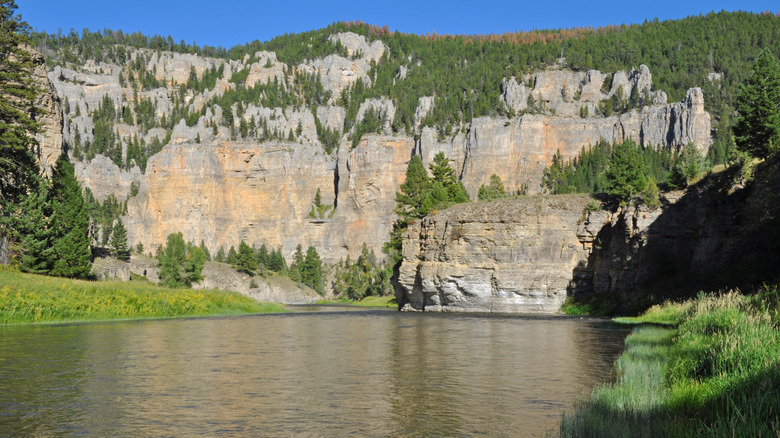
Securing a permit at Smith River State Park doesn't mean you'll be joining a tour like one you'd find at California's less-crowded Tomo-Kahni State Historic Park. Instead, you get a one-hour launch window (seriously, don't miss your window) and the opportunity to get out on the water without a guide. The only launch point is at Camp Baker, while the takeout point is downriver at Eden Bridge. In terms of difficulty, the Montana Fish, Wildlife & Parks says visitors should have at least intermediate paddling skills, as the route includes class II rapids.
Besides the scenery, the fishing opportunities will catch any angler hook, line, and sinker. The Smith River is a coveted brown and rainbow trout fishery, with whitefish also biting, depending on the time of year. It should come as no surprise that peak floating season on the Smith (May 15 to July 15) is also the prime fishing time. During this time of year, permit holders are only allowed to camp for four nights, while paddlers usually spend four days on the water.
In terms of camping, visitors should expect wilderness sites — no showers, drinking water, or camp stores — ideal for cowboy coffee over the campfire and stargazing at night. You'll find 27 boat camps and 52 spots spread along the river. The park provides minimal official information about the camps, but North 40 Outfitters has a great mini-guide that sums up each campground.
How to get a permit at Smith River State Park
Like trying to nab a spot on this secret hike in Redwoods National Park, applying for a permit at Smith River State Park can be very competitive. The lottery draw occurs once a year in February, so all visitors must submit their lottery applications during the annual application window. When you submit your application, you must choose your launch date from the available dates.
Some visitors hedge their bets by choosing a less popular launch date, while others hold out for prime fishing days. For instance, April is less popular, but paddlers should be ready for cold, snowy conditions, while August permit-holders often don't get to go on their trips because the water is too low, according to Montana Angler. Regardless of which date you choose, the park only draws nine launch groups for each date. The park only notifies successful applicants, so if you don't receive an email, better luck next year.
Each permit includes space for up to 15 paddlers floating together, but the permit holder is responsible for the group. If the permit is in your name, you must provide the personal information for everyone in your group, the number of nights on the water, and a description of each craft two days before your trip. After your river adventure, consider spending a couple of nights recharging your batteries in remote White Sulfur Springs, a city with natural hot springs, a vintage theater, and mountain views.