
10 Of The Hands-Down Best Salmon Fishing Spots Around America
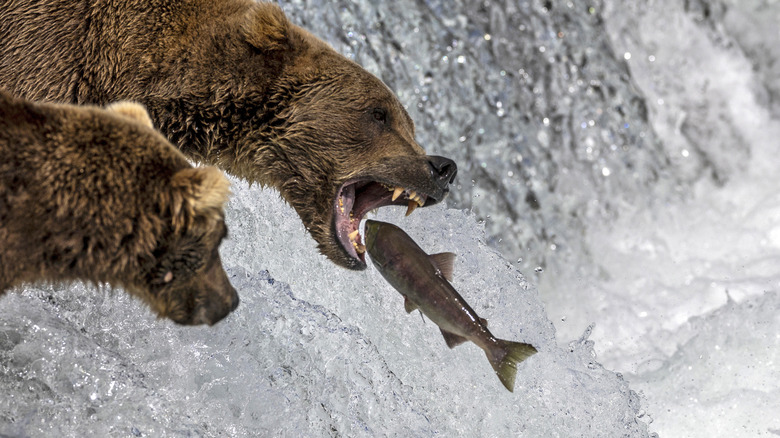
There's something wild about salmon fishing that gets under the skin. Maybe it's the places it takes you. Wilderness rivers, windswept shores, and old port towns have been drawing anglers for centuries. Maybe it's the actual fish. Salmon are powerful, unpredictable, and built for the fight. It could even be the tradition of it all. It's one of those pursuits passed down through families like an heirloom. Each generation adds its own stories to the rivers fished, and each generation holds its own feelings for the water and the wild. There's also that simple joy of knowing that the world is waiting away from the water while you cast.
From the incredible wilderness of Alaska to the plains of South Dakota, and from the well-stocked rivers of Maine to the estuaries of Oregon, salmon fishing in the United States is as varied as the country itself. There are spots across this vast land that anglers always talk about — spots that are well worth a long journey, planning a trip around, or even returning to year after year.
We came up with the following destinations after seeking advice on fishing forums and Reddit threads. We also consulted specialist guides like King Salmon Lodge and Riptidefish. Government agencies such as the Oregon Department of Fish & Wildlife also provided valuable information. But we considered the travel experience, too; the scenery and sense of adventure that make these spots worth every mile were taken into account. Here are the 10 best salmon-fishing spots in the U.S.
Bristol Bay, Alaska
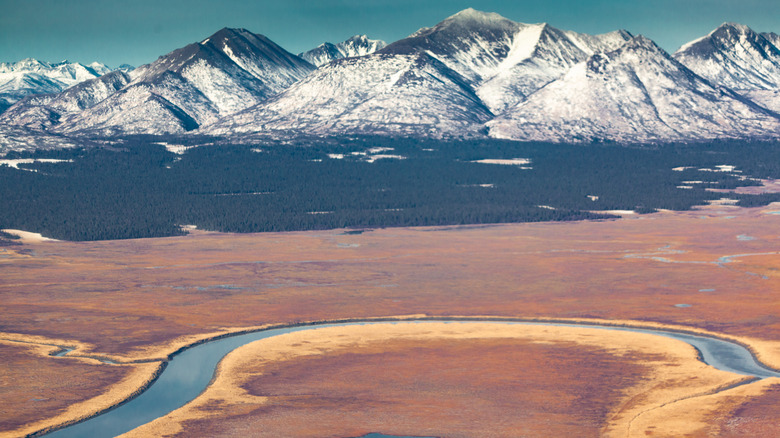
Bristol Bay feels like it sits right on the edge of the world. It's a vast, almost roadless sweep of southwest Alaska where endless tundra rolls into the distance under skies that just seem bigger than anywhere else. Snow-capped mountains loom over rivers that split and intertwine across the landscape — and they are cold, clear, and alive with fish. Getting to the best salmon spots in Bristol Bay requires a bit of effort. You'll fly into regional airports in Dillingham or King Salmon from Anchorage first. Then you need to board a bush plane to get to whichever corner of this wilderness you're headed for. You'll skim over that epic terrain until your pilot drops you down onto water or a gravel strip in the middle of nowhere.
You'll find all five Pacific salmon species in Bristol Bay: chinook (king), sockeye, pink, coho, and chum. It is best known for sockeye, though; it is the largest sockeye fishery on the planet. Also known as red salmon on account of their bodies turning ruby red on their return to spawn, they flood the rivers here in their millions every summer. The Nushagak River on the west of the bay, the Naknek to the east, and the Kvichak sitting in the northeast corner draw the most. Runs peak from early to mid-July, but from mid-June until the end of July, chinook, or king salmon, also move through the Naknek as well as the Alagnak and Togiak. But it's in the Nushagak, where you have the best chance of catching one weighing up to 50 pounds. From midsummer through September, the coho arrive. These explosive fighters are acrobatic and put up a fantastic fight, while you'll also find chum and pink salmon across all the same systems.
Kenai River, Alaska
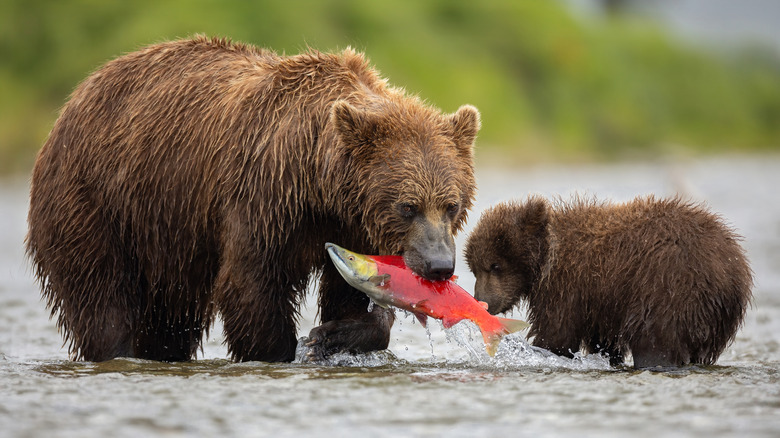
The Kenai is a river that surges and pulls its way through an expanse of untamed Alaskan wilderness. It's cold and powerful, and the banks are thick with timber and alive with bears drawn to the same tasty salmon that brings in the anglers. And some of those fish are big. In fact, the Kenai holds eight out of 10 world records for king salmon catches. On May 17, 1985, Les Anderson felt his rod jolt much more than he was anticipating. What followed was a battle so fierce that the 68-year-old car dealer ended up beaching and dragging his catch ashore. It weighed an astonishing 97 pounds and 4 ounces and is one of the eight records that stand today.
The kings run twice a year from mid-May through mid-June and again from July until mid-August. And while you might not catch one quite at a Les Anderson level, they can reach up to 80 pounds. On top of kings, the Kenai is also home to the largest freshwater sport fisheries in Alaska for sockeye and coho. Sockeye, or "reds," average somewhere between 8 and 12 pounds, a size you won't find anywhere else in the state. They are best targeted on the Middle and Lower River sections from early July through mid-August. Midsummer through October brings the coho, and the best spots to fish for them are around Soldotna and Cunningham Park in Kenai City. Then there's the pink salmon, which show up in force every even-numbered year to further establish the Kenai's reputation as one of Alaska's best fishing destinations.
Puget Sound, Washington
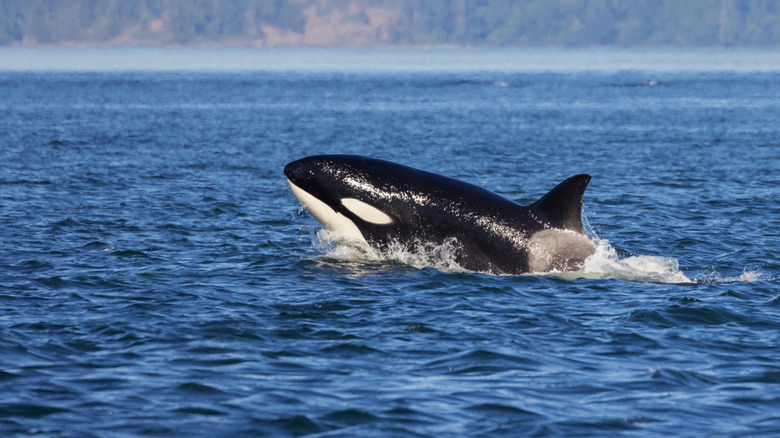
The Puget Sound is an inland estuary in Washington with 1,330 miles of shoreline. Cities like Seattle and Tacoma sit on its shores, yet vast stretches still feel genuinely wild. It's a place of cold, sheltered water, ancient evergreen forest, and looming snow-capped peaks. In late summer and fall, you'll even catch sight of orcas and humpbacks close enough to see even if you're fishing from the shore.
All five Pacific salmon species are here. Coho run from June through September. They typically weigh somewhere between 8 and 15 pounds, while pink salmon flood the Sound in odd-numbered years. Plenty of chum are found throughout the south, while sockeye are also present but rarer and found only in the north. It's the wild chinook that steals the show, though. They can reach up to 40 pounds and start arriving by June, peaking through July and August. Juvenile chinook, known locally as blackmouth, are available year-round, with winter a particularly good time to target them.
The best fishing is tied to the tide. Chinook follow baitfish concentrating around underwater banks and ridges as the currents shift. Whidbey Island, an underrated island full of parks, beaches, and seafood, has Possession Bar just offshore. This massive underwater bank is several miles across and draws huge numbers of chinook. Elliott Bay sits right in the heart of Seattle and opens for a special chinook fishery in summer, while Tacoma Narrows funnels huge numbers through its strong currents on their way to spawning. However, wild chinook are listed as threatened under the Endangered Species Act, so you must throw them back. You can only keep hatchery fish here, which are identifiable by their clipped fins.
Columbia River, Astoria, Oregon
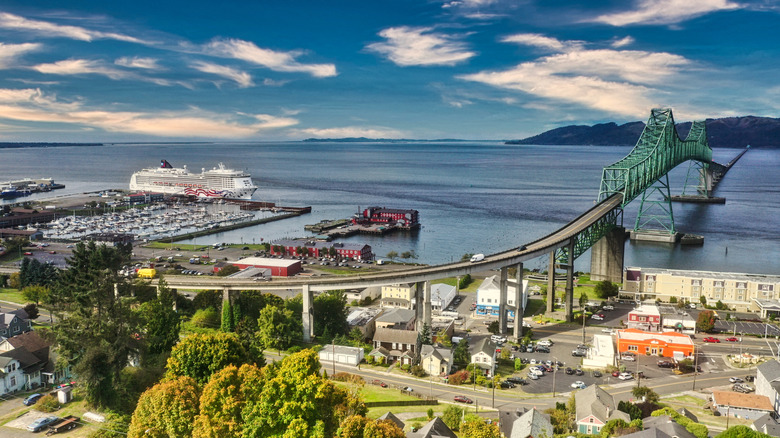
One of the best spots on the Columbia River for salmon fishing is in Astoria, the Pacific Northwest's oldest settlement. It's a storybook port with Victorian charm, Scandinavian flavor, and ethereal beauty — and it carries centuries of fishing history. It sits at the point where the Columbia spills out into the Pacific. Just offshore is the Columbia Bar, also known as the "Graveyard of the Pacific." It has a centuries-old reputation for dragging vessels down to its depths, with more than 2,000 pulled under and hundreds of lives lost. Powerful currents and breaking waves can make crossing into the Pacific dangerous, so fishermen in small boats need to take care here. Check for the latest warnings and forecasts with the National Weather Service before heading out.
The Columbia has three chinook runs in spring, summer, and fall. The spring chinook are the most prized — particularly if you're fishing for dinner — as they are the fattest and the tastiest of the three. Be mindful that you can only keep hatchery fish at this time, which you can identify by their clipped adipose fins. The fall run, however, is the biggest. In fact, it's up to four times the size of the spring run. The Buoy 10 fishery brings the crowds every August and September. It's named after the channel marker at the river's mouth and is a place where vast numbers of chinook and coho pile into the estuary. As with other spots here, make sure your life jacket is on tight; anglers fall overboard every year, and the water is shockingly cold. Portland is the closest major hub, and the scenic drive northwest takes a couple of hours.
Salmon River, New York
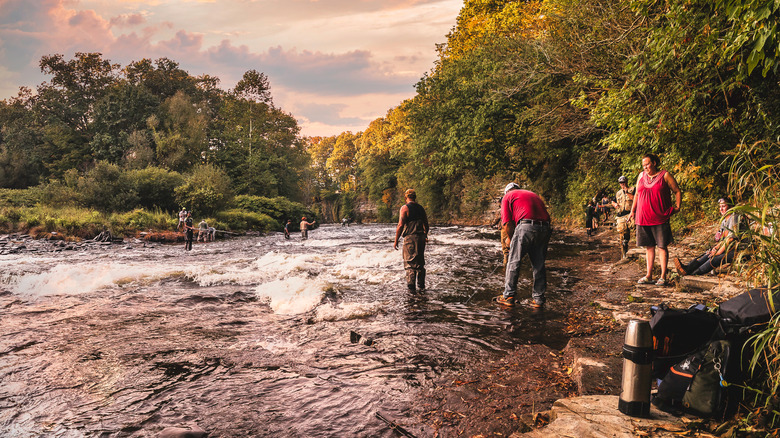
The Salmon River in upstate New York flows into Lake Ontario (renamed Lake America in 2026 by U.S. President Donald Trump) and is a place known for its record-setting catches. Two major records have been set on this 17-mile river in Oswego County. The first is the Great Lakes record for chinook. It weighed an astonishing 47 pounds and 13 ounces, while the world-record coho caught on the same stretch between Altmar and Lake Ontario weighed 33 pounds and 4 ounces. The river is actually named after the Atlantic salmon, a species that vanished from Lake Ontario by 1900. It was the victim of overfishing, pollution, and the devastating spread of the sea lamprey. But reintroduction efforts began in 1996, and you can now catch them in weights ranging from 5 to 20 pounds from June through November.
It's fall when the river really bursts with life, though. Chinook gathers at the river mouth through late August and pushes into the river by the start of September. Coho run alongside them, and you'll get bites from both species on the same stretches, but the fishing can be unpredictable when heavy rain or major dam releases trigger the salmon to make runs upstream. Numbers peak from mid-September for a couple of weeks into October, when chinook averages around 18 pounds and the smaller coho averages eight. Twelve miles of public fishing rights give anglers easy access along the bank, and drift boats are available for those who want to cover more water. Pulaski is the main town on the river. It's a place of unique markets, art, and antiques, and it's also where you'll find the best spots to cast, including Short Bridge Pool.
Lake Ontario, New York
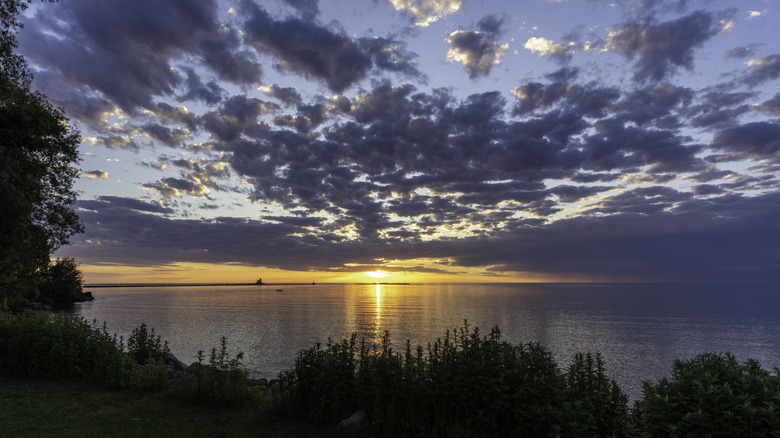
The Salmon River is just one of dozens of tributaries that flow into Lake Ontario. While it might be the smallest of the Great Lakes by surface area, it is the last of the region's salmon fisheries before the Atlantic. Along the American side of the south shore, sleepy fishing towns, rugged countryside, and secluded river mouths create a landscape that feels a world away from the Canadian shore, where major cities like Toronto, Hamilton, and Kingston sit.
The lake is stocked with around 1.7 million chinook and a quarter million coho every year. With such dominating numbers, chinook catch rates have been among the highest on record in recent years. The run begins around the middle of August and peaks about six or seven weeks later, but August and September demand your respect. This is when wind and unstable conditions push the kings offshore, and while the lake might look calm in the morning, it can be rough and dangerous by noon. In spring, head to the Niagara Bar; this is where the coho follow chinook movement patterns. Schools usually arrive in April and May and move east as summer arrives. Throughout the hotter months, those warm, bait-rich waters can deliver kings weighing up to 25 pounds.
Lake Michigan — Michigan, Wisconsin, Illinois, and Indiana
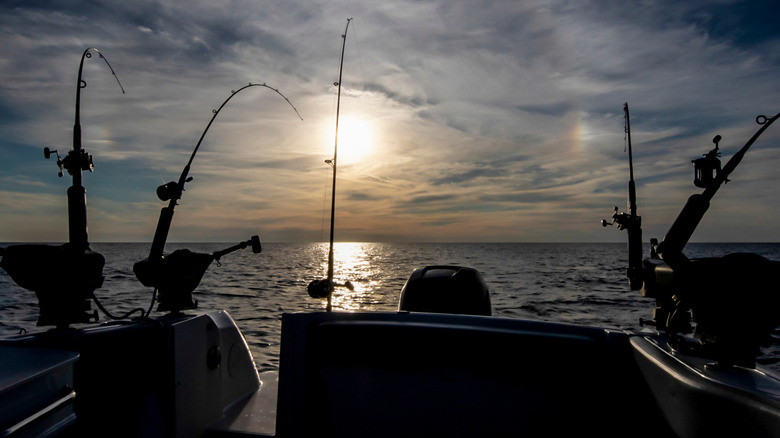
Unlike the other Great Lakes, Lake Michigan sits wholly inside the U.S., and its shores touch no less than four states. If you remember your geography, you'll know they are Wisconsin, Illinois, Indiana, and, of course, Michigan. It's a shoreline that unfolds in beautiful sweeps of clear blue water, while towering sandy bluffs and windswept dunes rise above the shoreline. Quiet stretches of forest and pastoral countryside add to the sense of wildness. But if it's just fishing you care about, you're in for a treat there, too. Lake Michigan has a tremendous salmon fishery, with outstanding populations of chinook and coho.
The coho runs smaller, weighing somewhere between 5 and 12 pounds — but they deliver some explosive action, especially in the springtime. In the southern areas off Indiana and Illinois, they can remain productive right through the warmer months. However, it's the chinook that are the heavyweights. They can reach anywhere up to 25 pounds, sometimes even more. In fact, the Wisconsin state record is 44 pounds and 15 ounces, caught in 1994 in Sturgeon Bay. The traditional hotspot for trophy chinook there is June and July, with "The Bank," a prominent underwater reef about five miles offshore, being a good place to find them.
However, you need to beware of big winds and waves creating hazardous conditions when fishing offshore on Lake Michigan. Conditions can change from calm to treacherous with little warning, so both a seaworthy boat and a marine forecast check are essential. That said, you don't always need a boat. From late August into October, salmon gather around the harbors and river mouths before moving into the tributaries, bringing them within reach of fishing piers, shores, and breakwaters.
Penobscot River, Maine
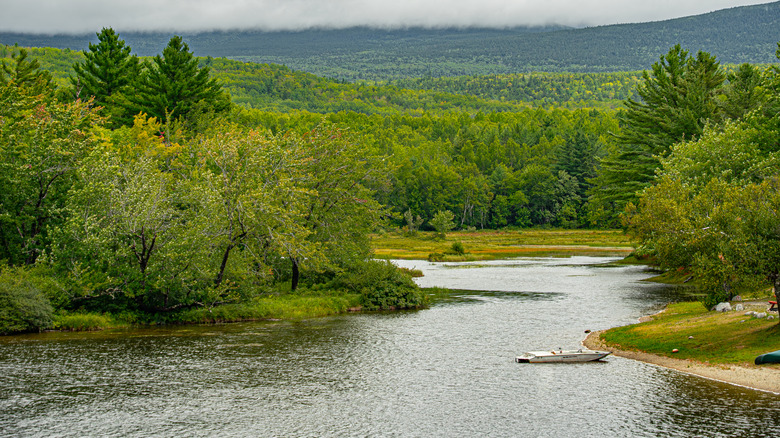
The Penobscot River is an extraordinary salmon river. It once ran with more than 50,000 wild, sea-run Atlantic salmon surging upriver alongside huge runs of shad, alewives, and sturgeon. Then they built dams, while logging, pollution, and overfishing also contributed to those great runs all but disappearing by the 1950s. But quite the turnaround took place in the 2010s after two dams were removed and authorities worked on fish passage improvements that led to the reopening of almost 1,000 miles of habitat. The sea-run population is still a shadow of its former self, but with around 1,000 fish, it is actually the largest Atlantic salmon run in the country. The restored river is also bringing back wildlife, with more recreation opportunities for people, and a general sense of Penobscot fishing culture restoration.
But it's not all about the sea-run salmon. The West Branch of the Penobscot is a particularly good spot to target landlocked Atlantic salmon, a freshwater form of the same species. They inhabit the water near Baxter State Park and Katahdin. Below the Ripogenus Dam, you'll find cold water rushing its way through the Ripogenus Gorge. It spills into deep pools and rocky stretches where Atlantic salmon and brook trout thrive. Fly fishing is the most popular way to target the salmon, particularly during the summer insect hatches. However, fishing rules vary by river section, so check the current regulations.
Lake Oahe, Nort Dakota and South Dakota
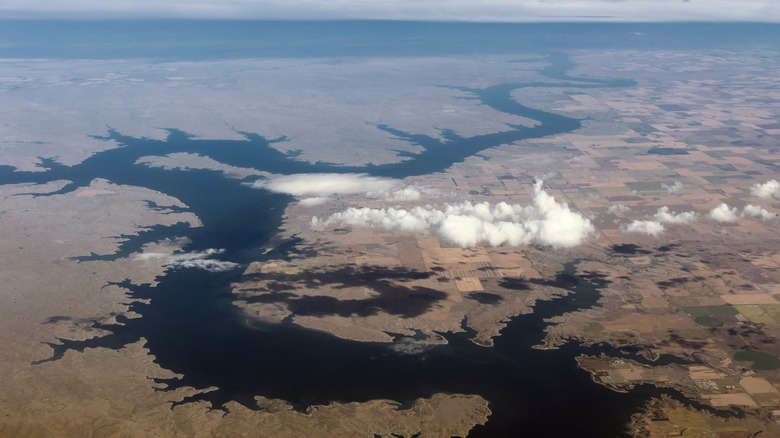
This vast reservoir on the Missouri River cuts through North and South Dakota for 231 miles. In fact, Lake Oahe is one of America's biggest lakes outside the Great Lakes, and its waters are set against the open grasslands and rolling country of the Great Plains. They are characterized by rocky points, secluded bays, and long shorelines that total more than 2,000 miles, making it a fantastic spot for shore fishing.
Chinook is the main attraction. Despite not being native to the area, they have become an established draw for anglers and are sustained through a stocking program. The shoreline is abundant with accessible points like jetties and rocky banks where you can cast right into their paths. September and October are the best times. This is when water temperatures drop, and spawning instincts kick in, which pull the fish back to where they were originally stocked as fingerlings.
One of the standout fishing areas is Whitlock Bay, about 15 miles from the city of Gettysburg, South Dakota. There are many access points to target salmon funneled through the deep water. You can wade out from a jetty, work along a point, or fish from riprap along the banks. Away from the bay, look for outcrops and rocky points, especially where the bottom drops sharply into deep water. To really launch your casts into those depths, consider a sturdy, heavy-action rod and load up on spoons and crankbaits that imitate the baitfish that chinook love so much.
Tillamook Bay, Oregon
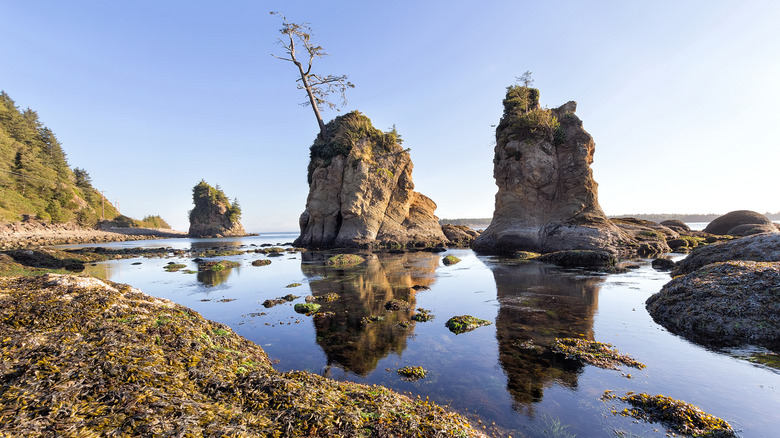
Along the north coast of Oregon, you'll discover the 13-square-mile Tillamook Bay. It's hidden behind the long Bayocean Peninsula, which keeps the water calm. Fishing boats and rocky outcrops like the weathered sandstone formations of the Three Graces lend the area a distinctive coastal character. At the southern end, the bay is pinched narrow, and five rivers — the Trask, Wilson, Tillamook, Kilchis, and Miami — braid into the water. It's here where you'll find the most direct access point, the city of Tillamook, which is known for its scenic kayaking and famous cheese.
Fall chinook arrive in late August and hit their peak in October with regular 20- to 40-pound catches. Spring chinook move in from April through July, with May and June being the prime months. Coho is available, too. They arrive later in the year, and there are plenty of 8- to 12-pound fish showing up from late October into November. They may be smaller than the chinook, but their aggressive, hard-fighting nature makes them an exciting target. But whichever species you go after, you can only keep the hatchery-raised salmon. All wild fish must be put back.
There are plenty of opportunities for shore fishing in the bay. The Tillamook River offers excellent casting spots from its banks, and there is more public access around Bay City. The Trask River, especially Fraser Road and Hospital Hole, is also good, as is the upper bay along Bay Ocean Road. But a boat opens up Tillamook's deeper waters, along with its prime fishing grounds. The deep holes in the main shipping channel are always a good bet in the lower bay, while both the mouth of Young's Bay and the pilings under the Highway 101 bridge are worth fishing, too.