
Travel Experts Warn These 9 Seemingly Innocent Behaviors Are A Major Faux Pas In England
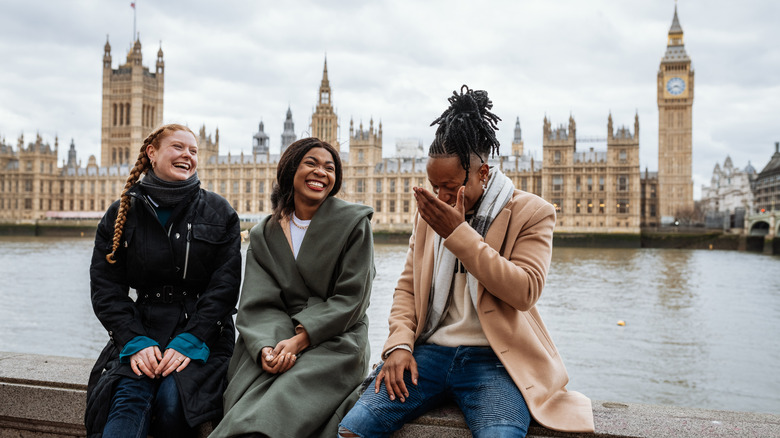
The United Kingdom is an amalgamation of four individual countries, the largest and most populous of which is England. The existence of a single state with four countries (and four capitals) is something of an oddity, and, in truth, the homogenization of each country into one whole never fully took hold. Still, English is far and away the most widely spoken language in the U.K., and many people do feel a shared British identity. That shared identity can be deceptive, as cultural norms in Scotland, Wales, and Northern Ireland can differ from those of its larger neighbor. The people of both nations are British, but the Scots, Welsh, and Irish are not English, and the same is true in reverse. Getting that wrong is faux pas 101 over here.
Of course, anyone looking to visit some of England's best places to visit in 2026 needs more information than a simple instruction never to call a Welshman English. English liberties, and the kind of social awkwardness that made Hugh Grant a household name, have created a famously reserved culture. Or, at least it feels that way. The people of the U.K. are warm and friendly, but many have been raised to believe that there is a right and wrong way of doing things. The English — and being one myself, I should know — tend to be lovers of order and of convention. Politeness is our preferred social lubricant and those who stray too far from that path are liable to encounter more than a few issues.
It's a genuine minefield. But those interested in learning how to navigate the world of English etiquette should take heart. Using a combination of lived experience and expert advice from etiquette coaches (yes, we have those here), we've produced a quick primer and survival guide to keep faux pas to an absolute minimum.
Asking overly familiar questions

Anyone who has traveled to one of Germany's fantastic Christmas markets will know that Germans actually have an excellent sense of humor, just as those who spend even a small amount of time in Paris will know that, no, the French are not inherently ill-mannered. And spoiler alert: while the English really do experience the full spectrum of human emotions, we are a reserved people to our core. And that limits the kind of conversations we're comfortable having.
During World War II, the iconic Keep Calm and Carry On poster was created to promote national resilience (although it was never actually distributed), but it has since become a symbol of the famous British stiff upper lip. As the British pop group The Cure sang in 1979, boys don't cry, and nor, for that matter, do British people like to express emotion in public. By 2024, almost 65% of people in the U.K. admitted that they hide feelings of anxiety from those around them (reported by Rethink Mental Illness).
The merits of keeping things bottled up are questionable at best, but the standard British way of coping with such things is to keep private matters, well, private. Asking about anything related to salary or the cost of a new house or car is generally frowned upon. The same goes for weight and age. Questions about romantic relationships are vague, and if people do ask if you are all right, they mean "hello"; they do not want an actual rundown of what is bothering you. Close friends and family might be exempt from this, but strangers, colleagues, and acquaintances are usually kept in the dark about most things. Oh, and if you're not sure whether you are friends with an English person or just an acquaintance, you're an acquaintance. Sorry.
Forgetting to offer someone a cup of tea
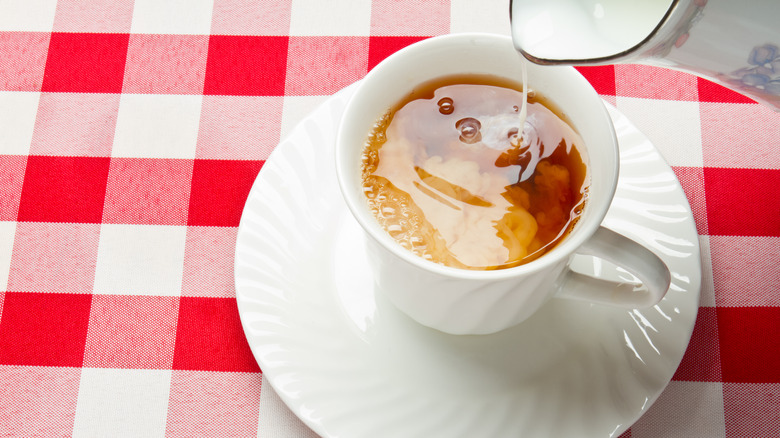
This might come as a surprise to you, but the United Kingdom is a nation of tea drinkers. Around 100 million cups are drunk every day (according to the U.K. Tea & Infusions Association), and tea comes in all shapes and sizes. The typical brew (get used to the vernacular; it's either a brew or a cuppa, depending on where you are) is served with milk and sugar. Afternoon tea is somewhat formal, and yes, if you don't know what you are doing, you'll probably break the rules within the first 10 minutes. Don't worry about it though; we actively enjoy correcting people.
As far as etiquette goes, however, there is an additional level of jeopardy in play. If anyone comes to your house, or place of work, you should offer them tea. A friend, a family member, or someone who has just popped over to fix your boiler, it doesn't matter; it is the height of rudeness not to do so. Of course, they are allowed to opt for something else, usually coffee or water, but "do you want a cuppa?" is the ubiquitous starting point.
Travelers are less likely to find themselves playing host to people, but certain situations can arise regardless. Somebody arrives at your rented accommodation; you need to offer them tea. If somebody enters your hotel room, tea. Tea is our way of welcoming someone, of warming them up in weather that leans towards the wet and windy end of the spectrum. It's how we show that we care. Oh, and don't do that thing with your pinkie finger. We don't do that; it's a myth.
Bragging or being self-congratulatory

The English sense of humor is a mix of self-deprecation, deep-seated cynicism, and a masochistic love of uncomfortable silence. National pride can be strong, sometimes to the point of jingoism, but it is always tinged with a sense of absurdity. Indeed, the average English person is far more likely to share anecdotes that paint them in a negative light, roll their eyes, and ask, "What am I like?" than to share positive news about themselves. In short, we don't brag, and we frown upon those who do.
The same applies to humblebragging. Those who show up in a new car will be quick to point out what a great deal they got. Home improvements, such as a new kitchen, will be described in terms of the inconvenience involved rather than the value added to the property. When going abroad, everywhere becomes a once-in-a-lifetime vacation planned years in advance and purchased at great personal sacrifice.
Those who fail to observe such social niceties are likely to be met with a healthy amount of snark. Oh, how we excel at snark. Those who are overly proud of material possessions might be referred to as Lord and Lady Muck, or may be accused of having to "eat beans" for dinner (with the insinuation that all their spare cash has been spent on showing off). More overt boasting causes even more consternation. Bragging about your expertise at a certain video game, the mention of a pay rise at work, a high score on a test shouted from the rafters? Such things do not make for polite conversation in England. Far better to deny, diminish, or simply keep schtum. People will still love you.
Being rude to service staff
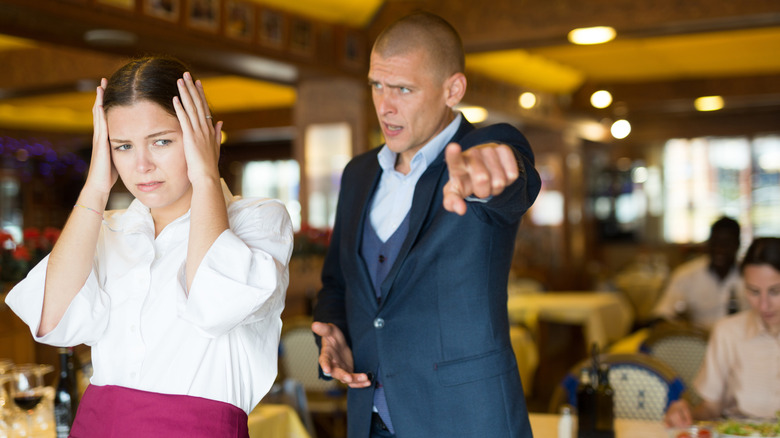
While we are spending some time talking about the stereotypical way in which the English navigate the world, it's important to note that other nationalities are being observed no less closely. There is a belief that Americans are rude towards service staff (as discussed on Reddit), and it is something of a red flag for us over here in Europe, particularly in the United Kingdom.
Firstly, the accusation is one of those one-size-doesn't-fit-all situations that are easy to debunk. Here in England, there is no formal tipping culture, so waiting staff tend to be less effusive. They are there to do a job, yes, but thanking them for doing so is standard behavior. Phrases like "Thank you so much" are common for pretty much anything that happens, ranging from taking your order to bringing you your food, cleaning the table, and even dropping off the bill at the end. We do not call waiters over aggressively; we make eye contact and wait our turn (everything is a queue here). The same is true of hotel staff; they are there to help, not to be treated as servants.
The more relaxed pace of service can drive some to the point of despair. And while the lackadaisical approach to service is more acute in certain places — loitering in coffee shops is a great way to explore Italy on a budget — in England it's just something you have to put up with. Indeed, as etiquette expert William Hanson told the BBC back, even in a hotel, interacting with service staff is "a transactional proposition, so some people wrongly feel they are entitled to behave in a way that they wouldn't at home. Whether that's leaving their room an absolute bomb site or being rude to the staff."
Forgetting the rules of everyday courtesy

All that thanking of waiting staff for doing their job does not exist in isolation. The phrase "mind your P's and Q's" is familiar to almost every English person (the term may refer to the old days of printing when lowercase P's and Q's could be accidentally set in reverse), and its meaning couldn't be any clearer: Good manners cost nothing. British people say thank you more than most, over 5,000 times a year in fact (according to One4All), and if that was all there was to it, we could move on. Alas, it's a little more complicated than that.
When two Brits get in each other's way, they apologize. If you bump into somebody in the street by accident, both parties apologize. When someone from England buys something from a shop, they thank the cashier. We thank bus drivers when we get off. When something is offered to us, we refuse out of politeness. When it is offered a second time, we are expected to say yes, often with a jovial "go on then." It's like some kind of synchronized dance where everyone knows the moves, except for that one stranger who just rode in from out of town.
Meanwhile, at dinner parties, nobody is allowed to help with the cleanup, but everyone is expected to offer. Oh, and there are a thousand different ways to express gratitude: "cheers" is the most common, but you might also hear others such as "ta," "nice one," "thanks a bunch," or the slightly more formal "much obliged." And to those who forget to thank their host, driver, or waitress, worry not. An apology will be accepted on the spot with an assurance that no offense was taken. Which is, of course, a lie.
Invading people's personal space

While the English absolutely value friendship, we are slow to let someone outside of our immediate circle into the fold. Indeed, Snapchat's 2019 Friendship Report revealed that people in the U.K. are less likely to say they have a BFF than anyone else in the world, and that this unwillingness to let people get close to us manifests itself in a most predictable way. We are protective of our own personal space. We don't like being touched by people we don't know well, and hugging is touching.
Loosely speaking, the idea that an Englishman's home is his castle dates back to the Magna Carta and to that brief period when the English were considered just a tad freer than their more autocratic neighbors. The politics of it all is one thing, but a culture of keeping others at arm's length is hard to deny as part of the English psyche. Handshakes, yes, bear hugs, no. We do not sit next to each other on public transport if another option is available. And if we do have to sit next to someone, we probably don't speak to them, other than to apologize for disturbing them when we get up to leave. At least we don't in London. The further north you go, the friendlier the people tend to get (you have been warned).
Which is not to say that we are unfeeling automatons. If someone close to us is in distress, the thin veneer of societal niceties is cast aside; we will embrace a person who needs to be embraced. And although it might take years to establish, if a close friendship develops, then handshakes are replaced with hugs and a kiss on the cheek.
Making too much noise
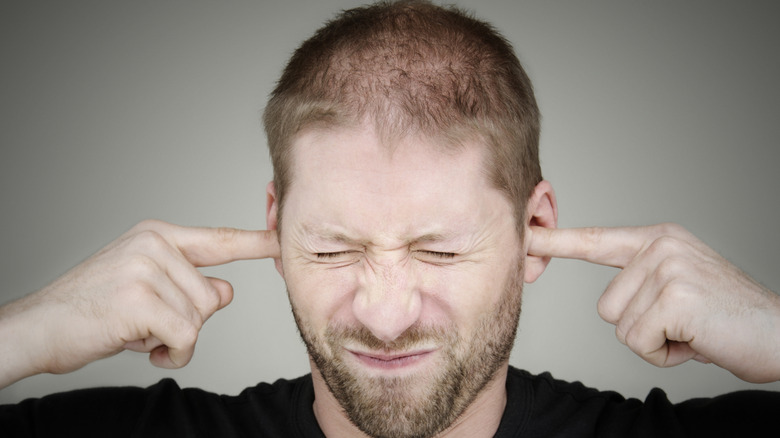
On many long-distance trains in the U.K., you will find a carriage or two listed as quiet zones. You aren't supposed to speak above a whisper in them, and taking a phone call is forbidden. Such measures might seem odd, but to the English they make perfect sense. Purchasing the best noise-canceling headphones out there is a solution, yes, but not everyone can afford to do so. Far easier to insist that the entire train keeps things to a whisper.
In general, being loud is frowned upon in England. People in restaurants do not want to hear your conversation drowning out their own. We don't like to draw attention to ourselves, and we don't care much for those who do. Yes, rowdy pub culture exists, but in such places, loud voices aren't out of place. But it's important to understand what is being said here. Every culture is entitled to its own idiosyncrasies.
Americans, for example, are often perceived as more ebullient by nature, and this is seen as a non-pejorative observation. The dining-out experience in the United States is, both subjectively (from my own experience) and objectively (according to Soundprint), a much noisier affair than you'd find in England. But it's also true that unfamiliar accents carry over the airwaves with more alacrity than home-brew dialects might. Indeed, as the Santa Barbara Independent asked back in 2025, what if loud is another word for foreign, a perception not of decibels but of difference? The point is well made, but it still leaves would-be visitors with a simple truth. The English tend to keep their voices down unless the surrounding noise makes it impractical. Whether you choose to follow suit is entirely up to you.
Jumping ahead of queues
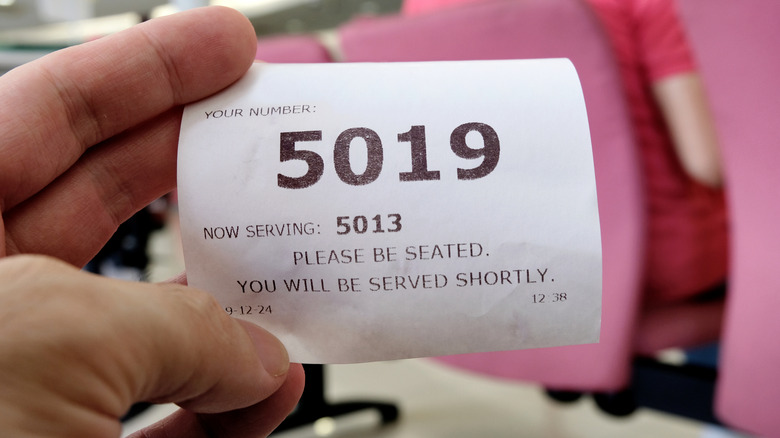
The English like to follow rules; it's something we do well, yet we also find it difficult to call someone out when we see them breaking them. Walk on our grass, smoke outside our hospitals, or play ball in front of a no-ball-games sign, and most of us will simply mutter invectives under our breath and move on. But cut into a line? Break the orderly nature of a queue? Such an action offends the English sense of fair play. And such an observation is no mere hyperbole. According to a recent YouGov poll commissioned by Liberty Human Rights, Brits really hate people who cut in line. When queuing, we are all of equal status, and nobody is allowed to act like they are better than anyone else. Indeed, so pervasive is the belief that people should wait their turn that not even celebrities can face a backlash for breaking the cardinal rule.
In 2022, following the death of Queen Elizabeth II, popular daytime television presenters Holly Willoughby and Philip Schofield were accused of jumping the queue that had formed for those wishing to pay their respects as she lay in state, as reported by the BBC. The public backlash was considerable, and the duo's attempts to answer the accusations were met with a rather angry response. Oh, yes, the English aren't great fans of half-hearted apologies either.
It was ultimately just a storm in a teacup, but it did highlight just how seriously the British public takes such matters. Passive-aggressive backlashes are one thing; the English are masters of that. But high-profile cases can have lasting consequences for a public figure's reputation. Don't cut in.
Paying more attention to your phone than to those around you

Picture the scene. You've booked a flight to one of the most vegetarian-friendly cities in the world, and selected a restaurant. You've arranged to meet your favorite English chum in the al fresco section of some exotic piazza, only to find that your phone is lighting up with Snap, texts, doomscrolling temptations, and Instagram notifications. The food arrives, your thumb works overtime, and your friend tucks into their food with all the enthusiasm of a narcoleptic hedgehog in winter.
In the U.K., phubbing is considered the height of rudeness. The reasoning is simple: if you are so keen to talk to someone else, then why did we agree to meet in the first place? If a call absolutely has to be taken during a social gathering, an immediate apology, followed by an insistence that you simply must take the call, is essential. Upon your return, you may need to provide an explanation as to why the call could not have been dealt with at a later date, unless you want to endure the sea of passive-aggressive eyebrow motions that would follow.
The same unwritten rules apply elsewhere. TikTokers dancing on busy high streets are not endearing themselves to anyone over here. Staring at a screen when making a purchase or playing what you consider to be good music on public transport are both considered the height of bad manners. Oh, and noses will turn up in the presence of those attempting to interact with another person wearing earbuds, transparent or not. My advice is to take them out and look vaguely sorry you bought them in the first place.