
Chicago Public Transportation Rules Tourists Frequently Break On Their First Visit
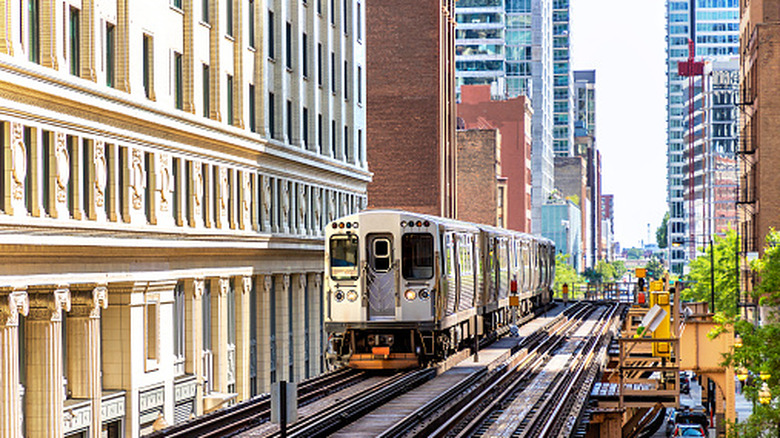
Whether you're looking to make a quick trip to a city for a weekend getaway or want to do a deep dive, Chicago can't be beat. And what better way to get around the Windy City than with public transit. The city of Chicago boasts a staggering 77 distinct neighborhoods to explore with plenty to do and see in each. Without feeling overwhelmed, taking one of many Chicago's convenient buses or subways can whisk you around efficiently and quickly. While Chicagoans know not to call the city "Chi-Town," they also know the rules to abide by on public transportation. Tourists, on the other hand? Well, they frequently break rules on their very first visit.
Public transit aficionados know that you should always let others disembark the subway before piling in, and they certainly know that blasting your social media videos is a major no-no. That being said, when tourists step into the unfamiliar world of public transit in another city or country, navigating the system can be difficult. Many rules go unspoken, understood only by locals who have spent years navigating their city. According to the Chicago Transit Authority, passengers are expected to follow a clear set of rules to keep the city's buses and trains running smoothly. With Chicago's extensive public transit network making it easy to explore the city without ever needing to rent a car, knowing the ins and outs of the system is all the more important for first-timers to Chicago. So, before you haul your oversized luggage onto the "L" train or accidentally commit a transit faux pas, we've rounded up a few essential rules and insider tips to help you navigate your next journey from The Loop to Chinatown like a seasoned local.
Playing devices out loud while on public transit
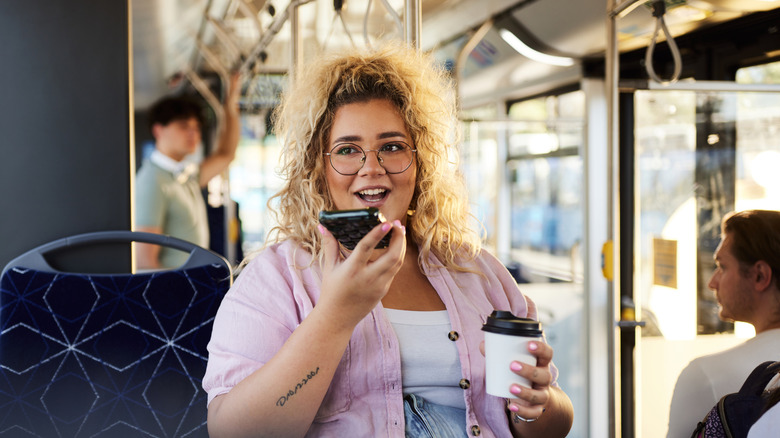
Sometimes, one of the most relaxing parts of the day is your commute on public transportation. Whether you're slipping on your headphones to jam out to your favorite tunes or unwinding with an intriguing podcast, the ride can offer a much-needed moment of peace. However, few things will get a Chicagoan worked up faster than another passenger blasting music or videos from their phone. If you're planning to ride the "L" or the bus and suddenly feel the urge to call your friends back home to livestream your journey, think again. Not only will you earn some serious glares from the locals, but you could also face a fine, according to the CTA's website. Knowing that loud music and ringtones are frowned upon on the "L" is definitely one of those unwritten rules you should know before visiting Chicago.
In a thread on r/Chicago, one Reddit user offers a blunt reminder that anyone disrupting the peace aboard the "L" train is being inconsiderate of their fellow passengers, saying, "If you blast your music on public transport, you are a bad person." Another user chimes in, suggesting that many of these disturbances are caused by people visiting from out of town. In a previous campaign directed at public transportation etiquette, the CTA gathered riders' opinions from social media, emails, and direct phone calls. The CTA stated that the campaign was aimed at showcasing courteous ways that public transit riders could make the journey — for everyone — a bit less of a slog.
Bringing a large luggage on a train during rush hour
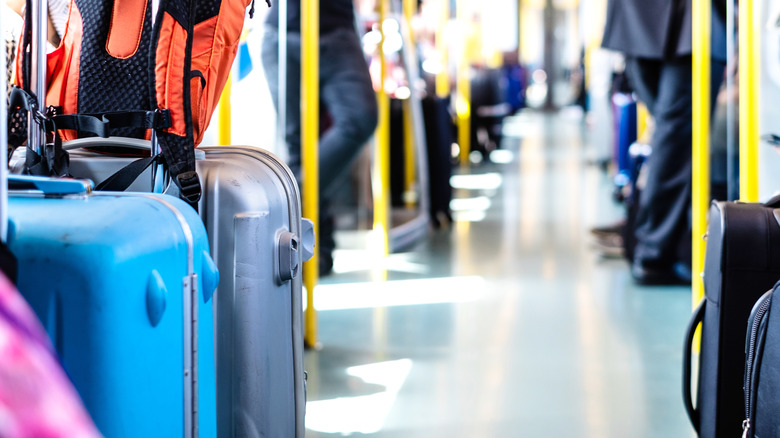
Picture this: It's 5 p.m. on a Friday evening, and you've finally finished that presentation that you've been working on all week. You happily shut your laptop and make your way to the Blue Line to head downtown for some happy hour drinks with your colleagues. Just as the train pulls up and brakes to a screeching halt, the doors slide open and the car is rammed with people going downtown from O'Hare International Airport, America's most connected airport. Each person has luggage bigger than the next, and it's near impossible to get onto the train. Feeling defeated, you let the doors close and wait for the next train to arrive.
In the Rules of Conduct section on the CTA website, it states that a passenger is prohibited from bringing large luggage, or any large personal item, onto any train or bus if they cannot handle their bag in one trip on their own. While it's perfectly acceptable to bring luggage on board, since many locals do so as well while heading to O'Hare, it's best to be as courteous as possible if doing so. If there's one thing local Chicagoans despise, it's when people visiting from out of town bring luggage onto public transit during rush hour and block the doors or aisles. If you have no choice but to travel with luggage on rush-hour public transportation, keep your bags tucked in as much as possible to avoid blocking the aisles. And whatever you do, don't stand in the doorway! It's a surefire way to annoy locals trying to board and earn yourself a few not-so-friendly glares.
Eating or drinking on public transit

If you're a first-time visitor to Chicago, you're probably excited to dig into the city's legendary food scene. You've got your heart set on some deep-dish pizza, and you've even read up on the five best places to get hot dogs in Chicago — minus the ketchup, of course. After a full day of restaurant-hopping, you board a bus to cross the city, ready to give your feet a well-deserved break. But just when you think you've had your fill, hunger strikes again. Lucky for you, there are leftovers in your bag! You unzip it, reach for that cold slice of pizza, and suddenly, a dozen Chicagoans lift their heads and turn in your direction. That whiff of pizza has just announced your arrival in the unofficial hall of transit shame. You've unknowingly broken another public transportation rule that is a fairly common mistake people make while using Chicago's CTA public transit buses.
A Redditor that commented on the obscene amount of food spillage they've witnessed is probably a good reason why you should avoid food and drink on public transit. "Yesterday was the third time I saw a person get a drink spilled on them by someone else on the bus. A month ago a girl opened a bottle of milk, and it burst entirely on the back of the passengers in front of her." The commenter carries on describing how they also witnessed a passenger get a fast food cup of liquor dumped on them, causing the entire train to stink. Eating in the transit stations is permitted, so it's best to chow down before boarding transit.
Crossing between train cars
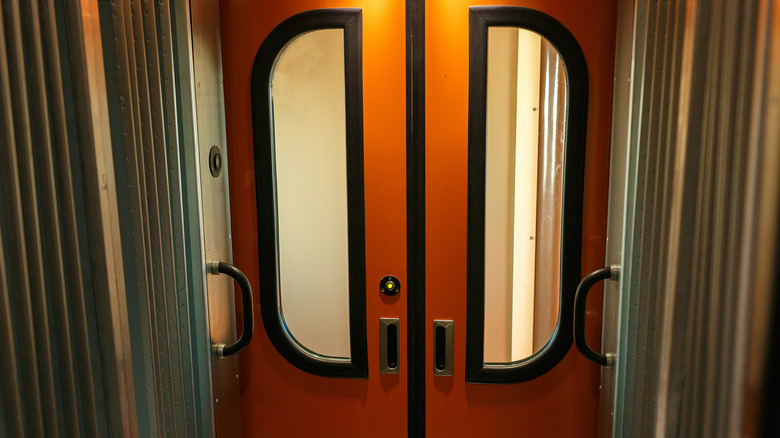
In some places, moving between train coaches is perfectly acceptable and even considered normal when train passengers are packed in like sardines. However, if you're planning to do this while visiting Chicago, think again. According to the Rules of Conduct section on the CTA website, crossing between train cars is strictly prohibited and should never be attempted. The only exception is when a CTA employee specifically instructs passengers to move between cars, such as when a door system malfunctions and prevents passengers from exiting normally.
In a r/Chicago thread, local Chicagoans trade thoughts about one of the city's unspoken public transit rules: never trust anyone who walks between train cars. "One of my top 10 takeaways after living in Chicago since 2007 — never trust anyone who walks in between train cars," one user declares. Another offers a theory to explain the phenomenon, dividing these wandering passengers into two distinct groups: "90% are people causing a problem; 10% are people fleeing a problem." If you're visiting Chicago for the first time and hoping to preserve your honor, dignity, and reputation, take note: stay put in your train car unless an authorized CTA employee tells you otherwise.
Not getting a Ventra public transit pass card
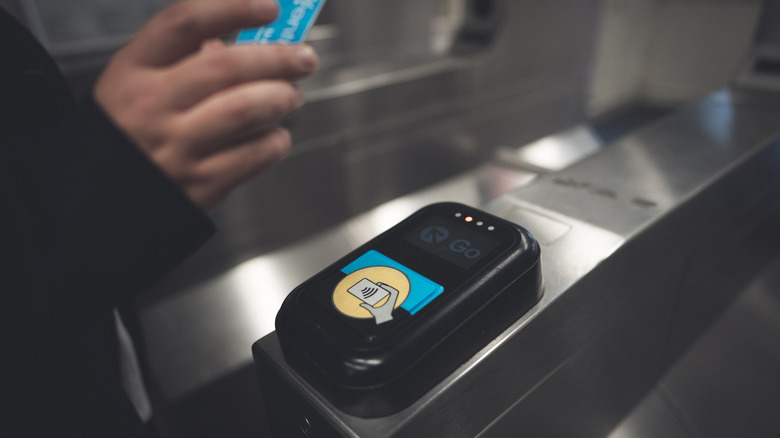
One of the ways to burn through your money quickly as a first-timer to Chicago is not buying a Ventra public transit pass. If you plan on venturing into other neighborhoods outside of The Loop, such as Old Town Triangle, one of Chicago's hippest neighborhoods, the Ventra might be something to look into. Public transit in Chicago is one of the most affordable options to get around on the CTA systems, which includes the "L," buses, and even suburban buses.
Getting a transit card will also save you the hassle of digging through your wallet to scrounge up enough change for a ticket. The card offers tourists the option to reload as you go or opt for a one-day, three-day, or one-week pass, which allows you unlimited uses of the card while visiting the city. You can buy a physical Ventra card at vending machines in "L" train stations, online, or in retail locations like drugstores, but the app makes the process even easier, allowing you to add your Ventra card to your Apple wallet. The initial cost of the card (as of this writing) is $5, so when you factor in the cost of taxis or paying for each individual transit ride, the benefits of saving some cash for another Chicago-style hot dog sound pretty appetizing. Keep in mind, all CTA transit also accepts contactless payment via your phone or credit card, making it even easier to get around the Windy City.