
8 Tips From Park Rangers For Enjoying Everglades National Park
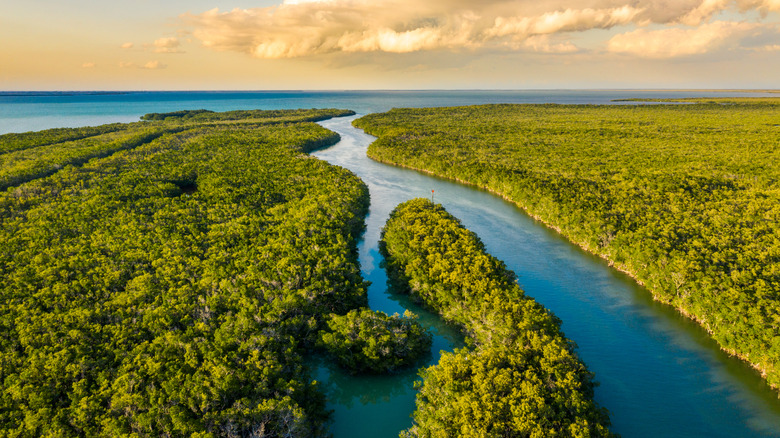
With an area of 1.5 million acres and a remarkable variety of ecosystems, the somehow still underrated Everglades National Park in Florida is one of the most fascinating places to experience the stunning nature of the United States. It's a great place for spotting wildlife, with the iconic American alligator among the park's best-known residents. The park is also home to a sizable bird population, particularly around Snake Bight Trail, one of the best birdwatching destinations in Florida. Among its ecosystems, you'll find distinctive landscapes not commonly found elsewhere in the country, including hardwood hammock forests and freshwater marl prairies.
Naturally, this part of Florida can be overwhelming for first-time visitors, and that's where the park's rangers come in. With their deep expertise in the geography and wildlife of the park, national park rangers are valuable sources of information if you're looking for tips on how to fully enjoy the Everglades. Never be afraid to ask, because rangers have tips on everything from the best areas to explore to recommendations on the best times to visit and much more. If you're curious about it, a ranger probably has the answer.
We scoured interviews, news articles, and YouTube videos for tips from park rangers at Everglades National Park and consulted educational videos posted on the National Park Service's website. Whether you're looking for a general introduction to the park or deciding which area to prioritize, these tips will help you plan your visit. For more Everglades National Park expertise, these unwritten rules to know before visiting the park may also be helpful.
Visit in winter for the best wildlife sightings
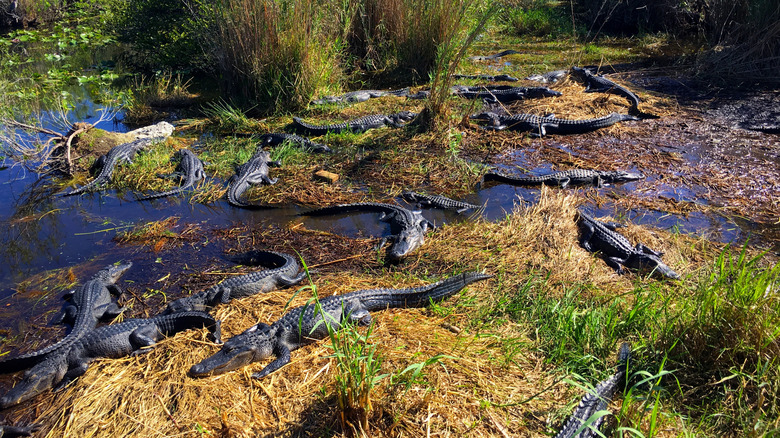
While winter brings frigid temperatures to many national parks around the country, Everglades National Park's location on the southernmost edge of mainland Florida means mild weather in the colder months. The stifling humidity and heat of summer give way to milder temperatures that are ideal for heading outdoors. Winter is also the region's dry season, which runs from late fall to spring.
According to Ranger Dylann Turffs, this is the ideal time to visit the park. In an interview with Nature on PBS posted on YouTube, Ranger Turffs explained: "The best time of year to see animals is during winter, during the dry season. Because, you can imagine, as much water as flowing through the Everglades during our wet season, it can be hard to see wildlife, because there's a lot of places that they can go ... During the dry season, the water starts to dry out and those animals are gonna get really concentrated." In addition to the dry season offering the best chance to easily spot wildlife, the swarms of mosquitoes that the park is notorious for tend to decline. If you visit during the season, you'll have fewer pests to deal with.
If you do go in winter, the popular Anhinga Trail is one of the best places for wildlife sightings, as the drier season often brings a variety of animals to gather around the remaining waterways. While you can see birds, turtles, and fish, it's one of the top spots to see the park's famous alligators. You can find the 0.8-mile-long Anhinga Trail in the Royal Palm section of the park, close to the Royal Palm Visitor Center. The paved path and boardwalk are wheelchair-accessible, but bicycles aren't allowed.
Check out the ranger-led programs
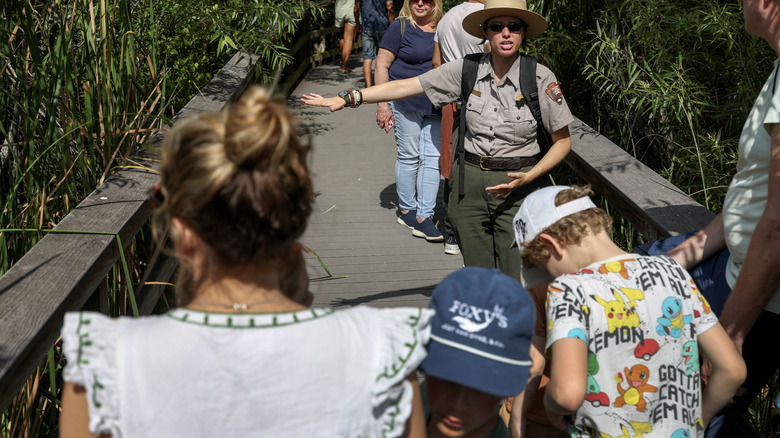
More often than not, the people who know an area well make the best guides. While you can easily take any of the park's many trails and explore on your own, joining a ranger-led tour can bring the sights to life. This is exactly what Ranger Mason McLeod recommends in one of the videos in an educational series on the National Park Service website.
Heading to a visitor center at the start of your trip is always a good way to orient yourself. At Everglades National Park, the centers have information kiosks where you can get any questions you have answered and get updates on any warnings in effect on the day you visit. You'll find trail maps, first-aid kits, and amenities to make your trip more comfortable, and if you're looking for a deeper understanding of the park, ask about booking a ranger-led experience.
Rangers have expert knowledge of the history, geography, and wildlife in the areas they work, and joining one of these programs can help you understand the park in ways you might miss when exploring on your own. You'll have many options if you go this route. If you'd rather not pay for a tour, you'll find free walks and talks regularly scheduled. If you want a more specialized experience, you can book eco-paddle tours, photography workshops, and many other exciting adventures through the Everglades National Park Institute.
Take the Shark Valley Tram Tour if you're nervous about safety
You don't need a full-blown case of herpetophobia to worry about getting too close to reptiles. Alligator attacks often make it into the news, enough to make even the hardiest folk somewhat nervous about encountering the creatures. If you're concerned about safety but still keen on visiting the park, Ranger Sandy Dayhoff has spent years helping kids and families feel more comfortable in Everglades National Park, so it stands to reason that she has some good advice. In an article about the Shark Valley Tram Tour on The Alliance for Florida's National Parks' official website, she said that "For somebody new coming, I always recommend Shark Valley ... People need to feel safe when they're going to the Everglades."
The Shark Valley area is known as one of the best places to see wild alligators in Florida. One of its main trails is the 15-mile-long Shark Valley Tram Trail, a paved loop used by guided tram tours, cyclists, and hikers that runs along spots that stay filled with water during the dry season, attracting alligators and making them relatively easy to spot. The waterways also support fish, turtles, and a variety of wading birds.
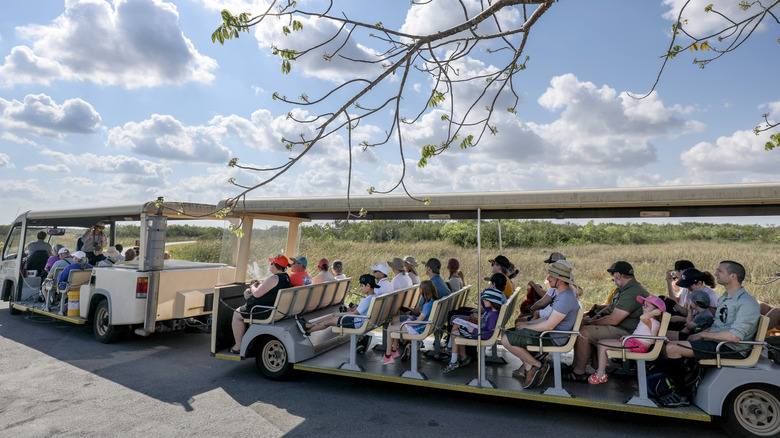
If you want to see gators and other wildlife, but want to feel safe while enjoying the views, a tram tour is an excellent choice. Visitors ride in an open-air tram while a guide points out the most interesting sights. The two-hour tour includes a stop at the Shark Valley Observation Tower, where you'll get sweeping views of the park from a safe distance in the air. Prices for the Shark Valley Tram Tour fluctuate by date and time, and it often sells out, so plan accordingly.
You don't have to splurge on a tram tour to enjoy Shark Valley
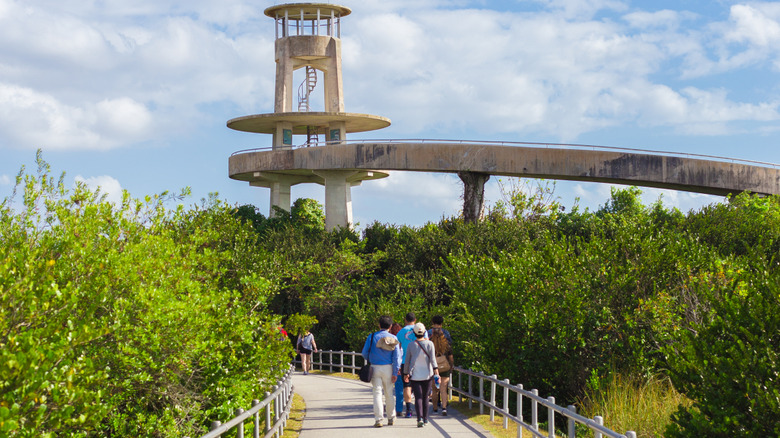
If you're after wildlife views, a tram tour is certainly a good way to go. But while the tours are popular, Ranger Laurie Humphrey (one of the rangers in the series of educational videos on the National Park Service website) says that they are not the only option for exploring the area. If you're short on time or don't want to shell out for a paid experience, her advice may come as good news.
"We have a two-hour guided tram tour. You can rent a bicycle or bring your own if you have it with you. Another way to explore if you don't have two hours to ride a bike or take the tram tour, you could just walk down the trail here," she said in the video. The trail is flat and paved, making it suitable for walking, but completing the entire loop does require considerable time and stamina. As you explore on foot, you'll see expansive sawgrass marshes, with opportunities to see alligators, wading birds, and other wildlife on either side. If you make it near the midway point, you'll find the observation tower, offering panoramic views of the surrounding wetlands.
For shorter walks, the Bobcat Boardwalk Trail and Otter Cave Hammock Trail branch off from the main tram road and also welcome walkers, offering a different perspective on the park. In addition to accommodating walkers and bikers, the paved Shark Valley Tram Trail is also wheelchair accessible. It's open year-round and begins behind the Shark Valley Visitor Center.
Go wading for some of the most unusual views
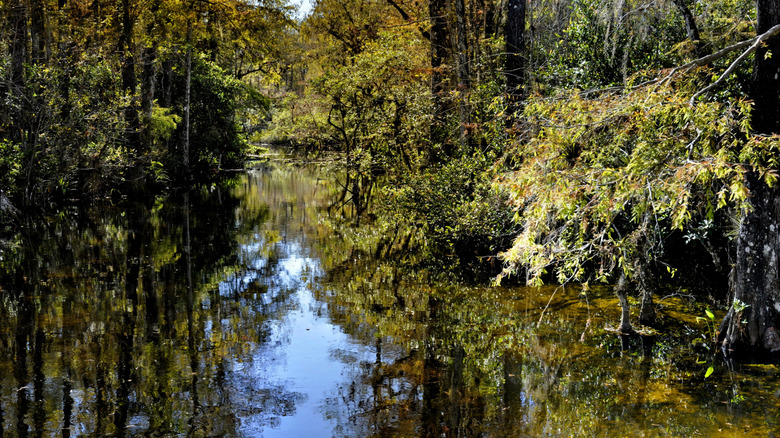
The scenic trails of Everglades National Park are undoubtedly some of the best ways to experience the park. However, if you've been to the park before or fancy a different kind of adventure, there's another way to see the park: wading through the wetlands. Chief of Resource Education and Interpretation Alan Scott spoke to NPR-affiliate WBUR in 2016, saying, "One of the things I like to do the most, that most people don't like to do is go walking in the water off the road and off the trail, and we call that slough slogging, and so you walk out in the water more than ankle up to knee deep, and you're out there standing in an open prairie, where you can see from horizon to horizon." It goes without saying that a slough slog (also known as a wet walk) isn't for everyone, but if you're game, you'll enjoy a most memorable experience.
As you'll be ankle- to waist-deep in the water, you'll feel, smell, and see the park from a rare vantage point. As you slough through the wetlands, a guide points out the plants, animals, and ecological processes shaping the landscape. Expect to get wet, and wear shoes and clothes that can handle muddy conditions. The Everglades National Park Institute's Cypress Dome Wet Walk departs from the Ernest F. Coe Visitor Center in Homeland and costs $55 at the time of this writing. Participants must be at least 12 years old and 54 inches tall, and wear long pants and closed-toe, lace-up shoes, although optional wet-walk gear is available for rent.
Try to explore a less-visited area
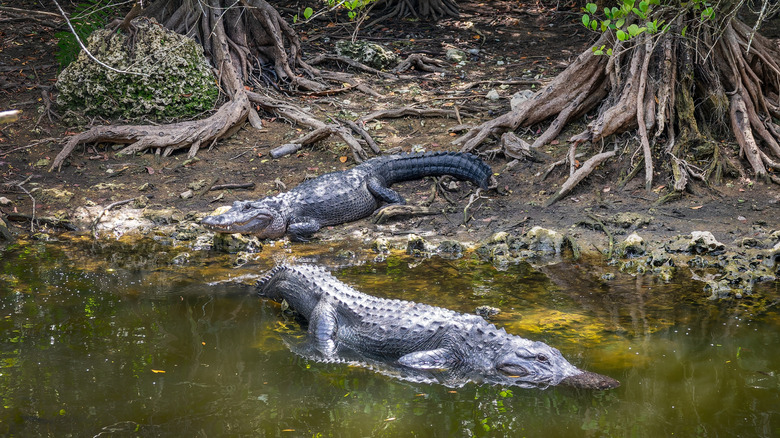
If you've hiked a few trails and want to see something different, Ranger Maria Thomson suggests venturing beyond the well-worn main roads of the park and exploring some less-popular trails. In a 2016 article published on The Manual, Thomson said, "It's incredibly interesting to stay off the beaten path. Just explore everything around you and have a sense of adventure."
One trail to consider is the Snake Bight Trail, which AllTrails rates as easy and is remote enough that many visitors never make their way to the area. You'll find yourself surrounded by greenery as you adventure through a tropical hardwood hammock and mangrove tunnels, but you'll also see shell beaches and, if you're lucky, a manatee in the tidal creeks. There's also a chance of spotting alligators and crocodiles in the canal alongside the trail, and birdwatchers are in for a treat, as herons, storks, spoonbills, and other species are known to frequent the area around the path.
The Snake Bight Trail begins about 4 miles north of the Flamingo Visitor Center. While bicycles are allowed, they can't be carried on the boardwalk at the end of the trail. As the trail is about 3 miles long round-trip, you can expect it to take roughly an hour to an hour and a half to hike. Be aware that the trail is not maintained, so check current conditions and prepare for uneven or overgrown sections before setting out.
Head to the Flamingo area for the best fishing and birding
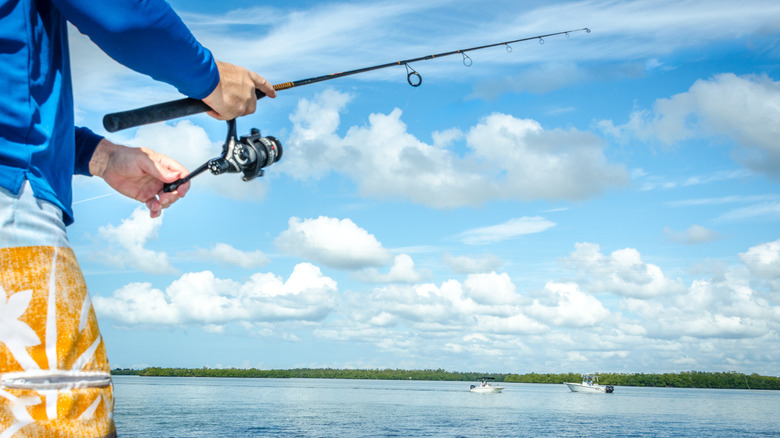
If angling or birding is your preferred activity in the great outdoors, you'll find plenty of options in Everglades National Park. Thanks to the diverse habitats within the park, it can seem like anything is possible, from fly fishing for tarpon to spotting the vibrant pink wings of a roseate spoonbill. However, while Everglades National Park is considered one of the best national parks for birdwatchers, you still need to know where to look.
According to a park ranger in a video on the Everglades National Park website, the Flamingo area of the park is a "Great place for birds. Lots of birds start coming here in the winter months, so say from about December through around March into April, that's a good time to come for birds." AllTrails highlights West Lake Trail and Eco Pond Trail as the top trails for birdwatching in the area. On the West Lake Trail, you can expect to see a variety of ducks, wood storks, American white pelicans, and more, while the Eco Pond Trail also has ducks and you may spot songbirds. The Snake Bight Trail and Guy Bradley Trail also offer excellent birding.
For anglers, the ranger recommended the Flamingo area for its "world-class fishing." He went on to explain that people go to the area to fish for snook, tarpon, red trout, and other species. Florida Bay lies in the area and offers excellent opportunities for saltwater fishing, and you can rent a boat from the Guy Bradley Visitor Center. Alternatively, bring your own, as there's a public boating ramp and marina, but it's a good idea to check the fishing regulations and prohibited areas before arriving.
Get on a full moon bike ride
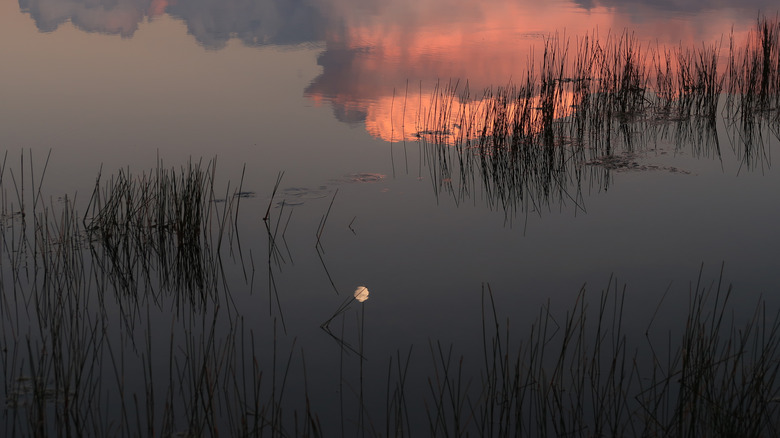
Many visitors head to Everglades National Park during the day, when alligators, colorful birds, and the vast marshlands are on full display under the Florida sun. Nighttime brings out another side of the park, and the full moon can cast a truly magical glow, according to Ranger Laurie Humphrey. In a video on the National Park Service website, Humphrey says that "The best program of all is the full moon bike ride that will get you out here in the Everglades in the evening."
The 15-mile bike ride takes place at Shark Valley, where riders can watch the sun set over the sawgrass prairie before the full moon takes its place in the sky. A stop at the observation tower is also included, and the sounds of the Everglades provide an atmospheric background to the views from the tower. This is a truly special experience, and the rides are only organized on select dates, so check the National Park Service's program calendar for the current schedule and reservation details. The park also advises that you bring your own bicycle, helmet, water, and snacks. You should also be able to cycle 15 miles round trip, sometimes in windy conditions.