
The 10 Most Scenic Trails In Everglades National Park
We may receive a commission on purchases made from links.
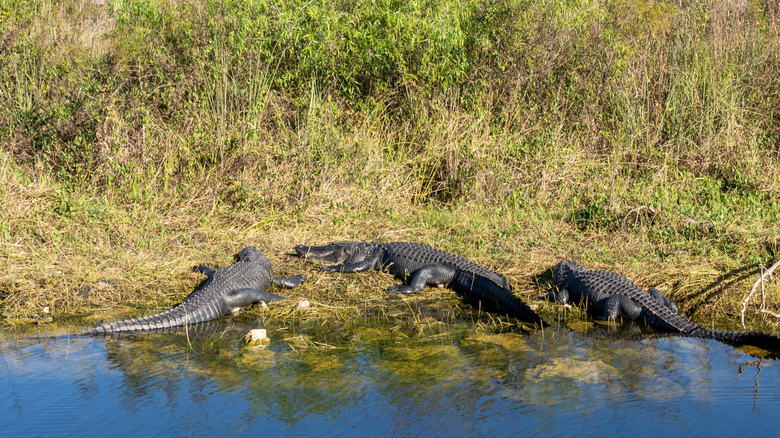
Everglades National Park offers the most unusual experiences and wildlife. South Florida is the only place on Earth where you'll find alligators and crocodiles coexisting in the wild, and you can glimpse them in the park. Endangered West Indian manatees also call the park home. And with part of Ten Thousand Islands National Wildlife Refuge sitting in the Gulf Coast section of the park, you can tour hundreds of islands on one of the area's paddling trails. Whether you're looking to go boating on a water trail or hike one of the walking trails, you'll have dozens of options.
Any view of the outdoors can be scenic, but you may have a preference when it comes to trails. Maybe you enjoy dense greenery and flowers. And, while many people think that the Everglades consist solely of swampland until they see it for themselves, there are also ponds, lakes, and other water bodies that may float your boat. Or perhaps you like unique natural features and wildlife. We scoured travel blogs and other online resources for trails frequently praised for having these natural features. We filtered these through traveler reviews on AllTrails, Reddit, and other popular travel platforms and selected the ones visitors were most enthusiastic about. Whether your idea of the perfect trail involves wildlife, untouched ecosystems, or something in between, you're sure to find one to try.
There are a few potential downers you may want to consider as you plan your trip. The rainy season brings mosquito swarms and washed-out trails, making the dry season between December and April ideal for your trip. That season is also better for seeing wildlife, as shrinking water bodies force them to concentrate around the few remaining watering holes. Regardless of when you visit, remember to pack bug spray, sunscreen, and lots of water. You may also want to consider these unwritten rules to know before visiting Everglades National Park.
Anhinga Trail
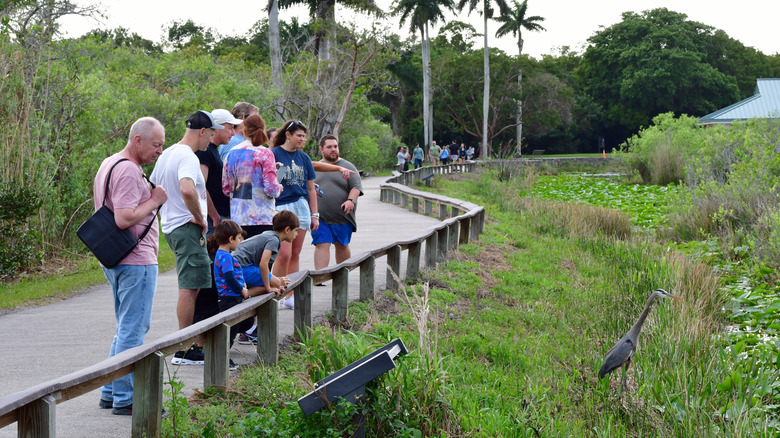
An alligator encounter can be the stuff of nightmares. Everglades National Park is the one exception. With hundreds of thousands of these creatures in the greater Everglades and safe viewing spots within the park, many visitors go to the park particularly to see the snout-nosed creatures. If this is your main reason for visiting, we suggest Anhinga Trail. According to A-Z Animals, the trail is the number one area to spot the creatures as it has the highest concentration. There's another accolade that's equally interesting. Anhinga was ranked as America's second-best trail for spring in a 2026 PlayFame study (via Secret Miami). Among other factors, the study was based on how often visitors used terms like "blooming," "vibrant," and "birds singing" to describe the trails. As you hike, you'll find scenes that fit these descriptions in spades.
Sprinkled into the scenery, rainbow-colored grasshoppers and vibrant birds make appearances. Thanks to the abundance of wildlife, if you're an animal lover, it's one of the prettiest trails you can take. "Anhinga Trail is short and convenient ... There are gators but also an abundance of birds such as Anhingas, Cormorants, Gallinules, Purple Gallinules (best place to see them), Great Blue Herons, Snowy Egrets ... and Northern Red Cardinals," gushed a visitor on Reddit. Another Redditor had other reasons to be enthusiastic, saying, "I love the giant, colorful grasshoppers on the Anhinga Trail."
You'll see all this from a paved boardwalk. On one side, scenic water bodies inhabited by picturesque sawgrass marsh, their grass-like greenery rising from the water, are home to much of the wildlife. The other side is characterized by lush greenery. Anhinga Trail is just under a mile long both ways and can be found about 4 miles from the park's main entrance. While cycling isn't allowed, the trail is wheelchair accessible.
3-in-1 Trail
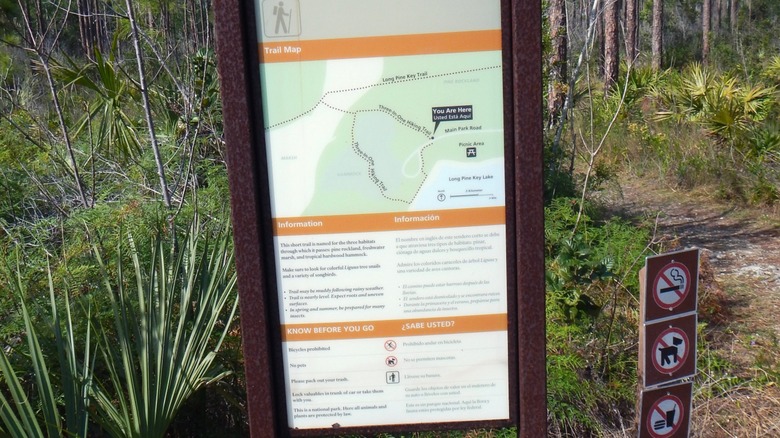
The 3-in-1 Trail passes through three different ecosystems — hence its name — offering an excellent overview of the sheer range of nature within the park. Needless to say, this diverse arrangement of gorgeous panoramas treats nature lovers to some of the most varied sights in the park. "Fun little trail through pine, mahogany and sawgrass ecosystems," said one impressed hiker on AllTrails. "Be sure to add a walk around the lake, it's the best part of the trail. The water is so clear! Saw a few butterflies on trail and heard several birds, but otherwise free of wildlife."
The trail starts amidst pine rockland. Here, sky-high pines tower over shorter ones, providing majestic views that are as pleasing to the eyes as they are to social media accounts. Sunshine shoots through the trees, bringing a nice brightness as you walk. The next ecosystem you'll get to is marsh wetlands, an area where grass dominates. As you progress, these disappear, and the scene starts to resemble a jungle. Hardwood trees tangle overhead, some of their roots exposed on the trail. This area is characterized by a hardwood hammock forest ecosystem, ruggedly beautiful in its wildness. As the trail ends, the picturesque Long Pine Key Lake, with its tiny island in the center, appears.
If you're after a fairly short hike, you'll be pleased to know that the entire loop that makes up the 3-in -1 Trail is just under a mile long, so you won't have a lengthy, challenging hike. It is unpaved, so it's best for walking; wheeled vehicles aren't allowed, although it's accessible by horseback. The trailhead is located near the Long Pine Key Campground in the Royal Palm section of the park.
Guy Bradley Trail
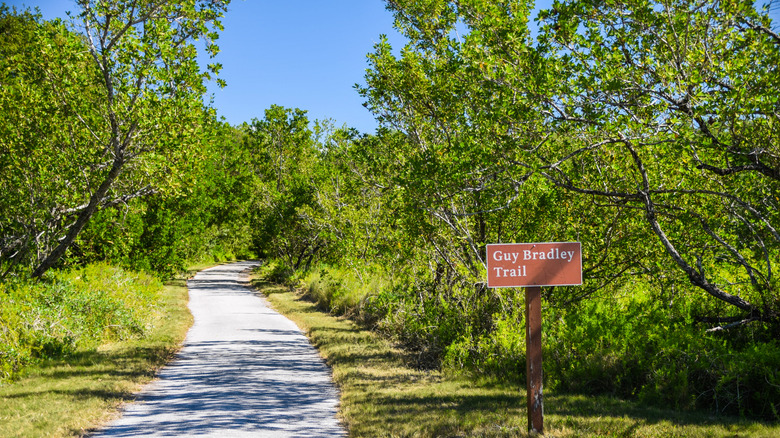
The paved Guy Bradley Trail starts out surrounded by trees on both sides. The trees give way to ferns before you start glimpsing water through the greenery. Soon, you're surrounded by the most amazing water views. This is the scenic Florida Bay, and it continues on, providing contrast to the greenery all around. But those aren't the prettiest sights. Known for numerous species of butterflies, including the bright orange Julia heliconians and black and yellow zebra heliconians, you'll probably share the trail with the flitting creatures as you stroll. Ospreys and other coastal birds also frequent the area, so you may also be treated to other types of winged animals. You may even spot a dolphin or manatee if you're lucky.
With vibrant butterflies and birds, bay views, sea creatures, and trees everywhere, it's no wonder the hike ranks among Everglades National Park's top 10 on AllTrails. One hiker summed up the natural scenery perfectly on the platform: "Easy trail – nice views across the bay. Great views of birds...saw 2 Osprey catch fish." The trail goes through an area that used to be a fishing village, so you may also see remnants of an old pier. This is another trail that may have mosquitoes — even if you wisely visited in the dry season — so bring lots of mosquito repellent.
The Guy Bradley Trail is around 2 miles round trip. It's also accessible, so wheelchair users can use it freely. Bikers are also welcome. You can find it in the Flamingo Visitor Center area of the park.
Shark Valley Trails
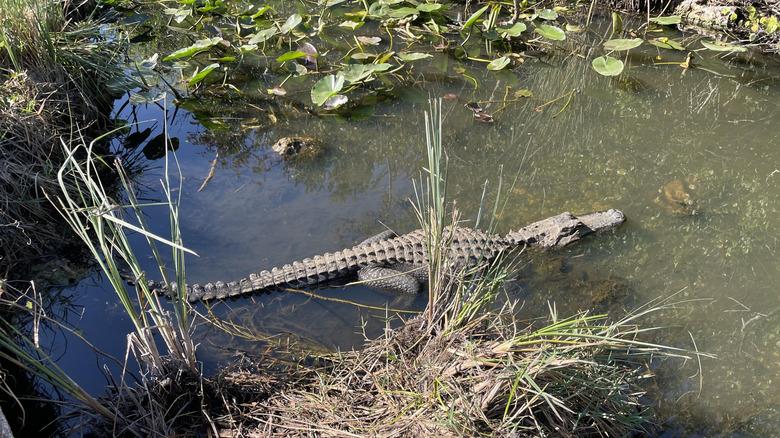
Like Anhinga Trail, the three walks that make up the Shark Valley Trails are ideal if you find gator sightings beautiful. Their location in the heart of the park's freshwater marshes, where alligators like to congregate, means sightings will be plentiful. It also means you'll be surrounded by sweeping marsh views, whether you take the Bobcat Boardwalk Trail, the Otter Cave Hammock Trail, or the Tram Road.
The Bobcat Boardwalk Trail is a raised walkway that winds through a sawgrass slough (part of the marshes) and tropical hardwood forests. Visitors often spot gators and other animals, so wildlife lovers will especially appreciate a stroll. "I saw 6 alligators in 10 minutes," raved a hiker on AllTrails. Tram Road is popular for its tram tours, but you're welcome to walk. Expect to spot alligators and other wildlife. If you splurge on the tour, these views come with lessons on the park's history. Halfway through, a 65-foot observatory tower offers stunning views of the marshes. You can also see alligators on the Otter Cave Hammock Trail, but hopefully it won't be under circumstances like this AllTrails hiker's: "One large alligator stood, turned toward us and began walking toward us. Then he laid down on the side of the road and we walked past."
Both Bobcat and Otter Cave Hammock are under a mile, so they're ideal for short walks. Of the two, Bobcat is the only one that welcomes wheelchair users. Bikers aren't allowed on either. Bicycles and wheelchairs are both allowed on the 15-mile-long Tram Road. All the trails begin near the Shark Valley Visitor Center. This area is closest to Miami, making the shorter trails ideal for a day trip. You may also want to consider Miami's Oleta State Park for more nature.
Eco Pond Trail
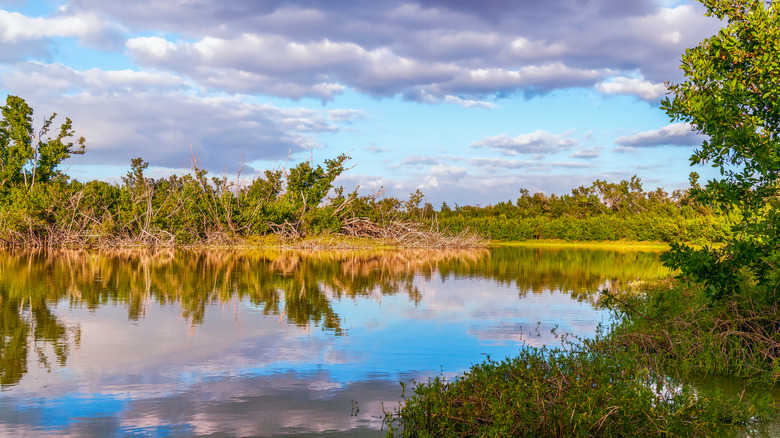
After you've spotted a gator (or 10!) Eco Pond Trail is a good place to see even more — but in a different setting. Instead of sawgrass marsh, the trail winds around Eco Pond, providing soothing views of water at many points. The picturesque waterbody alone makes for nice views. But don't be surprised if a few creatures show up in the landscape. Roseate spoonbills, with their gorgeous pink wings, are known to frequent the pond. And the dark-blue (and sometimes dark-purple) bodies of little blue herons might also be seen. Other wading birds, turtles, and alligators also call the area home.
As you would expect in the Sunshine State, the trail features lush greenery in some areas. Whether you enjoy views of water, birds, or plant life, you'll find the trail quite pleasant. "We saw a fair number of birds on our first visit ... There were a pair of pelicans, a group of roseate spoonbills, and some other waterbirds. We liked the trail that surrounds the pond. There is a small lookout spot that is great for photographing," explained a visitor on Tripadvisor.
At only half a mile long, the trail is pretty short and ideal for those looking for a quick activity, unless you use a wheelchair or ride a bicycle, as those aren't allowed. Eco Pond Trail is close to the Flamingo Visitor Center, so head to that section of the park to find it.
West Lake Trail
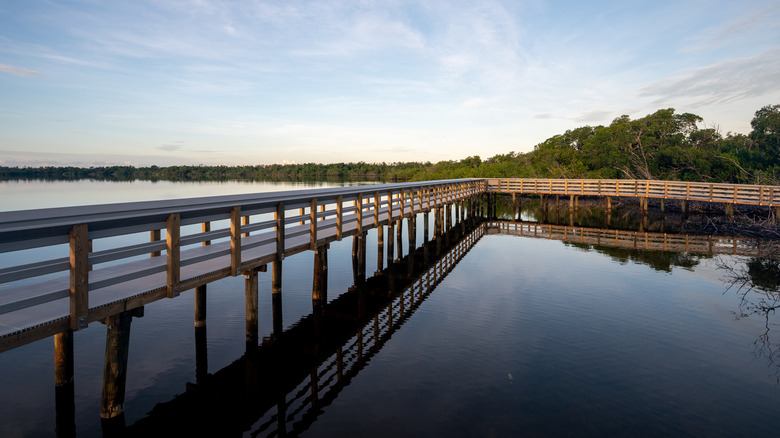
Much of West Lake Trail's praise is reserved for West Lake's watery views. But before you get there, the paved trail takes you through a mangrove forest populated with picturesque red, black, and white mangroves. A collection of buttonwood trees completes the picture. The lush forest scenes make a vibrant counterpart for the lake — the mangroves in this section are so dense that some call it a tunnel! With forest views meeting soothing lake vistas, it's no wonder AllTrails named West Lake Trail among the top 10 on its list of best trails in Everglades National Park.
When you get to the water, look out for signs of life. Wading birds and fish are common. And according to this visitor on Tripadvisor, one particular creature may delight you if you spot it on the day you go: "The trail is still perhaps the best place to walk through a mangrove forest and see all 3 species and it provides great access to the lake where we were treated to see the 10-12' American Crocodile that has taken up residence in the Lake."
Head 7 miles north of the Flamingo Visitor Center on the park's main road to find West Lake Trail. Expect a shorter trail as it's only half a mile long, both ways. It's also wheelchair accessible but doesn't welcome bikers.
Gumbo Limbo Trail
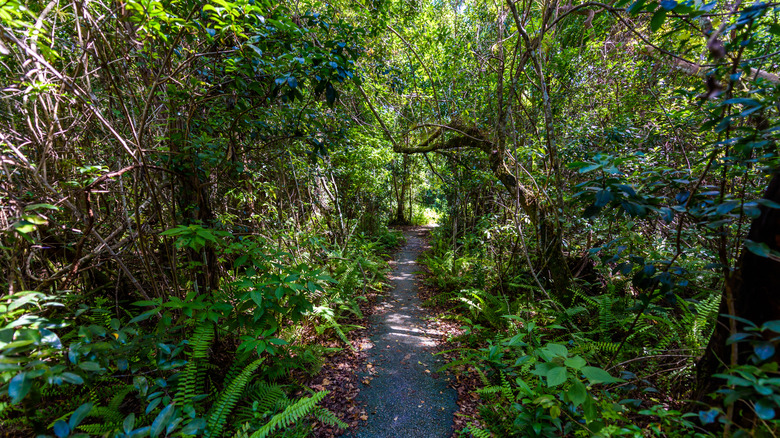
Gumbo-limbo trees are twisted, with peeling skin and gnarly limbs that can seem eerie. But eerie things can hold a unique kind of beauty. And the popular Gumbo Limbo Trail is the perfect place to see the memorable trees. Ranked the second-best trail in the park by Tripadvisor, visitors on the platform call it things like "jungly, green and pretty," and "unique." While there are many other trees along the trail, gumbo- limbos dominate, their broad leaves forming a canopy that almost completely blocks the sunlight — a boon if you happen to visit on a hot, sticky day instead of in the dry season.
"There are several very good hammocks in the park; however, this probably has the best forest of gumbo limbo trees," explained a visitor on Tripadvisor. "The trail also has native palms in the hammock and the best example of a strangler fig, a vine which totally overtakes its host plant ... Again, this is another example of a different ecosystem." Along with palms and strangler figs, if you're a tree lover, look out for oaks, ferns, and bromeliads. As you stroll, catbirds, warblers, and barred owls provide the soundtrack to your hike. If you really pay attention, you may even spot a liguus tree snail.
You can find Gumbo Limbo Trail's trailhead at the Royal Palm Visitor Center, about 4 miles from the main entrance to the park. While bicycles aren't allowed, wheelchair users will find it accessible. And at just under half a mile round trip, it's ideal if you're looking for a shorter trail.
Snake Bight Trail
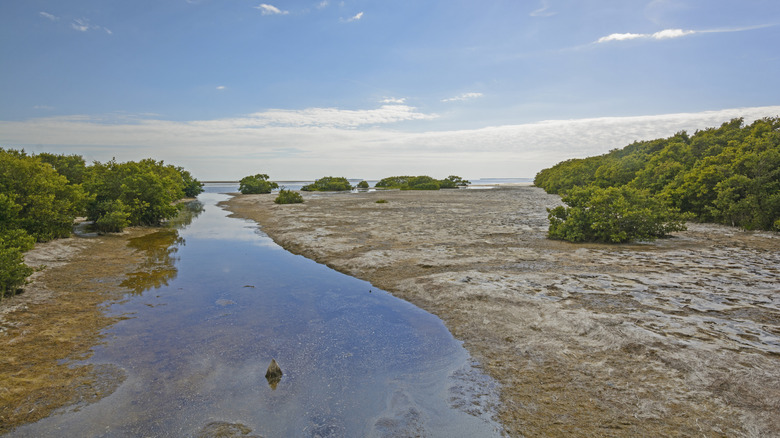
Contrary to the suggestion in its name, you won't get bitten by snakes if you hike Snake Bight Trail. The trail is actually named for Snake Bight, a smaller bay which sits within the larger Florida Bay. Water views are a necessary component. But part of the trail goes through a tropical hardwood hammock forest with the usual tangle of broadleaf evergreen trees and the wildlife – including ibis, herons, and storks — that call it home. Speaking of wildlife, Snake Bight Trail is one of the best places to go birdwatching in Florida. And if you hike to the boardwalk section at the end of the trail you'll see why. This is where even more birds come into view, playing on the water/
"Near Flamingo, we did the Snake Bight trail one early morning which was really enjoyable and yielded many warblers, other passerines, and then shorebirds at the end," said one visitor while recommending the trail on Reddit. Species of shorebirds to look out for include black-bellied plovers, greater yellowlegs, and black-necked stilt sandpiper. The National Park Service recommends high tide as the best time to see them, as the force of the water on Florida Bay pushes them closer to shore. You can easily check high tide times before your trip at tideschart.com.
Snake Bight Trail is 1.6 miles long, one way, and is located about 4 miles north of the Flamingo Visitor Center off the park's main road. Bicyclists are allowed everywhere except on the boardwalk at the end of the trail, but wheelchairs are not.
Sandfly Loop Paddling Trail
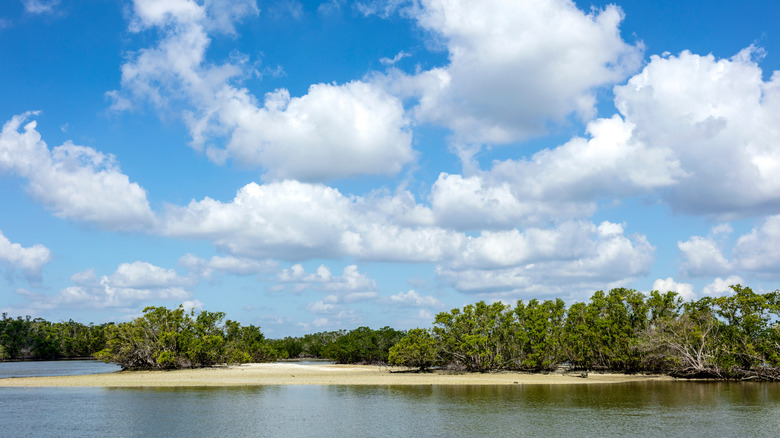
Nestled in the Gulf Coast section of Everglades National Park sits a remote collection of hundreds of islands, known as Ten Thousand Islands National Wildlife Refuge. Those who make it that far find a hidden haven with sandy beaches and backcountry kayaking. This is where you'll find the Sandfly Loop Paddling Trail. You'll need a paddling craft to navigate the water trail as it winds around islands and mangrove channels. But your payoff will be some of the most picturesque, untouched views.
Before leaving, kayakers and other paddlers can get a trail map from the ranger center around the Gulf Coast area. The first mile and a half is over the open waters of Chokoloskee Bay. The pretty waters soon surround the tiny islands you'll need to pass to get to Sandfly Island. One even has a beach, but that's not your destination. One paddler on AllTrails also saw: "Numerous grazing manatees and a variety of birds." Soon you spot an island with a visible port-a-potty on the dock. This is Sandfly Island. If you embark, you'll find gumbo-limbo trees, the leftovers of an old homestead, and more water views.
Paddlers taking the Sandfly Loop Paddling Trail usually launch from the Gulf Coast Visitor Center, where boat rentals are available. At minimum, you can expect the trail to be around 5 miles (length depends on where you launch from and whether you spend additional time on the island). It's best to land on the beach next to the dock, as algae has made the dock slippery. Always check tide and water conditions before heading out. It's also a good idea to check with the park to familiarize yourself with any boating regulations as you plan.
The Ranger-Guided Wet Walk
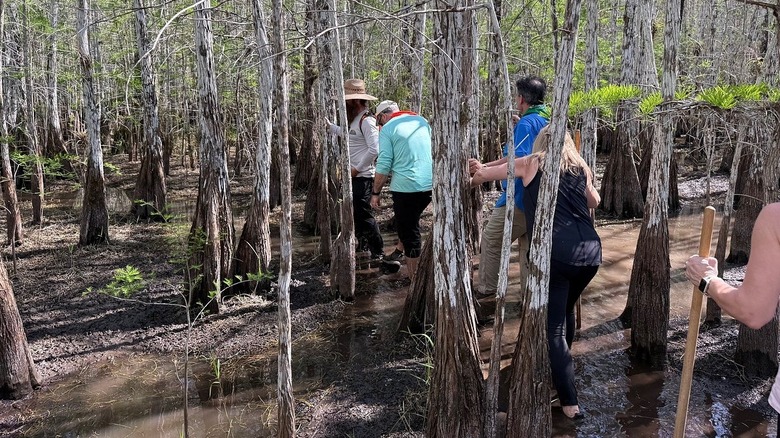
This one isn't so much a trail as it is a unique walk that sees you getting so close to the freshwater habitats within the Everglades that you become one with them. If you don't like getting wet, this experience isn't for you. But if it sounds appealing to be so immersed in nature that you feel and smell the flora and fauna, you may want to book a walk. Also called slough slogs, the ranger-led walks take you through sloughs and marshes. Part of the experience includes wading through water, which can be as high as your waist, so prepare for an unusual adventure. Depending on the walk you book, you'll see birds, fish, and other aquatic creatures and plants.
Although you'll become part of the scene, you'll still get to admire the views — just a bit more intimately! "The ranger guided wet walk is usually offered at 1:30 everyday and is the best visitor experience in my experience and opinion. You walk in the water through a cypress dome. It's wildly beautiful," said one Redditor.
Walks can be booked through the Everglades National Park Institute and start from the Ernest Coe Visitor Center at the time of this writing. The experience takes around two hours and is appropriate for anyone older than 12 and at least 54 inches tall. You are advised to bring a change of clothing, bug spray, towels, water, and snacks.