
5 Gondola Rules American Tourists In Venice Break Within The First 10 Minutes
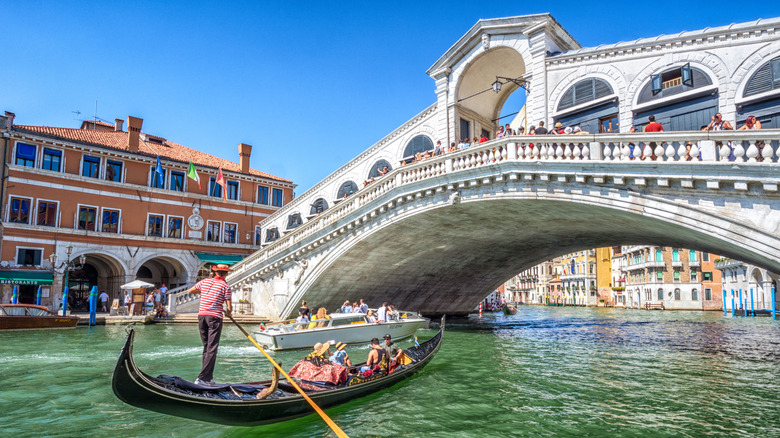
Few places have such power over the American imagination as Venice. A postcard come to life, it's a city of colors, mysteries, twists, and turns. And there, guiding travelers through its winding labyrinths is the gondola, the ultimate image of Venice's romance, magic, and history. For many, riding Venetian gondolas (or "gondole" in Italian) is a dream come true; that is, unless you break one of the unspoken or explicit rules that accompany it. Then, you could wind up capsizing the boat and fishing for your sandals in the canals.
Venice is a city of 118 islands linked by hundreds of bridges, so it was just a matter of time before it would develop its own unique transportation: the flat-bottomed, asymmetrical boat — capable of being guided with just one oar — that has become a familiar sight to all who venture to Italy. About 10,000 gondolas populated Venice's canals by the 16th century, but the gondoliering profession has been around even longer, since 1094 (via The Guardian). These iconic vessels became status symbols, decorated more and more lavishly by Venice's aristocrats, until a 16th-century decree demanded that they adopt a uniform black. While the number of licensed gondoliers has waned in recent years — there were 433 as of August 2024 — it's still a role in high demand with rigorous application and training processes.
Taking a spin on this traditional handmade boat, which has almost 1,000 years of history behind it, has become a must-do experience. But there are also certain rules that passengers should expect to follow. If you're an American tourist visiting Venice, make yourself aware of these rules so you don't accidentally break them within the first 10 minutes of stepping aboard.
Paying an unofficial higher price
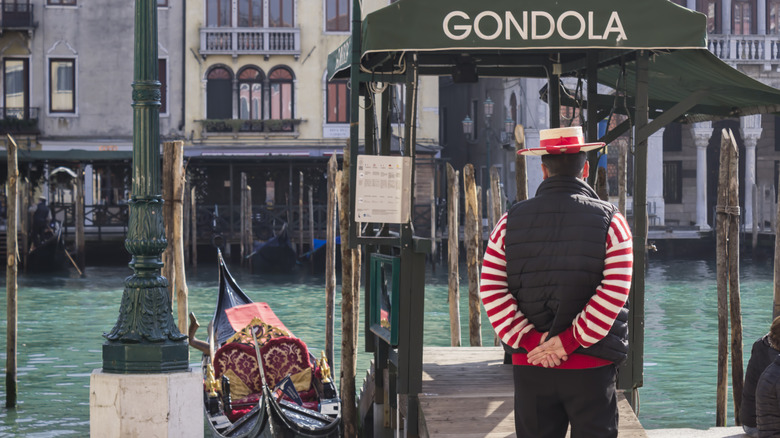
Venice isn't exactly a budget-friendly city. But what may surprise Americans is that Venice has set fixed rates for these rides across the city. As of this writing, a gondola ride costs around $101 from 9 a.m. to 7 p.m. for 30 minutes and $123 from 7 p.m. to 4 a.m. for 35 minutes. For a longer trip, it's another $45 for an extra 20 minutes. These are the walk-up prices; if you pre-book online, you may be charged more. Gondola rates apply to the whole boat, which can fit up to five people, so what you pay depends on your group size.
These rates must be displayed, so if they're not, you're at risk of being overcharged. It's best to familiarize yourself with the current prices before heading to the pier. If the gondolier's quote is different from the fixed rate, just walk to an official station. Be aware that many don't have credit card machines or they may be broken, so bring cash just in case (and keep some handy if you'd like to tip). Exact change is preferable. While online bookings are pre-paid, on-site ones may require payment at the beginning or end of the trip.
Budget travelers may want to avoid gondolas and do as the locals do by taking the traghetto, a bigger gondola costing a little over $2 that crosses the Grand Canal (keep some coins for this, too). It's just a few minutes long but offers an authentic Venice experience. You can also cut costs by booking a shared gondola instead of a private one. This will cost about $34 to $45 per person or more, depending on the tour operator.
Not listening to the gondolier
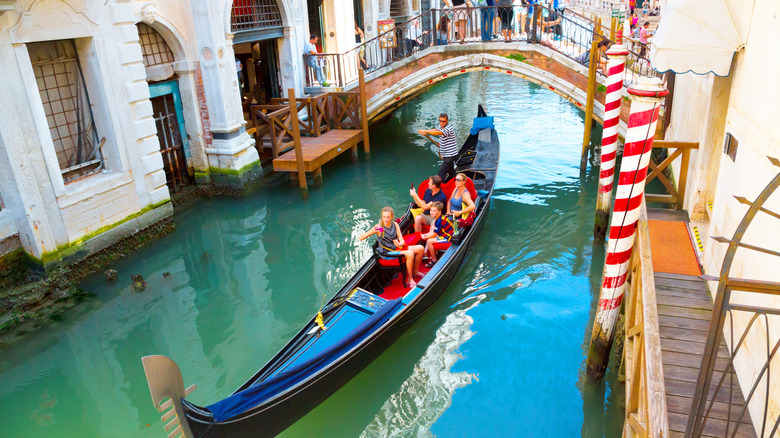
Some moments of pop history are eternal, and for many, Madonna dancing on a gondola in her "Like a Virgin" music video is one of them. But before you break out your "Boy Toy" belt, know that there's no standing, twirling, walking, or swapping seats while on board. Some tourists learned this the hard way when they capsized their gondola after standing up to take selfies, even though the gondolier told them repeatedly to sit down. Selfies are one of the things tourists do that drive locals up a wall, so consider pre-booking a photographer if you want images from your voyage.
When gondoliers give you instructions, it's not to be bossy. They're seasoned pros who know how to masterfully navigate their boats while keeping you safe, as they need to complete the official Arte del Gondoliere to become certified. This requires passing a 40-hour training course: 30 hours of theory and 10 hours of practical instruction. However, moving from a registered substitute to a fully licensed gondolier entails logging a minimum of six months of active service. So, rest assured, you're in the hands of highly capable, well-trained individuals who can complete complicated maneuvers and pass under low bridges without anyone getting a concussion — as long as you listen to them.
Some Americans may bristle at being told what to do by a stranger — especially one that they're paying to provide them with an enjoyable experience. But whatever your personal thoughts on being ordered around, if the gondolier tells you to duck or stay seated, it's better to simply listen than to end up in the canal.
Expecting an impromptu serenade
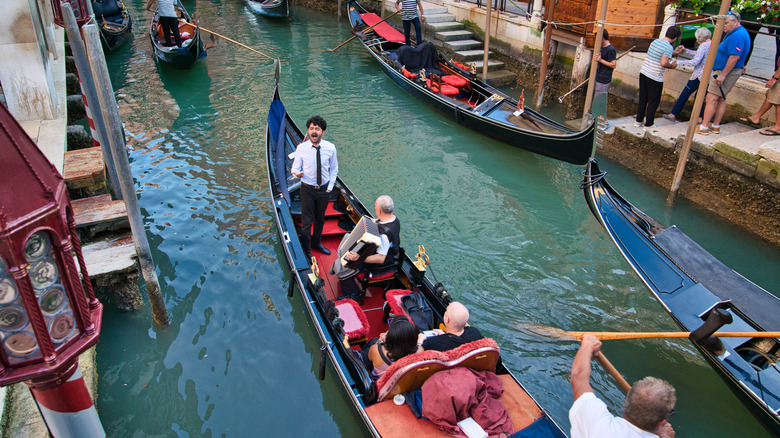
There's the seemingly universal image of a gondola ride: a man in a striped shirt rowing through the canals, singing "O Sole Mio" (no matter that it's a Neapolitan song). That's part of the reason why taking a gondola has become one of the most romantic things to do in Venice. Unfortunately, those expecting a spontaneous serenade will spend the whole ride feeling disappointed since gondoliers don't sing unless you pay them and it's been previously arranged.
The modern-day idea of the singing gondolier was certainly popularized through mainstream culture — operas, stage productions, and classic movies — and the tradition's recreation in Las Vegas. Bing Crosby crooning a lovely onboard song in the 1936 "Pennies from Heaven" became iconic; meanwhile, visitors to The Venetian Resort Las Vegas are willing to bear occasionally lengthy wait times to treat themselves to a singing gondolier and boat ride through human-made waterways. At one point in time, though, Venice's streets and canals were filled with music. In the 1740s, gondoliers sang simplified arias that French writer Jean-Jacques Rousseau called "barcarolle" in his "Dictionary of Music" (via SeeVenice). Barcarolle included romantic ballads and more comical carnival fare, although this serenade culture declined over time.
These days, most gondoliers don't sing, although you could try to offer a tip and see if they'll agree (they likely won't). Generally, any musical performance has to be pre-planned. And music is considered an add-on, so the standardized city tariff doesn't apply — each operator sets its own rate, and prices will vary. A ride on a serenade flotilla may cost upwards of $200 per person, and it can be double that to have the musicians on your boat. But this more expensive private option includes song requests. Golden hour is the most popular time for serenades, especially during the spring or fall. So, whether you pay for a band or not, you can still enjoy the echoes of music all over the canals.
Not confirming the route
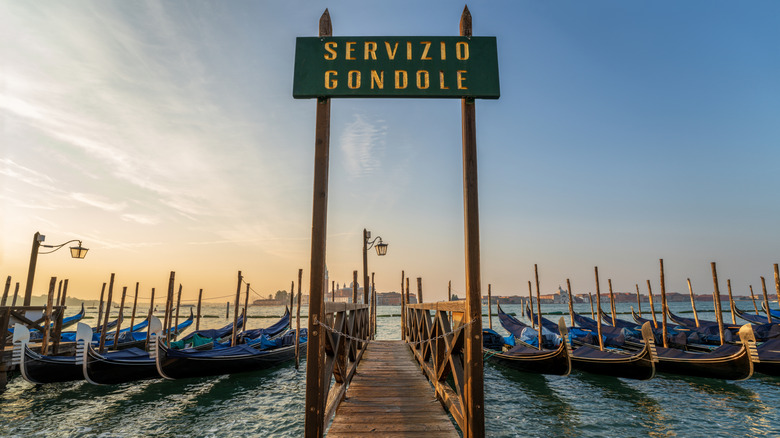
With vessels packing the waterways, it's understandable to assume that they all more or less follow the same path. But this isn't the case at all. There are gondola stations located all over the city, and they all take different routes, depending on your starting point. So, if there are certain sites you want to visit along the way, be sure to confirm your route beforehand — not doing so is another mistake many tourists often make.
When you're on vacation, bustling from attraction to attraction, the last thing you probably want to do is look at more maps and plan out yet another itinerary. But remember, unless you pay for extra time, you only have about half an hour for your ride, so you should ensure that it's worth the money. Decide what places of interest you'd like to see and pick a station nearby. Discuss the route with the gondolier before boarding and verify if you can reach these sites within your timeframe. If you don't have particular spots in mind, you may want to check online resources. Compare different options first to see which journey is best for you.
Those interested in the Grand Canal can depart from the popular San Marco Giardinetti, which reaches the lower part, or Santa Maria del Giglio, which sets off directly into the Grand Canal. For a quieter, more authentic experience of the back canals, take a gondola from Campo San Felice in the neighborhood of Cannaregio.
Not talking to the gondolier
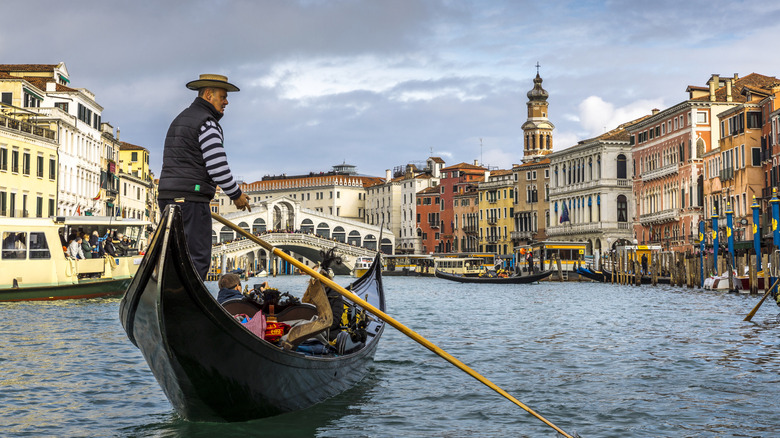
While the operators of these Venetian vessels wear a similar striped uniform, this doesn't mean all gondoliers are alike. So, if you don't want your experience dampened by a negative interaction, consider adding this one to the list of unwritten rules of visiting Italy: Talk to the gondolier before boarding (beyond a friendly "buongiorno").
Meeting and engaging with the people around you is what makes a 'good traveler,' according to Rick Steves. Even just chatting with the gondolier about the route and price can give you insight into their temperament, which can make or break your trip. After all, a gondola ride is more than just a photo opportunity. It's an ancient tradition that has been passed down through generations of families. While the rules for becoming a gondolier have opened up — women and other EU citizens can now apply — the expertise and skills required for this Venetian profession remain unchanged. Besides navigating the city like no other, gondoliers are well-versed in local history and can communicate in at least one foreign language.
Venice's intriguing history, dating back to the 5th century, and long-held traditions are why it holds such an allure for many Americans — and gondoliers are an essential part of this heritage. Those who willingly share their knowledge, and who are kind and charismatic, can turn a potentially rote touristic experience into something much deeper. Be sure to speak to them beforehand (to make sure they're the right fit) and during your ride to gain unique insight into a culture that has existed for centuries.