
Unwritten Rules You Should Know Before Visiting Germany
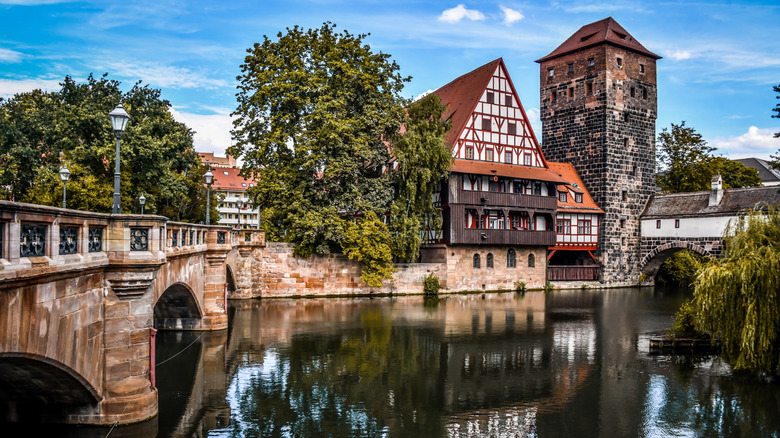
Germany's history stretches back thousands of years, from ancient Germanic peoples to medieval ducal realms to the modern republic. UNESCO recognizes an impressive 55 properties on its World Heritage List, including frontier lines of the Roman Empire and "Germany's little Versailles" in Potsdam, and the country is packed with contrasts, from traditional villages to innovative modern technologies and beyond. Following World War II, Germany was divided into four occupation zones controlled by the Allied powers, and in 1949, two separate states emerged: East and West Germany. Berlin's infamous wall became the most visible symbol of this division, and it wasn't until 1989 that it began to come down, with German reunification following in 1990.
In its history, heritage, people, and geography, Germany is magnificently diverse, but there are some "unwritten rules" for visiting that will apply in many places, whether you're touring Berlin, relaxing in a beer garden in Cologne, or exploring the Alps. There are plenty of cultural nuances to consider, but we've stuck to situations that tourists will most likely encounter on shorter visits, and these tips will (hopefully) help you avoid any sticky situations. In addition to our own experiences visiting different parts of Germany over the years, we researched a range of expat sites, Reddit threads, student resources geared toward international exchange, blogs, and tourism websites. Read on to discover what to expect when it comes to interacting with locals, getting around the country, and making your visit as enjoyable as possible.
Say what you mean and be careful with sarcasm

Communication in Germany can be straightforward and direct. To visitors from other cultures, comments or critiques can sometimes sound blunt, even rude, but they're not meant that way (most of the time). "Germans don't like wasting time. Their bluntness can hurt, but it's meant to be bold and honest," says Grecia Carbajal, who moved to Germany from Peru to study business and shares her experiences on Medium. Germans' direct manner of speaking cuts through the noise; this directness can make conversations feel refreshingly uncomplicated, although visitors may need time to adjust to a communication style that can seem rather blunt.
However, the straight-shooter style doesn't always lend itself to sarcasm. A friend from Munich I met at university often took my sarcastic remarks literally, either looking at me blankly or completely misunderstanding what I meant. My sarcasm often fell flat, and on at least one occasion, he thought I was insulting him. As we got to know each other better, I came to appreciate his frankness, and I learned that German humor often relies on irony and an appreciation of context.
Germans absolutely have a sense of humor, and irony is especially prevalent in conversation, but there are regional variations. Some jokes rely on cultural references or linguistic nuances that visitors might not immediately recognize. Some things may go over your head if you don't have a good grasp of the language and its many compound words.
Respect personal space
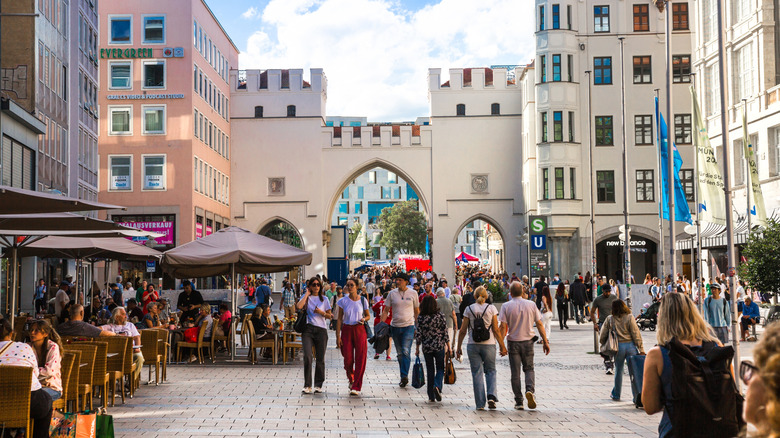
Visitors from some countries may find that Germans generally prefer a little more personal space in everyday interactions. The differences are often subtle, but they can be noticeable when greeting people or striking up conversations. In this respect, the experience may feel closer to what Americans are accustomed to. Of course, personal space can be harder to maintain in busy city centres and on crowded public transport, particularly in Berlin (the best solo travel destination in the world, for the record). In general, though, Germans tend to value a comfortable amount of personal space in everyday interactions. One Reddit user, who moved to Germany from India, offered this comparison: "Germans do have a sense of personal space it's not as pronounced as Americans."
The expectation of personal space also extends to etiquette around interactions with people you don't know. When you first meet someone, a handshake is common, particularly in formal or professional settings. Even in an informal situation, a hug may be a little too close for comfort. You may also find that strangers are less inclined to strike up casual conversations in public. It's not that people aren't friendly, they just that they are often happy to simply mind their own business.
Be aware of public transportation etiquette
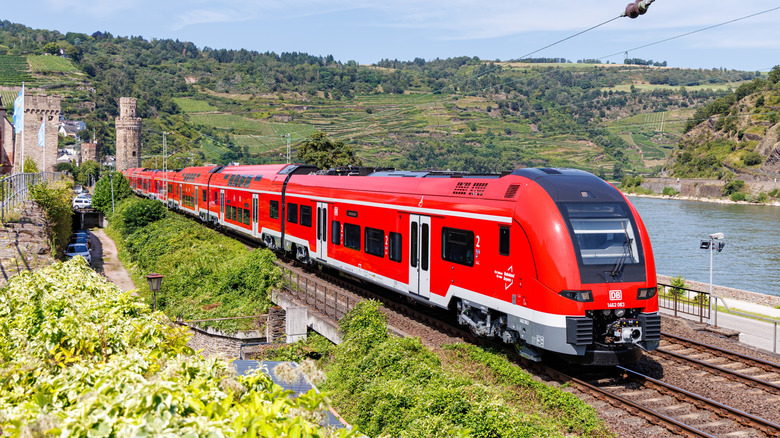
There are some unspoken norms about public transportation etiquette in Germany, many of which will sound familiar to people who regularly ride trains or buses elsewhere. Of course, front and center of this is the bane of all commuters: other passengers eating food on the train, especially smelly food. To avoid attracting irritated looks from others, it might be best to wait until you're off the bus or train to eat that hot takeaway sandwich. It's also considerate to keep conversations and phone calls quiet, and don't even think about using that speakerphone. As a Redditor says, "Don't use your smartphone on speakerphone. Please, just don't do it."
More important than etiquette guidance is making sure you have a valid ticket before travel. There's nothing worse than finding out you don't have the right one and needing to cough up even more money for a new ticket — I've been there. If you're caught traveling without a valid ticket in Germany, you can face an increased fare of up to €60. There are some exceptions, but don't make this bizarrely common transit mistake and simply hop on without paying the fare.
"There are no turnstiles but you do need a ticket, there's people who will check if you have one sometimes. (Often in plain clothes)," says one Redditor from Lower Saxony. Numerous train, subway, and bus companies all handle tickets slightly differently throughout Germany. Make sure you're purchasing tickets for the service you intend to use. "For long distance, buy tickets as early as possible," shares another contributor on Reddit.
Expect a story if you ask, 'How are you?'

Asking someone "How are you?" in Germany might elicit a rather involved response. In German, you will hear "Wie geht's?" (an informal way of asking, "How's it going?") or "Wie geht es dir?" literally, "How are you doing?"). In a more formal setting, you'd use "Wie geht es Ihnen?" However, it's not quite the same conversational formality as asking someone that same question in America, or saying "Alright?" in Britain, something that also surprises tourists when visiting the U.K. Rather than a simple response like, "I'm fine, you?," you might get a potentially lengthy story about how that person is actually doing. "Our cultural aversion to superficial answers leaves 'Wie geht's?' sounding like a trick question," says Carolin Würfel in an article for The Guardian. She adds, "'I'm fine' is considered otherworldly, naive, shallow, delulu, and, most of all, dishonest. Who is fine, really? We feel compelled to answer truthfully while simultaneously debating how much to reveal and how honest to be without losing face."
That doesn't mean you need to launch into a lengthy account of your own life, though. If you want to avoid lengthy, analytical dissertations, stick to the rule about respecting personal space, and you'll be fine. "You don't stick your nose into other people's business. That's the common courtesy over here," shares a Redditor. "Greeting a new neighbor with Tach. and a nod and never talking to them again is top notch." ("Tach" is a casual regional greeting, particularly common in parts of northern and western Germany). Simply saying hello is acceptable.
Greetings and goodbyes in shops
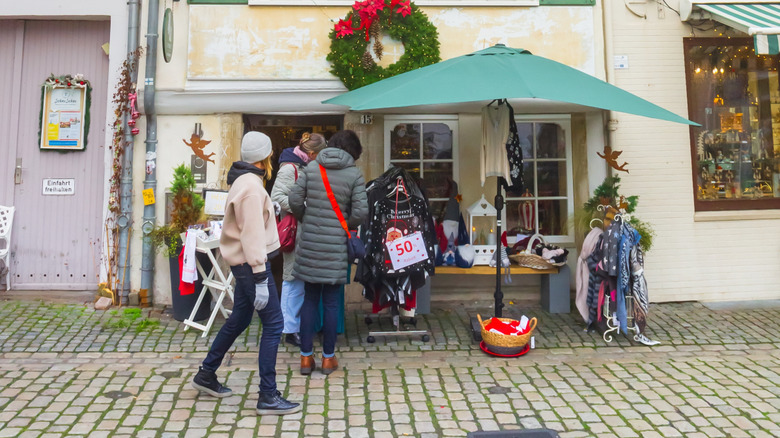
In Germany, it's common courtesy to say hello to the room when entering a small shop or similar setting, such as a waiting room. It's a custom that tourists may also observe when visiting Portugal and other parts of Europe. The appropriate greeting varies by region and setting, but "Hallo" is generally a safe choice in just about any situation, whether you're walking into a small shop or visiting a market stall. People also simply say, "Hi." And if you're nervous about speaking a new language or don't know much German, that's okay. The country is one of the best in Europe for English speakers because so many people speak the language. More than 40% of the population speaks English (according to Language Knowledge), but it's still good to know a few vocabulary words in the local language.
"'Guten Tag' seems overly formal," shares a Redditor from the Ruhr region in western Germany, who went on to say that they "might be tempted to use it in an upscale shop with personal service, but at a Kiosk or supermarket I would certainly go for Hallo/hi." Another Redditor from Munich adds: "I feel like 'hallo' is too casual for a walk-in shop and would say 'Grüß Gott' in Bavaria or 'Tag' elsewhere." You can also say "Morgen" (which means "morning," short for "Guten Morgen") or "Moin," a greeting particularly associated with northern Germany, although you'll hear "Moin" throughout the day. No matter how you greet a cashier in the shop, always remember to say goodbye, too. To extend the courtesy more formally, say "Auf Wiedersehen," or if it seems fitting to be slightly more casual, say "Tschüss!"
Don't be surprised by cigarette smoking in bars

Smoking restrictions vary between different German states. Although smoking is generally banned in restaurants and many other public places, exceptions mean you might still encounter it indoors, particularly in some bars. This is particularly true in bohemian Berlin. One time after a dinner out with friends, we decided to find a nightcap at a nearby spot, but opening the front door was like hitting a wall of cigarette smoke. The smell was overpowering, although it probably seemed even worse because none of us had been around indoor cigarette smoke in years.
For smokers, the opportunity to light up indoors might be a welcome perk. For everyone else, it can ruin the experience. "I avoid most of the bars because people are forcing their smoke on me," says a Berlin local on Reddit. If you're sensitive to smoke and looking for a spot in Berlin to hang out at, head to a non-smoking bar such as Muted Horn, Protokoll, and Mikkeller. There are plenty more sprinkled throughout the city, some of which may have separate areas inside for smoking. In many states, bars are only able to allow smoking indoors if there's a separate room set aside for it. If you're really concerned about it before you go, check online or give the bar a call to make sure.
Make eye contact when saying 'Prost!'

Many cultures have their own traditional way of toasting before taking a sip. In Gaelic, it's "Slàinte!" In Spanish, it's "¡Salud!" And, of course, in English, "Cheers!" When you say "Prost!" in Germany — and sometimes "Zum Wohl," which means "to your health" — you want to make sure to make eye contact with each person as you clink glasses. There's even an old adage that warns against not making eye contact when clinking glasses: if you don't, you'll suffer seven years of bad sex! In all seriousness, though, it's a small gesture, but one that's considered an important part of the toast.
William Nehra writes in I Am Expat that "this is a long tradition that can be traced back to medieval times." Although its exact origins are murky, it mostly comes down to trust and honesty, which isn't much of a stretch when you remember the value that Germans place on directness. So, when you raise a glass, remember to lock eyes with your table mates. And as an aside, it's also good etiquette to wait until everyone at the table has their drink before starting the toast.
Pay attention to walk signs at intersections
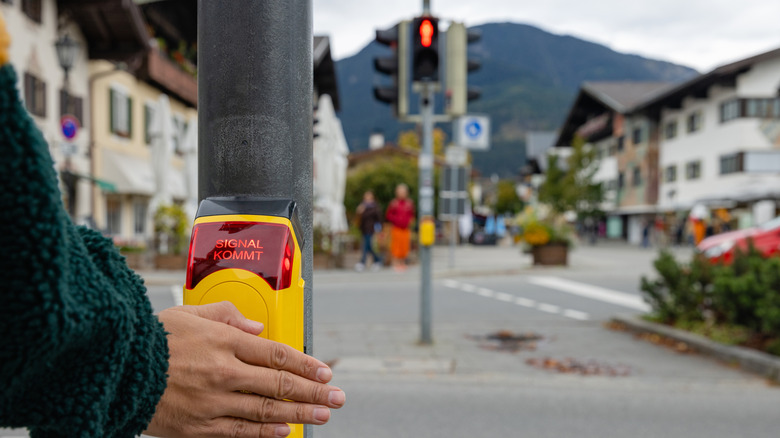
The Ampelmännchen — or little traffic light man — is the familiar figure used at pedestrian crosswalks in the former East Germany, a charming icon who strides forward when the light glows bright green or stands straight with his arms out when it shines red. The figure, designed by a German Democratic Republic (GDR) traffic psychologist in 1961, was intended to make it clear when pedestrians could cross the road. Although it originated in East Berlin, the Ampelmännchen remains prevalent throughout Berlin and much of eastern Germany, and locals take it very seriously. "Stand at a quiet pedestrian crossing in Germany and something miraculous will happen: no matter how few cars on the road, people will stand and wait patiently for the Ampelmännchen to turn green," writes Nic Houghton of 40% German.
The custom has a lot to do with public opinion and with not being seen as doing something that breaks the rules. Fadi Gaziri, who lives in Hamburg, writes in I Am Expat, "There is a German meme about this. It goes like this: two men stand next to each other at a pedestrian crossing. It's red, there are no cars, and it's midnight. A speech bubble appears above their heads. The text is identical, and it reads, 'If only the other guy wasn't here right now'." To avoid dirty looks, just wait until the Ampelmännchen turns green, even when the road appears completely clear.
Don't be surprised by open windows in winter
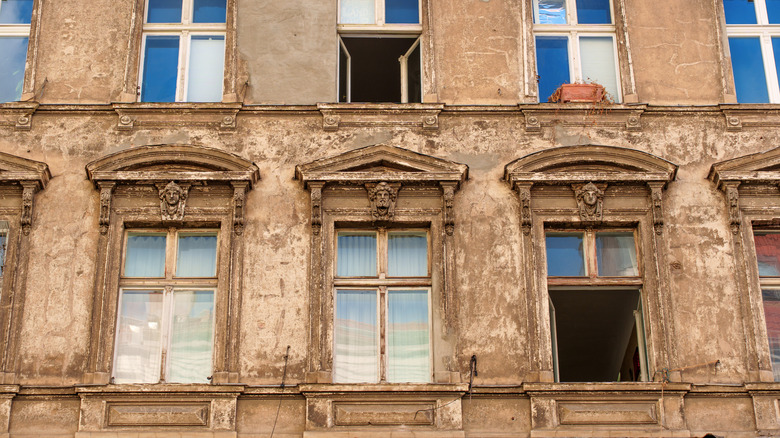
Many homes in Germany, particularly modern or renovated properties, are well insulated and relatively airtight. As a result, many homeowners and renters often practice a custom called Lüften, or house-airing, throughout the year. "Lüften" translates to "airing out," and according to Jamie Friedlander Serrano of Time, the age-old practice attracted renewed attention on TikTok in early 2026, with influencers sharing their tips for "burping" their homes. "In the wintertime, some Germans even practice stoßlüften, which translates to "shock ventilation," and involves opening all of a house's windows completely for five or 10 minutes," Serrano adds.
If you notice open windows in apartment buildings or homes as you're walking down the street, even in the winter, it's nothing out of the ordinary. "It's needed due to too much insulation without automatic ventilation," says a Redditor. The practice brings fresh air indoors, reduces humidity, and helps prevent condensation and mold from developing. Some landlords even include ventilation requirements in tenancy agreements, partly to reduce the risk of mould.
Quiet hours are a requirement
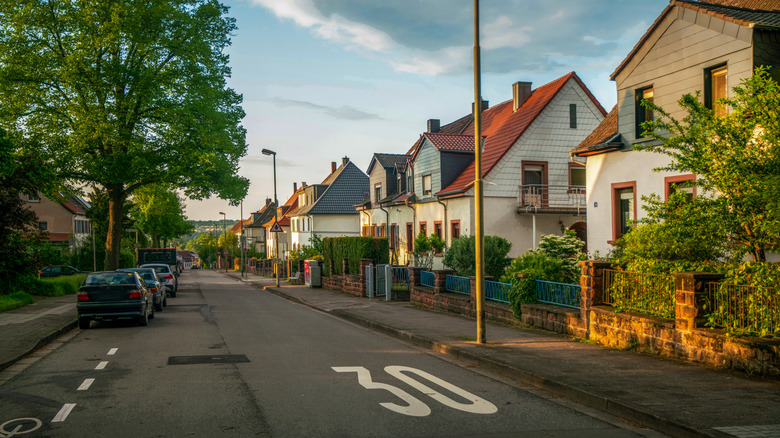
A few months ago, I heard a radio show host taking calls from locals about what time in the morning it was appropriate to start mowing the lawn. Some said 8 a.m., some said as soon as the sun comes up, and one even said 5 a.m. In Germany, there are clearer rules about when certain types of noise are acceptable, particularly when using machinery that could disturb others. That's where Ruhezeit comes in: a familiar German concept of quiet hours, some of which are protected by law. It's not exactly "unwritten," but it's worth mentioning.
Ruhezeit translates to "quiet time" and is sometimes referred to as Ruhezeiten, or "quiet hours." The German custom reserves specific times of day (or entire days) for rest and tranquility. It's an understated yet important part of the culture, so you'll want to be extra aware of the volume of your conversations or music during these times, as well as other things you might not expect, such as running a tumble dryer, vacuuming, or moving furniture around. Even something as mundane as throwing clanging glass bottles into a recycling bank can be frowned upon on Sundays, when many municipalities restrict the hours during which these containers can be used.
Ruhezeit is always observed between 10 p.m. and 6 a.m. (although local rules differ), during what is called Nachtruhe, or night-time quiet. Mittagsruhe, or midday quiet, generally runs for one to three hours, starting at noon, but it may be taken more or less seriously depending on the region. As one German resident on Reddit puts it, "noise during Ruhezeit should be kept to a level that stays within the room."