
The Deepest Limestone Cave In The US Isn't In Arizona Or Utah
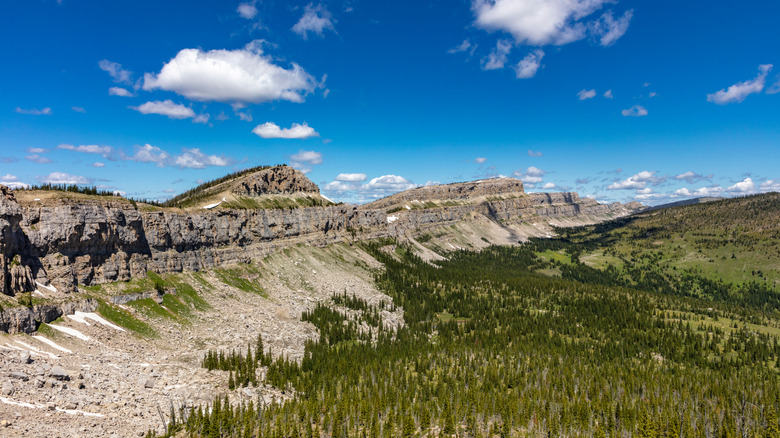
When tunneling caverns and caves that seem like portals deep into the earth's depths come to mind, it's perfectly reasonable to think the deepest limestone cave in the U.S. might be in Utah or Arizona. After all, these states are home to an array of superb subterranean landforms, including the layered hoodoos at Utah's Bryce Canyon and Arizona's pristine karsts within Kartchner Caverns. However, the nation's deepest limestone cave is actually hidden beneath the Bob Marshall Wilderness in northwestern Montana.
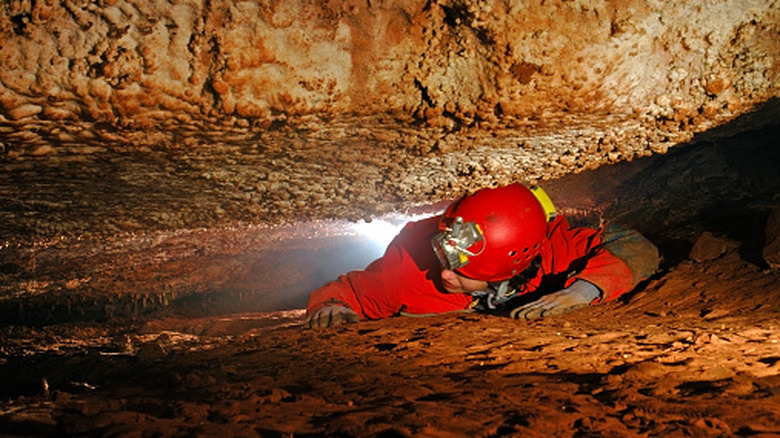
Named Tears of the Turtle Cave, this gigantean formation measures 2,477 feet deep. But, don't simply take the internet's word for it. In 2014, cavers descended into the heart of the beast, intent on determining exactly how far the cave went. Although it's hard to imagine something so massive going unnoticed, the cave was first discovered in 2006 by cavers Hans Bodenhamer and Jason Ballensky. However, it wasn't until eight years later that Ballensky determined the cave's massive depth. Over the course of nine days, the team shimmied through tiny crevices and chimneys, discovering mud-coated passages so tight they looked like they could suck a person straight into the abyss.
This harrowing expedition solidified Tears of the Turtle as the U.S.'s deepest limestone cave at 1,629 feet. However, subsequent subterranean explorations pushed the cave's length to a whopping 2,477 feet deep. In a letter shared on r/caving, Ballensky shared that the team finally found the cave's definitive end during a 2026 mission, noting that the maximum depth hadn't changed.
Can the public visit Montana's Tears of Turtle Cave?
Tears of the Turtle Cave is completely off-limits to the general public — and for good reason. To reach Tears of the Turtle Cave, you need to venture deep into one of the least accessible parts of the Bob Marshall Wilderness, a complex covering over 1.5 million acres and home to the Chinese Wall, a cliff with towering views of the unspoiled wilderness. The journey itself requires 22 miles of hiking with a team of pack mules carrying all your gear, food, and water.
During one of the team's excursions, the mules tumbled down a ravine, resulting in the death of two animals and a frantic scramble to retrieve supplies from the accident. One caver described to The Pulp the visceral experience of discovering his food bag soaked through with mule blood. Suffice to say, this isn't your tourist-friendly mule excursion like you'd find at the Grand Canyon.
Once underground, even cave researchers with advanced technical skills will have their limits tested. Instead of a vast chamber dressed in glistening stalactites, Tears of the Turtle is a long, muddy crack split into the earth. Here, cavers encounter passages so narrow the walls press against their backs and chests. They must solve problems on the go, like how to cross a 100-foot-long expanse of mud the team nicknamed the "slough of despond." On top of life-threatening terrain, temperatures hover around 39 degrees Fahrenheit, which means even a small injury or underground delay could easily result in death by hypothermia.
How does Tears of the Turtle Cave compare to other caves?
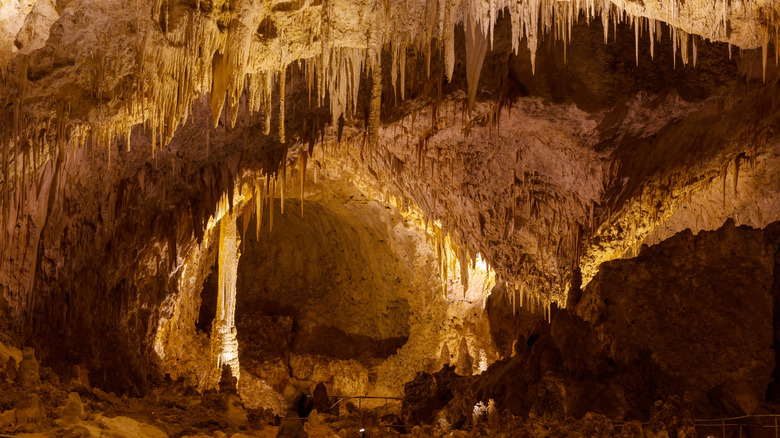
Before 2014, Lechuguilla Cave in Carlsbad Caverns National Park, New Mexico, was the reigning deepest limestone cave in the U.S. The National Park Service reports that cavers have surveyed over 145 miles, identifying the cave's maximum known depth as 1,604 feet. Like Tears of the Turtle, Lechuguilla isn't open to the public. However, visitors can take a guided tour of Carlsbad Cavern, which has the largest accessible cave chamber in North America.
Tears of the Turtle is one of over 80 known caves hidden in the Bob Marshall Wilderness, an area of Montana that boasts almost all of the state's caves. These caves were formed by water trickling through the bedrock, slowly eating away at limestone and other sedimentary rocks. Over time, crevices turned into cracks, and cracks turned into something far larger. While Tears of the Turtle is certainly the deepest, the Bob Marshall Wilderness is also home to the second deepest cave in the U.S., the 1,842-foot-deep Bobsled Cave.
Serious cavers who are interested in surveying the unexplored underworld can join the National Speleological Society's Caves of Montana Project. This project spearheads cave discovery around Turtlehead Mountain, the area where Tears of the Turtle can be found. Keep in mind, this is not a guided tour or a tourist initiative in the slightest. However, if you're in Montana and looking for a cave adventure that likely won't kill amateur adventurers, visit Lewis and Clark Caverns State Park, a breathtaking limestone wonderland with camping and trails.