
11 Of The Most Scenic Rail Journeys Across The UK
In 1804, the first steam locomotive was launched by a Cornish inventor in Wales. In 1825, the Stockton and Darlington Railway's steam locomotive became the first to carry passengers on public tracks, marking a watershed moment for public transportation in England. The U.K.'s modern public rail network remains a treasure of British heritage and, just as importantly, fundamental to the way millions of tourists and commuters get around. Some of the nation's routes are also incredibly scenic, from sweeping natural beauty to Victorian-era feats of engineering. Between April and June 2026 alone, passengers made 461 million journeys in Great Britain, reinforcing the staying power of rail transit. And as of March 2026, there are more than 2,600 stations across the U.K., connected by nearly 10,000 miles of railway, including Northern Ireland's Translink system.
Below, discover 11 of the most scenic railway journeys across England, Wales, Scotland, and Northern Ireland, from long routes and short jaunts to luxury sleeper itineraries and iconic tourist attractions. Some lines are served by regular commuter trains with reasonable ticket prices, while others are heritage routes where special fares or reservations are required — sometimes both. Regardless of the type, the landscape is what these journeys are all about, and we've dug into the unique history, landmarks, villages, and stations along the way.
There are many train companies in the U.K., and depending on the service, you can book directly on their sites, through search engines like Trainline, or in person at a station. Tickets are typically sold as single (one-way) and/or return (round-trip) journeys; we've included price conversions to USD here, based on the exchange rate at the time of writing and rounded to the nearest dollar. In addition to the author's experience taking several of these routes, especially in Scotland, Wales, and the North of England, we've also researched regional tourism and heritage resources, Reddit discussions, other travel articles, and specific train company websites.
The West Highland Line, Scotland
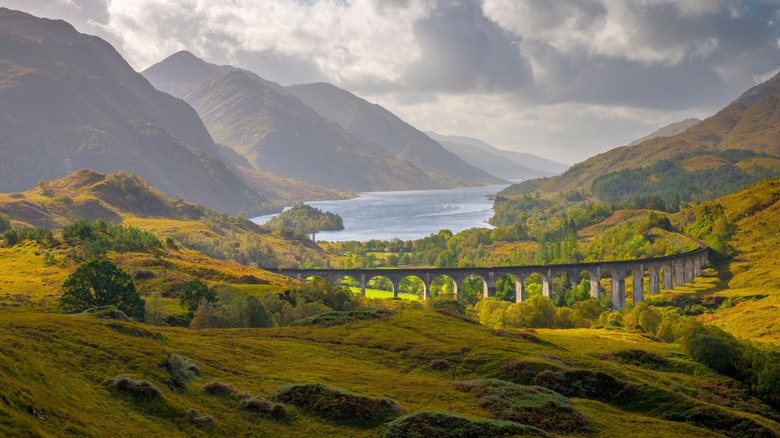
Scotland's West Highland Line is easily one of the most scenic in the U.K., starting in Glasgow and connecting to beautiful upland destinations like Fort William, Tyndrum, Glenfinnan, and more. You'll travel across the Glenfinnan Viaduct –made famous in the "Harry Potter" films — which began construction in the 19th century and is the largest concrete railway bridge in Scotland. The view of the mountains and Loch Shiel is stunning, and if you alight here to hike for hilltop views, you may even be lucky enough to see a steam train rolling around the bend. That's The Jacobite, a heritage steam train that steers a round-trip route from Fort William to Mallaig — the farthest destination on the West Highland Line.
The Jacobite runs round-trip twice daily between June and late September, with morning-only service through late October. Adult return tickets are priced at £76 for standard class (about $102) or £116 for first class (about $156). For a more economical option, book a ScotRail train, which runs along the same track. The West Highland Line has two branches, splitting at Crianlarich, so the fare from Glasgow Queen Street to Oban starts at £22 ($30) one-way, or you can head instead to Mallaig for starting at £26 ($35). You'll pass numerous stunning lochs, hills, and charming villages. Head to Mallaig to observe the otherworldly beauty of Rannoch Moor, or if you head to Oban, you'll see the 15th-century Kilchurn Castle on Loch Awe.
The Highlands, Royal Scotsman, Scotland
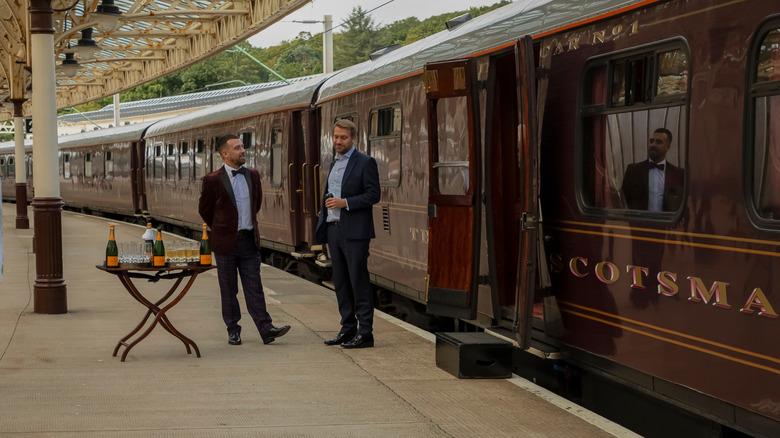
A landscape as varied, historic, and gorgeous as the Scottish Highlands is worthy of a couple of mentions on this list, and that's because the formal Highlands council area covers a little more than 10,000 square miles — and that doesn't even include adjacent upland areas like parts of Moray, Aberdeenshire, Perth and Kinross, and Stirling, with its eponymous city and rock-top castle that will pull you from the tourist trail. Departing from Waverley Station in Edinburgh, where you should book in advance for some extra time on either end of the journey, is a bucket-list train called the Royal Scotsman. Operated by Belmond, it's the epitome of luxury. As of this writing, cabins range from £14,800 ($20,000) for a 2-night jaunt to the Highlands to £62,400 ($84,000) for a 7-night "Grand Tour of Scotland" itinerary.
All routes depart from and arrive back in Edinburgh and include 5-star accommodations and dining, plus absolutely stunning views from the lavishly decorated carriages, including an observation car. The 4-night Highlands itinerary covers both northeastern and western regions, falling in the middle of these other options both length-wise and price-wise (starting at £23,200, or $32,000). Passengers stop at charming destinations like Keith, followed by the island-dotted Plockton to the west and the lovely Kyle of Lochalsh. (If you want to take in the same scenery for a tiny fraction of the price, book a journey with ScotRail along the Kyle Line, Europe's most scenic rail route.) One of the major bonuses of the Royal Scotsman is the private guided tours of estates, distilleries, and more, depending on the itinerary, so you get an up-close glimpse of interesting places and a deeper experience built into the journey.
Far North Line, Scotland
The Scottish Highlands aren't all Munros — what the Scots call mountains over 3,000 feet high. You'll also find incredible moors, islands, and bogs such as The Flow Country, a vast UNESCO-recognized area spanning more than 1,500 square miles across the northern regions of Caithness and Sutherland. This underrated, magical landscape can be seen from the Far North Line, the northernmost rail route in the U.K., which starts (or ends) in Inverness, the "capital of the Highlands." Its terminus is the town of Wick, via a little leg first to Thurso. (Thurso is just two miles south of Scrabster, where the ferry departs for Orkney — a spectacular 90-minute journey.) The entire trip from end to end takes about 4.5 hours past beautiful rivers, remote villages, North Sea estuaries, and quaint stations. A return journey starts around £38 ($51) for the entire route.
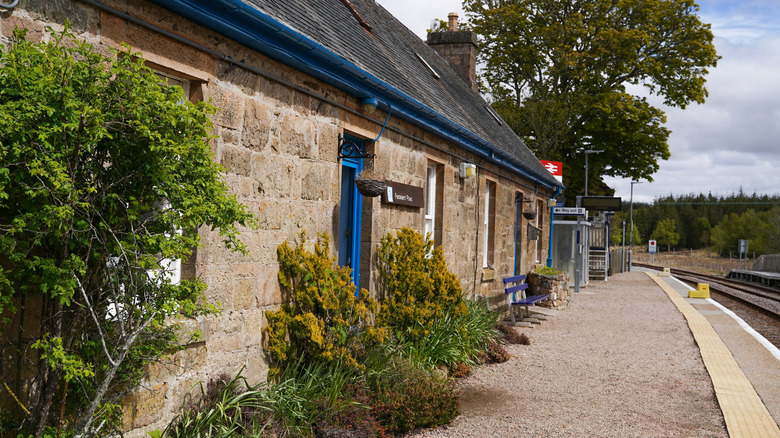
Stunning views along the Far North Line include the Beauly and Dornoch Firths, where rivers meet the open sea. Farther north, one of the most impressive parts of The Flow Country is Forsinard Flows National Nature Reserve, where the Royal Society for the Protection of Birds (RSPB) has a visitor center right inside the Forsinard train station. In the spring and summer, it's a spectacular place to spot hen harriers and skylarks, and a visitor trail provides closer views of the bog and distant hills. On the topic of stations, Dunrobin Castle station is one of the most charming, with its Tudor Revival half-timbered style. The name is a clue that even more spectacular architecture awaits nearby in its namesake palatial, turreted castle that has a history going back more than seven centuries.
North Yorkshire Moors Railway, England
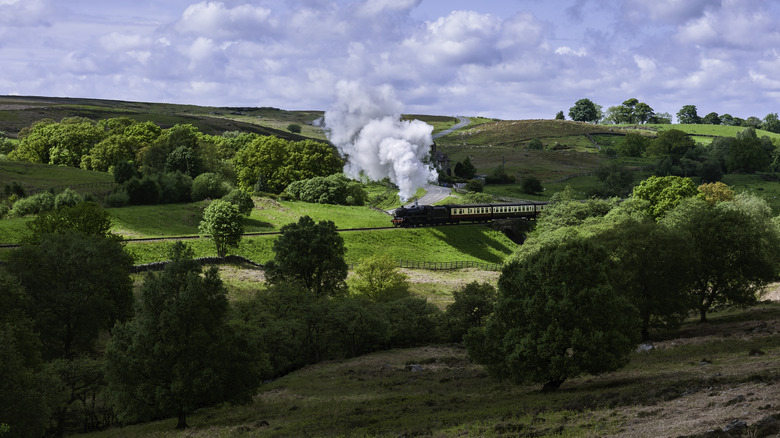
Yorkshire boasts some of the U.K.'s most striking scenery, especially across its glacially carved Dales and extensive moorlands made famous by literary greats like the Brontë sisters. Another literary (and Hollywood) reference awaits along the brief but spectacular North Yorkshire Moors Railway (NYMR), which stops at the charming Goathland Station. In the first "Harry Potter" film, the real-life spot stood in for Hogsmeade Station. NYMR's round-trip "Day Rover" fares start at about £35 ($47) for passengers 16 years and up. One child is free, and additional children's tickets are £8.55 ($11.50) each. Regular trips are offered between late March and early November, with additional holiday events.
The NYMR is a heritage route that spans only 24 miles, connecting Pickering, Levisham, Goathland, Grosmont, and Whitby. You'll find a 1930s theme at Pickering Station, a 1912 vibe at Levisham Station, and engine sheds full of steam and diesel engines at Grosmont Station. The route is ideal for taking in the beauty of North York Moors National Park, which the route passes straight through. If you want to hop off for some hillwalking or mountain biking, you can even request a stop at the beautifully secluded Newtondale Halt. The train rolls by bucolic pastures, rolling woodland, and the beautiful Rivers Esk and Murk Esk, crossing a number of historic bridges.
Settle-Carlisle Railway, England
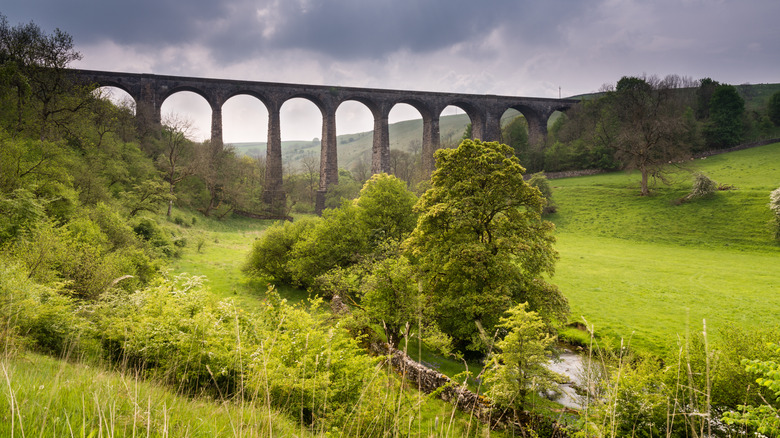
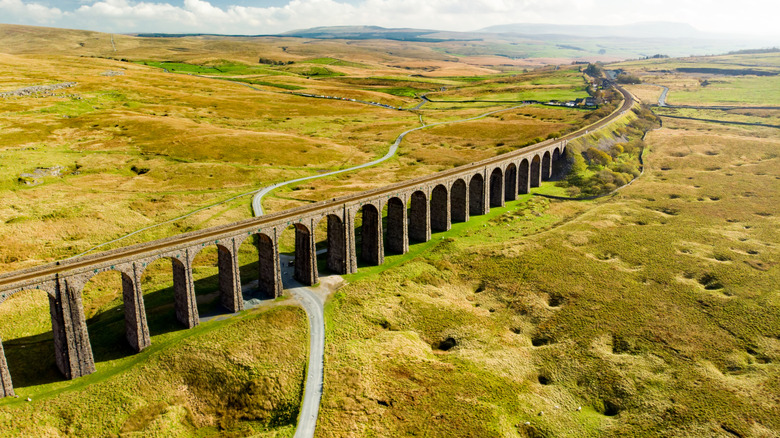
A historic 78-mile section of railway through the Yorkshire Dales and Cumbria, the Settle-Carlisle Railway offers beautiful views in northern England. The line begins in the town of Settle, which is about an hour's train journey northwest of Leeds, and ends farther north in Carlisle. A regular journey typically takes about one hour and 40 minutes, and trains on this Victorian-era line, completed in 1876, roll right through Yorkshire Dales National Park. They also pass quaint train stations and cross colossal viaducts, such as the Ribblehead viaduct, which is over 1,300 feet long.
This historic line is served by the Northern Railway and package tours, including a multi-day itinerary offered by Great Rail Journeys. For something more time- and budget-friendly, a single trip from Settle to Carlisle via Northern Railway will run around £11 to £56 ($15 to $75) depending on the time of day. Passengers take in views of the Westmorland fells and Yorkshire Three Peaks — Ingleborough, Pen-y-ghent, and Whernside — which are a delight for hikers in the national park. For a unique lodging option along the way, the Settle-Carlisle Railway has also appointed six historic station buildings for overnight accommodations along the route.
Hope Valley Line, England
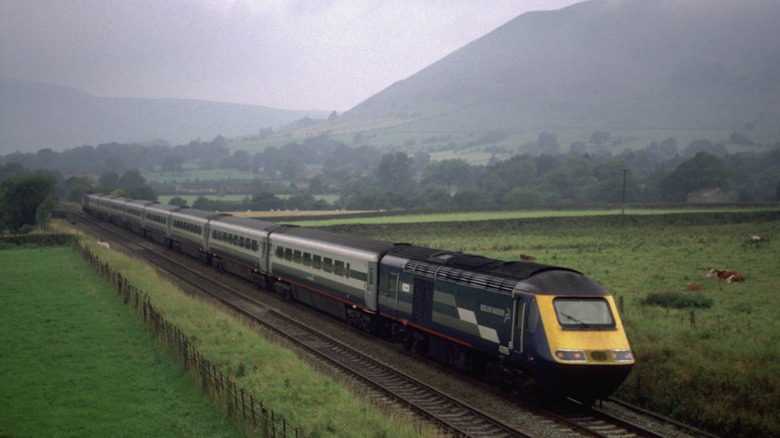
Between Manchester and Sheffield, one of the most charming cities to visit from Manchester, stretches another historic, scenic rail route: the Hope Valley Line. This beautiful Derbyshire valley is so named for the village of Hope, which sits roughly in the middle of the route. The line is served by the East Midlands Railway, Northern Trains, and the TransPennine Express, which convey passengers through the Peak District at the southern edge of the Pennines. Five stations are within Peak District National Park, providing ample opportunities to experience beautiful views of the hills and the three local rivers that wind through the valley: the River Noe, Peak Water, and the River Derwent.
Along an approximately 42-mile route, trains stop in charming villages like Hathersage, Edale, and Chinley, which boast historic estates, thriving high streets — what Americans refer to as main streets — and beautiful natural areas for an afternoon ramble. You'll ride through a number of tunnels, including Cowburn, England's deepest rail tunnel. Hikers can also alight at Edale Station to get a start on the 268-mile Pennine Way. The journey usually takes between 50 minutes and about an hour and 20 minutes, depending on the service, and single tickets typically range from around £12 to £30 ($16 to $40).
Riviera Line, England
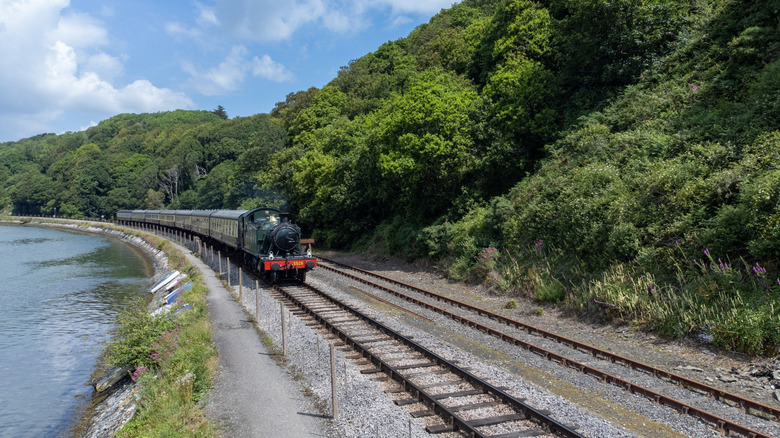
Traversing roughly 27 miles in Devon, a county in Southwest England right next to Cornwall, the Riviera Line is a stunning seaside jaunt that's also affordable, with tickets for off-peak day return — a round trip on the same day during non-busy times — starting around £12 ($16). The Riviera Line's most northerly point is Exeter, where it drops south by tracing the western shoreline of the beautiful and eco-diverse Exe Estuary before passing through seaside towns like Dawlish Warren, Dawlish, and Teignmouth. It then heads inland to Newton Abbot and re-emerges closer to the sea at Torquay and, finally, Paignton.
It usually takes about an hour to an hour and 15 minutes to ride the entire Riviera Line, and the most impressive scenery can be observed between Starcross and Teignmouth. Along this segment, the tracks run parallel to the South West Coast Path, which, at 630 miles, is one of England's longest National Trails. Unbroken views over the English Channel during much of this stretch make it a spectacular opportunity to take in some of the region's beautiful sea views.
Severn Valley Railway, England
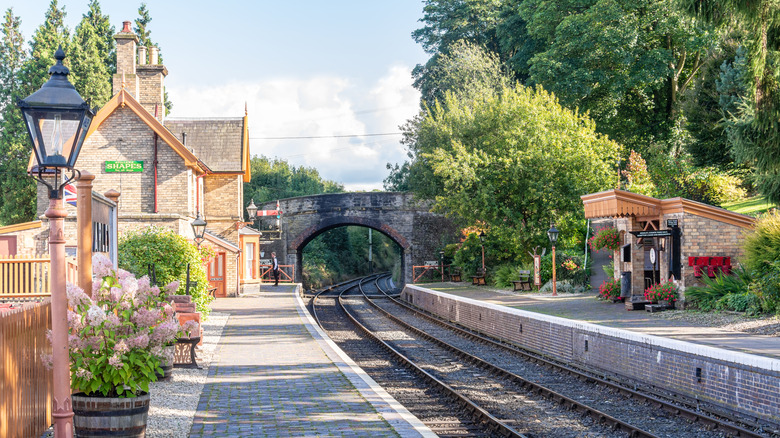
Gorgeous Shropshire and Worcestershire landscapes stretch along the 16-mile Severn Valley Railway, a heritage route where passengers can hop aboard vintage steam and diesel trains. The main highlights along this journey, in addition to pastoral English countryside, are the line's beautifully preserved brick station buildings and a number of bridges. Journeys depart from Kidderminster, a river town brimming with Victorian history, just about 20 miles southwest of central Birmingham. "Freedom of the Line" tickets are a day pass equivalent, so you can travel all day, choosing where to stop, and return for free. This adult fare runs £26 to £29.50 ($35 to $40); additional options include individual children's fares and group fares for both small and large families. Shorter return journeys are also bookable to specific stations. A round-trip from Kidderminster to Arley, for example, will run £15 ($20) for an adult.
Kidderminster Station has a cafe and a museum, and additional stops include historic stations in Bewdley, Arley, Highley, Hampton Loade, and Bridgnorth. Highley is where railroad enthusiasts will want to make sure to disembark to further explore the history of the Severn Valley Railway at its visitor center and Engine House. The train also crosses a prominently arched iron bridge named for Queen Victoria, which was built in 1861 and crosses the beautiful River Severn — the U.K.'s longest river.
Derry to Coleraine, Northern Ireland
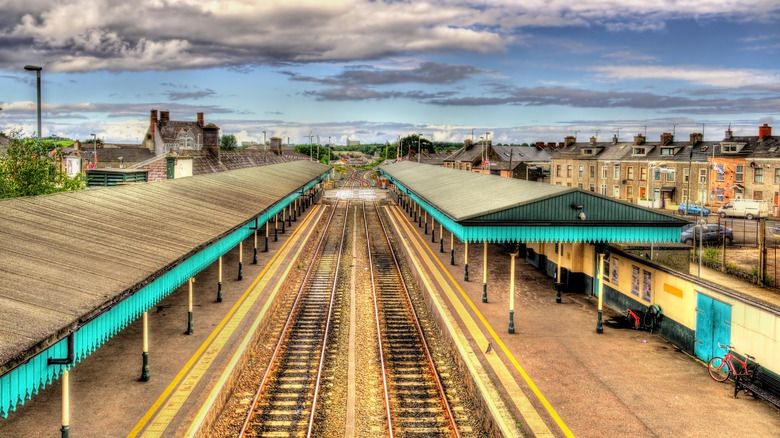
Northern Ireland boasts its own scenic rail route with waterfront views and sweeping hills. Between the city of Londonderry, also known as Derry, and the smaller town of Coleraine, this scenic rail journey follows the River Foyle to where it begins to skirt the coast along the tidal estuary of Lough Foyle, the sandy expanse of Benone Beach, and the maritime cliffs of Downhill. Along the way, you'll also be able to spot Binevenagh Mountain, part of Binevenagh Nature Reserve.
The route to Coleraine is a great day trip option if you've made your basecamp in Derry and want to see more of the seaside. It's operated by Translink, with fares starting at £13 ($17) for an adult single — £21 ($28) for a day return — and travel times clocking in at less than 40 minutes one-way. Castlerock is a fantastic seaside town to stop in for a longer visit, where you can explore the Mussenden Temple and Downhill Demesne, managed by the National Trust, with its spectacular clifftop setting. From Castlerock, the train turns southeast to follow the River Bann into the heart of Coleraine.
Cambrian Coast Line, Wales
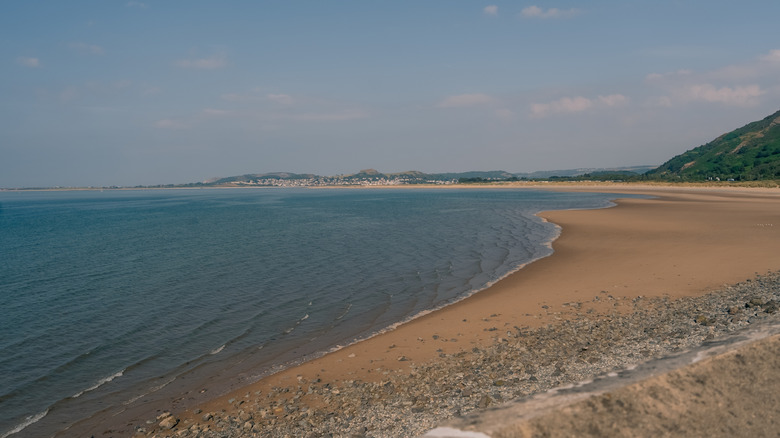
While the Welsh call their home country Cymru, Roman chroniclers Latinized it and referred to it instead as Cambria, which gives this line its name. One of the most scenic routes in the U.K. for its sea views, quaint villages, and rolling countryside, the Cambrian Coast Railway connects the Welsh towns of Pwllheli and Aberystwyth (with a change in Machynlleth) around the shoreline of Cardigan Bay. An adult return fare from Pwllheli to Aberystwyth runs from around £23 to £36 ($31 to $48).
Of course, you can take the entire route for a longer journey, but the Cambrian Coast Railway segment is where you'll find some of the most stunning vantage points over the water. Seaside towns invite visitors to explore local high streets and lively harbors, such as Abermaw (Barmouth) with its sand dunes, and quaint Penhelig and Aberdyfi nestled along the edge of the Dyfi Estuary. In the distance, atmospheric mountains rise from Snowdonia, known in Welsh as Eryri, and the Cambrian Mountain range.
Snowdon Mountain Railway, Wales
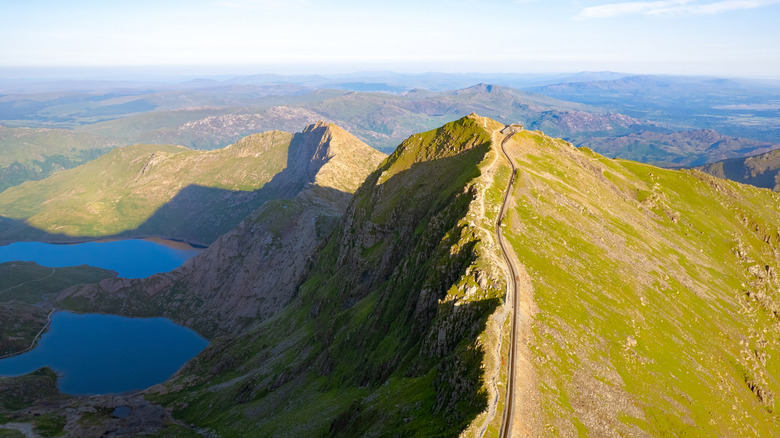
Mount Snowdon, known in Welsh as Yr Wyddfa, is the highest peak in Wales and the crowning jewel of Eryri National Park. Its crest is also home to a truly unique rail journey called the Snowdon Mountain Railway, which is unlike any other on this list. Single carriages pushed by vintage steam or diesel engines start in Llanberis and climb for 4.7 miles to the 3,560-foot-tall summit. From here, you can take in the stunning hills of Eryri, and on crystal-clear days, the panoramic view even includes distant views of the Isle of Man and the Wicklow Mountains in Ireland.
The ride takes about one hour each way, with an opportunity to explore the visitor center at the summit and soak up the astonishing view for about 30 minutes. Depending on the time of year, some routes only head three-quarters of the way up, to Clogwyn Station. The heritage steam experience is a little more expensive at £62 to £72 ($83 to $97) depending on the time of day, while the diesel engine option is £45 to £48 ($60 to $64) to the summit (a little less to Clogwyn). Both fares cover return journeys. Alternatively, if you plan to hike down one of the peak's several trails, you can book a single ride to the top via the diesel engine and spend as much time as you'd like there before heading down one of the mountain's six trails.