
8 Vatican Rules American Tourists Break Within The First 10 Minutes
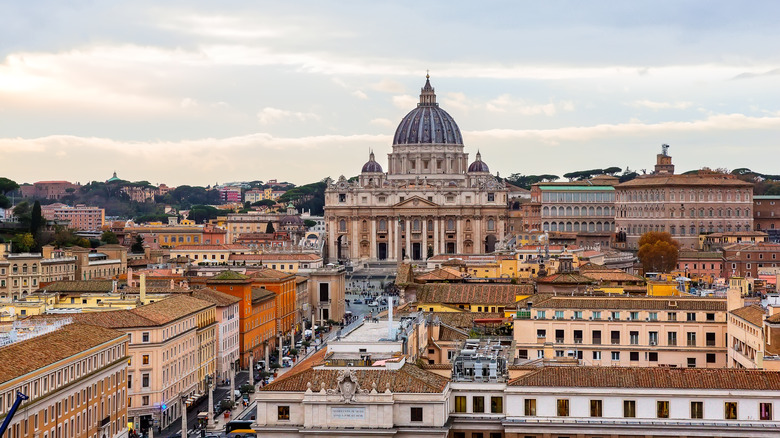
Vatican City welcomes millions of visitors each year. In 2025 alone, more than 3 million Catholics attended papal events at the Vatican, and this figure does not even include those who only visited the Vatican Museums or the grounds. However, it's important to remember that Vatican City is much more than simply one of the must-see things you should do with just one day in Rome. It's also the global headquarters of the Catholic Church. Due to this, the Vatican Museums, St. Peter's Basilica, and the Sistine Chapel have strict rules and regulations covering everything from visitors' appearance to preserving priceless artwork.
Some restrictions, like not wearing revealing clothing, are fairly obvious once you stop to think about them. Others, though, catch tourists off guard. Rules also vary a bit from one location to another, so something that is fully permitted inside the Vatican Museums may not be allowed at St. Peter's Basilica, for instance. Here, we'll look closely at eight Vatican rules American tourists sometimes break within the first 10 minutes. We'll also give you advice on how to avoid these mistakes yourself.
To compile this guide, we used official guidance from Vatican City and the Vatican Museums' official websites, as well as firsthand accounts from travelers across Reddit, Tripadvisor, and Facebook. Additionally, I've personally visited the Vatican, so I also drew on my own experiences watching fellow American travelers.
They arrive with exposed shoulders or knees
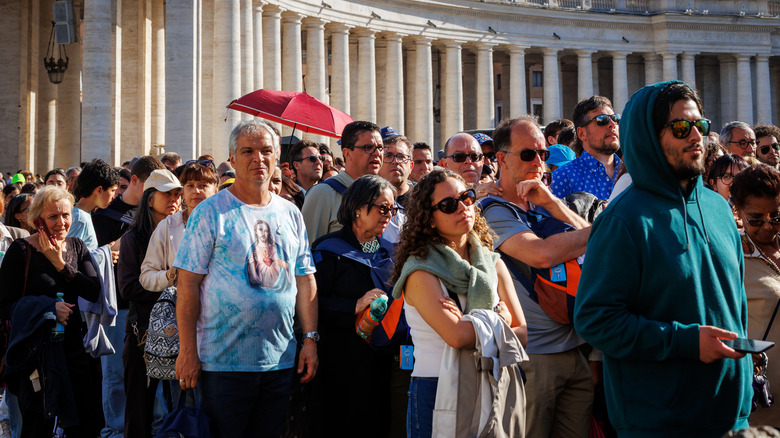
Rome can be quite hot during the summer months. The average July temperature ranges from 82 degrees Fahrenheit to 91 degrees Fahrenheit, so it's understandable that American travelers tend to gravitate toward tank tops, above-the-knee shorts, and sundresses, all of which would be perfectly acceptable in most situations at home. Unfortunately, an outfit that might even be fine at other Roman venues may not pass muster at the Vatican. Entry to the Vatican Museums, Sistine Chapel, Vatican Gardens, and St. Peter's Basilica requires visitors to be appropriately attired.
Per the Vatican Museums' official guidelines for all four sites, sleeveless or low-cut clothing, miniskirts or minidresses, and shorts ending above the knee are prohibited for all visitors. Not adhering to these restrictions is one of the biggest clothing mistakes you can make in Italy, as you might actually be barred from entering. On a Reddit thread, one traveler wondered whether Vatican officials made exceptions for men wearing shorts in extreme heat. Commenters urged them to obey the rules, with one person writing that they "went with a small group a few weeks ago and they stopped a boy and girl in our group and made them cover their shoulders."
Fortunately, there are plenty of clothing options that can keep you comfortable in warm weather without hindering your chances of entry. Dresses and men's shirts made from Tencel or lyocell, for example, are light and breezy, while also holding up well to travel wear and tear. For women, a pashmina or oversized cotton scarf can also serve as a shawl in a pinch if they accidentally wear a sleeveless garment. However, the smart move is to comply with the Vatican's dress code requirements from the start.
They expect to get close to the Pope
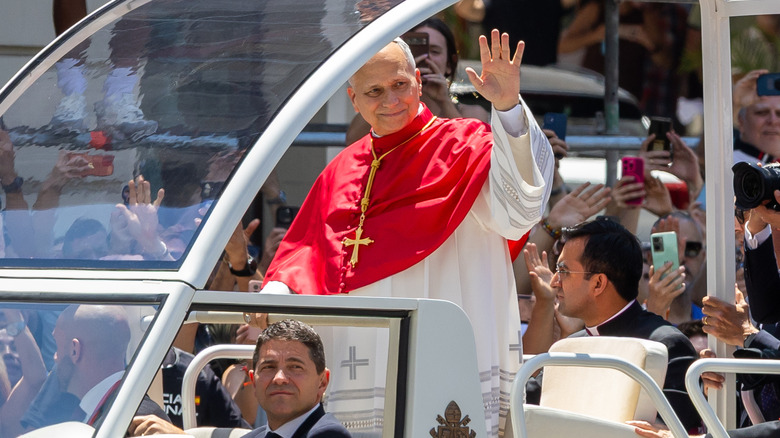
Merely visiting Vatican City does not automatically include an audience with the Pope, nor does it even mean that tourists will catch a glimpse of him. Sometimes the Pope is traveling for international engagements, and in other cases, he is simply occupied with daily duties away from public view. While most travelers understand that they may not see the Pope, there are some tourists who have other ideas. In one case, an American tourist who reportedly demanded to meet the Pope caused an international incident that received global press coverage.
In 2022, a man in his 50s shattered two ancient Roman busts in the Vatican Museums' Chiaramonti Gallery after he was told he could not meet Pope Francis. At the time, Vatican official Matteo Bruni called the individual a "deranged person." Then, in a 2025 incident, Vatican authorities dealt with a crowd pushing to get closer to Pope Leo. The crowd surged forward and nearly broke through the crowd-control barriers, while one person even tossed a stuffed animal toward the pontiff.
Fortunately, there are sanctioned ways for travelers to attend papal events. Papal Audiences are usually held on Wednesday mornings, depending on the Pope's schedule. The Sunday Angelus also offers another opportunity to see him. Although tickets for Papal Audiences are free, they should be requested in advance via the official website for the Pope's Household. Large crowds can attend Papal Audiences, and even with a ticket, people often start lining up hours early to try to get as close as possible to the Pope.
They don't remove their hats
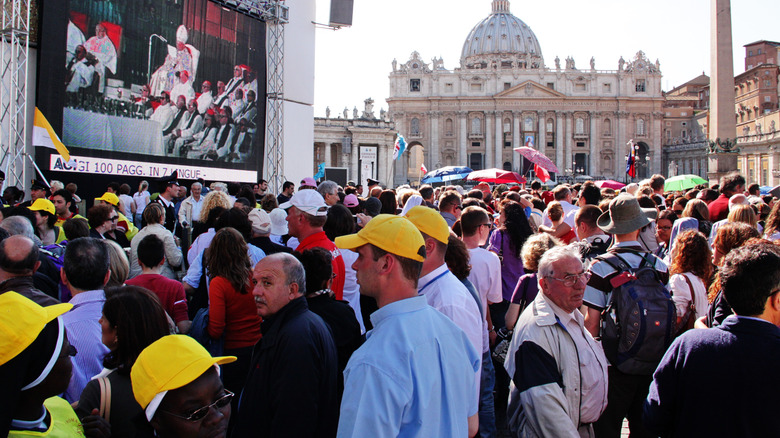
Wearing a baseball cap is an unexpected trait that Europeans always notice about American tourists. Nonetheless, this usually doesn't deter people from wearing them, especially on hot days. At the Vatican, however, hats are not allowed. If you're someone who grabs a ball cap nearly every day before leaving home, it's easy to forget you're even wearing one. Failing to comply with this rule, though, could prevent you from entering the Vatican Museums, the Sistine Chapel, and St. Peter's Basilica. This rule stems from a longstanding Catholic tradition dating back more than a century. In 1917, the Code of Canon Law stated that men were not allowed to wear hats in church. Women, however, were encouraged to wear head coverings under the same code.
At the Vatican, headwear is generally not permitted for visitors. Although St. Peter's Basilica and the Sistine Chapel are popular tourist destinations, they also both serve as active places of worship (though services in the latter are uncommon), so it's important to be respectful of those who may be worshipping.
If Vatican security guards or church attendants ask you to remove your hat, simply apologize politely and comply with the request. If you wear a head covering for religious reasons, such as a Jewish yarmulke, ask a Vatican staff member about the proper protocol. For everyone else, the easiest course of action is to remove any hat before you reach the Vatican entrance.
They bring oversized bags
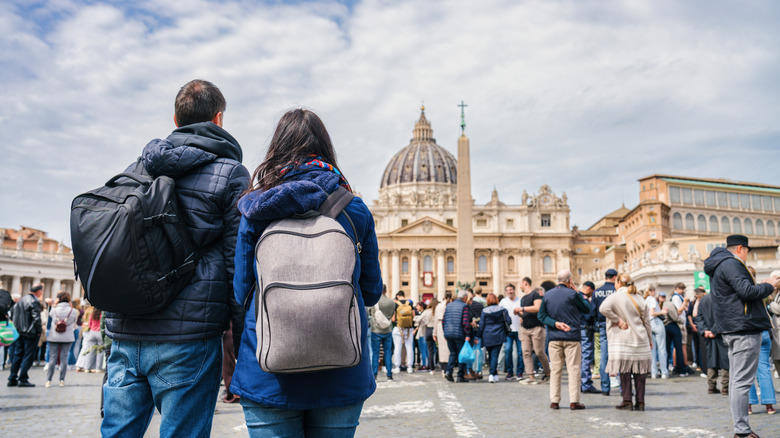
Those planning to visit the Vatican directly from the airport or train station should think again. The Vatican Museums, St. Peter's Basilica, and the Sistine Chapel all have restrictions on bag sizes, meaning visitors cannot enter with suitcases, oversized backpacks, duffel bags, or other large baggage. In a Facebook thread discussing what size backpacks were allowed at the Vatican, one tourist emphatically stated, "Small bags or no bags. The Vatican museum has a bag check area. Also, batteries have to be checked."
The Vatican Museums do, indeed, offer a cloakroom, where bags larger than approximately 16 by 14 by 6 inches must be checked upon entry. Note that staff members ultimately have the authority to decide which bags are allowed into the museum galleries, and which must be checked. Any item left behind for more than 48 hours may be permanently disposed of by Vatican officials. It is therefore crucial to collect your belongings before leaving the museum.
Where things get sticky for visitors is when they plan to visit multiple Vatican City sites in a single day. Although oversized items can be picked up after touring the Vatican Museums, St. Peter's Basilica does not have a baggage storage area and has its own bag restrictions. Although the church doesn't have specific size requirements, its official guidance notes that "Large backpacks, trolleys or bulky luggage are not allowed." It's best to err on the side of caution when visiting the Vatican and bring only a small purse or standard-sized backpack.
They forget to remove sharp objects from their bags
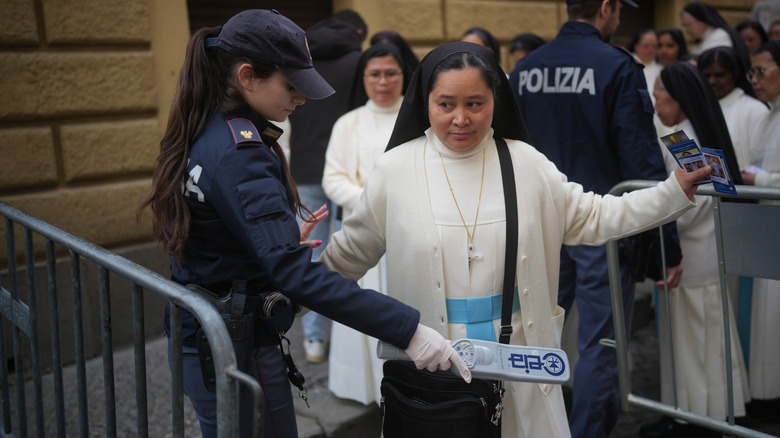
Much like items that will be confiscated when you visit Buckingham Palace, Vatican City has strict requirements about what can and cannot be carried through security. Knives and other sharp tools are strictly prohibited on Vatican grounds. Visitors may be allowed to check items like scissors and standard pocket knives in the aforementioned cloakroom. Firearms and other dangerous items are not permitted on the Vatican grounds.
In a Reddit thread about carrying a Swiss Army Knife throughout Italy to use the attached cutlery, one person wrote, "don't go to the Vatican with it because you will have to throw it out in order to enter." While the original poster might have been able to check their knife, the commenter's point that it wouldn't be allowed past security is valid. Since St. Peter's Basilica doesn't offer a cloakroom, it's even more important to leave sharp metal objects behind during your visit. Otherwise, you might be barred from entry.
Because carrying a pocket knife is so common in the United States, with more than 35 million American households owning pocket knives, it's easy for tourists to forget they even have one on them. It's smart to double-check your pockets before leaving your hotel. Additionally, bear in mind that this Vatican rule doesn't apply exclusively to obvious weapons. It can also apply to other restricted sharp or metal objects. This can include items like sewing scissors and other sharp tools.
They are eating and drinking on arrival
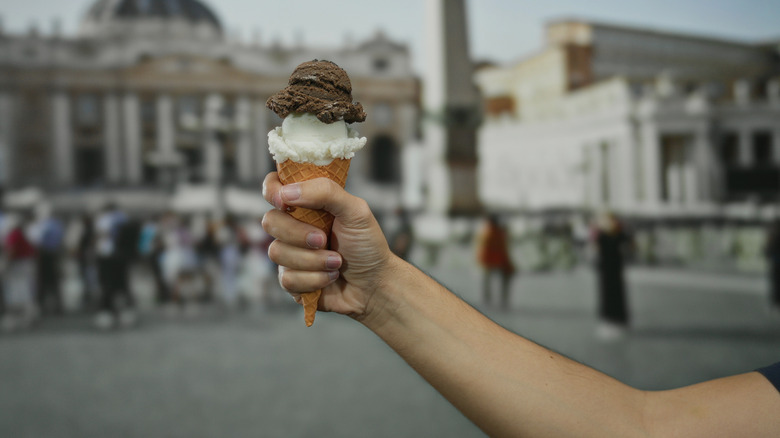
If you're visiting the Vatican around mealtime, you might be tempted to grab a quick bite or have your morning coffee while waiting in line. Just make sure you finish any food or drinks you're enjoying before you reach the security checkpoint. Vatican City rules prohibit guests from consuming food and drinks inside the Vatican Museums' galleries, St. Peter's Basilica, or the Sistine Chapel. This also includes alcoholic beverages. Visitors can, however, check food items in the cloakroom if they want to finish them later.
Some tourists, though, want to bring their own food through security. One Facebook user asked if their party could "bring in some food, like sandwiches and snacks to lunch while in the museum?" They were encouraged to visit the on-site restaurants instead. The Vatican Museums offer multiple dining options, including a pizzeria, Bistrot La Pigna in the famous Courtyard of the Pine Cone, and Caffetteria Il Forno near the Sistine Chapel. There is also a dedicated café at the Basilica.
It's worth noting that guests on Tripadvisor report being allowed to bring small items, like pieces of fruit, into St. Peter's Basilica as long as the food remained in their bags. This differs somewhat from the Vatican Museums' rules, which restrict where food can be consumed. The church itself also says that summer visitors may bring reasonably sized water bottles into the Necropolis.
They use flash photography, selfie sticks, or tripods
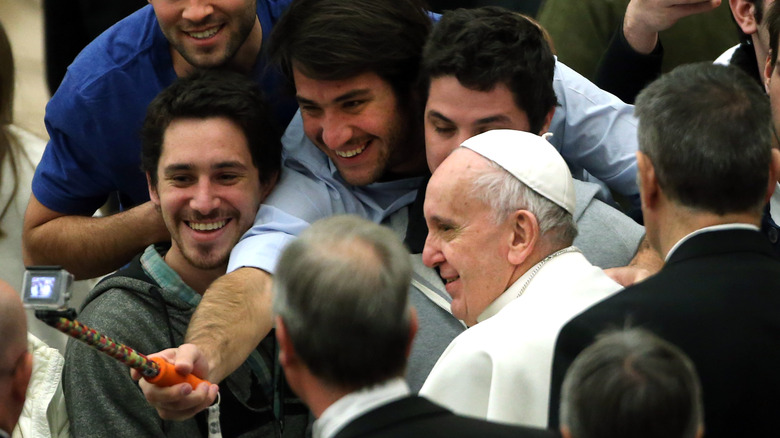
There are multiple destinations around the world that have odd selfie bans, and while the Vatican doesn't completely restrict visitors from taking photos, there are certain rules visitors must follow. The Vatican Museums and St. Peter's Basilica house some of the world's most recognizable artwork, including Michelangelo's Pietà and Raphael's The Transfiguration, so officials understand that travelers want to take photographs. While personal photography on a smartphone or point-and-shoot camera is generally fine in Vatican City, except within the Sistine Chapel, guests cannot use flash photography, selfie sticks, tripods, drones, or professional photography equipment.
St. Peter's Basilica also expressly prohibits video, though photos are allowed subject to similar restrictions. One traveler on Facebook asked whether their party could bring selfie sticks into the Vatican in their bags if they left them stowed throughout their visit. A fellow tourist urged the original poster to leave the equipment behind, noting, "When I went, I had a small foldable tripod in my bag, and they stopped me at the scanner I had to check it in." I have also personally witnessed a Vatican guard asking an American tourist to check a selfie stick in the cloakroom upon entry.
These rules help protect the artwork from flash damage and prevent people from blocking crowded hallways to take posed photographs. Since collecting checked items from the cloakroom can take extra time, the most efficient option is to leave your photography accessories at your accommodations. Visitors should also follow posted signage and any additional instructions from Vatican personnel.
They touch artwork or sculptures
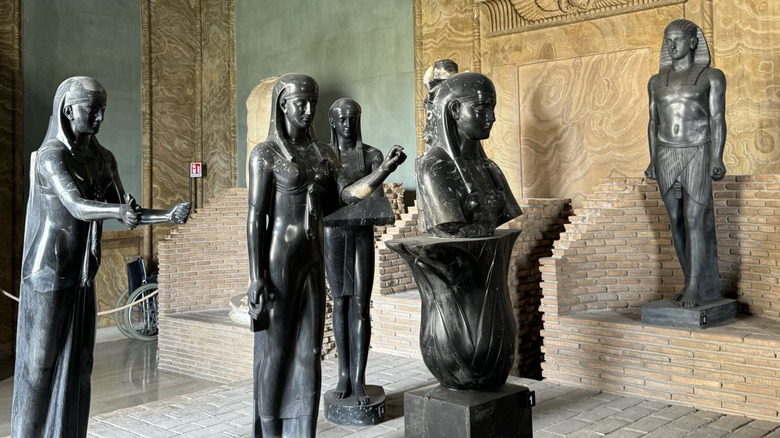
The Vatican Museums consist of over 20,000 pieces across more than four dozen galleries. The collection includes everything from ancient Greco-Roman sculptures to Renaissance masterpieces to Egyptian artifacts to priceless tapestries. Visitors are encouraged to admire the artwork, but touching pieces without signage expressly permitting hands-on exploration, leaning on or climbing on sculptures, and crossing into roped-off areas are prohibited.
I was personally surprised by how close we were able to get to some of the masterpieces at the Vatican Museums. For visitors not well-versed in museum etiquette, I can see how it might seem like an invitation to touch the artwork. It isn't, though. Imagine hundreds of thousands of people over the course of decades transferring oils, dirt, and germs from their skin onto artistic materials. This can cause permanent damage. Children, in particular, might need to be reminded not to touch Vatican artwork. For instance, I've seen multiple children traveling with American tour groups running their hands over marble sculptures.
There is one notable exception to the Vatican's "don't touch the artwork" policy. At St. Peter's Basilica, travelers will find a sculpture of St. Peter himself with one noticeably smooth foot. For hundreds of years, Catholic pilgrims have touched the statue's foot as part of their religious experience. This practice continues today, with one Tripadvisor reviewer suggesting that visitors see the statue in the evening when crowds have thinned.