
10 Underrated UK Cities American Tourists Normally Miss
Beyond London, the United Kingdom consistently rewards adventurous travelers. Sure, you need to check those capital city boxes: Big Ben, Buckingham Palace, the Tower Bridge. But then what? For some American visitors, a few days ticking off London's famous landmarks, riding a double-decker bus, and sampling fish and chips are enough. But many more U.K. cities are eclectic, historic, and full of character. They are places where the locals are as much a draw as the landmarks, and where centuries of history sit comfortably alongside thriving scenes of food, arts, and nightlife.
Data from VisitBritain identifies London, Edinburgh, Manchester, Birmingham, and Liverpool among the U.K.'s most visited destinations for international tourists, with a significant drop in numbers for the rest of the cities. Some are second cities overshadowed by a more famous neighbor; others are known names but passed over in favor of easier choices. But before we get started, let's have a quick geography lesson. Great Britain comprises three countries: England, Scotland, and Wales, while the United Kingdom also includes Northern Ireland. That's why the official name of the union is the United Kingdom of Great Britain and Northern Ireland. Confused? Don't worry, many people in the U.K. are, too.
We have done our best to include cities from all four constituent countries of the U.K. We drew on the author's own knowledge of the country, as well as opinions from travel publications, renowned travel blogs, and forum recommendations from locals and visitors on Reddit, Quora, and Rick Steves. Here are 10 cities we think are underrated and often overlooked by American tourists.
York, England
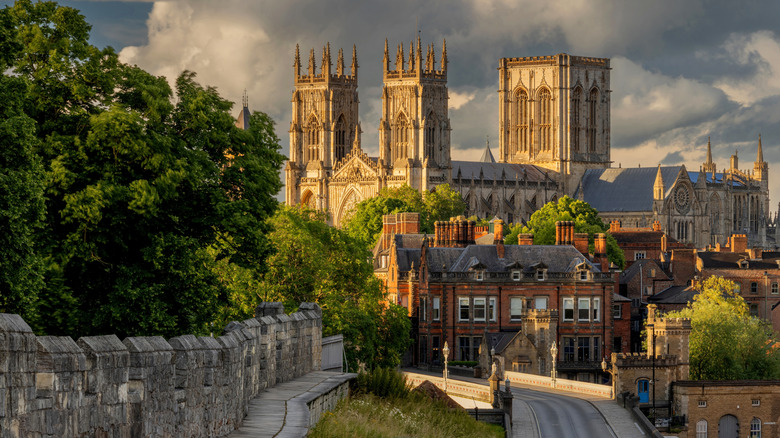
York might be situated halfway between London and Edinburgh, two of the main destinations Americans visit in the U.K., but the rain-soaked image of northern England deters many. The truth is, any visit to the country without seeing York means missing out on one of the finest examples of a medieval city anywhere in the world. With two millennia of history embedded in its stones, first as the Roman garrison of Eboracum and later as the Norse trading hub of Jorvik, York has streets and buildings so steeped in history that it has been likened to Florence.
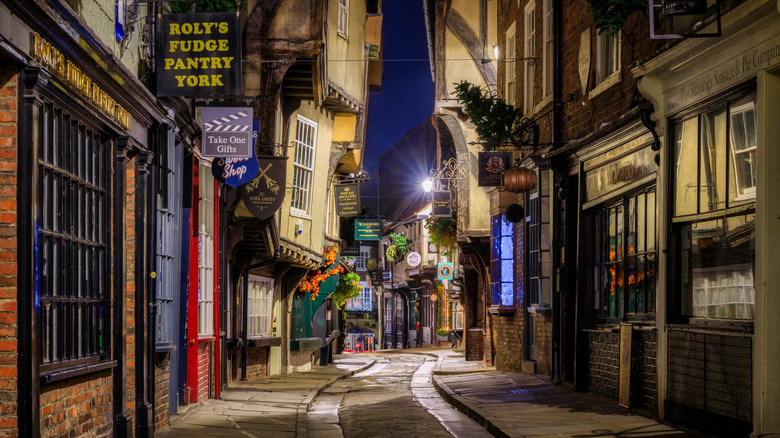
The centerpiece is York Minster. This grand Gothic cathedral took over two and a half centuries to build. It was completed in 1472, and its towers dwarf everything in its shadow. The streets below this imposing structure retain much of their medieval character, with narrow lanes and historic buildings that have stood for centuries. The Shambles is a narrow cobbled lane of timber-framed buildings that lean dramatically over the pavement. It feels like a step into some sort of fantasy realm, almost like a place where you might expect to see orcs and goblins squabble over a tankard of ale. The city walls were constructed in the 13th and 14th centuries and wrap around the old town, offering views over the city's sun-dappled gardens and Georgian townhouses.
Glasgow, Scotland
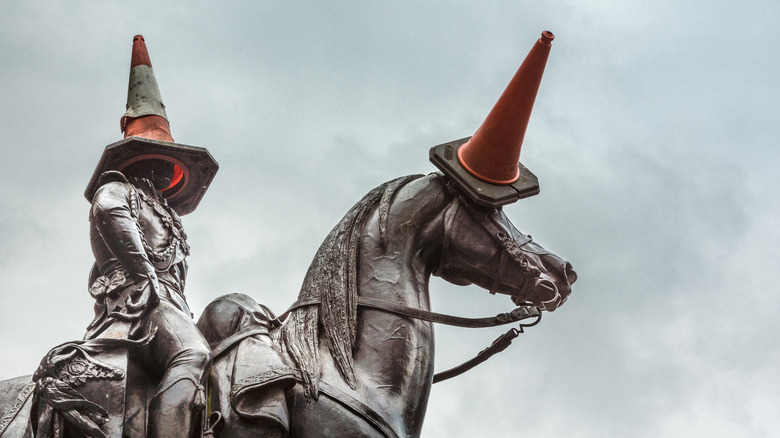
Scotland's largest city has long lived in Edinburgh's shadow when it comes to tourism, and the capital received more than triple Glasgow's visitor numbers in 2024 (according to VisitBritain). Yet despite lacking Edinburgh's famous castle and international festival profile, Glasgow was actually voted the U.K.'s friendliest city in 2022. In fact, Glasgow has long relied on its citizens to make a good name for itself. "People Make Glasgow" has been the official tourism slogan since 2013, and warmth and humor are what they are known for. You'll find that famous Glaswegian humor everywhere, but it's most striking in the traffic cone placed on the head of the Duke of Wellington statue outside the Gallery of Modern Art. Despite repeated attempts by authorities to remove it since the 1980s, another cone always reappears. The duke continues to wear his unconventional headwear to this day, even if the authorities remain less enthusiastic about the tradition.
But the city isn't all about laughter. Almost all of its museums are free, with Kelvingrove's eclectic collection of artifacts from ancient Egypt and World War II, as well as a famous Dalí painting, being the highlights. Architecture is another standout. The East End's Victorian streets lead to Glasgow Cathedral, the Scottish mainland's only surviving medieval cathedral. Glasgow was also the first city in the U.K. to receive UNESCO City of Music status, with a heritage that runs from Simple Minds to the famous King Tut's Wah Wah Hut venue, where Oasis caught the attention of Creation Records boss Alan McGee in 1993. You'll find a fantastic bar scene to complement all that music, spanning everything from whisky dens and dive bars to craft breweries operating out of buildings that would fit in well on the Venetian waterfront, you're bound to find something to quench your "drouth."
Chester, England
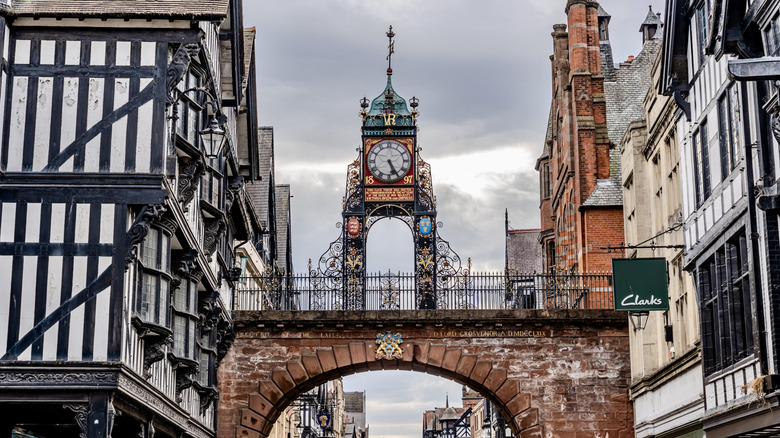
Chester sits just 30-odd miles south of Liverpool and roughly 40 miles southwest of Manchester, two of the U.K.'s most-visited cities. This means it tends to get treated as a day trip by Americans at best, but Chester deserves a whole lot more attention than that. The city was founded by the Romans around A.D. 79 and is one of the most architecturally beautiful cities in the country. Layers upon layers of history have been added since, with its most distinctive feature being the Rows. This network of double-tiered timber-framed shopping streets has extended along the city's four main medieval streets since the 13th century, although much of the familiar black-and-white architecture is Victorian.
Nearby, the City Walls are the most intact in Britain, and you can walk along them on a 2-mile loop. The River Dee winds to the south, while in the distance you might catch sight of the Welsh hills on a clear day. One of the access points is at the Eastgate Clock, an elaborate Victorian confection of gilded ironwork and colored enamel. It was commissioned in 1897 to mark the Diamond Jubilee of Queen Victoria, and was completed two years later.
Other historic attractions around Chester include the ancient Roman amphitheater, the largest in Britain, and the warm red sandstone of Chester Cathedral. There's also Chester Racecourse, the longest continually operating racecourse in the world, dating back to 1539 and drawing hundreds of thousands of spectators annually for its racing, events, and conference program.
Belfast, Northern Ireland
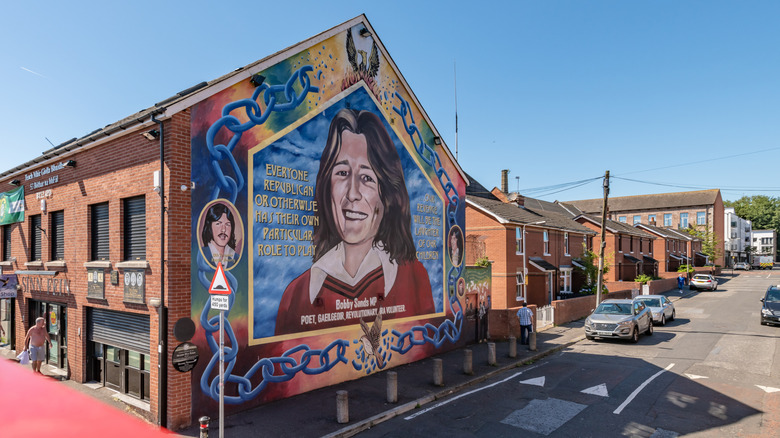
For nearly three decades, Belfast was a city many visitors preferred to avoid. It was a city torn apart by a conflict that claimed over 3,500 lives. For many people, daily life meant barricades, military patrols, and a hollowed-out city center. The Good Friday Agreement of April 1998 established the framework for peace and power-sharing, although sporadic violence and paramilitary activity continued afterward. The Troubles still keep many visitors away, American or otherwise, but those who skip it are missing out on something truly special. Today, Belfast is a city that has found its voice. It's curious, it's creative, and it's fun.
The Cathedral Quarter is where you'll see the city's transformation at its most apparent. It's a dense cluster of independent bars, restaurants, and creative businesses filling buildings that stood empty for years. The food scene has particularly flourished, and you'll find Michelin-starred restaurants within the walkable city center. A good drink is, of course, always on the cards, but the bars have moved on from the dingy boozers that once dominated this city. For example, the Crown Liquor Saloon, with its mosaic floors, whiskey barrels, and elaborately carved wooden arches, has probably one of the most ornate pub interiors in the world.
But to learn about the Troubles, walking tours guided by former combatants from both sides of the sectarian divide take in the towering concrete barriers that still divide neighborhoods. Vast street murals cover gable ends and show an open-air political and cultural record quite unlike anywhere else in the U.K.
Norwich, England
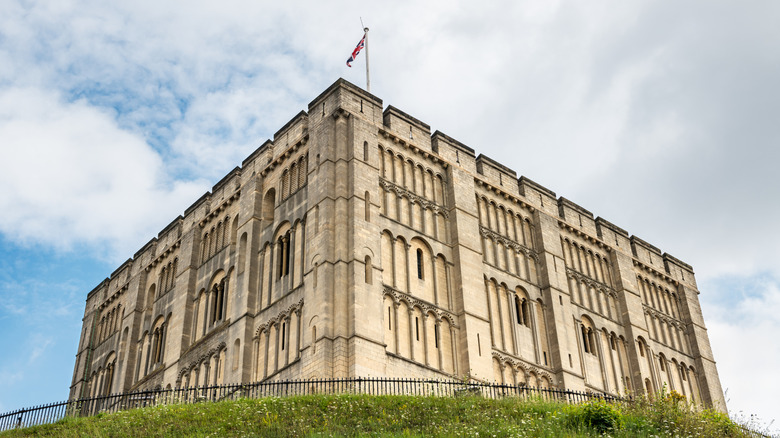
Once upon a time, Norwich was medieval England's second city. But today, most visitors, American or otherwise, give this ancient settlement a miss — which is, quite frankly, a remarkable oversight on their part. The City of Stories is a medieval charmer with UNESCO status, and the streets and lanes are brimming with independent bookshops and cafes standing up to encroachment from the big chains. Historic churches are another thing you'll see plenty of. In fact, more medieval churches survive here than any other city north of the Alps. Over 30 of them have had new life breathed into them, with theater companies, art galleries, quirky antiques dealers, and even a puppet house taking up residence within their ancient walls.
Things in Norwich don't change much, and we mean that in the best possible way. Norwich Market has occupied the same central spot since shortly after the Norman Conquest, while the Adam and Eve pub has been serving up ale to patrons for almost eight centuries. A prominent castle rises above the city center, and its massive cube-shaped Norman keep was built by Henry I in 1121. Following its recent restoration, the keep has been returned to something resembling its original medieval appearance, and all five floors are open for visitation. Inside, there's a gallery featuring close to a thousand artifacts assembled in partnership with the British Museum. Among the displays is the 500,000-year-old Happisburgh hand axe, one of the earliest pieces of evidence of human activity in the country. About a 10-minute walk away, Norwich Cathedral rises above the surrounding rooftops. It dates from around the same time, and its spire is the second tallest in England.
Cardiff, Wales
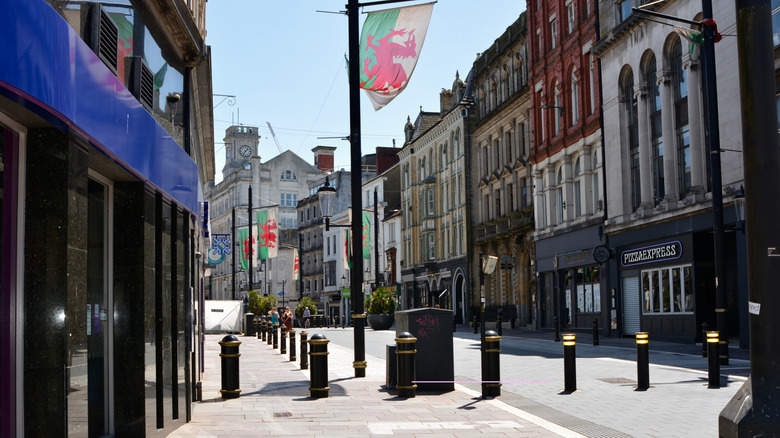
It probably comes as no surprise to hear that Cardiff is the least-visited of Great Britain's three capital cities (according to VisitBritain). Cardiff is the capital of Wales, an often overlooked part of the union, but those who venture this far are in for a real treat. It's one of Europe's most affordable capital cities, and you can enjoy it without the crowds of London or Edinburgh. At its heart, Cardiff Castle layers almost 2,000 years of history from a Norman keep sitting atop a grassy mound to a Gothic Victorian mansion whose gilded interiors rank among the most extraordinary in Britain. The Arab Room within that mansion stops visitors in their tracks. Its ornate gold-leaf ceiling catches the light filtering through tall stained-glass windows, and it's quite a sight.
Cardiff Bay sits at the southern end of this city on the Bristol Channel. Once a vast network of coal-shipping docks, it has been transformed into a sweeping waterfront of modern architecture and art. This is where you'll find the sweeping bronze-clad dome of the Wales Millennium Centre, which hosts everything from theatre and dance to comedy, cabaret and international arts, as well as performances by the Welsh National Opera.
With seven historic arcades to explore, Cardiff has more Victorian and Edwardian shopping arcades than any other U.K. city. The Morgan Arcade houses Spillers Records, recognized as the world's oldest record shop, while the nearby Royal Arcade has been trading since 1858. After dark, the city shifts up a gear. Cocktail bars like The Dead Canary draw on Welsh mythology and sit alongside craft breweries and pubs that predate the American Revolution, such as Rummer Tavern, reputed to have been pulling pints since 1713.
Stirling, Scotland
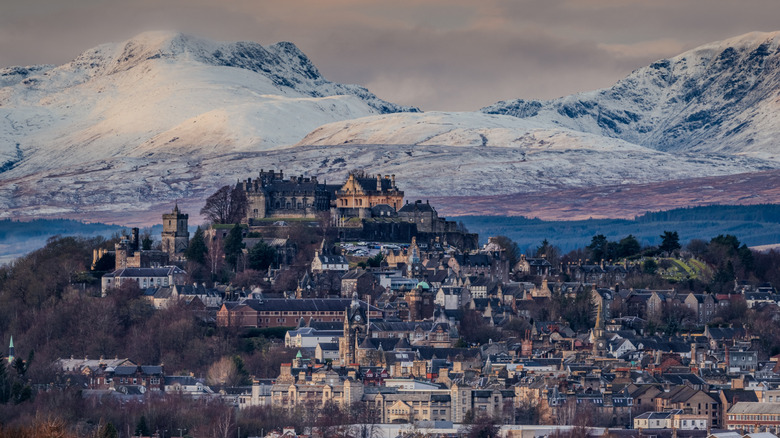
Stirling sits roughly 30 miles northeast of Glasgow and is one of Scotland's most historically rich cities. Its skyline is split between two volcanic outcrops sitting on either side of the River Forth. Atop one sits Stirling Castle, a foreboding stone fortress of towers and ramparts stacked high above the city. From the castle gates, the compact old town runs downhill. You'll pass the Church of the Holy Rude, where James VI was crowned King of Scots in 1567, before he inherited the English throne in 1603 and united the crowns of the two kingdoms.
You'll find one of Scotland's most important historic landmarks arching across the River Forth. Stirling Old Bridge is a late 1400s stone structure and one of the most intact of its kind in the country. It also stands near the site of the 1297 Battle of Stirling Bridge, where William Wallace and Andrew Moray led the Scottish army to victory over Edward Longshanks. For more battle history with the "Sassenachs," a Gaelic term used in reference to the English, make your way south to Bannockburn, the site where Robert the Bruce's decisive victory helped secure Scottish independence.
Opposite the dominant castle, the National Wallace Monument sits atop the other volcanic outcrop, Abbey Craig. At 520 feet above the river, its Hall of Heroes houses busts of revered Scottish figures and a 700-year-old broadsword of enormous length said to belong to William Wallace himself. For a city with all this history, it's almost criminal that Stirling isn't one of the U.K.'s most visited cities. But the good thing for you is that you can enjoy all that fascinating heritage without the crowds that follow the usual tourist trail.
Newcastle upon Tyne, England
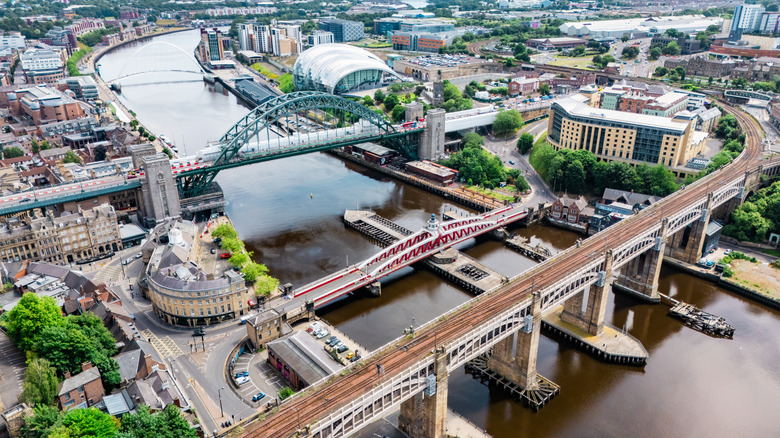
Newcastle upon Tyne boomed during the Industrial Revolution, and its grand city center of wide avenues and honeyed sandstone was born out of shipyards, coal trade, and railway works. Nowadays, this under-the-radar city is walkable, eclectic, and full of nightlife. But the most impressive thing about the city is undoubtedly its people. Ask anyone who has spent time there, and they'll all say the same thing. Geordies are among the warmest, friendliest, and most welcoming souls in Britain. They are also hilarious, and their unique wit and unmistakable accent lend a lot to the city's colorful character.
This spills out into Newcastle's thriving comedy scene. You'll find independent stand-up nights running throughout theaters, pubs, and clubs here. Much of the nightlife is concentrated in a few distinct areas. Bigg Market is the place to go for loud student nights, Quayside offers picturesque waterfront establishments, and a creative quarter of independent cocktail bars and indie pubs can be found at Pink Lane.
But it's Grey Street that is the city's beating heart. It sweeps down from the 133-foot sandstone column known as Grey's Monument through a curve of elegant 19th-century stone-fronted facades home to restaurants, bars, galleries, and cafes. Down by the river, you'll find seven bridges of different eras and designs spanning the Tyne. They unfold in quick succession as you look down the waterway. The broad steel arches and curves are impressive enough in the daytime, but at night they are all lit up, reflecting on the river in spectacular fashion.
Inverness, Scotland
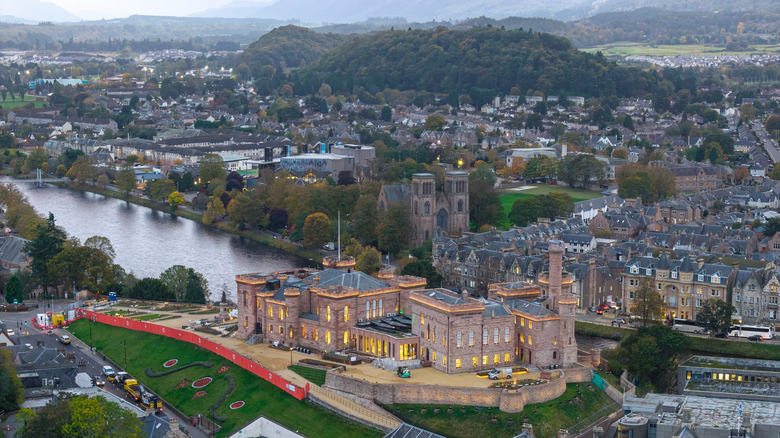
The capital of the Highlands, Inverness is considered a good starting point for anyone heading into the Highland wilderness or a base for visiting Loch Ness. But this small city rewards those who linger a little longer. A castle has occupied this strategic site for centuries, although the present red sandstone structure dates to the middle of the 19th century — a mere toddler compared to others around the country. Still, it looks impressive, and below, walking paths follow the River Ness, which flows from the mysterious, monster-haunted waters of Loch Ness.
They pass by war memorials, parks, and restaurants, and the occasional riverside hotel bar before entering a wooded chain of islands linked by iron footbridges. It's a beautiful stroll, and when you walk back down the other side, you'll see the city cathedral's dual towers breaking through the canopy. Inverness Cathedral was the first cathedral to be fully built and consecrated in Great Britain since the 16th-century Reformation, when Henry VIII broke ties with Rome and founded the Church of England.
Back in the center, the quaint Victorian Market has live music filling its halls, while shoppers browse the quirky shops for souvenirs and Highland gifts. Come evening, the live music shifts to the bars. Hootananny and The Highlander are among several venues with live traditional music, while the Market Bar is a tiny place with a long history of live performances. Other attractions in the city include Culloden Battlefield, the site of the last ever pitched battle on British soil. And, just north of the city at Chanonry Point, visitors have an excellent chance of spotting bottlenose dolphins from the shore. The Moray Firth is home to a resident population of around 200, and the animals can be seen here year-round, though sightings are more frequent in summer.
Bristol, England
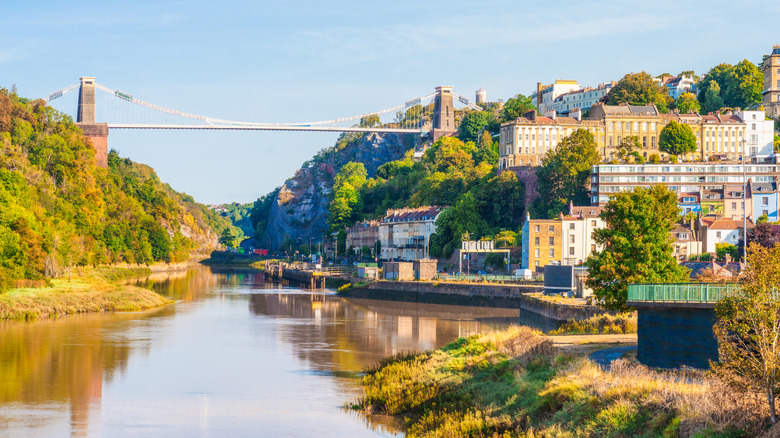
Legendary street artist Banksy is said to hail from Bristol, and he has left his satirical works across the city's walls. You can take tours to see many of his famous murals, but the arts have been around for a long time in these parts. The Bristol Old Vic, for example, is the oldest continuously running theater in the English-speaking world, and you can still catch shows ranging from the classics to cutting-edge contemporary productions.
But it's the city's iconic Clifton Suspension Bridge, strung between wooded cliffs above the River Avon, that everyone knows. It was designed by Brunel and has stood since 1864. Just over two decades ago, a builder stumbled upon hidden chambers beneath the bridge, adding intrigue to any bridge tour. Shopping is another reason to visit. St. Nicholas Market is nearly 300 years old and is home to the city's largest collection of independent retailers, while Gloucester Road is one of the longest unbroken runs of independent shops in Europe.
However, it's the nightlife that attracts many visitors. With venues like Thekla, a moored cargo ship converted into one of Bristol's best-loved live music venues, and The Apple, a cider pub on a moored boat nearby, there's plenty of variety. In fact, the Campaign for Real Ale (CAMRA) refers to Bristol as the cider capital of the U.K., and the Coronation Tap is the city's oldest cider house. However, the city's underrated status may be under threat, as it has recently been named one of the best places in the world to travel in 2026.