
11 Tips From Rick Steves To Help Tourists With Limited Mobility Travel To The Fullest
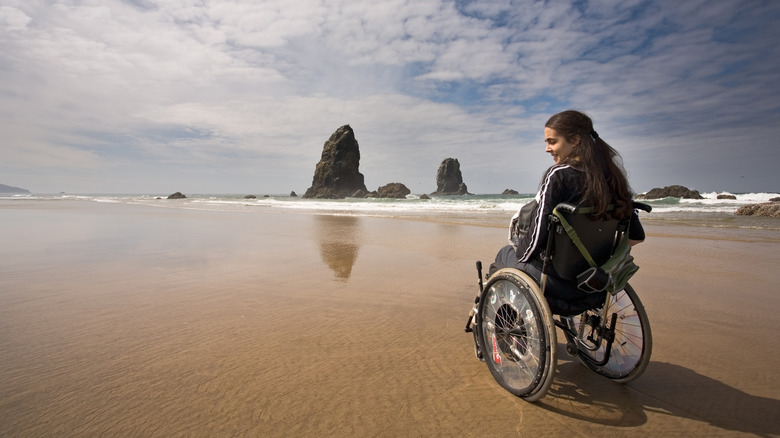
For those of us living with limited mobility, experiences others may take for granted can often require a good deal more planning. But as travel expert Rick Steves has emphasized many times over the years, those once-in-a-lifetime experiences you can only get through travel can be more accessible if you're willing to put in the research and plan ahead.
The go-to source for advice on getting around Europe like a local, Rick Steves has always been passionate about helping everyone make the most of their travel, offering some of the best tips out there for folks with mobility needs. "Easy Access Europe," the Europe travel guru's no-longer-in-print travel guide for Europe-bound travelers with limited mobility, was last printed in 2006. Keen to disseminate the book's useful advice for tourists heading to a continent where cobblestone streets and narrow stairwells are entirely common, Steves has even made the book available in PDF form in its entirety via his Rick Steves' Europe website.
Between the author's accessible travel guide, podcast, and website, travelers with mobility needs can find a wealth of advice that works well no matter where you're planning to travel. Here's a compilation of some of Rick Steves' best advice for making vacations more pleasant and accessible for everyone, regardless of mobility issues.
Make accessible public transportation central to your planning
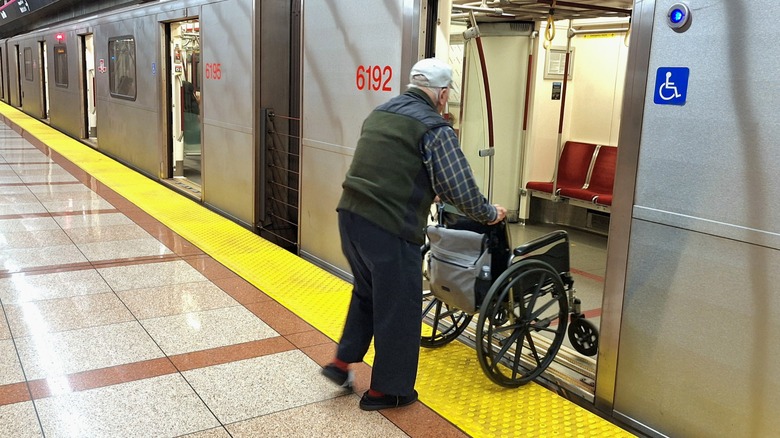
The Rick Steves' Europe expert-penned web article "Tips for Travelers in Europe with Limited Mobility" recommends researching accessible public transportation as an important money-saving travel essential. For individuals who might not typically use a mobility device but experience chronic pain or other mobility challenges, even a short walk can be difficult. For wheelchair users, getting around to shop or sightsee can be equally frustrating — not to mention costly. You might get a good discount on a hotel room, but if it means having to shell out for accessible cab fare every time you leave, the cost can add up pretty quickly.
In the U.S. and abroad, many major cities will have a range of public transportation options, such as bus services, subways, trains, trams, and ferries. As part of your planning, research the public transportation system where you'll be staying to learn what it is like for travelers with mobility needs. Writing on Rick Steves' website, senior and disability travel expert John Sage recommends (when possible) booking accommodations near an accessible public transportation option. If you're staying someplace where this isn't an option, Sage recommends booking your room as close to the heart of the travel scene as possible.
Visit mobility organizations for online travel advice

Several wonderful organizations exist to aid travelers with mobility and accessibility needs — so many, in fact, that Steves devoted an entire section of his book "Easy Access Europe" to discussing them. The disability-led nonprofit organization Mobility International USA (MIUSA) is an excellent resource for individuals preparing to travel with a physical disability. MIUSA's website contains advice from folks experiencing similar challenges and covers a wide range of topics from tips on choosing the right luggage to a how-to guide on charging wheelchair batteries while abroad.
The Society for Accessible Tourism and Hospitality (SATH) is a global nonprofit organization comprising travel industry professionals, travelers with disabilities, corporations, and other stakeholders, all working to help make travel more accessible for everyone, regardless of need. The SATH website offers resources on everything from navigating airport security to accessible island golfing. Steves also recommends checking out the International Association for Medical Assistance to Travelers (IAMAT) website, which includes recordings from the Travel Unravelled podcast focused on the intersection of travel and health, including many topics that may be of interest to individuals traveling with mobility needs.
Check out the government's resources

Rick Steves' book recommends a number of disability travel resources available courtesy of the United States government agencies. Steves also emphasizes the importance of understanding your protections under U.S. disability law and what to do when airlines won't accommodate your disability, topics many of these resources cover extensively.
The U.S. Centers for Disease Control and Prevention (CDC) website maintains a page called "Traveling with a Disability," where travelers can find advice on air and cruise travel, along with links to several informative topics. The CDC also maintains a CDC Yellow Book page for travelers with disabilities. Here, site visitors can find extensive resources and information on topics like global disability rights frameworks, along with a fairly comprehensive list of online resources for individuals with disabilities.
The U.S. Department of Transportation also provides several resources for travelers with disabilities. Included among them is the DOT's detailed breakdown of the Airplane Passengers With Disabilities Bill of Rights, which explains the 10 fundamental rights protected under the Air Carrier Access Act. Cruise travelers can find specific information on traveling with special needs inside the Federal Maritime Commission's Cruise Vacations: Know Before You Go booklet. Travelers with disabilities can also contact the U.S. Department of Justice ADA Info Line at 800-514-0301 to learn more about how disability law protects them when traveling.
Plan your trip well in advance

Throughout Steves' website and book, the writer advises booking early to ensure you get the support and accommodations you need. It stands to reason that the longer you wait to book, the fewer options will still be available — and those options won't necessarily be the most inclusive ones.
Hotels outside the United States can often run with fewer disability-friendly accommodations, making it necessary to book your rooms as early as possible. In his advice on Rick Steves' website, disability travel expert John Sage emphasizes that some European hotels may have only one or two accessible rooms, and these rooms tend to book up well in advance. Sage also recommends researching ahead of time to find out which accommodations a hotel may have, noting that "accessible" doesn't necessarily guarantee the same amenities travelers might expect in the United States.
This principle can also hold true for air travel. Writing in "Easy Access Europe," Steves warns that legal protections on paper don't always pan out in practice — which is why it's important to research a carrier's specific policies and track record for serving passengers with mobility needs. The author recommends contacting the airline ahead of booking to alert the carrier to your needs and ask any key questions about boarding and mobility chair storage. Even so, it's important to research carriers and find the best airlines for wheelchair passengers. "Unfortunately, it is not uncommon for a passenger with a disability to be assured over the phone that his or her needs can be accommodated, only to find that employees at the gate have a different understanding of policies and procedures," Steves advised (p. 38). Booking ahead as far in advance as possible can help you get the services you need, although nothing is guaranteed.
Arrive at the airport early
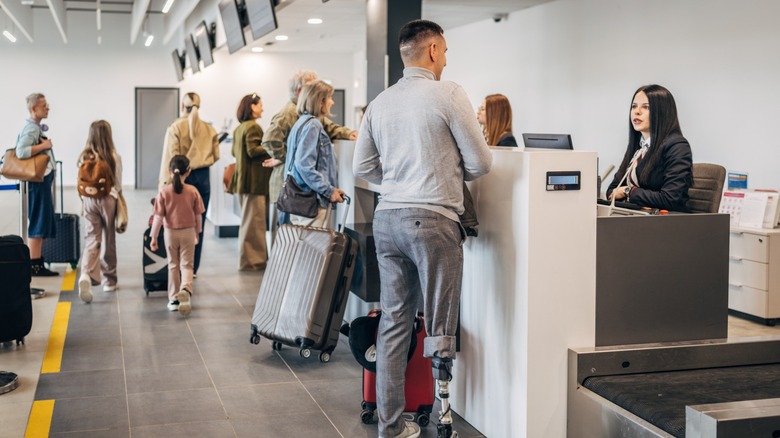
When it comes to unexpected airport snafus large and small, buffer time can be a lifesaver. This can especially prove true for travelers with disabilities who are flying with a budget airline, as one Rick Steves reader advised. In a reader comment Steves shared in "Easy Access Europe," the experienced traveler wrote, "If you're flying a no-frills airline and you have asked for wheelchair assistance, you are not by any means guaranteed to receive that service" (p. 41). The reader went on to observe that some smaller airports may use mobile steps or buses to transport travelers from terminal to tarmac, creating additional challenges for wheelchair users and making it even harder to make that flight. To that end, the reader recommended checking in as far in advance as possible.
Steves recommends arriving at the airport at least one hour ahead of your normal check-in time. This gives you plenty of time to work out details, such as how you'll be transported onto the plane or how you'll communicate with the baggage crew to arrange reuniting with your wheelchair after landing.
Choose your flight length wisely

Even without additional mobility challenges, every additional layover added onto a flight creates the potential for a missed connection. For travelers navigating busy airports with a mobility scooter, wheelchair, or chronic pain issues, having to rush through a busy airport is like vacationing on hard mode, and it's the last thing you need standing between you and the trip of a lifetime. "When making ticket reservations, request a bulkhead aisle seat, and take a plane that is nonstop," advised one Rick Steves reader in "Easy Access Europe." A nonstop flight removes the need to navigate an additional airport, reducing the stress of difficult transfers and the physical demands of the journey.
On the other hand, some travelers with mobility needs may prefer shorter flights to avoid the frustration of a tiny airport lavatory. If you're in Camp Shorter Flights, Steves recommends scheduling at least two hours between connecting flights to allow plenty of buffer time for boarding and deboarding. Steves also notes that waiting for a wheelchair or mobility scooter to arrive at the gate can tack time onto your airport navigation, all of which can add to your need for more layover buffer time.
Consider an accessible tour

In an article on Rick Steves' website, disability expert John Sage recommends using an accessible travel tour as one of the best ways to plan your dream vacation with mobility issues. Writing in "Easy Access Europe," Steves also recommends tours that specialize in accessible travel as a good option for tourists who would "rather not go it alone," (p. 41). "A company that specializes in accessibility will lead you on the flattest, smoothest, shortest tour routes," Sage emphasizes, offering a list of considerations to research before booking.
Sage recommends checking whether the tour guide is a licensed professional, how much training they have completed, and whether they plan to physically assist clients if necessary. Find out whether the tour is a public or private one, how many travelers will be with you, and what type of route they'll be taking. Sage also suggests inquiring about approximately how many tourists with disabilities they've worked with in the past year, since regulations regulations can change over time. Rick Steves' website includes links to a handful of sources for finding accessible tours, such as the Group Trips tab on Wheel in the World, Responsible Travel's accessible tours list, and the extensive tour offerings available from Sage Traveling.
Even if you don't typically use a wheelchair, consider one for your trip
Writing on Rick Steves' website, MIUSA CEO and co-founder Susan Sygall advised, "Let wheelchairs help you." If your health needs typically include limited mobility and/or chronic pain, but you don't use a wheelchair or scooter in your day-to-day life, renting one for your trip can be a real game-changer. Pain and mobility challenges can really put a damper on your travels, slowing everything down and limiting how much you can comfortably see. "People who have difficulty walking long distances may want to bring a lightweight wheelchair or borrow or rent one when needed," Sygall recommended.
And don't forget about all the airport walking you'll need to do. "If you don't own a wheelchair, but need to use one at the airport, request a wheelchair and assistance from the airline," Rick Steves advises in "Easy Access Europe." Some museums and tourist attractions may also offer wheelchairs to borrow, free of charge. Check ahead of time if you anticipate needing one while you're visiting these attractions.
Check out the bathroom situation ahead of time
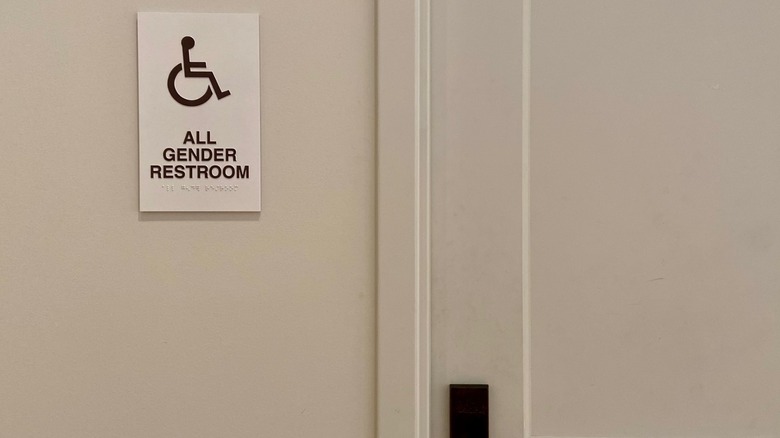
Rick Steves' "Easy Access Europe" airport advice includes discovering the bathroom situation before you end up in a situation you don't love. "Most airplanes lack accessible bathrooms," Steves writes. "Either work out alternative systems for dealing with this issue (such as limiting fluids immediately before a flight) or book flights on planes with accessible bathrooms" (p. 39). John Sage of Sage Traveling shares a similar recommendation for sightseeing on Rick Steves' website, recommending tourists ask guides about the locations of any accessible bathrooms along the route they'll be traveling.
If the bathroom outlook isn't great, at least you'll know what to expect, and a little preparation can help make the experience less stressful. Sharing on Rick Steves' "Tips for Travelers in Europe With Limited Mobility," MIUSA's Susan Sygall advised, "Don't let bathroom access stop you." Sygall says flexibility is key here, whether that means transferring in tight spaces or finding another discreet way to go. "You gotta do what you gotta do," Sygall mused. "Bring along an extra pair of pants and a great sense of humor."
Anticipate potential cultural differences
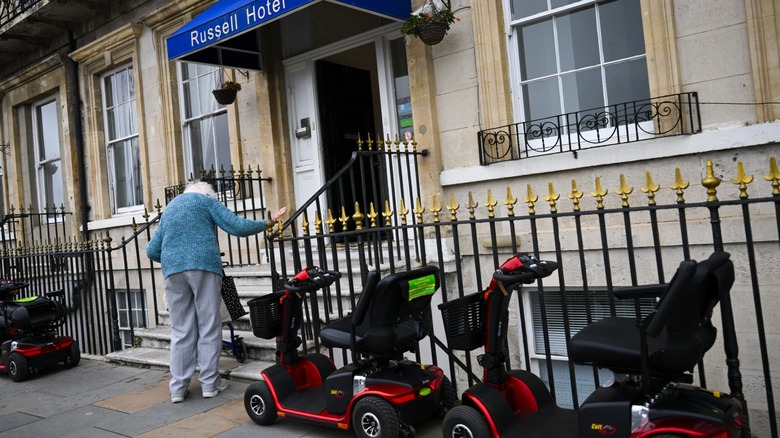
If you're planning to travel outside the United States, it's a good idea to learn about your destination country's cultural norms, expectations, and facilities regarding disabilities and accessibility before traveling. Knowing what to expect can help you avoid unpleasant surprises. In her contribution to Rick Steves' "Tips for Travelers," electric wheelchair user Carole Zoom emphasized that this can be an unpleasant surprise for unsuspecting U.S. citizens traveling outside their home country. "We live in an increasingly barrier-free world. But Americans going abroad need to be more aware and vigilant about accessibility than they are used to at home," Zoom opined.
Accessibility culture in the United States has been largely impacted by the Americans with Disabilities Act, which has helped to create a legal framework that emphasizes independent access and individual autonomy. However, different countries have different approaches to accessibility. For example, while the United States might see entryways repaved for independent access, European entryways might feature a step, with the assumption that a wheelchair user's family will be available to help the individual over it. "Policy tends to be focused on helping people with disabilities navigate a society built for nondisabled individuals — instead of helping society find ways to accommodate their needs," Zoom explained.
Along the same lines, mobility scooters are not always perceived as equal to wheelchairs in terms of necessity, with users often expected to walk a short distance. They're also less likely to fit in Europe's older elevators, which tend to be much smaller than they are in the United States.
Learn a little of the language

If you're planning to travel somewhere English isn't the primary language, anything you can do to eliminate that language barrier could prove a huge help when it comes to requesting accommodations. Sharing on Rick Steves' "Tips for Travelers," disability advocate Susan Sygall recommended trying to learn what you can to help communicate with the locals, noting that this comes in handy when you need assistance getting over a curb.
Rick Steves' reader tips in "Easy Access Europe" also emphasized the value of asking for help. "Being shy is a real liability in traveling to a foreign place. Most people are very friendly and helpful," shared one reader. Another wrote, "Asking for help and smiling a lot gets you all kinds of assistance," adding that the staff on one Belgian railway had gone out of their way to help them navigate a train change before calling ahead to ensure there was a wheelchair waiting for their party upon arrival at their destination.