
These Gorgeous French Wine Regions Serve Up Fairytale Views With Every Sip
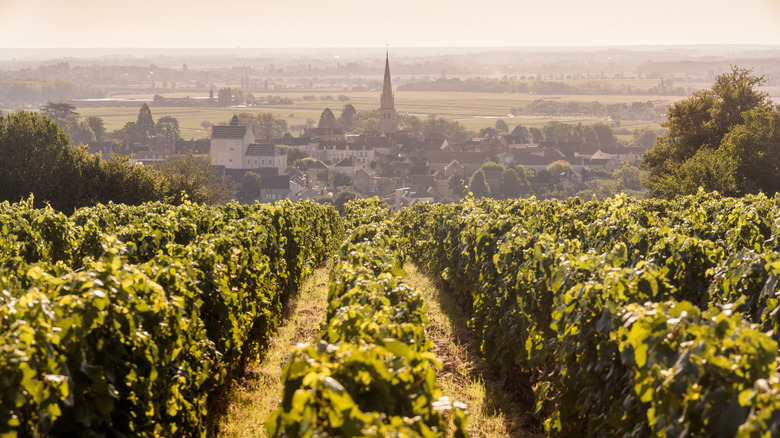
As the French say, "La vie est trop courte pour boire du mauvais vin," or, "Life is too short to drink bad wine." Depending on who you ask, there are 17 French wine regions, and within these greater regions are "appellations," legally defined geographical areas that guarantee a wine's origin and quality (not to be confused with terroirs, which are the scientific factors like soil, climate, topography, and human activity that impact wine). To summarize: France is huge (it's even one of the largest countries in Europe), has a diverse geography, and therefore very diverse wine. Couple that with centuries of tradition, and you're guaranteed to find good wine in France.
On this list, you'll find both well-known wine regions of France and more off-the-beaten-path destinations. Burgundy and Champagne will be included, but so will France's only Alpine wine region, Savoie, and Lot, home to the "black wines of Cahors." Discover chateaux-lined valleys or vineyards along the Mediterranean, regions within an hour of Paris, and some a full day's train away.
Each region is characterized by certain grape and wine varieties, of course, but also its own traditions, history, villages, castles, and scenery. There's one thing for sure: whichever wine region you choose, you'll be savoring fairy tale views with every sip.
Bordeaux
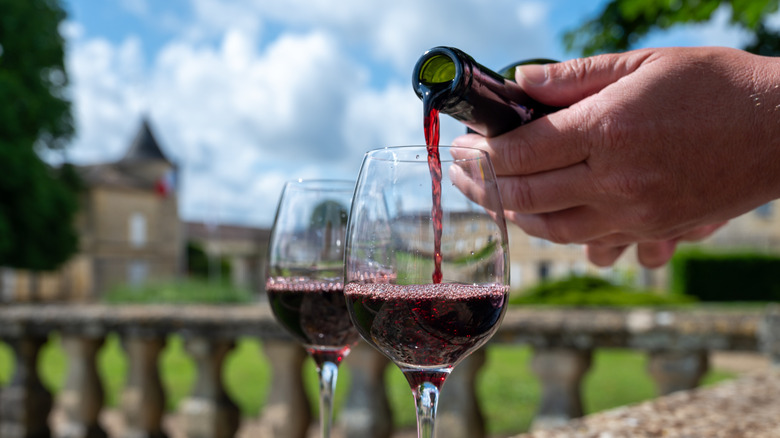
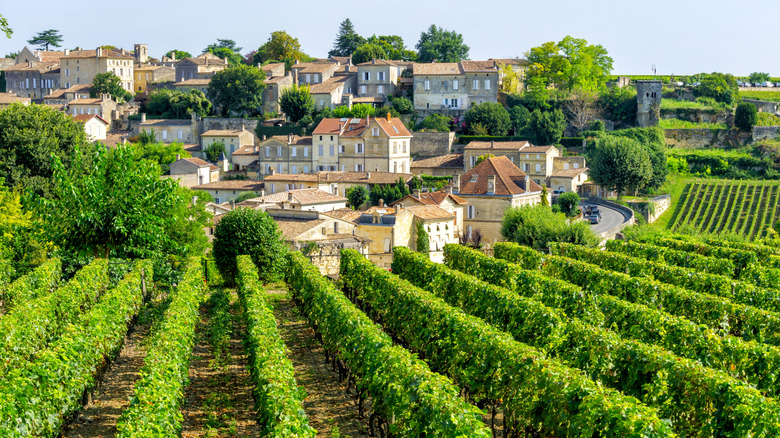
Bordeaux is the ultimate wine region, both within France and globally. Even those who've never sipped wine have heard of Bordeaux. Bordeaux is where you go looking for some world-famous red wines, made in the cellars of ancient, prestigious winemakers. Bordeaux is loosely split into three regions, based on geography: three rivers run through the region, the Gironde, the Garonne, and the Dordogne, and become natural barriers between the "Left Bank," the "Right Bank," and the "Entre-deux-Mers," loosely translated to "between two seas." The Left Bank is known for its Cabernet Sauvignon, the Right Bank is famous for Merlot, and Entre Deux Mers is, surprisingly, best known for its whites, like Sauvignon Blanc.
The town of Bordeaux itself is also one of the most beautiful in the country, a cherry on top of the excellent wine. Around 2.5 hours from Paris via train, it's the ideal city to base yourself during your explorations of Bordeaux (join a tour, rent a car, or borrow a bike to get deep into the wine country). North of Bordeaux lies the subregion of Médoc, home to some of the most esteemed wines in the world at the "Grand Cru Classé" vineyards, an award ("Great Classified Growth") given to winemakers who have consistently produced the highest quality wines. Médoc is also home to the "Route des Châteaux," a wine-and-château route that takes visitors to countryside estates, breathtaking vineyards, charming wineries, and idyllic villages.
Burgundy
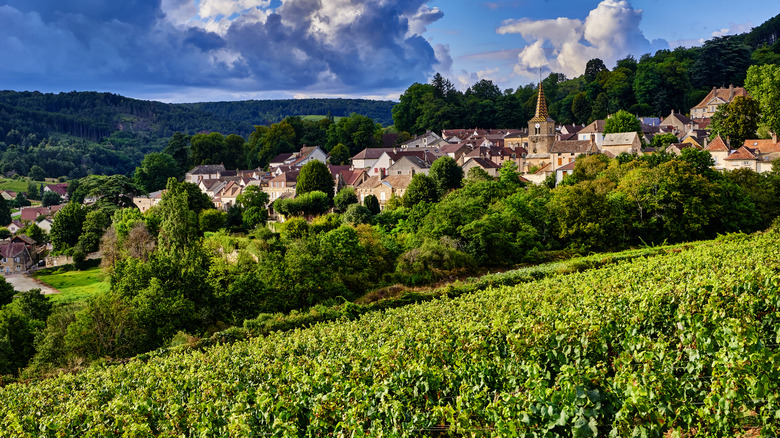
Another of the most recognizable wine regions in France, Burgundy (or Bourgogne) is known for its Pinot Noirs and Chardonnays. The winemaking history dates back to at least the Roman times, earning UNESCO World Heritage status as "Les Climats du vignoble de Bourgogne," or "the Climats, terroirs of Burgundy." The climats are designated vineyard plots within Burgundy considered to have their own terroir, or microclimate, geology, and growth shaped by humans over centuries.
While there are many places to base yourself while exploring Burgundy, like Dijon (more than just mustard) or Lyon, consider Tournus, a wine haven with medieval streets and Michelin-star feasts. Tournus is between three and four hours southeast of Paris by car or train, and one to two hours north of Lyon. Many of the "wine houses" in Burgundy aren't open to the public, so double-check hours before your visit. The region also features over 100 festivals and events throughout the year, like Les Œnogourmandes de Tournus, when the Saint-Philibert Abbey in Tournus opens its doors to local winegrowers and chefs to delight your senses. To explore Burgundy, select several to explore on foot, cycle along the Véloroute, rent a car, or even see the vines from above on a hot-air balloon.
Loire Valley
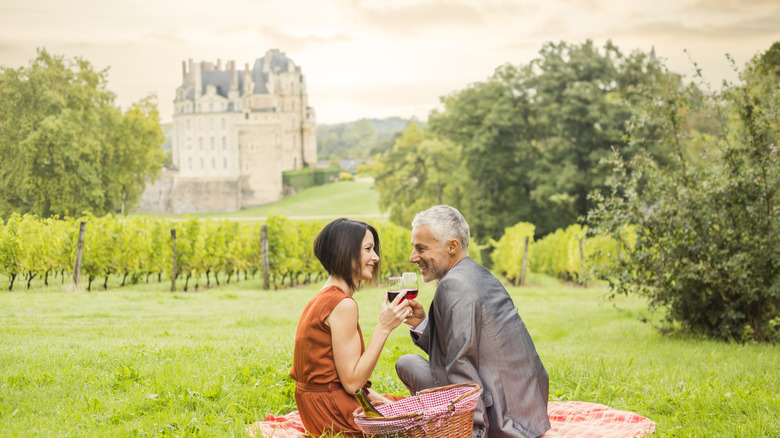
The Loire Valley is perhaps the most fairy-tale wine region in all of France, featuring medieval villages, stunning châteaux, and, of course, historic vineyards (primarily known for their white wines), all set against the idyllic Loire River. It's also well-located, with one of its best towns, Tours (noted for its delicacies and half-timbered houses), about 1.5 hours from Paris by train. There's also Clisson, a medieval town hidden in this underrated wine region, that makes an ideal base for exploring the less-discovered part of the Loire Valley, although it's much further from Paris: about three to four hours by train or car.
The Loire Valley is home to France's longest wine route, comprising over 1,000 vineyards open to visitors. In addition to the excellent Sauvignon Blanc — try it at the famous Pouilly-Fumé or the more budget-friendly Menetou-Salon — make sure to visit some of the palatial estates and châteaux, such as Château de Chambord or Clos Lucé.
Beyond white wines, the Loire Valley produces a diverse range of wines, including sparkling, red, and rosé. Lovers of dessert wine will enjoy the valley's signature late harvest Chenin Blanc, from winegrowers like Quarts de Chaume or Coteaux de l'Aubance.
Champagne
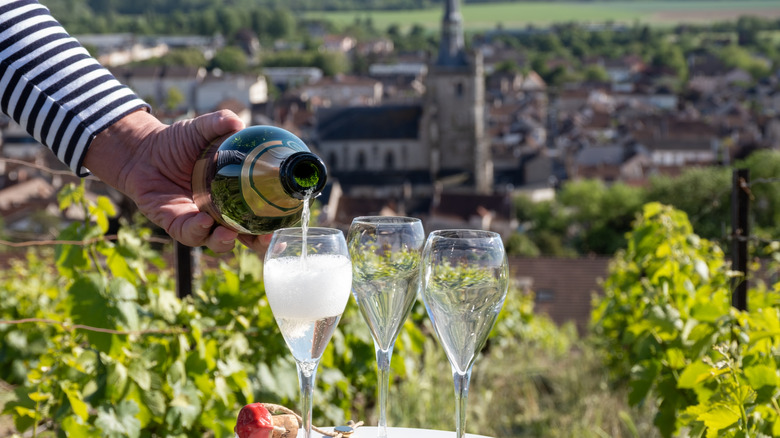
Even if you've never set foot in France or sipped French wine, you've heard of champagne, the classic bubbly wine. Visit the region where that famous monk, Dom Pérignon, first "drank stars," and of course, taste a variety of authentic champagnes. Only wines made in Champagne itself can be christened "champagne," and must follow specific rules to gain the designation. Seven grape varieties can be used, made into champagne via the méthode champenoise, or "traditional method," in which a second fermentation occurs in the bottle — that's when the bubbles form.. Then, the bottles mature in cellars for at least 15 months, but sometimes up to three years. That champagne price tag is starting to make a bit more sense now, no?
To explore the Champagne region, base yourself in Reims, only about 45 minutes from Paris via train, where you'll want to see the gorgeous cathedral, or travel a little further to Epernay, considered the center of Champagne production. Walk along Avenue de Champagne in Epernay to sample champagne from the famous maisons (houses) that line the picturesque street. Try the bubbly in Moët et Chandon's famous, awe-inspiring cellars, and visit smaller producers as well. Experts recommend just two maisons per day, despite the temptation to see as many as possible, as tastings are usually around two hours long. End your day with a walk through the vineyards.
Rhône Valley
The Rhône Valley stretches from the Swiss Alps down to the edges of the Mediterranean, forming the second-largest wine region in France. Since it's so large and the climate varies so dramatically, it's generally split into two sections: Northern Rhône, the "Land of Syrah," and Southern Rhône. Both areas offer excellent wines, charming towns, and stunning views.
The Rhône River begins in the Swiss Alps, passes Lake Geneva before meeting the Mediterranean in the South of France. "The Rhône Valley is one of the most prestigious and geographically diverse winegrowing regions in the world...From smooth nectars to grand crus with excellent ageing potential, take a trip through these terroirs for red, rosé and white wines with a truly distinctive character," says Anne Schoendoerffer of Taste France Magazine. Home to 14 separate wine routes, the main issue with the wonderful Rhône Valley is choosing where to go (and what wines to taste).
To explore the Northern Rhône, known for its strong Syrahs, base yourself in either Tain l'Hermitage or Tournon, connected on either side of the river by a bridge. These towns are best accessed in about a one-hour drive from Lyon. In the southern part of the valley, Châteauneuf-du-Pape reigns supreme (both the village and the winegrowers), although you could stay the night in nearby Avignon for more accommodation options (25 minutes away).
Provence
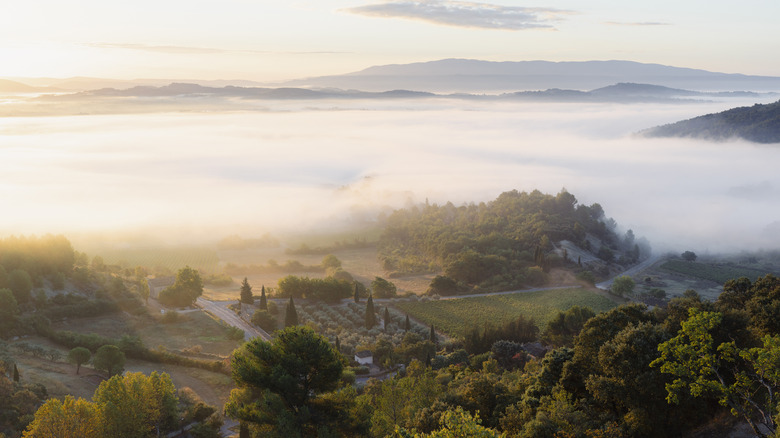
The iconic lavender fields of Provence are also home to some of the country's best wines, especially rosé. In fact, a glass of rosé in Provence is almost a cliché, but it's not just a fantasy: you, too, could be sipping a glass of perfectly pink wine overlooking either the Mediterranean or a different type of sea, of waving lavender. Lavender season runs from May to early August, so plan your visit then if you want to see the fields in bloom.
Provence can produce so much fine rosé thanks to its quintessential Mediterranean climate, with mild winters and sunny summers. Provence's location near the French Riviera also makes it a dreamy holiday destination, especially paired with destinations like Nice, Cannes, or Saint-Tropez. The historic capital, Aix-en-Provence, is well connected to the rest of France by train, though a car makes it easier to visit the region's many sunny wineries. If you get tired of the light, refreshing Provençal rosé, visit Bandol for a smoky red or the port town of Cassis for the region's best whites.
Alsace
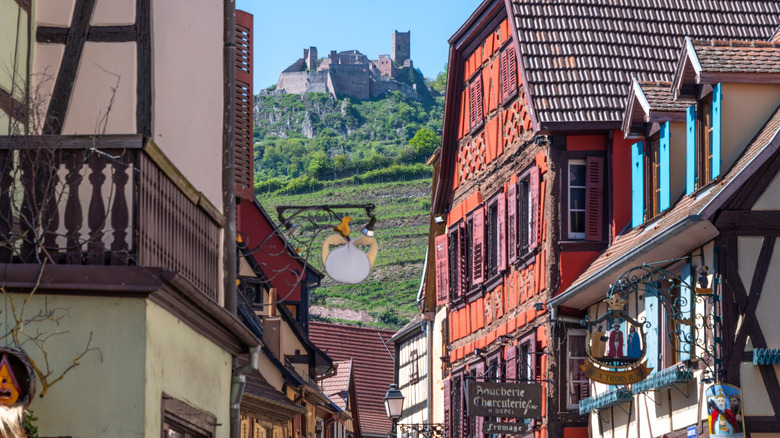
Alsace, a region in France along the border of Germany, has a turbulent history, transferring between the two countries several times over the centuries. Alsatians generally embrace their dual heritage, evidenced in the language, architecture, and, of course, their incredible white wines.
When it comes to wine, Alsace embraces its German roots, as it's the only wine region in France that christens its wines in the German way, by grape varietal, rather than by the traditional French appellations. Even the bottles have a similar curve to typical German wines. Of course, the French influence is still evident. As one expert notes on Wine Spectator: "This proud French wine region offers a unique 'double culture,' blending French heritage with German influence."
When talking about French fairy tales, you'd be remiss not to mention the sleepy, half-timbered villages of Alsace, such as Colmar. Colmar, a picturesque fairytale town often called one of France's prettiest, is known for its Christmas markets, where you can pair one of the region's famous Rieslings with melty raclette for the ultimate cozy meal. If you visit in the autumn or spring, it's best to visit the wineries on a bike, so you can visit every cellar along the way.
Alsace is easily reached via Strasbourg, the regional hub about an hour from Colmar — and a lovely destination itself, with canals, half-timbered houses, and famous Christmas markets.
Languedoc-Roussillon
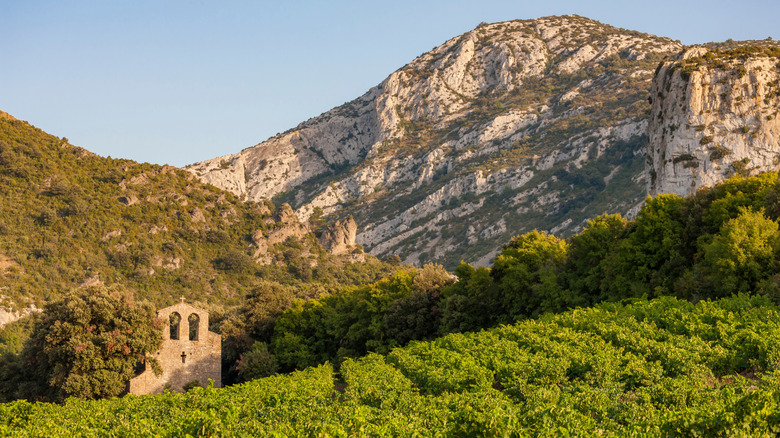
Languedoc-Roussillon, or just Languedoc, is France's largest wine region, although many foreigners have never heard of it. That's a shame, because this picturesque region along the Mediterranean is home to some of France's largest and oldest vineyards. It's also considered one of the best wine regions in France for those on a budget, as you can find nearly any style of wine at a variety of price points. Plus, this little-known corner of France is more authentic than its crowded neighbors, like Provence. One expert notes on Wine Spectator that, although Languedoc "is easily accessed by train from both Paris and Barcelona," it does feel "less commercial" so "it might be a little more challenging to make winery/vineyard visits unless you have some French to get around with, but that's offset by many of the local restaurants and bars sourcing largely from winemakers of the region."
Languedoc, in addition to being France's largest wine region, is one of the biggest wine regions in the world. It produces one-third of all French wine (and exports 40% of the country's wine) across over half a million acres (220,000 hectares) of vineyard. Some hail Languedoc's soil as the best in France. It's particularly known for its blended wines, primarily red, but you can find all varieties: red, white, rosé, dessert, sparkling, still, and even orange wine (not just for hipsters).
Stay in Nîmes, around three hours from Paris by train, or Montpellier (3.5 hours from Paris) for a city feel. Take a break from the wine tastings with a day trip to the famous medieval walled city of Carcassonne, about two hours from Montpellier.
Jura
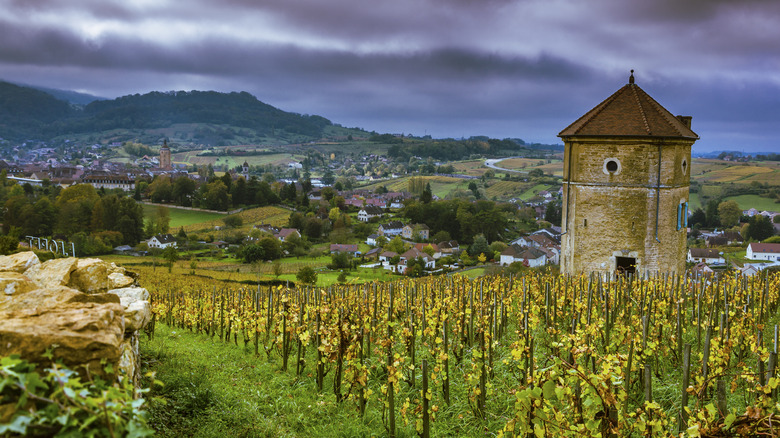
Jura, one of France's lesser-known regions, feels like stepping back in time. The hilltop towns and family-run wineries seem like bucolic countryside, yet their wine is world-class. France's smallest wine region, the Jura, is also one of the top up-and-coming regions in the country, hidden away between the famous Burgundy and the border with Switzerland. "This hidden gem offers a mix of rustic character, alpine beauty, and distinctive wines. What makes the Jura so special is its authenticity with small, family-run domaines, centuries of tradition, beautiful scenery, and, of course, incredible Comté cheese," says one expert on Wine Spectator.
The Jura is most famous for its "vin jaune," or yellow wine, often called "the gold of the Jura," made from the Savagnin grape. Vin jaune is aged in barrels until a "voile," or film of yeast, develops, giving the wine its distinctive color and nutty flavor. If you visit in February, be sure to attend the annual festival when the year's golden wine is opened — note the unusual shape of the bottles, known as a "clavelin."
The Jura is also a pioneer in biodynamic (organic) wine. To explore this exciting wine region, base yourself in Arbois (four hours from Paris by train), the region's capital, where you must visit Château-Chalon, considered the original maker of "the gold of Jura." And while there, don't forget to try the Jura's iconic local cheese, Comté.
Lot
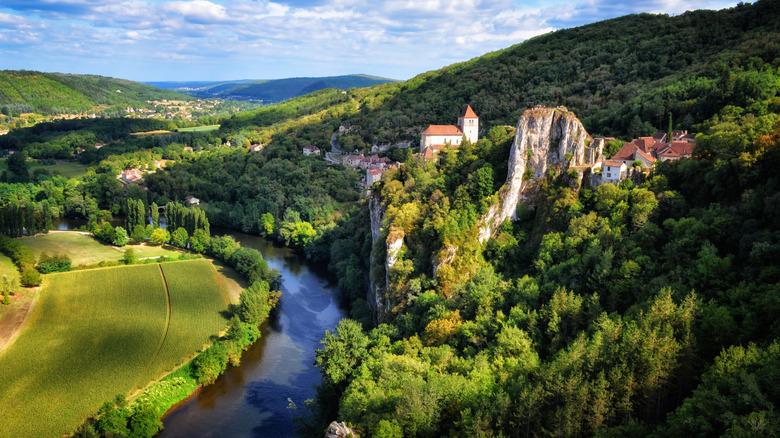
East of Bordeaux is the incredible Lot Valley, a wildly underrated French wine region with fairytale medieval villages and sublime vineyards. The Lot is a unique region of France, home to gravity-defying cliffside villages, dramatic canyons, and the famous "black wines" of Cahors (the area's capital and hub). These so-called black wines are really dark-red Malbecs, known as "côt" in French. While Malbec means Argentina nowadays, these distinctive grapes have been grown in the Lot since the Middle Ages.
Sample these inky reds in the Roman town of Cahors, a picturesque medieval city complete with half-timbered buildings, as well as the ideal base to explore Lot and its environs. Notable winemakers in Cahors include Chateau de Chambert, dramatically perched above the valley with a history dating back hundreds of years. Follow Cahors trail along the river, stopping at other winegrowers like Clos Triguedina and Château Lagrézette, one of the region's most prestigious wineries.
The complex regional wines fit in with the drama of the Lot Valley, which you can visit in the clifftop towns like Saint-Cirq-Lapopie, one of the most beautiful villages in France (officially noted on the list of "Les Plus Beaux Villages de France"), or Rocamadour. To reach the Lot Valley, travel from Toulouse to Cahors, about one to two hours by train or car.
Savoie
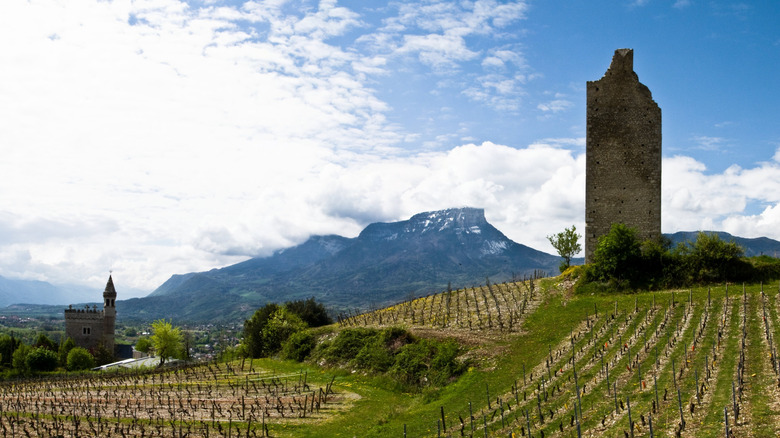
France's only Alpine wine region, Savoie (or Savoy), is perched along the Swiss border and Lake Geneva. It stands out in comparison to other French wine regions thanks to its mountainous beauty, along with its crisp white wines. Savoie is known for its excellent skiing on mountains created by an epic landslide in 1248, which in turn deposited rich, grape-friendly soil at the bottom of said mountains.
Savoie has everything from culinary experiences to delicious wine, and gorgeous landscapes as far as the eye can see. The vines spread throughout the foothills, overlooking some of France's most beautiful lakes, and many wineries are family-run. Stay in the neighboring towns of Chambéry and Aix-les-Bains to take advantage of the Alpine vistas, hot springs, and, of course, delicious wine. Sample wines from all over the region at La Cave du Sommelier in Chambéry, or visit in October for the annual Fête des Vins de Savoie, a showcase of local wines.
To reach Chambéry and the rest of Savoie, drive there from Lyon (1.5 hours) or Geneva, Switzerland (one hour).
Methodology
For this article, we made sure to include well-known wine regions of France and more off-the-beaten-path destinations. Gleaning information from wine experts, travel experts, and experienced travelers, we discovered the best wines from each region, along with its own storied wine traditions. We also used these sources to include recommended wine routes, wineries, villages, cities, and sites, to ensure varied itineraries making the most of France's diverse wine regions. And, of course, we utilized mapping websites, such as Google Maps, to ensure the accuracy of travel times.