
10 Lavish Homes Once Owned By Famous People That Visitors Can Now Tour
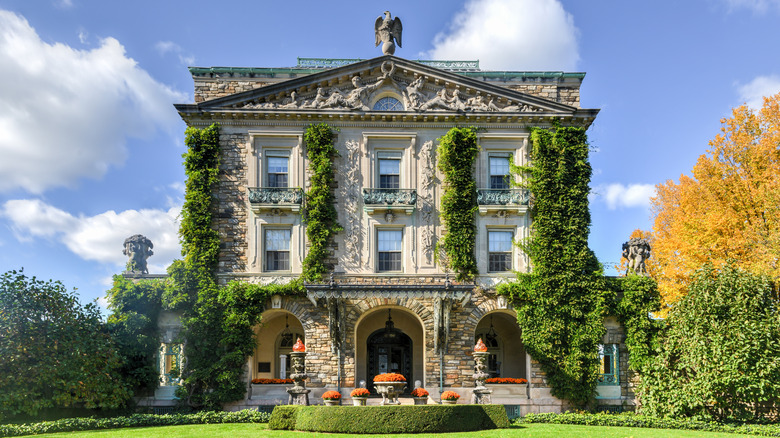
Feeling the weight of wealth and prestige, people of high society have historically coped with their immense prosperity by investing in lavish homes. While some homes of the currently rich and famous are unapproachable to the public, many of these historical homes have either been turned into some of the best museums — or are generally open for tours, allowing visitors to enter into the quarters of those who changed the world.
Some of these options may not be the most ostentatious, but considering the time period in which they were built and the resources needed to construct them, they are all grand expressions of the influential individuals who inhabited them. To find these homes, we researched top "must-visit" lists for countries around the world from travelers' reviews and round-ups. We also dug into historical sources and architectural publications to find out what exactly were behind the doors of the world's most famous homes and what, according to the location and time period, made these homes so special.
New mega mansions are built every day, but how the following homes still stand as relics of times long past are a testament to true "lavishness" of their eras. From the personal living quarters of famous fashion designers to the massive estates of American icons, here are the most lavish homes owned by famous people open to visitors.
Gianni Versace's Versace Mansion
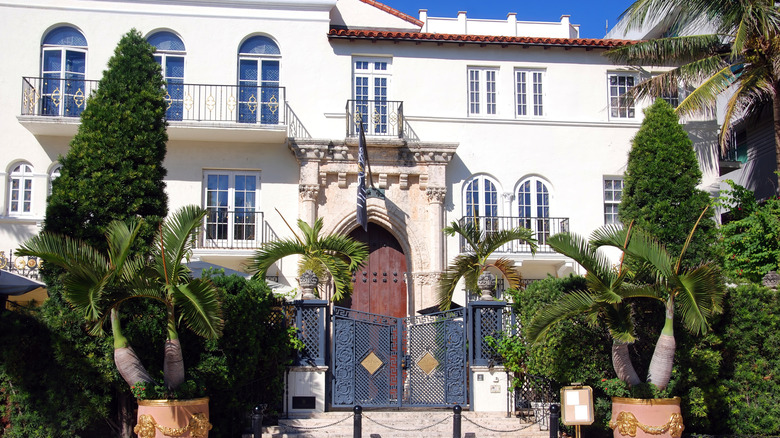
When it comes to lavish homes from the wealthy, the Versace Mansion in the artsy and trendy beach paradise of South Beach may be the first to come to mind. Gianni Versace, the creative extraordinaire behind the luxury Versace brand, purchased the Miami Beach mansion, originally known as Casa Casuarina, in 1992. Versace then went on to invest $32 million in renovations, including adding a pool laid with 24-karat gold tiles, converting the lodging into 10 large suites, and building a copper-domed conservatory. The Versace Mansion's gold-plated moldings, pristine white marble, and expressive wallpapers of natural scenes are the legacy of Versace's presentation of classic Italian grandeur.
After Versace's untimely passing in 1997, the mansion was converted into a boutique hotel and restaurant years later. Guests can even stay in Gianni Versace's private living quarters with a private balcony overlooking Ocean Drive. Other rooms include the Venus Suite, which was originally the bedroom of Versace's younger sister and muse, Donatella Versace. Amenities in the Venus Suite include a custom double queen sized bed, stained-glass French doors opening to private balconies, and a separate sitting room.
The full essence of Versace's mansion can only be captured visually as the contrasting patterns, design, and mosaics somehow coexist aesthetically to create a strong brand associated with Versace. The wrought-iron railings cascading toward the on-site restaurant, Gianni's, and the enveloping dark wood of the Onyx Bar are additions to the unmistakable style of the Versace Mansion.
Frank Lloyd Wright Home & Studio
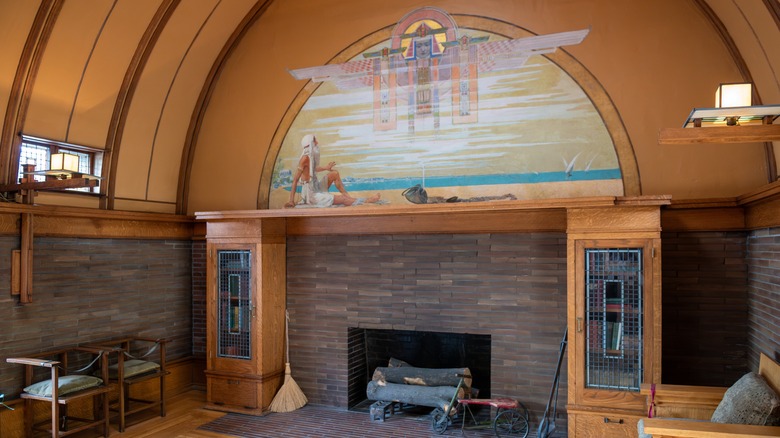
Architecture fanatics and design aficionados alike can get up close and personal with the home and studio that's a striking masterpiece from one of the world's visionary architects, Frank Lloyd Wright. Originally born in Wisconsin, Wright initially found employment in architecture through rebuilding efforts in Chicago after the Great Fire of 1871. At only 22-years old, Wright went on to use a loan from his employer to build his family a home and a personal studio in the Chicago suburb of Oak Park in 1889.
From this personal project, he went on to define a style inextricably tied to the American Midwest. Wright pioneered the Prairie School movement of architecture, overhanging roofs and low, horizontal structures evoking the flat prairie plains of the Midwest. Out of 1,114 designs for homes and structures Wright created, just over 500 were actually brought to life.
Visitors have the option to pair their tour of the home/studio with a historic neighborhood tour of Oak Park, Illinois. Oak Park is a walkable, all-American village right outside of Chicago that's brimming with other works from Wright — so, for an extra $14, it's a deal visitors can't afford to miss. Otherwise, the Home and Studio Guided Interior Tour is still a great way to soak up as much as possible about this famed structure. The properties are only available through guided tours offered daily from 10 a.m. to 4 p.m., but be sure to book tickets in advance.
Frida Kahlo's Casa Azul
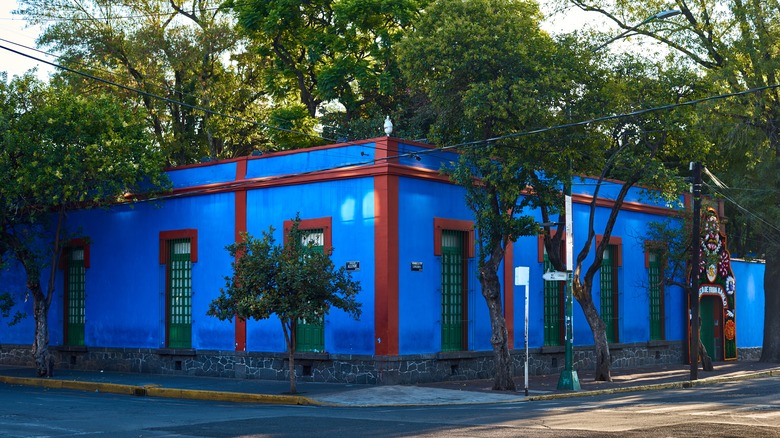
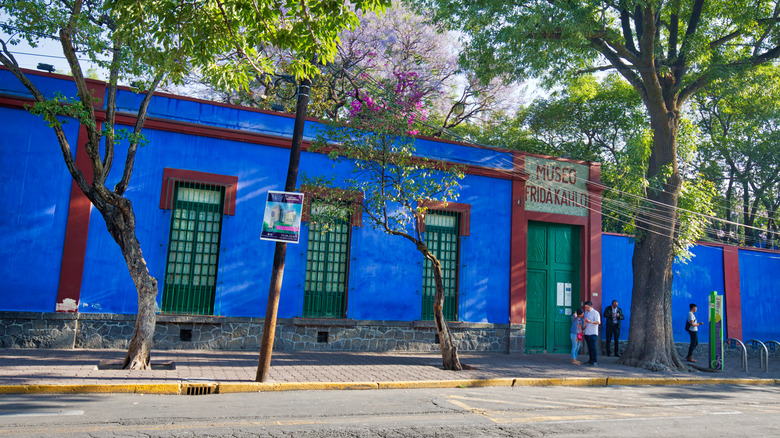
Few Mexican artists surpass Kahlo's legacy of poignant and topical portraiture. During the 20th century, Kahlo became one of the foremost artists in Mexico on the world stage as her work and tumultuous marriage with muralist Diego Rivera made headlines in and out of the art community. Impaired by lifelong complications with polio, her struggle with health often was a central theme to her unique self-portraits. Casa Azul, the cobalt, two-level home in Coyoacán, Mexico City, was where Kahlo was born, lived, and died.
The entirety of Casa Azul is built around a central courtyard and garden while the structure's 10 other rooms are still preserved, including Kahlo's personal bedroom, bathroom, kitchen, study, and art gallery. Kahlo's own manual wheelchair can even be seen, still sitting next to the easel she used while painting in the sun-drenched studio on the main floor. Beyond the deep blue exterior, the yellow kitchen floor and brilliant green French doors offer more lively details manifested from Kahlo's paintings and an ode to classic Mexican design.
The structure is now a part of Museo Frida Kahlo that gives visitors access to Casa Azul and the unfinished paintings, collectible items, and photographs that encapsulate the artist's life. The museum is a popular tourist attraction, so don't wait until the last minute to book tickets. Other Frida-centered tours also give the option of exploring the space, but be wary of increased prices. The museum is open from Tuesday through Sunday and closed during Mexican Independence Day (September 16), December 13, Christmas, and New Year's Day. Pro tip: have a truly unforgettable and intimate experience exploring the museum at night during the last Wednesday of each month.
Samuel Morse's Locust Grove
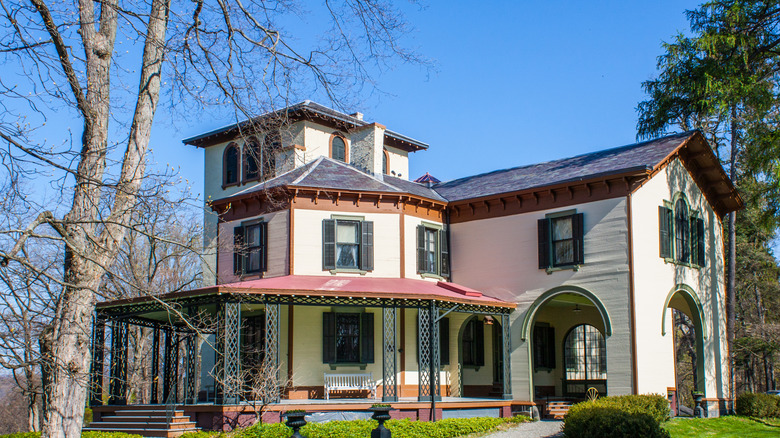
You may not know exactly who Samuel F.B. Morse is, but you're surely familiar with what brought him to fame — he was one of the three developers of Morse code. Before he solidified his name in history, however, Morse made his mark as an accomplished painter during the early 18th century. His own self-portrait and a scene portraying a House of Representatives convening in 1822 are held in the National Portrait Gallery at the Smithsonian and National Gallery of Art archives, respectively. It wasn't until 1844 that Morse, alongside contemporaries, developed the electrical telegraph system known as the Morse Code.
By 1852, the massive Locust Grove, Morse's 14,000-square foot summer home in Poughkeepsie, New York, was completed and he and his family reportedly spent every summer there for about 20 years, until he died in 1872. The home was bought by the Young family in the beginning of the 1900s — descendants of the family have since worked to maintain its condition and open the estate to the public for tours.
With 45 rooms spanning over six floors, the mansion fits snugly in Morse's list of impressive accomplishments. The staff kitchen, dumbwaiter elevator, and tea room are all still in the same conditions they were in during the early 20th century. Visitors can snag tickets for tours of the mansion interior at the Locust Grove Museum Shop. Hours and availability vary by season, so it's best to check the Locust Grove Estate website to plan your trip. Outside of the mansion, don't forget to take a stroll through the 200 acres of land and 5 miles of walking trails.
Franklin Delano Roosevelt's Springwood Estate
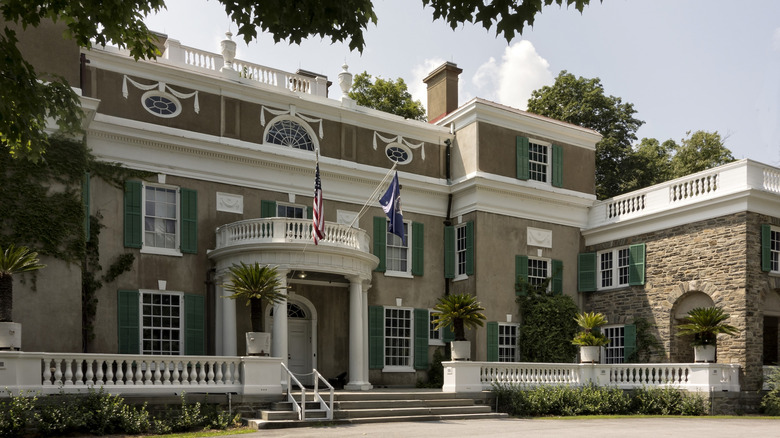
On top of the countryside charm and wealth of trails in Hyde Park, New York, the quaint town is also home to the lavish estate that was both the birthplace and lifelong home of the 32nd President of the United States, Franklin Delano Roosevelt. James Roosevelt, FDR's father, purchased the home in 1867. Eventually, both FDR and his father acquired new parcels of land around the original home, amassing over 1,500 acres at one time within the entire estate. During the president's life, he added two additional wings and external stucco to the original building, an extensive garden, and two separate cottages as retreats for him and his wife, Eleanor Roosevelt.
Around the home, history buffs and visitors can peruse FDR's childhood bedroom, the exterior horse stable, and a library that holds the former president's 3,000-book collection. The home's first floor contains a traditional music room and a dedicated estate administration room known as "the Snuggery." The Roosevelt's fine china and silverware collection was so robust, a designated butler was responsible for safely washing and storing each piece.
Ascending floors hold the Boyhood Room, where FDR spent most of his childhood, the Pink Room, a guest quarters once occupied by Winston Churchill, and Eleanor's Room, where FDR's wife relocated after her husband's polio required attention from medical professionals day and night. Only 898 acres of the estate are now managed by the National Park Service, and Springwood is available only for guided tours on a first-come, first-served basis, with operating hours differing by season.
Prince's Paisley Park
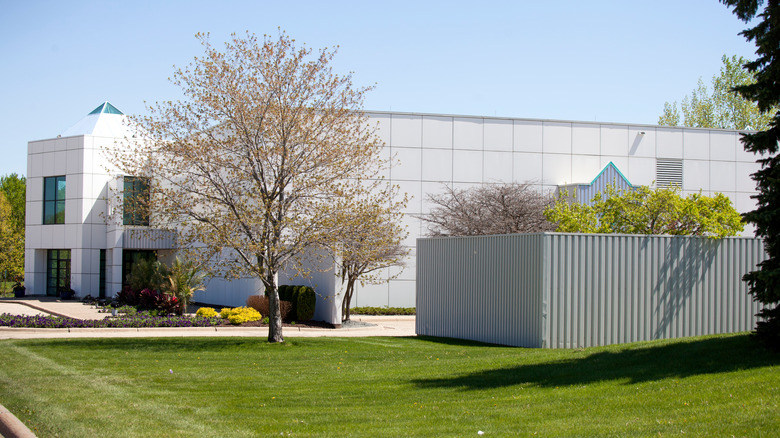
This former home-studio-turned-museum is just as lively as its iconic owner. Just about 30 minutes outside of Minneapolis, Prince's Paisley Park estate served as both a living quarters and hub for music production. The artist artfully constructed the site along the lines of myth and reality, even singing, "Admission is easy, just say U [sic] believe ... Paisley Park is in your heart" in his 1985 song "Paisley Park." After two years, Paisley Park became a bit less abstract when the $10 million, 65,000-square-foot space was finished. The depth of the facilities allowed for Prince to "create in a free, independent and open manner." Since the artist's death in 2016, Paisley Park has become a memorial and museum commemorating his life.
Inside, the space holds any amenities one could think of: four recording studios, rehearsal halls, a private night club that is said to hold up to 1,000 party people, and an outdoor basketball court. Of course, purple-hued lighting is integrated throughout the home in honor of Prince's signature purple palette. Tickets are available at three different levels: The Paisley Experience, The VIP Experience, and The Ultimate Experience. All levels include guided floors of recording studios and sounds stages, but the VIP guest experience pulls the curtain behind Prince's personal vault of unreleased music and displays rare relic from the artist's archives. Super fans who opt for the premier Ultimate Experience get additional access to archives, their own audio playback session in one of Paisley Park's studios, and a special viewing of unseen Prince video footage in the Paisley Park Editing Suite.
Mozart's Tanzmeisterhaus
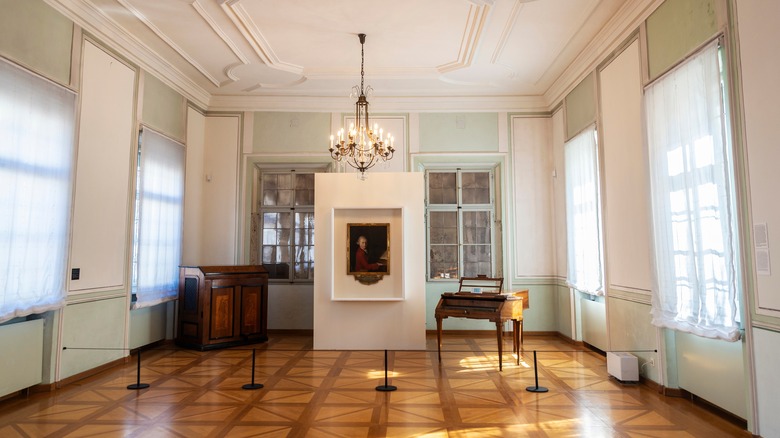
This residence was home to Wolfgang Amadeus Mozart and his family from 1773 to 1787 in Salzburg, Austria. The eight-room apartment was originally built in 1617 and got the nickname Tanzmeisterhaus, or the "Dancing Master's House," from the large central hall that was used to teach the nobility how to dance. The Mozart family would use the large dancing hall for small concerts and the common pastime called "bölzlschiessen," a game of using airguns to shoot darts at paper targets.
Although not vast in space or showy in design, Wolfgang Amadeus Mozart's living space was still stylistic for the time period and beyond. The exterior sports curved stone archways against giant, wooden entry doors. The interior is made up of expanding central halls and rooms with uniquely tiled flooring and detailed crown molding on the ceilings.
Since 1880, Tanzmeisterhaus has transformed into a museum celebrating Mozart's life available for the public to visit. Self-guided tours, open daily, give a look of the interior filled with important artifacts from the composer's life — inside one of the music rooms is the very piano Mozart used to compose his piano concertos after 1781. Free to the public in the Mozart residence is the audio-visual collection of 50,000 recordings related to Mozart's work. The extensive archive holds rehearsal recordings, radio plays, documentaries, and more.
The Rockefeller Family's Kykuit Estate
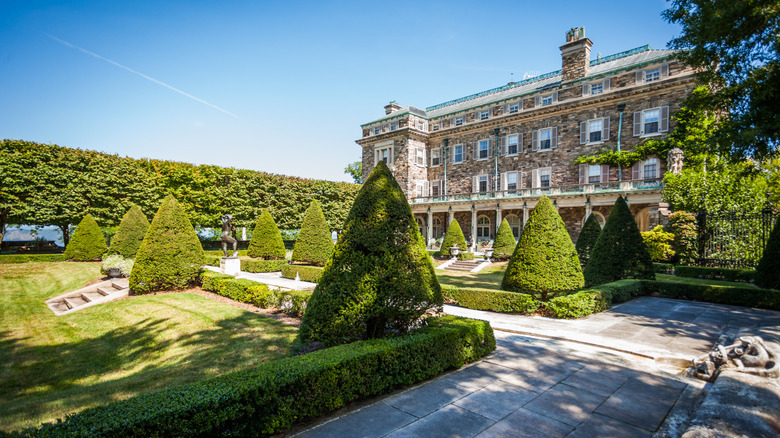
Completed in 1913, the giant mansion along the Hudson River was home not only to John D. Rockefeller, but also his descendants for three more generations after him. During his time, Rockefeller was considered the richest man in America after he founded Standard Oil and established a monopoly on oil during one of the nation's most prosperous periods. On a hill overlooking the bustling, charming fall destination of the Hudson River Valley, Kykuit, which means "lookout" in Dutch, is 3,500 acres and the mansion has 40 interior rooms.
The Classic-Revival style exterior is adorned with foliage, carefully designed wrought-iron balconies, and ornate sculptures within the façade. Inside are classic marble fireplaces and an atrium-like opening in the ceiling of the Music Room. Additionally, the surrounding garden was constructed to feel like different "rooms" — one area contains a columned gazebo enclosing a statue of Aphrodite, another uses tree-lined paths to create French-style alleys, and others are sprinkled with vivid and amorphous modern sculptures.
The Rockefellers played an instrumental role in the founding of the Museum of Modern Art, so, naturally, the home is filled with the personal collection of iconic art pieces. Guided tours through the sprawling estate are available usually between May and November with three options to choose from. The Selected Highlights Tour (90 minutes) is great for those on a tighter schedule looking to explore the main floor and inner garden, while the Classic Tour (120 minutes) gives visitors a peak into the Rockefellers' art collection on top of the standard tour. The Grand Tour (180 minutes) is a deep-dive into the main property interior, including the second level, as well as more time in the gardens and coveted art galleries.
Yves Saint Laurent's Villa Oasis and Jardin Majorelle
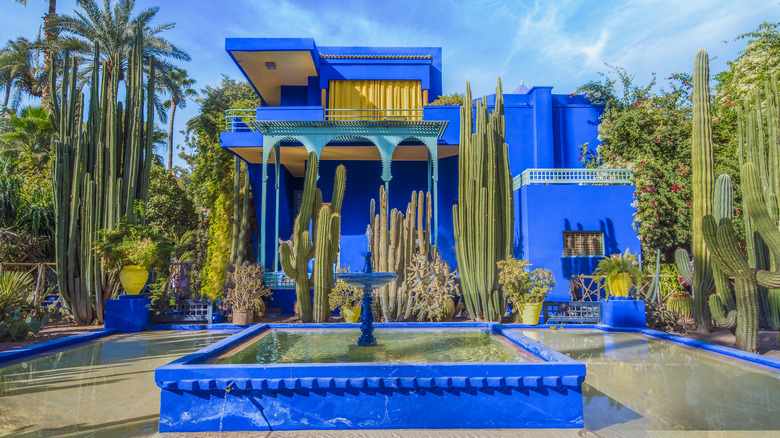
Across Marrakesh (also spelled Marrakech), there are a number of places that showcase the life and impact of Yves Saint Laurent, the famous luxury designer who greatly admired the Moroccan city to the point that he ended up buying property there. Most famously, Laurent purchased what is now known as the Villa Oasis and Jardin Majorelle.
The French painter Jacques Majorelle bought the aforementioned garden in the 1920's and spent about 40 years expanding and curating the space with exotic plants from all over the world, colorful structures, and winding paths. It was even opened to the public in 1947, but after the artist's death in 1962, the garden was largely abandoned and left to deteriorate. Yves Saint Laurent purchased the nearby villa (then called Dar Es Saada) in 1974, and after learning the next door garden was potentially threatened for demolition, purchased it as well in 1980.
The Villa Oasis provides visitors with a view of Laurent's personal life with business partner and one-time companion, Pierre Bergé. The immaculate sitting and dining rooms spotlight beautiful patterns and decor. Next door, the now-9,000 square meter (a little over 2 acres) Jardin Majorelle has become one of the most popular attractions in Marrakesh. The striking, almost violet-blue trademarked as "Majorelle blue" is a part of the main façade and structure throughout the garden. To visit the garden, tickets can be purchased directly though the Jardin Majorelle site with the option to purchase a combined ticket that provides access to the garden, the Pierre Bergé Museum of Berber Arts, and the Musée Yves Saint Laurent Marrakech. Rotating exhibitions highlight local styles and give context to the contributions of Bergé and Laurent during their time in Marrakesh.
Claude Monet's Giverny Home
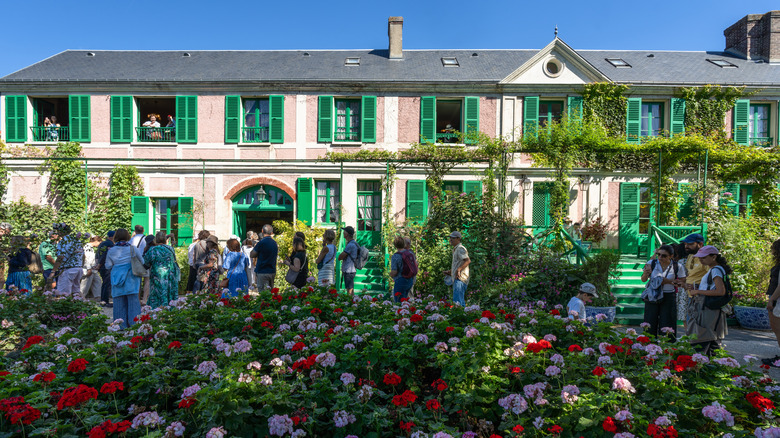
Discover where Claude Monet got his floral inspiration from his home in Giverny, France. The acclaimed French leader of the impressionist art movement lived in Giverny for 43 years until his death in 1926. Monet and his wife, Alice, painted the home pastel pink, the shutters a bright green, and the dining room various shades of yellow.
The ground floor contains an intricately-tiled blue kitchen with copper vases and canisters that would contain common pantry items like olive oil, tea and spices. Monet's maximalist tendencies continue around the corner from the blue kitchen into the yellow dining room. The central hosting space is contrasted with a red and white checkerboard-style floor and Japanese art hung up around the room. Monet's first painting studio is one of the more muted rooms in the home where the wide windows illuminate the mahogany woodwork and Monet's remaining paintings are displayed.
Outside, visitors can see where Monet got his inspiration for his "Water Lillies" painting from, well, an actual water lily pond. In 1893, Monet built a large pond, installed a Japanese bridge, and planted various willow, bamboo, and water lilies. Additionally, the winding Clos Normand path on the estate lined with flowerbeds and trees served as inspiration for another work of his, "The Artist's Garden at Giverny." Ahead of booking a self-guided tour, keep an eye out for combined tickets with other Monet museums for a great deal, including the Musée des Impressionnismes and Musée Marmottan Monet.
Methodology
Across eras and cultures, luxury can look completely different. In considering these stunning examples of lavish abodes, the selected options were determined based on these criteria: distinction in design and relation to differing time periods or cultures. From pre-colonial Mexican pyramids to cobalt blue gardens in Marrakesh, luxury has different connotations. There's nothing wrong with a Beverly Hills mansion or Manhattan duplex, but these remarkable structures listed above have stood the test of time and evolved to become architectural inspirations. Some bringing in tens of thousands of visitors every year, these homes' designs often give a new insight into a era already passed and a culture not-yet discovered. These famous architects, designers, and artists have effectively transformed their homes into extended versions of themselves, continuing to carry their legacy beyond their life.