
30 Words And Phrases To Learn Before Any Vacation

If you don't speak the language in your next vacation destination, it's best to learn some basics. Most guides will generally suggest that you learn pleasantries and simple greetings, but if you want to make your stay smoother and easier, you should take that advice a little further.
One way to start is by acquiring some elementary vocabulary so you can understand directions and prices, order food politely, and ask for things without offending cultural sensibilities. Learning a language also goes hand-in-hand with learning a bit more about the culture as well, so you can avoid social faux pas or even make a few friends.
Here are a few phrases and words that will help you communicate, impress your hosts, or even potentially save your life. Learning a language can be difficult for some, so try carrying a pocket dictionary or writing down useful phrases in a journal or your phone's note-taking app as well. On the plus side, it's easier to learn a second or third language if you practice using it, so you might walk away with more knowledge than you think.
'My X is missing'

If you are unlucky enough to have an airline lose your luggage upon arrival to your destination, you need to know how to report it missing in your destination's language. While you might get lucky, some airport workers won't always speak enough English to help you. To aid you here, know the words for "flight number" and "boarding pass," since you will need to provide the clerk that info to get your stuff back.
If you are staying at a hotel or other lodging, you will likely need to call the front desk at least once, whether it's to request things like extra towels or report something amiss. Unless you know how to say so, the staff or landlord may not be able to help you unless you're staying in a large or expensive hotel with international clientele. Hence, learn to say "X is missing" or "X isn't working" to make your experience a bit smoother for yourself and your hosts.
Asking for additional items at your hotel

Similarly, while you cannot learn every single item of vocabulary in your hotel room, you should at least know the words for some basic essentials so you can ask for them at the front desk. Learn to politely request something like, "May I have more clean towels for my room?" or "May I have an extra pillow?" For many stays, the most important things that need to be working and in good shape are the bed, the shower, and the toilet. Know these essential words and you will be in a much better position should something malfunction or be amiss.
'How do I get to X?'

From the moment your plane lands, this phrase will be your best friend for your entire stay. As a tourist in a foreign country, you're likely get lost at least once at any point of your trip. Thus, knowing how to ask how to get somewhere will make it possible for locals who might not speak much English to help you get to your destination instead of relying on a map or your phone.
'Take me to X'
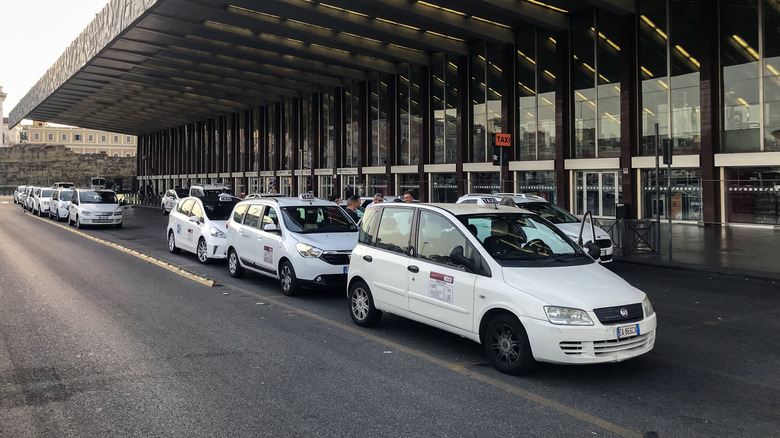
This is important for taxis or, occasionally, rideshares. Before you get into the car, a common taxi safety tip is knowing how to tell the driver where you are going so there is no space for misunderstanding. Make sure you both understand the cab fare as well before your ride. In certain languages, all you need to say is your destination followed by the word "please."
The words for 'right,' 'left,' and 'straight ahead'
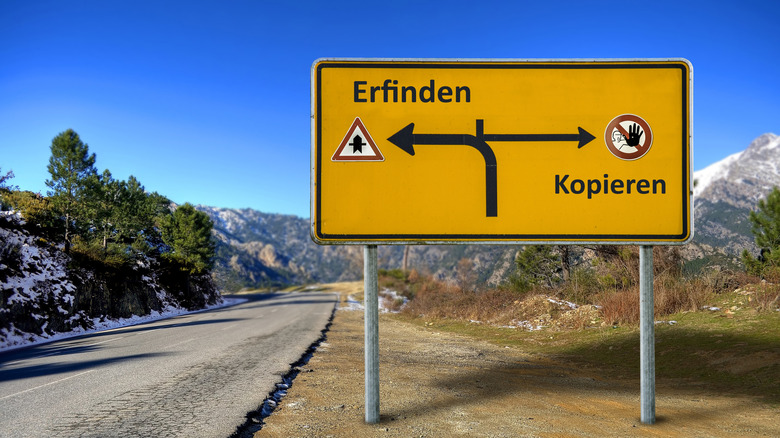
While these words might not come to mind at first, if you are able to ask for directions properly, you will get directions that will inevitably involve being told to "turn left" or "turn right on X street." If you know these words in the destination's language, you will have a much easier time interpreting directions. Feel free to repeat them back to the person for extra clarity and practice.
Asking for a doctor

If you need medical treatment abroad, no one will be able to help you if you can't communicate. Thus, you should learn how to ask for a doctor. At minimum, learn the word for "doctor" since just saying that on its own will alert people that you are in distress. For extra clarity, learn how to explicitly ask for a doctor with the phrase, "I need a doctor."
Saying something hurts

If you end up needing medical attention, certain countries — especially rural areas — may not have English-speaking medical personnel immediately available. If you need treatment, make sure you can give a bare minimum description of your symptoms so the staff knows what to look for. For extra clarity, learn basic body parts, too (in case you can't point).
Asking for over-the-counter medicine and pharmacy goods
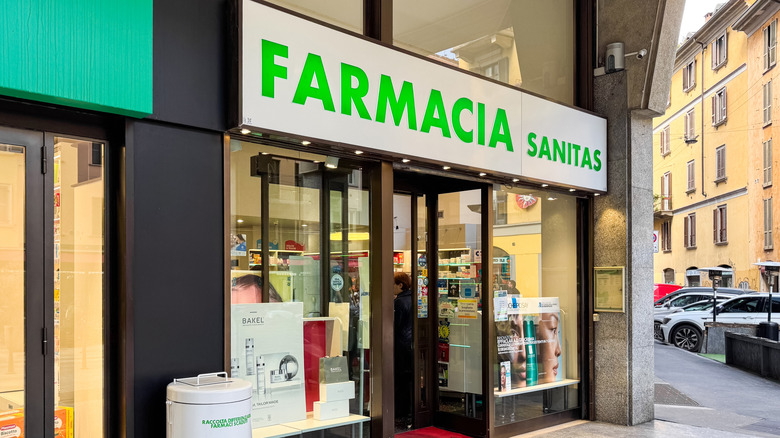
Most of the time, medical and hygiene issues can be solved with over-the-counter medicine or a trip to the pharmacy. Know what certain items are called so you can buy them without any misunderstandings. Getting the wrong medication can have unpleasant consequences. In Europe for instance, many American medications are sold under the same brand name. Alternatively, you can learn the words for maladies like the common cold and flu, or memorize active ingredients like acetaminophen (or paracetamol in Europe) and allow the pharmacist to recommend you a medication. These are usually similar to the English name.
'I would like X'

If you're eating at a restaurant or shopping at a supermarket, you will need to know how to ask politely for what you want. An impolite or unclear request may be ignored. For instance, in Italy, some might order a meal using the phrase "I want" ("Voglio" or "Io voglio"), but this might come off as a little too aggressive, so the best way is to use the phrase "I would like" ("Vorrei" or "Io vorrei"). If you are at a restaurant, politeness is likely to earn you better service as well, especially among waiters who are used to dealing with entitled tourists.
'How much does it cost?'
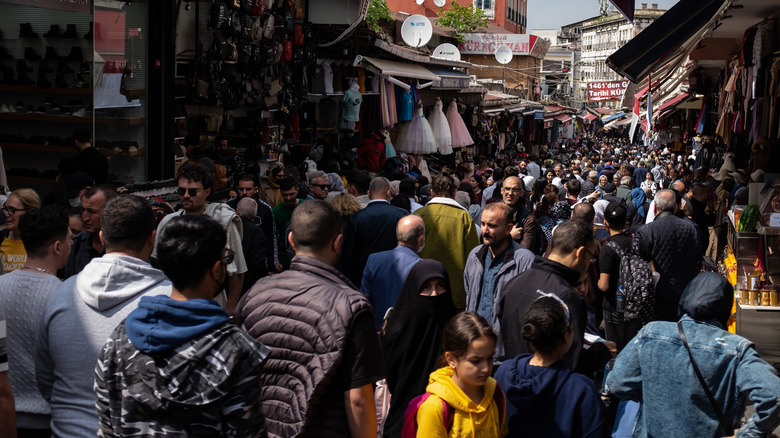
If you want to buy something and the price isn't shown, you need to know how to ask for it. It is common for some vendors in less touristy areas to either have a limited knowledge of English or not speak it at all. However, many of these vendors may also have the best souvenirs — like local gastronomic products and crafts — which you won't want to miss out on.
'Do you take a card?'
Credit and debit cards are becoming the standard payment form in many countries, but this isn't always a given — even in some parts of the industrialized countries of Western Europe. On top of that, some places may technically take cards but won't tell you, such as taxi drivers in Rome who often prefer cash payments over card charges that take fees and can be traced. Make sure to know how to ask if a business takes cards, especially for transportation, lest you find yourself unable to pay for a service because you don't have cash.
'Can I pay in X?'

In some countries, you may have the option of using multiple currencies. For instance, it isn't uncommon for vendors in Mexico to accept U.S. dollars or some places in non-Eurozone countries like Switzerland to accept euros. But this won't always be the case. Say, for instance, you take a day trip to Switzerland from Italy (which is in the Eurozone), and need to buy something, but you don't have any Swiss francs. You might be able to use euros, but to find out, you might have to ask in German, Italian, or French. Otherwise, you'll need to find an exchange (or pay with a card).
Numbers

If you don't know the numbers in the target language, you likely won't be able to understand quoted prices. The numbers you will need depend on your destination's currency. In Europe, chances are learning one to 100 will cover most of your needs, since numbers are fairly straightforward after 20 in most European languages. If in the Eurozone, you probably wont use any banknote above 50. If you are going to a place like Japan, which uses the yen (a decimal currency), it might help to learn the numbers that yen bills and coins come in. In practice, this means one, five, 10, 50, 100, and so on, up to 10,000.
'Is there a discount/lower price?'
This one is useful for haggling, which is practically an art form in places like Latin America, Southern Europe, the Middle East, and South Asia. Often, merchants will expect you to haggle and will give you a higher price than what they expect you to pay. Sometimes, simply giving a lower number is enough to start the haggling process. If you want to be absolutely clear, know how to ask explicitly for a lower price.
'Can you repeat yourself?'

When you ask a local native speaker a question in your destination, they will likely answer in a way that's natural to them. This means that they will speak in the language's typical tempo, rhythm, and speed. As a second-language learner, you may not catch everything, especially when it comes to complex directions. In that case, you may need the speaker to repeat themselves, so know how to politely ask for that.
'Can you speak more slowly, please?'

If you don't understand something, despite asking the person you're talking with to repeat it, don't be afraid to ask them to speak slower. Sometimes, even when you have some knowledge of the destination country's language, a native speaker's natural speed, rhythm, or dialect can catch you off guard and prevent you from processing everything.
'I don't speak X, but I speak Y'

One of the most useful and effective phrases while abroad is telling locals that you don't speak their language. It conveys a certain level of respect, because you at least bothered to learn something in their own tongue. If you make it clear you don't speak their language, they can direct you to someone who speaks yours or they can switch to yours when possible. Or, if you are more conversational in a different tongue, you could try speaking to them in the third language (if they happen to also speak it). Over half of Europeans at least know a second language, especially English, but that rule could be different elsewhere in the world.
'Hello' and other basic pleasantries

A little courtesy goes a long way in a foreign country, so learn pleasantries like "please," "thank you," "hello," and things like "good morning" and "good evening." Even if you learn absolutely nothing else, locals will always appreciate this, since it means you took the time to look up their country and learn how to treat its people courteously. Some languages have honorifics, which means greetings change depending on whom you're talking to. For example, Japanese has many ways to say "thank you."
The formal and informal 'you'

This one applies to languages that have the informal-formal "you" distinction, like French and Italian, where they are crucial words to know. In English, "you" is used regardless of whomever you are speaking. In other languages, if you are talking to someone who is older than you or a stranger who is high status, such as a doctor or other professional, the proper way is to use the formal pronoun.
In Italian, for instance, would be the capitalized "Lei" (when writing) or "vous" in French. For children, your family, and your close friends, you would use "tu" in both Italian and French. This may seem minor, and locals will likely forgive mistakes, but again, a little courtesy and cultural competence goes a long way.
'Help!'

If you are in public and in a situation where you are being accosted or worse, you should know how to shout for help. Most languages have a word that signals distress. In Italian, for instance, you could shout "aiuto" ("help") or "aiutami" ("help me") in an emergency. Or, if you need to approach the situation with calm, you can walk up to someone and say "mi puoi aiutare" (or "can you help me"). This not only will alert bystanders that you are in distress, but also the threat of bystander intervention might convince the person harassing you to stop and leave you alone.
Reporting crimes and talking to the police

This category is essential for dealing with local emergency services, and what you learn will depend on what you are doing. If you are a victim of a robbery or a scam, you need to know how to tell the police what happened. If you encounter a dangerous animal and are bitten, you need to know how to communicate — especially if it's life threatening like a bite from a poisonous snake or potentially rabid creature.
The names of businesses you expect to visit

While you can't predict every place you will be going to as a tourist, it helps to make a list of the essential spots any tourist would go and learn the words that describe them in the destination's language. Most travelers should know words like "bank," "restaurant," "hotel," "taxi," "train station," and so on. Obviously, the exact words you need will depend where you are going, but some things are nearly universal.
'I have an allergy to X'
If you have a food allergy, this one could make the difference between having a blast and ending up in the emergency room — or worse. Many restaurants abroad might not list common allergens on their menus. In less-developed countries, the chances of allergens getting listed on menus are even smaller. You must know how to tell servers that you have a deadly allergy so they can ensure your food isn't cross-contaminated — because you will have no other way of knowing.
'I have diabetes'

This one is especially applicable in Arab countries, where locals hand out sweetened tea to visitors like water, whether you're in Morocco's hypnotic "Blue City" or Iran. It is generally rude to refuse. However, drinking copious amounts of sweetened tea is a health risk for diabetics, so knowing how to express that will allow you refuse it without ruffling any feathers. In Arabic, for instance, just say "al-sukkari" when offered tea, and your hosts will completely understand, likely because one in six adults has this disease in this part of the world, according to Diabetes Atlas.
'Without X'

Staying on the topic of food, it's a good idea to learn how to refuse a particular ingredient at a restaurant. If you have a religious dietary restriction (e.g. halal or kosher) or don't eat certain foods on principle, you should know how to express that. If you want to avoid having to say you're a vegetarian or wading into the minefield of religion, knowing how to say "without pork" or "without meat" will get the message across without having to get philosophical.
'Check, please!'
After your meal, you should know how to properly ask for the check so you can pay and move on. Unlike the United States, where it's common for waiters to bring you your check unprompted, servers abroad will be more relaxed. This will be noticeable especially in Europe, where dining at a restaurant is a social occasion meant to be enjoyed, not rushed. Thus, it's considered normal not to get the check until you ask for it.
'May I take a picture?'

Asking to take a picture is common courtesy, and in some cases, can prevent you from getting fined or even arrested. Obviously, if you want to get a picture with local friends, you need to know how to ask. In countries with stricter rules and norms, always ask before taking a picture that will include other people, particularly women or children. Places like churches and museums also have restrictions to maintain sacredness and protect artifacts or paintings. Finally, don't take pictures near military installations, law enforcement, or soldiers. It's illegal in certain countries, and can potentially land you in jail.
'This one' or 'that one'

Knowing demonstratives will make buying souvenirs a lot simpler. For instance, in Romania, a seller might say, once you point to what you want, with "acesta (this one)?" To which, you either say "da" (yes) or "nu, acela" (no, that one). While you can simply shake your head and point, speaking not only endears you to the vendor, it makes things easier and gives you an opportunity to learn how to say the object in the local language.
'Where is the bathroom?'

The reason this seemingly straightforward phrase makes the list is due to cultural nuances around toilets and bodily functions. Take France, for instance. In certain situations, it's considered rude to ask for the toilet, so you must know that sometimes you will need to ask for a place to wash your hands or freshen up. In Turkey, as this native speaker demonstrates, it's considered polite to ask for the washbasin rather than the toilet. Those are the kinds of cultural nuances that will save you major faux pas while abroad, so look them up before you go.
'Is X dangerous?'
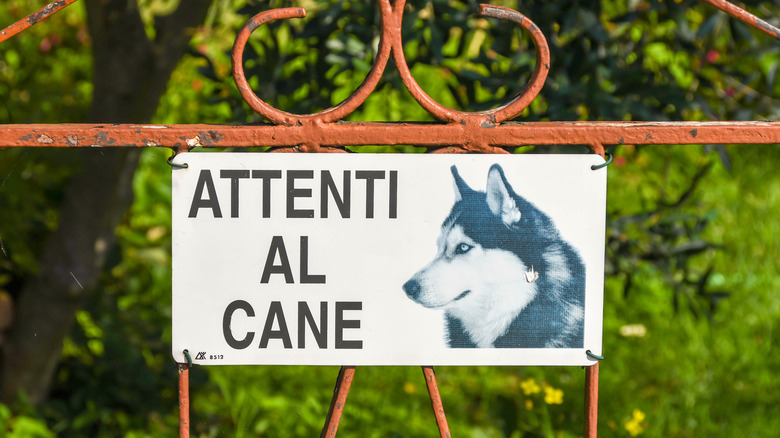
If you are going off the beaten path or to a place where help might not be immediately forthcoming, it is essential to know what you are getting yourself into. If you are in a place where there are a lot of dangerous animals or crime (especially the organized sort), that carries a whole different set of risks such as kidnapping, extortion, animal attacks, and death. Know how to ask what dangers you should look out for and research the risks in your destination so you can learn important words or phrases to help you if your trip takes a dangerous turn.