
15 Historic Landmarks That Used To Look Completely Different
Witnessing a piece of history in person is one of the most rewarding parts of travel. Some landmarks carry such cultural weight that it's easy to imagine what it might feel like to stand in front of an icon represented over and over in books and films. However, many of the most famous locations that have stood the test of time have not always looked the way they do today. Whether it's natural erosion, the modernization of the surrounding city, or the collapse of an ancient civilization, there are many reasons why places change.
Although we can't go back in time to see what these places used to look like, we can thank historians and researchers for chronicling the stories that represent many chapters of world history. We gathered some of the most iconic landmarks around the world that would look completely different if you had visited them in the past — and what these dramatic changes can reveal about history.
Times Square
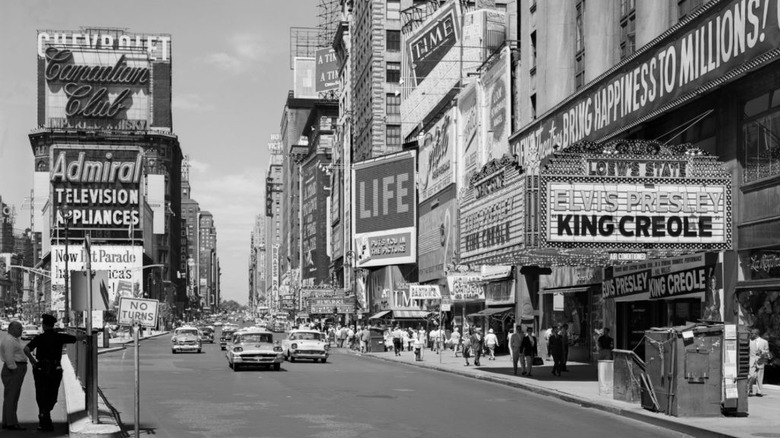
Until 1904, the most recognizable intersection in all of New York City was called Longacre Square. It was a hub for the horse-and-carriage industry until The New York Times newspaper decided to move its headquarters to the area. It was eventually renamed "Times Square" for the new building that rose tall above the quaint streets, a 25-story neo-Gothic proto-skyscraper. While the square takes its name from the newspaper, it was the burgeoning industry of theaters and nightlife in the surrounding blocks that gave it its energy and reputation. By 1912, Times Square was the go-to nightlife hub, and advertisers realized that billboards could reach a wide audience of passing New Yorkers, especially if they made use of flashing lights.
By the time the 20th century was finished, Times Square had become the biggest tourist attraction in New York and a traffic nightmare. In the 2010s, the city decided the area was ready for another transformation, and it was renovated into a pedestrian-friendly zone cut off from cars. Although we may never hear the quiet sounds of trotting horses and creaky carriage wheels that once defined Longacre Square, the modern, car-free Times Square — still busy with advertisements — makes it slightly easier to imagine.
Sagrada Familia
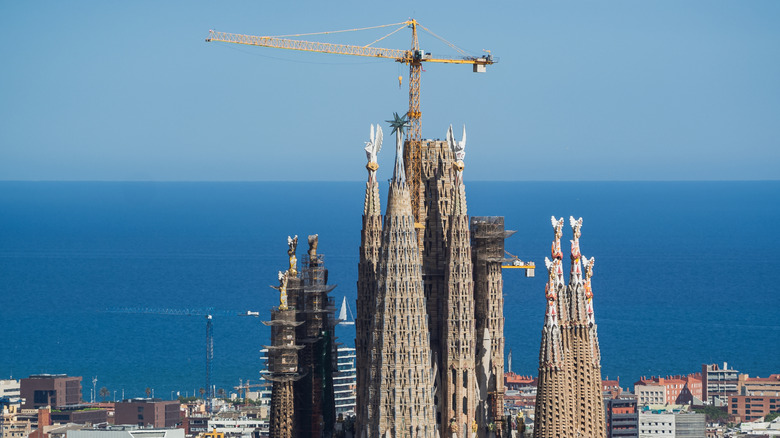
As of 2025, the modernist masterpiece in Barcelona remains unfinished. The project for the new cathedral began in the late 19th century and continues to follow the blueprint of the city's famous architect, Antoni Gaudí, the master of the whimsical, nature-loving style of Catalan modernisme. By the time of his death in 1926, all that had been completed was the bell tower, which looked so strange on its own without the context of the rest of the basilica that the author George Orwell described it as "one of the most hideous buildings in the world."
If he could see it today, now that more pieces of the puzzle have come together, he might think differently, as it is frequently hailed as the top travel attraction in the world. In 2010, the interior of the Sagrada Familia officially opened to the public, and repeat visitors will tell you that there is always something new to see as the construction team inches closer to completion, including a grand entranceway. Although the goalpost is always moving, at the time of writing, that's expected to be around 2034.
Angkor Wat
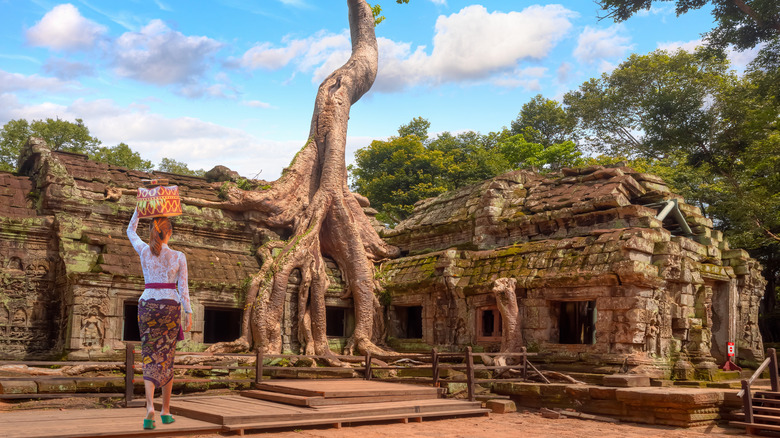
When this Cambodian landmark was built in the 12th century during the Khmer Empire, it was the largest religious complex in the world. The wider Angkor site had a thousand buildings across 400 acres dedicated to Hinduism. Today, it is a vast and impressive ruin overgrown by trees that takes a full day to explore. However, if you could travel back in time and visit Angkor Wat in its heyday, you would find a thriving city full of color and bustling with people.
If you want a glimpse of what it may have been like, the "Visualising Angkor Project" brings the temples to life with 3D reconstructions and animations based on historical accounts to simulate what this historical landmark looked and sounded like and how people used to live and work in the surrounding area of the Royal Palace compound. It's worth checking out before visiting the site in person, as it will help you better imagine the monument's impressive scale before nature took it over.
Colosseum
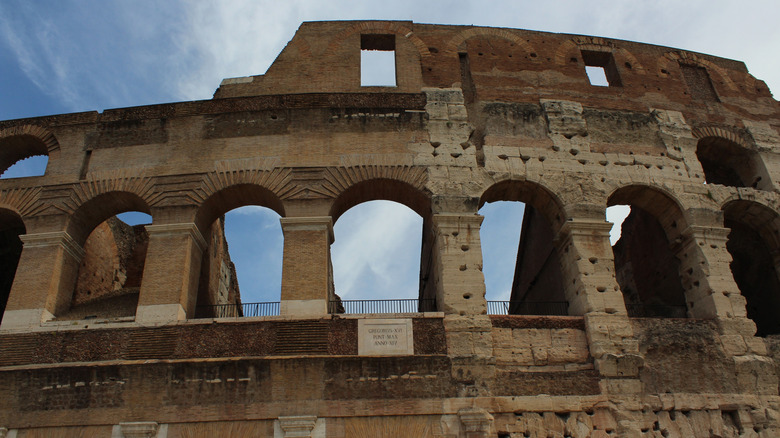
One of the Seven Wonders of the World, Rome's Colosseum is one of the most inspiring and most-visited historic landmarks on the planet. Although it is a ruin today, with three-fifths of the building missing, its stories of gladiator fights are widely known, but these took place in a much different version of the monument than you find today, one that was four stories high and covered in white stone slabs. You can still see the arches today that give the Colosseum its iconic look, but 2,000 years ago, the arches also held statues. After the fall of Rome and the rise of the church, marble was taken from the arena to be reused in the construction of St. Peter's Basilica and other Roman landmarks like the Palazzo Barberini and Piazza Venezia.
Even with so much of the original material missing, the fact that the Colosseum is still standing is a marvel of ancient engineering. As explained on the blog of tour operator Walks of Italy, "The Amphitheater's outer wall is constructed of over 100,000 cubic meters of travertine without a single drip of concrete. Instead, the stones were bound by 300 tons of iron clamps." The metal was also taken from the site, but Roman concrete has the unique property of getting stronger over time, so the building can still stand without it.
Hollywood Sign

Nothing establishes the dreamy glamour of Los Angeles like a shot of the Hollywood sign perched in the hills above the city. It's both an iconic photo op and a popular (and overcrowded) hike, but what most people don't know is that this sign was originally an advertisement for a real estate company — and it's missing a few letters.
The sign was erected in 1923 with 30-foot-tall letters that spelled out "Hollywoodland," which lit up with electric lights. These were later removed by the sign's next owner, who found them too expensive to maintain. Over the next 100 years, the sign would be renovated multiple times, and the "land" suffix was officially removed in 1949. This change was to reflect the fact that the sign was no longer an advertisement but a beloved cultural landmark. In the past century, the sign has seen various states of disrepair, but a recent 2022 restoration means that if you go today, you will find it in all its glory.
Eiffel Tower
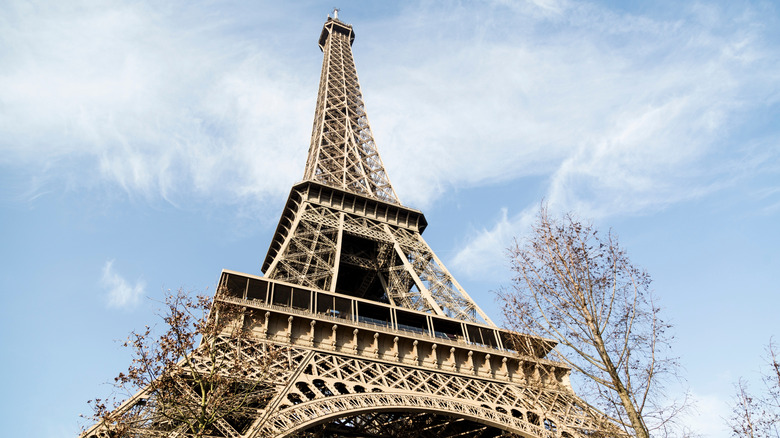
Unveiled in 1889 at the World's Fair, the Eiffel Tower is now considered one of the most beautiful structures in the world, but at the time, Parisians thought it was an eyesore. The elegant iron tower is now so popular that you have to time your visit to avoid the crowds, but it didn't always look the same. Today's yellow-brown paint job is in accordance with architect Gustave Eiffel's preference, but the tower has been painted 20 times in over 130 years, and when it was first erected, it was painted a bright Venetian red. By the time it debuted at the World's Fair, this was changed to a more subdued reddish-brown. Over the next 100 years, the tower would go back and forth between yellow-brown, reddish-brown, and "Eiffel Tower brown," which was the longest-lasting color. However, in 2019, the color was returned to the more historically accurate 1907 color.
Great Pyramids
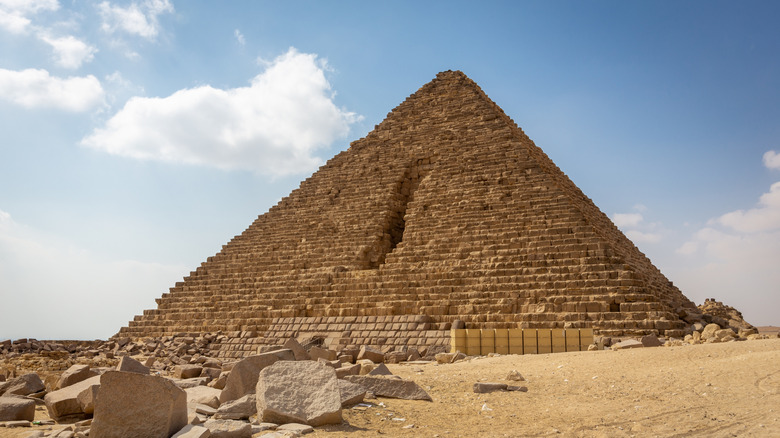
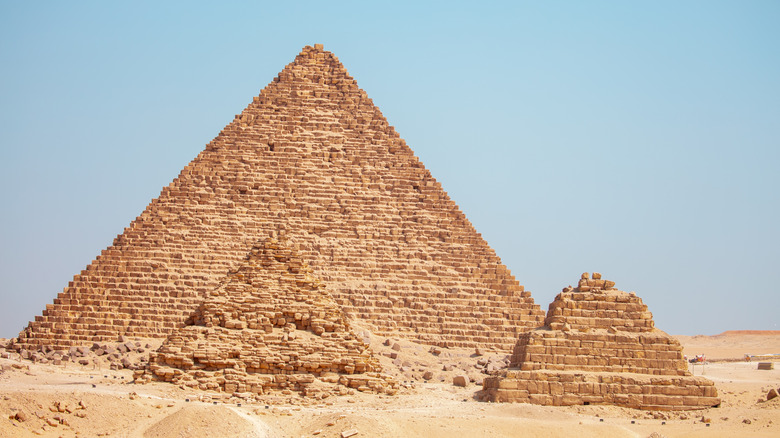
The Great Pyramids of Giza are more than 4,000 years old, and despite their age, you might say they've done a remarkable job of holding their shape over time. However, if you could travel back in time to when they were first built, they would look completely different. Today's pyramids are impressive but have a rough, rocky exterior with a sandy brown color. Originally, they were shiny, smooth, and bright white. The structures' exteriors were encased with limestone slabs, which were later quarried for other building projects after many had loosened during a major earthquake. You can still see some of these stones at the peak of the largest pyramid, the Pyramid of Khufu.
At the top of the pyramids, you also would have seen capstones made of polished stone and possibly covered in gold that would have glinted on the horizon as you approached the city. Other markers of time include the large gash inside the Pyramid of Menkaure, which helps reveal the interior structure of the pyramids — something archaeologists are grateful for.
Las Vegas Strip
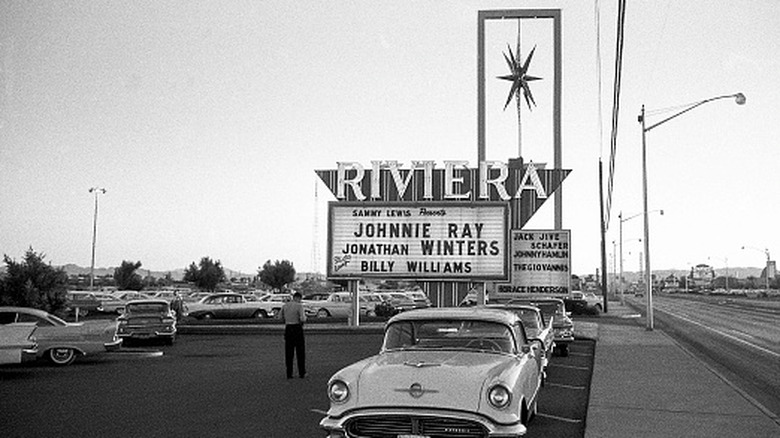
Now synonymous with casinos and wild bachelor parties, Las Vegas was once a patch of desert where developers saw an opportunity in the 1930s, when the construction of the Hoover Dam coincided with the legalization of gambling in Nevada. At first, the Las Vegas Strip was a simple thoroughfare for wagons and livestock, but over the years, it would transform into one of the world's most famous adult playgrounds — in the world's best city for nightlife. Casino advertisements started simple but exploded over time with neon lights and massive hotels offering swimming pools and other amenities, as well as live entertainment from internationally known acts like Elvis Presley and Frank Sinatra.
The tradition of bigger and better continues on the Las Vegas Strip today, where it seems like there is always something new to marvel at, including the dancing Bellagio fountains and, most recently, Sphere. This immersive venue has once again transformed the Las Vegas skyline and is the hottest ticket in town to catch a movie or a concert.
Hagia Sophia

It should be no surprise that Istanbul, once known as Constantinople, is a city accustomed to change. The most iconic landmark in town, the Hagia Sophia, has also gone through major changes since it was first built in the 6th century. During the Byzantine Empire, it was constructed as a Christian church and survived centuries of earthquakes, conquests, and looting. When the Ottomans took over the city in the 15th century, it was transformed into a mosque, and the first iconic minaret was added to the exterior. In the 20th century, it was turned into a secular museum that could display the artworks and features of both religions. However, in 2020, it was converted back into a mosque.
The architecture of the Hagia Sophia is spectacular, especially if you go inside to see the stunning mosaics. When the building was still a museum, Christian mosaics depicting religious iconography were on display, but since the recent conversion, some mosaics have again been concealed in accordance with religious traditions.
Statue of Liberty
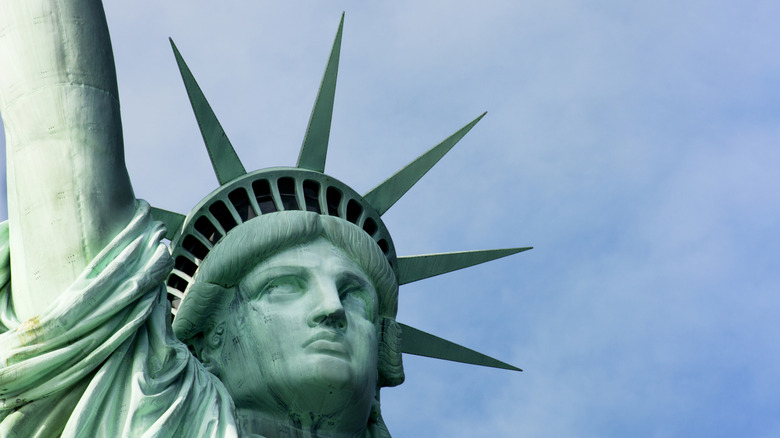
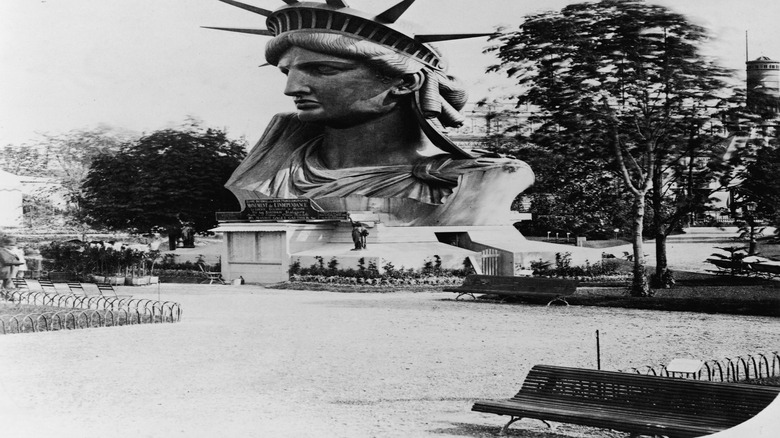
The American flag is red, white, and blue, so why exactly is the Statue of Liberty — one of the country's most symbolic landmarks — green? The answer lies with science, and if you could go back to 1886, when the statue was first unveiled, you would have seen a shiny brown statue. Go back to 1906, though, and the statue would already be green. Made of copper, the Statue of Liberty oxidized over two decades, changing color from copper to blue-green, just like an old penny you might find on the ground. This patina actually protects the copper below, so it is better left in place.
It's hard to imagine the Statue of Liberty being any other color, but over the years, the visiting experience has also changed. Following the 9/11 terrorist attacks and the COVID-19 pandemic, access to the crown viewing platform was temporarily closed, but it is now open to visitors who reserve online in advance. Although it was once accessible, the torch has been closed for over a century.
Buckingham Palace
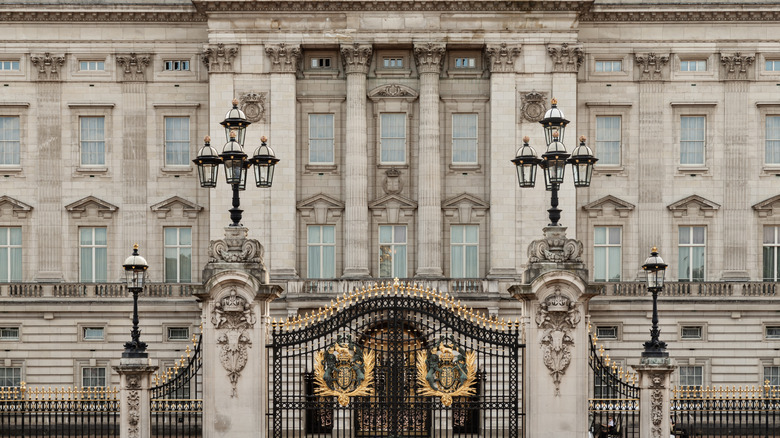
In the center of London, Buckingham Palace is where the royal family resides and where many ceremonial events are carried out. It's a sprawling and well-protected building, but it hasn't always looked that way. The original house was built in 1703 for the Duke of Buckingham — hence the name — and was later purchased by King George III as a private family residence for Queen Charlotte. It was a relatively modest house until the next century, when King George IV commissioned the construction of the imposing facade. Once Queen Victoria took the throne, Buckingham Palace became an official royal residence, and more expansions followed.
The look of the palace has consistently evolved with the times, perhaps most obviously after the smog of industrial London darkened the stone facade, prompting a replacement in 1914. The palace is a functioning administrative center for the royal family, but small-group guided tours are offered on select dates throughout the year.
Penn Station
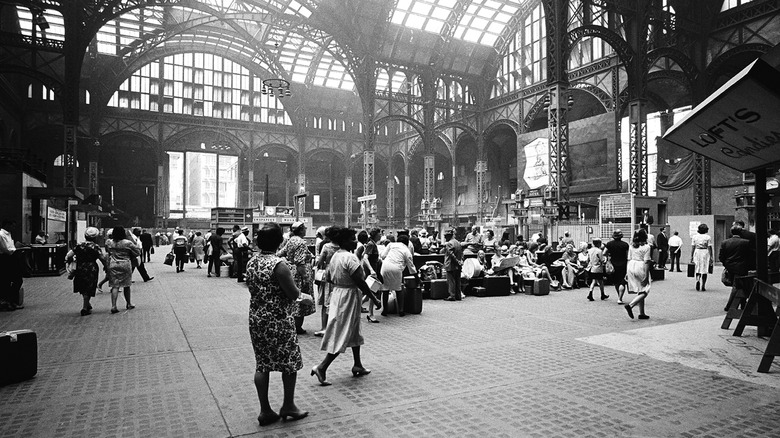
Although Penn Station technically still exists at the intersection of 32nd Street and 8th Avenue, it does not hold a candle to the grandeur of the original building, which was demolished in 1963. The original Penn Station was a neoclassical masterpiece designed by the firm McKim, Mead & White that opened in 1910, representing a grand connector between New York City and the rest of the country. The huge hall had magnificent columns and arches that decorated a light-filled waiting room that naturally transformed into a more industrial concourse. After World War II, train use dropped in America, and developers decided to tear down the historic building to make way for Madison Square Garden and move the train station underground. At the time, this stirred a major controversy and led to the creation of the Landmarks Preservation Commission and a nationwide movement to protect landmarks across the U.S.
Mount Saint Helens

By far the oldest landmark on this list, by well over 270,000 years, Mount St. Helens is a volcano located in southern Washington, and before its eruption in 1980, it was the fifth-highest peak in the state. The violent eruption that killed 57 people completely changed the face of this once snowcapped mountain. In addition to shaving 1,300 feet off the top of the mountain, it also left behind a crater roughly two miles wide. It is one of the most spectacular geological events captured on film. The explosion also devastated the surrounding environment, which was buried by an avalanche of rock, followed by mudflows that filled the valleys around the mountain.
Today, Mount St. Helens is a peaceful recreation area and national monument where visitors can learn more about the eruption and explore the landscapes created by the lava flows. Hiking the volcano can be dangerous, but there are many ways to see the crater in person, including helicopter tours.
Machu Picchu

The ancient Peruvian city was rediscovered in 1911 by Professor Hiram Bingham, whose discoveries were widely publicized thanks to the original article that appeared in National Geographic in April 1913. At the time, the photographs captured the global imagination as the never-before-seen city was unveiled to the world. Today, however, it is the most popular tourist attraction in Peru and is visited by more than 1 million people per year, and social media feeds are flooded with photos of travelers braving the altitude and posing with llamas in front of the ruins.
Setting aside the fact that Machu Picchu was once a thriving city bustling with people, photos taken today don't reflect the state of overgrowth it was in at the time of discovery, which also explains why it was so hard to find. As Bingham writes in his original article, a clearing project helped reveal the ruins below, writing, "It is most sincerely to be hoped that the Peruvian government will not allow the ruins to be overgrown with a dense forest, as they have been in the past."
Lisbon
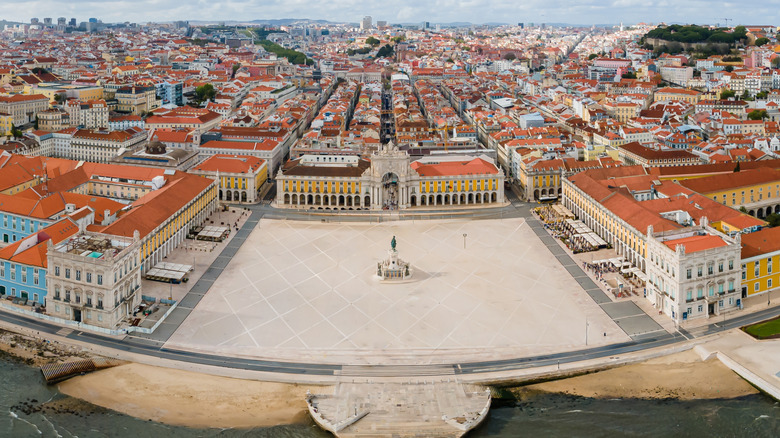
In 1755, Lisbon was devastated by an earthquake and a subsequent tsunami, which led to widespread fires. Famously, the city was celebrating All Saints' Day at the time of the quake, which caused lit candles in churches to topple over simultaneously. In addition to the devastating loss of life (historians estimate between 12,000 and 40,000 casualties), this event completely changed the landscape of the city, destroying much of the city's historic buildings, including opulent palaces, libraries, and churches, as well as the many books and artworks that were inside. Many government buildings were also wiped out, including Ribeira Palace, which once stood where the main square of Praça do Comércio is now located.
The city was rebuilt by the Marquis of Pombal, who is an honored figure in Lisbon's history, and the earthquake, which coincided with the Enlightenment era, helped inspire the development of seismology as a field of study. Although we can never set eyes on what was lost, the city came back stronger and prepared for the next quake.
Methodology
The places on this list were selected because they are widely known and have well-documented histories of drastic changes in physical appearance over time. When considering historic landmarks for this list, I looked at how famous each place was and how dramatic its transformation had been, and evaluated whether that change offered an interesting historical perspective that also told a story about the destination. I also used personal experiences from my life and travels to share stories that stuck out to me, for example, learning that much of the original marble of the Colosseum is scattered in various buildings around Rome.