
These 5 Cities Had The Highest Amount Of International Travelers In 2025

The end of a calendar year always brings a flurry of roundup lists and superlatives — from the music you listened to the most to the hours you spent learning new languages – and what the data says can be quite revealing. Travel is no exception to the data collection game, and one market research firm, Euromonitor, annually tallies global tourism numbers to reveal global insights. This year, the world's most visited cities in 2025 based on international arrivals reveal interesting trends about how people are moving across the map.
Euromonitor compiles criteria tied to tourism infrastructure, economic growth, and sustainability, narrowing to a shortlist of 100 cities. In 2025, the Asia-Pacific region saw the strongest tourism surge overall — a 10% increase — and Asian metro areas dominated the top five in terms of international visitors. Three and a half of the leading spots went to the continent (Istanbul, Turkey, which ranked fifth, uniquely straddles both Europe and Asia). The rest of the top five include Bangkok, Thailand; Hong Kong; London, United Kingdom; and Macao, China.
While several of these cities also appeared on the 2024 list, this year brought some changes. In 2024, Bangkok topped the rankings for most international arrivals — as in 2025 — followed by Istanbul, London, Hong Kong, and Mecca in Saudi Arabia. In 2025, Istanbul slipped to fifth, London held steady in third, while Hong Kong climbed from fourth to second. The 2025 rankings show that global travel continues to tilt toward Asia, where strong tourism infrastructure, affordability, and cultural diversity are drawing more international visitors than ever. And while Euromonitor named Paris the world's most appealing city for tourism using a separate set of criteria, the arrival data indicates that European appeal remains relevant but no longer overwhelmingly dominant.
Bangkok

If you're an HBO viewer — or chronically online — you may see the phrase, "Piper, no!" and automatically hear it in a Southern drawl, courtesy of actress Parker Posey in season three of "The White Lotus," which was set in and around Thailand (primarily Koh Samui and Bangkok). The season aired in early 2025, and that line launched a full meme campaign. It also may have helped in launching Thailand's tourism numbers into the stratosphere. Already on the rise post-pandemic, Bangkok topped all tourism globally this year, becoming the world's most visited city with 30.3 million tourists.
Thailand has long been beloved by backpackers, wellness seekers, Full Moon partiers, foodies, and luxury travelers alike. But its dazzling capital has surged in global popularity in the past several years, continuing to land on "best of" and "top 10" lists. Rich in history and culture, the city overflows with shrines, temples, museums, and markets that draw visitors from around the world. Its nightlife is electric, its people are famously welcoming, and for American tourists, no visa is required for stays up to 29 days. Bangkok was even named the most affordable international destination for fall 2025, offering remarkable value — from five-star resorts to Michelin-star restaurants at prices only a fraction of what they are elsewhere.
The City of Angels — or "Big Mango," as it's sometimes called in a playful nod to New York's Big Apple — is earning that comparison more and more as Bangkok pushes its way toward the forefront of the global cultural conversation. But those soaring tourism numbers come with consequences, prompting national and local officials to confront mounting pressures on beaches, islands, and other natural resources, as well as concerns about the erosion of local culture.
Hong Kong
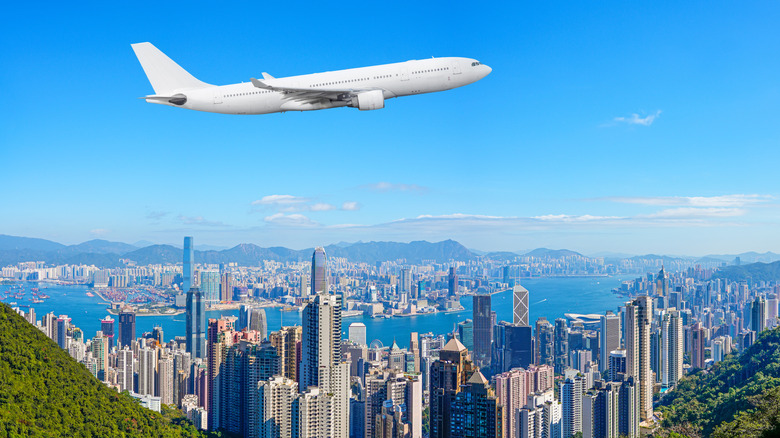
Coming in second on the list of most-visited cities for 2025 is Hong Kong, one of Asia's most exciting and convenient travel destinations. Known for its vibrant food scene, efficient public transportation, and futuristic skyline — juxtaposed with lush parks and natural landscapes — Hong Kong offers a distinct East-meets-West energy that cements its role as a regional hub. In 2025, the city welcomed 23.2 million international arrivals, jumping from fourth place on the 2024 list to second.
Hong Kong was under British rule for over 150 years until the handover to China in 1997, and that layered history shapes its identity. You can see it in the blend of Cantonese tradition and colonial-era influences, from architecture to daily life. English is reasonably accessible in many neighborhoods, making the city easier to navigate for first-time Westerners. It's also considered very safe. There's no sales tax, though Hong Kong's undeniably one of the most expensive places in the world. Traditional temples like the Ten Thousand Buddhas Monastery or Man Mo Temple sit alongside architectural icons and sites like St. John's Cathedral and the Central Police Station. Outdoor enthusiasts can hike Victoria Peak and other trails quite close to the bustling urban center.
Food is one of Hong Kong's greatest draw. Often regarded among the world's culinary capitals — Anthony Bourdain called it a "wonderland" – the cuisine reflects a fusion of Cantonese heritage, Western colonial influences, and generations of migrants. It's widely associated with the origins and evolution of dim sum, and has explored a bid for UNESCO's "City of Gastronomy" designation. And of course, there's Hong Kong Disneyland — one of only three Disney parks in Asia — which reported record attendance and profit in 2024, numbers that are likely to rise.
London
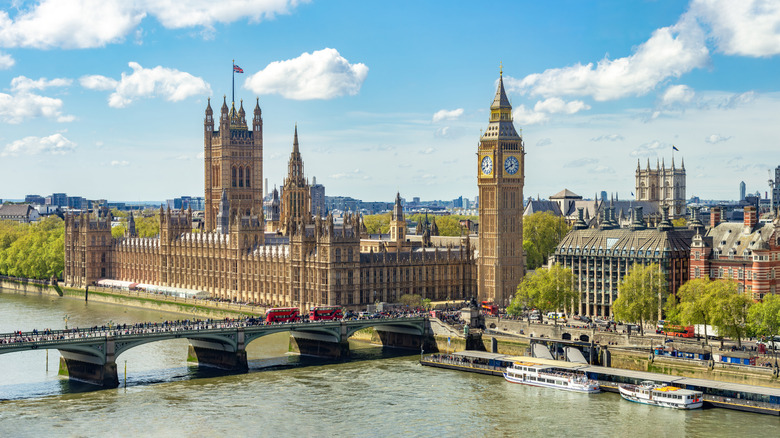
London has already been named the world's best city of 2025 by marketing and tourism sites thanks to its walkability and lovability. But England's capital ranks third in the world for the number of visitors, welcoming 22.7 million international arrivals in 2025 alone. With centuries of history and awe-inspiring architecture, the city practically invites travelers to take their own jaw-dropping walking tour. It's also world-renowned for museums, vibrant entertainment, shopping, diverse food, nightlife, and lodging options to suit any traveler on any budget. Expansive green spaces, a storied Royal family, and comprehensive public transportation system round out the reasons why London remains perennially popular among global travelers.
Tripadvisor named London the world's most popular destination in 2025, based on all-time reviews highlighting its mix of culinary delights and rich arts and heritage, beating out Dubai, which had won the previous year. Many of the entire United Kingdom's top attractions are located in the country's capital, from the British Museum — which drew 6.5 million visitors in 2024 alone, the most visited London attraction — to the Tate Modern, and the historic Tower of London. The city's West End theatre district (London's equivalent of Broadway), historic tours, iconic pubs, and world-class dining (despite the longstanding jokes about British food) make London a must-visit destination year after year.
London's long-standing role as a hub of the Western world makes it highly accessible. Approximately 1,300 flights per day enter and leave London Heathrow alone. Luxury tourism and major cultural events such as Wimbledon and the Notting Hill Carnival also contribute significantly to the country's economy and reinforce London's global appeal. Ultimately, London is a city that has something for international travelers, whether you're a history buff, a foodie, a theatre lover, or simply a traveler seeking an unforgettable urban adventure.
Macao
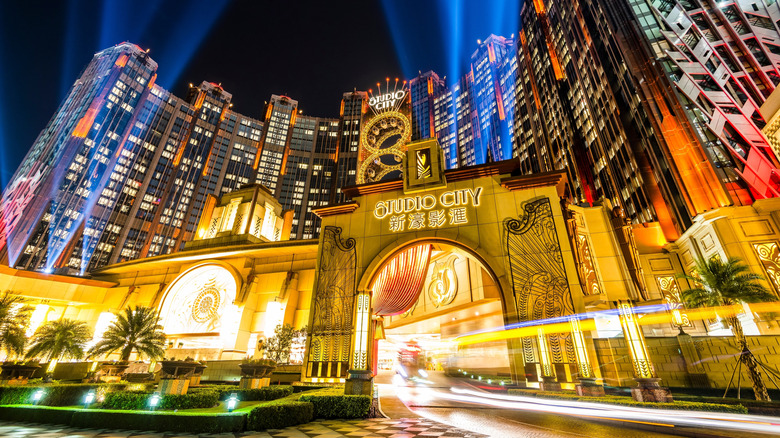
Hop on a one-hour high-speed ferry from Hong Kong to Macao, another Special Administrative Region (SAR) under China that shares a familiar, but distinctly different, East-meets-West energy. Macao is often called the Las Vegas of Asia. This global gambling hub is one of the most densely populated cities in the world. Now, it's the fourth most-visited destination on the planet, totaling 20.4 million international arrivals in 2025.
Once a small Chinese fishing village, Macao (also spelled Macau) grew into an important port along the ancient maritime Silk Road. Portuguese explorers and missionaries began settling there in the 16th century, and their influence shaped the city for nearly 450 years. The result is a striking Sino-European fusion that's still prevalent in Macau's food, architecture, and culture. Gambling and entertainment remain major draws — both high rollers and casual gamblers flock to casino resorts like The Venetian, the Grand Lisboa, and the MGM Macau. Even for non-gamblers, there's plenty to experience. The city's Historic Centre is rich with iconic sites and photographic backdrops — landmarks like Senado Square, the Ruins of St. Paul's, and the Guia Fortress with its lighthouse.
Macau's culinary scene is equally impressive. It was named a named a "Creative City of Gastronomy" by UNESCO and it's home to innovative chefs serving traditional Macanese fusion dishes — with their diverse spice profiles — and an exceptional lineup of Michelin-starred restaurants. There are 19 of them, with a combined 29 stars. Macau also knows how to throw a party. The nightlife is thriving, and the city hosts major international events including the Macau Grand Prix, the International Fireworks Display Contest, dragon boat races, music festivals, and fashion and design showcases. Add waterparks and shopping malls and it's easy to see why Macau fills so many travelers' itineraries.
Istanbul
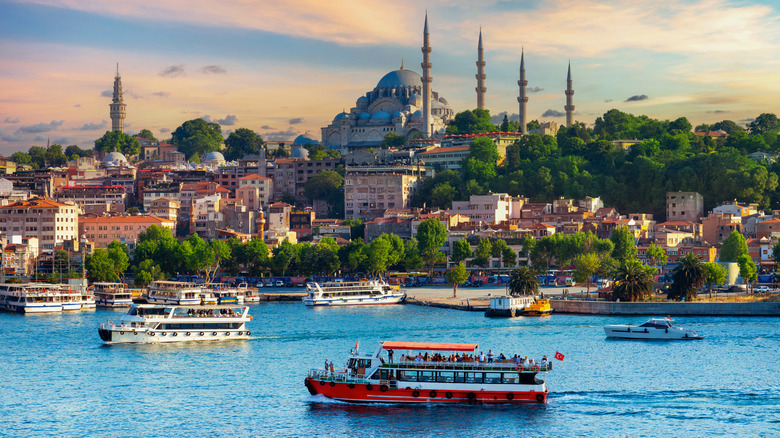
Istanbul has it all. Long considered a crossroads of continents and cultures, it's the epicenter of much global history. It even boasts an unlikely beach scene! Although it slipped in global rankings of most-visited cities this year, its numbers remain extremely high: 19.7 million international arrivals in 2025. Travelers are drawn to its unique blend of European and Asian influences, since the city spans both continents. Grand Byzantine churches stand beside ornate Ottoman mosques. Bustling markets preserve and maintain centuries of tradition, while landmarks like the Hagia Sophia, Blue Mosque, Topkapi Palace, the Grand Bazaar, and the Bosphorus with its tranquil waterfront views offer a rich and immersive experience. Istanbul also remains relatively affordable, even as some travelers have noted rising costs due to inflation. Plus its street food scene continues to be a major highlight.
Originally known as Byzantium and later Constantinople, the city served as the capital of both the Byzantine and Ottoman Empires. Today, relics of the past and restored historic districts stand alongside contemporary galleries, cafés, and restaurants, giving visitors that pleasant combination of past and future, all in the present. With enduring charm and global significance, it's easy to see why Istanbul remains such an irresistible destination for people from around the world. It will be interesting to see if it retains its incredibly high volume of international arrivals in the coming days.
Methodology

Euromonitor International is a global market research firm with offices and analysts in more than 100 countries. It studies industries, economies, and consumer trends to provide global insights across a wide range of sectors. One of its major annual publications is the Top 100 City Destinations Index, which gathers data from national statistics, international organizations, and private databases, to evaluate and rank cities. Over 50 metrics across six main parameters determine the top 100 most appealing cities — which Paris topped in 2025 — while the firm also releases supplemental lists, such as those ranking cities by international arrivals.
According to Euromonitor, the index evaluates an urban area's resilience in terms of economic activity, tourism performance, infrastructure, tourism policy, health and safety, and sustainability. This may include factors such as visa accessibility, overnight stays, visitor spending, airport efficiency, public transport access, tourism investment, and government measures to manage overtourism, which has become a major problem in many cities. Euromonitor's exact metrics and weights aren't publicly disclosed, though. Euromonitor emphasizes cities that "prioritize value over volume" with infrastructure that encourages longer stays, higher spending, and responsible tourism. Cities integrating AI for modern tourism needs are also highlighted for innovation and personalized visitor experiences.
According to the data, 702 million trips to leading global destinations are projected by the end of 2025, representing an overall 8% increase — a continuation of post-pandemic growth trends. The 100 cities topping the index account for almost half of all global tourism, and indicate that Asia's continued investment in tourism and infrastructure is paying dividends and shaping global travel.