
The 5 Best Affordable Cities To Retire In Spain

If you need a convincing reason to retire abroad in Europe, look no further than costs. Everything from food to healthcare and housing generally is less expensive in Europe. "It might cost you $70,000 a year to have a middle-class retirement in the United States," said Tommy Sikes, founder of Traveltirement, to CNBC, noting that with the same budget in parts of Europe, "you can live like a king, including renting or purchasing a property." That isn't to say all European countries are the same (Switzerland, Iceland, and Norway, for example, rank high for costs of living), but an affordable one that many American retirees flock to for high quality of life and a pleasant climate is Spain.
According to data from Numbeo, the cost of living in Spain is roughly one-third lower than that of the United States overall. Your dollar goes even further in Spain when you compare it to specific, popular cities for retirement in the U.S. Compared with Tampa's cost of living index, for example, it's 38% cheaper. But beyond cost, Spain has many benefits for retirees. International Living ranked it among the top 10 countries in the world for retirement in 2026, citing its famously relaxed pace of life, top-tier healthcare access, and sunny Mediterranean climate.
For retirees, the best of Spain's advantages — its culture, weather, and affordability — are most exemplary in certain cities. We selected five that truly stand out, evaluated based on cost of living, healthcare access, climate comfort, and cultural and lifestyle amenities to facilitate a breezy and fulfilling retirement.
Málaga
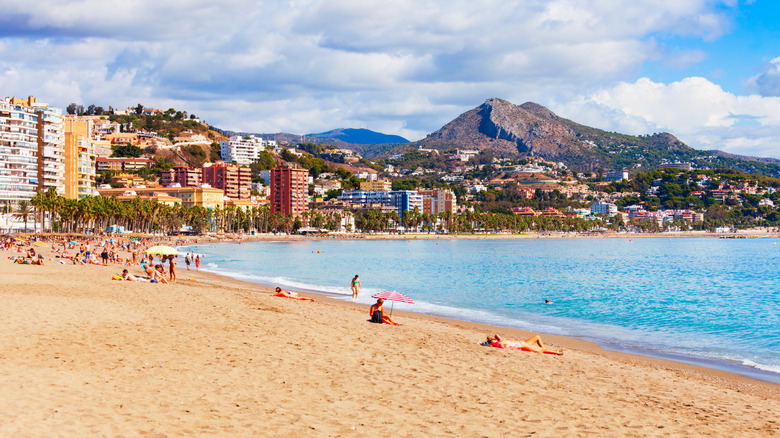
Located along the blissful Costa del Sol region on Spain's Mediterranean coastline, Málaga is an Andalusian pearl, known for its beautiful Moorish-influenced historic center, urban beaches, and exceptional climate. Based on a study by vacation rental company Holidu, Málaga is the third-sunniest city in all of Europe, with about 280 hours of sun per month on average. The Universidad de Málaga also notes that the city gets 300 sunny days per year and just 50 days of precipitation, and even in its coldest month, January, the temperatures are between 53 and 68 degrees Fahrenheit.
Despite its prime coastal location, the cost of living in Málaga is low. The overall cost of living in Málaga is around 26% cheaper than Tampa, Florida, for example, according to Numbeo data. The monthly costs for one person, excluding rent, are estimated to be €703 ($824). As with the rest of Spain, residents of Málaga can get access to the country's free public healthcare, though Málaga also has a strong private healthcare network: It has the most private healthcare doctors of anywhere in Andalusia, and several of its hospitals are ranked the best in the country, according to Sur in English.
The city offers a wide range of ways to enjoy daily life and connect to a community. It's super easy to get around: Málaga's been named Spain's most walkable city (with a high safety score for walking alone in the city), plus it has a bus network and two subway lines, so a car-free lifestyle is more than viable. There are over 40 museums in the city, fun Andalusian traditional festivals, and access to nature escapes like the Montes de Málaga Natural Park just outside of the city.
Valencia
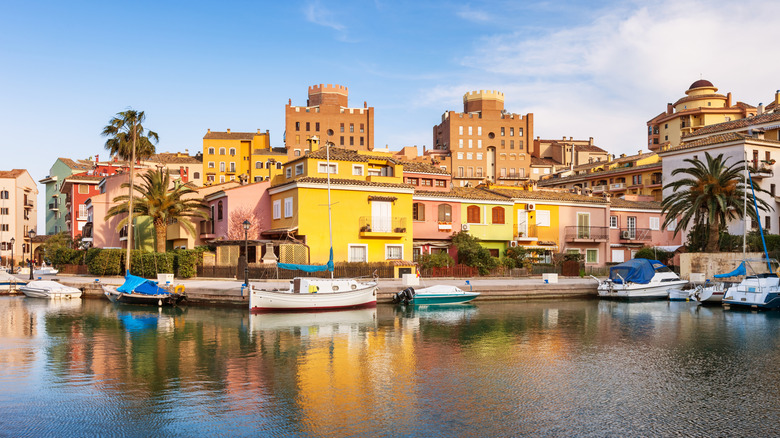
Valencia is Spain's third-largest city, albeit one significantly more affordable than its peers, Madrid and Barcelona. Excluding rent, the cost of living is 16.5% cheaper in Valencia than Madrid, and 15% cheaper than Barcelona. Not including rent, a single person in Valencia spends about €677 ($793) a month, according to Numbeo. With that reasonable price, you get to live in a city with 300 days of sun per year, city beaches on the Balearic Sea, and one of Europe's largest historic city centers.
"[Valencia's] got the coast, a mild climate (not as hot as southern Spain), and a relaxed vibe compared to big cities like Madrid or Barcelona," wrote a Reddit user living in the city, who also emphasized its welcoming community. According to National Institute of Statistics data reported in Think Spain, Valencia has the highest number of expat residents over the age of 60 out of all of the country's autonomous communities, so retirees are sure to find camaraderie. Despite its expat community, a retiree in Valencia emphasized that the city is "authentically Spanish" in a profile for Spend Life Traveling.
Perhaps part of its authentic essence lies in food — Valencia is the birthplace of paella, after all, and it's common to find paella-specialized restaurants serving it right on the beach. You don't need a car to get around the city. Valencia has an extensive public transit network of trams, metros, and buses, which weave all through the city center and connect to the airport, too. The crime index for the city is low, and it's safe to walk around the streets. The historic center is a particular joy to explore on foot, home to the Gothic Silk Exchange building, the Valencia Cathedral, and several plazas where you can sip coffee and savor the mañana culture.
Alicante
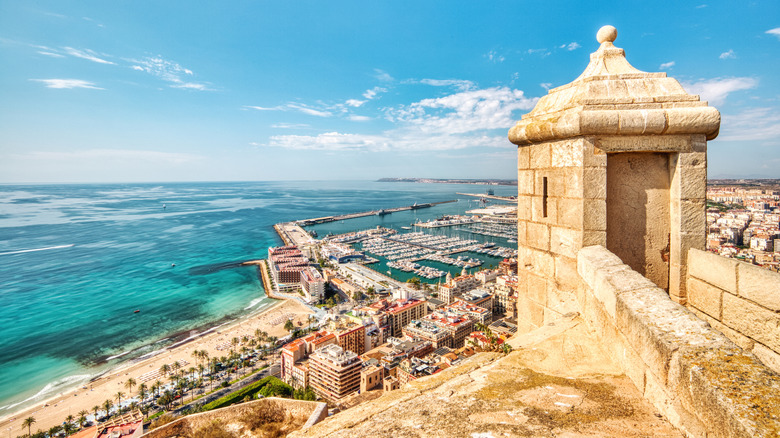
A smaller coastal city, Alicante is ideal for cost-conscious retirees looking for a relaxed atmosphere with plenty of outdoor activities available. The city is the second-sunniest in Europe, per Holidu, and unlike some hotter areas along the Southern coast, Alicante's temperatures rarely exceed the mid-80 degrees Fahrenheit in summer months, Climate Data shows.
Excluding rent, the average person spends about €700 ($822) a month living in Alicante, according to Numbeo — and the city's cost of living is nearly 28% cheaper than Tampa, Florida's and 48% cheaper than San Francisco's. It has strong, accessible healthcare options: A survey by InterNations ranked Alicante as the sixth-best city (out of 49 cities) for affordable expat healthcare, and its Vithas Medimar International Hospital is considered one of the best private healthcare facilities in Spain, with English-speaking providers available.
Though less populated than the aforementioned Spanish cities, Alicante (like many smaller cities in Europe) has a compact layout, rather than the spread-out design more typical in the U.S., making it perfectly walkable. "All the main attractions, museums, restaurants, and bars are a short walk away from wherever you are in town," wrote blogger Brainy Backpackers. Plus, the city has a low crime index and unique attractions. Its hilltop ninth-century castle, Castillo de Santa Bárbara, is free to visit (and the lift that takes you up the hill is free to those older than 65). Meanwhile, Playa de San Juan, located just a 20-minute metro ride from the city center, was named one of the best beaches in Spain by The Times.
Salamanca
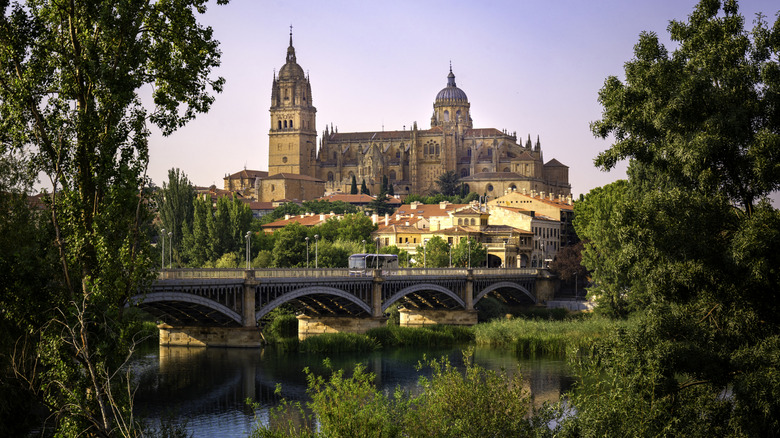
Salamanca is the one non-coastal city we chose for this list, and though it lacks seaside access, it makes up for it in its architectural beauty and laid-back atmosphere. Salamanca is sometimes considered a breathtaking alternative to Barcelona without the massive tourist crowds and with much lower costs: Rent is nearly 47% cheaper in Salamanca than in Barcelona, and its overall cost of living is 22.5% lower. For a cappuccino or a bottle of beer from the market, you'll pay less than €2, according to Numbeo data. A study of Spanish retirement destinations by Moving to Spain ranked Salamanca the top city for healthcare, too, citing high life expectancy and minimal wait times.
The same study shows that the retirement community in Salamanca is among the most prominent in Spain, with retirees making up nearly 29% of the city's population, the highest of all cities analyzed. But that's not to paint Salamanca as an unvaried monolith. Aside from its retirement community, it's also a major university city; the Renaissance-style university in Salamanca's stunning Old Town dates back to the 12th century. You'll often see students and retirees alike convening in the Old Town's plazas and museums.
Though the sea might be out of range, there's no shortage of outdoor leisure opportunities in Salamanca. The pinnacle of Salamanca lifestyle is going for long walks through its riverfront paths and Roman bridges. "If you want the most beautiful plaza mayor in Spain that couples in their eighties all take a walk around arm-in-arm at 8 every night, choose Salamanca," a Reddit user said. The city's crime index is very low, and even walking around alone at night is considered highly safe.
Bilbao
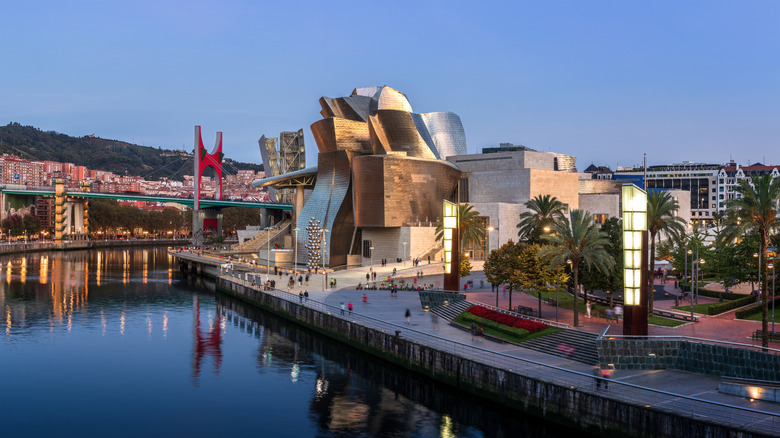
Bilbao is one of the most well-known cities of Spain's Basque country, a coastal region that's paradise for food, art, and wine lovers. Bilbao, being on the north coast of Spain, can get colder than other destinations on this list, but it's still comfortable much of the year. Its coldest month, February, averages around 47 degrees Fahrenheit, per Climate Data. One expat retiree living in the city wrote on Facebook, "I thought the winter was very mild. ... It does rain a lot compared to where we are from, but it usually doesn't rain very hard or very long."
According to Numbeo, €750 ($883) is how much the average person living in Bilbao spends each month, not including rent. That makes it over 9% more affordable than Madrid and over 21% more affordable than Orlando, Florida. Moving to Spain's study of retirement destinations in the country ranked Bilbao as both the most economically stable city — with low income inequality and well-funded infrastructure — and as having the highest life satisfaction rate. It also came close to Salamanca for having some of the best healthcare in the country.
Bilbao is much more modern feeling than many other Spanish cities, with a sophisticated commercial district called the Ensanche and bold architectural landmarks, most iconically the Bilbao Guggenheim Museum, designed by Frank Gehry and a mecca for art and architecture lovers. The city's modern edge is reflected in its well-connected transit system, consisting of trams, metros, and buses. That's not to say Bilbao is absent of more old-world historic charm. Bilbao's Old Town is its pedestrian heart, home to the Cathedral de Santiago, the 16th-century Palacio Arana, and the sprawling Bidebarrieta Library. The city's crime index is moderate but scores high for daytime walking safety.
Methodology
Spain is one of the most sought-after retirement destinations, with an abundance of great cities to enjoy post-work life, and for this list, we selected five Spanish cities based on their affordability and livability for retirees. To create the ranking, primary emphasis was placed on cost of living, climate, and car-free habitability. Data for cost of living was sourced from the database Numbeo and evaluated in comparison to other Spanish cities and common retirement destinations. The climate factor focused on year-round comfortable temperatures and sunlight levels. Walkable suitability considered city layouts, public transit infrastructure, and street-level charm. Secondary factors considered to narrow down the rankings included: high-quality healthcare access, safety, existing retirement or expat communities, and cultural offerings. These were sourced from data studies, tourism bureaus, and firsthand accounts from local expats.