
12 Places In America To Live Comfortably And Stretch Your Social Security
Affordability seems to be at the forefront of many people's minds these days, and retirement is certainly no exception. Finding a place to spend your golden years without emptying your nest egg is becoming more difficult, but this list aims to help. We focused on the cost of living by comparing state and national averages. Median home prices were also considered to identify some of the most cost-effective towns for retirement nationwide. Keep in mind the average Social Security payment for retired workers during 2025 was $1,976, so we try to select locations that can utilize that amount best. Not everything has to be about your budget when contemplating retirement. The town also needs to be a place retirees will truly enjoy, with strong social networks for adults 60 and older, senior-friendly activities, and reliable transportation.
Wolfforth, Texas

Located in West Texas at the base of the Panhandle, Wolfforth is a suburb of Lubbock and a relaxed option for retirement. If you're looking for a retirement spot with warm weather and affordable living, you shouldn't look past Wolfforth. Upon moving to the area, you'll likely be looking for a home, and Wolfforth offers great value, with a median home price of $269,286, compared with the state average of $296,039. It's not just home prices that are affordable; the cost of living in Wolfforth is 14% lower than the Texas average and 19% lower than the rest of the nation.
One popular local attraction is the year-round farmers market, held every Saturday. Check out local produce, arts and crafts, and vendor food trucks to try out local cuisine. If you're looking for a relaxing afternoon activity, take a stroll in one of Wolfforth's seven parks, including Preston Manor Park, which is ADA-accessible and has a small pond for fishing as well. In terms of healthcare, you'll have access to the Covenant Medical Group Medical Clinic on Dowden Road or larger healthcare facilities throughout the nearby Lubbock metro area.
Red Wing, Minnesota
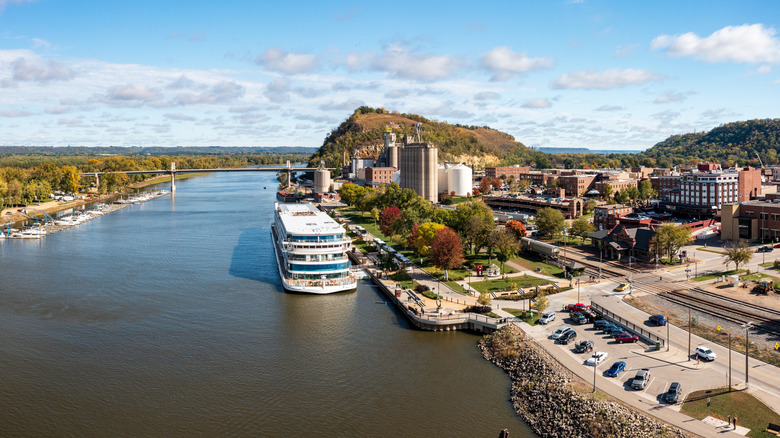
Spend your retirement in a beautiful river city just south of the Twin Cities that's a true representation of the Midwest. Red Wing sits along the Mississippi River and borders neighboring Wisconsin. Because the average monthly Social Security check is $1,976, you may need to find an under-the-radar retirement town to help with affordability, and Red Wing helps you with that. The cost of living in Red Wing is 7% lower than the Minnesota average and nearly 10% lower than the national average. Housing costs are also lower; Red Wing's median home value is $282,244, over $50,000 cheaper than the state average of $337,686.
Amidst the photogenic nature of this Midwest town is a deep history you'll want to get to know when moving here. Stop at the unique American Ski Jumping Museum and learn about Norwegian ski jumpers from Red Wing in the early 1900s. You'll be able to look after your health through several Red Wing establishments, including the Innovative Chiropractic Center to keep your body aligned, Intuitive Self Healing for a yoga session, or the Red Wing YMCA to maintain your physical health. Finally, enjoy the combination of the area's beauty with local art as you catch a concert at the Band Shell at Central Park during the summer months.
Boonville, Missouri

Sitting in the heart of the Show Me state, Boonville is a small town situated directly between St. Louis and Kansas City. Resting on the shores of the Missouri River, this small town of about 7,700 people allows you to spend your retirement in an affordable location, allowing you to stretch your nest egg further. You'll be able to find a new retirement home in Boonville without breaking the bank since the median home value is $187,532 compared with the Missouri average of $255,937. After saving on the lower average home cost, you'll be able to take advantage of Boonville's cost of living, which is 6% lower than the state average and 20% below the rest of the country.
With a history based heavily on river and rail transportation, visitors can get to know the town by visiting the Rivers, Rails & Trails Museum, where they can view exhibits and memorabilia of the area. Your new home will keep you entertained with many festivals and events throughout the calendar. Held the first weekend in September, the Steam Engine Festival is Boonville's longest-running festival, filled with blacksmithing, tractor pulls, and historical demonstrations. Finally, you won't have to worry about a lack of retail options in this smaller town, as the Boonville Historic Downtown retail corridor offers unique shops, perfect for any of your needs.
Raton, New Mexico

Northern New Mexico, just south of the Colorado border, is where you'll find Raton, a small town of about 6,000 people and a great place to retire. When thinking about affordability and how to get the most out of your $1,976 a month, Raton is one of the most budget-friendly towns on our list. The cost of living in Raton is 13% below the New Mexico average and 23% below the rest of the country. When looking for housing, you'll find great value, as Raton's median home value of $150,441 is less than half the state average of $309,185.
When living in Raton, you'll notice a historic railroad and beautiful mountain scenery surrounding you at every turn, but there are also memorable visuals by local artists. You can make "The High Life of the Santa Fe Trail" a weekly stop and visit galleries, antique shops, or the Historic El Raton and Shuler theaters, and take in a show. When it comes to health care in the area, you'll be able to keep on top of your health at the Miners Colfax Medical Center.
Punta Gorda, Florida
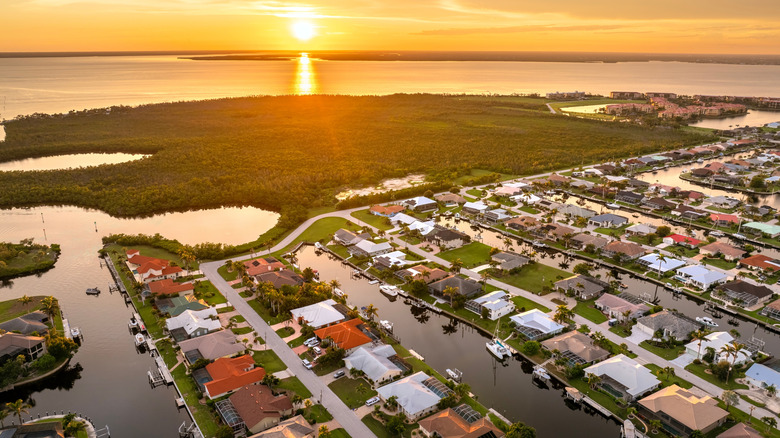
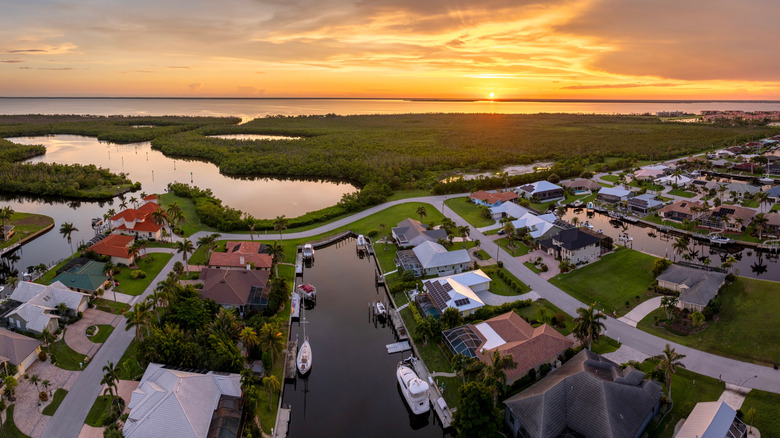
This coastal Florida town fits the image of a traditional retirement, but it is more affordable than most and just as entertaining. Punta Gorda is a town on the west coast of Florida and home to about 20,000 residents. While many Florida retirement beach towns have gotten more expensive, Punta Gorda has stayed reasonable, while also offering a walkable city with shops, seafood, and less crowded beaches. The median home price is $332,771, compared with Florida's average of $372,356, and the cost of living is 9% lower than the Florida average and 6% lower than the national average.
Punta Gorda has a relaxed, family-friendly atmosphere for you and your grandkids, or maybe even your four-legged family at dog-friendly parks like Harbour Heights Park or Hounds on Henry. If art and botanical gardens sound like a great way to spend weekends, try the Peace River Botanical & Sculpture Gardens and explore about 30 acres filled with artistic sculptures and five ecosystems. Among the sunshine and beaches, another thing Florida is known for is top-notch golf courses, so feel free to spend your retirement playing year-round with over 20 courses around the Charlotte Harbor Gulf Island Coast. One of the main benefits of living in Punta Gorda is its access to many health care facilities, such as Life Care Center of Punta Gorda, AdventHealth Port Charlotte, and plenty of other options.
Decatur, Alabama
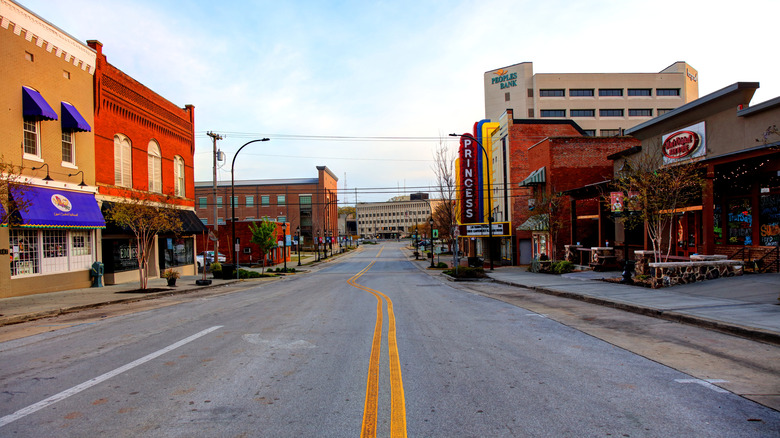
This northern Alabama town, nicknamed the River City, is bigger than most of the towns on this list, but quietly one of the cheapest places to retire in the country. Decatur blends the affordability of a small town with the options of a bigger city, making it a perfect spot for your retirement. Decatur has a reasonable cost of living, as its 1% lower than the Alabama average and almost 17% lower than the rest of the country. In terms of housing, Decatur's median home value is $219,703, which is slightly lower than the state average of $231,050.
If retirees choose Decatur, they will be immersed in art throughout daily life. You can check out the MoCo Art Trail, where you'll check out local artwork throughout the county, including the MoCo Mural Trail. Care to see live events and shows? The historic Princess Theatre showcases concerts throughout the year, offering a steady lineup of arts programming. An important part of retirement is finding a place that fulfills all your health care needs. The Decatur Morgan Hospital is a 273-bed not-for-profit hospital that will help you stay on top of your health.
Sherman, Texas

A short drive north of Dallas, Texas, is where you'll find this great retirement spot. Sherman provides senior-friendly activities, affordability, and a mild climate most of the year to help you enjoy your golden years. Because Social Security checks are just shy of $2,000, the need for retirees to use it wisely may draw them away from big metropolitan cities and their immediate suburbs. That's why Sherman, a town of about 45,000, is a great option where affordability and accessibility meet. Boasting a median home price $40,000 lower than the Texas average of $296,039, it's a great place to afford a home, and the cost of living is 7% lower than the state average and 13% lower than the national average.
One of the biggest advantages of retiring in Sherman is the extensive health care network and facilities. There are three top-rated hospitals, including Baylor Scott & White Surgical Hospital and Sherman Medical Center. When it comes to shopping, you'll be able to find whatever you're looking for locally since Sherman boasts the largest shopping spot between Dallas-Fort Worth and Oklahoma City. If you're a fan of the arts, Sherman provides you with no shortage of options, as you can take in a classical concert at the Sherman Symphony Orchestra or enjoy Arts Fest every September with local vendors, food trucks, and performance art.
Peoria, Illinois

Set on the Illinois River and located in central Illinois is Peoria, not only one of the most affordable towns for retirement in the Midwest, but ranked as one of America's best cities to live in. So what does it cost to make retirement work in Peoria? The cost of living is 19% cheaper than the Illinois average, while it's 24% lower than the national average. Regarding housing costs, Peoria's median home value is $127,325, well below the Illinois average of $278,351.
One way to become familiar with the area is to explore its history by visiting the Caterpillar Visitors Center to learn about the company's former headquarters in town or walking through the Peoria Riverfront Museum to see exhibits focused on science, history, and art. You'll have access to a thriving local shopping scene, so start your day at The Spot Coffee great artisan coffee and local baked goods, then go shopping for antiques and collectibles or thrift shops throughout the downtown area. Finally, you're never too old to learn, so sign up for classes from the Peoria Area SeniorNet, which teaches adults 60 and older computer classes.
Jackson, Mississippi

If history, blues music, and low cost are your idea of a perfect retirement, Jackson, Mississippi, may hit all the right notes. You'll find the cheapest housing for your retirement on the list in Jackson, Mississippi, where the median home value is $81,323, compared with the state average of $187,902. While the housing costs in Jackson are so low, the cost of living in the area may be even cheaper, as Jackson is 3% lower than the state average and 24% lower than the rest of the country, meaning that your $1,976 Social Security check can cover quite a bit.
Book lovers in retirement will love Jackson. Buy used and new books at The Book Rack, a 50-year staple of the area, or head to the Eudora Welty House and Garden and see how life was for Pulitzer Prize-winning author Eudora Welty. While enjoying retirement in Jackson, you'll learn the rhythm of the town by exploring the rich musical history with great Southern food at Hal & Mals, a historic music and dining scene. When it comes to health care, you'll be in good hands at The University of Mississippi Medical Center on North State Street, providing primary care, specialty, and subspecialty care for the state.
Fort Wayne, Indiana
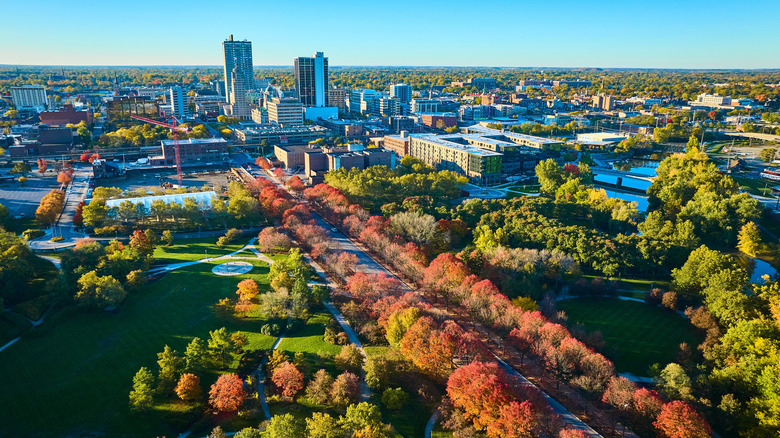
Tucked in the northeast corner of Indiana is where you'll find Fort Wayne. Home to a famous botanical conservatory, underrated art, and one of the lowest costs of living in America, this Midwestern town is an option more retirees should consider. One of the major benefits of retiring in the Midwest is the lower cost compared to the coasts, and Fort Wayne is no different. The cost of living in Fort Wayne is 2% lower than the rest of the state and 18% lower than the national average. The median home price in Fort Wayne is $235,458, compared to $248,414 for the rest of Indiana.
One of the cost benefits to help utilize your Social Security checks is Fort Wayne's public transportation, which offers help to seniors get around. The Community Transport Network (CTN) has operated for 25 years, taking seniors and others anywhere they need to go in the area on a daily basis, and the cost can be covered under many insurance plans. A great way to find community in Fort Wayne is to spend days at the Fort Wayne Community Center, which has plenty of activities and events geared toward those aged 60 or older.
Ocean Shores, Washington
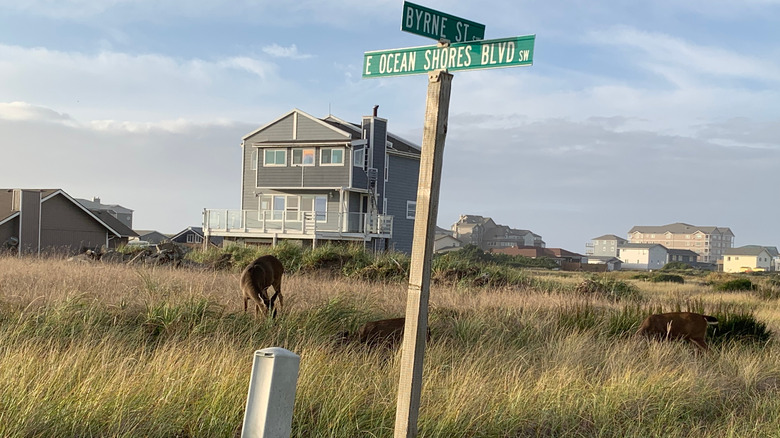
You would think a place called Ocean Shores would be anything but affordable for retirement, but Ocean Shores, Washington, is an exception. Nestled high in the Pacific Northwest, with the Pacific Ocean as the backdrop, this quiet coastal town of about 7,000 people offers breathtaking views at costs that rival Midwestern towns. While Washington has a high median home value of $587,696, Ocean Shores comes about a quarter of a million dollars below that at $338,864. In terms of a retiree's day-to-day spending, the cost of living is 24% lower than the rest of the state and 8% lower than the national average.
Because of its location along the Pacific, leisure water activities like pontoon cruising, fishing, and bird-watching are all popular options to enjoy the wildlife and views. Another benefit of living in Ocean Shores is the access to fresh seafood for your weekly night out, so stop over at Bennett's Fish Shack or Umi Sushi Japanese Restaurant.
Pocatello, Idaho

Pocatello is located in southeast Idaho and is nicknamed the Gateway to the Northwest. Not only does Pocatello offer the beauty of America's West, but a surprisingly affordable town to spend your retirement years. When it comes to housing, the median home value in Pocatello is $329,887, while the rest of Idaho is much higher at $462,838. To help retirees stretch a monthly Social Security check, Pocatello's cost of living is 16% lower than Idaho's average and 11% lower than the national average.
If fishing with the wilderness of the west surrounding you seems like your idea of a great retirement, the Pocatello area offers 31 reservoirs and several lakes for you to choose from. The town has many historically significant sites, including Historic Downtown Pocatello, where visitors can browse specialty shops, admire architecture listed on the National Historic Registry, or buy local produce at the Portneuf Valley Farmers Market. Don't be afraid to get involved with the Senior Activity Center, which offers resources and programs geared toward retirees.
Methodology

When creating a list of 12 locations ideal for retirees who rely on Social Security, there are several factors we took into account. The locations had to be financially feasible for the average retiree, which means the average Social Security check of $1,976 in 2025 needed to be able to handle a portion of the expenses. To make sure we were on the right track, every town chosen needed to have a median home value below the state average, and the cost of living needed to be below the state and national averages. To keep things consistent, we used Zillow to compare home prices, and BestPlaces to compare the cost of living. Beyond expenses, we wanted a wide swath of the United States represented to show the variety of options available. Finally, each area had to have senior-friendly activities available throughout the year, as well as healthcare access and accessibility options.