
10 Immaculate Scottish Destinations To Pull You Far From The Tourist Trail
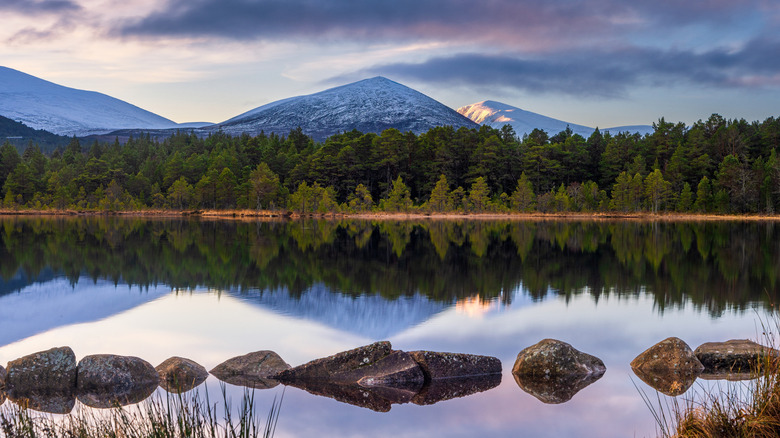
Scotland draws millions of visitors a year from around the globe, called there by its bleak beauty, spectacular historical sites, vibrant cities, golf, and, of course, its whisky. It's not a big place by any means — roughly the size of South Carolina —but the little country punches well above its weight.
Yet, for all it offers, tourists tend to swarm to a few specific spots, neglecting dozens of rewarding destinations that are almost all in day-trip striking distance of their hotels. Edinburgh, the stunning capital, is the beating heart of the tourism industry, while Glencoe, Skye, and Loch Ness have all become required stops on any visit. These are all wonderful in their own right, but, as with anywhere popular, crowds flock, and the experience can be diminished.
Whether you're a Scotland first-timer searching for the best experience or a return visitor looking for something new, broadening your scope to include some of the country's lesser-visited regions can enhance your trip immensely. Take it from a Scot, born and bred, and discover everything our country has to offer in these oft-passed-over destinations.
Make a base in Glasgow
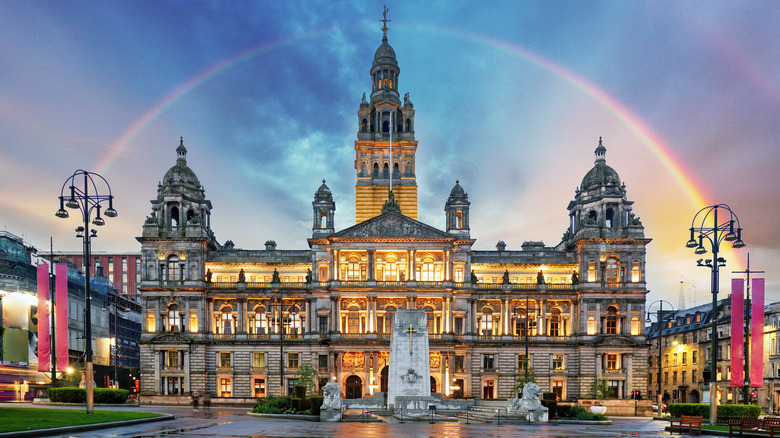
Okay, so Glasgow isn't exactly off the beaten path. It's the country's largest city and, generally speaking, features in most itineraries as a day-trip from Edinburgh. In this regard, it shouldn't feature on this list, but it is a neglected destination, and one that's worthy of being an alternative base for your Scotland trip — and a cheaper one.
Edinburgh becomes the de facto basecamp for most visits, owing to its tourist infrastructure and the simple fact that it's spectacularly beautiful. But Glasgow, it could be argued, is Scotland at its purest. Even Rick Steves believes it's Scotland's most underrated destination. Once known as the "Second City of the Empire," it's a grittier city and something of a fallen giant that's been kept afloat by the good humor of its inhabitants — Glasweigans, as the city's slogan in George Square states, make Glasgow. That's never more evident than the traffic-cone-topped Duke of Wellington statue in the town center.
Regardless, with fewer tourists and a less distinct attraction trail, your time here will be more experiential. It's home to some of the best pubs in the country, the regulars of which you'll likely find far more welcoming than in the capital, and its distinct neighborhoods — like the West End, Finniston, and the East End — all offer something unique. And just because it's not bursting with tourist attractions doesn't mean there aren't loads to do. Kelvingrove Museum is fantastic, wandering through the grounds of the almost 600-year-old University of Glasgow is a delight, and with distilleries, galleries, mural trails, markets, botanic gardens, and tons more to enjoy, you'll never be bored. Plus, its food scene is getting spectacular.
Ayrshire and Arran
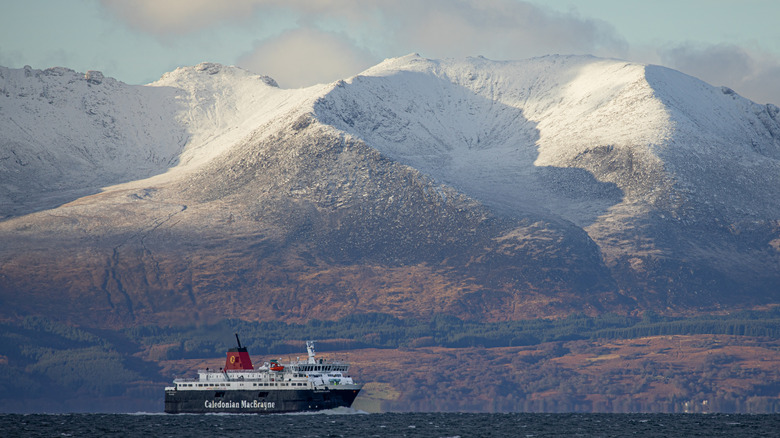
Unless you're a golf fanatic, Scotland's Ayrshire Coast flies well under the radar for most tourists. Its renowned courses, like Troon, Prestwick, and Turnberry, are a draw unto themselves, but there's so much to explore in the region. Considering most of its towns are less than a 40-minute train ride from Glasgow, it's super accessible, too. It's also my home!
The best way to experience it is to hire a car and drive the coastal roads towards Girvan. Along the way, you'll be able to stop at Culzean Castle, a breathtaking cliff-set architectural marvel, Robert Burns' home and museum (Scotland's bard — he wrote "Auld Lang Syne"), isolated beaches, distilleries, and a number of remarkable little fishing towns screaming for aimless wanderings. It's a slower pace of life in this corner of Scotland, and one you're unlikely to find many other tourists.
The highlight, however, is the underrated Scottish Island of Arran. Impossible to miss from the mainland, the island is known as "Scotland in Miniature", owing to its uncanny ability to offer a slice of virtually everything you'd come to the country for — mountains for climbing, whisky for drinking, castles for exploring, and wonderful seafood. Climbing the island's tallest mountain, Goatfell, is a popular day-trip for locals who hop on the ferry at Troon, disembark at Brodick, ascend, descend, then drink before heading home. Even if you don't go across, the sunset over Arran from the mainland is nothing short of perfect.
Stirling
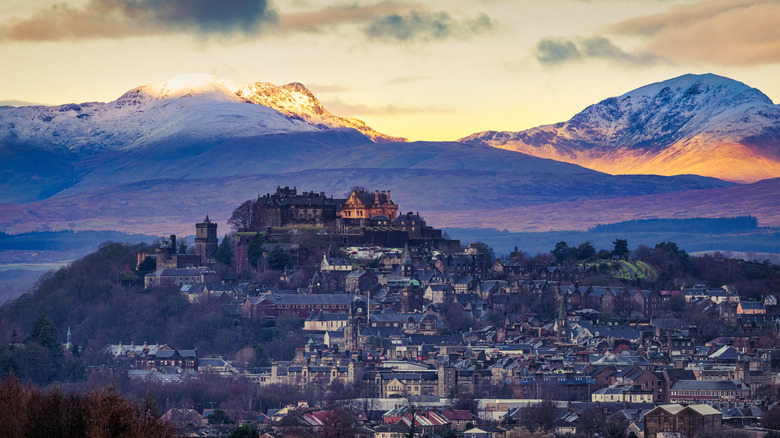
Edinburgh Castle steals a lot of the attention from tourists, and its lofty perch above one of the world's most beautiful cities is epic, to be fair. But another castle and its surrounding city in the heart of Scotland gives it a run for its money — and doesn't have the crowds to contend with. Stirling, and its eponymous castle, make for a brilliant day-trip from Glasgow to Edinburgh, as it's right in the middle of them both and easy to access by train.
The initial approach to Stirling is dramatic. The castle itself is draped over a lone rocky crag, offering it full prominence over the landscape, while the town curls around the base. Known as one of the gateways to the Highlands, the imposing hills beyond, often snowcapped in winter, frame the entire scene just for extra romantic effect. It's almost worth visiting just for the initial view.
But there's much more on offer. A castle visit is an excellent sister visit to Edinburgh, as Stirling's history leans more into royalty and power than Edinburgh's does. More monarchs were crowned here, and the field of Bannockburn below was the scene of Scotland's most famous battle in the Scottish Wars of Independence. The Wallace Monument, a tribute to Scotland's best-known warrior, is also nearby and can round out a historically inclined visit. From there, explore the cobbled old town, with its nearly thousand-year-long history, and check out the selection of local shops plying their wares. And, naturally, there are some excellent pubs to finish the day with a well-earned pint.
Orkney
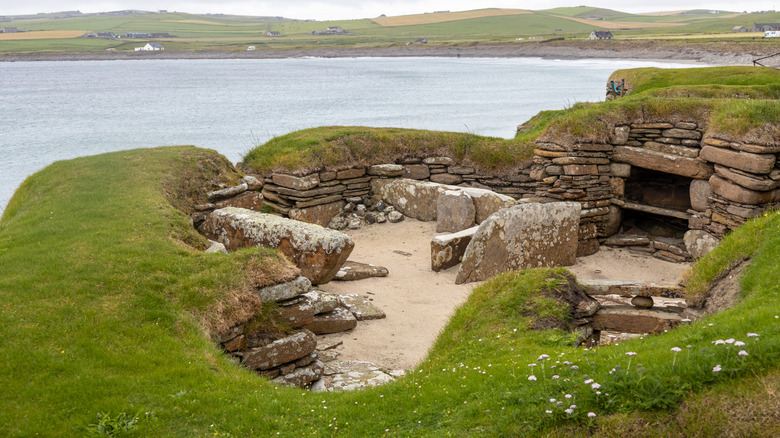
Orkney is so far off the well-trodden path that most Scottish people haven't even visited. Located 20 miles off the most northerly point in mainland Britain, the Orkney Isles are a world and culture unto themselves. Geographically isolated and rooted in the Nordic world, Orcadian life feels distinct from mainland Scotland in many ways, and for what might seem like an insignificant place, it's brimming with historical significance.
Orkney is best known for Skara Brae, a 5,000-year-old Neolithic village uncovered by a storm in the late 19th century. Widely regarded as the best preserved example of prehistoric life in Western Europe, a visit here is worth the trip alone for many people. The level of preservation for a site older than the pyramids is unlike anything else in Scotland, or most of Europe, in fact. Equally interesting are the nearby burial chambers, which were also discovered by the Norsemen centuries ago, who left their own graffiti on the site.
But, as you'll find out, there's more to these isles than meets the eye. Its bleak, wind-weathered beauty is staggering, with its monumental cliffs hiding thousands of endemic bird species like puffins and guillemots, and its rough waters playing host to everything from whales to dolphins. In its towns, lively pubs glow with live music and restaurants push some of the freshest North Sea catches you'll find anywhere. Just be aware, there are around 70 islands, with 20 of them inhabited, and ferries running from 13. Make sure to plan well ahead. It's also home to the world's shortest scheduled commercial flight — a fun, travel bragging tidbit to tell your friends.
Dumfries and Galloway
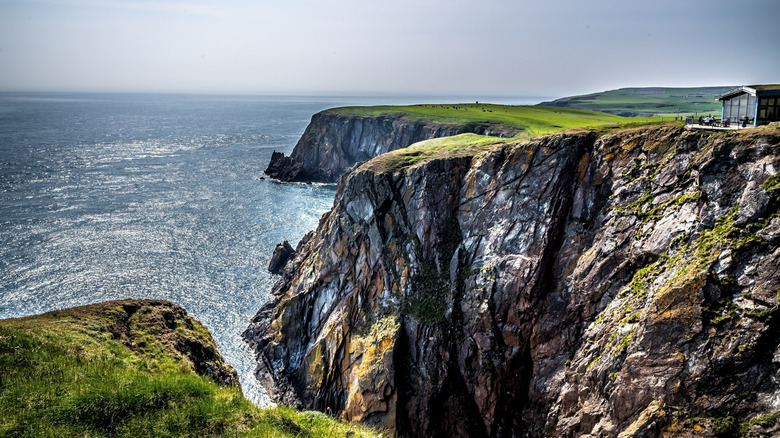
Heading back south again, you'll find Dumfries and Galloway, another overlooked corner of Scotland. Similar to neighboring Ayrshire, the region is more than worth a visit, offering just as much as anywhere else with a fraction of the crowds. That could change soon, though. Efforts are being made to entice tourists by marketing the underrated Southwest Coastal 300 road trip as a quieter alternative to the North Coast 500.
Blessed with deeply beautiful stretches of coast, vast forests, and stark mountainous regions, it's built for outdoor exploration. The centerpiece — Galloway Forest Park — is the largest of its kind in the U.K., offering around 300 square miles of trails, mountain biking, and climbing. Within its boundaries, you'll find the Merrick, an excellent day climb offering views along the coast, as well as routes around Loch Trool, a picturesque body of water in the center of the park. The more adventurous can hike deep into the park, and make camp at one of the remote bothies for a sense of true isolation, or embark on the 214-mile-long Southern Upland Way. Those with an interest in space can take advantage of the perfect stargazing conditions that made the area the U.K.'s first dark sky park.
Scotland's most southerly point, the Mull of Galloway Lighthouse's clifftop spot makes it one of the most unforgettable sights in the country, and the area's countless beaches are a constant draw (just don't expect too much sun). It is Scotland after all. The city of Dumfries is small but welcoming, with some of its major tourist draws centered around Robert Burns, who spent the latter half of his life there. His mausoleum, the inn where he drank, and a small museum all lend context to the complex but beloved Scottish poet.
The Cairngorms
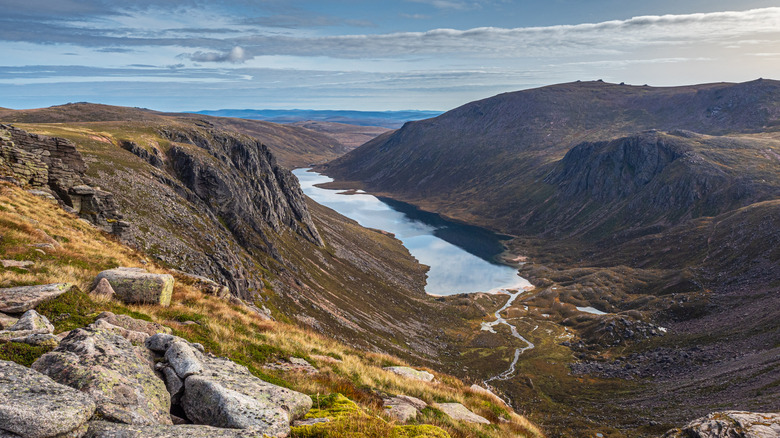
Mention the Scottish Highlands and your mind, even without knowing the name, probably flits to Glen Coe. The iconic valley deserves the reputation; it's beautiful, but it's a tiny fraction of a huge highland region that covers almost half of the country. With so many visitors flocking there, it's worth venturing further afield to find quieter and equally impressive areas. The Cairngorms, while well-known to locals, fit that bill.
With almost 1,800 square miles to explore, the Cairngorms is the U.K.'s largest national park. Aviemore, a thriving resort town in the northwest of the park, is a base for skiing in the winter and the perfect basecamp for exploring the greater park in the warmer months. What you do with that exploration is up to you. Five of the U.K.'s tallest mountains are located within the park, waiting to be summited. A funicular railway and steam train operate in the park if you don't feel like carrying yourself up a hill, and world-class distilleries like Glenlivet and Dalwhinnie are located within its boundaries. It's far more than a few hiking trails.
Getting there and enjoying it independently is best with a car, but trains and buses do make it simple enough to get into the center of the park. You can also head out on organized adventure tours, which can see you climbing mountains, canyoning down river valleys, exploring local wildlife, or taking part in some clay pigeon shooting on centuries-old country estates. The possibilities are endless in the Cairngorms.
Mull and Iona
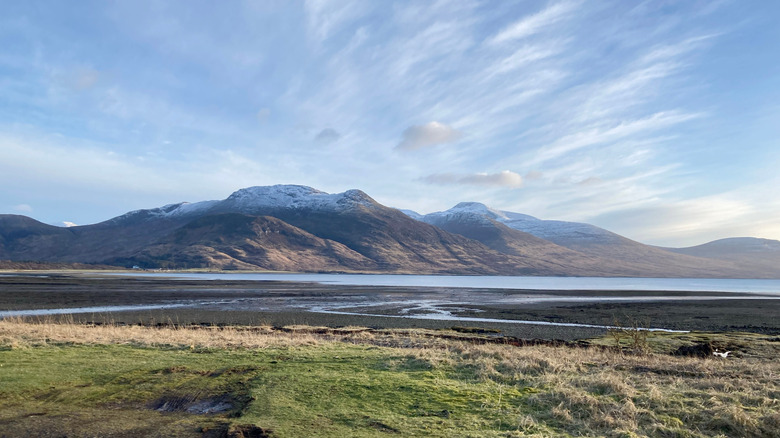
Skye is a regular name-drop in lists of the world's most beautiful places. The breathtaking Hebridean Islands' reputation has soared in recent years, and while they're large enough to cope with the tourism, some of their most famous draws can be overcrowded, diminishing the peaceful aura. But the Inner Hebrides, a collection of 35 inhabited islands (including Skye) on the West Coast, offer many far quieter but equally idyllic alternatives.
Mull, a pristine little paradise of cliffs, beaches, and mountains, and nearby Iona are the pick of the bunch. Usually visited together, Mull is a large island built for tons of varied exploration, while little Iona sits off its western coast and offers a more nuanced experience. Mull is a peaceful place, and it's home to just under 3,000 people who help make it a uniquely homely destination. Tobermorey is the main town on the island and, while small, it's instantly unforgettable. Originally a planned fishing village built in the 18th century, its seaside array of colorful homes is a joy, as are the countless quirky shops, cafes, and restaurants. There's also the impressive Duart Castle, home of Clan MaClean, the Tobermory Distillery, and the chance to climb Ben More, one of Scotland's 282 Munros (mountains above 3,000 feet).
Iona is a far smaller affair, with the primary attraction being the Iona Abbey and Nunnery. The 13th-century abbey, built by Irish missionaries, is beautiful, emanating an air of complete serenity from its island location, and widely credited as being the birthplace of Christianity in Scotland. While the truth is more complex, it's still an important piece of Scottish history. If you can linger overnight on the island, you'll feel like you almost have the place to yourself as all the day-trippers disappear.
St. Kilda
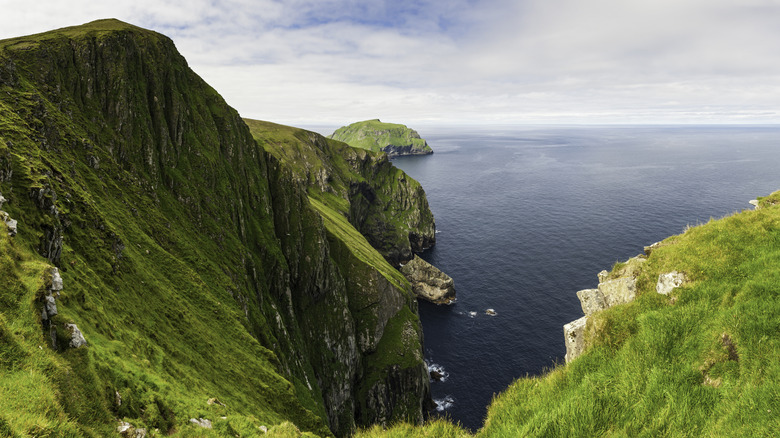
There's off the beaten path, and then there's St. Kilda. The island, located in the middle of the Atlantic Ocean, has been officially uninhabited since the 1930s, when life became impossible for the locals. Barring a few workers and researchers, there's no one else there, but it is open to visitors. Considering it's 40 miles beyond the furthest Outer Hebrides, though, it's not easy to get there.
Day trips are possible with specific tour companies, but be warned that trips can take anywhere from three to six hours when traveling from Skye or other Hebridean isles, and as much as 18 hours from the mainland. Once there, you're free to explore the remarkable scenery, including the highest cliffs in Scotland, huge amounts of birdlife, and the ghost-like cottages of its previous inhabitants, now operating as a small museum. You'll be privy to tales of the island, from World War I clashes with Germans to tales of banishments in centuries gone by.
It's a long way for a day trip, so it might be worth checking out the possibility of camping. Don't do this without preparation, though. There are no stores on the island, only fresh water and no food, so you'll need to pack enough food and remember you'll need to take it all away with you. It's worth taking a few extra days' worth with you, too, as the weather can turn, cancelling boats in both directions. With that in mind, have a backup plan if your visit falls through.
East Neuk of Fife
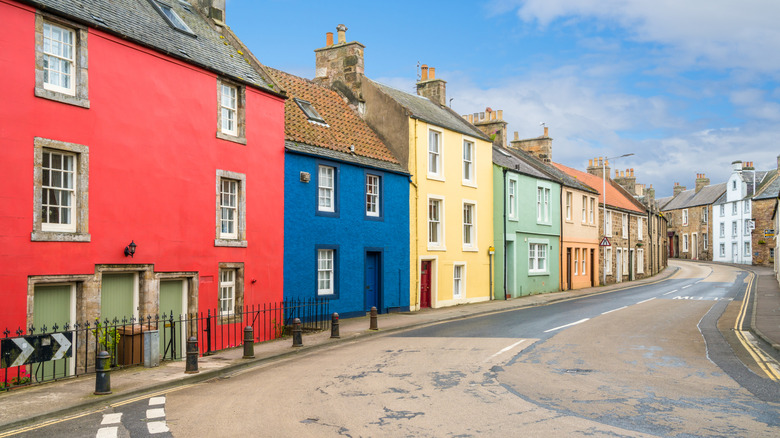
St. Andrews is one of the biggest names in Scottish tourism, primarily for its world-renowned golf course. However, those who have visited know it's also an astonishingly beautiful little town. They might not know that it's also the gateway to an even more beautiful region named the East Neuk of Fife.
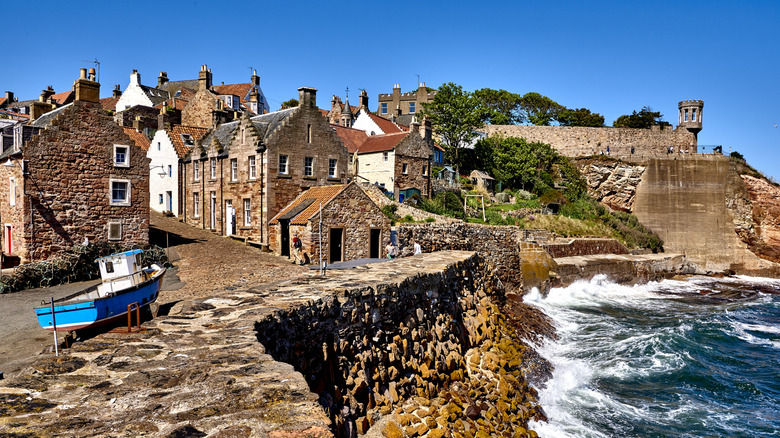
The coastal stretch is punctuated by the picturesque fishing villages of Crail, Anstruther, Pittenweem, St. Monans, Elie, Earlsferry, and Kingsbarns, each offering its own slice of East Neuk charm. Anstruther is the largest, but with under 4,000 residents, you can get an idea of how small each village is. Crail's harbor is arguably the best of the bunch, with its whitewashed buildings, burgeoning food scene, wonderful local craft stores, and excellent museum, while the cliffside coastal gem of Pittenweem steals hearts with its storybook views, delightful arts festival, and nearby historical sites.
It's easily visited as a day trip from Edinburgh, but it's best experienced as an extended trip. Rent a car, and take a few days to savor the slower pace of life. If you've got the energy, you could even visit each town as part of an epic 117-mile Fife Coastal Path. Most locals walk individual segments of the trail, but some visitors take it all in one go. And of course, if you've brought your clubs, you can start or end the visit with 18 holes on the Old Course in St. Andrews.
The Cowal Peninsula
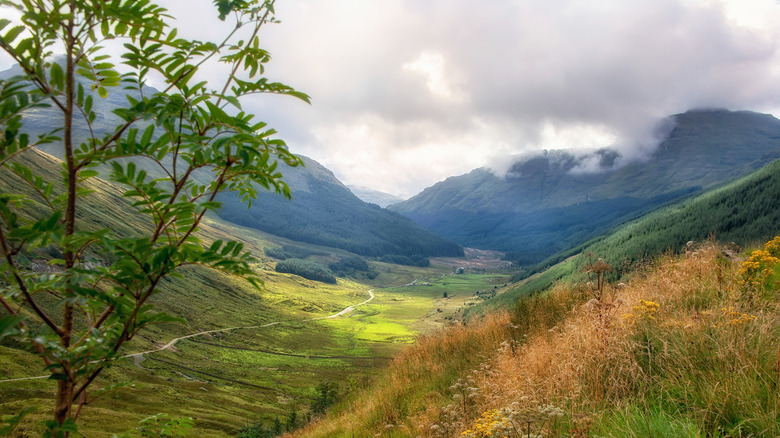
One of the joys of Scotland is that its compact size means you're never too far from a remarkable outdoor opportunity. The illusion of remoteness found in the Cowal Peninsula is one of the best examples of this. Less than two hours from Glasgow, the often bypassed coastal highland region is one of the U.K.'s greatest destinations for outdoor adventure.
Known as the Secret Coast, the sizeable outcrop is wedged between Loch Fyne (a sea loch) and the Sound of Bute. Hidden within is a wealth of lochs, mountains, castles, endearing little villages, and enchanting woodland walks like those found in the Argyle Forest. It's easy to get to by car, but it doesn't fall on a natural tourist trail of the coast, so it's typically bypassed for the likes of Oban. But those who venture in are amazed.
Its wild beaches, barren and beautiful, are a highlight, while Dunoon Castle and Old Castle Lachlan rank among the most photogenic structures in the country. Its villages and towns are also among the best places to experience highland culture, with one of the premier Highland Games taking place in the region, and a strong presence of Gaelic culture.
Methodology
I'm born and bred in Scotland, so most of the places are well known to me as lesser-visited spots. All my picks were backed up by tourism board websites, travel blogs, and magazine sites, as well as any relevant stats suggesting lower tourist numbers. Obviously, some exceptions, like Glasgow, were used as subjective choices. Scotland is one of the world's great triumphs, and deserves its place on bucket lists around the world.