
Hands-Down Europe's 5 Cities With The Best Public Transportation Systems
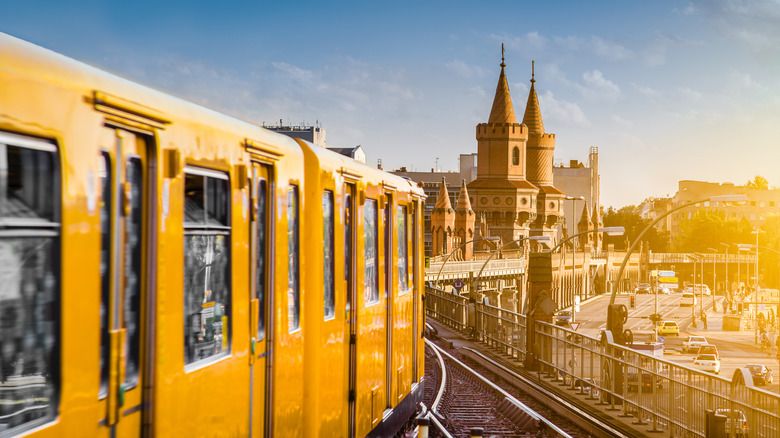
One of the great things about many European cities is how easy it is to get around without a car. From buses and trams to subways and even boats, public transportation is often the default. Even travel guru Rick Steves raves about its transit networks, recommending local buses as a secret weapon to getting around Europe like a local. Still, not all systems are created equal, which is why we looked closely at which European cities truly stand out for car-free travel.
By looking at surveys from the European Commission, analyzing rankings from major publications, and digging into first-hand accounts on Reddit, we've identified five cities that consistently rise to the top. While some iconic cities are famous for landmarks, that doesn't always translate to efficient transportation. Take Rome, for instance. According to the European Commission's 2023 Report on the quality of life in European cities, only 29% of residents are satisfied with public transportation, whereas Vienna, which ranks on our list, boasts a 91% satisfaction rate.
So what's the secret of these successful cities? As we'll discover, a mix of reliability, good connections, and plentiful options that never leave you stranded helps elevate their urban centers above the rest. This means that the next time you want to book a ticket to Europe and want to make sure you visit a place that's easy to navigate, you'll want to seriously consider these five incredible destinations.
London
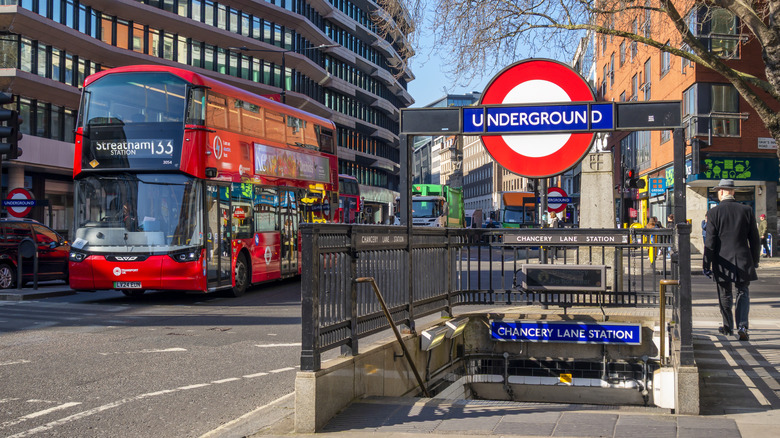
With its extensive Underground system and fleet of red double-decker buses, London is the first European capital on the list. After surveying 18,500 city residents worldwide, Time Out named London's public transit the best in Europe in 2025, with 86% of respondents rating it positively. Given that London was named the world's best city for 2026 by Resonance Consultancy, nothing less should be expected.
The London Underground, also known as The Tube, is the world's oldest subway system, yet it remains highly efficient with 272 stations across the city that, at times, carry out 5 million trips a day. It's supported by more than 9,000 buses covering 675 routes, along with the Overground rail network. Recent upgrades include the Elizabeth Line, London's first fully accessible railway, which has significantly improved cross-city connections, easing traffic and increasing capacity.
Between night buses and 24-hour Underground service on select lines on Fridays and Saturdays, the city ensures that no one is left stranded. Bus fares are a flat £1.75 per ride (roughly $2.35), with daily fares capped at £5.25 (around $7). Underground prices, by contrast, are zone-based and vary depending on whether or not you travel during peak hours. Payment is simple via the city's transit pass, the Oyster Card, or contactless bank cards at the gate – just make sure you keep track of what card you use. All of these factors make London a city where you never have to walk too far to reach a station or bus stop, or wait long for your next mode of transport to arrive.
Berlin
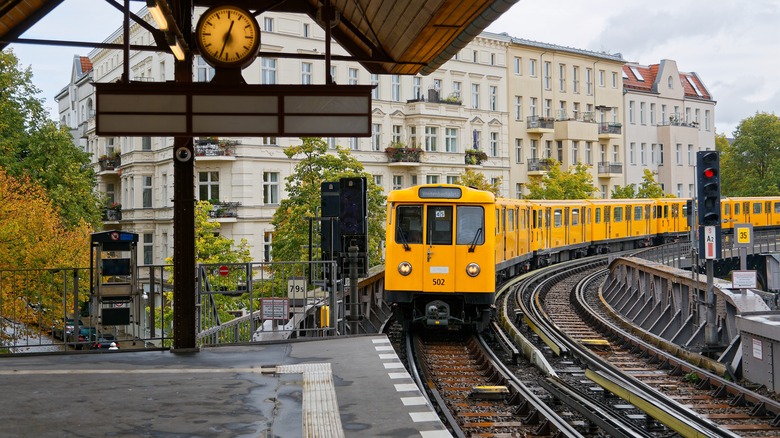
While London may have topped Time Out's 2025 list of the best transportation systems in Europe, Berlin earned an even bigger prize in 2023 when the publication named it the best transportation system in the world, with 97% of surveyed residents expressing satisfaction. Compared to larger cities like London or Paris, Berlin has a much smaller system, yet it runs so efficiently that it can certainly teach larger cities a thing or two.
The core of Berlin's transport system is its subway, the U-Bahn, which runs 9 lines across 175 stations. On weekdays, it operates from 4 a.m. until 1 a.m., and on weekends, it runs 24 hours to allow residents and tourists enjoy Berlin's incredible nightlife. With trains running every 5 minutes during the day and every 10 to 15 minutes at night, the subway is a reliable way to move about the city. The U-Bahn is complemented by the S-Bahn, a light rail system with both urban and suburban connections that can quickly get you from one end of the city to the next. By strategically locating tram and bus stops outside the S-Bahn stations, the city prioritizes connectivity.
One unique characteristic of Berlin transportation is that you won't find any turnstiles at the entry to the U-Bahn and S-Bahn, which also cuts down on lines. Rather, users are invited to validate their tickets before boarding the trains and are then subject to inspection by ticketing officers. Regarding tickets, the city's transit authority, BVG, has introduced an integrated ticket valid across all modes of transit, making transfers straightforward.
Prague
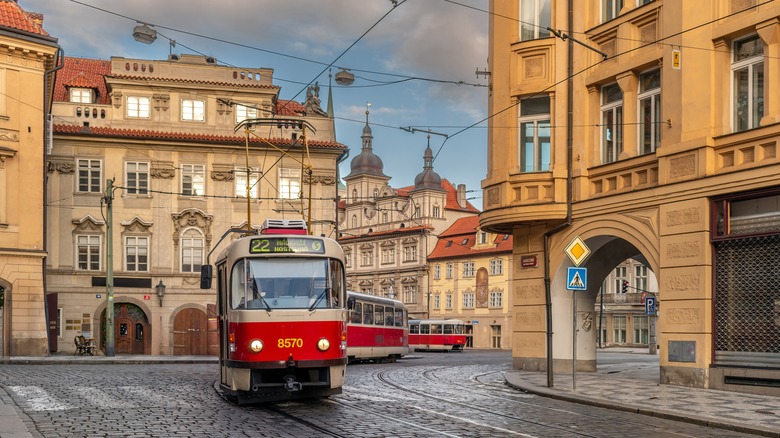
Prague ranked second globally in Time Out's 2023 transit survey, bolstered by the European Commission's quality of life survey that same year, in which 88% of residents said they were satisfied with the city's public transportation. The city's expansive tram network — made up of hundreds of vehicles across 24 routes –forms the backbone of daily travel, with trams arriving at a remarkable rate of one every 4 minutes, while fewer nighttime routes serve citizens from midnight to 5 a.m.
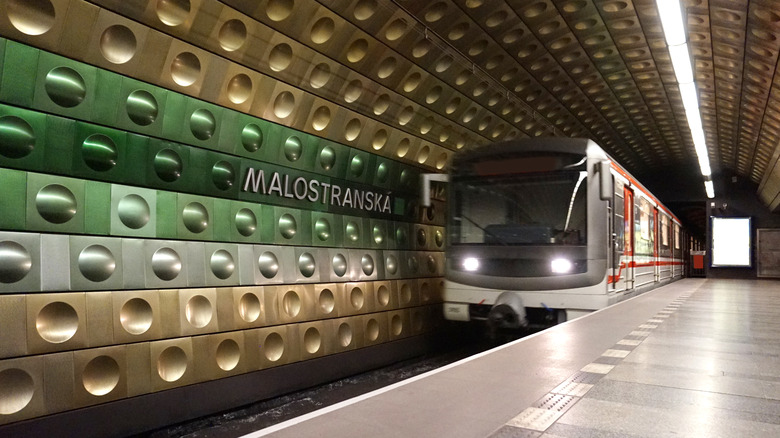
The Czech capital, one of Europe's safest cities, also has an effective — and beautiful — metro system, Prague Metro. Its three-line network opened in 1974, serves over 1 million passengers daily, and accounts for 34% of all public transit rides. It's also expanding, with a fourth line under construction as of this writing. Most tourists will be familiar with the A line, which stops at iconic sights such as Prague Castle and Old Town Square. Its stations have become monuments in their own right, thanks to the colorful station interiors designed by Czech architect Jaroslav Otruba.
Prague's buses cover over 130 routes, ferries, and a historic funicular round out the network. All of this transport is also reasonably priced, with timed tickets starting at 36 Kč (around $1.74) for 30 minutes and 192 Kč (about $9.26) for a 24-hour pass. Children under 15 and seniors over ride free of charge, and one adult accompanying a minor under 3 years old also rides free as long as they have an ID proving the child's age.
Vienna
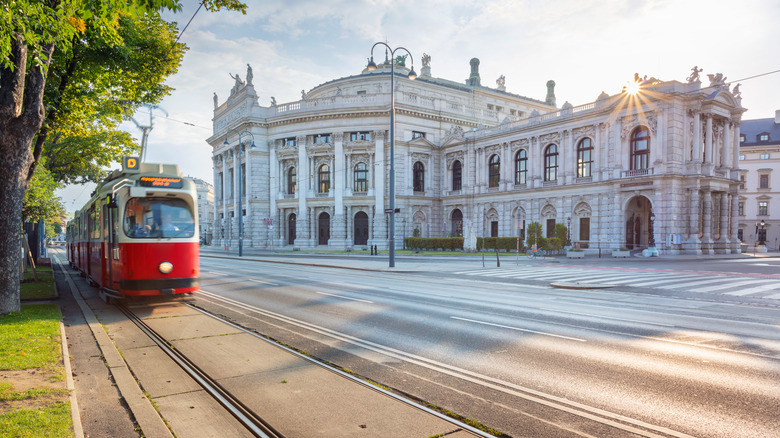
Vienna's public transportation is not only world-class but also steeped in history, with the city's first horse-drawn streetcars debuting in the 1840s. Today, a network of subways, trams, buses, and suburban trains serves about 2 million passengers daily, with 3 out of 10 residents using public transportation. Vienna ranked seventh on Time Out's 2025 list, a sentiment echoed by residents in the 2023 European Commission survey, where 91% stated they were happy with the transit system.
That's a big feat in a city where much of the infrastructure dates back to the early 20th century, but the city is committed to improving, particularly as it's pledged to be climate-neutral by 2040. This includes the addition of a sixth subway line and plans to modernize an existing line. The Vienna Subway runs from 5 a.m. until midnight, except on Friday and Saturday nights, when it runs 24 hours a day at 15-minute intervals. While buses and trams stop earlier, a network of night buses runs every 30 minutes, ensuring night coverage in the city.
Much like Berlin, Vienna works on a barrier-free honor system, where people can walk freely onto transit but are subject to ticket inspections. While public transit in Vienna isn't the most affordable on the list, costing €3.20 (around $3.75) for a single ride or €10.20 (about $12) for a 24-hour pass, there is a 5% discount for purchasing tickets digitally, and residents are favored with an annual pass that works out to just €1.26 or $1.48 per day. It's these little touches that help make Vienna one of the world's most liveable cities.
Zurich
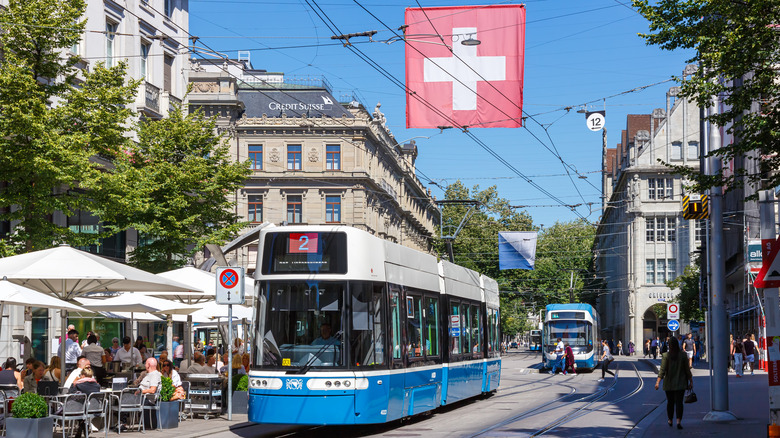
Zurich consistently ranks among Europe's best cities for public transportation. According to a 2023 European Commission survey, 95% of its residents said they were satisfied with the system — and it's easy to see why. Trams, buses, trains, and boats operate under the Zurich Transport Association's integrated ticketing system, allowing riders to switch modes seamlessly with the same ticket. Zurich's transit is also praised for its efficiency, interconnectedness, and reliability.
Like London, Zurich is divided into zones, with passengers paying fares accordingly. Surprisingly affordable, children under 6 ride for free, while those aged 6 to 19 enjoy a reduced fare. If you want to explore every nook and cranny of the Swiss city, consider the 24- or 72-hour Zurich Cards, which include airport travel and unlimited second-class rides in central zones.
Though Zurich is a relatively small city, with a population of just 400,000, it has more than 15 tram lines, over 50 bus routes, and extensive regional and national rail systems, making it easy to reach anywhere in the country. A user on the r/transit subreddit sums up the beauty of its transit system perfectly: "The trams and buses nearly always get priority at crossings; few routes are actually affected by traffic. Other cities and operators come to visit to learn from Zurich. Long distance trains supplement the regional services, all tickets are valid on all forms of transit. Train service is the same from the early morning into the late evening on all days. It's the subtle things that make a transport system great."
Methodology
To determine Europe's best public transportation systems, we looked at accolades from respected publications like Time Out and data from the European Commission, both of which draw on surveys of city residents. Factors such as connectivity, ease of use, reliability, available transportation types, and user satisfaction were used to evaluate the final cities for the list. We then cross-checked this feedback on Reddit, scouring subreddits like r/transit and r/europe for user feedback on each system. Personal experience from repeated visits and time spent living in several of these cities helped further validate the selections.