
5 Once-Thriving Ports That Are Pushing Pause On Cruise Ship Growth
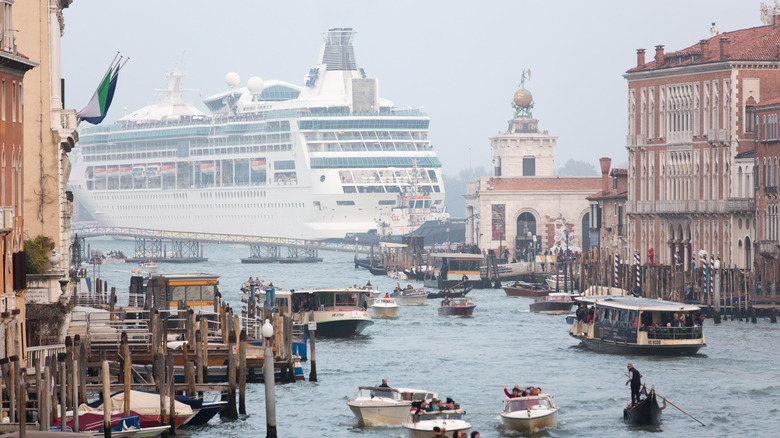
Iconic destinations and historic cities rely on the tourism industry as a person relies on a diet. Visitors from around the globe are their lifeblood, sustaining local economies and communities. Yet, as with food, the essence of the intake can either make them thrive and be healthy, or be decadently detrimental. For this reason, many emblematic port cities over the past decade have taken measures to restrict or outright ban cruise ships from their waters, concluding that these floating cities often bring more burdens than benefits.
The reasons vary, from overtourism to environmental damage, but at the end of the day, the watermark is clear: Mega-ships that barrel into quaint harbors primarily serve the cruise lines that run them, seldom the communities that host them. Thousands of "hit-and-run" tourists disembark for a few hours, strain the infrastructure, and spend very little ashore. This type of demographic, unfortunately, focuses on trendy checklists fuelled by cultural stereotypes of the location. Along with severe crowding of landmarks without delving into the context and cultural significance, the crowds leave heaps of litter and disturb locals before moving on to their next item on the list. Many iconic destinations and cities are fed up and are finally bringing in much-needed change.
The environmental impact doesn't go unnoticed either. These behemoth vessels have to keep their engines running while docked, burning fuel containing sulphur levels up to 3,500 times those of cars or trucks. Due to large volumes of water displacement and coastal erosion, including the port's foundations, an increasing number of maritime locations are closing their docks — or at least sharply restricting who may use them. That said, the following five ports illustrate the most pertinent reasons as to why many have turned on their "cruise control."
Cannes, France
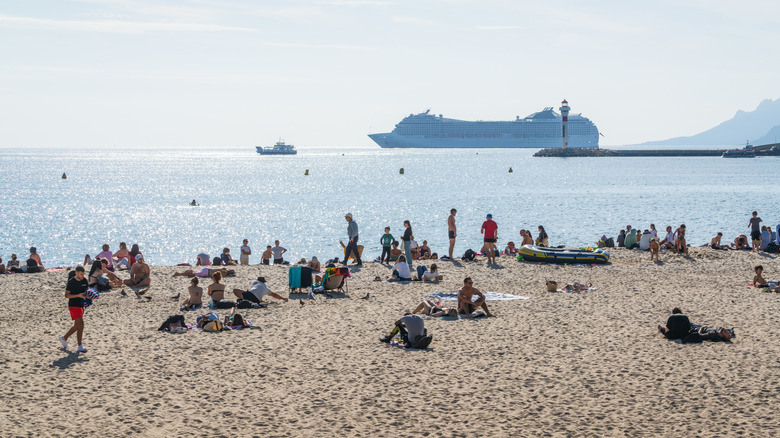
A jewel of the French Riviera, Cannes, has been a major tourist destination for several centuries, with English aristocracy and international elites wintering there in luxurious villas and hotels as early as the mid-19th century. With its stunning coastline, rich culture, and pleasant year-round weather, it's no surprise that cruise lines are eager to include this coveted destination on their itineraries.
Alas, that all-you-can-dock buffet has since been strictly curtailed. As of June 2025, the municipal council of Cannes unanimously decided to approve strict measures to combat overtourism and pollution. The former small fishing village turned French Riviera postcard of luxury and cinema lacks the port facilities to accommodate cruise ships docking in their small harbor, with cruise ships having to rely on their own power while anchored, causing excessive air pollution and flooding the city with thousands of "low-cost" clientele who mostly eat and sleep on board, leaving behind waste and frustrated locals.
Only ships under 500 feet can directly dock at Canne's Quai du Large, with cruise ships allowed to approach over 980 feet from shore and tender their passengers over. With the new regulations taking effect in January of 2026, only one vessel per day carrying over 3,000 passengers will be allowed to moor on its coastline. Lastly, the city has implemented a cap of 6,000 cruise passengers for daily visits. The popular vacation spot's ban on cruise ships and excess tourists is mainly for environmental and capacity-driven reasons, to protect its ocean floors and sunny streets.
Amsterdam, Netherlands
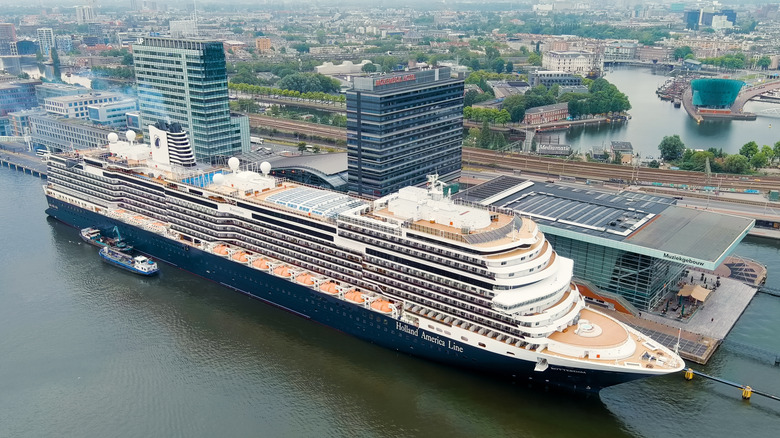
The end of cruise ships in Amsterdam is not immediate, but it now appears inevitable. With around 20 million tourists annually, the Dutch port city has become a focal point in Europe's debate on overtourism. In 2023, the city launched a tourism campaign aptly named "Stay Away" to deter the growing demographic of tourists who visit the city specifically for disruptive, party-focused tourism. The campaign's focus soon zeroed in on cruise ship passengers, recognizing that they stampede through the city center while contributing very little.
In response, Amsterdam confirmed plans to close its cruise ship terminal entirely by 2035, effectively eliminating the only landing place for the vessels. The cutback will be gradual, with the city reducing the number of cruise ships allowed annually to 100 beginning in 2026. Further reductions are expected in the years to follow. The city's greatest concern is heavy pollution from ships, which emit a carbon footprint equivalent to 12,000 cars.
That said, it cannot be all concerns and criticisms without some solutions in sight. After all, cruisers do contribute a steady income to the local museums, galleries, and restaurants. With the overall revenue from cruise ships amounting to approximately $142 million a year, one compromise under consideration is relocating the Passenger Terminal Amsterdam away from the city center, which could be a considerate middle ground, abating both pollution and preserving revenue. Visitors will still be able to reach the center by high-speed train, bus, or bike and get their fix of one of the world's most walkable cities.
Monterey, California
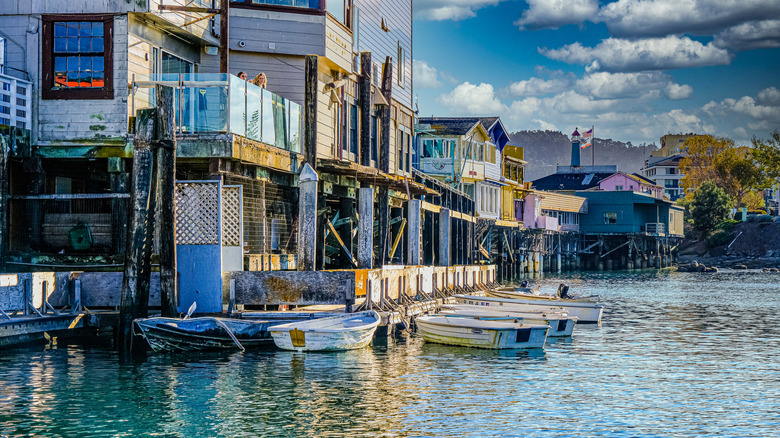
Tucked along the southern pocket of Monterey Bay, many companies yearn to have their cruise drop anchor in this central Californian port. Known for its signature coastal vistas, one of the country's most important marine sanctuaries, and a refuge for many great artists such as John Steinbeck, Monterey hasn't outright banned cruise ships; rather, it cut off the initiative to stop by.
In February 2023, the city decided to close off any employment or services assisting cruise lines during their visits, including processing arrivals. By severing the link between the city's port services and commercial cruise ships, Monterey has effectively handed over the logistical duties and oversight to the companies that run the ships, making them foot the bill. The result has been predictable: most ships have simply stopped calling. The astonishing reason for the ban lies behind Protect Monterey Bay, a nonprofit led by students from local schools, which aims to protect the marine sanctuary.
The decision has not been without tradeoffs, especially for businesses in the area. Ferried by tender boats to Fisherman's Wharf, cruise ship passengers once provided a steady stream of generous revenue for the local seaside restaurants and tour companies. As the debate between Monterey's business owners and environmentalists continues, with both sides making fair arguments, the cruise ships have no choice but to pass by to friendlier waters, such as the ports of Los Angeles, San Diego, and San Francisco.
Barcelona, Spain
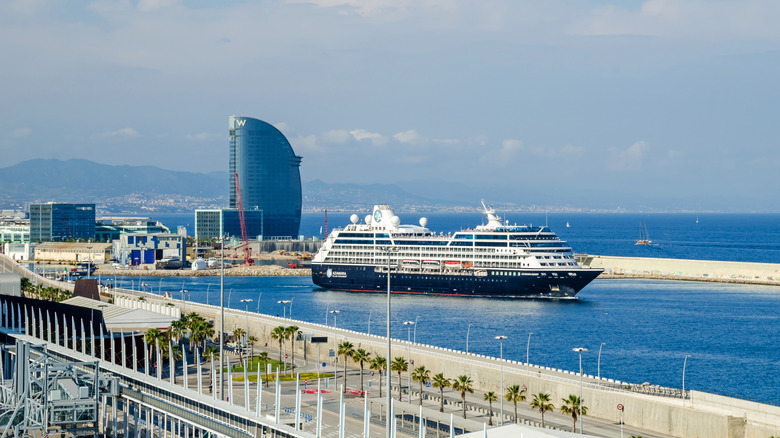
As the crown jewel of Catalan culture and commerce, Barcelona remains one of Europe's busiest cruise ports, welcoming over 2.7 million passengers each year. However, the city has begun changing how and where those visitors arrive. The news of the city closing down its central Muelle Barcelona Norte docks, located a stone's throw from the touristy Gothic Quarter and Las Ramblas boulevard, brings hope of creating a visible vacuum in its overcrowded streets. In October 2023, cruise ships were redirected to dock south of the capital at the Moll d'Adossat wharf, requiring tourists to take a 30-minute shuttle to reach the downtown district, relieving some of the pressures of overtourism.
City officials have long argued that short cruise stops deliver limited benefit. In 2022, former Mayor Ada Colau pointed out that 40% of cruises stayed in port for only four hours, flooding central areas with visitors while generating minimal spending. Infrastructure strain, traffic congestion, and air pollution led Barcelona to join the ranks of many hallmark seaside destinations seeking to focus on more balanced, environmentally sustainable tourism. The restrictions implemented by closing down the World Trade Center pier send a clear message: cruise ships of any kind will no longer have red-carpet access to the city's historic center.
With over 88.5 million tourists visiting the country in 2024, Spain is doubling down on efforts to curb rampant overtourism, with its citizens increasingly raising their voices to reclaim their cities and beaches, as seen in Barcelona. The city's plan for the newly vacated wharves is to repurpose the space for greener uses, with 3.3 acres available for public spaces, parks, and boardwalks for residents and tourists to enjoy. In the meantime, the Moll d'Adossat wharf received an estimated $215 million in infrastructure investment to improve Barcelona's cruise ship compatibility.
Venice, Italy
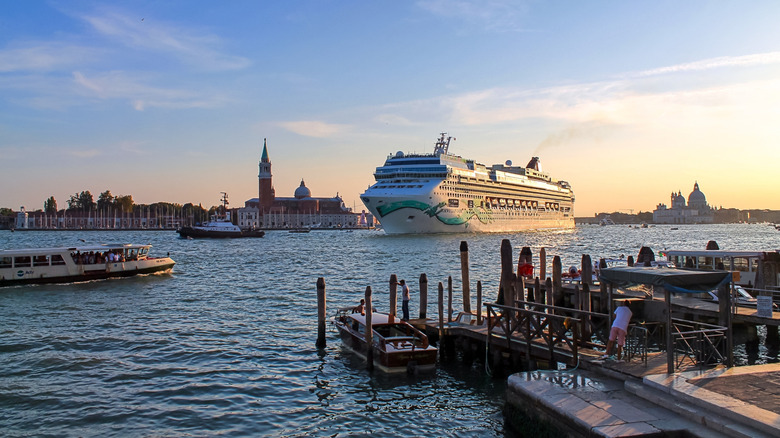
Venice, the 1,600-year-old former republic that once was one of the masters of the Mediterranean and European trade, has been the epitome of the city on water. If one thinks of a bull in a china shop, a cruise ship sailing into its lagoons is reflective of the expression, as a 13-deck cruiser ship crashed into a Venetian wharf, injuring five and damaging nearby structures in June 2019. As a result and a call to action, as of August 2021, Mayor Luigi Brugnaro has banned cruise ships weighing over 25,000 tons from entering the historic waters of Venice's Giudecca Canal, effectively barring them from Venice's historic center (via Cruisecritic).
The cruise ships tower over the UNESCO World Heritage site, with its gorgeous yet frail architecture standing on hundreds of thousands of ancient wooden piles, while Venice already strains under the crowds that overwhelm its narrow streets and waterfront. As it stands, the decision to redirect large cruise ships to mainland terminals by the Marco Polo Airport, or to further cities in the storied lagoon, seems to be the sensible temporary alternative.
Venice's waterfront lacks sufficient shore-power capacity, forcing ships to burn fuel while in port. Their scale disrupts lagoon ecosystems, exacerbates erosion, and increases flooding risks in a city already struggling to avoid going underwater. The question of whether Venice is sinking, and how fast, is on everyone's lips, and adding floating behemoths into the mix is an alarming concern. As no viable solutions to find a middle ground for cruise ships have yet been presented, and the ban is in effect, most cruise companies now redirect ships to Marghera, an industrial zone on the metropolitan mainland, or to alternative ports such as Ravenna.