
9 Rules To Know Before Visiting Dubai

Dubai is practically already living in the future. Somehow, it managed to erect the world's first 3D-printed building that functions as a usable space. Downtown is lined by a futuristic skyline famous for iconic sights like The Museum of the Future's space-shaped building, the boat-shaped Burj Al Arab Hotel, and the irregularly shaped Opus hotel. And as hot and humid as it is, it has an icy, winter playground where penguin experiences and skiing are the main events.
Created in a desert land that was little more than a tiny outpost for Bedouin traders just 50 years ago, everything about the impressively developed emirate feels modern. While visitors will enjoy the innovative attractions around the destination, travelers from Western nations may find some of Dubai's laws unfamiliar. Couples holding hands is generally acceptable, but kissing and other forms of public affection can lead to arrest. Gambling is illegal — even if done online from the privacy of a hotel room. And rules around taking photos and social media may also be unlike those in the Western world.
Year after year, travelers find themselves arrested, fined, or prohibited from leaving due to ignorance of Dubai's laws and customs. Operating with a legal framework based on the Islamic religion, some of these laws are brand new for Western travelers who aren't familiar with the traditions of the religion and region. The solution is a bit of preparation. No traveler wants to get in trouble that could have easily been avoided with a little research. If you're planning a trip to experience Dubai's magnetic attractions, here are some emirate's laws and regulations to keep in mind.
Food and alcohol rules

Dubai's food scene is so varied that you may find yourself scratching your head as you try to decide where to eat. While you choose, it's worth keeping some rules in mind. If you plan on consuming alcohol, the most important rules to know are: Drinking alcohol is allowed only in private and licensed places, no one under 21 may purchase or drink alcohol, and drinking in private requires an individual license. Private places include your private accommodations. Licensed places are usually restaurants, hotel bars, and shops that sell alcohol.
For example, if your hotel is licensed to serve alcohol in its bar, you can drink there but not in a public-facing balcony — even in the most glamorous Dubai hotels like Five Luxe JBR. With such strict rules, it should go without saying that public intoxication and drunk driving are unacceptable, and unlike the U.S., there is no acceptable blood alcohol level. To get a license to drink in private, you must show up at designated locations with your passport and visa.
Food rules mostly center on the holy month of Ramadan when Emiratis observe periods of fasting. Non-Muslims are not required to fast, but you may not eat publicly during fasting hours. To help, many restaurants have screened-off areas where non-Muslims can eat privately during the holy month (in 2021, rules were loosened to make screens optional). With these rules in mind, you'll find Dubai's culinary scene a truly global affair. Indian cuisine is well represented, thanks in part to the millions of Indian migrants who live and work in the UAE. You'll also find shawarma from Lebanon, ramen eateries, Peruvian spots serving spicy empanadas, and lots more. For a novel experience, try Al Dawaar Revolving Restaurant, which completes a 360-degree rotation while diners eat, or the posh train-car dining area at Blume.
Rules around rental cars and public transportation

Dubai is where you'll find iconic feats of architecture near vast desert landscapes and historic towns. If you plan on seeing it all, getting around Dubai is easy. The emirate boasts a modern fleet of public transportation options that make getting around the more popular areas a breeze. But there are basic laws to follow.
When taking public transportation, riders may not eat, drink, or chew gum in any mode of transportation. If you do eat or drink in a prohibited place, the fine is up to 100 dirhams ($27 ). Spitting and littering are also frowned upon and carry a fine of 200 dirhams ($54 ). And any behavior that may annoy or offend fellow passengers is disallowed. This can be public displays of affection between couples (considered indecent in any public setting), but it could also be speaking loudly while having a conversation. If you follow these rules, you'll find the urban parts of Dubai fascinating places to explore.
When you're ready to escape the man-made urban centers for Emirati culture, venture out to Old Dubai or the desert for immersion in traditional Bedouin life — places that may require renting a car. Again, there are some rules you'll want to keep in mind. At its most basic, the rule says cars must not be dirty and unkempt while in public. That means you must keep your rental clean while driving or parked anywhere in public. If you do infringe this law, you may be fined up to 2,000 dirhams ($544). Washing cars in public places is also illegal, so stick to licensed car washes.
Rules for taking photos and using social media
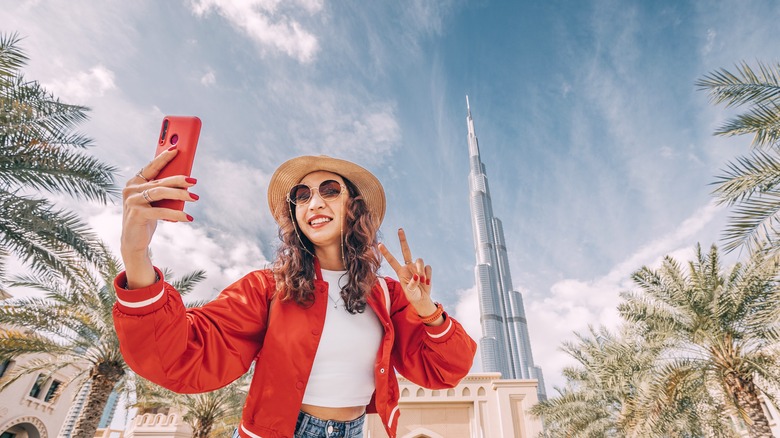
From resorts with amazing views like an underwater hotel suite with floor-to-ceiling aquarium vistas, to the futuristic scenes around the Museum of the Future, the photo opportunities around Dubai are not to be missed. While you snap selfies and videos for your Instagram Stories, there are some important laws to keep in mind. These laws can be found in the 2012 Federal Decree No. 5.
First, always ensure you have not mistakenly photographed others without their consent. Posting content including others without their consent is illegal. The law does not distinguish between taking photos and posting them, so simply taking a photo may get you into trouble. If you do infringe upon someone's privacy, the fine can be up to 500,000 dirhams ($136,000 ) and a jail term of six months. The law also prohibits the publishing of certain newsworthy events, even if they are factual events. For example, posting images of an airplane accident is a serious crime with fines up to 3,000,000 dirhams and possibly deportation.
You'll also want to ensure you do not create content meant to insult or slander a public official while carrying out their job. And you may not mock or insult official symbols, leaders, religion, or national monuments in any content you post. In fact, just taking photos of some government buildings is illegal. Taking photos of a military building or palace carries a fine of up to 5,000 dirhams ($1,360) or imprisonment. If you plan to solicit donations for a cause, do not film your request for the charity without a proper permit to do so. An Australian citizen doing exactly that found himself in trouble with the law for soliciting donations on social media without a proper permit.
Unpaid hotel bills and other debt

Unlike in the U.S., where consumer debt is mainly a civil matter aimed at restitution, consumer debt accrued in Dubai is treated more seriously. Before 2020, when the laws changed, those who owed debts could be criminally prosecuted. The law has slackened, but if you cannot pay hotel bills or meet other financial obligations, you may still find yourself in trouble more serious than what you would expect from a civil matter in the U.S.
First, if you are unable to cover the bill for your hotel or other service costs, you may find yourself banned from traveling back home until you settle the debt, according to Chambers and Partners. This punishment only applies if the amount is 10,000 dirhams ($2,721) or more. This happened in 2023 to teenagers from Zimbabwe traveling under an adult chaperone who misused funds intended for their hotel bills. Their passports were confiscated, and they found themselves unable to return home.
If you have to issue a check while in Dubai and that check bounces, you will also find that the rules are unlike the U.S. laws around debt. In addition to being required to repay the bounced amount, you may be fined a fee above what you owe on the check. According to Legal Consulate UAE, a bounced check of 50,000 dirhams can result in a fine of up to 10,000 dirhams, 20% of the actual debt owed. Unlike the U.S., you may also go to jail if the debt cannot be cleared.
Rules for couples visiting Dubai

It can be difficult to keep your hands to yourself when you're strolling past the lovey-dovey heart tunnel in Dubai Miracle Garden or sailing around Dubai Harbour while the sun is setting and the skyline is simply magical. But you must follow this rule if you're in Dubai — especially if you're unmarried. With a culture based on conservative values, Dubai considers many public gestures between couples indecent. The emirate takes these public displays of affection so seriously that couples who infringe upon the rules may find themselves under arrest or paying steep fines.
First, an aside: If you've been doing your research, you may have questions about the law for unmarried couples booking accommodations together — the information out there can be conflicting. The quick answer is that since 2020, unmarried couples can book accommodations without fear of legal consequences. But laws around public displays of affection have not changed.
All overt physical displays of love by both unmarried and married couples are banned in public. Married people may hold hands, but that's the extent of what is allowed. Kissing, groping, and anything more physical are prohibited or considered inappropriate. It goes without saying that any kind of voyeurism will lead to serious issues with the law. According to a news article in The Sun, a British woman and her unmarried companion were imprisoned, deported, and fined after they were found having sex on a beach.
Rules for members of the LGBTQIA+ community

Members of the LGBTQIA+ community visiting Dubai will want to do extensive research before traveling. Nonbinary identities are not recognized, and people in this group will not be protected from discrimination. Same-sex sexual activities and gay marriage are illegal, with punishments as severe as the death penalty. And officials are reported to monitor social media and chat rooms to identify LGBTQIA+ people in the emirate.
Still, many LGBTQIA+ people visit Dubai. Research by the London School of Economics and Political Science even suggests that there is a gay nightlife underground. If you belong to this community and you're planning a trip to Dubai, take as many precautions as possible to ensure there are no displays of sexuality. And to reiterate, do extensive research into Dubai's LGBTQIA+ laws before deciding whether the destination is a good fit.
Gambling rules

Casino gambling is a favorite pastime for many American and international travelers. From China, where many of the world's largest casinos deliver big wins, to a glamorous Las Vegas casino resort with top star chefs, gambling is part of the appeal of many destinations. Dubai is one exception. Like many Arab nations, the UAE's legal framework incorporates elements of Sharia law, a legal tradition based on the rules found in the Islamic religion. Islam strictly prohibits, and Dubai follows suit.
Visitors who fancy a night of gambling will find it impossible, as there are no casinos or other gambling establishments in Dubai for now. Lest you're tempted to scout out your own gambling fun online, web-based forms of gambling are also illegal. According to Davidson and Company Law Firm, the anti-gambling regulation also makes it illegal to manage, establish, or operate a website for betting. It's also against the law to publish or distribute any material mentioning or advertising gambling. This means it will be difficult to find websites or advertisements for gambling websites that are accessible within Dubai.
Workarounds like accessing betting websites based outside Dubai or using a VPN to mask your gambling from authorities are all illegal too. But there's good news. Dubai is currently working on reforming its gambling laws, so betting may soon be allowed in some forms. Wynn, a renowned name in casino resorts, is also slated to open its Wynn Al Marjan resort in Dubai in 2027, by which time it is expected that Dubai will have reformed its gambling law to allow casinos.
What to wear
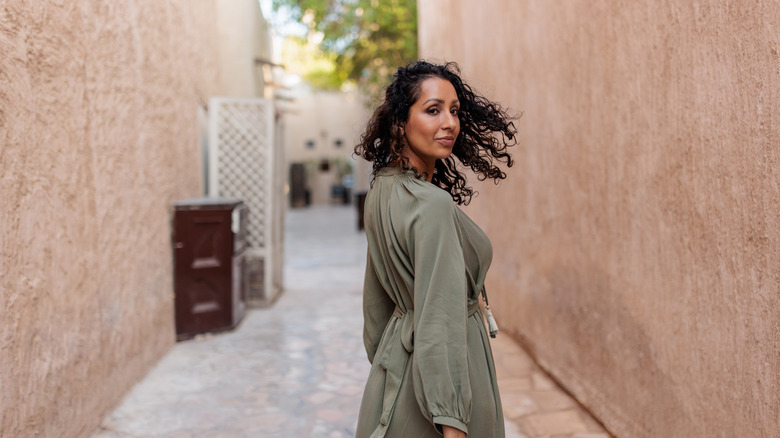
Dubai's rules may feel strange from a Western point of view. But maybe local officials are on to something when you consider that Dubai has been ranked the safest city in the world for females traveling alone in 2025. Clothing and attire are another area with unfamiliar expectations. Dubai asks visitors to wear modest clothing. This may be difficult to define if you're from a Western nation where most things go. The official government site on the subject defines modesty as clothing that is not transparent, revealing, or covered with offensive graphics.
This does not mean that visitors always need to wear the traditional abaya or head covering in Dubai. As long as your clothing is not sheer, tight-fitting, or revealing of your shoulders and legs, you can wear what you like. You'll see signs reminding you about these rules in malls and other touristy places, but they are not strictly enforced and seem to be a matter of respecting social norms and refraining from offending locals. The exceptions are during Ramadan and when visiting mosques. If you plan to visit the gorgeous Jumeirah Mosque or one of the other religious sites around Dubai, you will need to ensure that your arms, legs, and hair are totally covered. The mosque provides abayas and head covers to women and similar coverings for men who aren't dressed appropriately.
While clothing rules may be relaxed in some of the more touristy areas, Dubai's rules on nudity are strictly enforced and carry serious repercussions. According to an official government website, nudity is not allowed in the emirate. This includes going topless on the beach. And while you are free to wear a bathing suit on Dubai's pretty beaches, beachwear shouldn't leave the beach. Travelers who run afoul of nudity laws can be imprisoned for at least six months. If a minor younger than 15 is involved in the nudity incident, the adult in the situation faces a higher term, up to a year.
Miscellaneous rules: Swearing, insults, and offensive gesturing

If you're known to let a curse word slip now and then, you will want to be extra careful while in Dubai. According to the U.K.'s official travel advisory body, Dubai's law prohibits swearing. Swearing online, for example, on WhatsApp or on social media, is also illegal when directed at a person. The punishment can be stiff fines, deportation, or imprisonment. Using insulting language is also punishable.
One case in point is a story reported in the Khaleej Times in which a man faced a significant fine for calling his wife an idiot. The man, who used the insulting word in a WhatsApp message sent to his wife, was fined 20,000 dirhams ($5,445) for causing insult. In another case, Craig Ballentine, an Irishman working in Dubai, posted a negative review about his employer on Google. The review was deemed slander, and so Mr. Ballentine was remanded and banned from leaving the country as the case was being tried.
On your trip, you'll also want to stay away from any gestures considered offensive and abide by a few social norms. An official government website guides visitors to keep legs uncrossed when seated with important people and to point with the whole hand instead of a finger, if pointing is needed. You'll also want to refrain from giving the thumbs-up sign (considered rude in Dubai). And use only the right hand for eating, greeting others, and passing items. During Ramadan, some norms should also be followed. Try to be extra conscious of clothing, loud music, and dancing during the somber season. Also, be mindful of swearing or any other insulting language.