
5 Best Abandoned Malls To Visit Around America
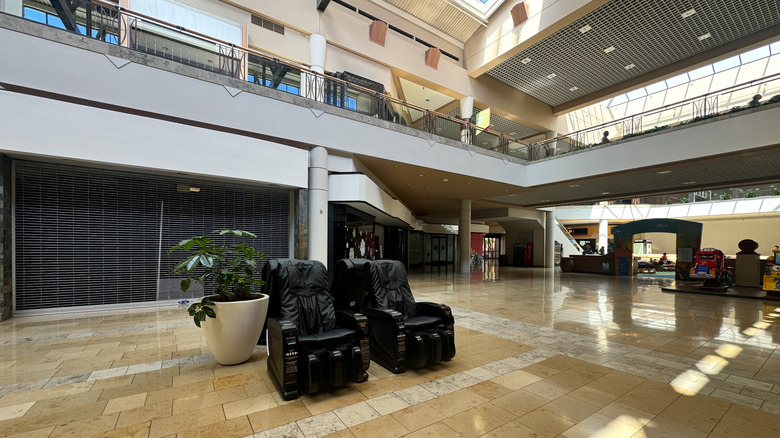
When the Southdale Center opened in Edina, Minnesota, in 1956, it ushered in a new era for shopping in the United States: the age of the shopping mall. These massive retail centers aimed to mimic the feel of European town squares, but in indoor, climate-controlled spaces where visitors could shop in comfort year-round. The concept was a hit, and hundreds of malls popped up across the country in the 1950s and 1960s, hitting a high-water mark of about 25,000 nationwide in 1986.
As shopping habits changed at the turn of the millennium, malls were increasingly plagued by empty storefronts and dated décor, prompting consumers to shop elsewhere. From 1986 through 2017, malls closed at a rate of more than 750 each year. By 2022, only about 700 large malls remained in the U.S., with some 2 million square feet of mall space demolished that year alone. Many of the malls still open are clinging to life, with a vacancy rate 112% higher than the overall retail space average, according to Capital One Shopping.
Granted, the news isn't all bad. In a 2023 study by IPX1031, half of shoppers said they miss going to malls, and 61% want to see malls make a comeback. The first three quarters of 2025 actually saw more mall stores open than close, and many malls that have shut down are being repurposed as community spaces, housing, or mixed-use developments, with 46% of mall redevelopments still including some kind of retail space. Even so, many once-thriving malls are now abandoned relics of the pre-internet era, waiting for their eventual demolition or rebirth. Here are five that are still lingering in this stage of retail limbo, where you can experience the apocalyptic feel of a former commercial hub.
Circle Centre Mall (Indianapolis, Indiana)
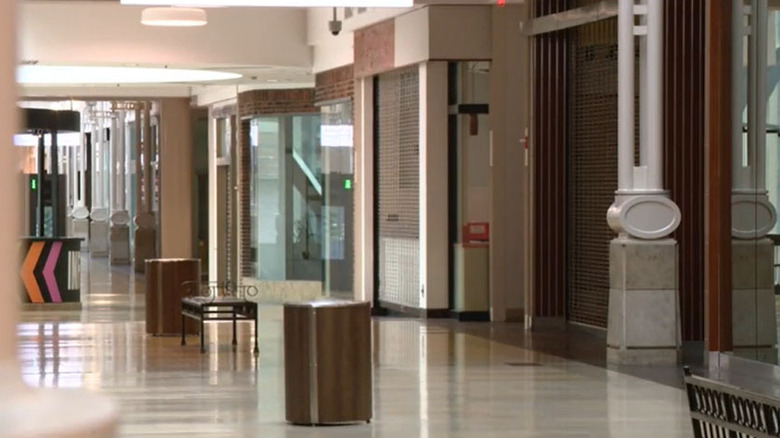
The once-thriving Circle Centre Mall in downtown Indianapolis hits the sweet spot for urban explorers. It's officially closed, giving you the full experience of walking abandoned corridors lined with empty storefronts. But that closure happened in December 2025, meaning the building itself hasn't fallen to the dangerous level of disrepair found in many totally abandoned malls. There are plans to redevelop the site, but the first phase of that project isn't scheduled for completion until 2029, leaving a narrow window to experience the mall in its empty state before it's gone for good.
Circle Centre Mall had a rocky start. Many locals weren't happy that several historic downtown buildings needed to be demolished to make way for it. On top of that, two of the three planned anchor stores backed out before construction even started, and the developer struggled to secure enough money for the project until the city of Indianapolis contributed $287 million in bonds. These issues delayed the opening by nearly 2 years, but when the mall finally opened in September 1995, it was initially successful, maintaining a healthy 93% occupancy rate through 2010.
The departure of anchor Nordstrom in 2011 marked the start of its decline. The final anchor store closed in 2018, and renovation plans intended to attract new retailers were derailed by the COVID-19 pandemic, sealing the metaphorical coffin. In 2023, new developers purchased Circle Centre Mall, with plans to turn it into a mixed-use space comprising apartments and offices, along with public plazas and space for stores, restaurants, and entertainment. Until those plans move forward, the building stands as an empty monument to the vibrant commercial hub it once was.
The Pines Mall (Pine Bluff, Arkansas)
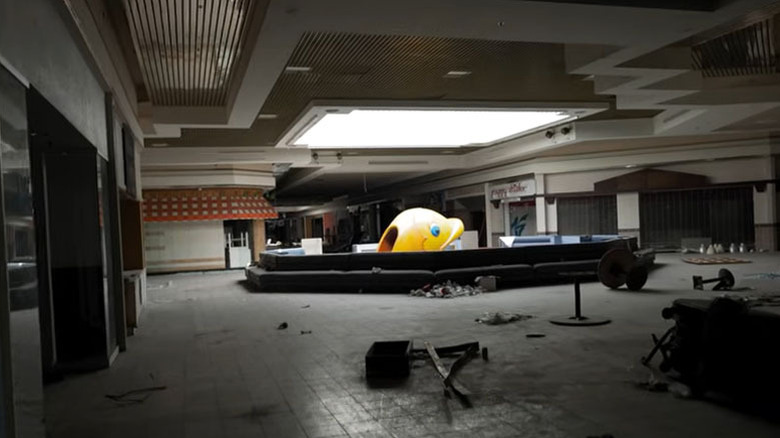
Pine Bluff, Arkansas, is a unique riverfront escape that blends art and science. It's also home to the Pines Mall, the city's first large indoor shopping center, which opened in 1986. With more than 50 stores and four anchor tenants, the mall quickly became a popular gathering place. A movie theater added in 1990 further cemented its role as a local entertainment hub.
The problems for the Pines Mall started in the early 2000s. Pine Bluff's economy had been in a slow decline for decades, and by 2000, the city ranked among the highest in the U.S. for per-capita crime. In a 2025 Facebook post about the abandoned mall, a former Little Rock resident recalls they would call the town "Crime Bluff," saying, "You didn't go there if you didn't have a very good reason to go." The Pines Mall was increasingly seen as unsafe, especially at night. Walmart was the first major store to leave in 2004. The remaining anchors hung on for another decade, but Sears closed in 2016, followed by JCPenney in 2019. In June of 2020, the mall's interior was abandoned. The movie theater shut down in 2021, leaving Dillard's Clearance Center the last remaining functional business.
The Pines Mall may be brought back to life in the near future. An Arkansas local purchased the building in 2023 with plans to renovate it back into a community hub. In 2024, the mall was mentioned in the city of Pine Bluff's economic development plans, though no details were provided about the mall's future. For the time being, it remains an empty shell ripe for urban exploration.
Seminole Towne Center (Sanford, Florida)
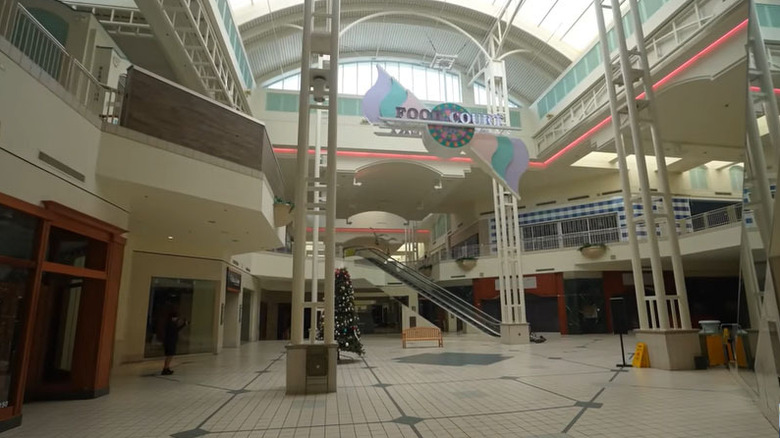
Sanford, about a half-hour drive north of Orlando, is a charming town with breweries, trails, and a brick-paved downtown, and is called one of Central Florida's best-kept secrets. But there's also a creepy side to this Sunshine State destination. Not only is it located near one of the most haunted roadways in America, but it's also home to the empty Seminole Towne Center mall.
When it opened in 1995, the Seminole Towne Center had over 150 stores across its two levels and reportedly drew about 200,000 shoppers during its opening weekend. It sustained that success through the 2000s, even expanding by 20,000 feet in 2009 to add more stores. As late as 2014, it had a 90% occupancy rate, but that story changed by the late 2010s. Sears closed in 2018, followed by Macy's in 2020. In 2022, the former Sears space became a family entertainment center, but it failed to reverse the mall's downward trajectory. Burlington closed later that year, and by June 2023, the mall was at risk of foreclosure for unpaid property taxes. Unpaid utility bills briefly turned the lights out in 2024, and on January 31, 2025, the mall's interior closed permanently.
At the start of 2026, Seminole Towne Center is perhaps better described as hibernating than dead. Its anchor buildings remain open, and redevelopment plans for its interior are in the works. Costco will move into the former Macy's, and other parts of the mall will be demolished for new mixed-use construction, including a 300-unit apartment building. Demolition is expected to start in mid-to-late 2026, so visitors have a few months to experience the empty mall before it's torn down.
Pittsburgh Mills Mall (Pittsburgh, Pennsylvania)
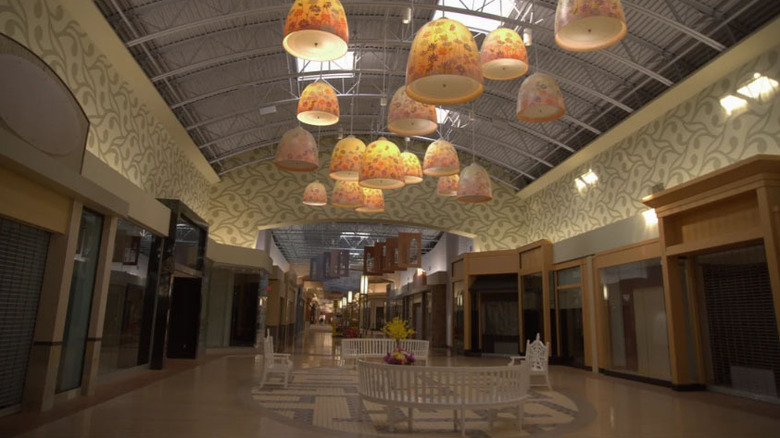
If you say "zombie mall" in Pittsburgh, most locals may think you mean the Monroeville Mall, the filming location for George Romero's iconic 1978 zombie flick "Dawn of the Dead" and current home of the Living Dead Museum, an under-the-radar gem for horror fans. While the Monroeville Mall is going strong, Pittsburgh also has its share of failing commercial centers, like the almost-empty Galleria at Pittsburgh Mills.
Unlike other malls on this list, Pittsburgh Mills struggled from the start. Though it had over 150 tenants when it first opened in 2005, some of its 162 available storefronts were never filled, and initial retailers started leaving as early as 2006. It was consistently plagued by financial woes, culminating in a 2016 foreclosure after the owners defaulted on the mortgage. About half the mall was occupied in 2017, when it was sold at auction to Wells Fargo Bank for just $100. The property was valued at $11 million at this point, a steep drop from its $190 million assessment in 2006. By the end of 2025, the departure of anchor tenant Dick's Sporting Goods left the Galleria with just 22 occupied storefronts, which dropped to 21 after Macy's (the last remaining anchor) announced plans to close its Pittsburgh Mills location in January 2026.
It's not clear what the future holds for the Galleria. In 2024, the mall's current owners were hit with both a lawsuit from Frazer Township and nuisance charges filed by the Allegheny County District Attorney's Office for allowing the roads around the mall to fall into disrepair. The owners started quietly seeking buyers for an off-market sale in June of 2025, but as of this writing, there are no announced plans to officially close or demolish the property.
The Vista (Lewisville, Texas)
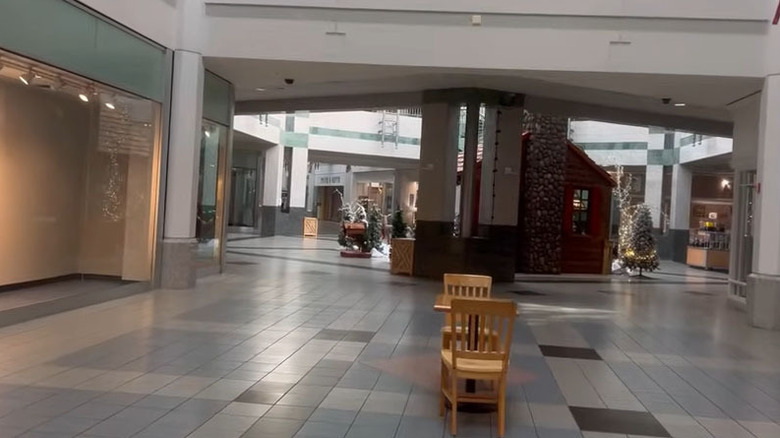
The Vista, originally known as Vista Ridge Mall, opened in 1989, just south of Lewisville, Texas, a lakeside city with a walkable downtown about 25 miles northwest of Dallas. With over a million square feet of retail space, Vista Ridge Mall was one of the largest in the Southwest when it opened and quickly filled most of that space. Within 6 months, it had a 65% occupancy rate, a number that climbed higher once JCPenney and Foley's joined Sears and Dillard's as anchors.
As the area around Vista Ridge Mall developed, it faced new competition from other shopping centers. Sales started to decline in the early 2000s, a trend that continued through the 2010s. In 2017, ICA Properties purchased the mall for $17.3 million (about half of its appraised value) and rebranded it the Music City Mall. The grand reopening in September 2018 brought daily live music and other changes intended to make the mall an artistic hub, but it failed to attract the hoped-for crowds. The mall was sold again in late 2022, at which point the name changed back to The Vista. By early 2023, the mall's only anchor was the Asian grocery store Zion Market, and only about 20% of The Vista's total space was active.
The Lewisville City Council approved a redevelopment concept for The Vista even before ICA Properties sold it, but as of this writing, there have been no visible changes to the mall, and there is no official timeline for when demolition or construction might occur. As of January 2026, The Vista remains open but sparsely occupied. The directory lists only 39 tenants, including anchors and non-retail spaces like the Lest We Forget Museum and Lone Star Bikers motorcycle training, leaving almost three-quarters of the storefronts vacant.
Methodology
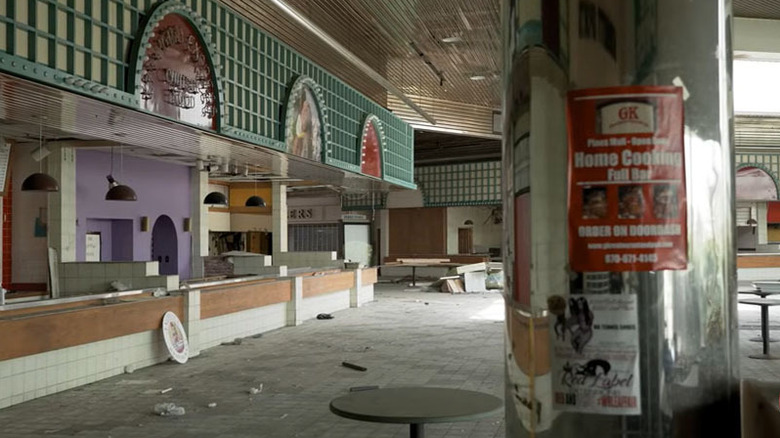
To compile this list, we focused on malls that met two criteria: First, they qualify as "dead malls," meaning they are either entirely abandoned or have minimal foot traffic with few to no remaining retail stores. Second, they are still both safe and legal to visit.
While there is certainly something compelling in the images of collapsed escalators and snowy benches under broken skylights captured by photojournalists like Seph Lawless, malls with that level of structural damage are often closed off to public access for a reason: they can be dangerous to explore. In this article, we focused on malls where you can still experience an empty commercial space but without risking your health and safety (or any potential fines if you're caught trespassing).