
These Hidden Passageways In Utah's Canyons Will Transport You To Another Planet
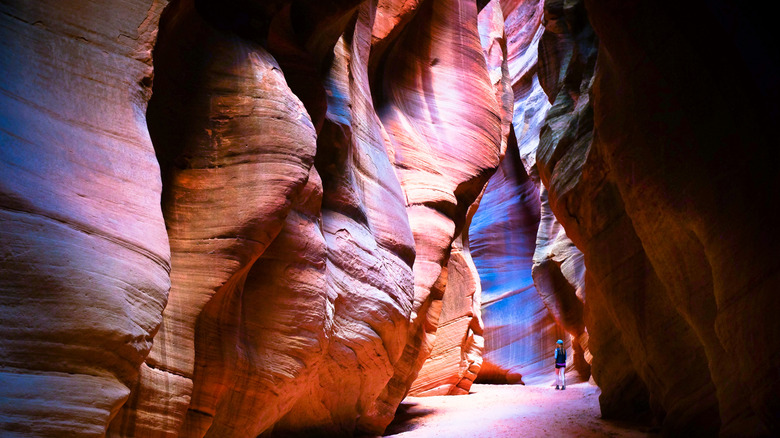
Hidden in Utah's vast wilderness, strange passageways wind their way through the red rock, leading all who venture into them on otherworldly adventures. These unusual gorges are formed by flash floodwaters carving their way through the soft sandstone, leaving behind extraordinary channels that twist and turn as the water seeks the path of least resistance. Known as "slot canyons," these peculiar passageways are usually long, deep, and very narrow, with sometimes just a few inches between the cliff walls. Squeezing through these slender gaps is all part of the slot canyon experience for explorers who visit Utah's bizarre, natural ravines.
Erosive water forces scour the rock, which is why slot canyon walls are extremely smooth, with the sculpted surfaces often exposing weird patterns that wouldn't be out of place on another planet. In some slot canyons, the rock colors seem almost alien, especially when sunlight penetrates the shadowy depths, revealing vivid oranges, reds, and purples. Yet it's not all about looks — one slot canyon in Utah has unearthly acoustic qualities which give it a mystical feel.
You'll find unusual slot canyons in Nevada, Arizona, California, and all across the American Southwest. However, the concentration of slot canyons in Utah is believed to be greater than anywhere else in the world, making it a prime destination for visitors. Despite being narrow and remote, many of Utah's slot canyons are accessible to visitors. Some require technical rappelling skills to enter, while others are just a few flat steps from the parking area, making them easy stops on a road trip. Let's look at some of Utah's otherworldly slot canyons.
Buckskin Gulch: One of the world's longest slot canyons
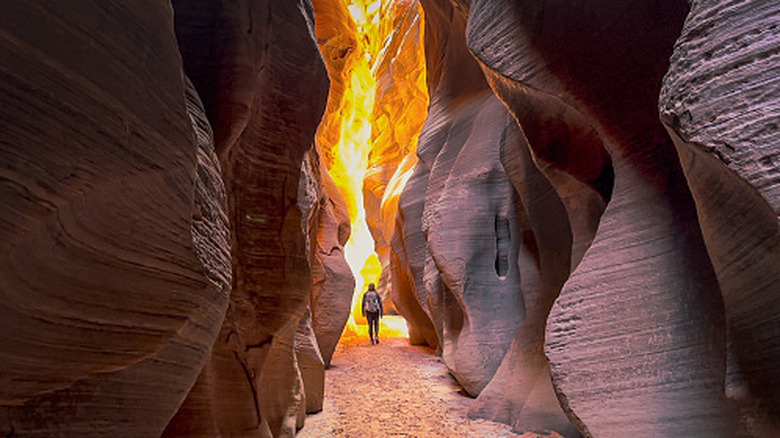
Buckskin Gulch is the longest and deepest slot canyon in the American Southwest, and maybe even the world. Snaking for 16 miles through Grand Staircase-Escalante National Monument in Utah and into Paria Canyon-Vermilion Cliffs Wilderness in Arizona, this dramatic passageway through the rock is an extraordinary sight. Inside, the sandstone walls are incredibly smooth after years of flash flooding, and when sunlight penetrates the canyon depths, the cliff walls glow red. It's one of the most striking slot canyons in Utah, with swirling rock formations.
Buckskin Gulch is a spectacular desert canyon hike without the crowds of Zion, taking you on an adventure deep into the rocky wilderness. Access is via the Wire Pass Trail, which leads you straight to the Buckskin Squeeze, where the canyon walls are as little as 10 feet apart in places.
For an epic route, you can hike 20 miles along the canyon via the Confluence, exiting at White House. However, if you'd prefer a shorter hike while still taking in the most show-stopping parts of Buckskin Gulch, you can do an out-and-back route instead. It's only 1.7 miles to the canyon from the Wire Pass Trailhead, and from there, you can decide how far to continue. It's flat, so it's a relatively easy hike. You'll need to purchase a day-use permit at the trailhead for a small fee, while advance permits are only required if you plan on staying overnight.
Peek-A-Boo Slot Canyon: A blaze of fiery red rock
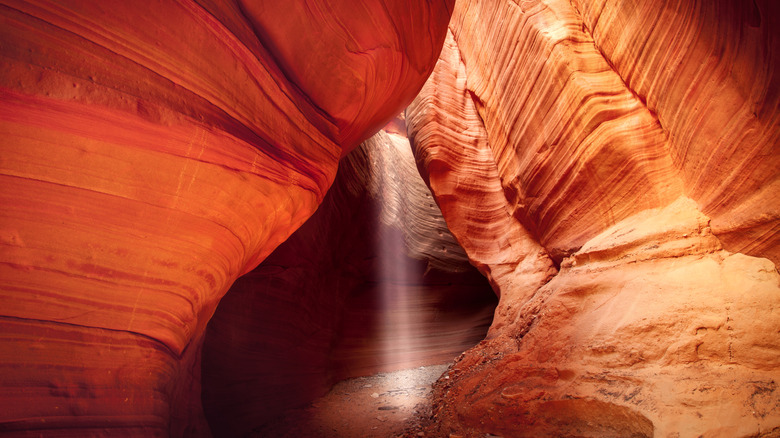
Located about a 10-minute drive north of Kanab, this cheekily-named canyon is popular with photographers looking to capture otherworldly scenes. There's a curious natural window in the winding rock passageway within Peek-A-Boo Slot Canyon, which is perfect for framing quirky photos. There's another Peekaboo Canyon near Escalante, so be careful not to confuse the two.
The ravine is also known as Red Canyon, due to the Navajo Sandstone cliffs, which turn a blazing red hue when the sun shines through from above. The colors change with the shifting light, making every moment unique. Even more unusual are the strange holes carved into the rock, visible as you hike through the canyon. This odd stairway was created by the cliff-dwelling Ancestral Puebloan people, a prehistoric Indigenous culture that had mysteriously disappeared by the end of the 13th century.
Peek-A-Boo Slot Canyon is one of Utah's best family hikes, with an easy out-and-back trail of less than 1 mile. The hardest part is getting there — deep sand on the driving route to the Peek-A-Boo Trailhead means you'll need a four-wheel-drive with high clearance to access the hike. If you prefer not to drive, there are local tour companies in Kanab offering rides and ATV excursions, which add another thrilling element to the adventure.
Zebra Slot Canyon: A white-striped wilderness
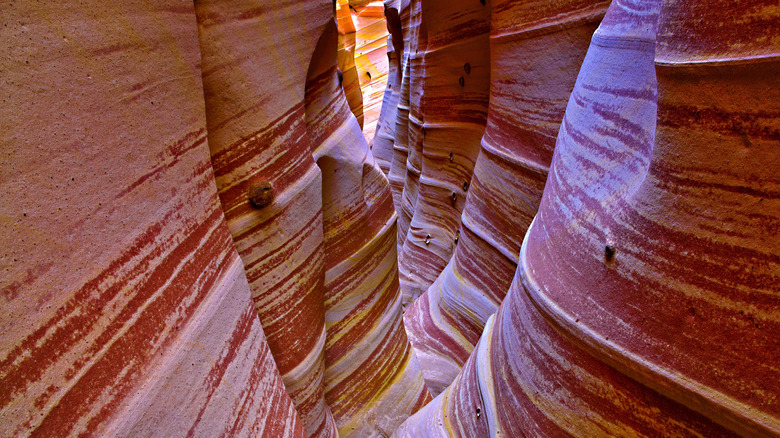
Zebra Canyon is just a few miles from Escalante City, one of America's best trail towns and a perfect jumping-off point for exploring Utah's otherworldly slot canyons. As the name suggests, this enchanting rocky ravine is covered in white, wavy zebra stripes. It's these striking lines running through the pink rock, together with the extremely narrow passageway, that give this canyon an out-of-this-world vibe.
Before you even reach the canyon, you get a taste of what lies ahead with the striped red rock lining the valley approach. It looks a little like the Wave in Arizona, so you know you're going to be in for a treat further into the canyon. The best white zebra stripes can be seen in the upper reaches of the ravine, which is only about 300 feet long, so it's worth persevering with the hike right to the end for those iconic shots if you feel able.
Zebra Canyon is an underrated Utah hike, which is good news if you're looking to escape the crowds. The 5.2-mile out-and-back route is fairly challenging since the canyon is very slender (just 10 inches in places), often with water at the bottom, which requires wading through, so be prepared for tight squeezes and wet feet. The narrowness of this rather claustrophobic canyon means water levels can be above chest height after heavy rainfall, so this one is best visited in dry periods. It's advisable to keep your shoes on during this wet canyon hike, since it's more slippery to navigate in bare feet. For a longer hike, you can take in a bonus slot canyon by extending the route into Tunnel Slot, which is located down the nearby Harris Wash.
Burr Trail Singing Canyon: Nature's cathedral of sound
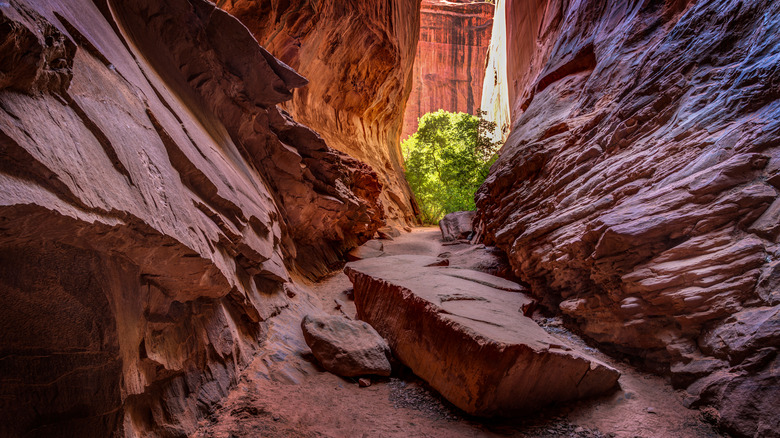
The Burr Trail Singing Canyon on the scenic Burr Trail Road is one of Utah's most ethereal canyons. While the red rock walls are impressively high, it's the canyon's musical characteristics that will transport you to another planet. Known as the "Singing Canyon," this short, rocky passageway is famed for its natural acoustics, as sounds bounce off the 80-foot cliffs with an almost cathedral-like quality. Unusually for a slot canyon, trees are growing here, which just adds to the magical feel of the place.
Fill your lungs and whoop or sing to your heart's content as you test out this rocky amphitheater and listen in awe to the answering echoes from the surrounding cliffs. Musicians often go there to play too, so if you're lucky, you might be treated to an impromptu open-air concert, whether by violin, guitar, or even didgeridoo. Find a rock to sit on while you soak up the surreal atmosphere and hum along as the echoing notes fill the canyon with song.
Just 11 miles east of Boulder along the paved Burr Trail Road, the Singing Canyon is one of the easiest slot canyons to reach in Utah, and you don't need a permit to visit. The flat, out-and-back hike takes 15 minutes from the parking area, so it makes a fun stopoff on a longer road trip. Pack a picnic and linger a while in this mystical canyon.
Zion Narrows: Utah's most famous slot canyon
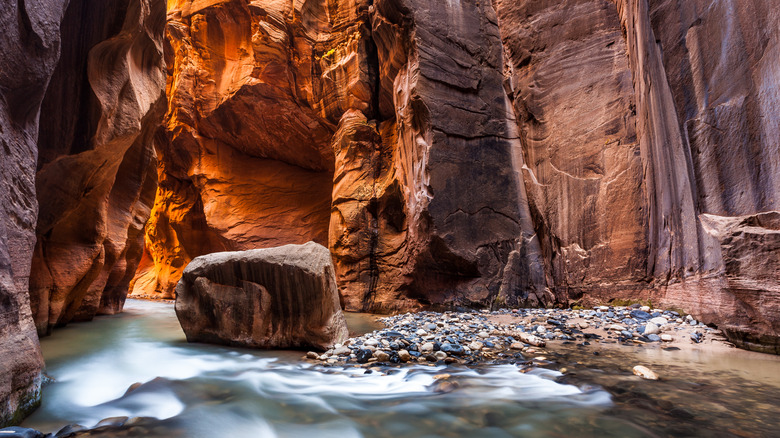
Zion Narrows is the most slender and subsequently most dramatic section of Zion Canyon in Zion National Park. The towering rock walls and the fact that you have to hike through the Virgin River into the canyon make this an extraordinary and almost spiritual experience, plunging you deep into the heart of nature. The Wall Street section of the canyon is the highlight for many visitors, where 1,000-foot-high cliffs keep you humble as you splash through the Narrows, which are just 20 feet wide in places. Sometimes the water will be ankle deep, sometimes it'll be up to your chest, so be prepared for a wet adventure.
This is one of Utah's most popular slot canyons, so it does get busy — early fall is a good time to avoid the worst of the crowds, although the water will be warmer during summer. Many hikers turn back at Wall Street, so if you continue, you'll have a little more tranquility as you admire your surroundings.
A permit is required for the full 16-mile through hike, but not for the bottom section as far as Big Spring, which is a 9.4-mile round trip. Many of the canyon's most spectacular rock formations, including Wall Street, can be seen in this lower part, which is accessed from the trailhead beside the Temple of Sinawava shuttle bus stop. It's a challenging hike and rough underfoot, particularly in the river sections, so a reasonable level of fitness is required.
Kanarra Slot Canyon: An untamed waterfall wonderland
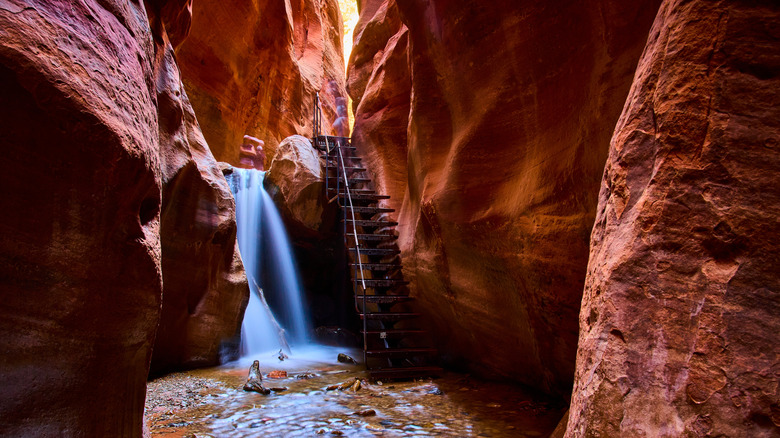
This 4.5-mile out-and-back trail takes you through an unearthly obstacle course of rivers, waterfalls, boulders, and ladders, all within a stunning slot canyon in Kanarraville. Also known as "Kanarra Falls," this mesmerizing passageway shows you water erosion in action as the river runs through the canyon for most of the year, and you'll be wading right through it.
After splashing through the river and scrambling over rocky sections, you'll eventually arrive at the slot canyon entrance. As you venture into the dark, narrow passageway, it feels like setting foot on another planet. Deep oranges and purples enhance the surreal atmosphere. Adding to the drama is a rustic 20-foot wooden ladder that you'll use to scale the waterfall, with a nearby rope to help steady you as it wobbles. You can continue up the ravine to a second, equally impressive slot canyon, accessed via another wet, waterfall scramble.
Kanarra Falls is less crowded than the Zion Narrows, but just as scenic, so it makes a great alternative hike if you prefer a shorter and more tranquil trail. It's easier underfoot, too, since the water is shallower. As the Kanarra Slot Canyon is on private land, you need a permit to access it. It's best to book online ahead of your visit to avoid disappointment since daily visitor numbers are limited to 200.
Keyhole Slot Canyon: A wild and challenging adventure
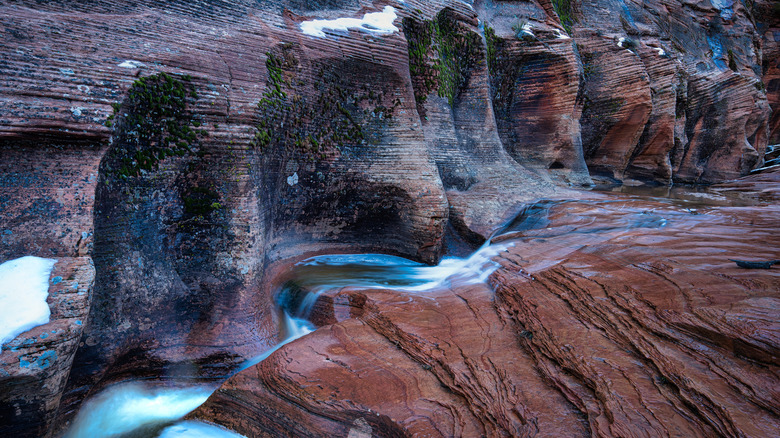
Keyhole Slot Canyon in Zion National Park presents a more challenging adventure, with a wetsuit and harness needed for wading, scrambling, and rappelling through technical sections of the narrow gorge. The steep drops and dark, twisting passageways offer a humbling and slightly eerie experience to brave explorers wanting to see something extraordinary in Utah's striking red rock country. There's not much light down here, with the gloom adding to the otherworldly atmosphere.
Once you're down in the canyon, there are boulders and logs to negotiate, as well as rappels into pools of water and a 100-foot swim through a narrow corridor to add to the excitement. It's cold without the sunlight, so you'll want to keep moving through the canyon to stay warm. Just remember to take a few moments to admire the undulating rock strata in the overlapping red and white cliffs that are ever-present all around you.
Accessed from Highway 9 and located just 2 miles east of the Zion-Mount Carmel Tunnel, Keyhole Slot Canyon is a great introduction to technical canyoning for beginners. It takes a couple of hours to complete the 6.8-mile route, and permits are required to limit the number of people in the canyon to protect it from erosion.
Leprechaun Slot Canyon: Utah's mystical underworld
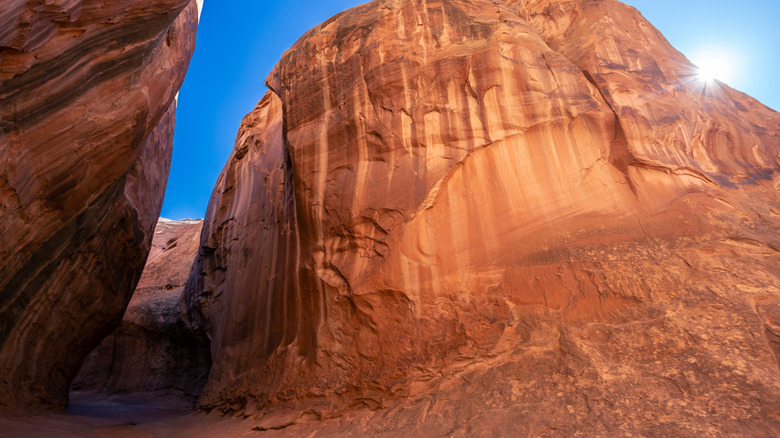
Leprechaun Slot Canyon is a less-visited slot canyon in the North Wash area with rock walls that shine orange and red when the sun filters down into the dark gorge. It's hidden and quiet, with sculpted sandstone corridors that lead you on a magical adventure through Utah's secret rocky underworld. It's a great place to see geology up close, with years of erosion leaving amazing ridges and whirls clearly visible on the cliff faces, like something from another planet.
While you might be expecting to come across mischievous leprechauns on your hike — and indeed they wouldn't feel out of place in this mysterious canyon — try not to be disappointed when they don't appear. The playful name probably comes from the strange passageways rather than sightings of the goblin-folk themselves. Some believe the canyon was named by 20th-century uranium miners with a sense of humor, while local folklore suggests "Canyon Pete," a hermit who once lived in the ravine, may have been the source of inspiration. Either way, it makes a good story.
Located just off Highway 95 near Hanksville, the lower part of Leprechaun Canyon is easily accessed on a 2-mile round-trip hike with a few tight sections and rocky scrambles connecting the whirling sandstone passageways. For a longer and more challenging trek, the upper section of the canyon requires a permit and is more technical.
Willis Creek Canyon: An accessible, geological masterpiece
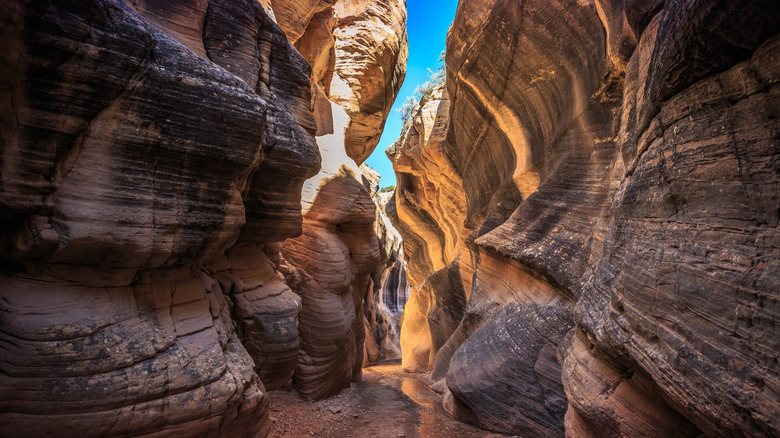
This straightforward, 3-mile out-and-back trail through Willis Creek Canyon in Grand Staircase-Escalante National Monument offers huge visual reward for relatively little effort. This makes it a great option for hikers of all abilities, including families with younger children. The wavy, cream slickrock walls show off nature's art in all its glory, with weird textures and colors that are so stunning they seem almost alien. The patterns come alive in the dancing light, so keep your camera handy.
Besides the flat and easy trail, one of the major draws of Willis Creek Canyon is the changing width between the cliff walls. Some parts of the canyon are quite open, while others are steep, dark, and narrow, giving plenty of photographic variety during your hike. The slender slot canyon sections are short and sweet, with the most impressive rock formations found around 1 mile into the passageway.
You'll find the Willis Creek Trailhead off the dirt track known as Skutumpah Road, just outside Cannonville. It's accessible for most cars in dry weather, but not advisable after rain. There's a small creek running along the bottom of the canyon that you can hop across if you'd rather avoid getting wet feet. The water can dry up completely in summer, so you might not even have to do that.
Things you need to know before visiting Utah's slot canyons
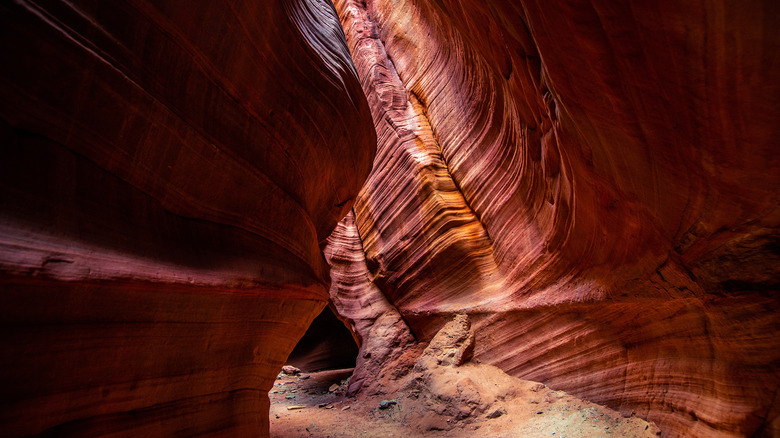
The best time of year to explore slot canyons is during spring and fall, when temperatures are mild, making hiking more comfortable. Summer in Utah can be sizzling, so if you are visiting at this time, head out in the early morning or evening to avoid the worst of the heat. Slot canyons are prone to flash flooding, particularly between July and September, so never enter one after a period of heavy rain. You can check the current alert status on the National Weather Service website. Meanwhile, winter brings snow and ice, and while the canyons are less crowded, they become harder to navigate.
Timing is everything if you want to photograph the glowing canyon walls, which are at their best during the morning, when the soft light bounces off the rock. To see the enchanting light beams that sometimes shine directly into the canyon, you'll need to be there around midday when the sun is overhead. You may need a little patience while waiting for magic to happen, but when it does, you're in for a treat.
You'll have a hot desert hike to reach many of the slot canyons in Utah, but the passageways themselves are often cool since they're in shadow for much of the day. If there's water in the bottom, it may be cold to wade through, so pack some warm clothing layers. Sturdy shoes that you don't mind getting wet are a must, too, and it's a good idea to carry a waterproof bag to protect your camera and other valuables. You should also take plenty of water to keep hydrated, as well as sunscreen for the hike.
Methodology
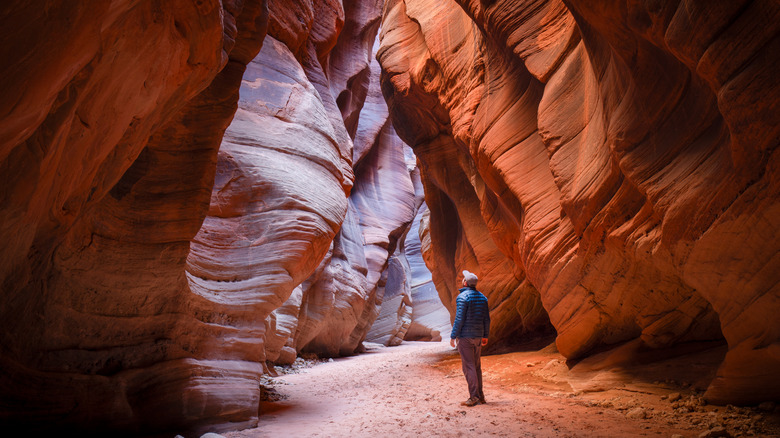
The slot canyons have been ranked in order of their otherworldly appeal, considering factors such as appearance, size, and acoustics. We have used research from the Utah Tourism Board's official website, as well as travel and hiking blogs, to determine the most suitable slot canyons to include on the list. We also looked at visitor reviews on Tripadvisor and AllTrails when assessing the access and trail difficulty. To be included on the list, the canyon needed to offer an air of mystery and an out-of-this-world adventure, as well as a unique visual appeal.